Copyright 2015 John Wiley & Sons, Inc.
Chapter 13
Project
Termination
13-2
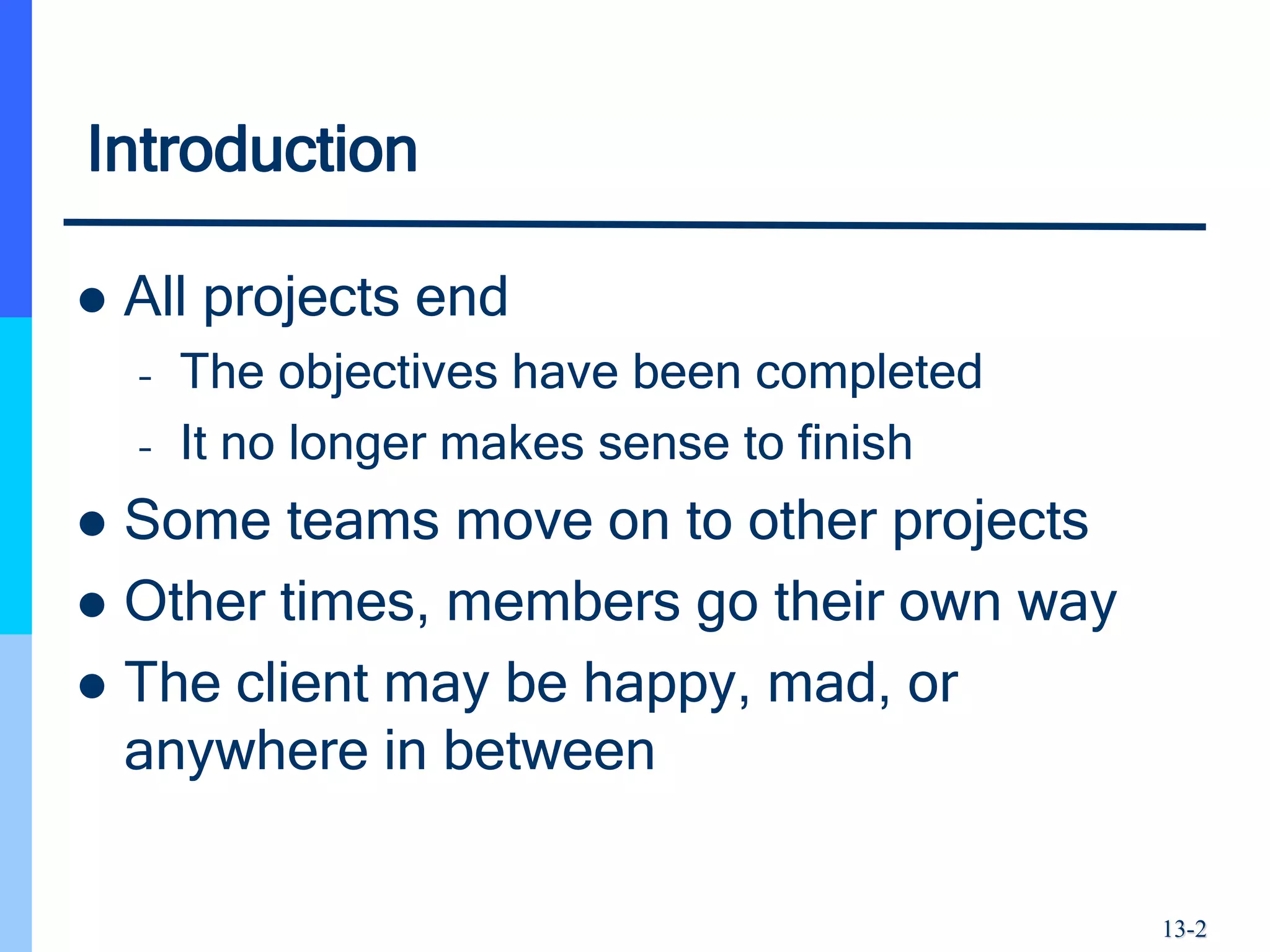
Introduction
 All projects end
– The objectives have been completed
– It no longer makes sense to finish
 Some teams move on to other projects
 Other times, members go their own way
 The client may be happy, mad, or
anywhere in between
13-3
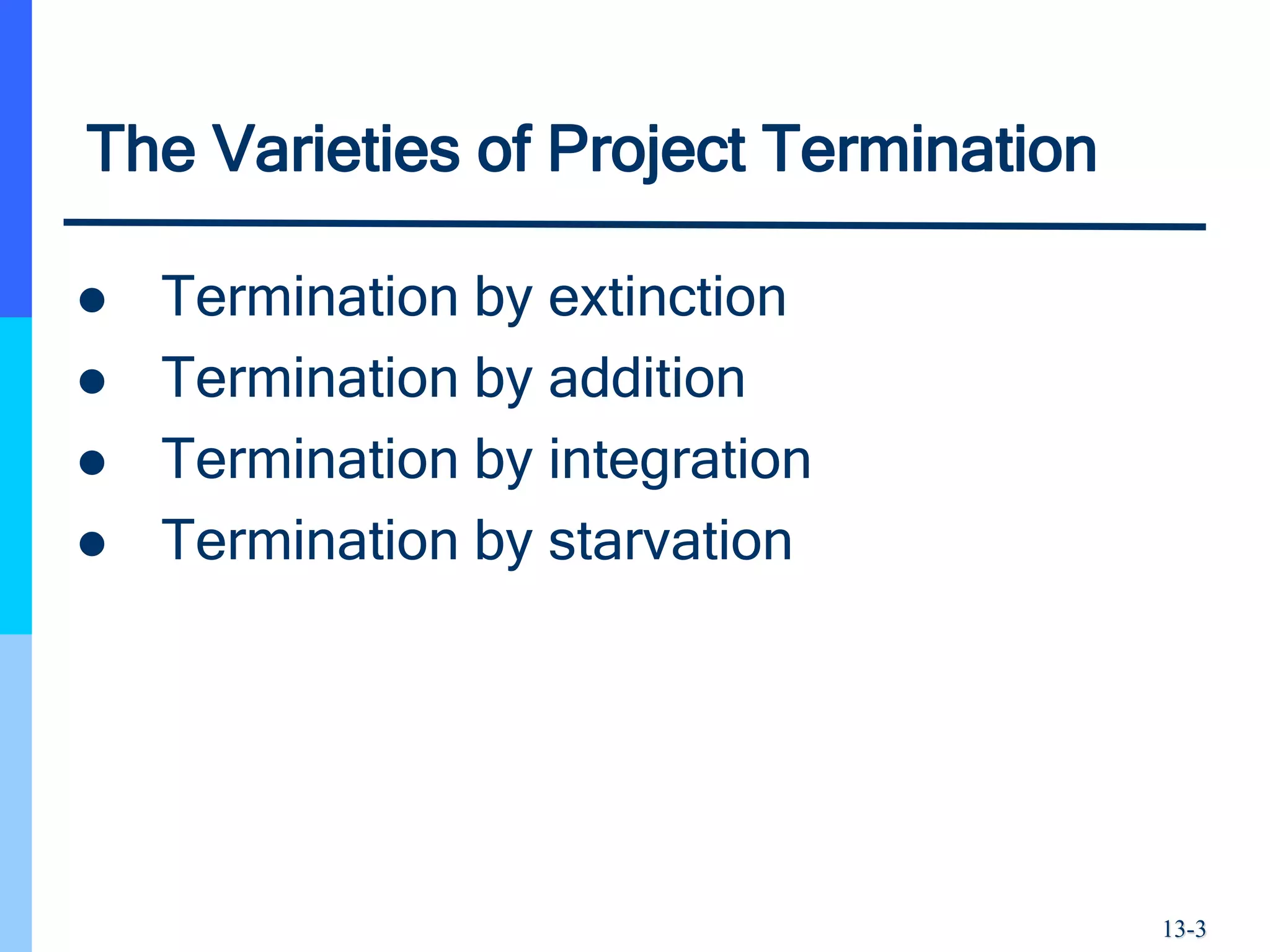
The Varieties of Project Termination
 Termination by extinction
 Termination by addition
 Termination by integration
 Termination by starvation
13-4
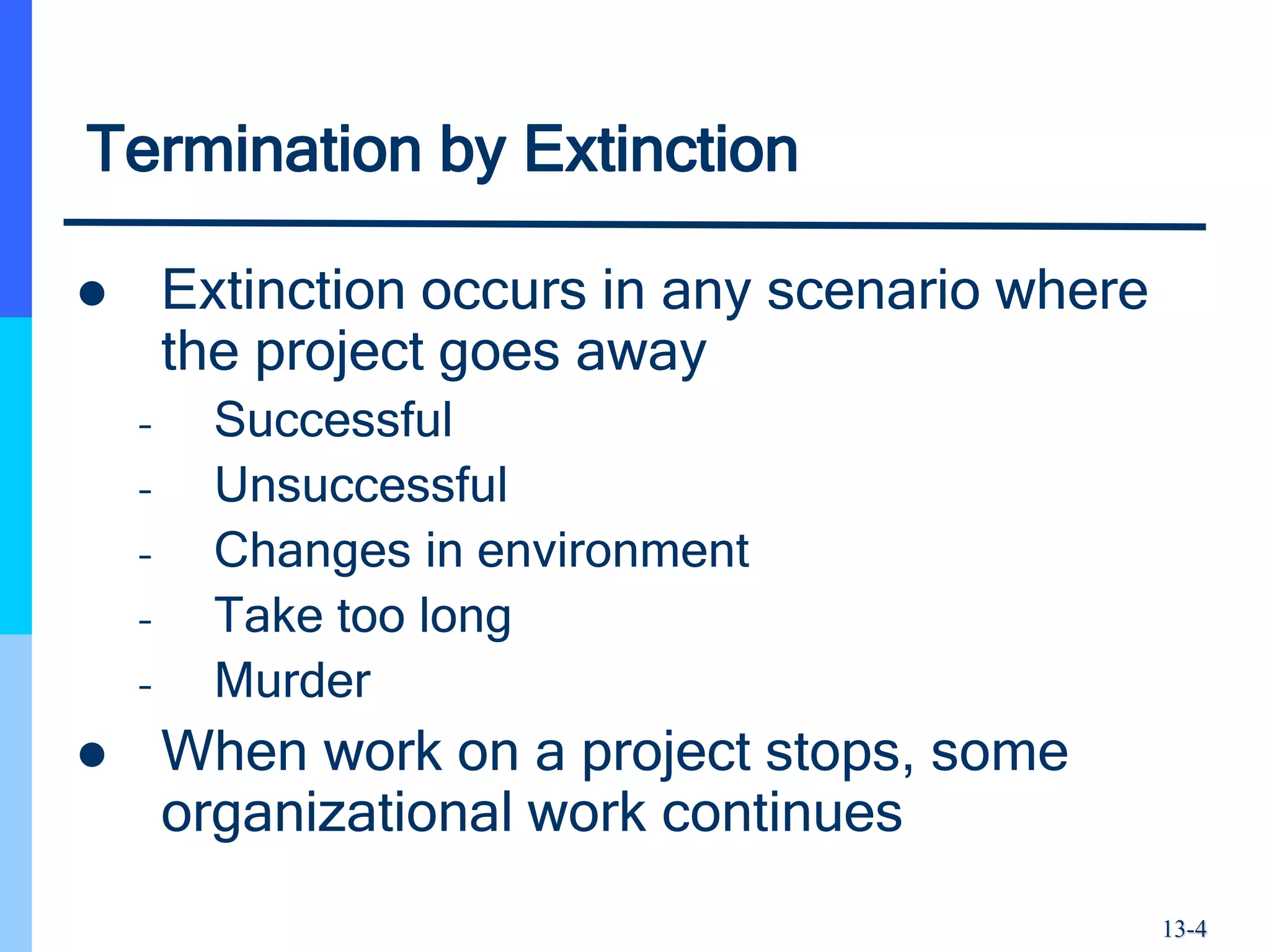
Termination by Extinction
 Extinction occurs in any scenario where
the project goes away
– Successful
– Unsuccessful
– Changes in environment
– Take too long
– Murder
 When work on a project stops, some
organizational work continues
13-5
Termination by Addition
 Applies to an in-house project
 When the project is successful, it is
institutionalized
 While the project goes away, project
personnel and assets are transferred to
the new business
13-6
Termination by Integration
 The most common way to terminate a
project
 The project comes into the business
– It is absorbed into the existing structure
 That structure absorbs the assets of the
project
13-7
Aspects of the Transition from Project to
Integrated Operation
 Personnel
 Manufacturing
 Accounting/finance
 Engineering
 Information systems
 Marketing
 Purchasing,
distribution, legal,
etc
 Risk ID and
management
13-8
Termination by Starvation
 Termination by starvation involves greatly
reducing the budget of a project
 Used when it is politically dangerous to
cancel a project
 Bad manners to enquire the status of the
project
13-9
When to Terminate a Project
 Projects take on a life of their own
 It may be easy to terminate a project that
is finished
 But it can be very difficult to terminate a
project prior to its completion
13-10
Critical Success Factors
 Project mission
 Top-management
support
 Project
schedule/plan
 Client consolation
 Personnel
 Technical tasks
 Client acceptance
 Monitoring and
feedback
 Communication
 Trouble-shooting
13-11
Fundamental Reasons Why Some Projects
Fail
 A project organization is not required
 Insufficient support from senior
management
 Naming the wrong person as project
manager
 Poor planning
13-12
Non-Technical Reasons for Termination
 Political
 Cross-cultural
 Senescence
13-13
The Termination Process
1. Must first decide to terminate
2. If the decision is to terminate the project,
the decision must be carried out
13-14
The Decision Process
 Sunk costs are not relevant to the
decision about terminating a project
 Primary concern for project continuance
or termination is whether or not the
organization is willing to invest the
estimated time and cost required to
complete the project
13-15
The Implementation Process
 Termination can be orderly or a “hatchet
job”
 Planning for implementing an orderly shut
down yields better results
 Who leads the shut down project?
 A special termination manager may be
used
13-16
Things to Do
 Ensure tasks are completed
 Notify the client
 Finish the paperwork
 Send out final invoices to the client
 Redistribute resources
 Clear with legal counsel
 Determine what records to keep
 Assign support
 Close the project books
13-17
The Final Report—A Project History
 Project performance
 Administrative performance
 Organizational structure
 Project and administrative teams
 Techniques of project management
Afterword
 Does anyone really use this stuff?
 Research project completed to see which
knowledge areas were focused on in real-
life projects
– Practices associated with time, scope, and cost were
widely used
– Practices associated with integration, HR, and
procurement were used somewhat less used
– Practices related to communication, quality, and risk
tend to be used least frequently.
13-18

ch13 Project termination.ppt

  • 1.
    Copyright 2015 JohnWiley & Sons, Inc. Chapter 13 Project Termination
  • 2.
    13-2 Introduction  All projectsend – The objectives have been completed – It no longer makes sense to finish  Some teams move on to other projects  Other times, members go their own way  The client may be happy, mad, or anywhere in between
  • 3.
    13-3 The Varieties ofProject Termination  Termination by extinction  Termination by addition  Termination by integration  Termination by starvation
  • 4.
    13-4 Termination by Extinction Extinction occurs in any scenario where the project goes away – Successful – Unsuccessful – Changes in environment – Take too long – Murder  When work on a project stops, some organizational work continues
  • 5.
    13-5 Termination by Addition Applies to an in-house project  When the project is successful, it is institutionalized  While the project goes away, project personnel and assets are transferred to the new business
  • 6.
    13-6 Termination by Integration The most common way to terminate a project  The project comes into the business – It is absorbed into the existing structure  That structure absorbs the assets of the project
  • 7.
    13-7 Aspects of theTransition from Project to Integrated Operation  Personnel  Manufacturing  Accounting/finance  Engineering  Information systems  Marketing  Purchasing, distribution, legal, etc  Risk ID and management
  • 8.
    13-8 Termination by Starvation Termination by starvation involves greatly reducing the budget of a project  Used when it is politically dangerous to cancel a project  Bad manners to enquire the status of the project
  • 9.
    13-9 When to Terminatea Project  Projects take on a life of their own  It may be easy to terminate a project that is finished  But it can be very difficult to terminate a project prior to its completion
  • 10.
    13-10 Critical Success Factors Project mission  Top-management support  Project schedule/plan  Client consolation  Personnel  Technical tasks  Client acceptance  Monitoring and feedback  Communication  Trouble-shooting
  • 11.
    13-11 Fundamental Reasons WhySome Projects Fail  A project organization is not required  Insufficient support from senior management  Naming the wrong person as project manager  Poor planning
  • 12.
    13-12 Non-Technical Reasons forTermination  Political  Cross-cultural  Senescence
  • 13.
    13-13 The Termination Process 1.Must first decide to terminate 2. If the decision is to terminate the project, the decision must be carried out
  • 14.
    13-14 The Decision Process Sunk costs are not relevant to the decision about terminating a project  Primary concern for project continuance or termination is whether or not the organization is willing to invest the estimated time and cost required to complete the project
  • 15.
    13-15 The Implementation Process Termination can be orderly or a “hatchet job”  Planning for implementing an orderly shut down yields better results  Who leads the shut down project?  A special termination manager may be used
  • 16.
    13-16 Things to Do Ensure tasks are completed  Notify the client  Finish the paperwork  Send out final invoices to the client  Redistribute resources  Clear with legal counsel  Determine what records to keep  Assign support  Close the project books
  • 17.
    13-17 The Final Report—AProject History  Project performance  Administrative performance  Organizational structure  Project and administrative teams  Techniques of project management
  • 18.
    Afterword  Does anyonereally use this stuff?  Research project completed to see which knowledge areas were focused on in real- life projects – Practices associated with time, scope, and cost were widely used – Practices associated with integration, HR, and procurement were used somewhat less used – Practices related to communication, quality, and risk tend to be used least frequently. 13-18