Current Asset Management
 Working Capital Management
 Current Asset Investment Policy
 Temporary and Permanent Current Assets
 Zero Working Capital
 Cash Management
 Marketable Securities
 Accounts Receivable Management
 Inventory Management
Working Capital Management
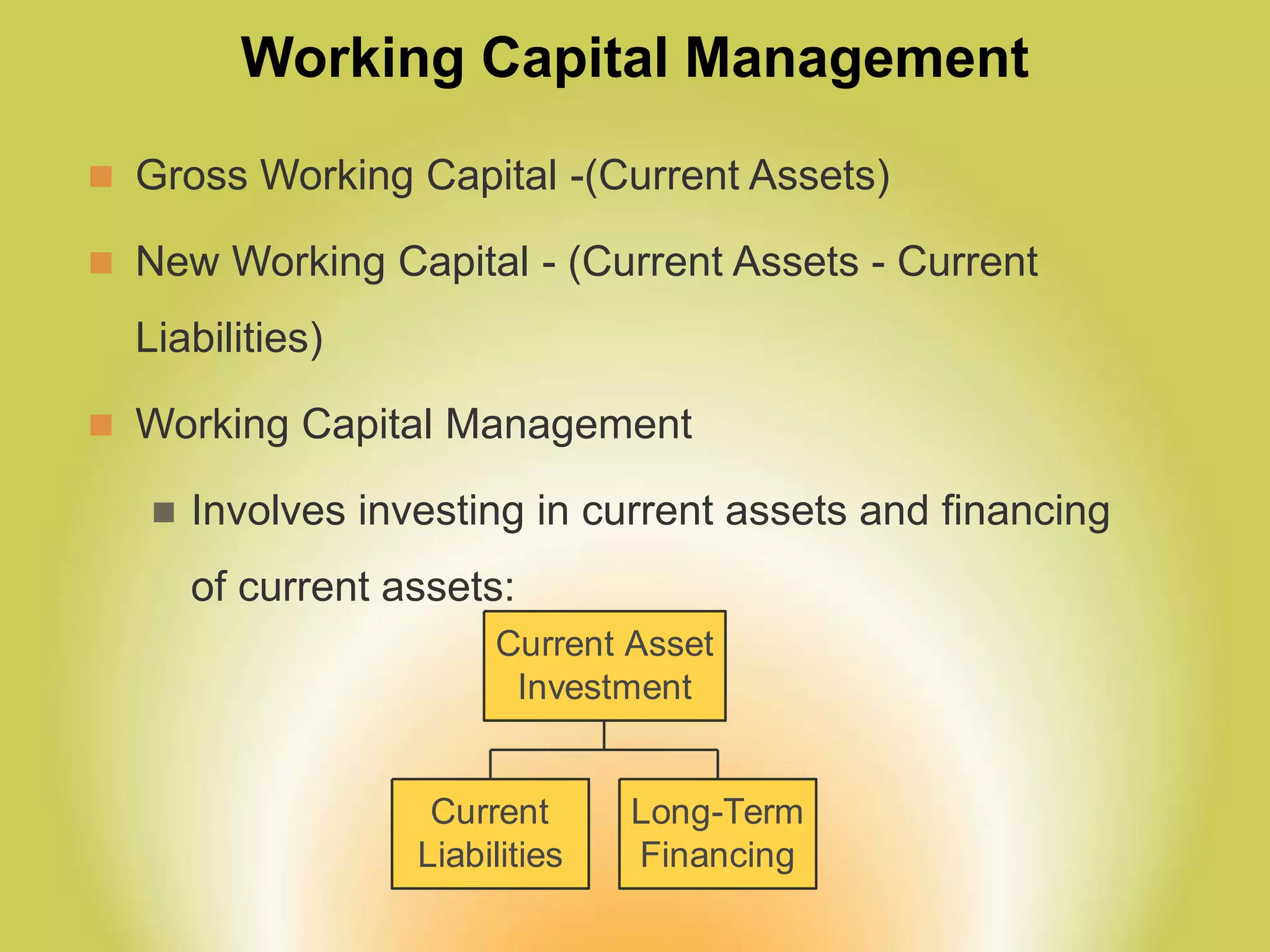
 Gross Working Capital -(Current Assets)
 New Working Capital - (Current Assets - Current
Liabilities)
 Working Capital Management
 Involves investing in current assets and financing
of current assets:
Current
Liabilities
Long-Term
Financing
Current Asset
Investment
Current Asset Investment Policy
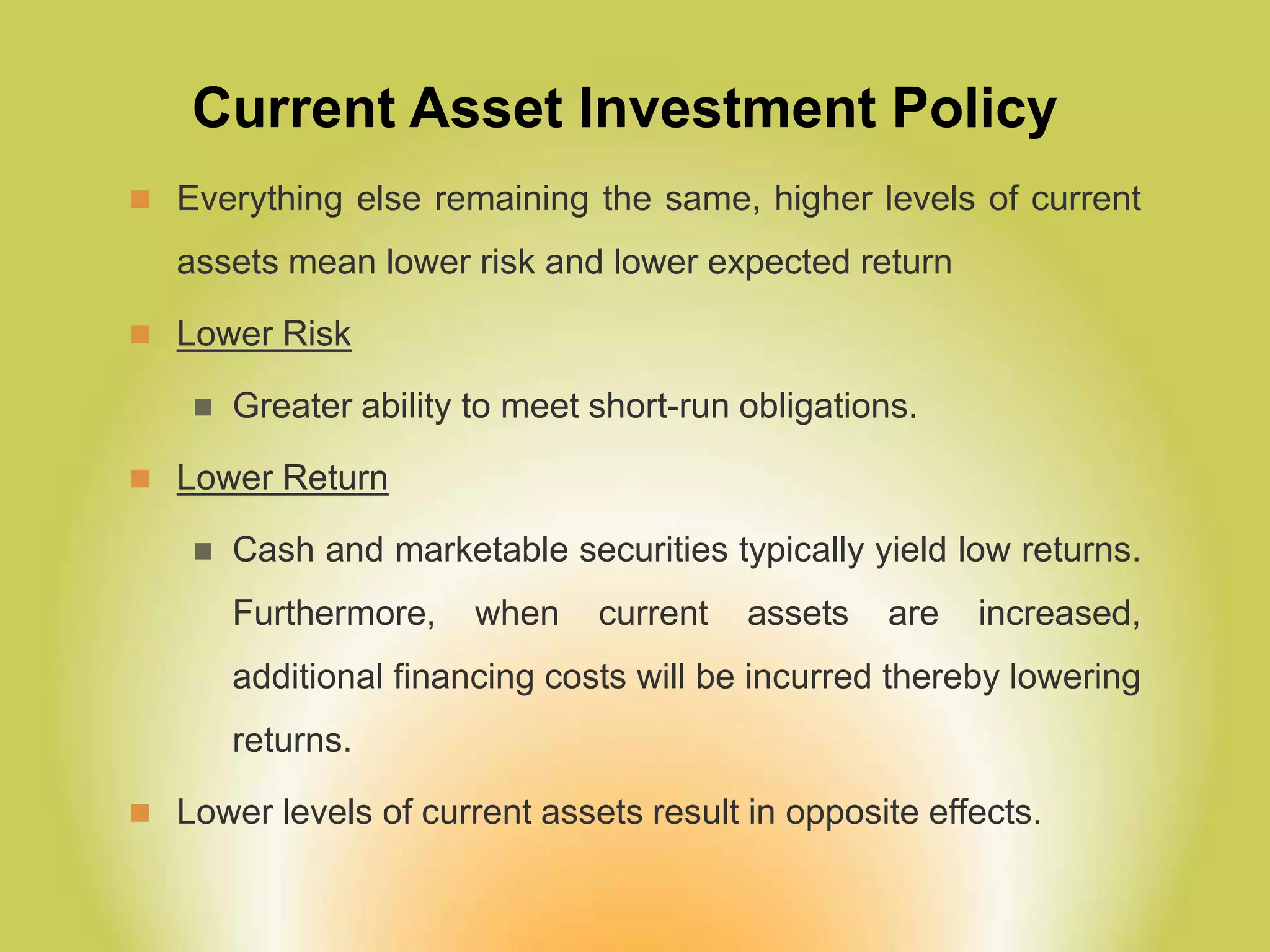
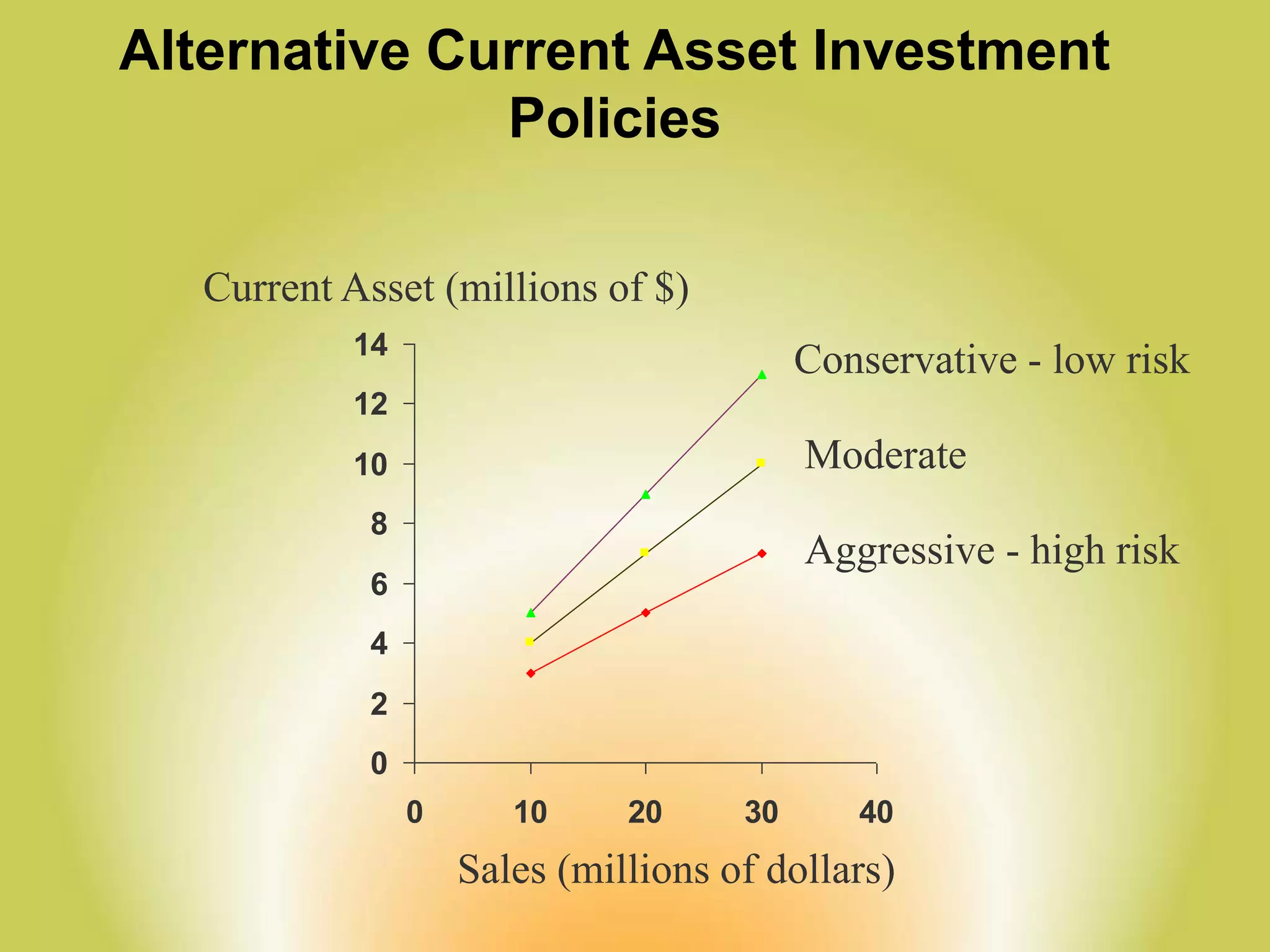
 Everything else remaining the same, higher levels of current
assets mean lower risk and lower expected return
 Lower Risk
 Greater ability to meet short-run obligations.
 Lower Return
 Cash and marketable securities typically yield low returns.
Furthermore, when current assets are increased,
additional financing costs will be incurred thereby lowering
returns.
 Lower levels of current assets result in opposite effects.
Alternative Current Asset Investment
Policies
0
2
4
6
8
10
12
14
0 10 20 30 40
Current Asset (millions of $)
Sales (millions of dollars)
Conservative - low risk
Aggressive - high risk
Moderate
Temporary vs. Permanent Investment
in Current Assets
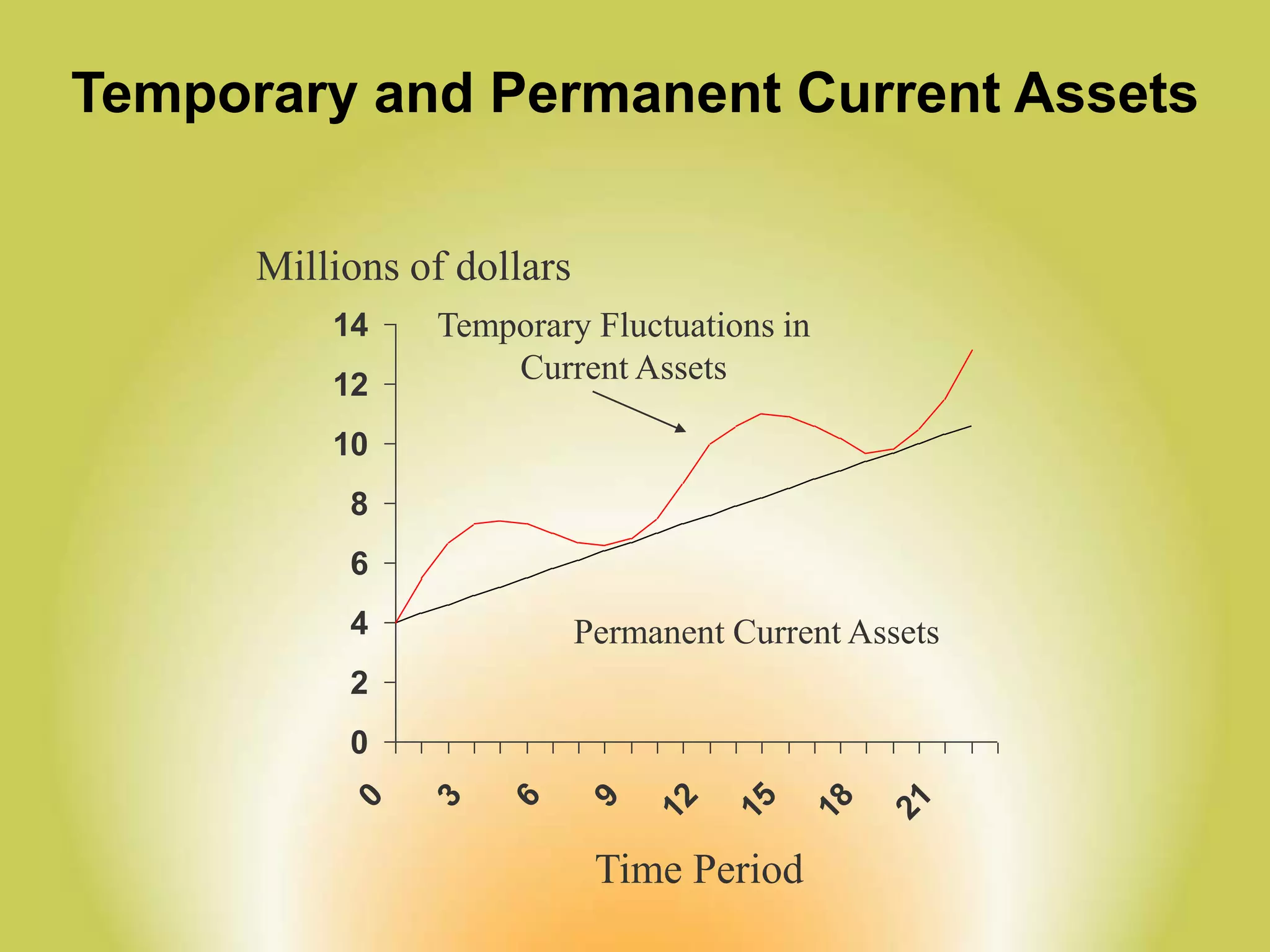
 Temporary Investment - Commonly, firms experience short-run
fluctuations in current assets. For example, retail department
stores will have high levels of inventory around Thanksgiving. In
January, the inventory should be low.
 Permanent Investment - Firms always have some minimum
level of investment in current assets (i.e., a permanent
investment). As a firm grows over time, the level of permanent
current assets also grows (e.g., a supermarket chain with 70
stores will have more permanent inventory than a chain with 4
stores).
Temporary and Permanent Current Assets
0
2
4
6
8
10
12
14
0 3 6 9 12 15 18 21
Millions of dollars
Time Period
Temporary Fluctuations in
Current Assets
Permanent Current Assets
Cash Management: An Overview
 Beginning Cash Balance
+ Cash Inflows - - - Speed Up
- Cash Outflows - - - Slow Down
= Ending Cash Balance
- Desired Cash Balance
= Surplus or Shortage
 If Surplus: Pay off short-term debt or buy marketable
securities
 If Shortage: Short-term borrowing or sell marketable
securities
Desired Cash Balance:
 Precautionary Demand - Satisfy possible, but as yet indefinite
cash needs.
 Speculative Demand - Build up current cash balances in
anticipation of future business costs being lower.
 Risk Preferences
 Compensating Balances
 Transactions Demand - Cash needs arising in the ordinary
course of doing business.
Float
 Much of cash management is oriented towards managing the
float.
 Mail Float
 Time lapse from the moment a customer mails a remittance
check until the firm begins to process it.
 Processing Float
 Time required for the firm to process remittance checks
before they can be deposited in the bank.
Float (Continued)
 Transit Float
 Time necessary for a deposited check to clear through the
commercial banking system and become usable funds to the
company.
 Disbursing Float
 Funds available in the firm’s bank account until its payment
check has cleared through the system.
Electronic Funds Transfer
 Substantially reduces float
 Some Examples:
 Automated teller machines
 Direct deposit of payroll checks
 Paying the supermarket and others with bank cards.
Lock-Box System
 Customers mail remittance checks to P.O. Box.
 Local bank processes and deposits checks directly into the
company’s account.
 Reduces mail and processing float.
 Also reduces transit float if lock-box is located near Federal
Reserve Bank or branches.
Marketable Securities
 The marketable securities portfolio is typically used for
temporary investments of excess cash, or as a substitute for
cash (i.e., near cash). Therefore, securities in the portfolio are
generally safe, short-term, and highly liquid.
 Treasury Bills
 Short-term obligations of the federal government with
maturities of 91 days to a year. They are traded on a
discount basis in bearer form. Not taxable at state and local
levels, but taxable at the federal level.
 Commercial Paper
 Unsecured promissory notes issued by large corporations in
amounts of $25,000 or more (No active secondary market).
Marketable Securities Continued
 Negotiable Certificates of Deposit (CDs)
 Offered by financial institutions (e.g., banks, S&Ls). Those
big business is interested in have $100,000 minimums.
 Banker’s Acceptance: Generally arise out of foreign trade.
 Importer (buyer) issues a promise to pay a certain amount to
the exporter (seller).
 A bank accepts the promise, and commits itself to pay the
amount when due.
 Exporter (seller) can now sell this acceptance in the
marketplace at a discount (a price that is less than the
promised amount).
Accounts Receivable Management
 Major Decisions
 Credit Standards
 Credit Terms
 Collection Policy
 Credit Standards: Will they pay as agreed?
 Credit Scoring
 Credit Reports
 Past Experience
 Financial Analysis
 Debt Ratios, Liquidity Ratios, Profit Ratios
Accounts Receivable Management
(Continued)
 Credit Terms
 Example: 2/10, net 30
 Collection Policy
 Standard Operating Procedures
 Be professional, firm, and do not bluff.
 Vary procedures with slow payers.
 Evaluating Collection Efforts
 Average Collection Period, Bad Debt to Sales
Ratio, Aging Accounts Receivable, Receivables
to Assets Ratio, Credit Sales to Receivables
Ratio.
Inventory Management
(Covered in Production Management)
 Basic Costs Associated With Inventory
 Carrying Costs
 storage, insurance, cost of capital used
 Ordering Costs
 placing orders, shipping and handling
 Costs of Running Short
 lost sales, reduced customer goodwill
 Objective
 Minimize total costs associated with managing inventory.

1 current assement management

  • 1.
    Current Asset Management Working Capital Management  Current Asset Investment Policy  Temporary and Permanent Current Assets  Zero Working Capital  Cash Management  Marketable Securities  Accounts Receivable Management  Inventory Management
  • 2.
    Working Capital Management Gross Working Capital -(Current Assets)  New Working Capital - (Current Assets - Current Liabilities)  Working Capital Management  Involves investing in current assets and financing of current assets: Current Liabilities Long-Term Financing Current Asset Investment
  • 3.
    Current Asset InvestmentPolicy  Everything else remaining the same, higher levels of current assets mean lower risk and lower expected return  Lower Risk  Greater ability to meet short-run obligations.  Lower Return  Cash and marketable securities typically yield low returns. Furthermore, when current assets are increased, additional financing costs will be incurred thereby lowering returns.  Lower levels of current assets result in opposite effects.
  • 4.
    Alternative Current AssetInvestment Policies 0 2 4 6 8 10 12 14 0 10 20 30 40 Current Asset (millions of $) Sales (millions of dollars) Conservative - low risk Aggressive - high risk Moderate
  • 5.
    Temporary vs. PermanentInvestment in Current Assets  Temporary Investment - Commonly, firms experience short-run fluctuations in current assets. For example, retail department stores will have high levels of inventory around Thanksgiving. In January, the inventory should be low.  Permanent Investment - Firms always have some minimum level of investment in current assets (i.e., a permanent investment). As a firm grows over time, the level of permanent current assets also grows (e.g., a supermarket chain with 70 stores will have more permanent inventory than a chain with 4 stores).
  • 6.
    Temporary and PermanentCurrent Assets 0 2 4 6 8 10 12 14 0 3 6 9 12 15 18 21 Millions of dollars Time Period Temporary Fluctuations in Current Assets Permanent Current Assets
  • 7.
    Cash Management: AnOverview  Beginning Cash Balance + Cash Inflows - - - Speed Up - Cash Outflows - - - Slow Down = Ending Cash Balance - Desired Cash Balance = Surplus or Shortage  If Surplus: Pay off short-term debt or buy marketable securities  If Shortage: Short-term borrowing or sell marketable securities
  • 8.
    Desired Cash Balance: Precautionary Demand - Satisfy possible, but as yet indefinite cash needs.  Speculative Demand - Build up current cash balances in anticipation of future business costs being lower.  Risk Preferences  Compensating Balances  Transactions Demand - Cash needs arising in the ordinary course of doing business.
  • 9.
    Float  Much ofcash management is oriented towards managing the float.  Mail Float  Time lapse from the moment a customer mails a remittance check until the firm begins to process it.  Processing Float  Time required for the firm to process remittance checks before they can be deposited in the bank.
  • 10.
    Float (Continued)  TransitFloat  Time necessary for a deposited check to clear through the commercial banking system and become usable funds to the company.  Disbursing Float  Funds available in the firm’s bank account until its payment check has cleared through the system.
  • 11.
    Electronic Funds Transfer Substantially reduces float  Some Examples:  Automated teller machines  Direct deposit of payroll checks  Paying the supermarket and others with bank cards.
  • 12.
    Lock-Box System  Customersmail remittance checks to P.O. Box.  Local bank processes and deposits checks directly into the company’s account.  Reduces mail and processing float.  Also reduces transit float if lock-box is located near Federal Reserve Bank or branches.
  • 13.
    Marketable Securities  Themarketable securities portfolio is typically used for temporary investments of excess cash, or as a substitute for cash (i.e., near cash). Therefore, securities in the portfolio are generally safe, short-term, and highly liquid.  Treasury Bills  Short-term obligations of the federal government with maturities of 91 days to a year. They are traded on a discount basis in bearer form. Not taxable at state and local levels, but taxable at the federal level.  Commercial Paper  Unsecured promissory notes issued by large corporations in amounts of $25,000 or more (No active secondary market).
  • 14.
    Marketable Securities Continued Negotiable Certificates of Deposit (CDs)  Offered by financial institutions (e.g., banks, S&Ls). Those big business is interested in have $100,000 minimums.  Banker’s Acceptance: Generally arise out of foreign trade.  Importer (buyer) issues a promise to pay a certain amount to the exporter (seller).  A bank accepts the promise, and commits itself to pay the amount when due.  Exporter (seller) can now sell this acceptance in the marketplace at a discount (a price that is less than the promised amount).
  • 15.
    Accounts Receivable Management Major Decisions  Credit Standards  Credit Terms  Collection Policy  Credit Standards: Will they pay as agreed?  Credit Scoring  Credit Reports  Past Experience  Financial Analysis  Debt Ratios, Liquidity Ratios, Profit Ratios
  • 16.
    Accounts Receivable Management (Continued) Credit Terms  Example: 2/10, net 30  Collection Policy  Standard Operating Procedures  Be professional, firm, and do not bluff.  Vary procedures with slow payers.  Evaluating Collection Efforts  Average Collection Period, Bad Debt to Sales Ratio, Aging Accounts Receivable, Receivables to Assets Ratio, Credit Sales to Receivables Ratio.
  • 17.
    Inventory Management (Covered inProduction Management)  Basic Costs Associated With Inventory  Carrying Costs  storage, insurance, cost of capital used  Ordering Costs  placing orders, shipping and handling  Costs of Running Short  lost sales, reduced customer goodwill  Objective  Minimize total costs associated with managing inventory.