Vectoring Basics 
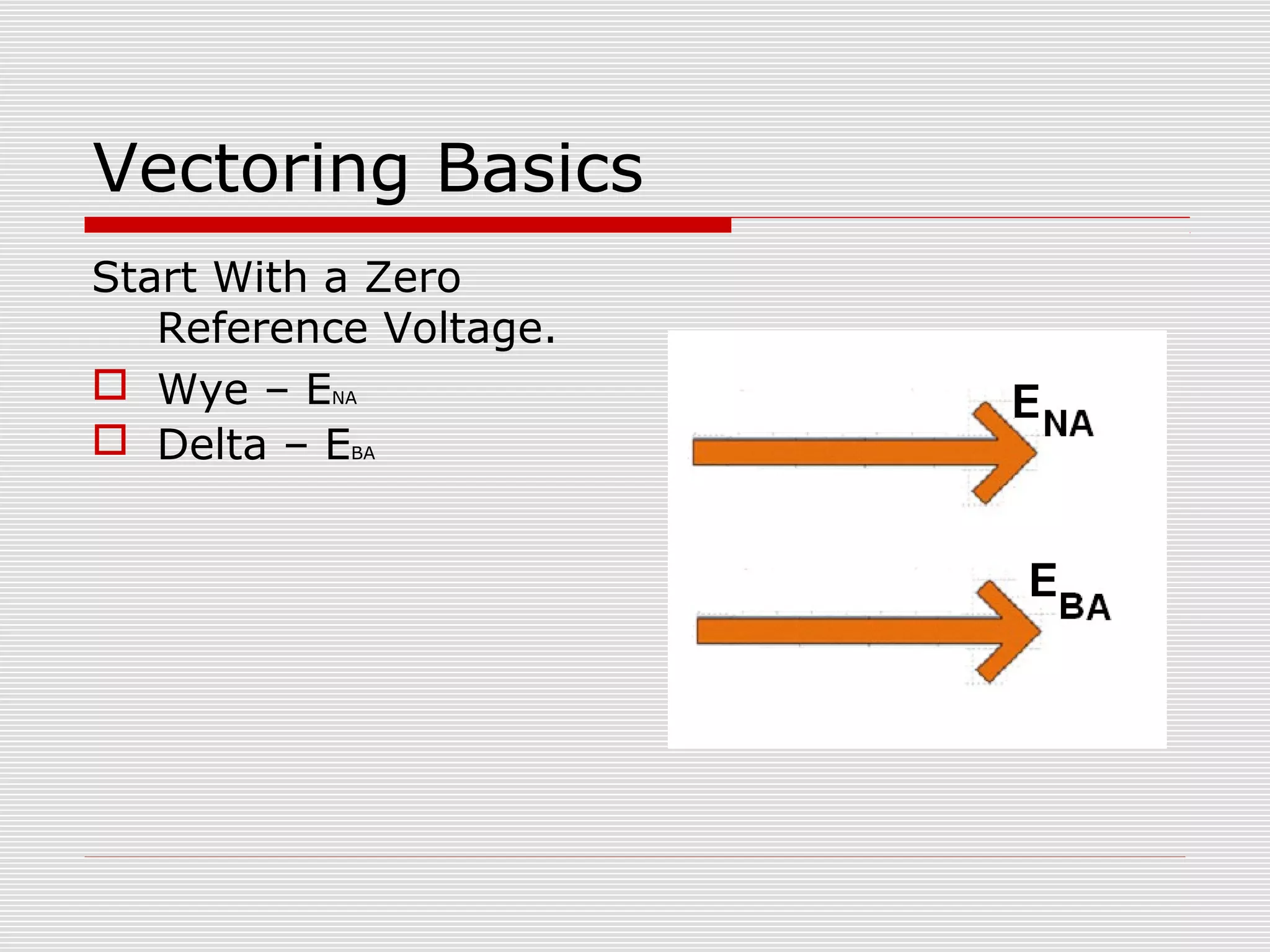
Start With a Zero 
Reference Voltage. 
 Wye – ENA 
 Delta – EBA
Vectoring Basics 
 Potential – Open Arrow. 
 Current – Closed Arrow. 
 Arrowhead Denotes Polarity. 
 Current Enters the Polarity side of a Current Coil. 
 Cannot have a C-Phase without first having A-Phase and B-Phase. 
 The ONLY Current Coil that is ever reversed is B-Phase. 
 B-Phase Current Coil Reverses when you Alter it. 
Half Coils and ‘Z’ Coils are considered Altered. 
 All Meter Elements Have Forward Torque at Unity Power 
Factor. 
Forward torque means less than 90 degrees between 
the Potential coil and the current coil vectors.
Sequence for Vectoring 
 Learn and Memorize the Three Basic System Vector Diagrams. 
 Learn and Memorize Meter Footprints. 
 The Meter Footprints show the Potential Connections and 
Currents being measured. Labeling the connections is helpful. 
 Apply the Rules Regarding Forward Torque and Which Current 
Coils may be Reversed. 
 Draw the Meter Vectors. 
 Create a hypothetical load. 
 Do the Math.
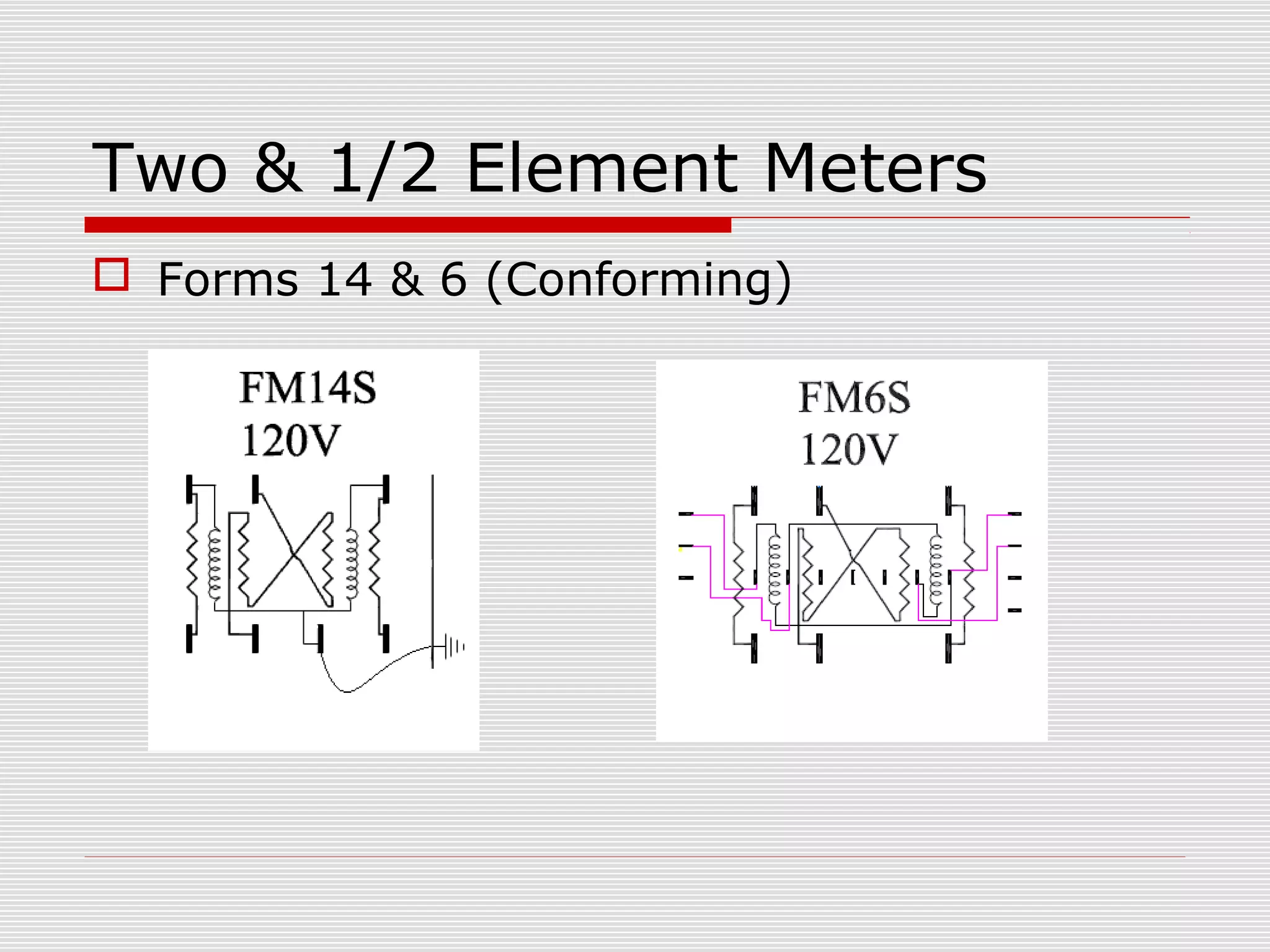
Two & 1/2 Element Meters 
 Forms 14 & 6 (Conforming)
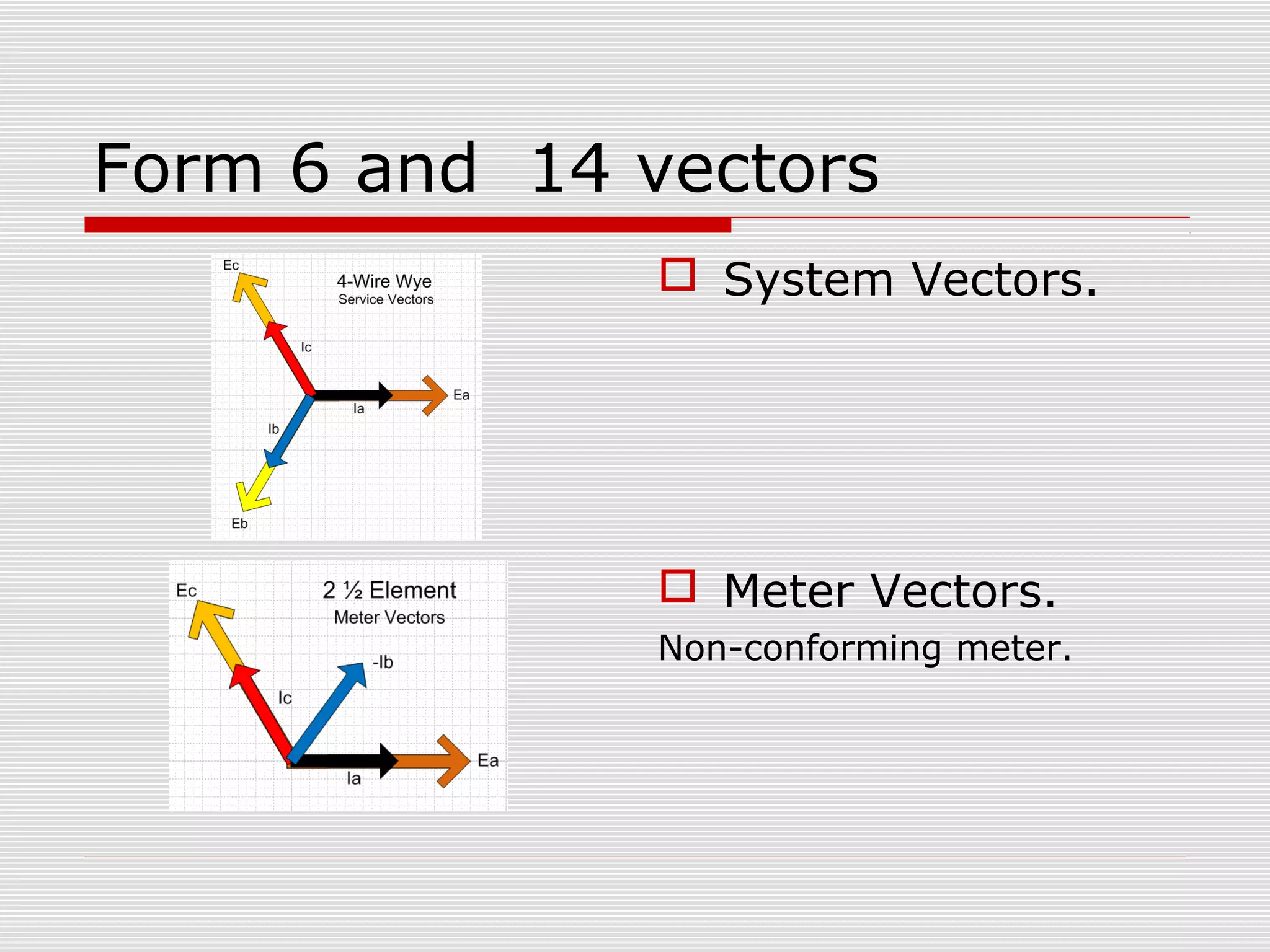
Form 6 and 14 vectors 
 System Vectors. 
 Meter Vectors. 
Non-conforming meter.
Form 6 as a 3Ø 4-Wire Meter
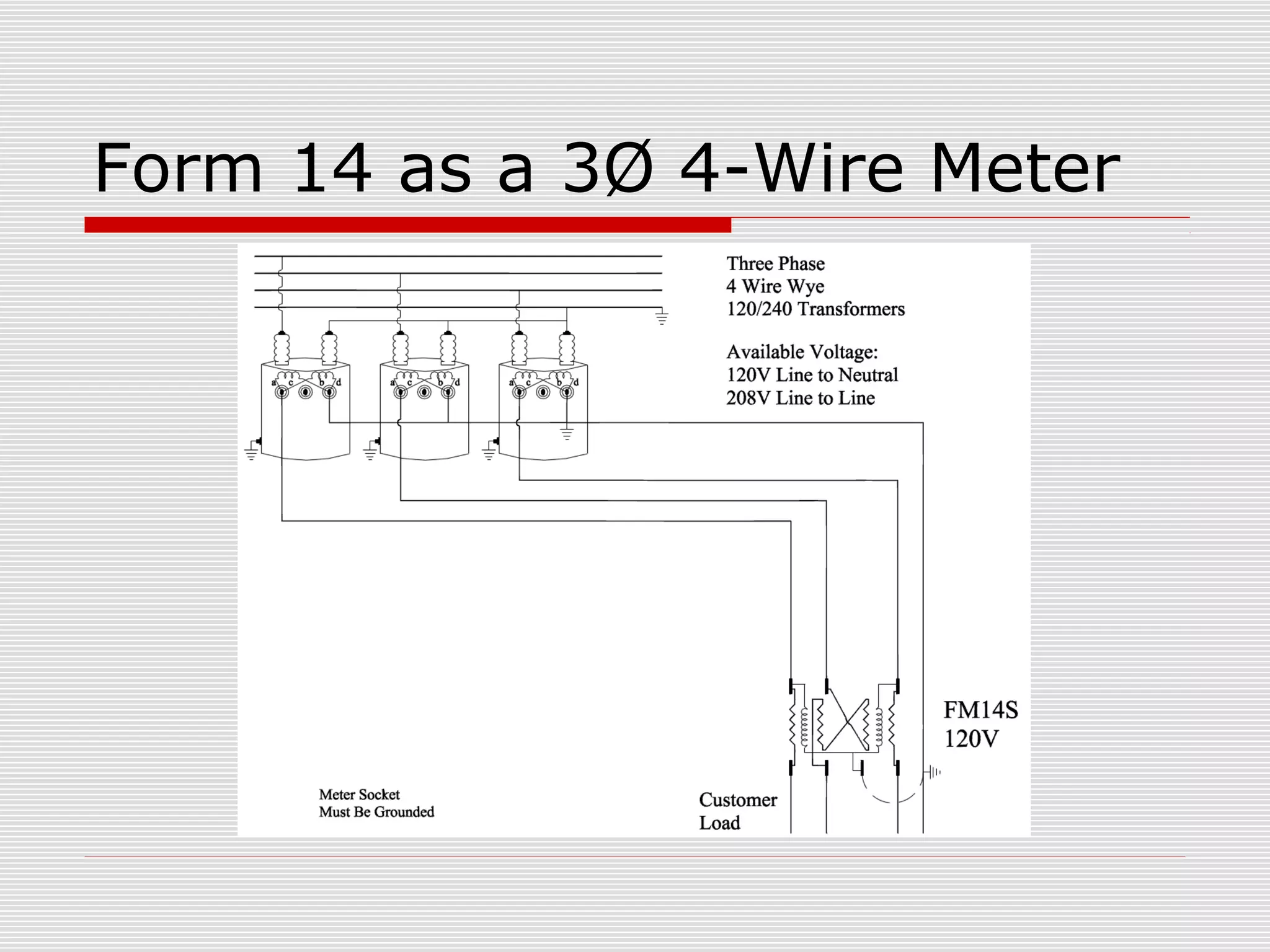
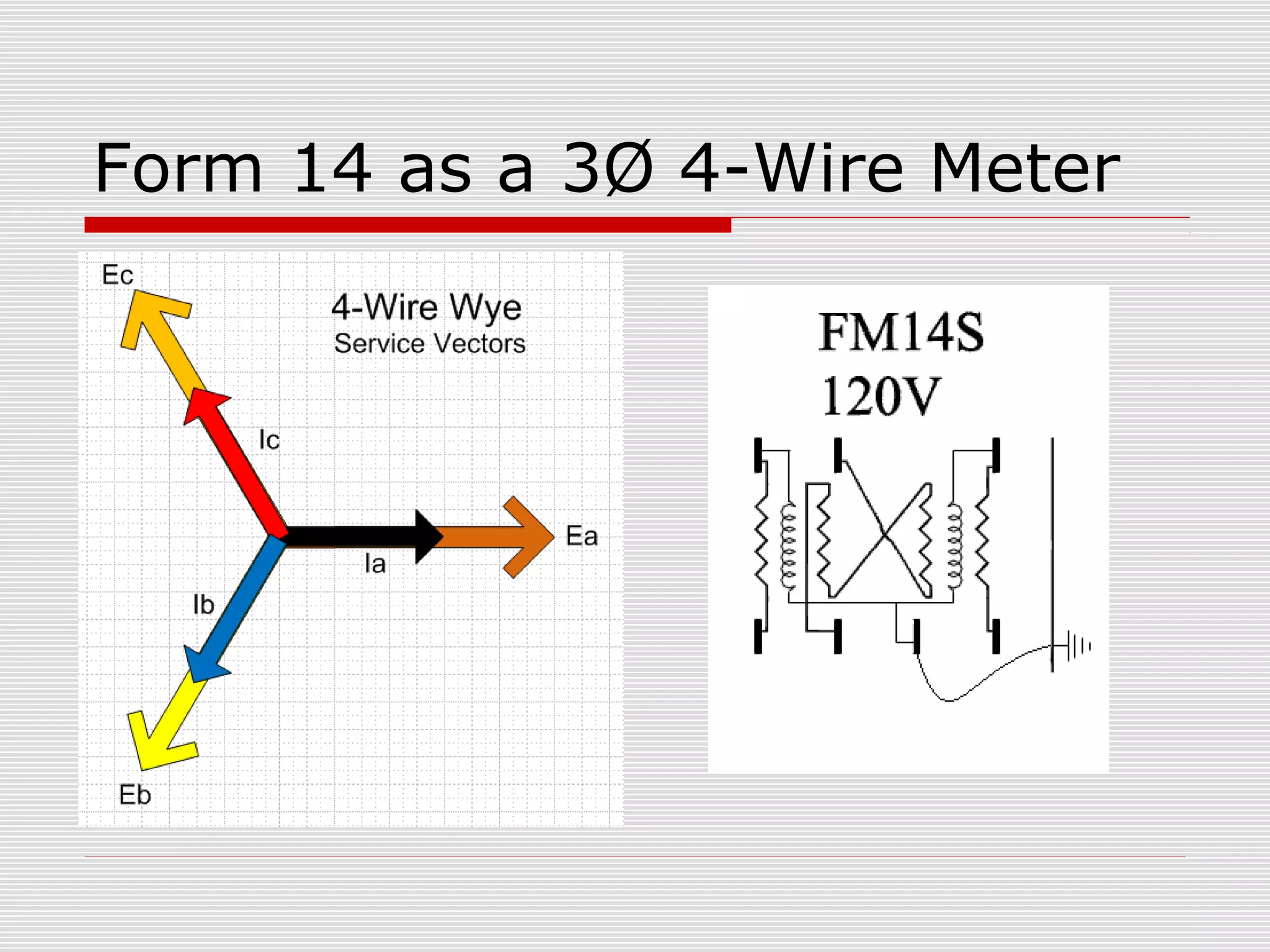
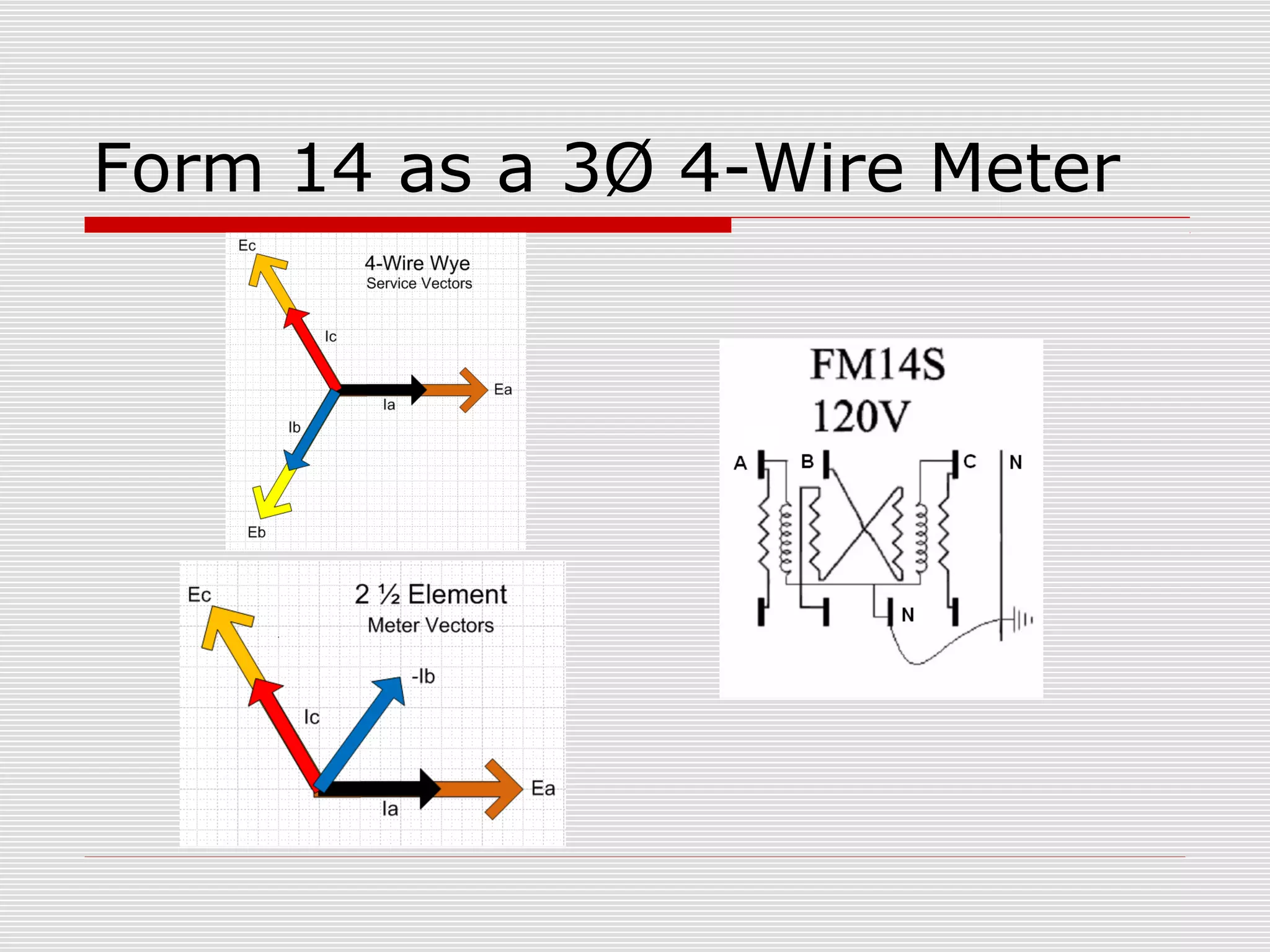
Form 14 as a 3Ø 4-Wire Meter
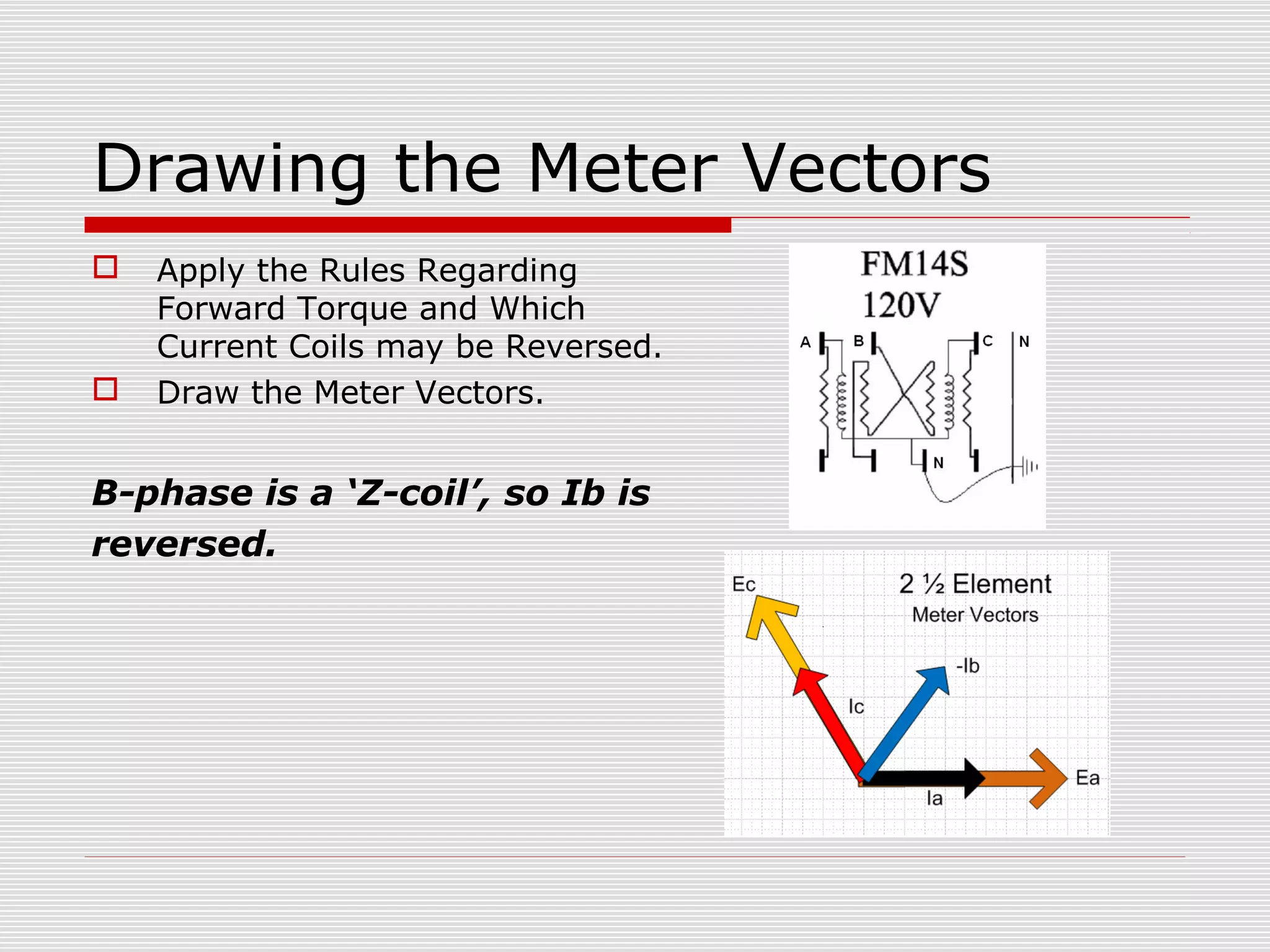
Drawing the Meter Vectors 
 Apply the Rules Regarding 
Forward Torque and Which 
Current Coils may be Reversed. 
 Draw the Meter Vectors. 
B-phase is a ‘Z-coil’, so Ib is 
reversed.
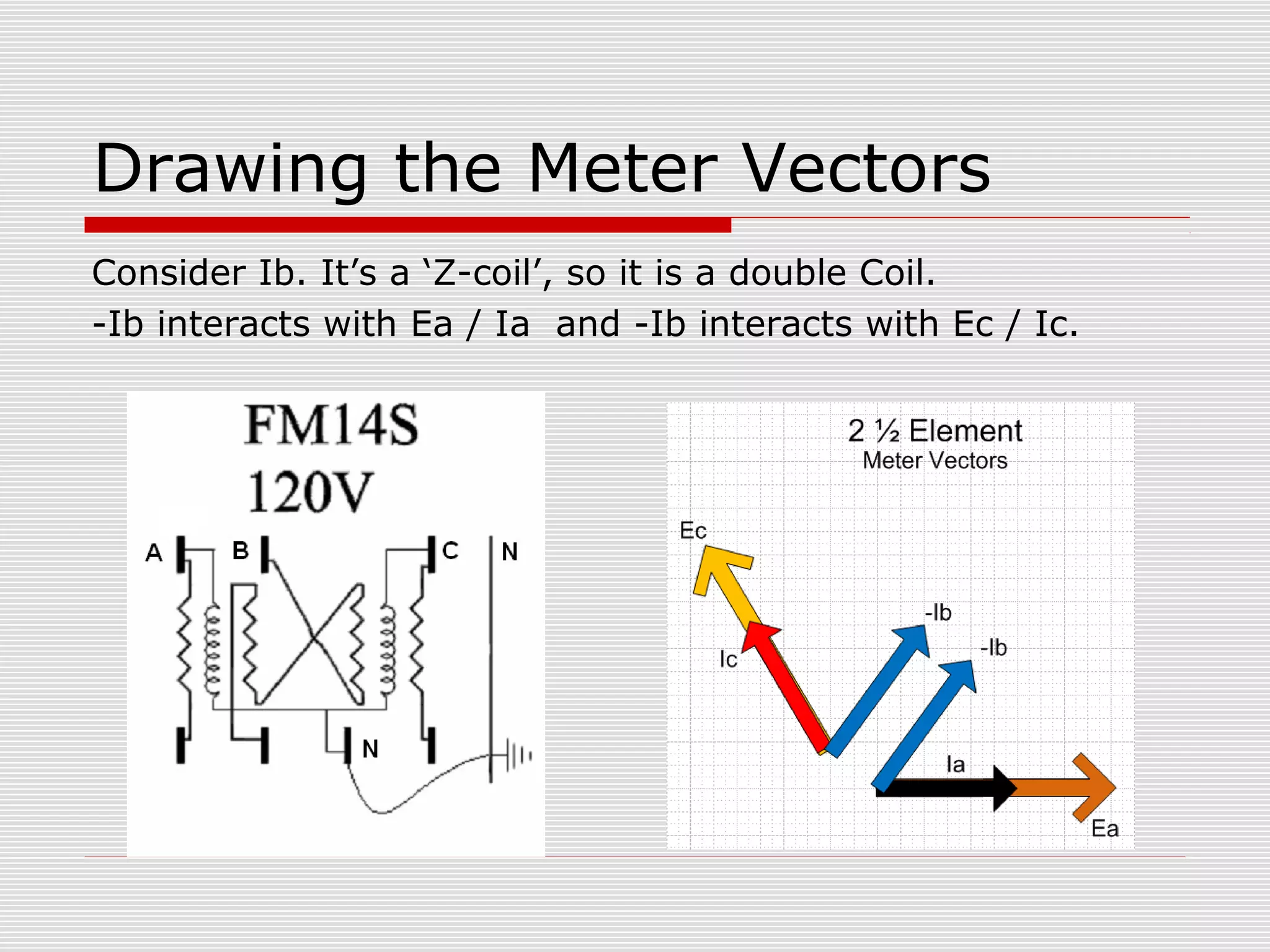
Drawing the Meter Vectors 
Consider Ib. It’s a ‘Z-coil’, so it is a double Coil. 
-Ib interacts with Ea / Ia and -Ib interacts with Ec / Ic.
Create a Load 
A Convenience Store with 36 kW of load 
(For simplicity phases are evenly loaded and 1.0 pf) 
36000 watts of 3-phase 
36000 / (120 x 3) = 100 phase amps
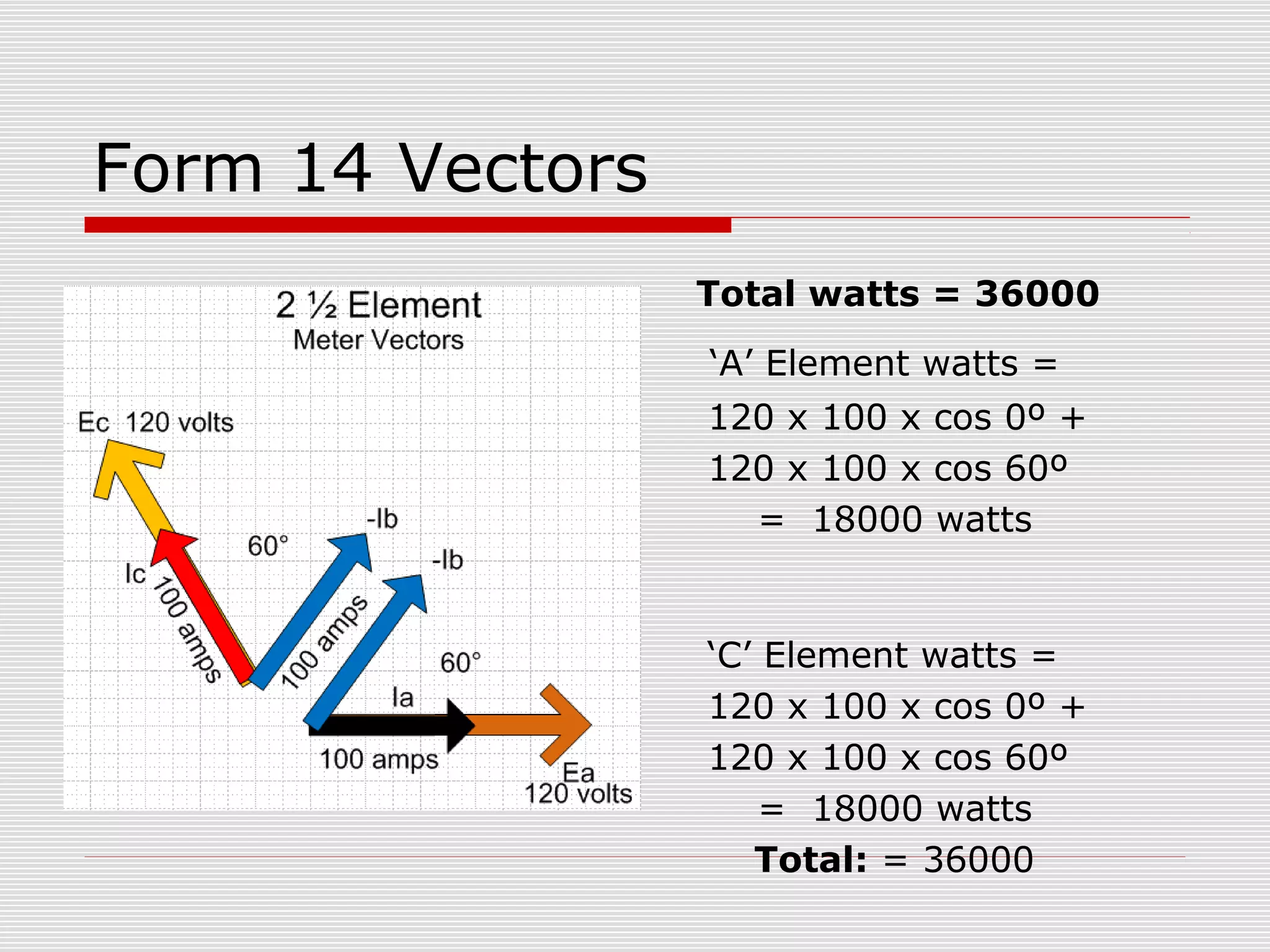
Form 14 Vectors 
Total watts = 36000 
‘A’ Element watts = 
120 x 100 x cos 0º + 
120 x 100 x cos 60º 
= 18000 watts 
‘C’ Element watts = 
120 x 100 x cos 0º + 
120 x 100 x cos 60º 
= 18000 watts 
Total: = 36000
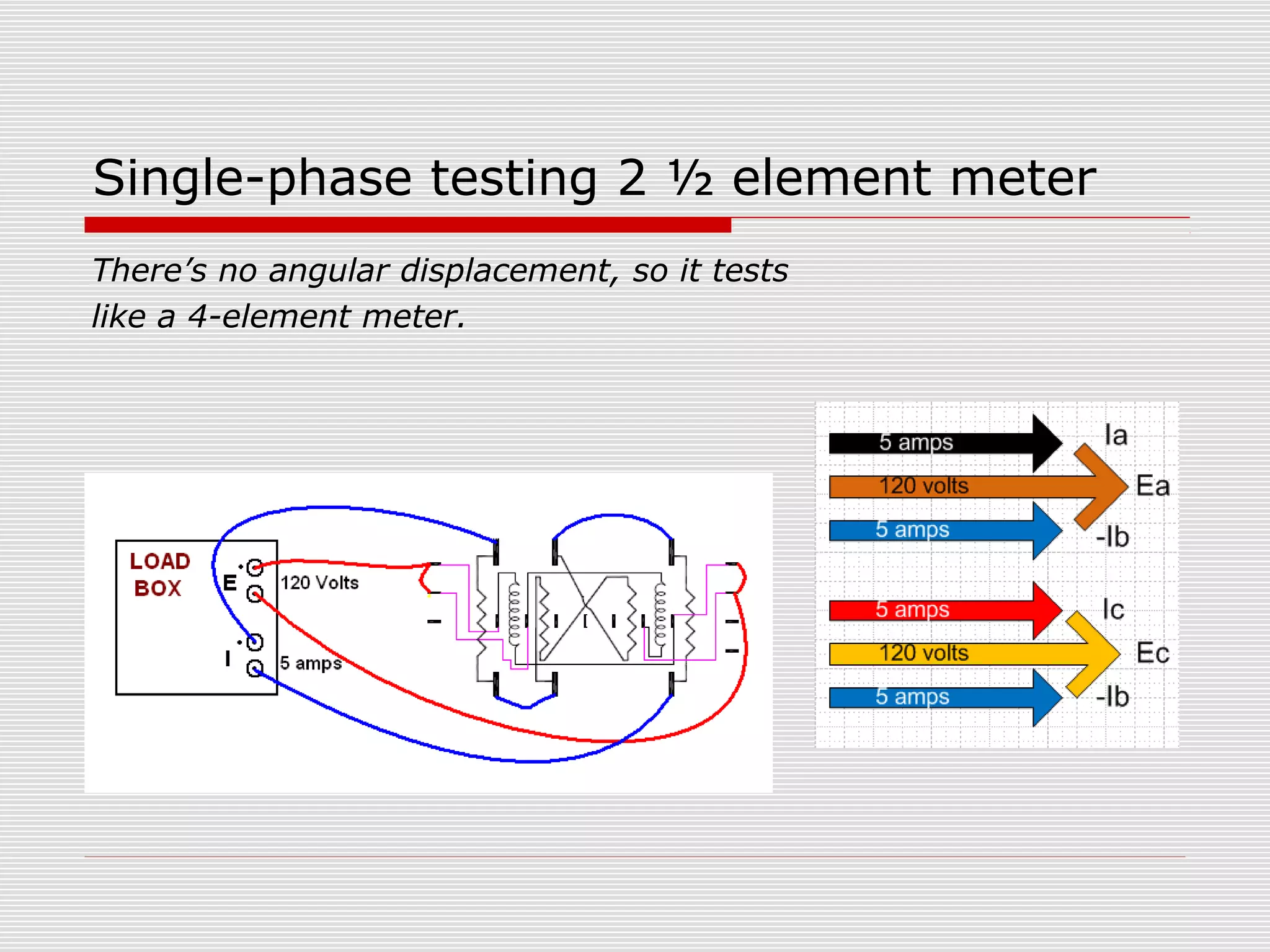
Single-phase testing 2 ½ element meter 
There’s no angular displacement, so it tests 
like a 4-element meter.
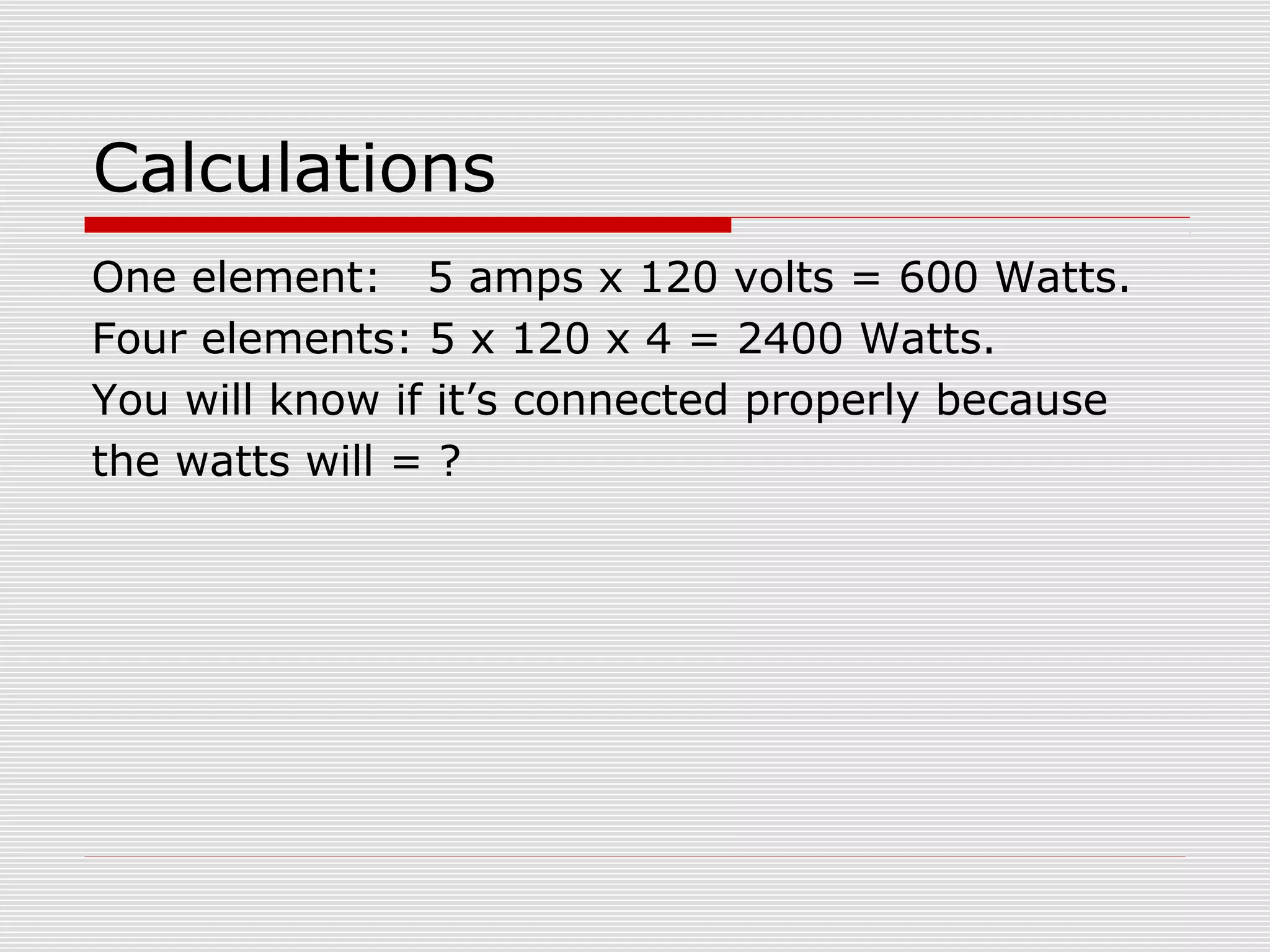
Calculations 
One element: 5 amps x 120 volts = 600 Watts. 
Four elements: 5 x 120 x 4 = 2400 Watts. 
You will know if it’s connected properly because 
the watts will = ?
Unique Example 
A Cap bank is switched according to MW load on 
a specific transformer. Some time in the past 
the Watt meter (2 ½ element) was wired using 
A-phase Voltage, A-phase Current, B-phase 
Current and C-phase Voltage. 
The multiplier for the meter includes an 
additional X 1.5 to correct for the lack of 
C-phase current (failed CT). How does this 
meter work?
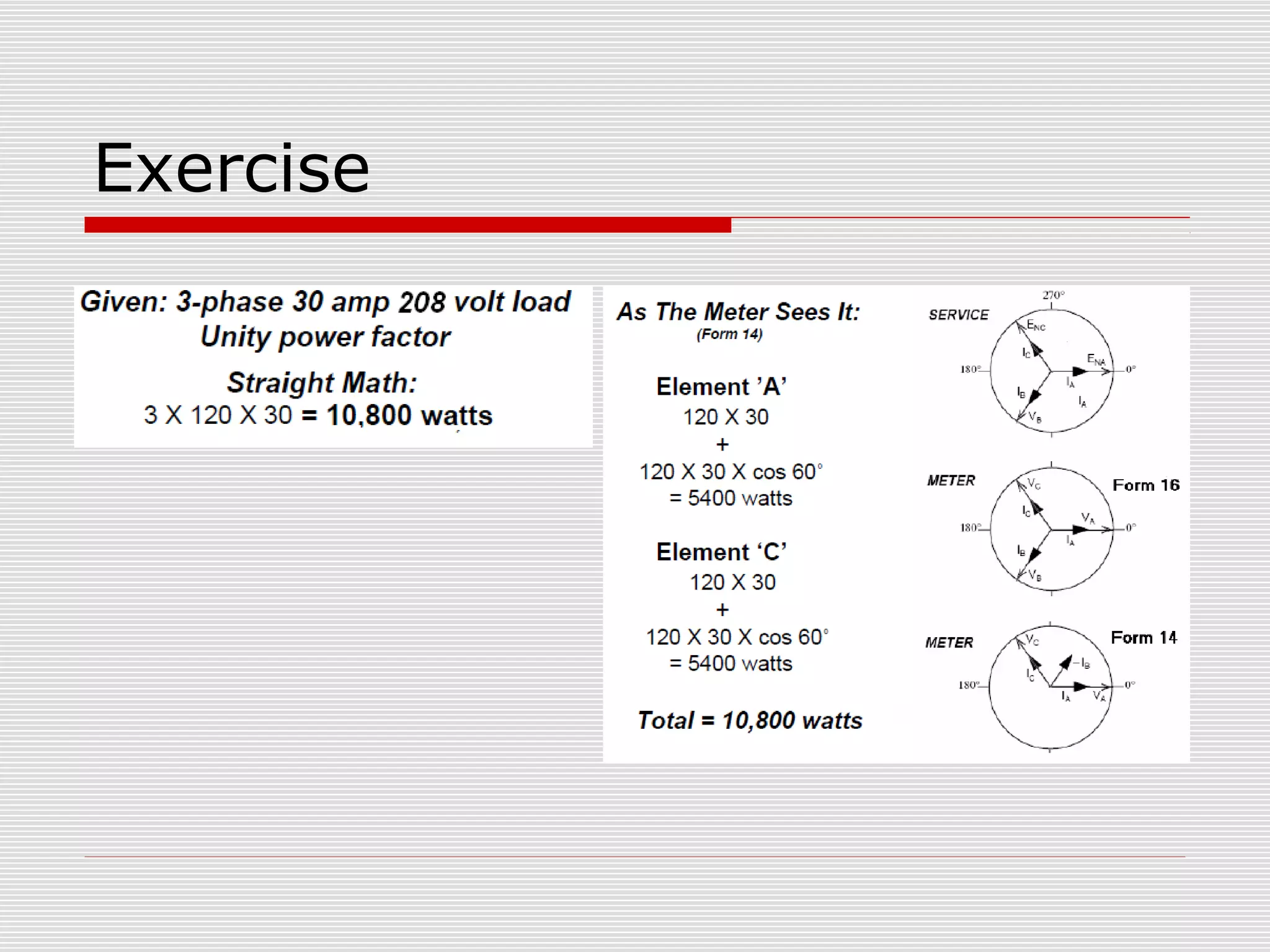
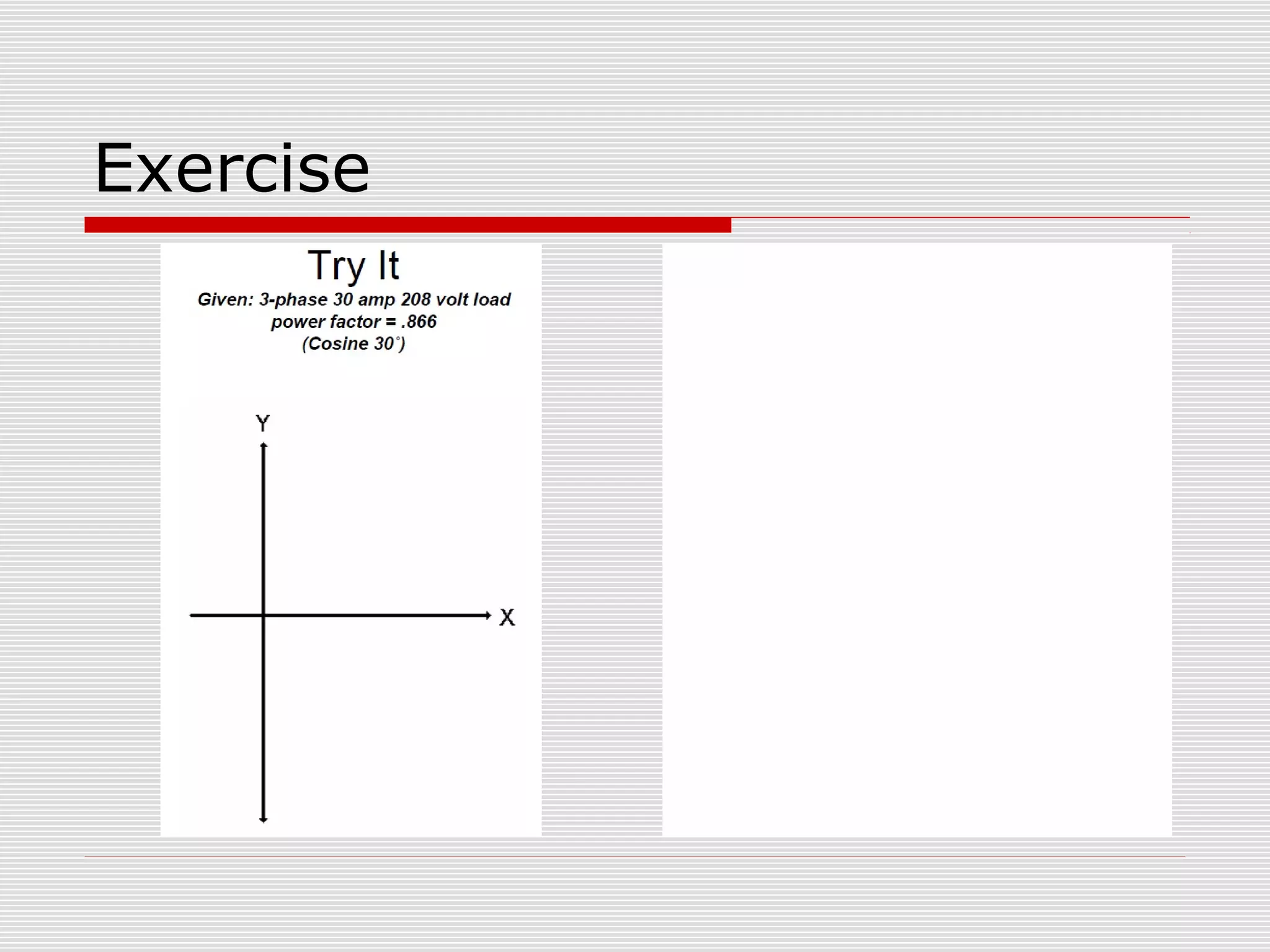
Exercise
Exercise
The End

2 5 element eric haut - pgn

  • 1.
    Vectoring Basics StartWith a Zero Reference Voltage.  Wye – ENA  Delta – EBA
  • 2.
    Vectoring Basics Potential – Open Arrow.  Current – Closed Arrow.  Arrowhead Denotes Polarity.  Current Enters the Polarity side of a Current Coil.  Cannot have a C-Phase without first having A-Phase and B-Phase.  The ONLY Current Coil that is ever reversed is B-Phase.  B-Phase Current Coil Reverses when you Alter it. Half Coils and ‘Z’ Coils are considered Altered.  All Meter Elements Have Forward Torque at Unity Power Factor. Forward torque means less than 90 degrees between the Potential coil and the current coil vectors.
  • 3.
    Sequence for Vectoring  Learn and Memorize the Three Basic System Vector Diagrams.  Learn and Memorize Meter Footprints.  The Meter Footprints show the Potential Connections and Currents being measured. Labeling the connections is helpful.  Apply the Rules Regarding Forward Torque and Which Current Coils may be Reversed.  Draw the Meter Vectors.  Create a hypothetical load.  Do the Math.
  • 4.
    Two & 1/2Element Meters  Forms 14 & 6 (Conforming)
  • 5.
    Form 6 and14 vectors  System Vectors.  Meter Vectors. Non-conforming meter.
  • 6.
    Form 6 asa 3Ø 4-Wire Meter
  • 7.
    Form 14 asa 3Ø 4-Wire Meter
  • 8.
    Form 14 asa 3Ø 4-Wire Meter
  • 9.
    Form 14 asa 3Ø 4-Wire Meter
  • 10.
    Drawing the MeterVectors  Apply the Rules Regarding Forward Torque and Which Current Coils may be Reversed.  Draw the Meter Vectors. B-phase is a ‘Z-coil’, so Ib is reversed.
  • 11.
    Drawing the MeterVectors Consider Ib. It’s a ‘Z-coil’, so it is a double Coil. -Ib interacts with Ea / Ia and -Ib interacts with Ec / Ic.
  • 12.
    Create a Load A Convenience Store with 36 kW of load (For simplicity phases are evenly loaded and 1.0 pf) 36000 watts of 3-phase 36000 / (120 x 3) = 100 phase amps
  • 13.
    Form 14 Vectors Total watts = 36000 ‘A’ Element watts = 120 x 100 x cos 0º + 120 x 100 x cos 60º = 18000 watts ‘C’ Element watts = 120 x 100 x cos 0º + 120 x 100 x cos 60º = 18000 watts Total: = 36000
  • 14.
    Single-phase testing 2½ element meter There’s no angular displacement, so it tests like a 4-element meter.
  • 15.
    Calculations One element:5 amps x 120 volts = 600 Watts. Four elements: 5 x 120 x 4 = 2400 Watts. You will know if it’s connected properly because the watts will = ?
  • 16.
    Unique Example ACap bank is switched according to MW load on a specific transformer. Some time in the past the Watt meter (2 ½ element) was wired using A-phase Voltage, A-phase Current, B-phase Current and C-phase Voltage. The multiplier for the meter includes an additional X 1.5 to correct for the lack of C-phase current (failed CT). How does this meter work?
  • 17.
  • 18.
  • 19.