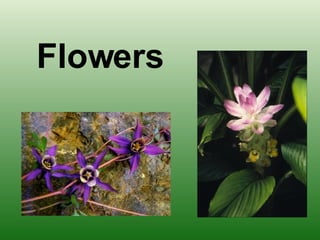
Flowers
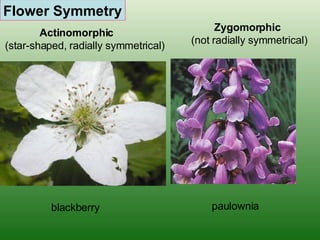
Actinomorphic (star-shaped, radially symmetrical) Zygomorphic (not radially symmetrical) blackberry paulownia Flower Symmetry
 
 
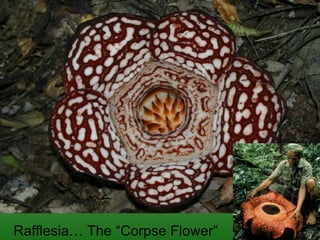
Rafflesia… The “Corpse Flower”
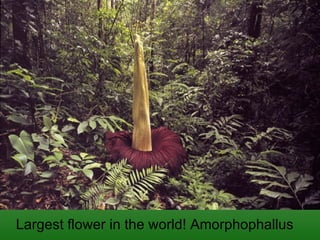
Largest flower in the world! Amorphophallus
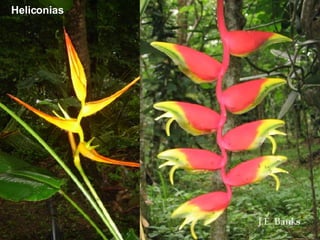
Heliconias
 
 
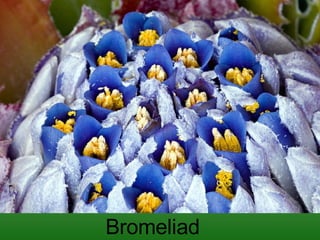
Bromeliad
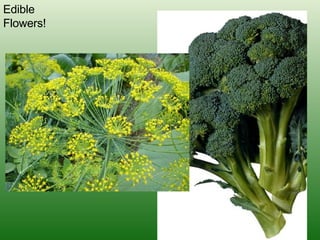
Edible Flowers!
 
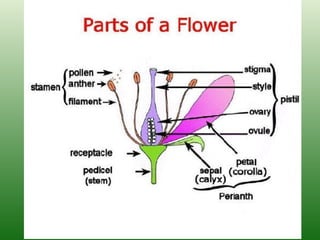
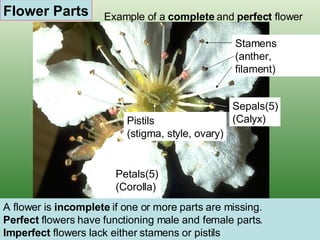
Petals(5) (Corolla) Flower Parts Stamens (anther,  filament) Pistils (stigma, style, ovary) Sepals(5) (Calyx) Example of a  complete  and  perfect  flower A flower is  incomplete  if one or more parts are missing. Perfect  flowers have functioning male and female parts. Imperfect  flowers lack either stamens or pistils
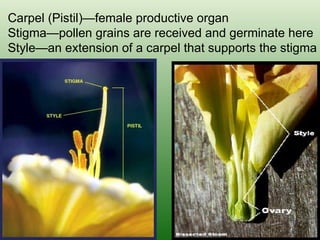
Carpel (Pistil)—female productive organ  Stigma—pollen grains are received and germinate here Style—an extension of a carpel that supports the stigma
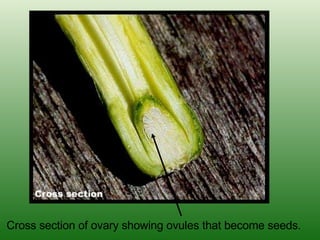
Cross section of ovary showing ovules that become seeds.
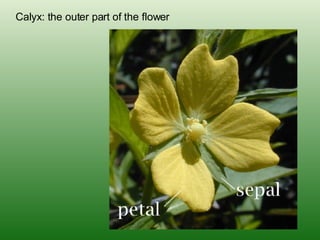
Calyx: the outer part of the flower
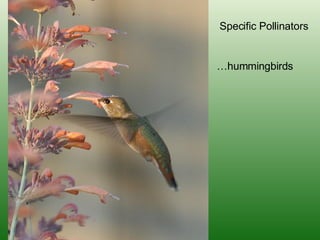
Specific Pollinators … hummingbirds
 
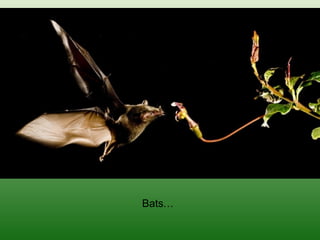
Bats…
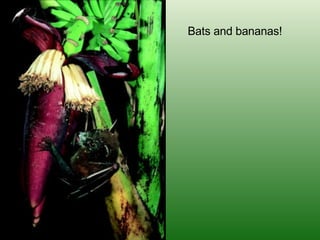
Bats and bananas!
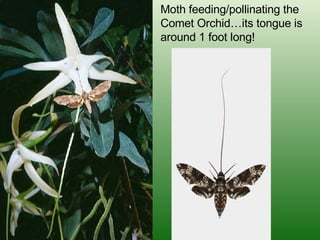
Moth feeding/pollinating the Comet Orchid…its tongue is around 1 foot long!
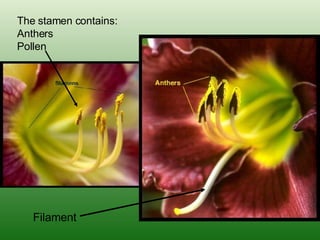
The stamen contains: Anthers Pollen Filament
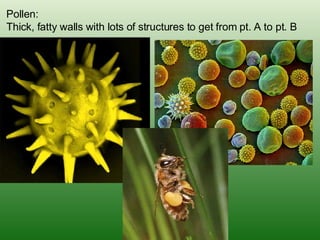
Pollen: Thick, fatty walls with lots of structures to get from pt. A to pt. B
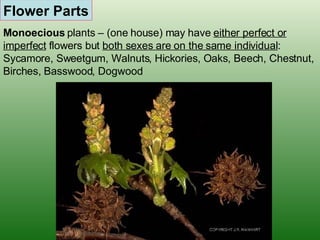
Flower Parts Monoecious  plants – (one house) may have  either perfect or imperfect  flowers but  both sexes are on the same individual : Sycamore, Sweetgum, Walnuts, Hickories, Oaks, Beech, Chestnut, Birches, Basswood, Dogwood
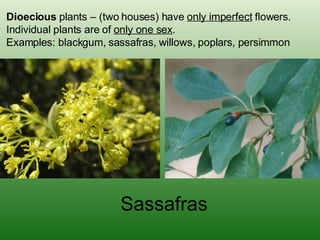
Dioecious  plants – (two houses) have  only imperfect  flowers.  Individual plants are of  only one sex .  Examples: blackgum, sassafras, willows, poplars, persimmon Sassafras
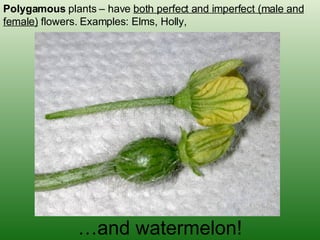
Polygamous  plants – have  both perfect and imperfect (male and female)  flowers. Examples: Elms, Holly, … and watermelon!
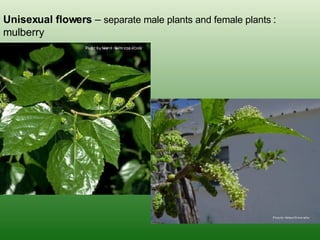
Unisexual flowers  –  separate male plants and female plants   : mulberry
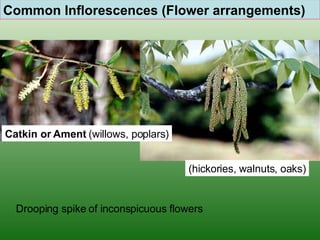
Common Inflorescences (Flower arrangements) Catkin or Ament  (willows, poplars) (hickories, walnuts, oaks) Drooping spike of inconspicuous flowers
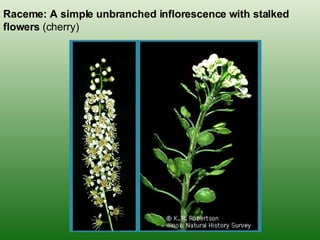
Raceme: A simple unbranched inflorescence with stalked flowers  (cherry)
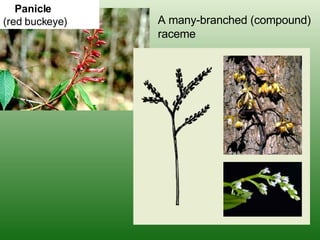
Panicle   (red buckeye) A many-branched (compound) raceme
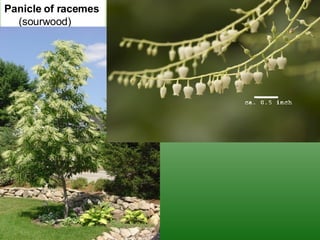
Panicle of racemes   (sourwood)
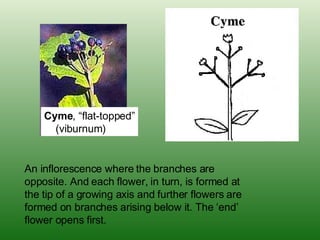
Cyme , “flat-topped” (viburnum) An inflorescence where the branches are opposite. And each flower, in turn, is formed at the tip of a growing axis and further flowers are formed on branches arising below it. The ‘end’ flower opens first.
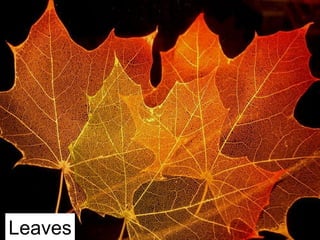
Leaves
 
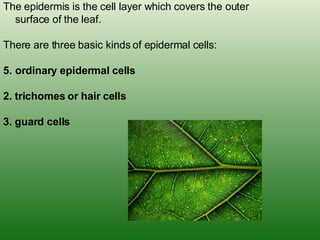
The epidermis is the cell layer which covers the outer surface of the leaf.  There are three basic kinds of epidermal cells:  ordinary epidermal cells 2. trichomes or hair cells 3. guard cells
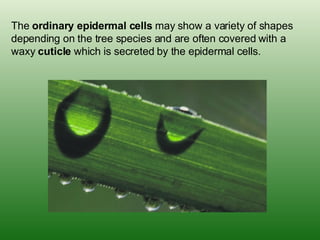
The  ordinary epidermal cells  may show a variety of shapes depending on the tree species and are often covered with a waxy  cuticle  which is secreted by the epidermal cells.
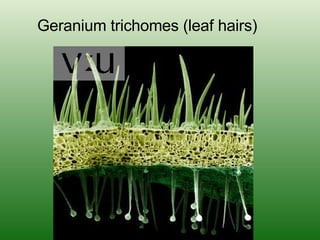
Geranium trichomes (leaf hairs)
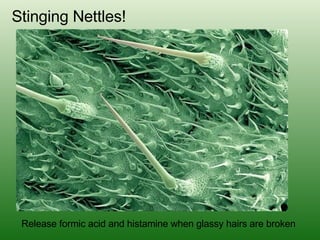
Stinging Nettles! Release formic acid and histamine when glassy hairs are broken
 
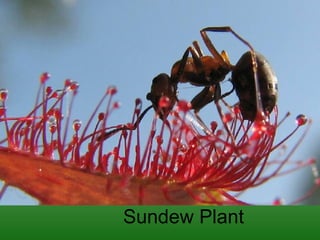
Sundew Plant
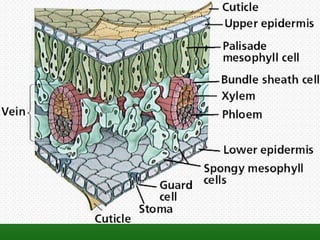
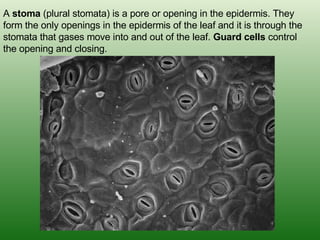
A  stoma  (plural stomata) is a pore or opening in the epidermis. They form the only openings in the epidermis of the leaf and it is through the stomata that gases move into and out of the leaf.  Guard cells  control the opening and closing.
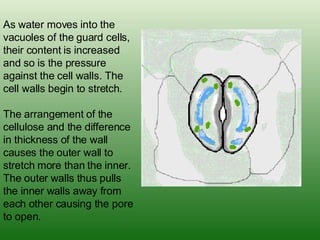
As water moves into the vacuoles of the guard cells, their content is increased and so is the pressure against the cell walls. The cell walls begin to stretch.  The arrangement of the cellulose and the difference in thickness of the wall causes the outer wall to stretch more than the inner. The outer walls thus pulls the inner walls away from each other causing the pore to open.
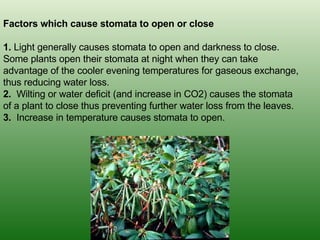
Factors which cause stomata to open or close 1.  Light generally causes stomata to open and darkness to close. Some plants open their stomata at night when they can take advantage of the cooler evening temperatures for gaseous exchange, thus reducing water loss.  2.   Wilting or water deficit (and increase in CO2) causes the stomata of a plant to close thus preventing further water loss from the leaves. 3.   Increase in temperature causes stomata to open.
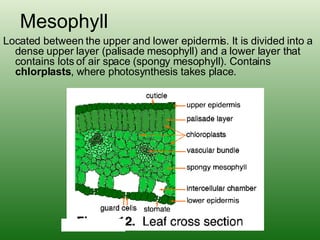
Mesophyll Located between the upper and lower epidermis. It is divided into a dense upper layer (palisade mesophyll) and a lower layer that contains lots of air space (spongy mesophyll). Contains  chlorplasts , where photosynthesis takes place.
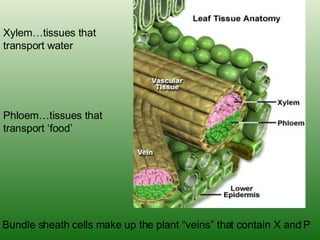
Xylem…tissues that transport water Phloem…tissues that transport ‘food’ Bundle sheath cells make up the plant “veins” that contain X and P
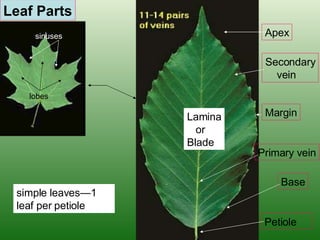
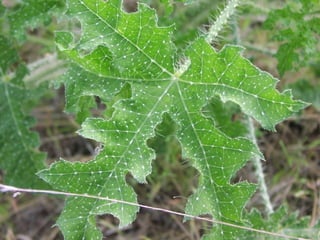
Leaf Parts Apex Margin Base Petiole Secondary vein Primary vein sinuses lobes simple leaves—1 leaf per petiole Lamina or Blade
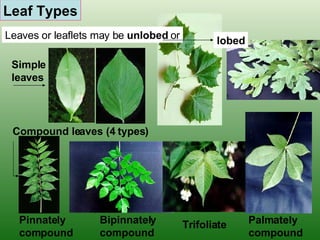
Leaf Types Simple leaves Compound leaves (4 types) Pinnately compound Trifoliate Palmately compound Bipinnately  compound Leaves or leaflets may be  unlobed  or lobed
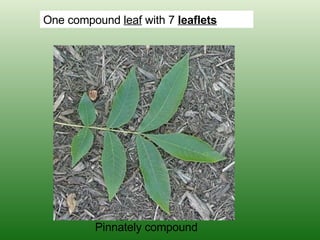
One compound  leaf  with 7  leaflets Pinnately compound
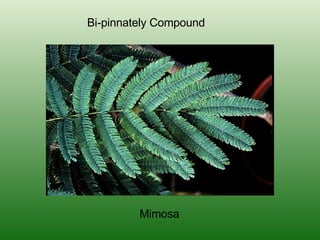
Bi-pinnately Compound Mimosa
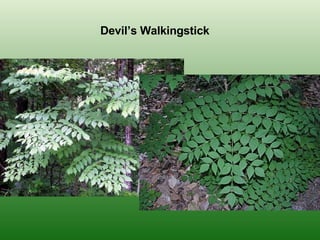
Devil’s Walkingstick
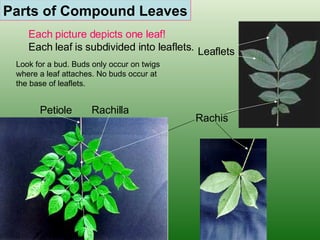
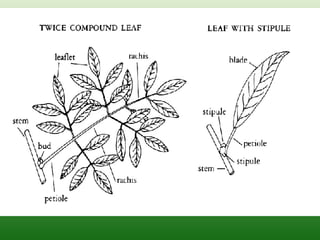
Parts of Compound Leaves Leaflets Rachis Rachilla Petiole Each picture depicts one leaf!   Each leaf is subdivided into leaflets. Look for a bud. Buds only occur on twigs where a leaf attaches. No buds occur at  the base of leaflets.
 
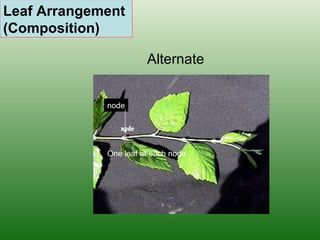
Leaf Arrangement  (Composition) Alternate One leaf at each node node
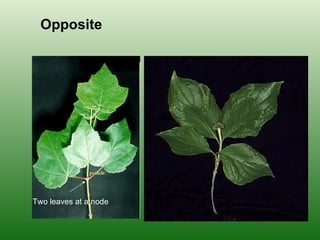
Opposite Two leaves at a node
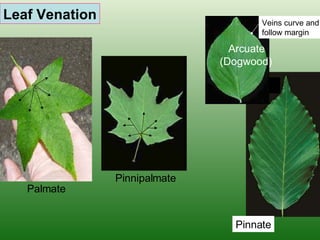
Leaf Venation Palmate Pinnipalmate Pinnate Arcuate (Dogwood) Veins curve and  follow margin
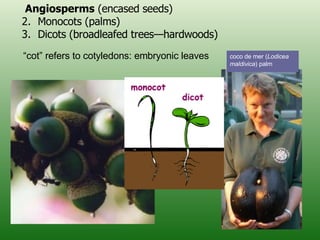
Angiosperms  (encased seeds) Monocots (palms) Dicots (broadleafed trees—hardwoods) “ cot” refers to cotyledons: embryonic leaves  coco de mer ( Lodicea maldivica ) palm
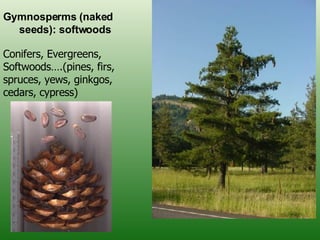
Gymnosperms (naked seeds): softwoods Conifers, Evergreens, Softwoods….(pines, firs, spruces, yews, ginkgos, cedars, cypress)
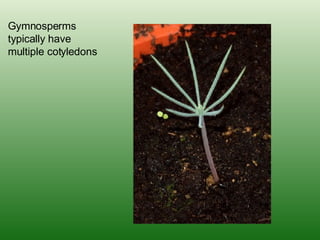
Gymnosperms typically have multiple cotyledons

1st Lecture Flowers And Leaves

  • 1.
  • 2.
    Actinomorphic (star-shaped, radiallysymmetrical) Zygomorphic (not radially symmetrical) blackberry paulownia Flower Symmetry
  • 3.
  • 4.
  • 5.
  • 6.
    Largest flower inthe world! Amorphophallus
  • 7.
  • 8.
  • 9.
  • 10.
  • 11.
  • 12.
  • 13.
    Petals(5) (Corolla) FlowerParts Stamens (anther, filament) Pistils (stigma, style, ovary) Sepals(5) (Calyx) Example of a complete and perfect flower A flower is incomplete if one or more parts are missing. Perfect flowers have functioning male and female parts. Imperfect flowers lack either stamens or pistils
  • 14.
    Carpel (Pistil)—female productiveorgan Stigma—pollen grains are received and germinate here Style—an extension of a carpel that supports the stigma
  • 15.
    Cross section ofovary showing ovules that become seeds.
  • 16.
    Calyx: the outerpart of the flower
  • 17.
  • 18.
  • 19.
  • 20.
  • 21.
    Moth feeding/pollinating theComet Orchid…its tongue is around 1 foot long!
  • 22.
    The stamen contains:Anthers Pollen Filament
  • 23.
    Pollen: Thick, fattywalls with lots of structures to get from pt. A to pt. B
  • 24.
    Flower Parts Monoecious plants – (one house) may have either perfect or imperfect flowers but both sexes are on the same individual : Sycamore, Sweetgum, Walnuts, Hickories, Oaks, Beech, Chestnut, Birches, Basswood, Dogwood
  • 25.
    Dioecious plants– (two houses) have only imperfect flowers. Individual plants are of only one sex . Examples: blackgum, sassafras, willows, poplars, persimmon Sassafras
  • 26.
    Polygamous plants– have both perfect and imperfect (male and female) flowers. Examples: Elms, Holly, … and watermelon!
  • 27.
    Unisexual flowers – separate male plants and female plants : mulberry
  • 28.
    Common Inflorescences (Flowerarrangements) Catkin or Ament (willows, poplars) (hickories, walnuts, oaks) Drooping spike of inconspicuous flowers
  • 29.
    Raceme: A simpleunbranched inflorescence with stalked flowers (cherry)
  • 30.
    Panicle (red buckeye) A many-branched (compound) raceme
  • 31.
    Panicle of racemes (sourwood)
  • 32.
    Cyme , “flat-topped”(viburnum) An inflorescence where the branches are opposite. And each flower, in turn, is formed at the tip of a growing axis and further flowers are formed on branches arising below it. The ‘end’ flower opens first.
  • 33.
  • 34.
  • 35.
    The epidermis isthe cell layer which covers the outer surface of the leaf. There are three basic kinds of epidermal cells: ordinary epidermal cells 2. trichomes or hair cells 3. guard cells
  • 36.
    The ordinaryepidermal cells may show a variety of shapes depending on the tree species and are often covered with a waxy cuticle which is secreted by the epidermal cells.
  • 37.
  • 38.
    Stinging Nettles! Releaseformic acid and histamine when glassy hairs are broken
  • 39.
  • 40.
  • 41.
    A stoma (plural stomata) is a pore or opening in the epidermis. They form the only openings in the epidermis of the leaf and it is through the stomata that gases move into and out of the leaf. Guard cells control the opening and closing.
  • 42.
    As water movesinto the vacuoles of the guard cells, their content is increased and so is the pressure against the cell walls. The cell walls begin to stretch. The arrangement of the cellulose and the difference in thickness of the wall causes the outer wall to stretch more than the inner. The outer walls thus pulls the inner walls away from each other causing the pore to open.
  • 43.
    Factors which causestomata to open or close 1. Light generally causes stomata to open and darkness to close. Some plants open their stomata at night when they can take advantage of the cooler evening temperatures for gaseous exchange, thus reducing water loss. 2.   Wilting or water deficit (and increase in CO2) causes the stomata of a plant to close thus preventing further water loss from the leaves. 3.   Increase in temperature causes stomata to open.
  • 44.
    Mesophyll Located betweenthe upper and lower epidermis. It is divided into a dense upper layer (palisade mesophyll) and a lower layer that contains lots of air space (spongy mesophyll). Contains chlorplasts , where photosynthesis takes place.
  • 45.
    Xylem…tissues that transportwater Phloem…tissues that transport ‘food’ Bundle sheath cells make up the plant “veins” that contain X and P
  • 46.
    Leaf Parts ApexMargin Base Petiole Secondary vein Primary vein sinuses lobes simple leaves—1 leaf per petiole Lamina or Blade
  • 47.
    Leaf Types Simpleleaves Compound leaves (4 types) Pinnately compound Trifoliate Palmately compound Bipinnately compound Leaves or leaflets may be unlobed or lobed
  • 48.
    One compound leaf with 7 leaflets Pinnately compound
  • 49.
  • 50.
  • 51.
    Parts of CompoundLeaves Leaflets Rachis Rachilla Petiole Each picture depicts one leaf! Each leaf is subdivided into leaflets. Look for a bud. Buds only occur on twigs where a leaf attaches. No buds occur at the base of leaflets.
  • 52.
  • 53.
    Leaf Arrangement (Composition) Alternate One leaf at each node node
  • 54.
  • 55.
    Leaf Venation PalmatePinnipalmate Pinnate Arcuate (Dogwood) Veins curve and follow margin
  • 56.
    Angiosperms (encasedseeds) Monocots (palms) Dicots (broadleafed trees—hardwoods) “ cot” refers to cotyledons: embryonic leaves coco de mer ( Lodicea maldivica ) palm
  • 57.
    Gymnosperms (naked seeds):softwoods Conifers, Evergreens, Softwoods….(pines, firs, spruces, yews, ginkgos, cedars, cypress)
  • 58.
    Gymnosperms typically havemultiple cotyledons