Process and Product 
Development 
Valve Tappet Cold forging Process 
Abdullah Ansari
INDEX 
• Introduction 
• Nature of Problem 
• Existing Blank & Forging Die Analysis 
• Cold Forging Standard 
• Existing D2/d2 & l/d Ratios 
• Corrective Actions 
• Recalculations, Results Of Recalculations 
• Trials & Decisions 
• Previous Process & Revised Process 
• Results with Revised Tooling & Conlusion 
• Support During Development
INTRODUCTION 
 The problem of head offsetting while cold forging of item R 708‐13 is observed 
in since new product development. 
 To avoid the same several corrective actions [short method] were initiated such 
as using flat ejector etc. but effectiveness of the actions taken was not 100% 
satisfactory. The results were not consistent. 
 After all above it is concluded to analyze and re‐design of cold forging tooling & 
process. 
 While analyzing the same whatever the calculations, observations and the 
actions taken by undersigned are recorded here, which will be one guide line to 
attend this kind of problems in future. 
A. T. ANASRI 
Date : 22.08.2000
Nature of Problem 
( Tappet R 708‐13 ) 
While cold forging 1st stage Head Diameter of Tappet 
getting more offsets & not getting controlled after 
several adjustments.
Existing Blank & Forging Die analysis 
• .Size of Cold forging blank: 
Total Length = 85mm 
Outer diameter ( d ) = 12.5mm 
• .Size of cold forged part: 
Head diameter ( D ) = 30mm 
Head thickness = 5.5mm 
Total length = 61mm 
OD of stem = 12.8 & 12.6mm 
• .Size of Cold forging Die: 
Length of die = 90mm 
Length of blank outside the die ( l ) = 30mm 
( From flat face )
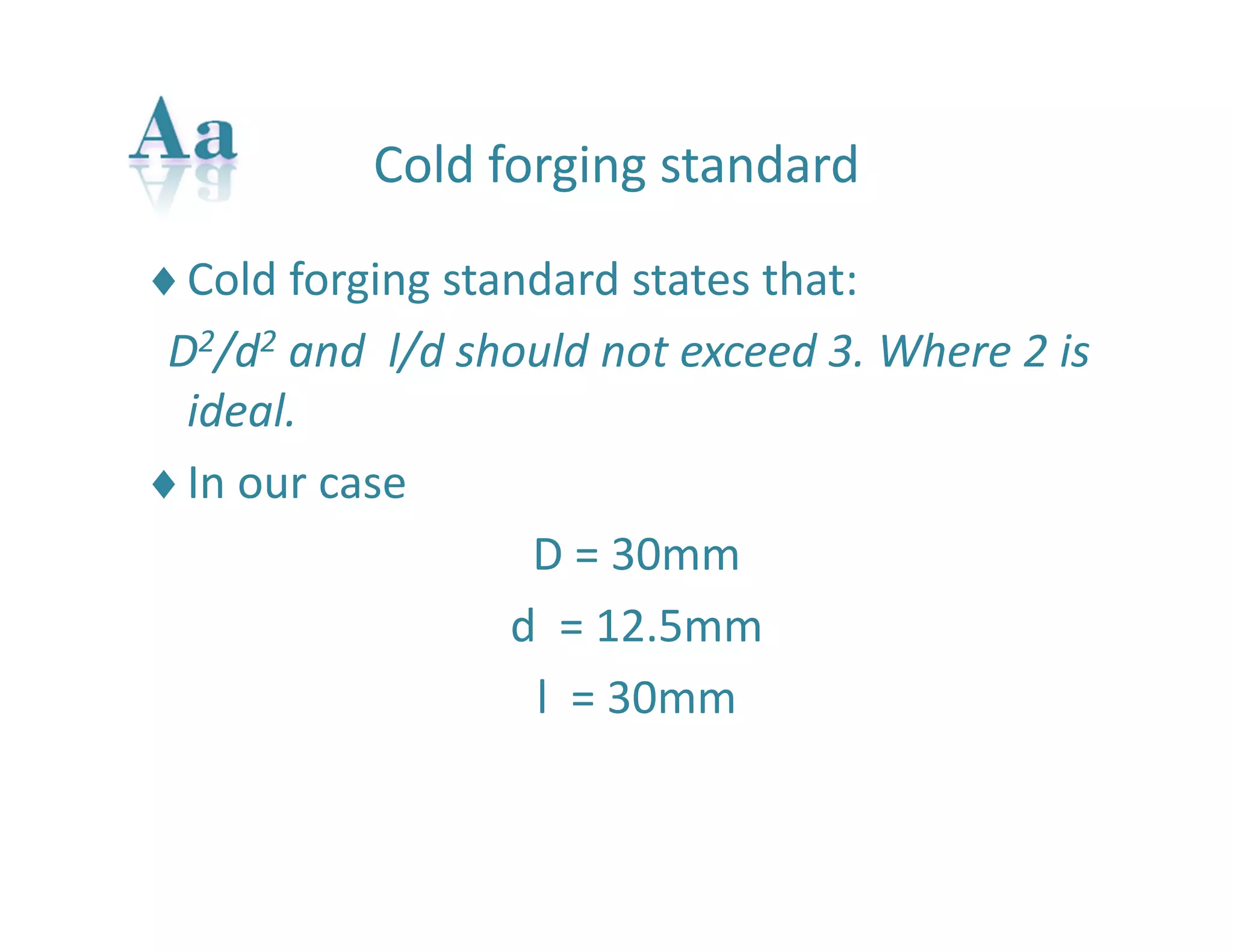
Cold forging standard 
Cold forging standard states that: 
D2/d2 and l/d should not exceed 3. Where 2 is 
ideal. 
In our case 
D = 30mm 
d = 12.5mm 
l = 30mm
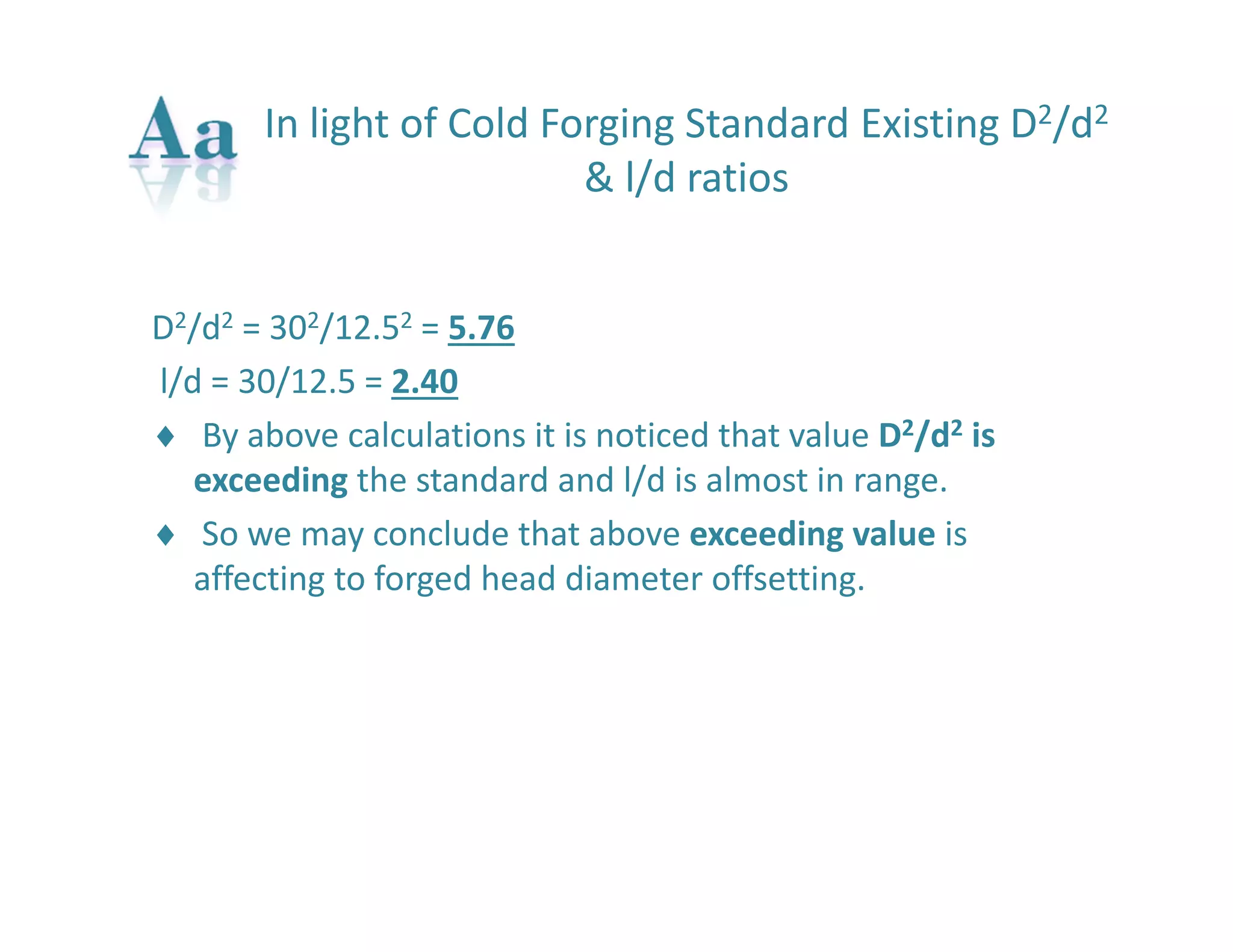
In light of Cold Forging Standard Existing D2/d2 
& l/d ratios 
D2/d2 = 302/12.52 = 5.76 
l/d = 30/12.5 = 2.40 
 By above calculations it is noticed that value D2/d2 is 
exceeding the standard and l/d is almost in range. 
 So we may conclude that above exceeding value is 
affecting to forged head diameter offsetting.
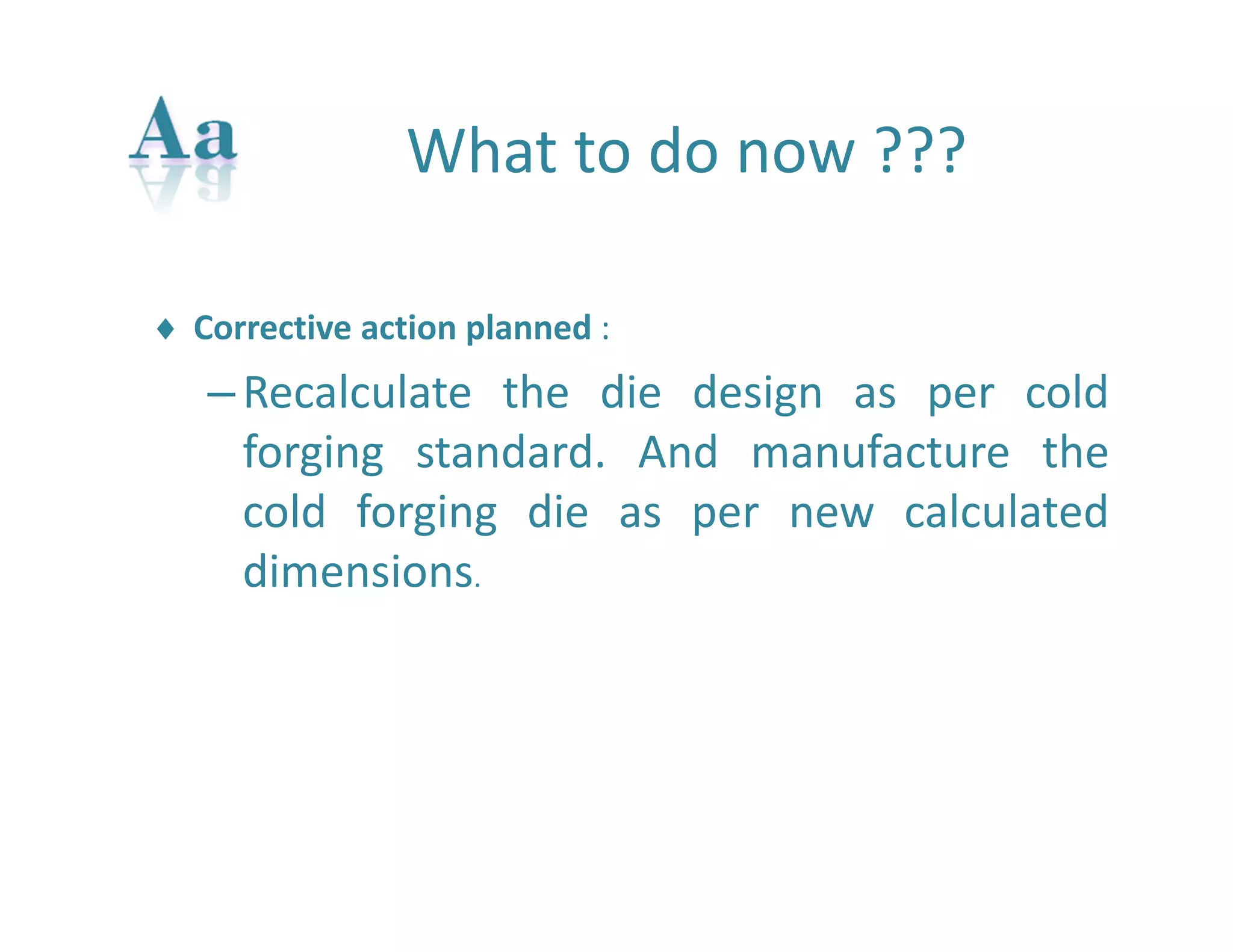
What to do now ??? 
 Corrective action planned : 
– Recalculate the die design as per cold 
forging standard. And manufacture the 
cold forging die as per new calculated 
dimensions.
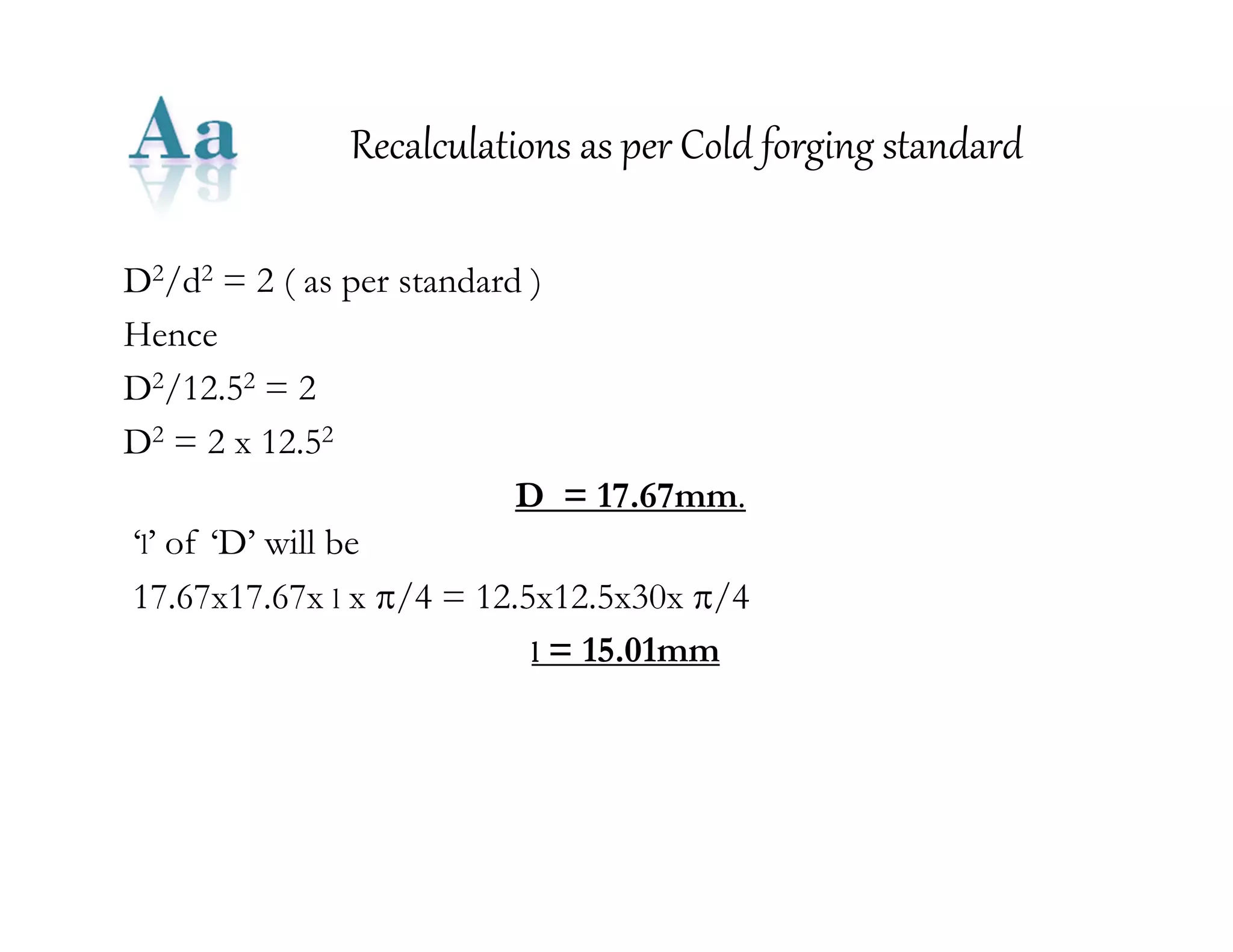
Recalculations as per Cold forging standard 
D2/d2 = 2 ( as per standard ) 
Hence 
D2/12.52 = 2 
D2 = 2 x 12.52 
D = 17.67mm. 
‘l’ of ‘D’ will be 
17.67x17.67x l x /4 = 12.5x12.5x30x /4 
l = 15.01mm
What Recalculations Indicating!!! 
Recalculations indicating that the forging is not possible in one operation 
& it will need double operation. For second operation stepped blank will 
be required, while first operation stepped blank will be produced. 
For preparing stepped blank separate die is 
required
Trials . 
For trials stepped blank is prepared by machining. 
While trials forming punch is used. 
Trials are taken with stepped blank on 22.08.2000 
Results found satisfactory in all aspects. 
Head offsetting is very low & will not create any 
defect while head turning. 
Dimensions are found consistent. 
Trials are successful.
Way Forward. 
Based on successful trials, die 
designed for first operation for 
preparing the stepped blank 
(cold forging 1st operation).
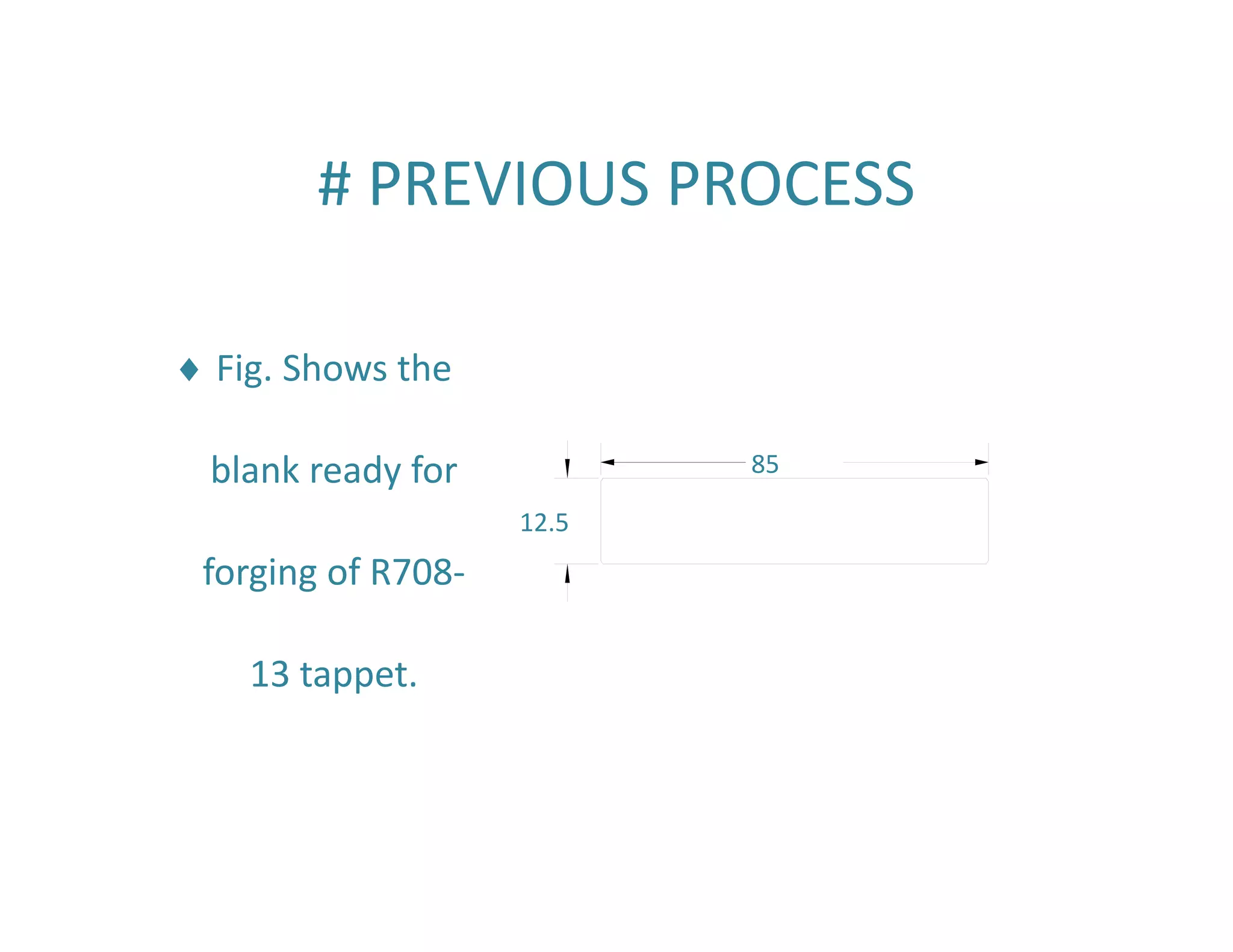
# PREVIOUS PROCESS 
 Fig. Shows the 
blank ready for 
forging of R708‐ 
13 tappet. 
85 
12.5
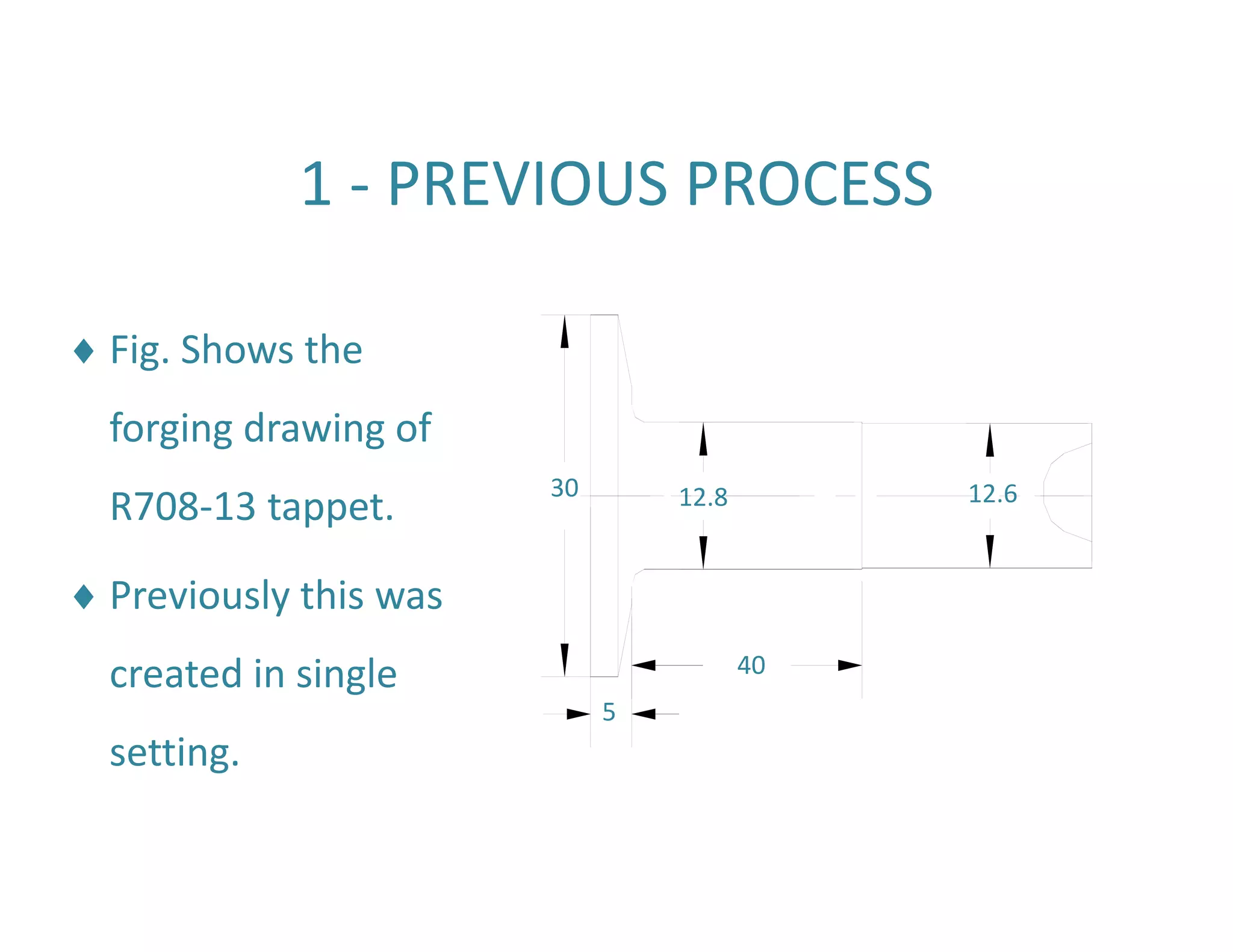
1 ‐ PREVIOUS PROCESS 
 Fig. Shows the 
forging drawing of 
R708‐13 tappet. 
 Previously this was 
created in single 
setting. 
30 12.8 
5 
40 
12.6
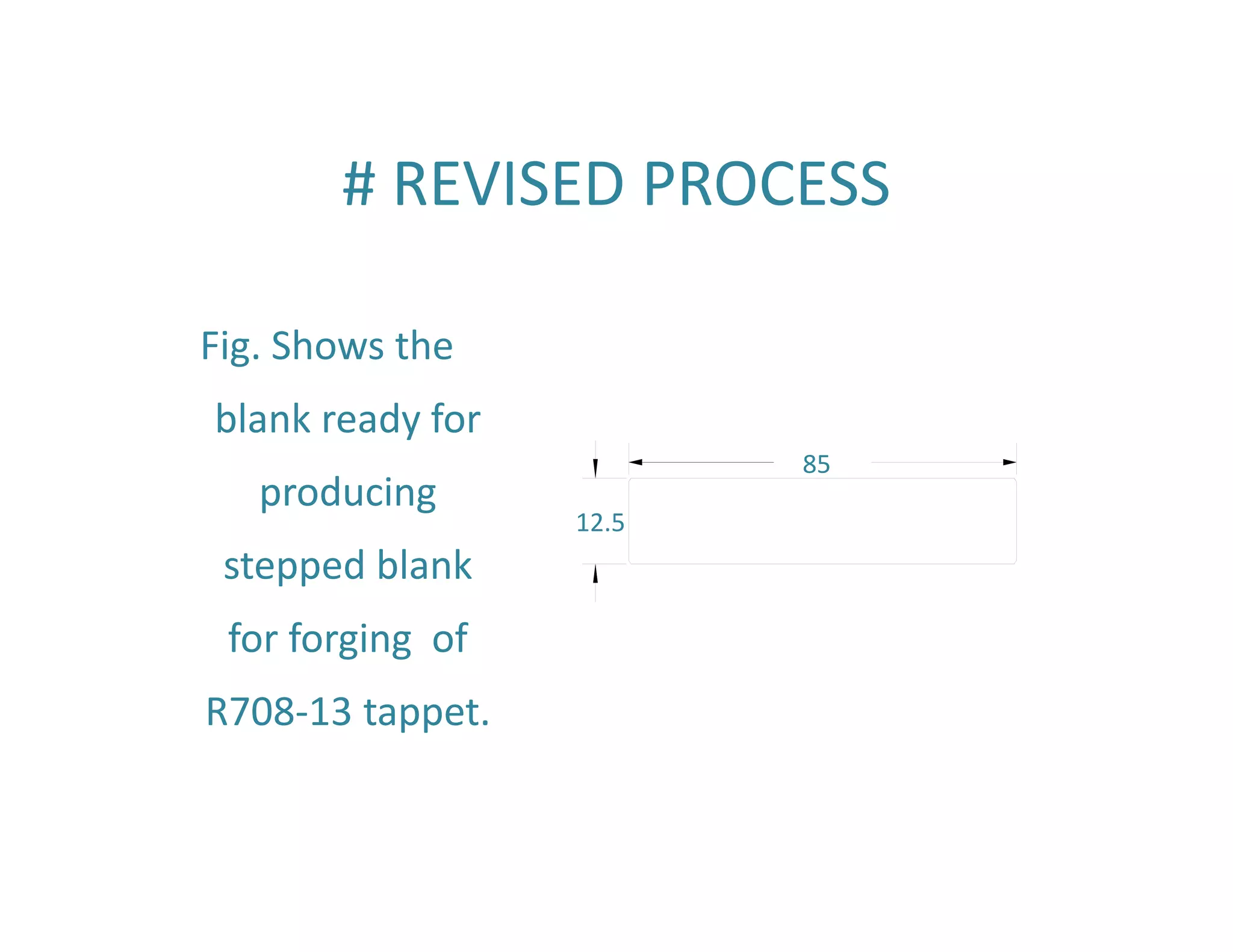
# REVISED PROCESS 
Fig. Shows the 
blank ready for 
producing 
stepped blank 
for forging of 
R708‐13 tappet. 
85 
12.5
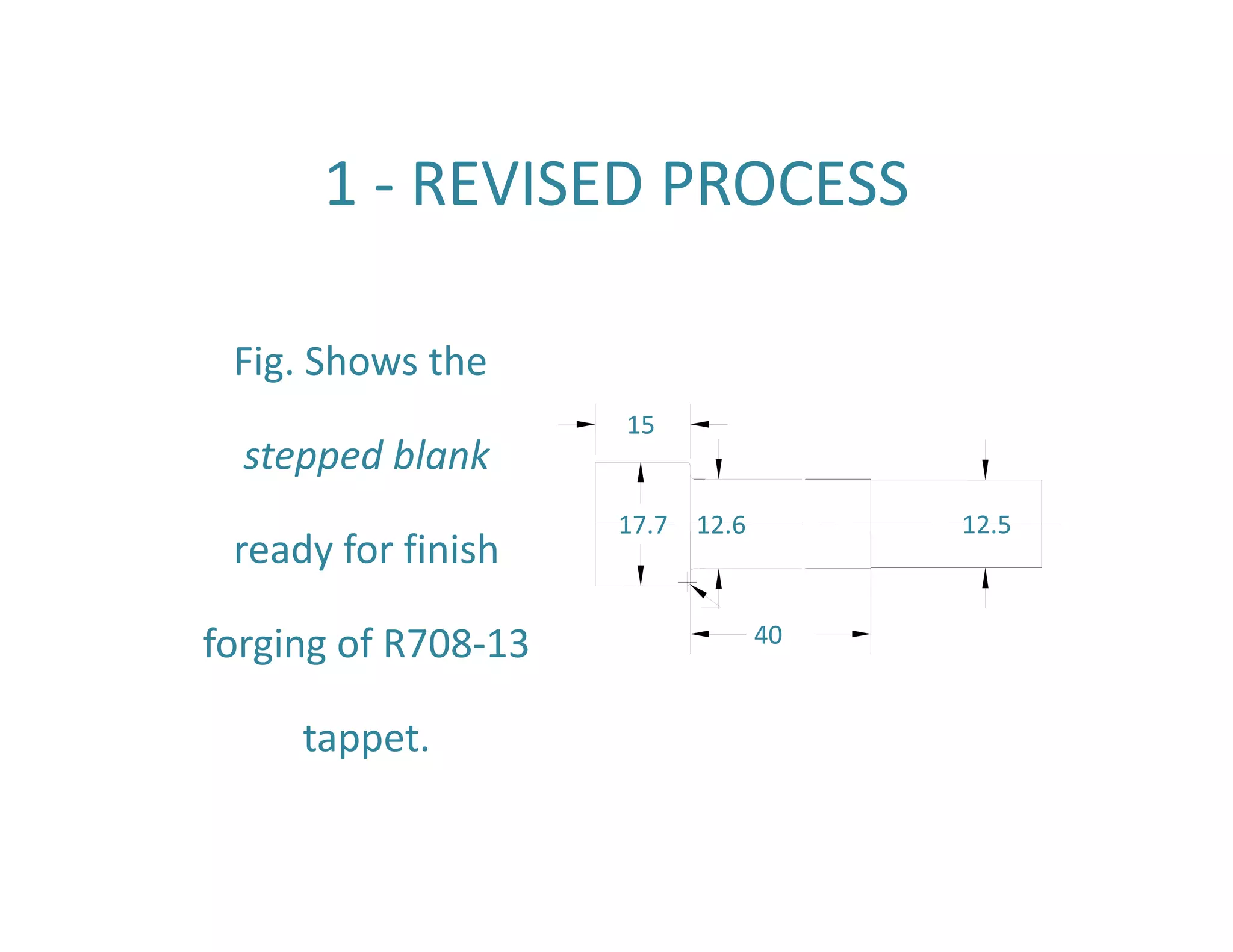
1 ‐ REVISED PROCESS 
Fig. Shows the 
stepped blank 
ready for finish 
forging of R708‐13 
tappet. 
12.6 12.5 
40 
15 
17.7
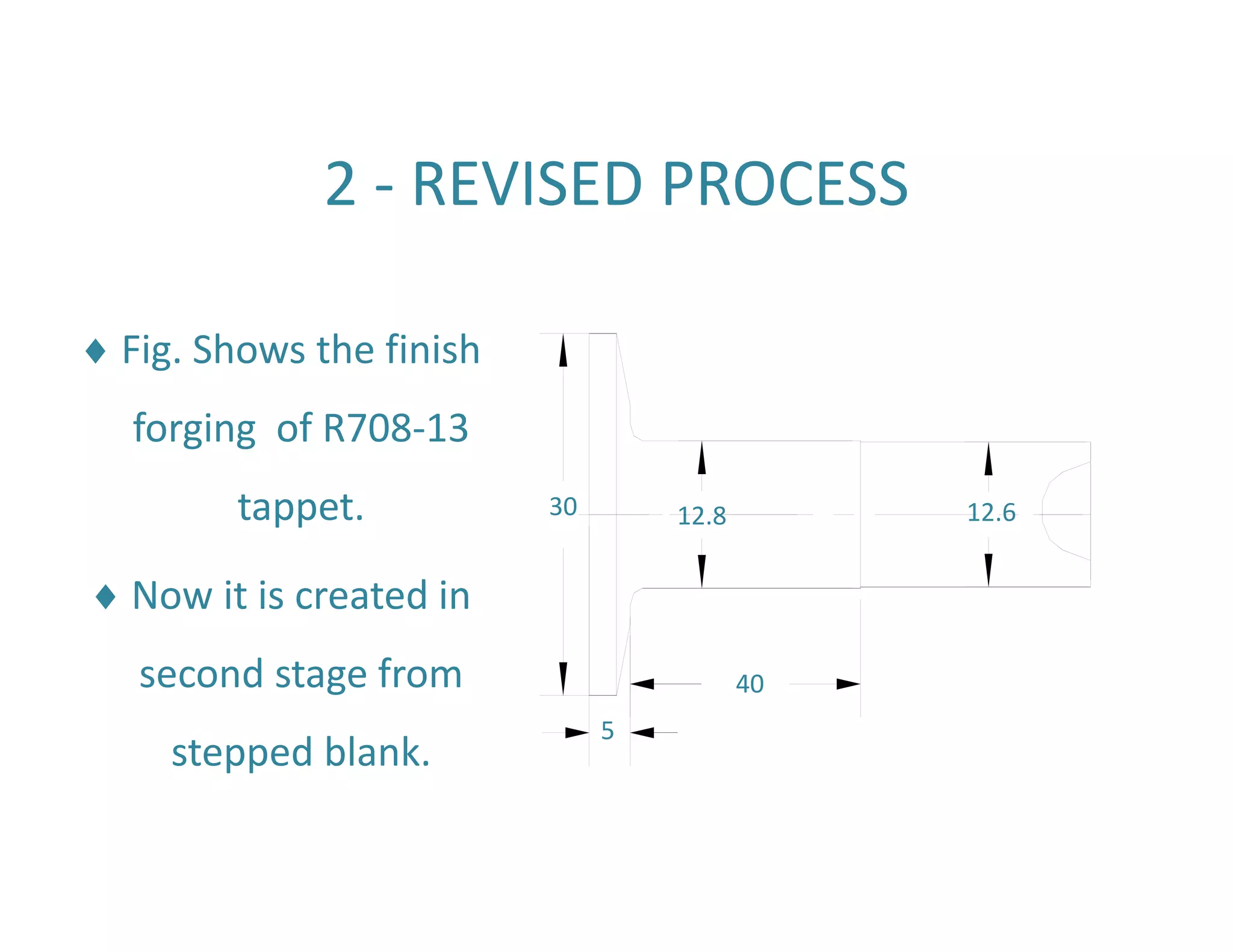
30 12.8 
5 
40 
12.6 
2 ‐ REVISED PROCESS 
 Fig. Shows the finish 
forging of R708‐13 
tappet. 
 Now it is created in 
second stage from 
stepped blank.
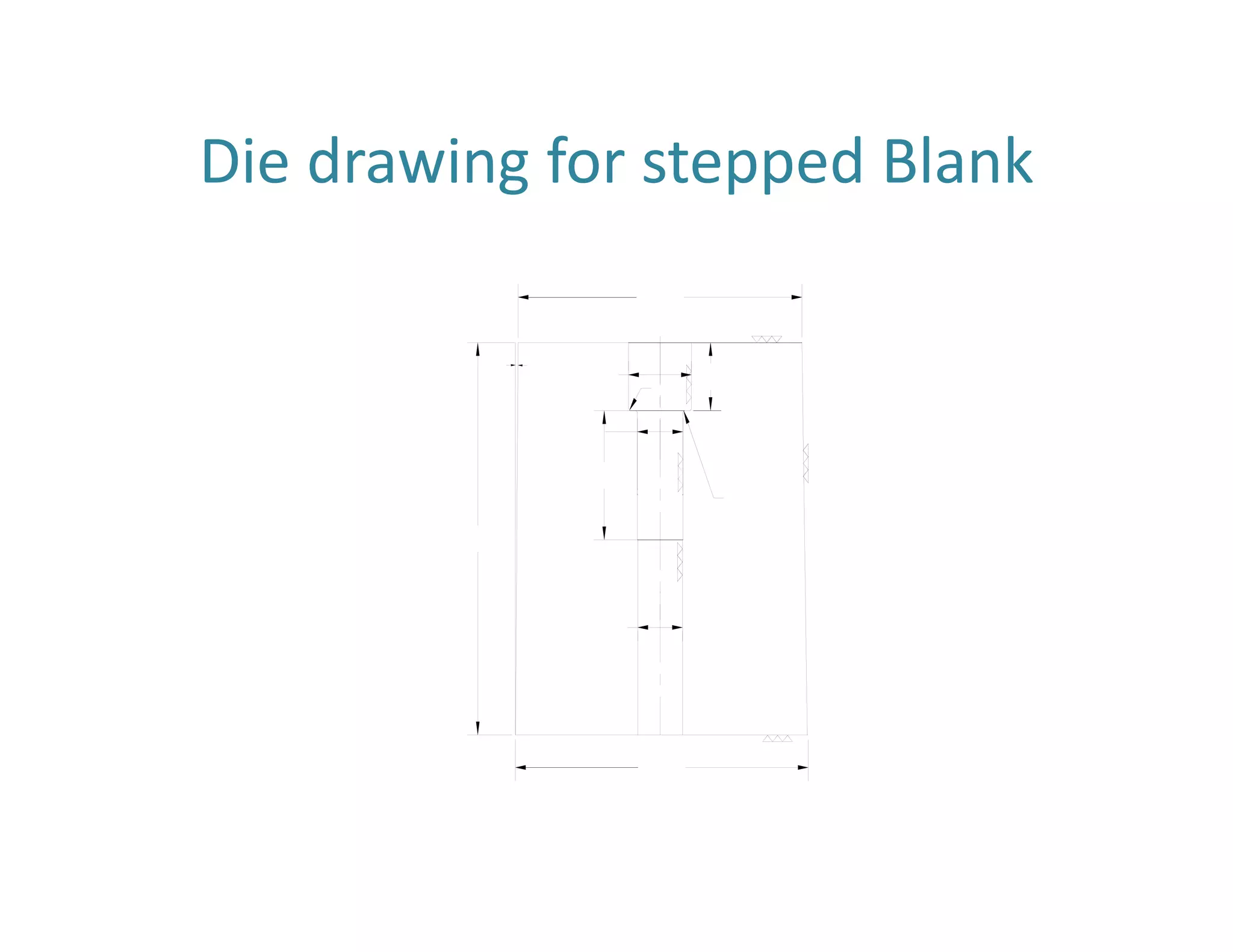
Die drawing for stepped Blank
Results with revised tooling. 
Implemented the new tooling & monitored for 1000nos for 
cold forging 1st & 2nd operation. 
No problem while preparing stepped blank. I.e. 1st 
operation. 
No problem of head forming while 2nd operation. 
Improved consistency in dimensions while cold 
forging 2nd stage. 
Setting time for cold forging is reduced. 
Minimizes rejection at cold forging drastically . 
Hence reduction in wastage.
FINAL CONCLUSION. 
The newly designed 
tooling is OK & Proven 
for production. 
05.11.2000
Acknowledgements 
Mr. V Ramgopal 
Mr. M. GANAPATHY 
For Giving A Opportunity To Work On Such A Special Task. 
Mr. S.C.SALVI & Mr. P.S.KULKARNI 
Team members
Thank You 
abdullahta@gmail.com

Cold forging Process and Product Development - Case study

  • 1.
    Process and Product Development Valve Tappet Cold forging Process Abdullah Ansari
  • 2.
    INDEX • Introduction • Nature of Problem • Existing Blank & Forging Die Analysis • Cold Forging Standard • Existing D2/d2 & l/d Ratios • Corrective Actions • Recalculations, Results Of Recalculations • Trials & Decisions • Previous Process & Revised Process • Results with Revised Tooling & Conlusion • Support During Development
  • 3.
    INTRODUCTION  Theproblem of head offsetting while cold forging of item R 708‐13 is observed in since new product development.  To avoid the same several corrective actions [short method] were initiated such as using flat ejector etc. but effectiveness of the actions taken was not 100% satisfactory. The results were not consistent.  After all above it is concluded to analyze and re‐design of cold forging tooling & process.  While analyzing the same whatever the calculations, observations and the actions taken by undersigned are recorded here, which will be one guide line to attend this kind of problems in future. A. T. ANASRI Date : 22.08.2000
  • 4.
    Nature of Problem ( Tappet R 708‐13 ) While cold forging 1st stage Head Diameter of Tappet getting more offsets & not getting controlled after several adjustments.
  • 5.
    Existing Blank &Forging Die analysis • .Size of Cold forging blank: Total Length = 85mm Outer diameter ( d ) = 12.5mm • .Size of cold forged part: Head diameter ( D ) = 30mm Head thickness = 5.5mm Total length = 61mm OD of stem = 12.8 & 12.6mm • .Size of Cold forging Die: Length of die = 90mm Length of blank outside the die ( l ) = 30mm ( From flat face )
  • 6.
    Cold forging standard Cold forging standard states that: D2/d2 and l/d should not exceed 3. Where 2 is ideal. In our case D = 30mm d = 12.5mm l = 30mm
  • 7.
    In light ofCold Forging Standard Existing D2/d2 & l/d ratios D2/d2 = 302/12.52 = 5.76 l/d = 30/12.5 = 2.40  By above calculations it is noticed that value D2/d2 is exceeding the standard and l/d is almost in range.  So we may conclude that above exceeding value is affecting to forged head diameter offsetting.
  • 8.
    What to donow ???  Corrective action planned : – Recalculate the die design as per cold forging standard. And manufacture the cold forging die as per new calculated dimensions.
  • 9.
    Recalculations as perCold forging standard D2/d2 = 2 ( as per standard ) Hence D2/12.52 = 2 D2 = 2 x 12.52 D = 17.67mm. ‘l’ of ‘D’ will be 17.67x17.67x l x /4 = 12.5x12.5x30x /4 l = 15.01mm
  • 10.
    What Recalculations Indicating!!! Recalculations indicating that the forging is not possible in one operation & it will need double operation. For second operation stepped blank will be required, while first operation stepped blank will be produced. For preparing stepped blank separate die is required
  • 11.
    Trials . Fortrials stepped blank is prepared by machining. While trials forming punch is used. Trials are taken with stepped blank on 22.08.2000 Results found satisfactory in all aspects. Head offsetting is very low & will not create any defect while head turning. Dimensions are found consistent. Trials are successful.
  • 12.
    Way Forward. Basedon successful trials, die designed for first operation for preparing the stepped blank (cold forging 1st operation).
  • 13.
    # PREVIOUS PROCESS  Fig. Shows the blank ready for forging of R708‐ 13 tappet. 85 12.5
  • 14.
    1 ‐ PREVIOUSPROCESS  Fig. Shows the forging drawing of R708‐13 tappet.  Previously this was created in single setting. 30 12.8 5 40 12.6
  • 15.
    # REVISED PROCESS Fig. Shows the blank ready for producing stepped blank for forging of R708‐13 tappet. 85 12.5
  • 16.
    1 ‐ REVISEDPROCESS Fig. Shows the stepped blank ready for finish forging of R708‐13 tappet. 12.6 12.5 40 15 17.7
  • 17.
    30 12.8 5 40 12.6 2 ‐ REVISED PROCESS  Fig. Shows the finish forging of R708‐13 tappet.  Now it is created in second stage from stepped blank.
  • 18.
    Die drawing forstepped Blank
  • 19.
    Results with revisedtooling. Implemented the new tooling & monitored for 1000nos for cold forging 1st & 2nd operation. No problem while preparing stepped blank. I.e. 1st operation. No problem of head forming while 2nd operation. Improved consistency in dimensions while cold forging 2nd stage. Setting time for cold forging is reduced. Minimizes rejection at cold forging drastically . Hence reduction in wastage.
  • 20.
    FINAL CONCLUSION. Thenewly designed tooling is OK & Proven for production. 05.11.2000
  • 21.
    Acknowledgements Mr. VRamgopal Mr. M. GANAPATHY For Giving A Opportunity To Work On Such A Special Task. Mr. S.C.SALVI & Mr. P.S.KULKARNI Team members
  • 22.