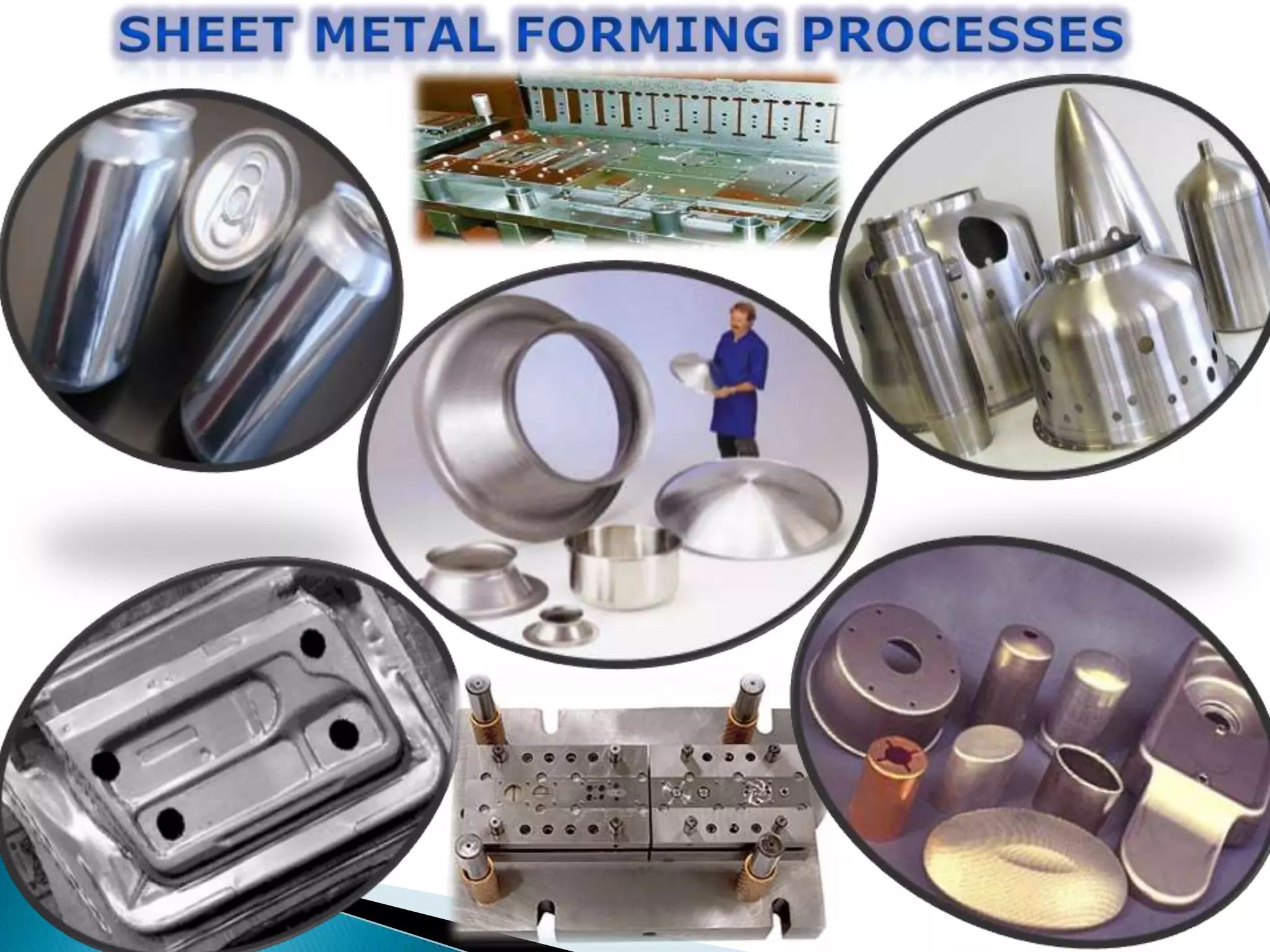










A piece of metal whose thickness is between
0.006(0.15 mm) and 0.25 inches(6.35 mm).
Anything thinner is referred to as a foil and thicker is
considered as a plate.
Sheet thickness is generally measured in gauge. Greater
the gauge number, thinner the sheet of metal.
Sheet metal can be cut, bent and stretched into nearly
any shape.
Generally two types of operations are
performed- forming and cutting.
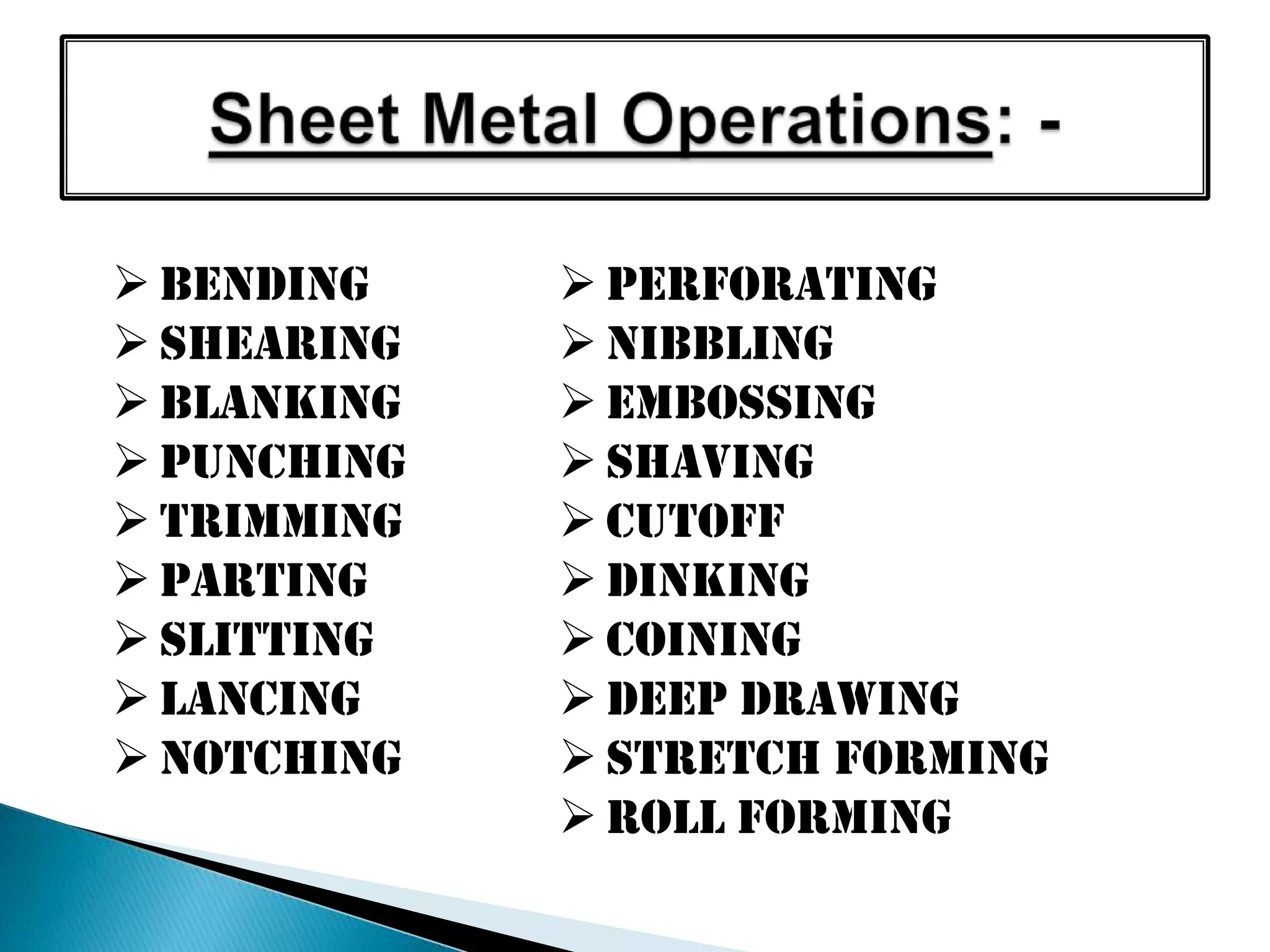
 Bending
 Shearing
 Blanking
 Punching
 Trimming
 Parting
 Slitting
 Lancing
 Notching

 perforating
 Nibbling
 Embossing
 Shaving
 Cutoff
 dinking
 Coining
 Deep drawing
 Stretch forming
 Roll forming


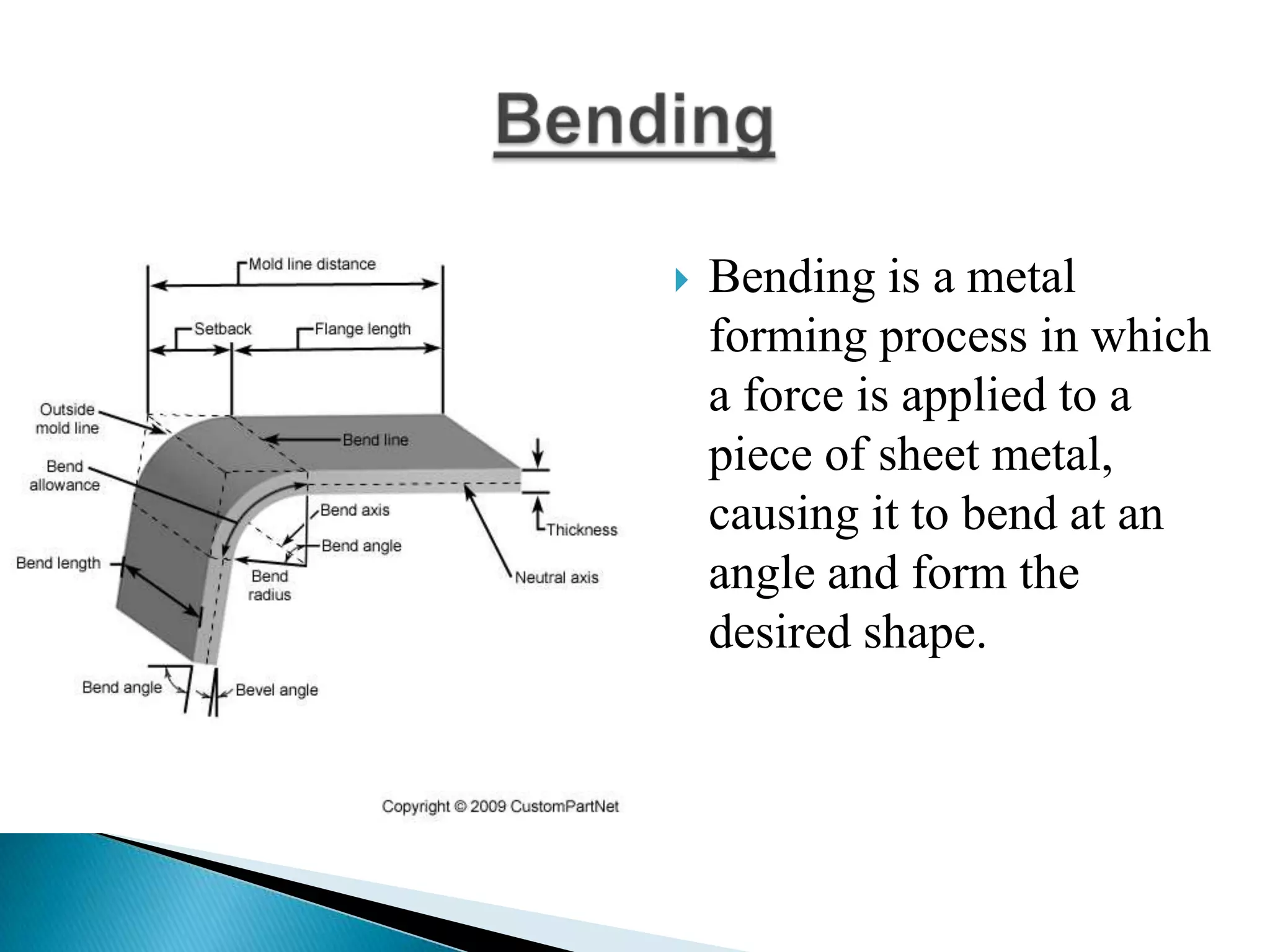
Bending is a metal
forming process in which
a force is applied to a
piece of sheet metal,
causing it to bend at an
angle and form the
desired shape.
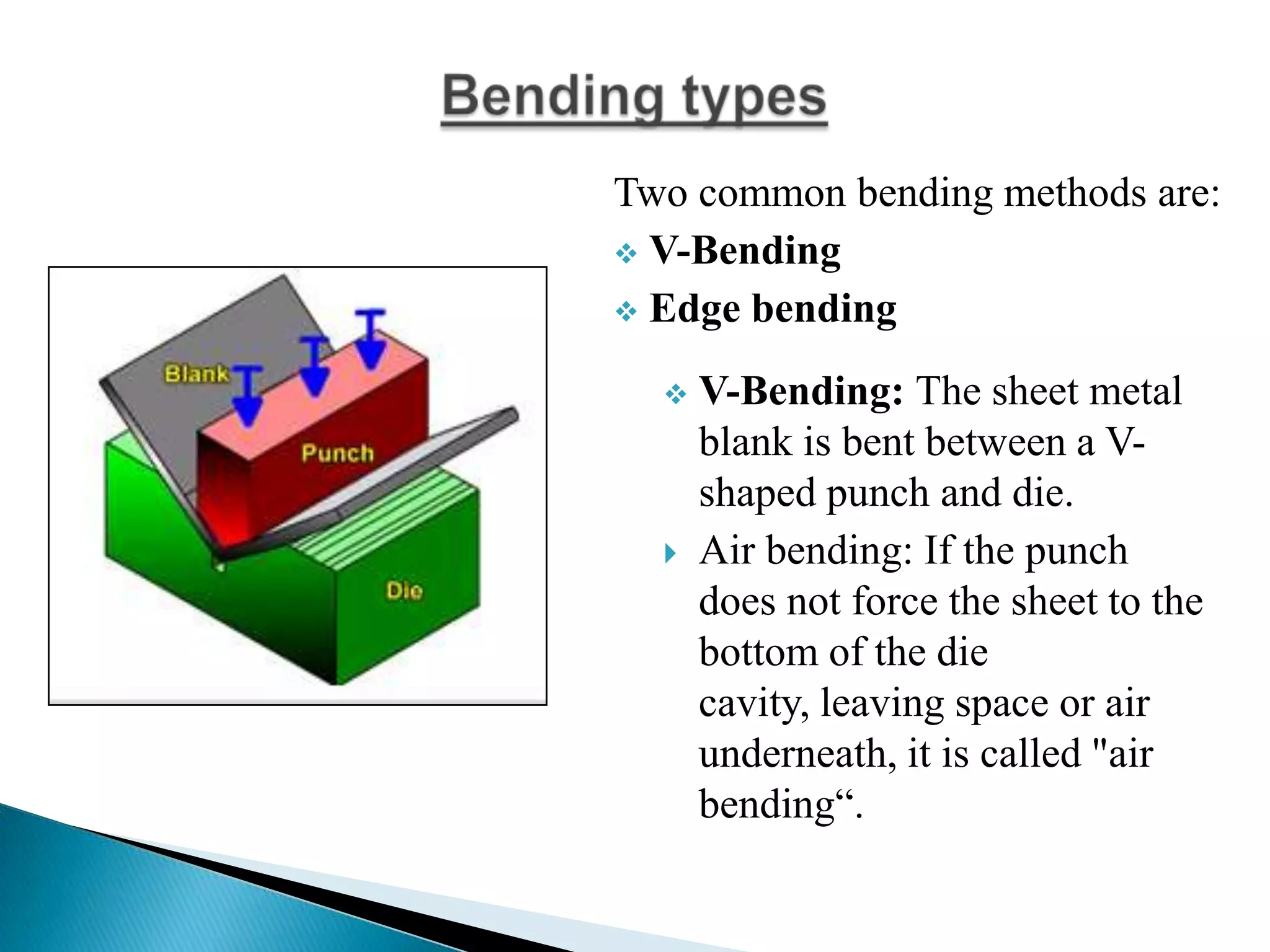
Two common bending methods are:
 V-Bending
 Edge bending




V-Bending: The sheet metal
blank is bent between a Vshaped punch and die.
Air bending: If the punch
does not force the sheet to the
bottom of the die
cavity, leaving space or air
underneath, it is called "air
bending“.


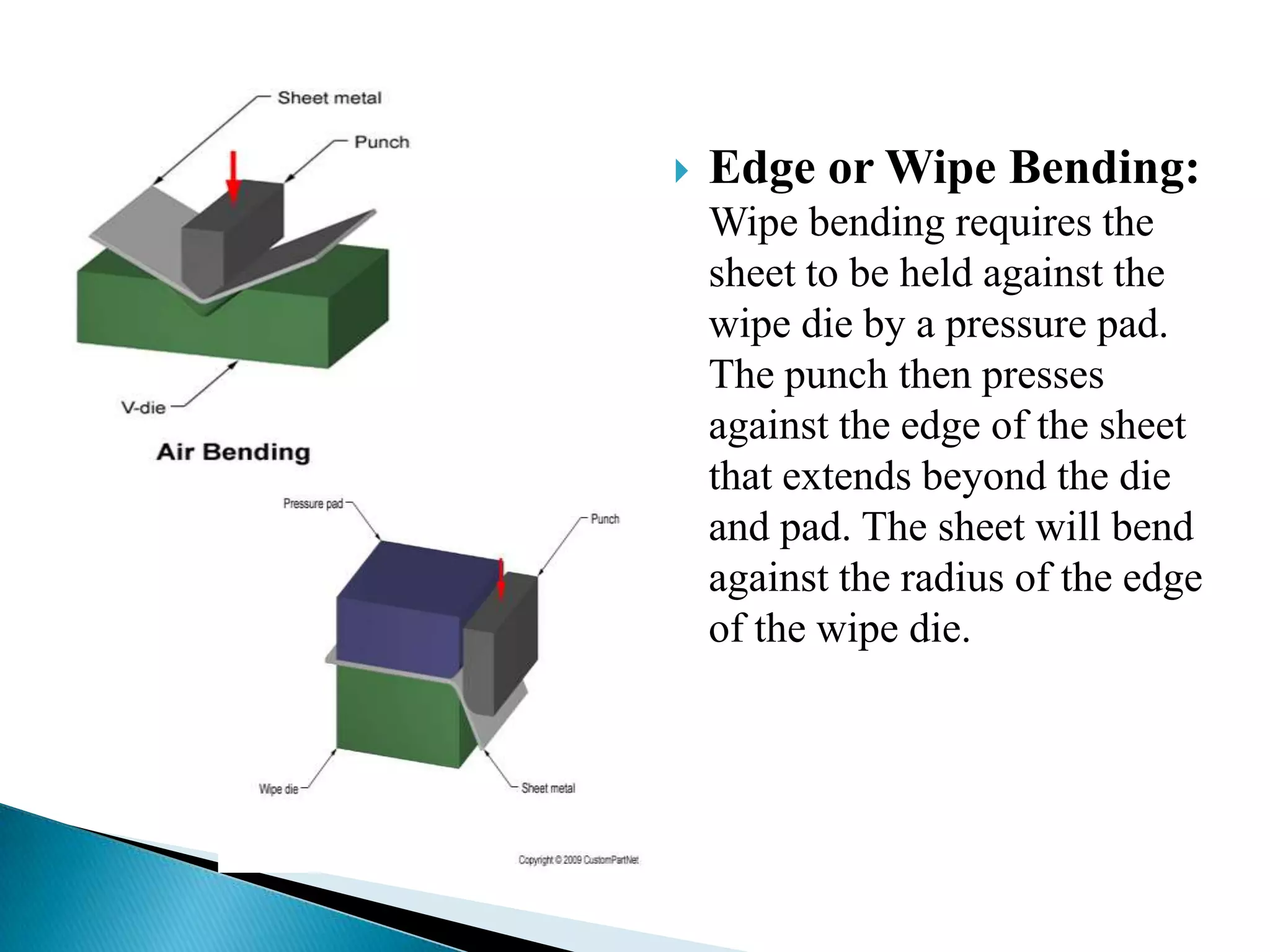
Edge or Wipe Bending:
Wipe bending requires the
sheet to be held against the
wipe die by a pressure pad.
The punch then presses
against the edge of the sheet
that extends beyond the die
and pad. The sheet will bend
against the radius of the edge
of the wipe die.
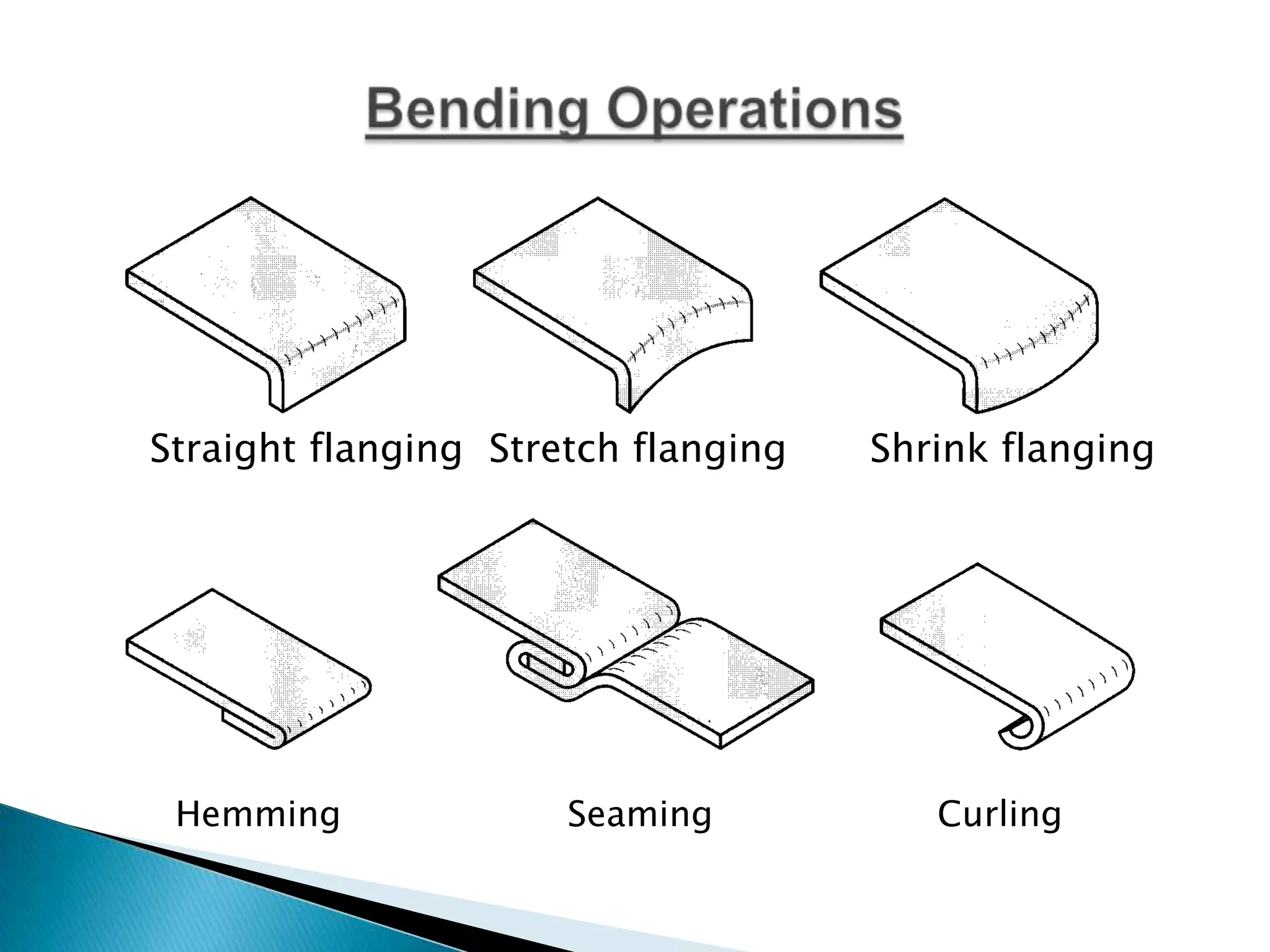
Straight flanging Stretch flanging

Hemming

Seaming

Shrink flanging

Curling
Channel bending

Offset-bending

U-bending

Corrugating

air-bending

Tube forming
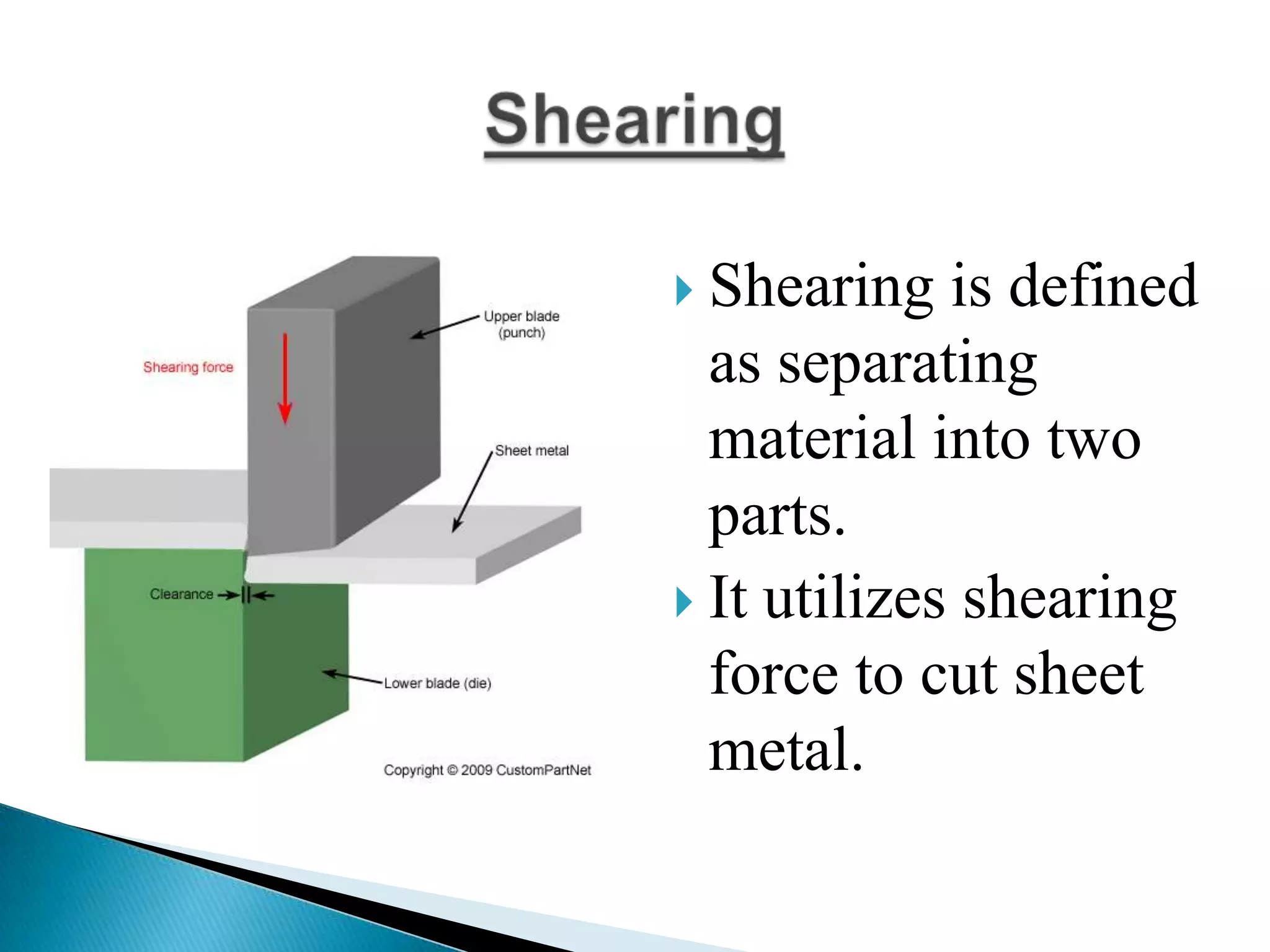
 Shearing

is defined
as separating
material into two
parts.
 It utilizes shearing
force to cut sheet
metal.
 A piece

of sheet
metal is removed
from a larger piece
of stock.
 This removed piece
is not scrap, it is
the useful part.
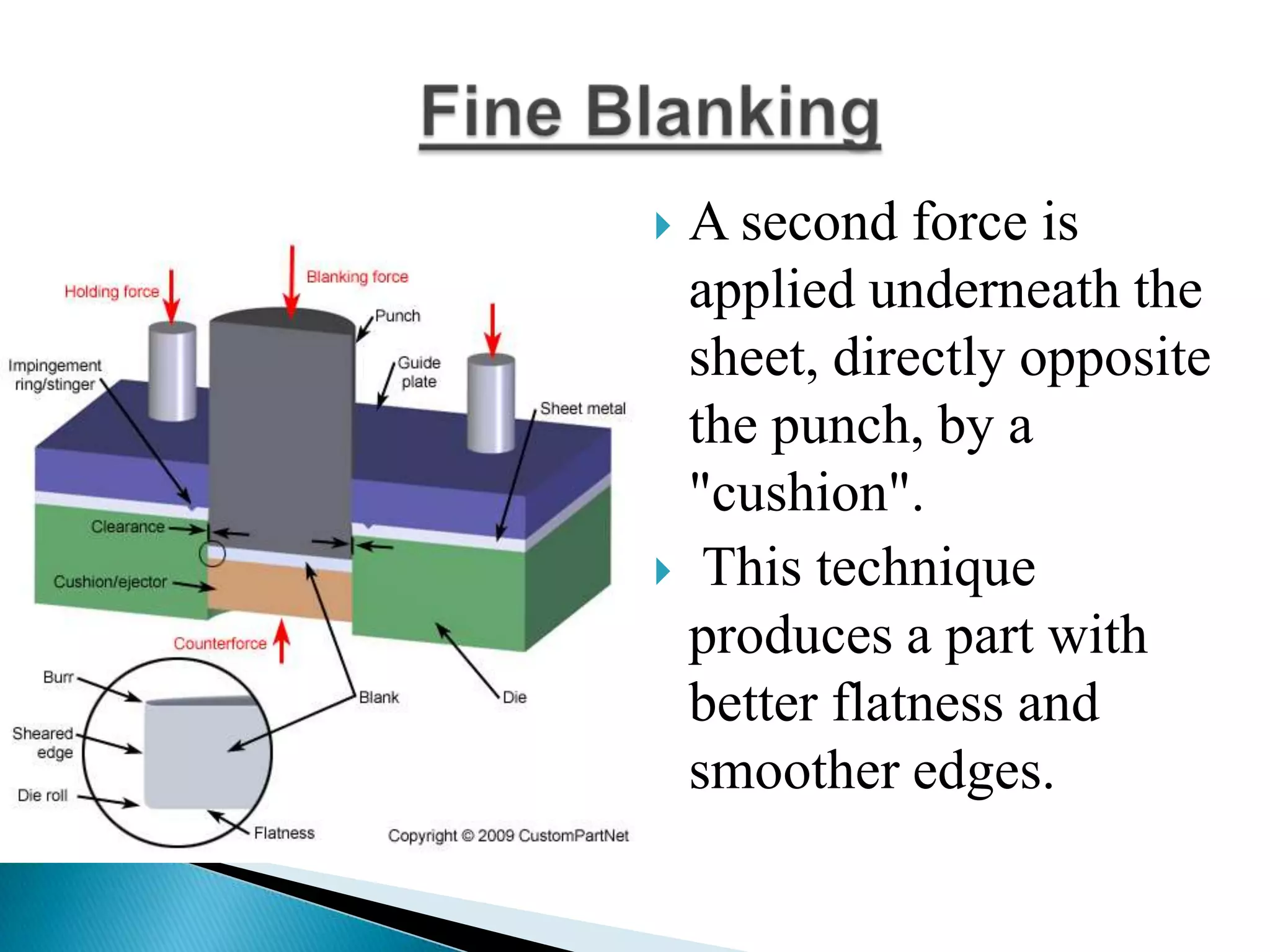
A second force is
applied underneath the
sheet, directly opposite
the punch, by a
"cushion".
 This technique
produces a part with
better flatness and
smoother edges.

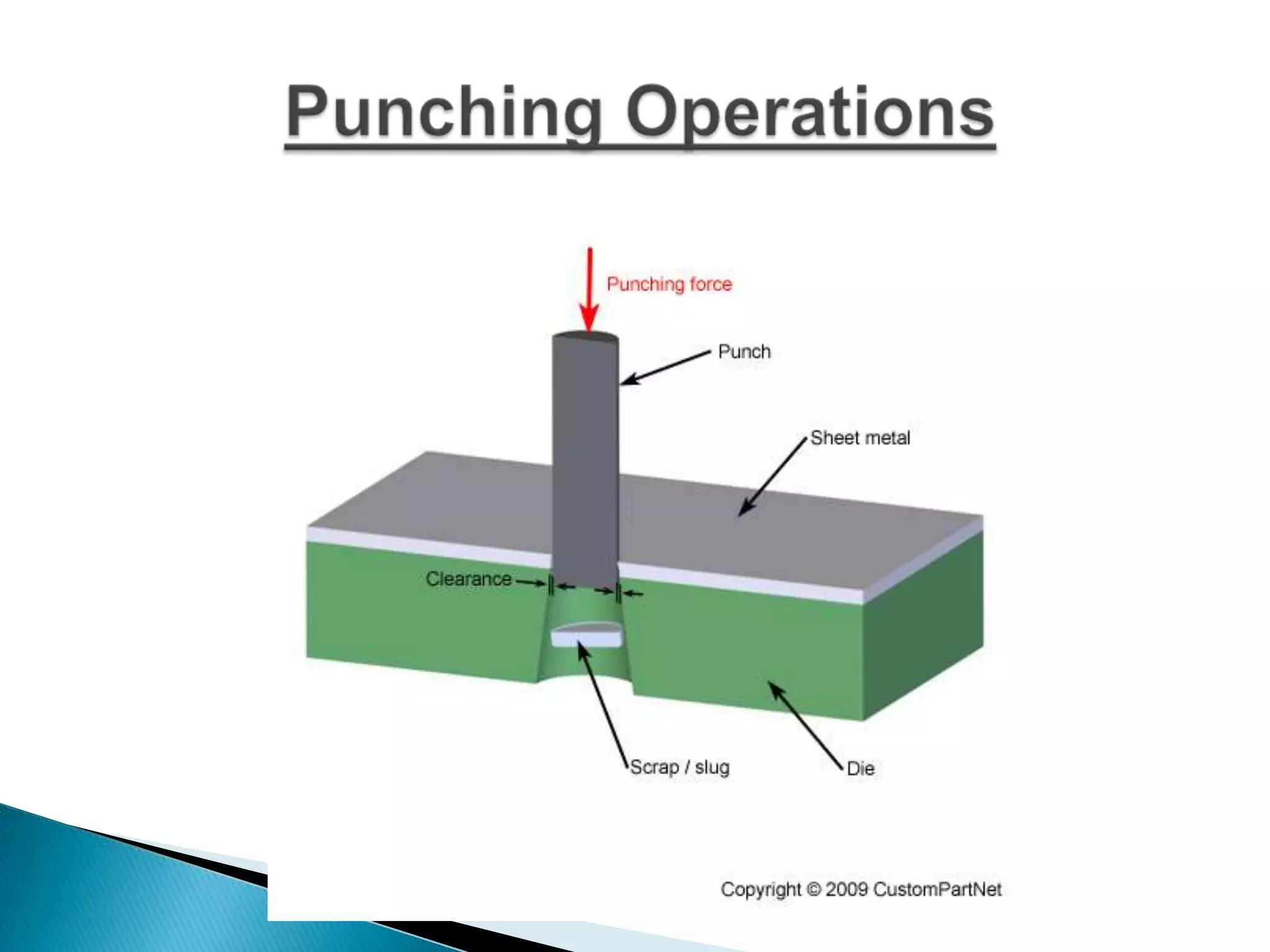
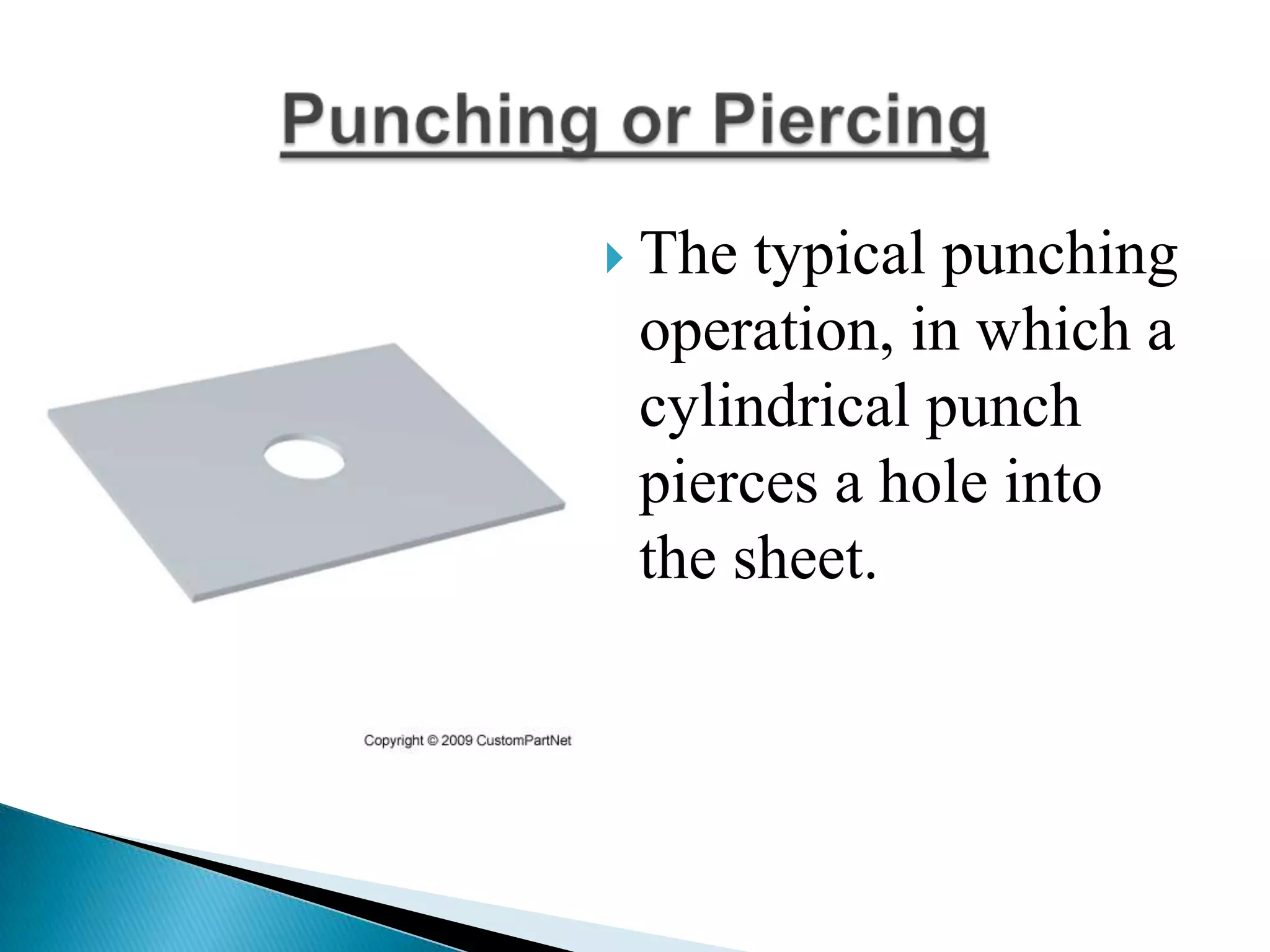
 The

typical punching
operation, in which a
cylindrical punch
pierces a hole into
the sheet.
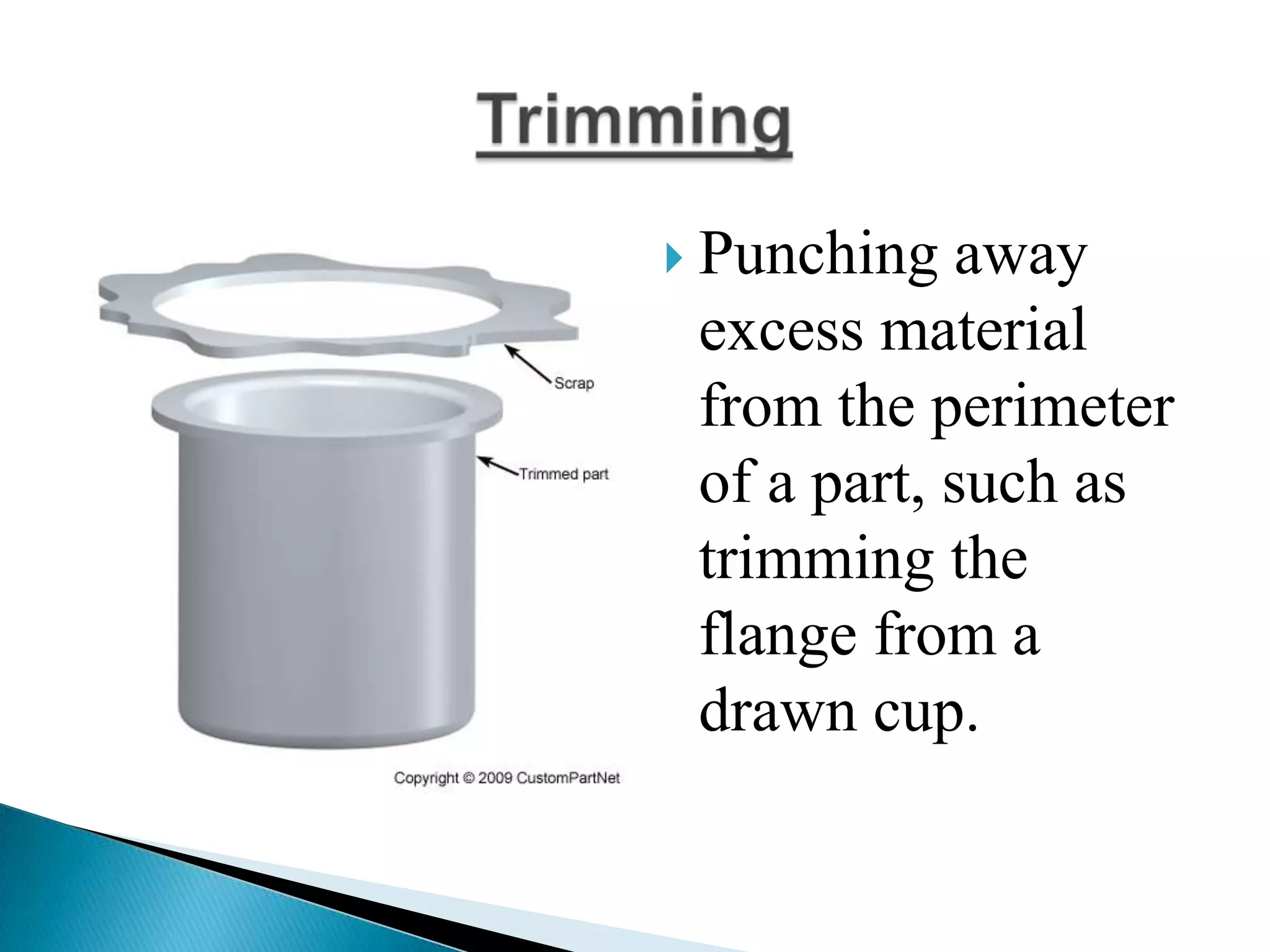
 Punching

away
excess material
from the perimeter
of a part, such as
trimming the
flange from a
drawn cup.
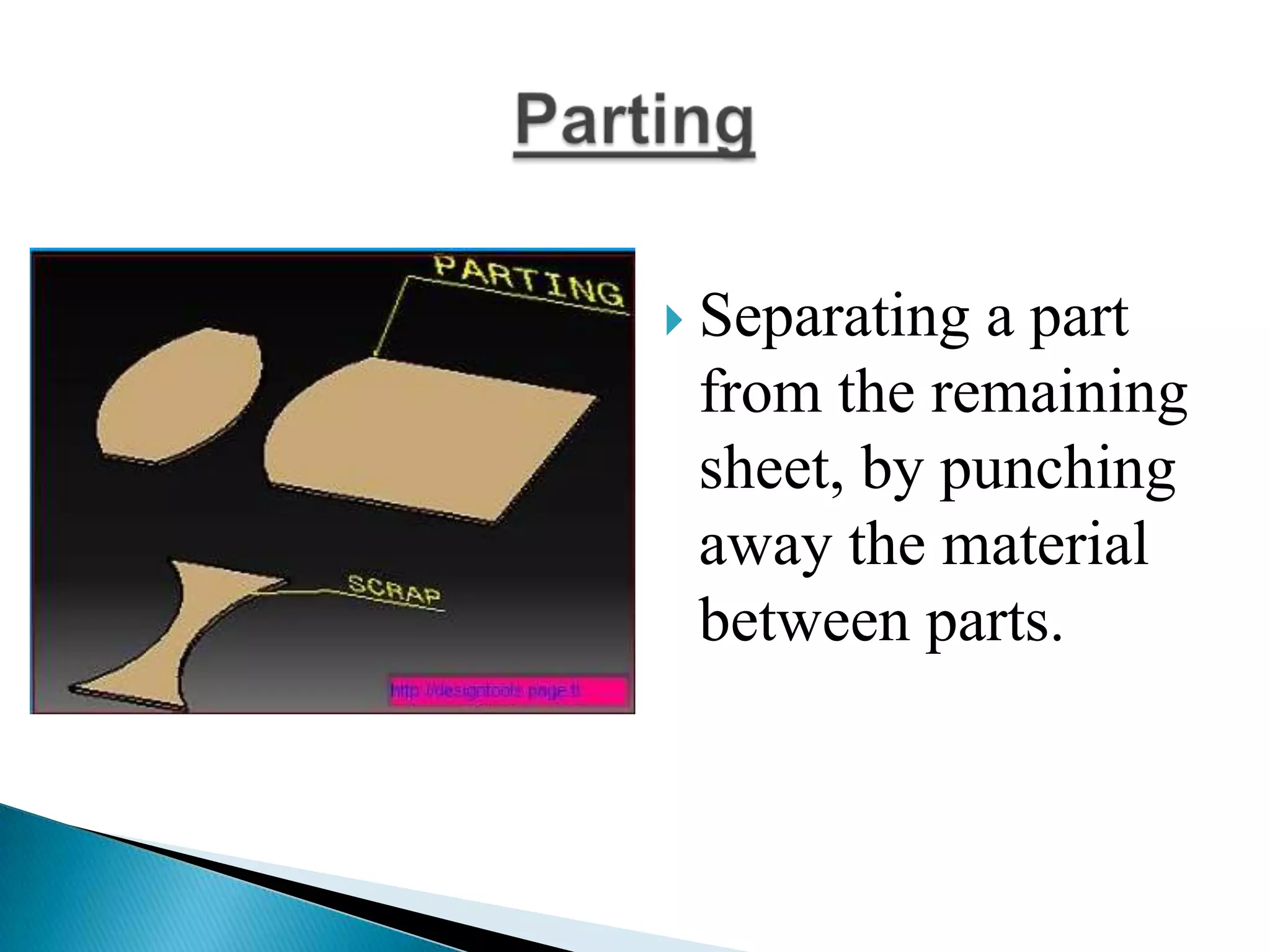
 Separating

a part
from the remaining
sheet, by punching
away the material
between parts.
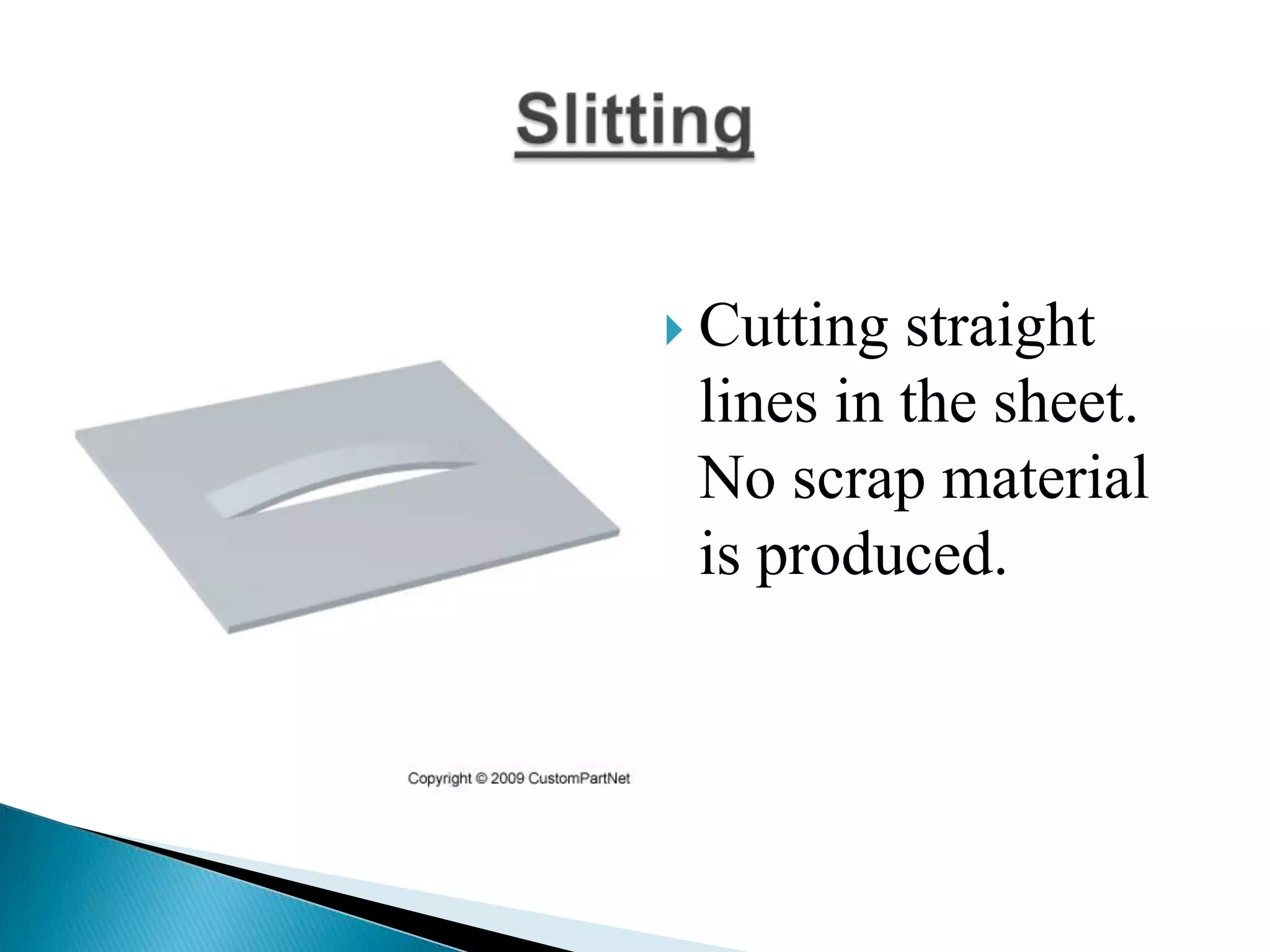
 Cutting

straight
lines in the sheet.
No scrap material
is produced.
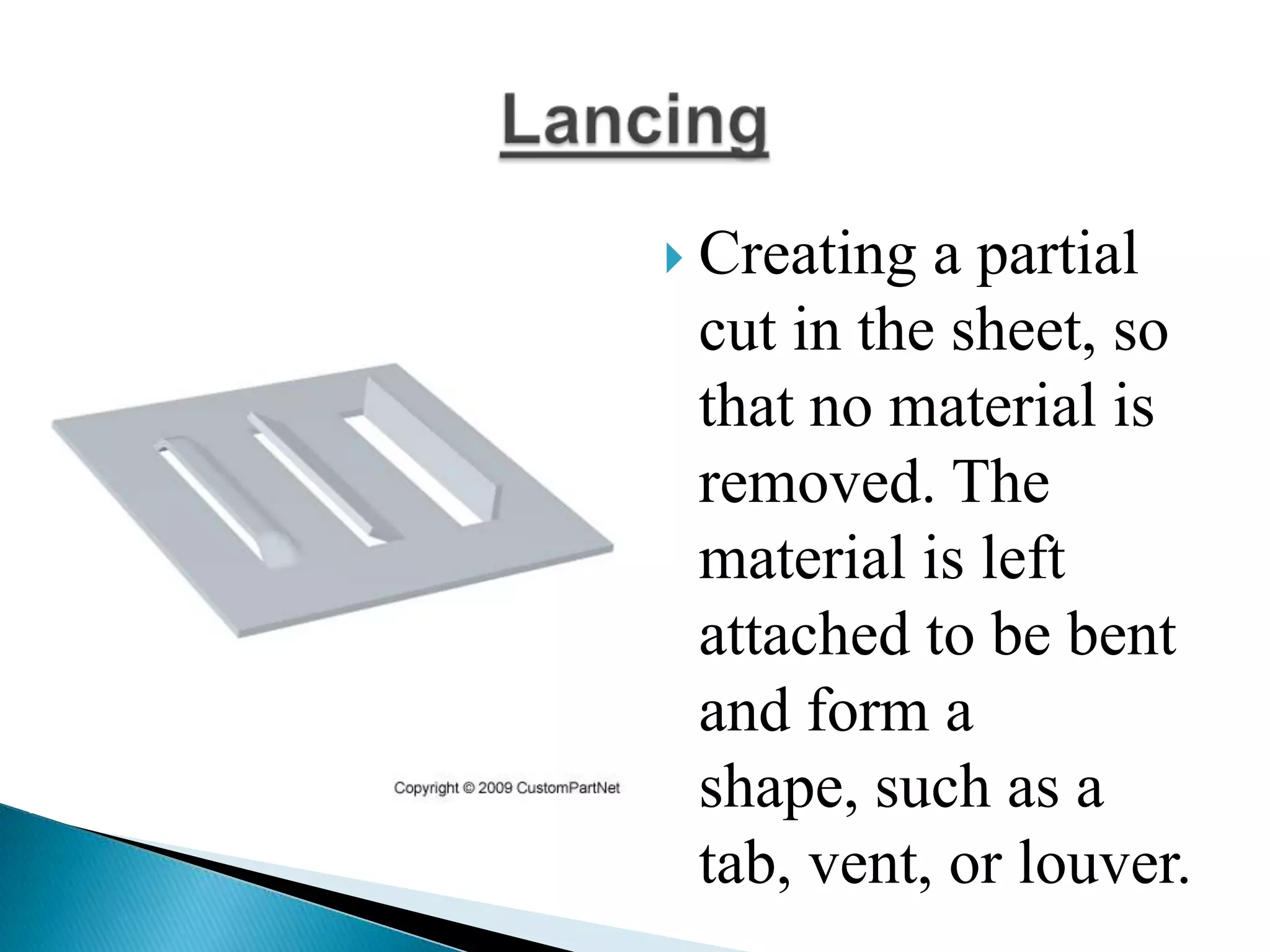
 Creating

a partial
cut in the sheet, so
that no material is
removed. The
material is left
attached to be bent
and form a
shape, such as a
tab, vent, or louver.


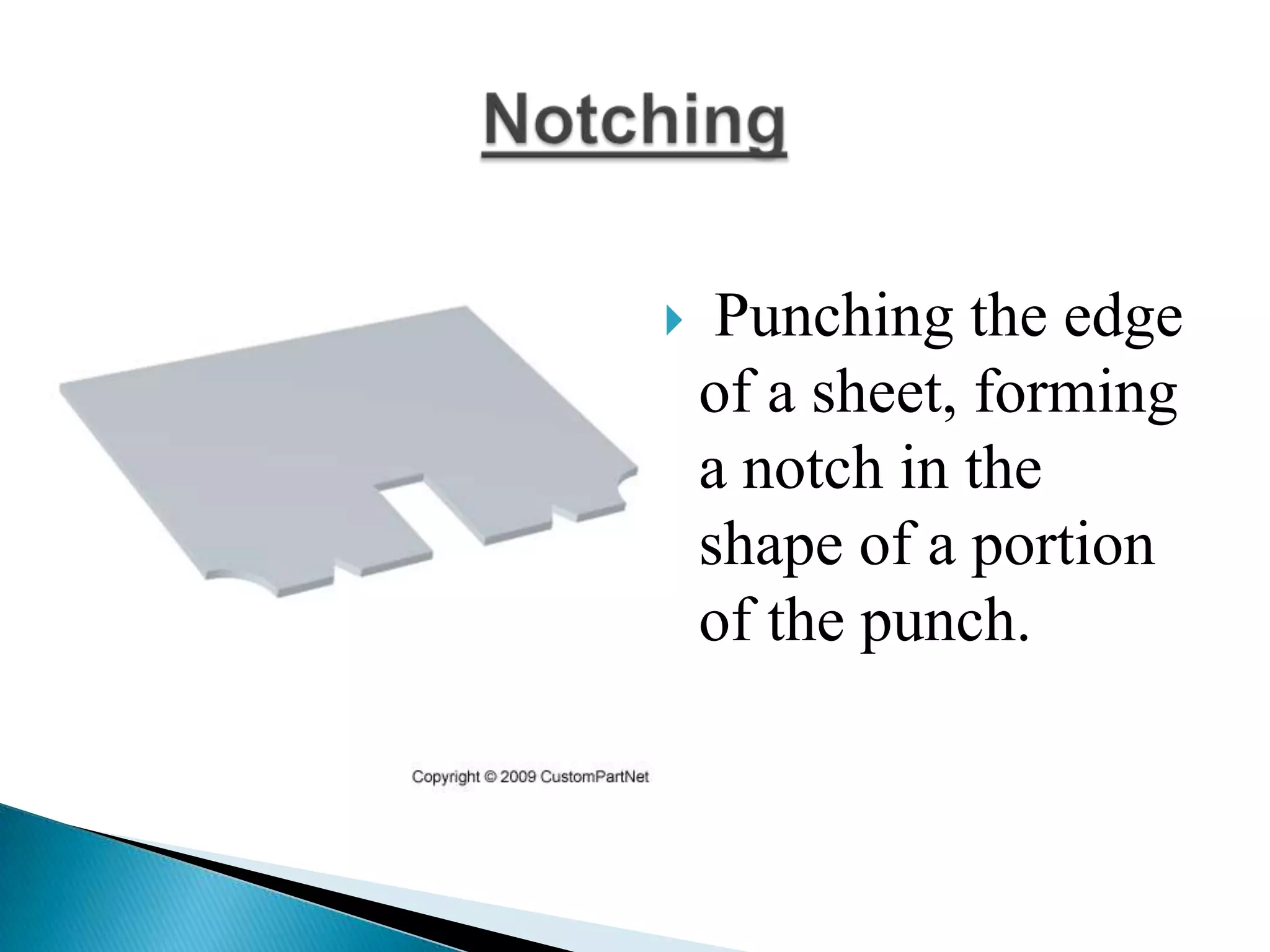
Punching the edge
of a sheet, forming
a notch in the
shape of a portion
of the punch.


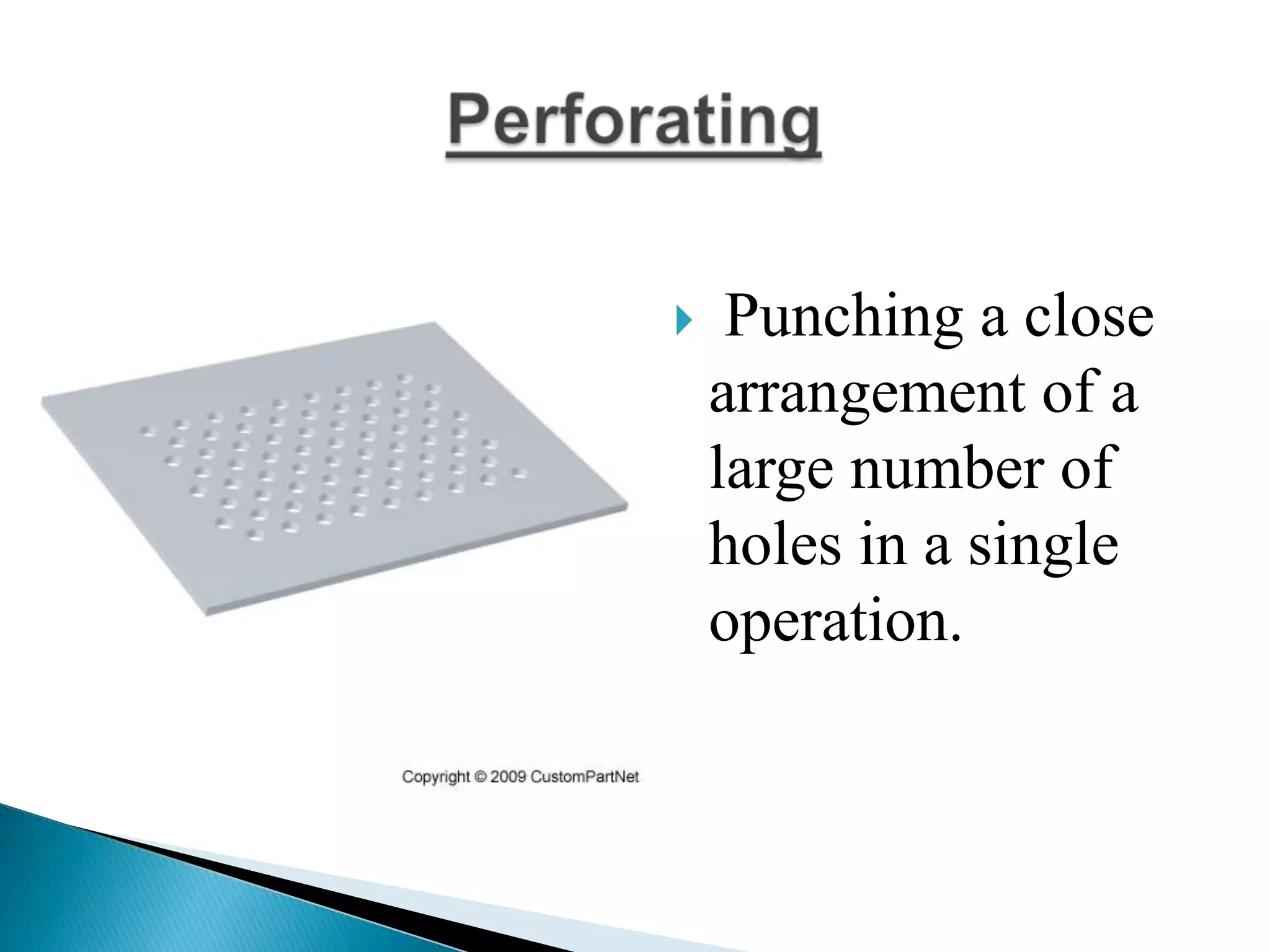
Punching a close
arrangement of a
large number of
holes in a single
operation.
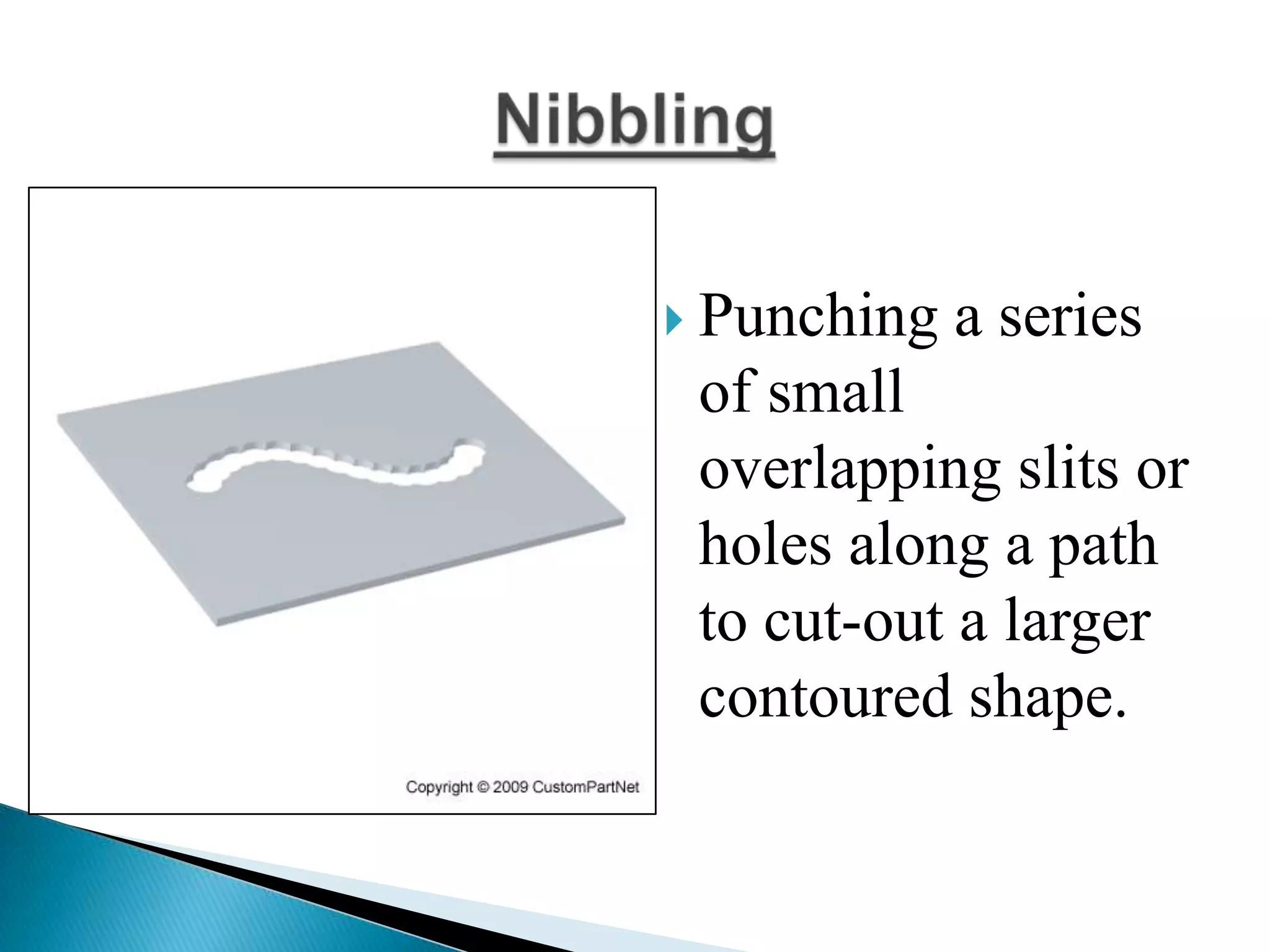
 Punching

a series

of small
overlapping slits or
holes along a path
to cut-out a larger
contoured shape.
 Certain

designs are
embossed on the
sheet metal.
 Punch and die are
of the same
contour but in
opposite direction.
Shearing away minimal
material from the
edges of a feature or
part, using a small die
clearance. Used to
improve accuracy or
finish. Tolerances of
±0.025 mm are
possible.
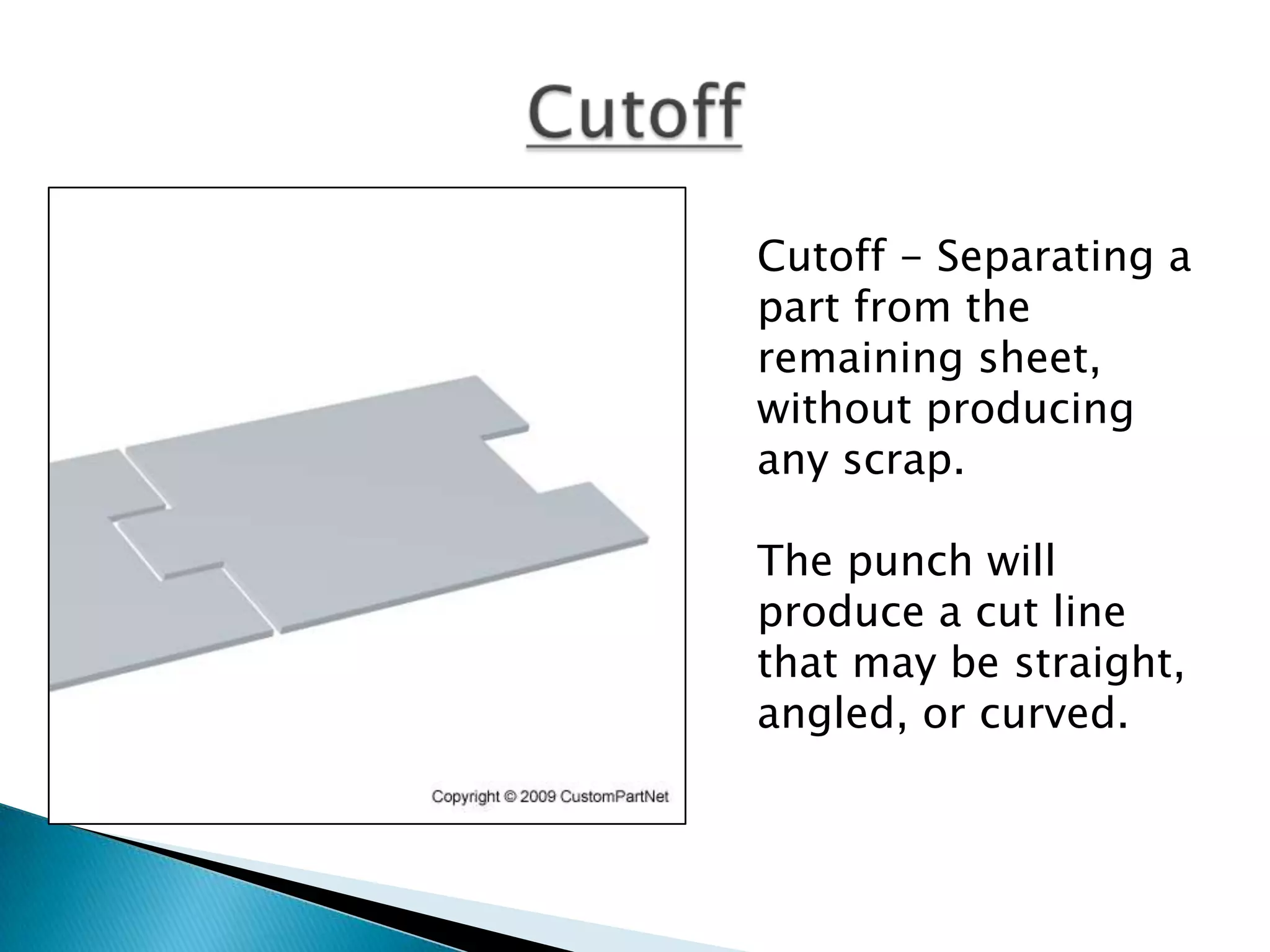
Cutoff - Separating a
part from the
remaining sheet,
without producing
any scrap.
The punch will
produce a cut line
that may be straight,
angled, or curved.
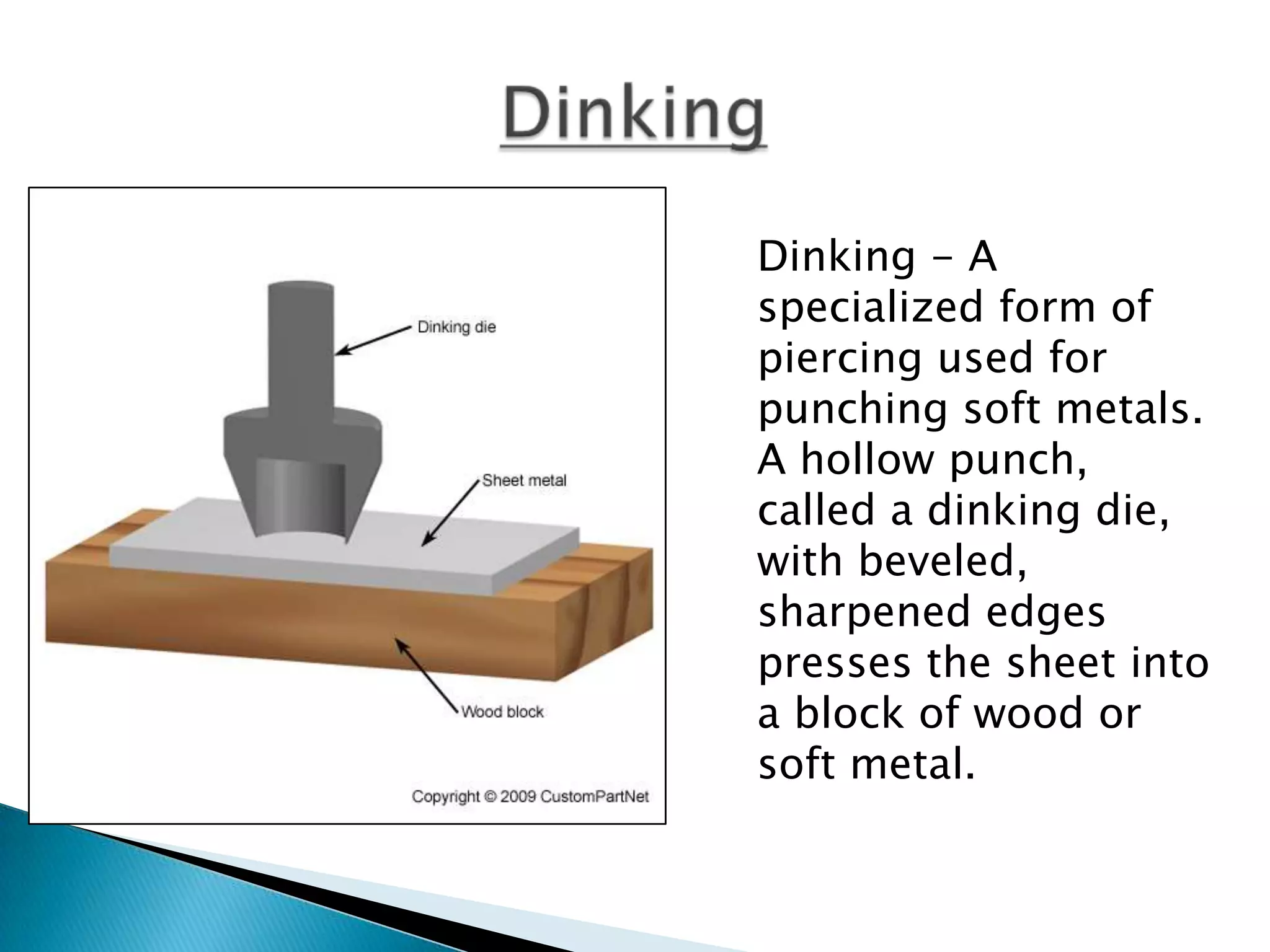
Dinking - A
specialized form of
piercing used for
punching soft metals.
A hollow punch,
called a dinking die,
with beveled,
sharpened edges
presses the sheet into
a block of wood or
soft metal.
 Similar

to
embossing with the
difference that
similar or different
impressions are
obtained on both
the sides of the
sheet metal.




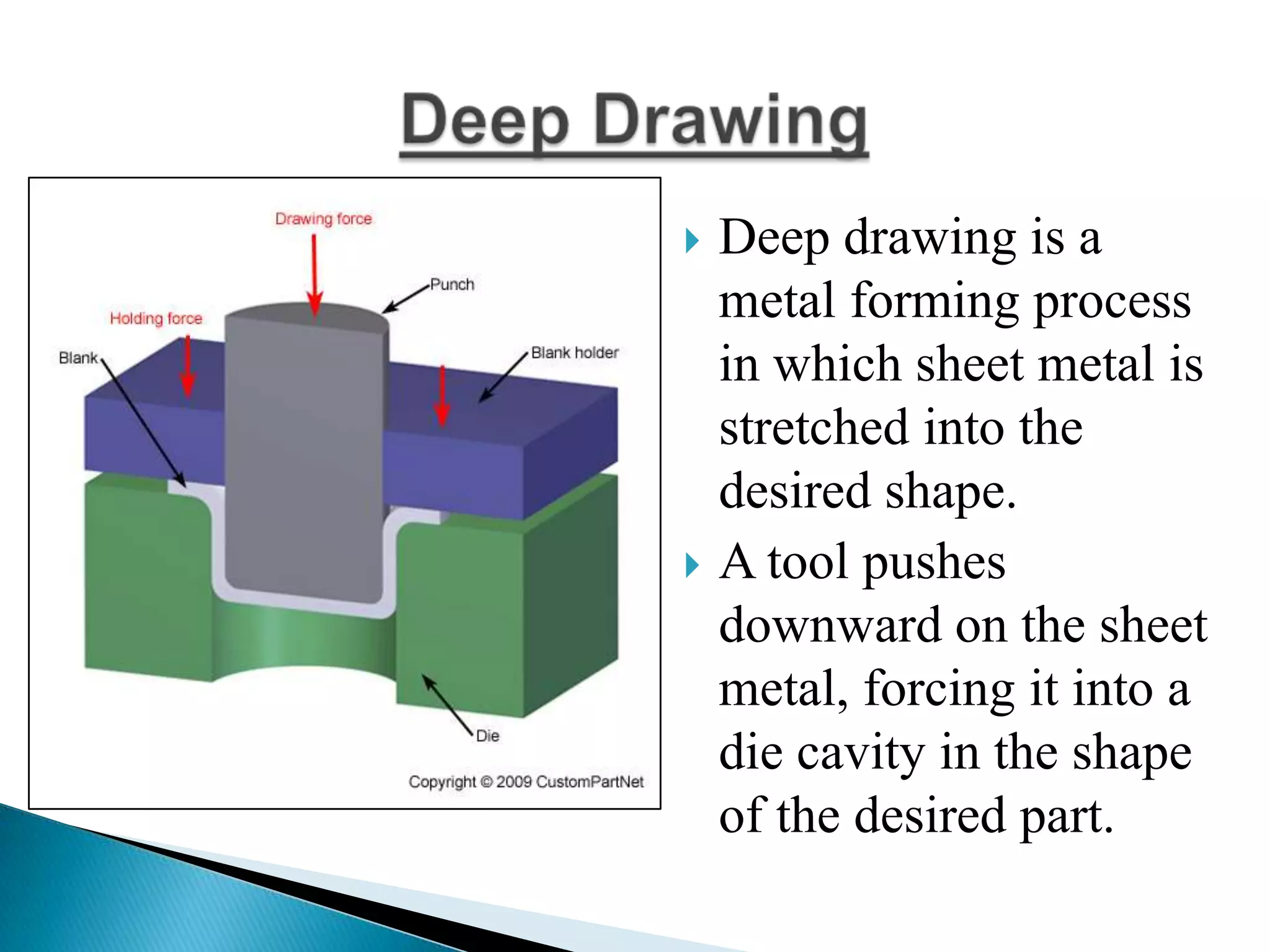
Deep drawing is a
metal forming process
in which sheet metal is
stretched into the
desired shape.
A tool pushes
downward on the sheet
metal, forcing it into a
die cavity in the shape
of the desired part.


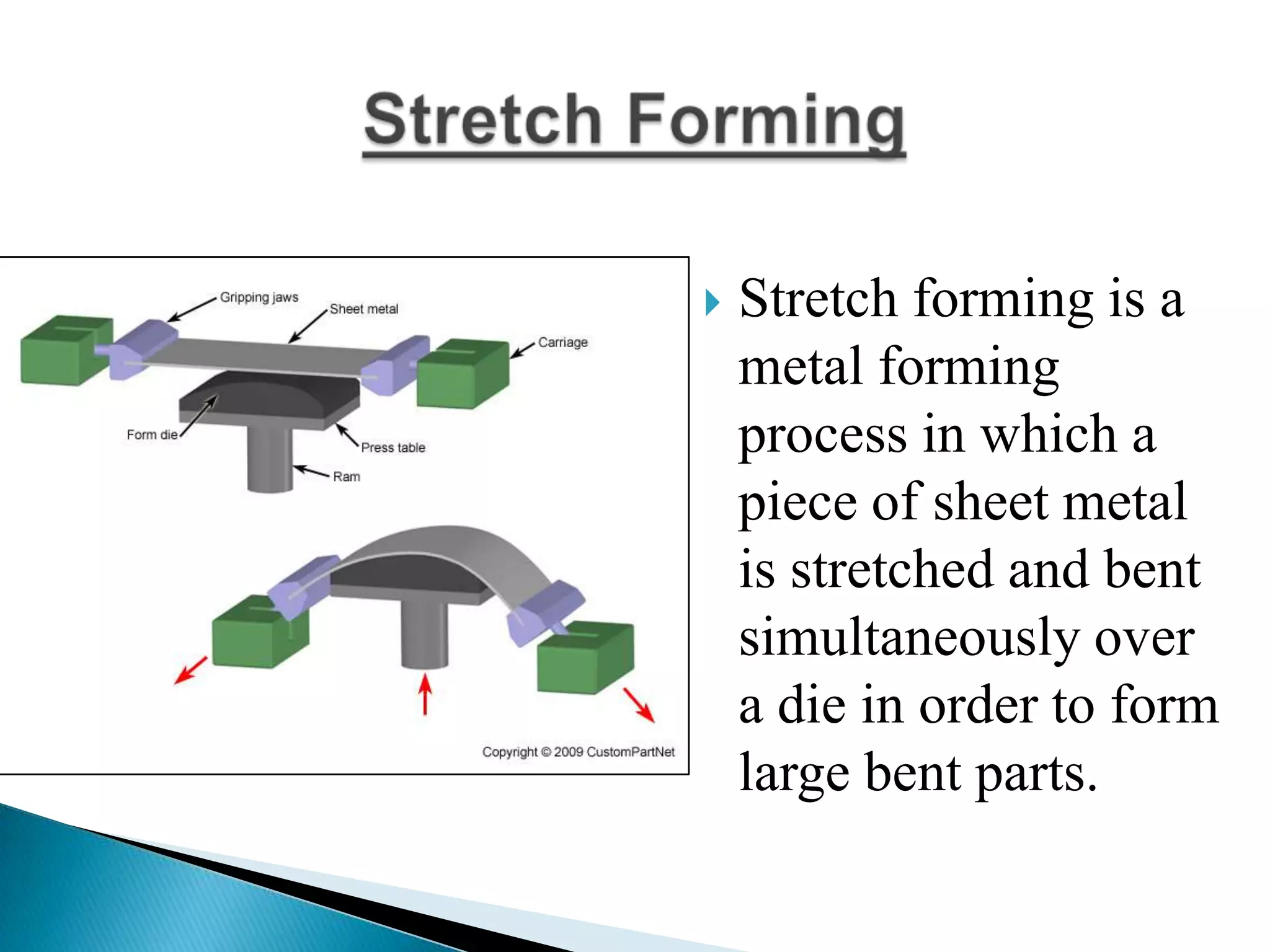
Stretch forming is a
metal forming
process in which a
piece of sheet metal
is stretched and bent
simultaneously over
a die in order to form
large bent parts.




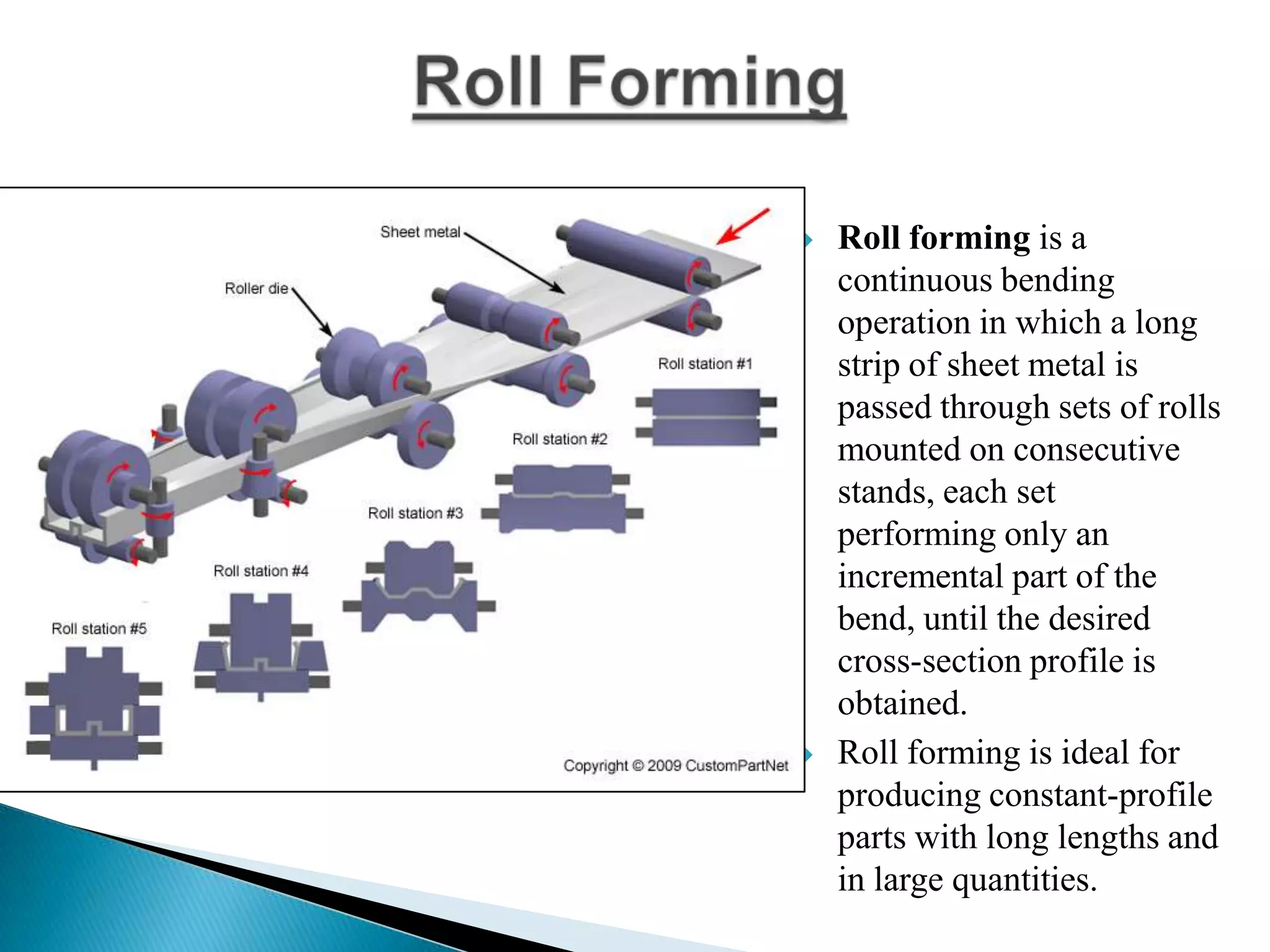
Roll forming is a
continuous bending
operation in which a long
strip of sheet metal is
passed through sets of rolls
mounted on consecutive
stands, each set
performing only an
incremental part of the
bend, until the desired
cross-section profile is
obtained.
Roll forming is ideal for
producing constant-profile
parts with long lengths and
in large quantities.
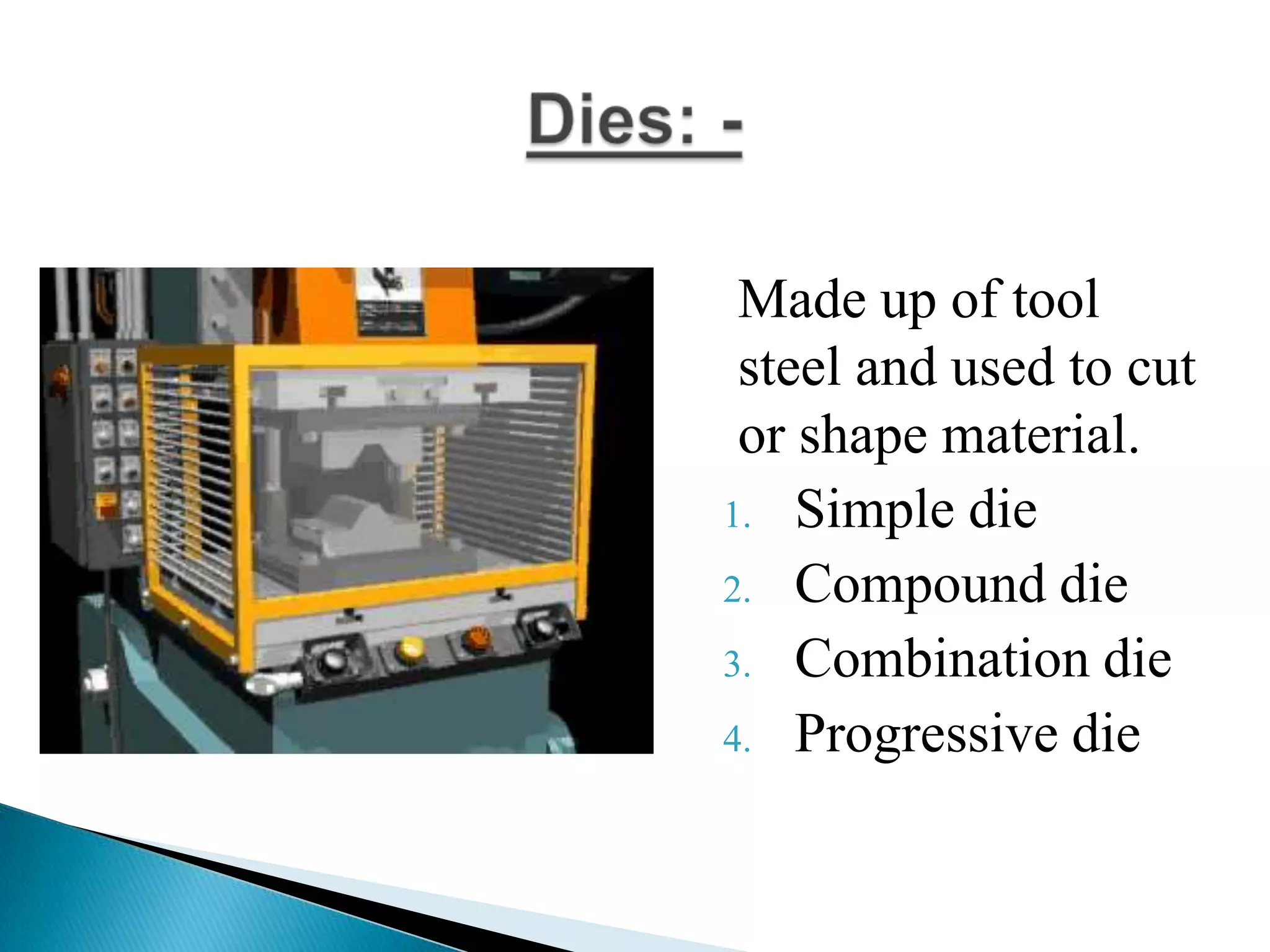
Made up of tool
steel and used to cut
or shape material.
1. Simple die
2. Compound die
3. Combination die
4. Progressive die
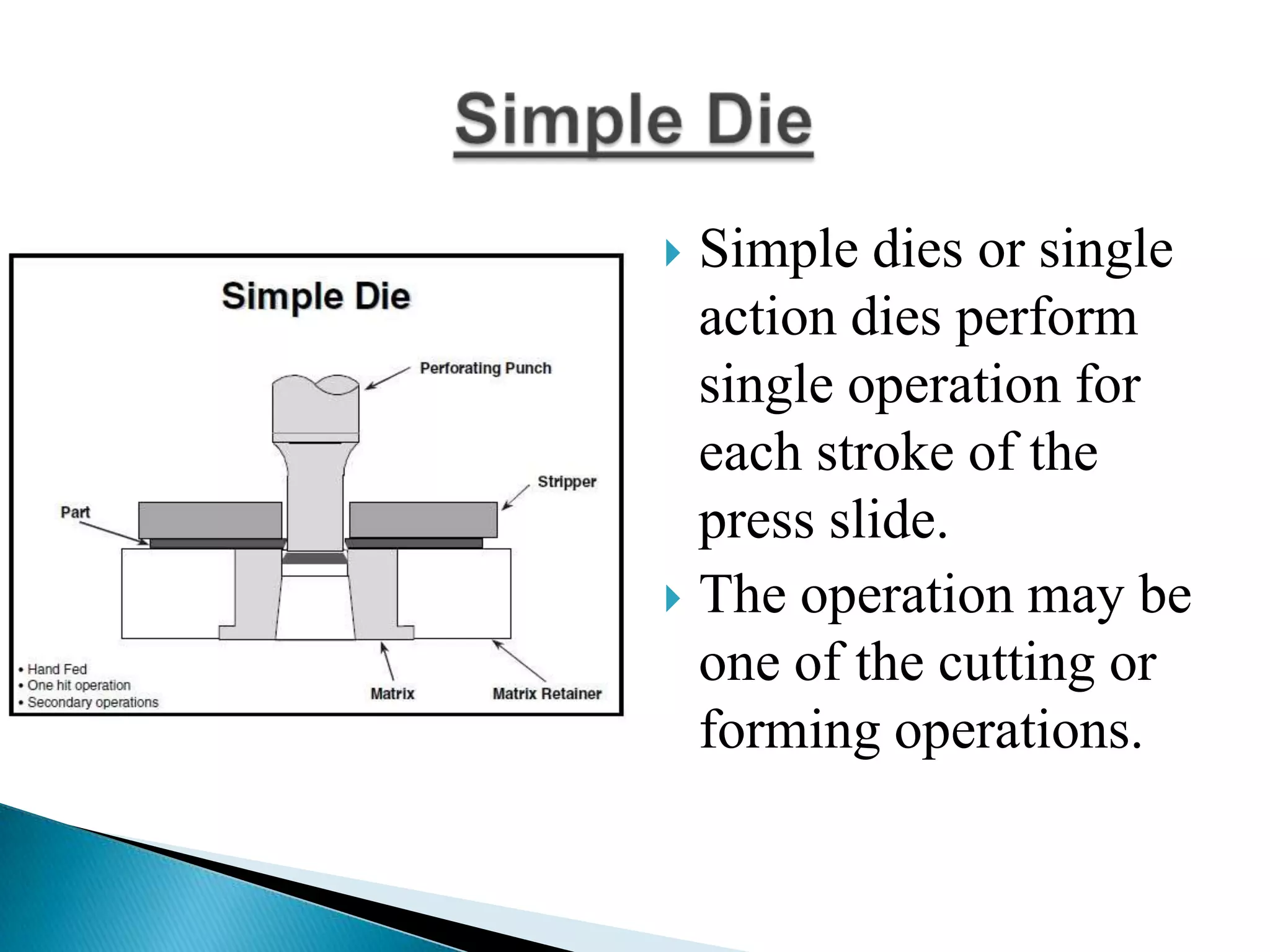
Simple dies or single
action dies perform
single operation for
each stroke of the
press slide.
 The operation may be
one of the cutting or
forming operations.

In these dies, two or
more operations may
be performed at one
station.
 Such dies are
considered as cutting
tools since, only
cutting operations are
carried out.





In this die also , more
than one operation may
be performed at one
station.
It is different from
compound die in that in
this die, a cutting
operation is combined
with a bending or
drawing operation, due
to that it is called
combination die.
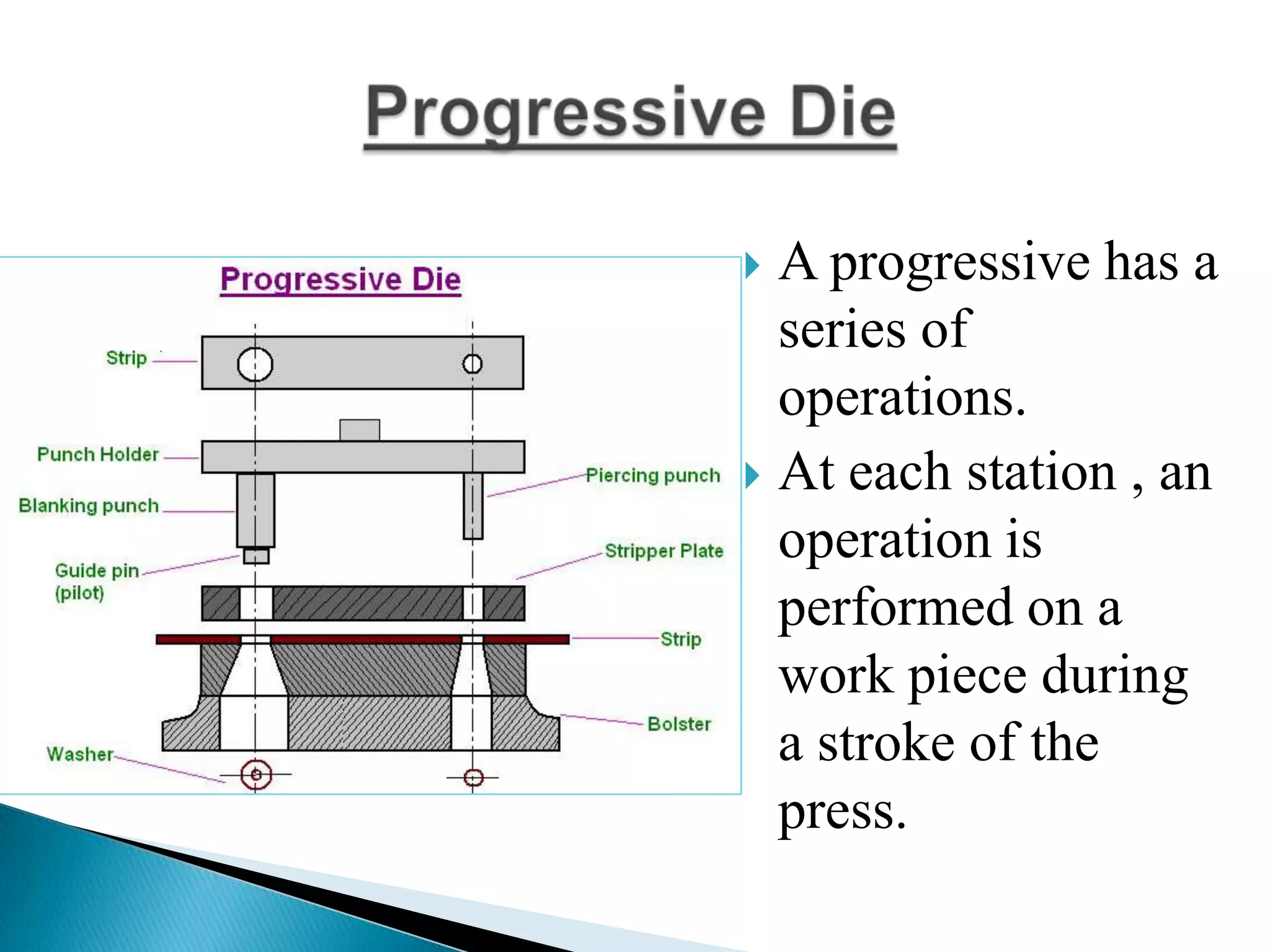
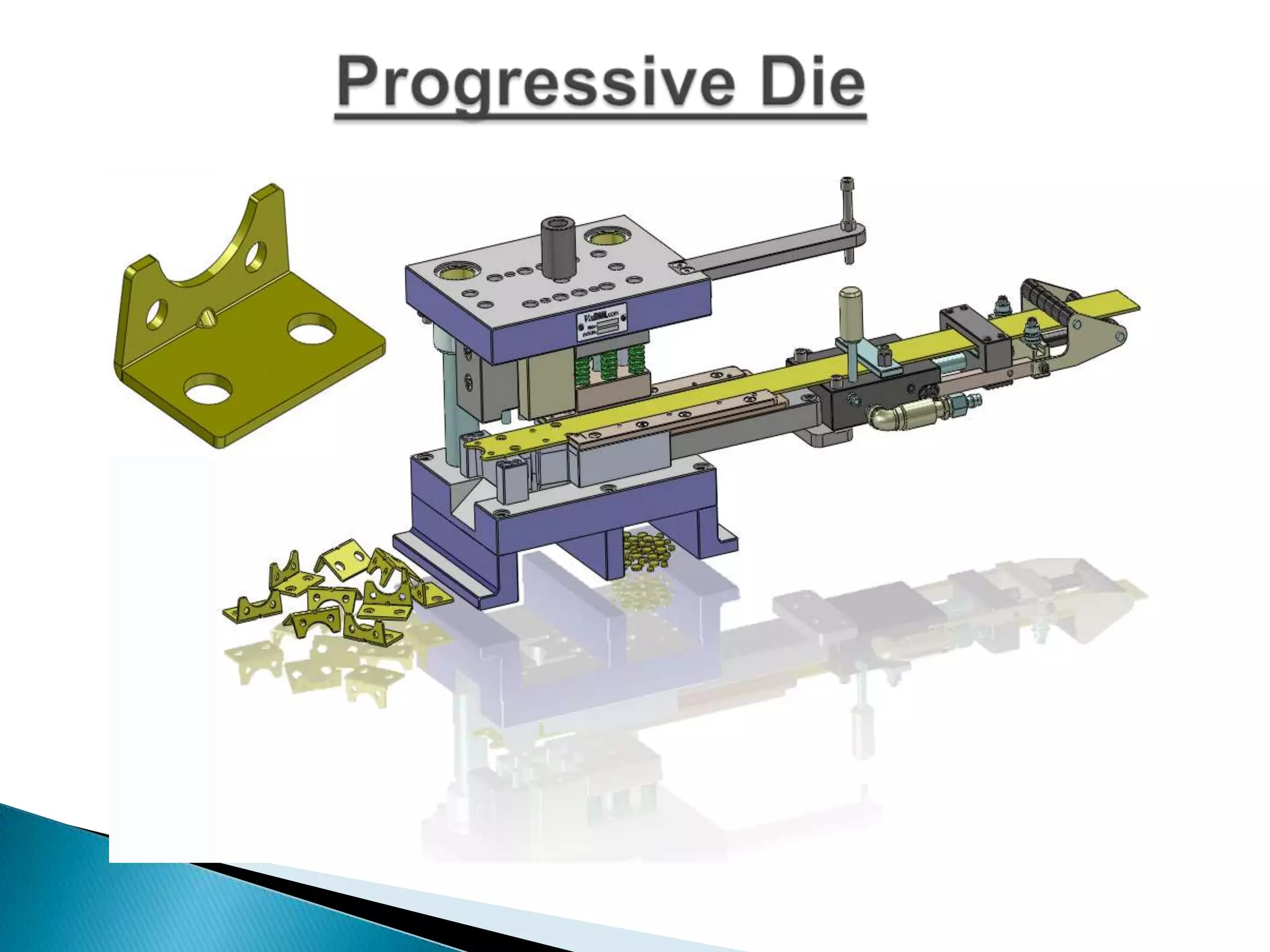
A progressive has a
series of
operations.
 At each station , an
operation is
performed on a
work piece during
a stroke of the
press.

THANK YOU

Sheet metal-operations

  • 3.
         A piece ofmetal whose thickness is between 0.006(0.15 mm) and 0.25 inches(6.35 mm). Anything thinner is referred to as a foil and thicker is considered as a plate. Sheet thickness is generally measured in gauge. Greater the gauge number, thinner the sheet of metal. Sheet metal can be cut, bent and stretched into nearly any shape. Generally two types of operations are performed- forming and cutting.
  • 4.
     Bending  Shearing Blanking  Punching  Trimming  Parting  Slitting  Lancing  Notching  perforating  Nibbling  Embossing  Shaving  Cutoff  dinking  Coining  Deep drawing  Stretch forming  Roll forming
  • 5.
     Bending is ametal forming process in which a force is applied to a piece of sheet metal, causing it to bend at an angle and form the desired shape.
  • 7.
    Two common bendingmethods are:  V-Bending  Edge bending   V-Bending: The sheet metal blank is bent between a Vshaped punch and die. Air bending: If the punch does not force the sheet to the bottom of the die cavity, leaving space or air underneath, it is called "air bending“.
  • 8.
     Edge or WipeBending: Wipe bending requires the sheet to be held against the wipe die by a pressure pad. The punch then presses against the edge of the sheet that extends beyond the die and pad. The sheet will bend against the radius of the edge of the wipe die.
  • 9.
    Straight flanging Stretchflanging Hemming Seaming Shrink flanging Curling
  • 10.
  • 11.
     Shearing is defined asseparating material into two parts.  It utilizes shearing force to cut sheet metal.
  • 12.
     A piece ofsheet metal is removed from a larger piece of stock.  This removed piece is not scrap, it is the useful part.
  • 13.
    A second forceis applied underneath the sheet, directly opposite the punch, by a "cushion".  This technique produces a part with better flatness and smoother edges. 
  • 15.
     The typical punching operation,in which a cylindrical punch pierces a hole into the sheet.
  • 17.
     Punching away excess material fromthe perimeter of a part, such as trimming the flange from a drawn cup.
  • 18.
     Separating a part fromthe remaining sheet, by punching away the material between parts.
  • 19.
     Cutting straight lines inthe sheet. No scrap material is produced.
  • 20.
     Creating a partial cutin the sheet, so that no material is removed. The material is left attached to be bent and form a shape, such as a tab, vent, or louver.
  • 21.
     Punching the edge ofa sheet, forming a notch in the shape of a portion of the punch.
  • 22.
     Punching a close arrangementof a large number of holes in a single operation.
  • 23.
     Punching a series ofsmall overlapping slits or holes along a path to cut-out a larger contoured shape.
  • 24.
     Certain designs are embossedon the sheet metal.  Punch and die are of the same contour but in opposite direction.
  • 25.
    Shearing away minimal materialfrom the edges of a feature or part, using a small die clearance. Used to improve accuracy or finish. Tolerances of ±0.025 mm are possible.
  • 26.
    Cutoff - Separatinga part from the remaining sheet, without producing any scrap. The punch will produce a cut line that may be straight, angled, or curved.
  • 27.
    Dinking - A specializedform of piercing used for punching soft metals. A hollow punch, called a dinking die, with beveled, sharpened edges presses the sheet into a block of wood or soft metal.
  • 28.
     Similar to embossing withthe difference that similar or different impressions are obtained on both the sides of the sheet metal.
  • 29.
      Deep drawing isa metal forming process in which sheet metal is stretched into the desired shape. A tool pushes downward on the sheet metal, forcing it into a die cavity in the shape of the desired part.
  • 31.
     Stretch forming isa metal forming process in which a piece of sheet metal is stretched and bent simultaneously over a die in order to form large bent parts.
  • 32.
      Roll forming isa continuous bending operation in which a long strip of sheet metal is passed through sets of rolls mounted on consecutive stands, each set performing only an incremental part of the bend, until the desired cross-section profile is obtained. Roll forming is ideal for producing constant-profile parts with long lengths and in large quantities.
  • 33.
    Made up oftool steel and used to cut or shape material. 1. Simple die 2. Compound die 3. Combination die 4. Progressive die
  • 34.
    Simple dies orsingle action dies perform single operation for each stroke of the press slide.  The operation may be one of the cutting or forming operations. 
  • 35.
    In these dies,two or more operations may be performed at one station.  Such dies are considered as cutting tools since, only cutting operations are carried out. 
  • 36.
      In this diealso , more than one operation may be performed at one station. It is different from compound die in that in this die, a cutting operation is combined with a bending or drawing operation, due to that it is called combination die.
  • 37.
    A progressive hasa series of operations.  At each station , an operation is performed on a work piece during a stroke of the press. 
  • 40.