Reproduction:
Mitosis & Meiosis
BIOL 1307
Ebeling
Objectives:
1. Explain the main events of the Eukaryotic cell cycle.
2. Define: chromosome, autosome, sex chromosome, homologous
pair, sister chromatids, genes, and alleles.
3. Define and relate: haploid and diploid cells, gametes,
fertilization, zygote.
4. Explain the main events and the end result of mitosis.
5. Explain the main events and the end result of meiosis.
6. Compare and contrast asexual and sexual reproduction,
including advantages and disadvantages.
7. Explain the roles of meiosis, gamete formation, and fertilization
in sexual reproduction.
8. List and explain three ways that meiosis and sexual reproduction
generate genetic variability among offspring.
9. Describe the role of homologous chromosomes in sexual
reproduction.
10. Compare and contrast mitosis and meiosis.
Cellular Reproduction vs. Organismal Reproduction
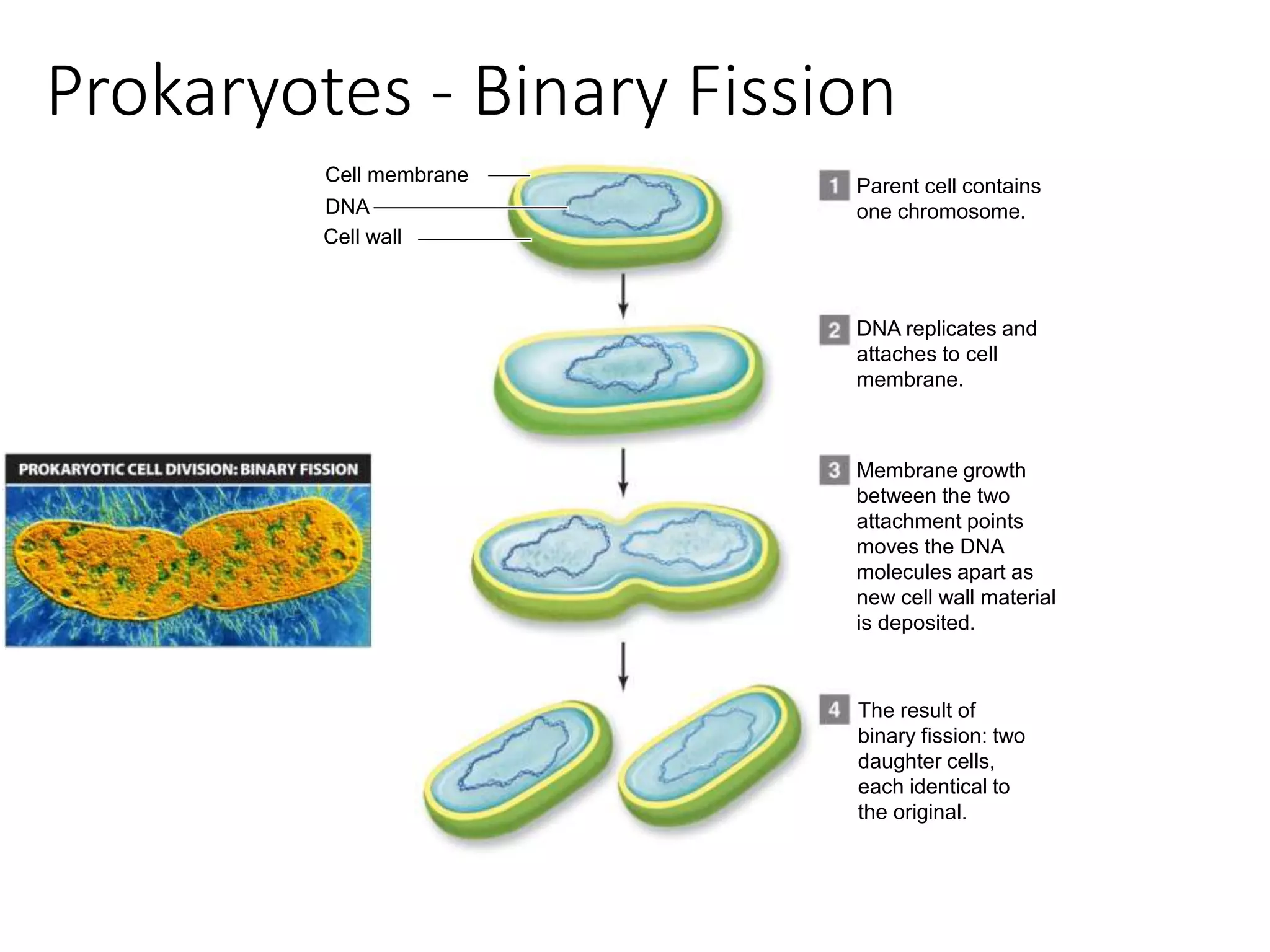
Cell membrane
DNA
Cell wall
Parent cell contains
one chromosome.
DNA replicates and
attaches to cell
membrane.
Membrane growth
between the two
attachment points
moves the DNA
molecules apart as
new cell wall material
is deposited.
The result of
binary fission: two
daughter cells,
each identical to
the original.
Prokaryotes - Binary Fission
Eukaryote Mitosis
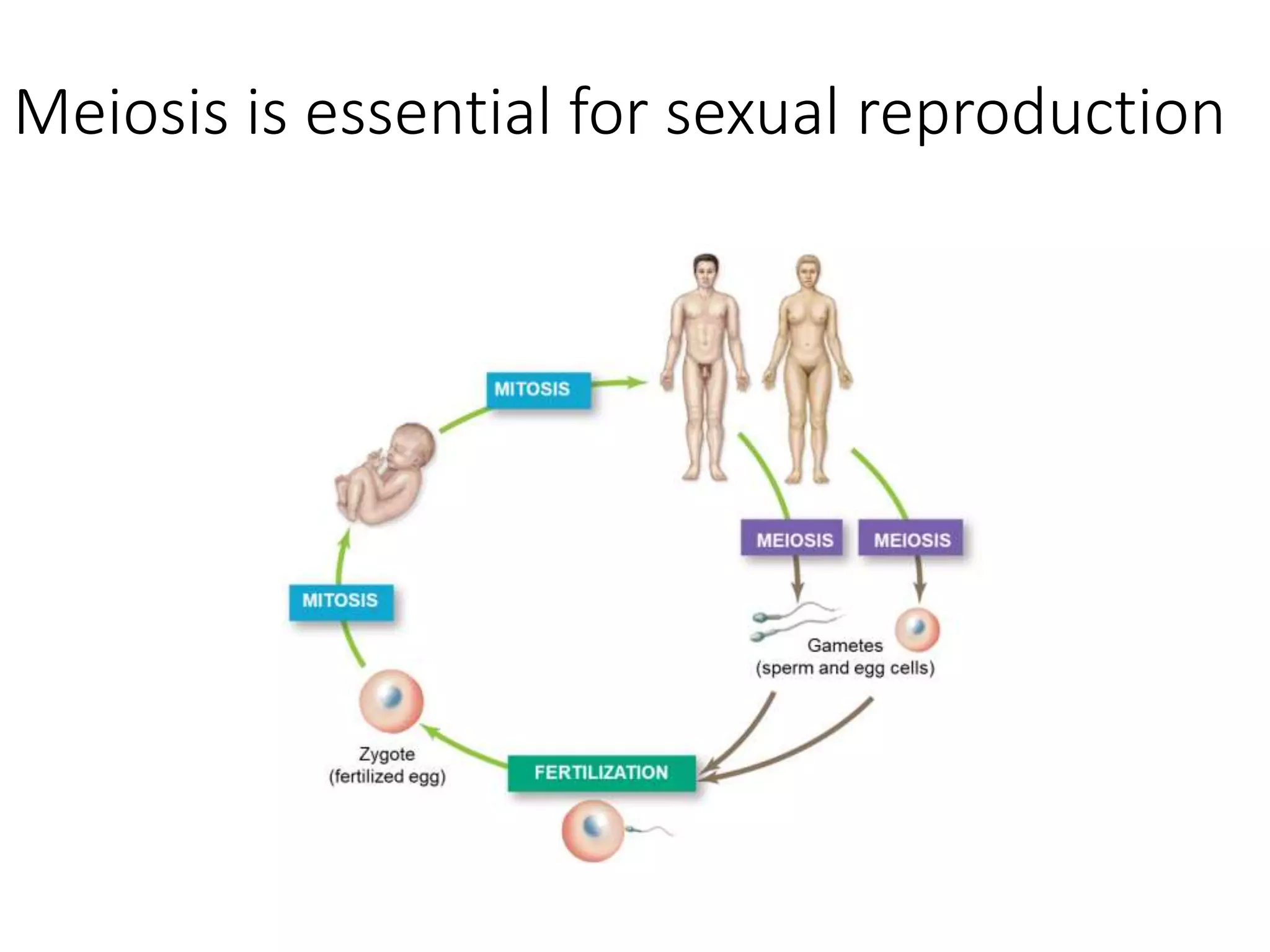
Meiosis is essential for sexual reproduction
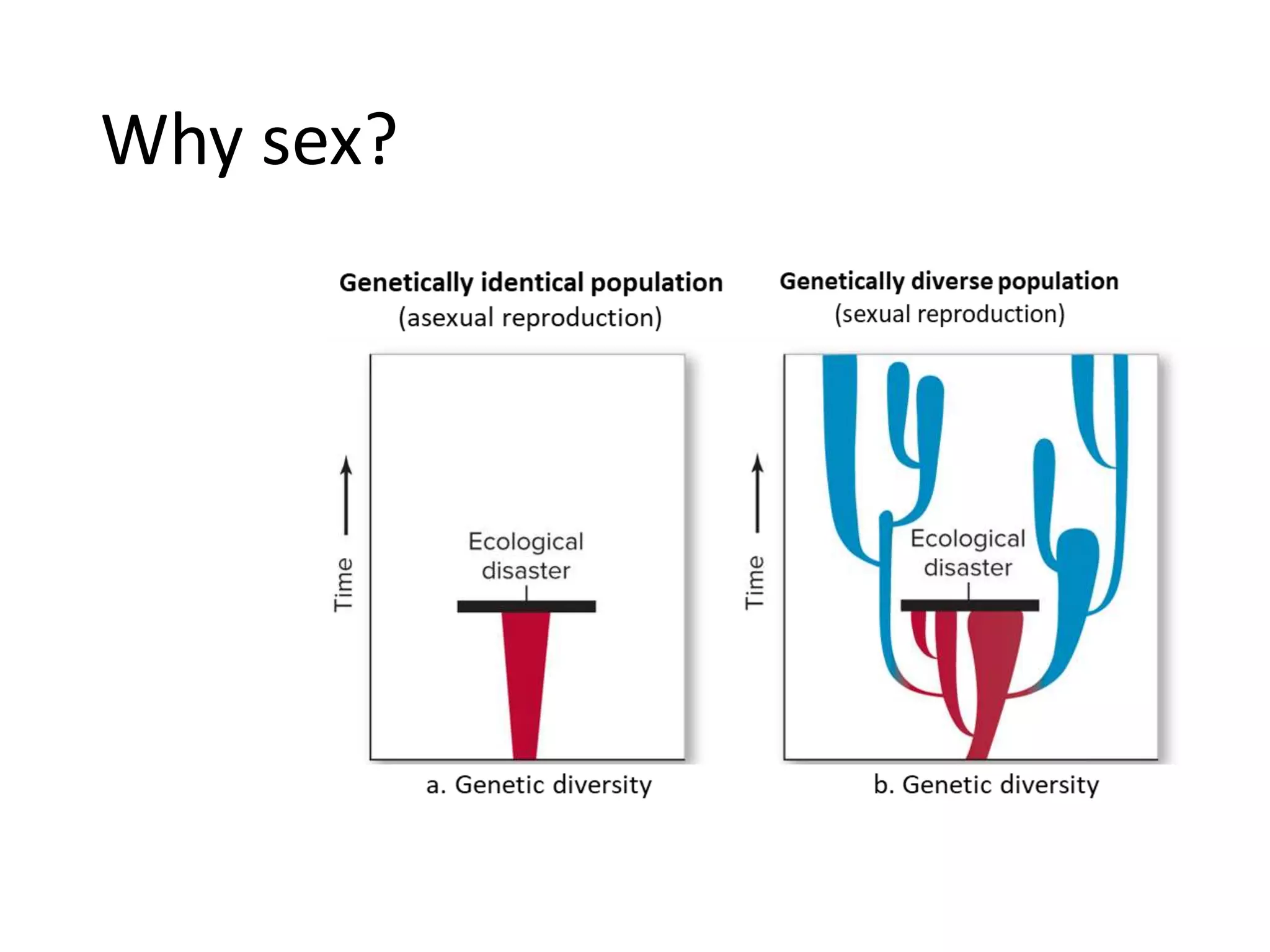
Why sex?
Asexual Sexual
Reproduction
Eukaryote Cell Cycle
• G1
• S
• G2
• M phase (Mitosis and Cytokinesis)
• P
• M
• A
• T
DNA Replication
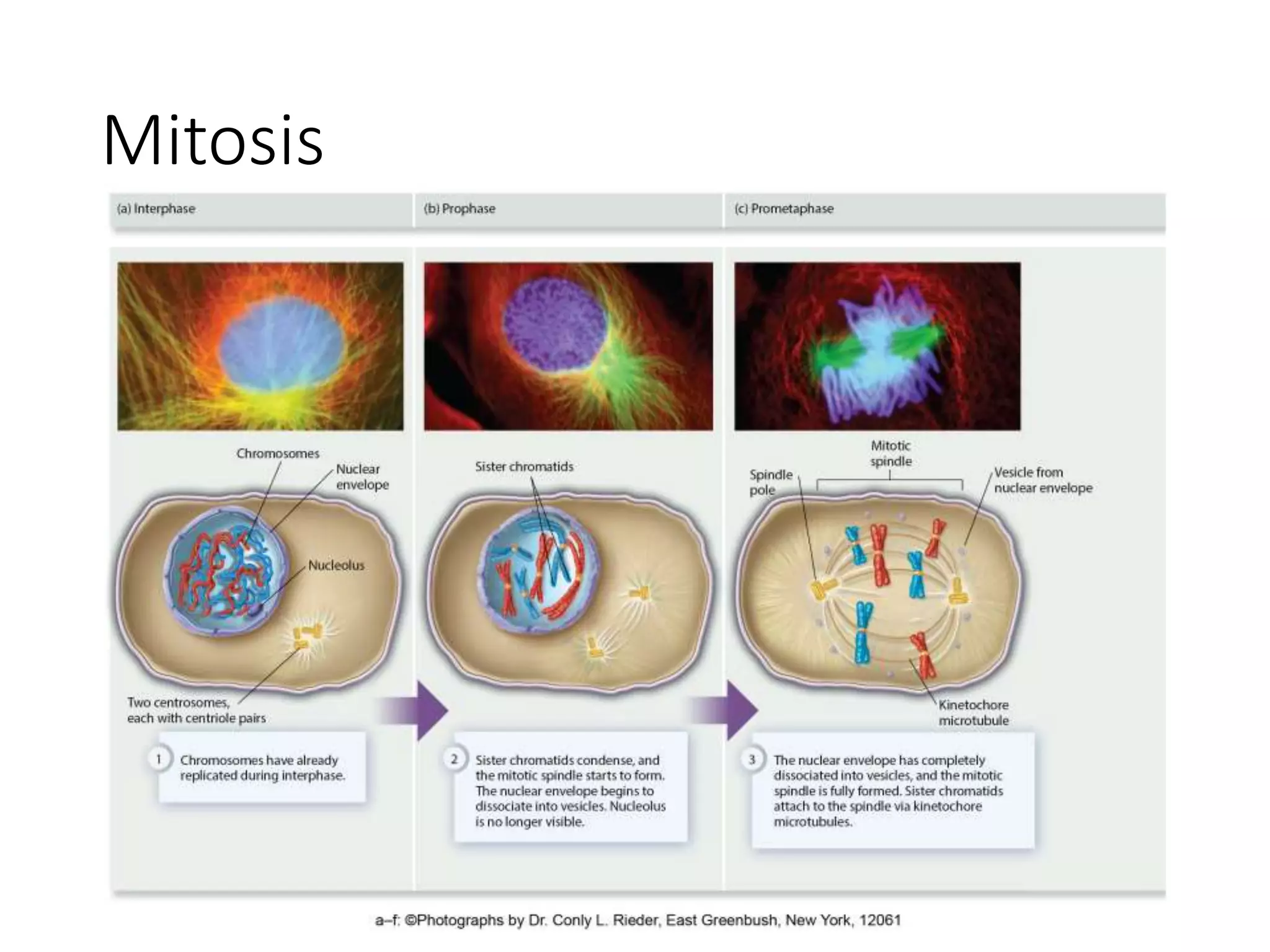
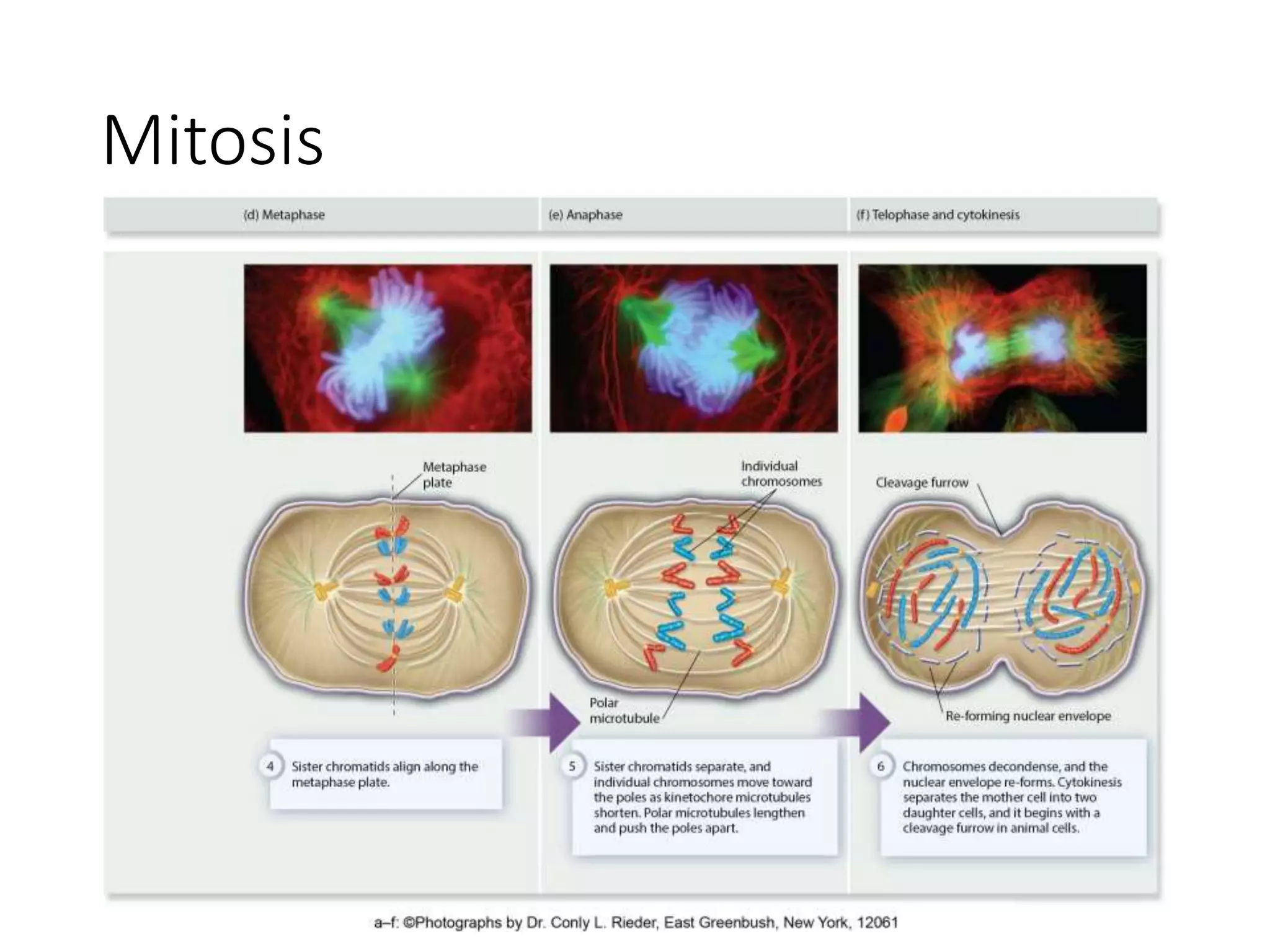
Mitosis
Mitosis
Cytokinesis
Meiosis is essential for sexual reproduction
Vocabulary:
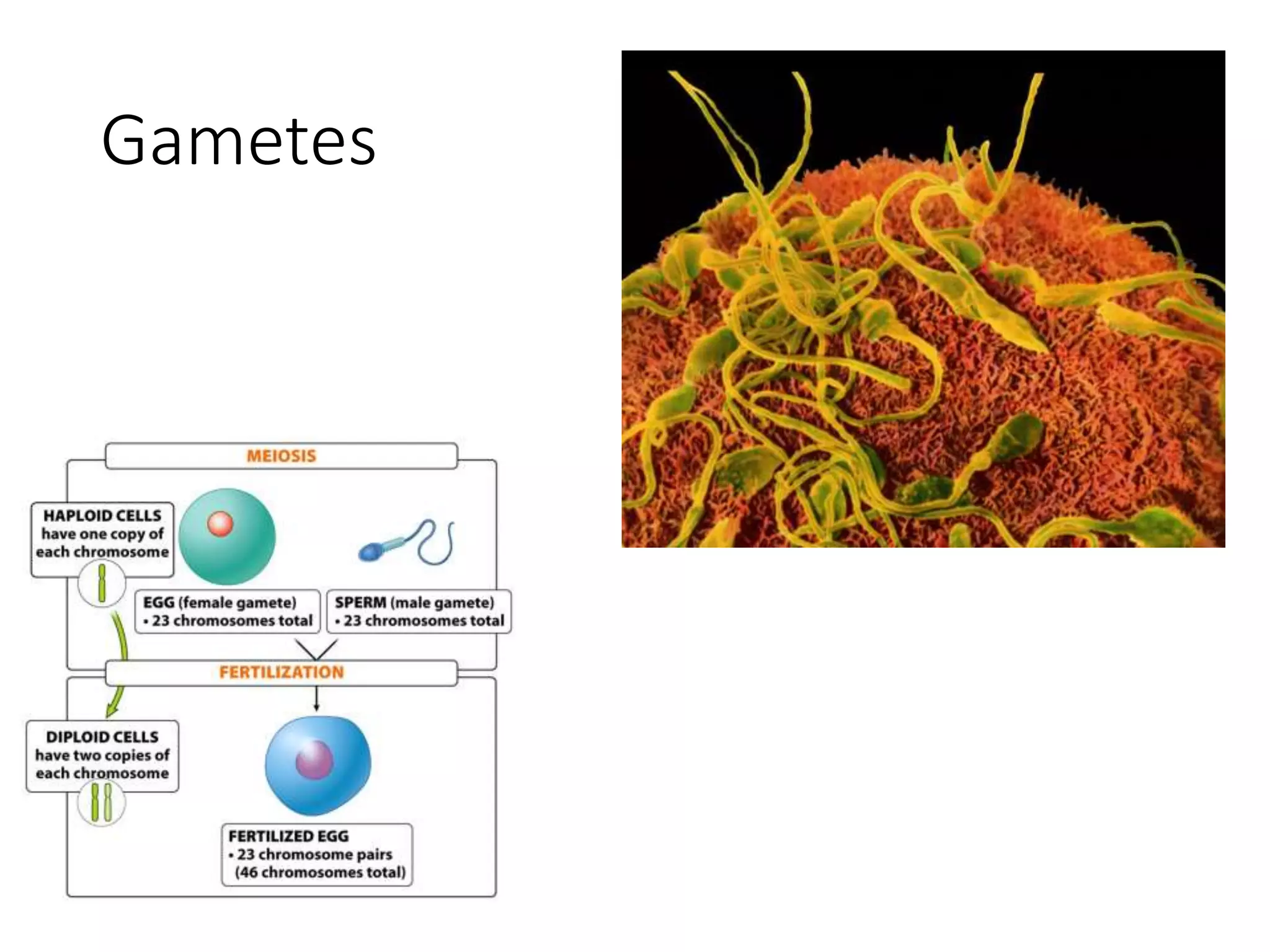
• Diploid
• Haploid
• Gametes
• Fertilization
• Zygote
Vocabulary:
• Chromosome
• Autosome
• Sex Chromosome
• Gene
• Allele
• Homologous Pair
• Chromatid
• Sister Chromatid
DNA Replication
Replicated Chromosomes
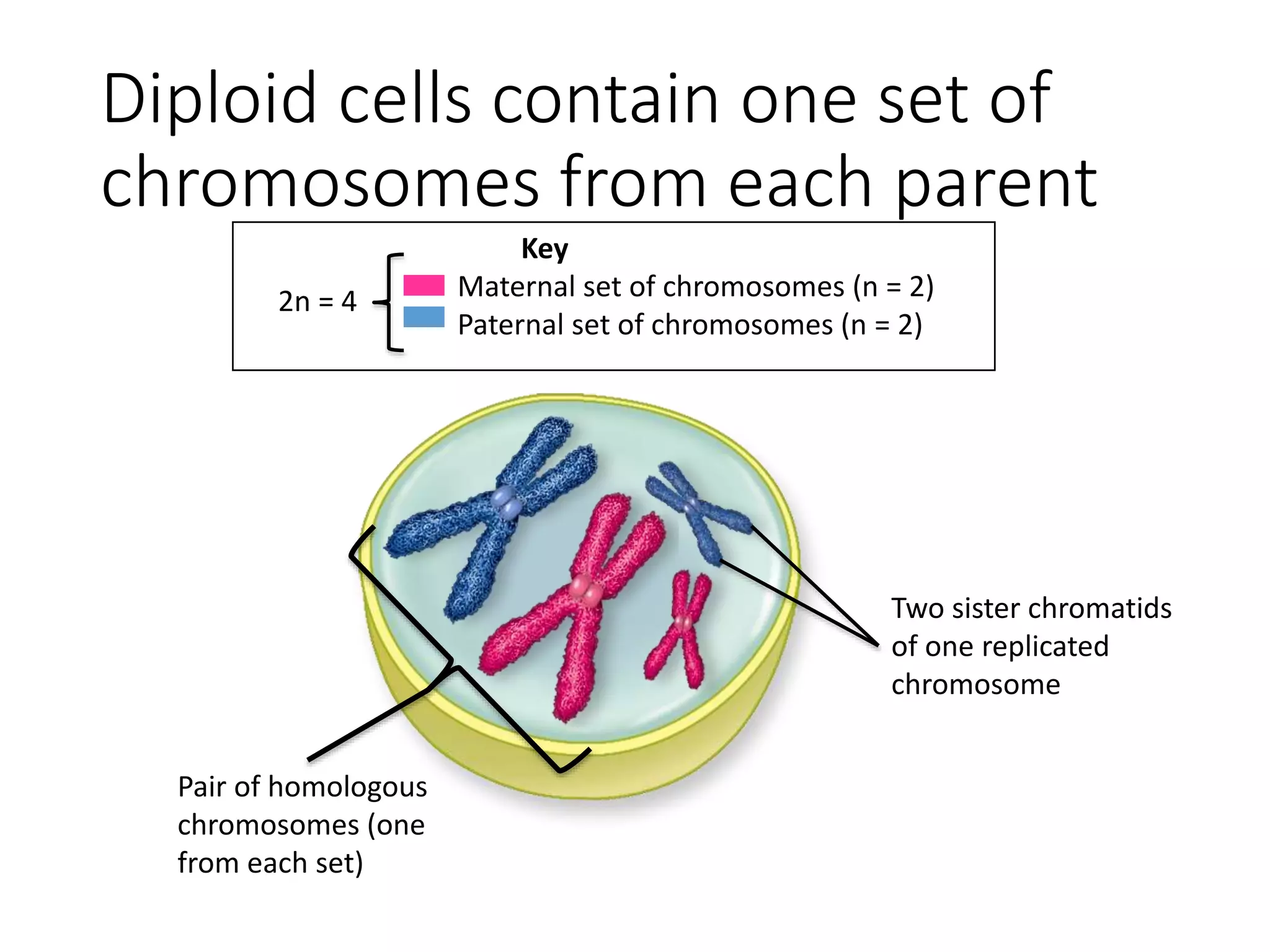
Diploid cells contain one set of
chromosomes from each parent
Two sister chromatids
of one replicated
chromosome
Pair of homologous
chromosomes (one
from each set)
Key
Maternal set of chromosomes (n = 2)
Paternal set of chromosomes (n = 2)
2n = 4
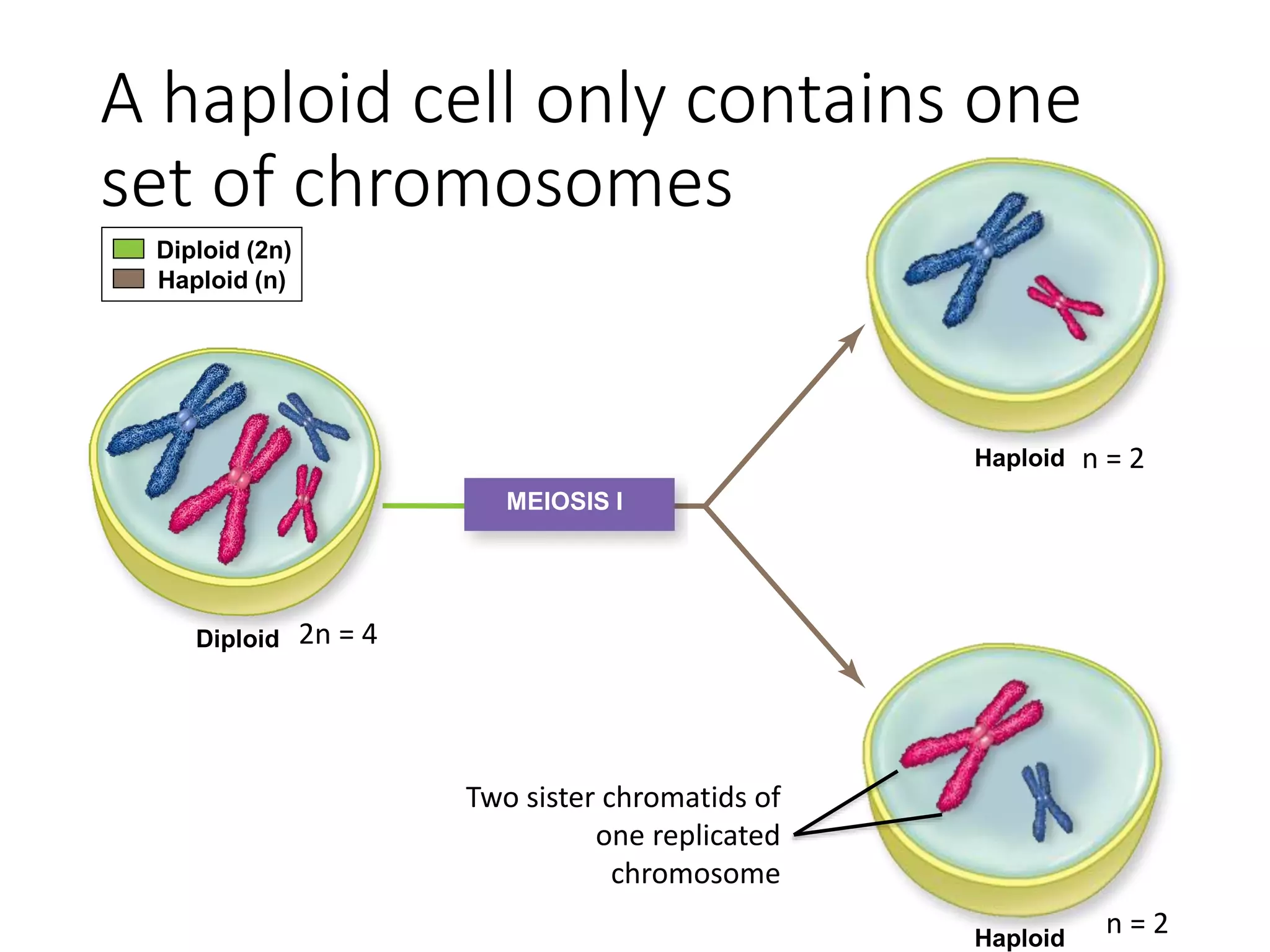
A haploid cell only contains one
set of chromosomes
Haploid
Haploid
Diploid
Diploid (2n)
Haploid (n)
MEIOSIS I
2n = 4
n = 2
n = 2
Two sister chromatids of
one replicated
chromosome
Gametes
Diploid Cells Contain Two Homologous
Sets of Chromosomes
Section 9.2 Figure 9.3All karyotype photos: © CNRI/Science Source
sex chromosomes
autosomes
Karyotype
Homologous Chromosomes
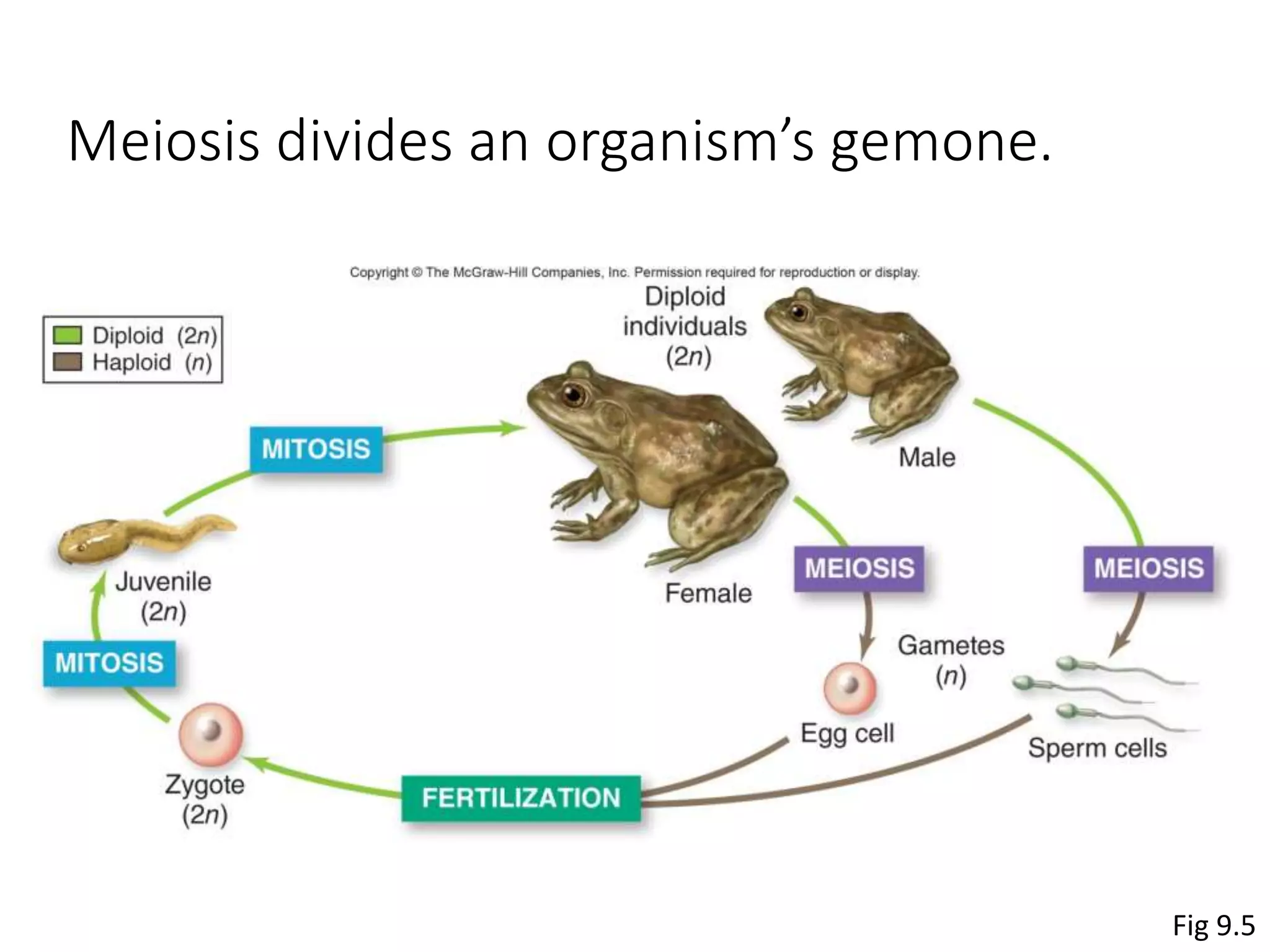
Meiosis divides an organism’s gemone.
Fig 9.5
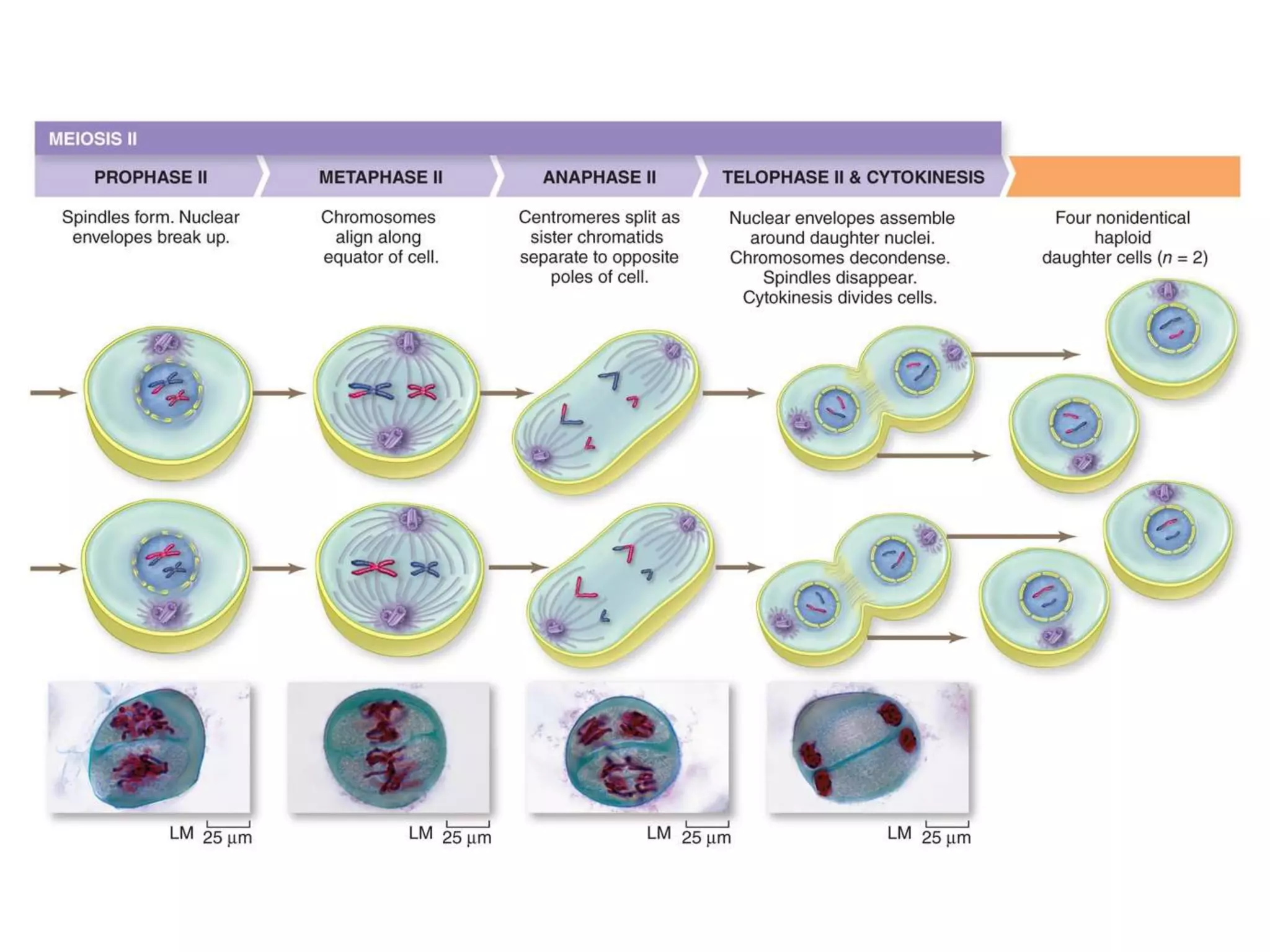
Meiosis occurs in 2 major divisions
Figure 9.7
Nuclear envelopes form
around chromosomes,
which may temporarily
decondense. Spindle
disappears. Cytokinesis
may divide cell into two.
Homologous
chromosomes
separate to opposite
poles of cell. Sister
chromatids remain
joined.
Paired homologous
chromosomes align
along equator of cell.
DNA replicates.
Cell produces
proteins needed
for cell division.
INTERPHASE
TELOPHASE I &
CYTOKINESIS
ANAPHASE IMETAPHASE IPROPHASE I (LATE)PROPHASE I (EARLY)
Chromosomes
condense and become
visible. (2n = 4)
Crossing over occurs.
Spindle forms.
Nuclear envelope
breaks up.
Nucleus Nuclear envelope
Homologous
chromosomes
Centrosomes Spindle fibers
MEIOSIS I
Haploid (n)
Diploid (2n)
LM 25 μm LM 25 μm LM 25 μm LM 25 μm
(all) ©Ed Reschke
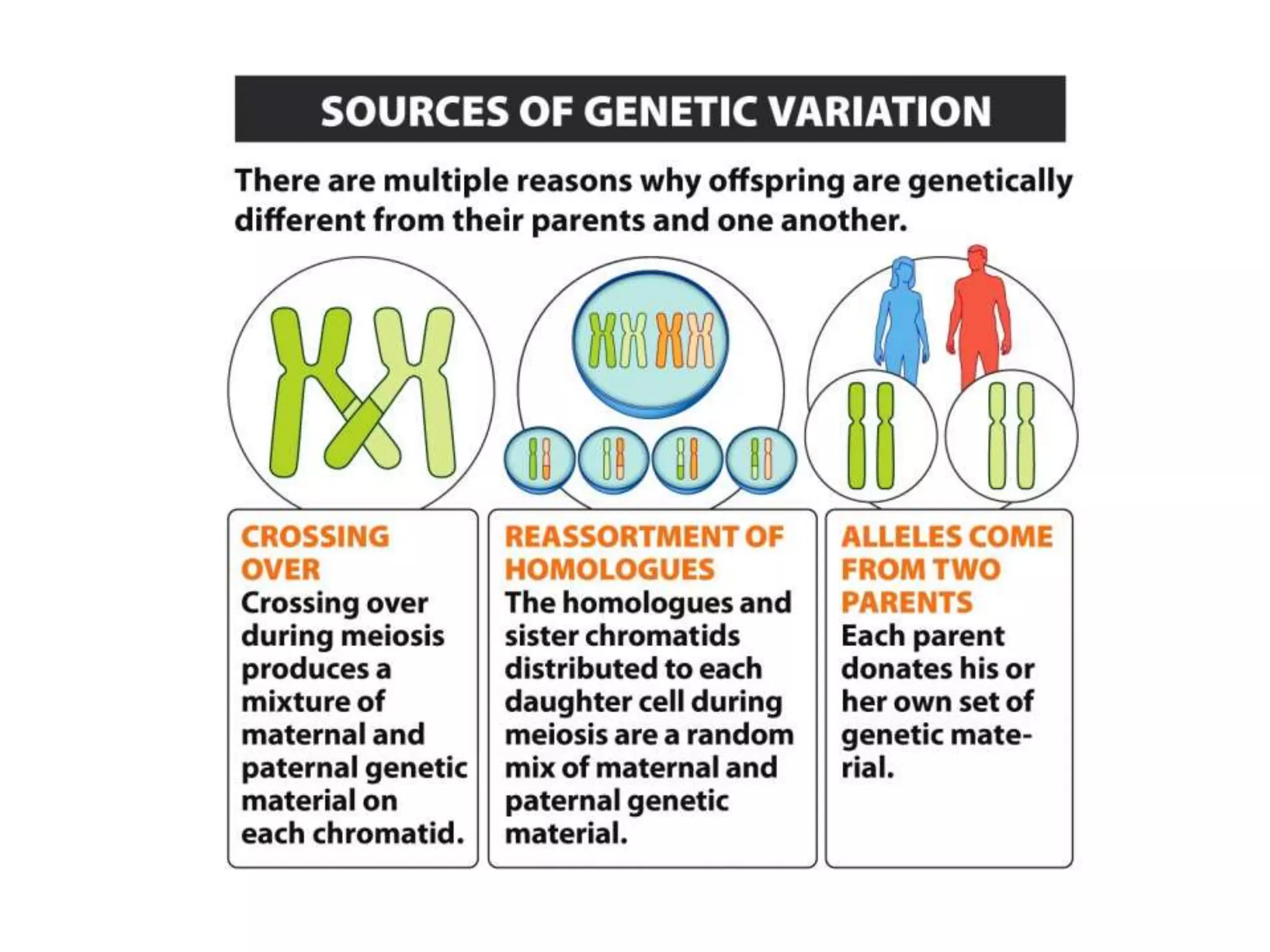
Meiosis generates genetic variability
Labradoodle x Labradoodle = ???
Crossing Over
Chromosome Pairs Align Randomly During Metaphase I
Independent Assortment
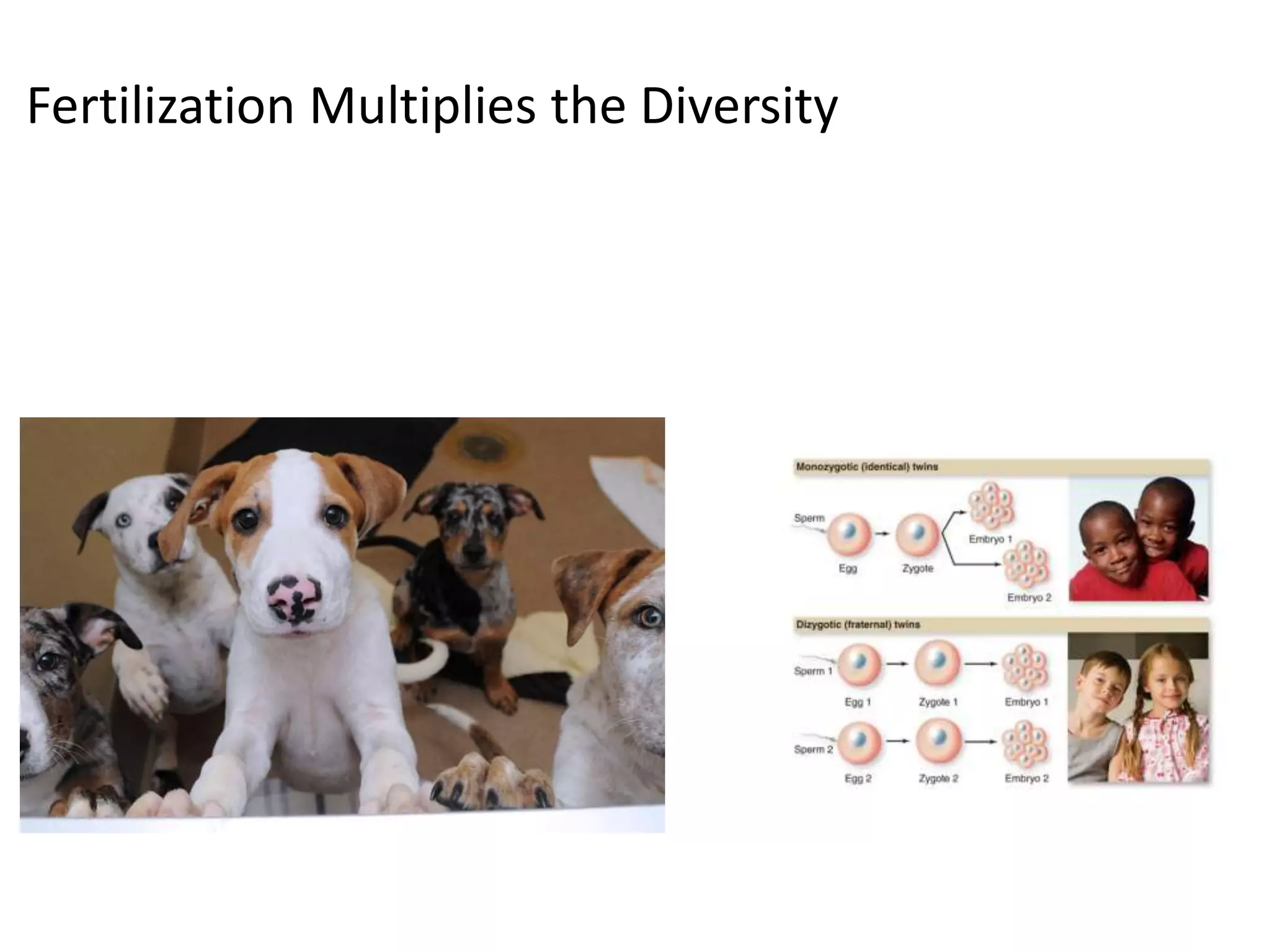
Fertilization Multiplies the Diversity
Compare and Contrast Mitosis and Meiosis
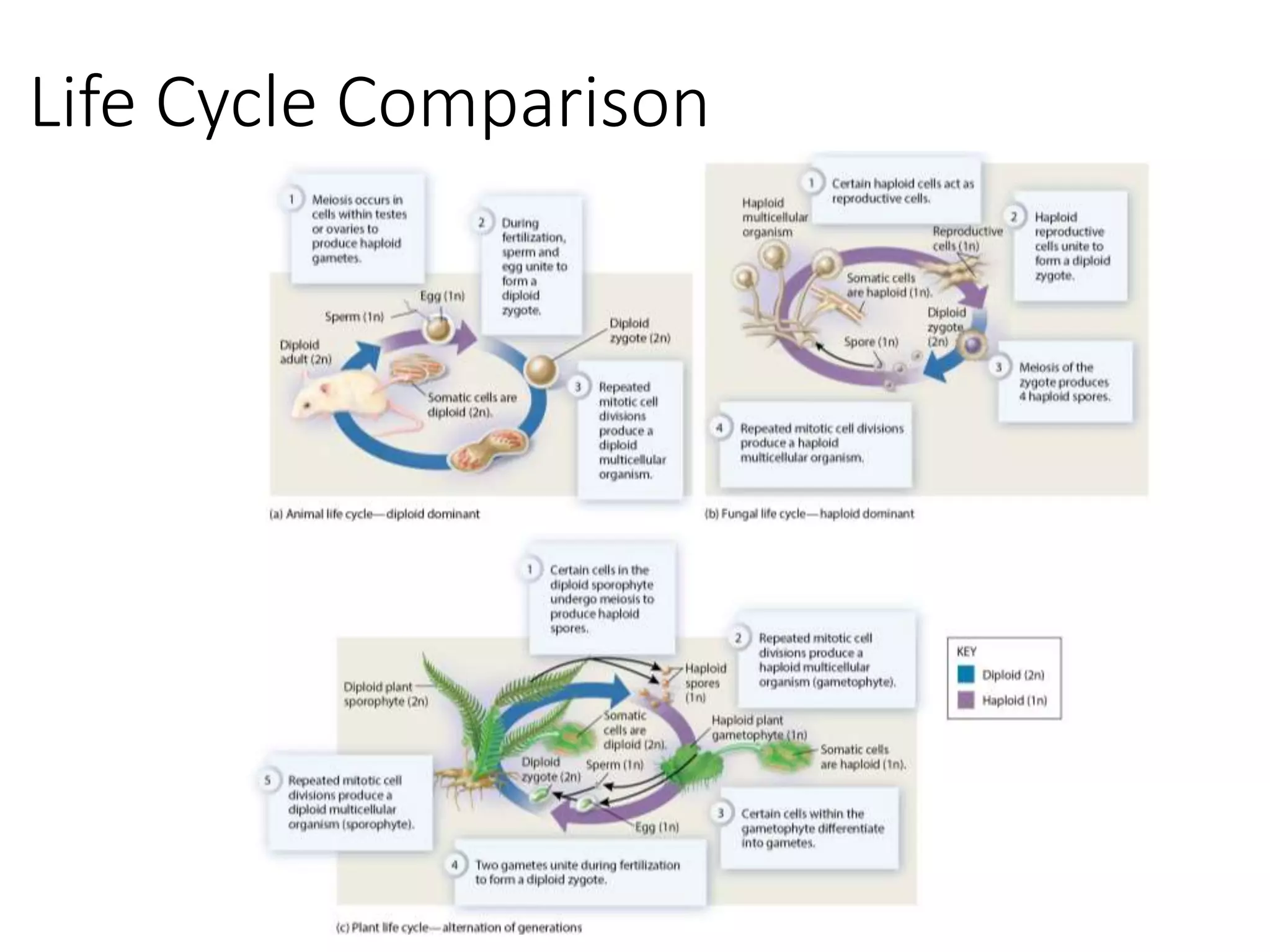
Life Cycle Comparison
Alternation of Generations=

1307 cell cycle f 2019 blank