Menstrual disorders and
others
Amenorrhea & dysmenorrhea
Dysfunctional bleeding and PMS
PID & Endometriosis and
Menopause
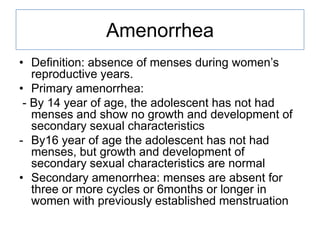
Amenorrhea
• Definition: absence of menses during women’s
reproductive years.
• Primary amenorrhea:
- By 14 year of age, the adolescent has not had
menses and show no growth and development of
secondary sexual characteristics
- By16 year of age the adolescent has not had
menses, but growth and development of
secondary sexual characteristics are normal
• Secondary amenorrhea: menses are absent for
three or more cycles or 6months or longer in
women with previously established menstruation
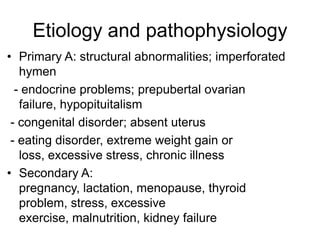
Etiology and pathophysiology
• Primary A: structural abnormalities; imperforated
hymen
- endocrine problems; prepubertal ovarian
failure, hypopituitalism
- congenital disorder; absent uterus
- eating disorder, extreme weight gain or
loss, excessive stress, chronic illness
• Secondary A:
pregnancy, lactation, menopause, thyroid
problem, stress, excessive
exercise, malnutrition, kidney failure
Assessment findings
• History tacking; whether the client has ever had
regular and cyclic menstrual pattern, past
illness, pregnancy history, medication, nutrition
and diet
• Physical examination; Wt, Ht, visible sign of
genetic problem or endocrine disease, eating
disorder, look for characteristics of secondary sex
development and evaluation of the reproductive
tract
• Dx: Karyotyping, pregnancy
test, ultrasound, hormonal study
• Tx: Depending on the cause, estrogen therapy,
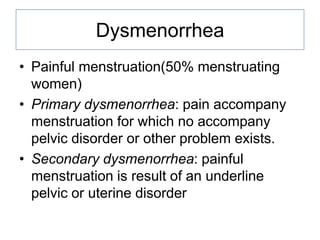
Dysmenorrhea
• Painful menstruation(50% menstruating
women)
• Primary dysmenorrhea: pain accompany
menstruation for which no accompany
pelvic disorder or other problem exists.
• Secondary dysmenorrhea: painful
menstruation is result of an underline
pelvic or uterine disorder
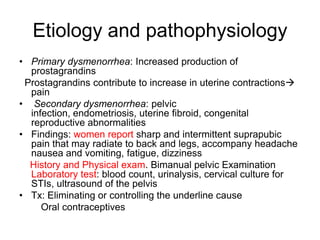
Etiology and pathophysiology
• Primary dysmenorrhea: Increased production of
prostagrandins
Prostagrandins contribute to increase in uterine contractions
pain
• Secondary dysmenorrhea: pelvic
infection, endometriosis, uterine fibroid, congenital
reproductive abnormalities
• Findings: women report sharp and intermittent suprapubic
pain that may radiate to back and legs, accompany headache
nausea and vomiting, fatigue, dizziness
History and Physical exam. Bimanual pelvic Examination
Laboratory test: blood count, urinalysis, cervical culture for
STIs, ultrasound of the pelvis
• Tx: Eliminating or controlling the underline cause
Oral contraceptives
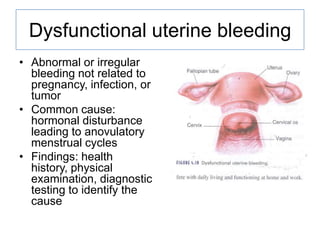
Dysfunctional uterine bleeding
• Abnormal or irregular
bleeding not related to
pregnancy, infection, or
tumor
• Common cause:
hormonal disturbance
leading to anovulatory
menstrual cycles
• Findings: health
history, physical
examination, diagnostic
testing to identify the
cause
Premenstrual syndrome(PMS)
• Regular premenstrual physical or emotional
symptoms that interfere with daily living and
functioning at home and work.
• Sx: pain, anxiety, irritability, mood
swings, fatigue, palpitation, crying, forgetfulness, fl
uid retention. Weight gain and breast tenderness
• Etiology is unknown but several theories involve;
Vit. deficiency, mineral deficiency, prostaglandin
imbalance
• Tx: Balance level of hormones or serotonin, life
style change, decrease alcohol and caffeine
intake, increase vit. B, calcium, exercise, Aerobic
Pelvic inflammatory disease(PID)
• PID, a serious complication stemming
from previous infections(STIs), can result
from infection of internal upper
reproductive tract
uterus(endometritis), fallopian
tube(salpingitis), ovarries(oophoritis), or
peritoneum
• Cause to infertile(100,000 women) and
lead to death(150 women)
Etiology and pathophysiology
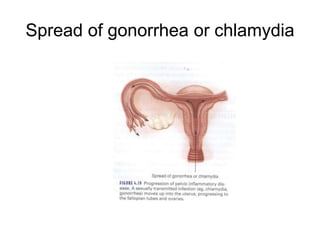
• Harmful bacteria move upward from the
vagina or cervix
• Bacterium; Chlamydia & gonorrhea that
infection result scarring and obstruction of the
fallopian tubes ectopic pregnancy or
infertility
• Risk factors: young, low income low
educational status, history of criminal
abortion(D&E), history of PID or STD, IUD
insertion, smoking, more than one sexual
parterner
Spread of gonorrhea or chlamydia
Assessment findings
• Sx: Mild to severe, asymtomatic, abdominal
pain, low abdominal tenderness, bilateral
tenderness
• Mild sx; vaginal discharge, mild persistent
abdominal and back pain
• Severe Sx; sudden and severe pelvic
pain, high fever chills ,heavy vaginal
discharge or bleeding, feeling of abdominal
fullness, abdominal mass(when abscess of
present)
• Dx: difficult because the symptoms are similar to many
other disease.
- Physical and pelvic examination
- Bacterial vaginal smear and cervical culture are used to
identify the causative organism.
- Blood analysis(erythrocyte sedimentation
rate;ESR), pelvic sonogram, laparoscopy
• Tx: depending on present symptoms
• Hospitalization IV+ antibiotics 24-48hrs.
• Laparoscopy to drain the abscess
• Women must be counseled to complete all
prescriptions and to receive follow up evaluation
• Nurses should educate and counsel client about
criminal abortion due to unwanted pregnancy
• Criminal abortion; by non professional or woman own
perform illegal abortion.
Endometriosis
• Endometriosis is a benign uterine condition in which
endometrial tissue attaches to sites outside the
endometrial cavity.(ovaries, fallopian tubes uterosacral
ligaments, peritoneum
• This tissue responds to hormones during the
menstrual cycle and undergoes change similar to
normally site uterine endometrial tissue
• All ethnic groups occurs, Asians appear to be at
increase risk
• Endometriosis is not life threatening, it interferes with a
client’s ability to work and can cause much pain and
discomfort(dysmenorrhea)
Etiology and pathophysiology
• Unknown; several theories
- during menstrual cycle, tissue back up
through the fallopian tubes and attaches
and implant in peritoneal cavity
- immune and hormonal problem
- tissue travel from the uterus to lymphatic
and blood vessel
Assessment findings
• Sx: asymtomatic
- Dysmenorrhea, infertility, pelvic
pain, dyspareunia, irregular and heavy bleeding,
- Symptoms may be associated with menstrual
cycles; premenstrual back pain abdominal
pain, rectal pain, diarrhea, fatigue, abdominal
bloating, urinary problem
• Dx: history, physical examination, pelvic
examination, Laparoscopy or laparotomy can be
used to visually inspect and identify this disorder
for definitive diagnosis.
• Tx: Depends on the extend and location of endometrial
growth, the client’s age, desire for pregnancy, and
severity of symptoms.
- Relive or reduce pain, shrink or slow endometrial growths
- Hormone therapy; oral contraceptives, progesterone
drugs
- Surgery and pre and post operative care
• Nug care:The nurse should provide information about
the use of nonphamacologic comfort measure
- Nurses need to aware the strong association between
reported pelvic pain and sexual abuse.
- Women should be encouraged to see her health provide
routinely and maintain life style that include proper
diet, physical activity, adequate sleep, and stress
management
Pelvic relaxation
• Muscle of the pelvic floor support the abdominal
and pelvic organs and ligaments, muscle, and
connective tissues support the pelvic itself
• These structures become stretched or damaged
due to childbirth, lack of restoration after
postpartum periods
• The median age for women seeking care for these
disorders is 61yrs
• Most common disorders are
cystocele, rectocele, uterine prolapse, uterine
displacement
• Pelvic strengthening exercise(Kegel’s exercise)
Pelvic relaxation
Cystitis
• An infection of the bladder. Bacterial(E-Coli)
growth in a woman’s urinary tract is relates
primarily to sexual intercourse and urethral
manipulation during oral sex or
masturbation(honeymoon cystitis)
• Dx: urine analysis, urine culture and
sensitivity test  proffer antibiotics
• Tx: increasing fluid intake(cranberry juice)
• Treat promptly and prevent development of
upper UTI
Urinary incontinence
• The inability to control urination.
• This gender associated difference may be attributable to
pregnancy, child birth, menopause.
• Old women are more likely than younger women
• There are 3 types
- Stress incontinence: after cough, sneeze, running
- Urgent incontinence: strong urge to void immediately before
urine is lost
- Mixed incontinence: combination of stress and urge UI
• Dx: Client may keeps bladder diaries for short periods(23days)
• Tx; Kegel’s exercise
- Bladder training
Perimenopause
• Perimenopause include
premenopause, menopause, postmenopause
• As long as 7-10 yrs, women age 45-60yrs, average 51yrs old
• This time begins with the last menstrual cycle leading to
menopause and extends to 1 year after the last menses
• Menopause is end of menstruation, dysfunction of
ovary(cessation of ovarian follicle)
• Menopause is not disease, menopause is natural process in
women’s life cycle
• Biomedical aspect, menopause as disease due to estrogen
deficiency
• Estrogen deficiency accompany symptoms; hot
flashes, vaginal dryness, emotional changes Hormonal
replacement therapy
• In Western culture, with its strong emphasis on
female youth and beauty, menopause may be a
difficult adjustment for some women.
• But Oriental culture, with its respect of old persons
and their wisdom, so less upset of loss of youth
and beauty.
• Nurses can assist women in dealing with this
transition use self help remedy.
• Women are finding meaning in their lives in a wide
variety of role
• Cessation of menses free women from periods
fear of pregnancy, and contraceptive concerns.
• Many women are menopause as a time of few
child care responsibilities and increase
opportunities to pursue other goals

12.menstrual disorders & others

  • 1.
    Menstrual disorders and others Amenorrhea& dysmenorrhea Dysfunctional bleeding and PMS PID & Endometriosis and Menopause
  • 2.
    Amenorrhea • Definition: absenceof menses during women’s reproductive years. • Primary amenorrhea: - By 14 year of age, the adolescent has not had menses and show no growth and development of secondary sexual characteristics - By16 year of age the adolescent has not had menses, but growth and development of secondary sexual characteristics are normal • Secondary amenorrhea: menses are absent for three or more cycles or 6months or longer in women with previously established menstruation
  • 3.
    Etiology and pathophysiology •Primary A: structural abnormalities; imperforated hymen - endocrine problems; prepubertal ovarian failure, hypopituitalism - congenital disorder; absent uterus - eating disorder, extreme weight gain or loss, excessive stress, chronic illness • Secondary A: pregnancy, lactation, menopause, thyroid problem, stress, excessive exercise, malnutrition, kidney failure
  • 4.
    Assessment findings • Historytacking; whether the client has ever had regular and cyclic menstrual pattern, past illness, pregnancy history, medication, nutrition and diet • Physical examination; Wt, Ht, visible sign of genetic problem or endocrine disease, eating disorder, look for characteristics of secondary sex development and evaluation of the reproductive tract • Dx: Karyotyping, pregnancy test, ultrasound, hormonal study • Tx: Depending on the cause, estrogen therapy,
  • 5.
    Dysmenorrhea • Painful menstruation(50%menstruating women) • Primary dysmenorrhea: pain accompany menstruation for which no accompany pelvic disorder or other problem exists. • Secondary dysmenorrhea: painful menstruation is result of an underline pelvic or uterine disorder
  • 6.
    Etiology and pathophysiology •Primary dysmenorrhea: Increased production of prostagrandins Prostagrandins contribute to increase in uterine contractions pain • Secondary dysmenorrhea: pelvic infection, endometriosis, uterine fibroid, congenital reproductive abnormalities • Findings: women report sharp and intermittent suprapubic pain that may radiate to back and legs, accompany headache nausea and vomiting, fatigue, dizziness History and Physical exam. Bimanual pelvic Examination Laboratory test: blood count, urinalysis, cervical culture for STIs, ultrasound of the pelvis • Tx: Eliminating or controlling the underline cause Oral contraceptives
  • 7.
    Dysfunctional uterine bleeding •Abnormal or irregular bleeding not related to pregnancy, infection, or tumor • Common cause: hormonal disturbance leading to anovulatory menstrual cycles • Findings: health history, physical examination, diagnostic testing to identify the cause
  • 8.
    Premenstrual syndrome(PMS) • Regularpremenstrual physical or emotional symptoms that interfere with daily living and functioning at home and work. • Sx: pain, anxiety, irritability, mood swings, fatigue, palpitation, crying, forgetfulness, fl uid retention. Weight gain and breast tenderness • Etiology is unknown but several theories involve; Vit. deficiency, mineral deficiency, prostaglandin imbalance • Tx: Balance level of hormones or serotonin, life style change, decrease alcohol and caffeine intake, increase vit. B, calcium, exercise, Aerobic
  • 9.
    Pelvic inflammatory disease(PID) •PID, a serious complication stemming from previous infections(STIs), can result from infection of internal upper reproductive tract uterus(endometritis), fallopian tube(salpingitis), ovarries(oophoritis), or peritoneum • Cause to infertile(100,000 women) and lead to death(150 women)
  • 10.
    Etiology and pathophysiology •Harmful bacteria move upward from the vagina or cervix • Bacterium; Chlamydia & gonorrhea that infection result scarring and obstruction of the fallopian tubes ectopic pregnancy or infertility • Risk factors: young, low income low educational status, history of criminal abortion(D&E), history of PID or STD, IUD insertion, smoking, more than one sexual parterner
  • 11.
    Spread of gonorrheaor chlamydia
  • 12.
    Assessment findings • Sx:Mild to severe, asymtomatic, abdominal pain, low abdominal tenderness, bilateral tenderness • Mild sx; vaginal discharge, mild persistent abdominal and back pain • Severe Sx; sudden and severe pelvic pain, high fever chills ,heavy vaginal discharge or bleeding, feeling of abdominal fullness, abdominal mass(when abscess of present)
  • 13.
    • Dx: difficultbecause the symptoms are similar to many other disease. - Physical and pelvic examination - Bacterial vaginal smear and cervical culture are used to identify the causative organism. - Blood analysis(erythrocyte sedimentation rate;ESR), pelvic sonogram, laparoscopy • Tx: depending on present symptoms • Hospitalization IV+ antibiotics 24-48hrs. • Laparoscopy to drain the abscess • Women must be counseled to complete all prescriptions and to receive follow up evaluation • Nurses should educate and counsel client about criminal abortion due to unwanted pregnancy • Criminal abortion; by non professional or woman own perform illegal abortion.
  • 14.
    Endometriosis • Endometriosis isa benign uterine condition in which endometrial tissue attaches to sites outside the endometrial cavity.(ovaries, fallopian tubes uterosacral ligaments, peritoneum • This tissue responds to hormones during the menstrual cycle and undergoes change similar to normally site uterine endometrial tissue • All ethnic groups occurs, Asians appear to be at increase risk • Endometriosis is not life threatening, it interferes with a client’s ability to work and can cause much pain and discomfort(dysmenorrhea)
  • 15.
    Etiology and pathophysiology •Unknown; several theories - during menstrual cycle, tissue back up through the fallopian tubes and attaches and implant in peritoneal cavity - immune and hormonal problem - tissue travel from the uterus to lymphatic and blood vessel
  • 16.
    Assessment findings • Sx:asymtomatic - Dysmenorrhea, infertility, pelvic pain, dyspareunia, irregular and heavy bleeding, - Symptoms may be associated with menstrual cycles; premenstrual back pain abdominal pain, rectal pain, diarrhea, fatigue, abdominal bloating, urinary problem • Dx: history, physical examination, pelvic examination, Laparoscopy or laparotomy can be used to visually inspect and identify this disorder for definitive diagnosis.
  • 17.
    • Tx: Dependson the extend and location of endometrial growth, the client’s age, desire for pregnancy, and severity of symptoms. - Relive or reduce pain, shrink or slow endometrial growths - Hormone therapy; oral contraceptives, progesterone drugs - Surgery and pre and post operative care • Nug care:The nurse should provide information about the use of nonphamacologic comfort measure - Nurses need to aware the strong association between reported pelvic pain and sexual abuse. - Women should be encouraged to see her health provide routinely and maintain life style that include proper diet, physical activity, adequate sleep, and stress management
  • 18.
    Pelvic relaxation • Muscleof the pelvic floor support the abdominal and pelvic organs and ligaments, muscle, and connective tissues support the pelvic itself • These structures become stretched or damaged due to childbirth, lack of restoration after postpartum periods • The median age for women seeking care for these disorders is 61yrs • Most common disorders are cystocele, rectocele, uterine prolapse, uterine displacement • Pelvic strengthening exercise(Kegel’s exercise)
  • 19.
  • 20.
    Cystitis • An infectionof the bladder. Bacterial(E-Coli) growth in a woman’s urinary tract is relates primarily to sexual intercourse and urethral manipulation during oral sex or masturbation(honeymoon cystitis) • Dx: urine analysis, urine culture and sensitivity test  proffer antibiotics • Tx: increasing fluid intake(cranberry juice) • Treat promptly and prevent development of upper UTI
  • 21.
    Urinary incontinence • Theinability to control urination. • This gender associated difference may be attributable to pregnancy, child birth, menopause. • Old women are more likely than younger women • There are 3 types - Stress incontinence: after cough, sneeze, running - Urgent incontinence: strong urge to void immediately before urine is lost - Mixed incontinence: combination of stress and urge UI • Dx: Client may keeps bladder diaries for short periods(23days) • Tx; Kegel’s exercise - Bladder training
  • 22.
    Perimenopause • Perimenopause include premenopause,menopause, postmenopause • As long as 7-10 yrs, women age 45-60yrs, average 51yrs old • This time begins with the last menstrual cycle leading to menopause and extends to 1 year after the last menses • Menopause is end of menstruation, dysfunction of ovary(cessation of ovarian follicle) • Menopause is not disease, menopause is natural process in women’s life cycle • Biomedical aspect, menopause as disease due to estrogen deficiency • Estrogen deficiency accompany symptoms; hot flashes, vaginal dryness, emotional changes Hormonal replacement therapy
  • 23.
    • In Westernculture, with its strong emphasis on female youth and beauty, menopause may be a difficult adjustment for some women. • But Oriental culture, with its respect of old persons and their wisdom, so less upset of loss of youth and beauty. • Nurses can assist women in dealing with this transition use self help remedy. • Women are finding meaning in their lives in a wide variety of role • Cessation of menses free women from periods fear of pregnancy, and contraceptive concerns. • Many women are menopause as a time of few child care responsibilities and increase opportunities to pursue other goals