Composite Shapes
The student is able to (I can):
• Find the surface area and volume of composite figures
Much like composite plane figures, to find the surface area
and volume of composite shapes, break them down into
simpler shapes and combine.
While volume is a fairly straightfoward process, when you
calculate the surface area of a composite shape, you need to
take into account portions of the shape that might be
covered up by other shapes.
Example
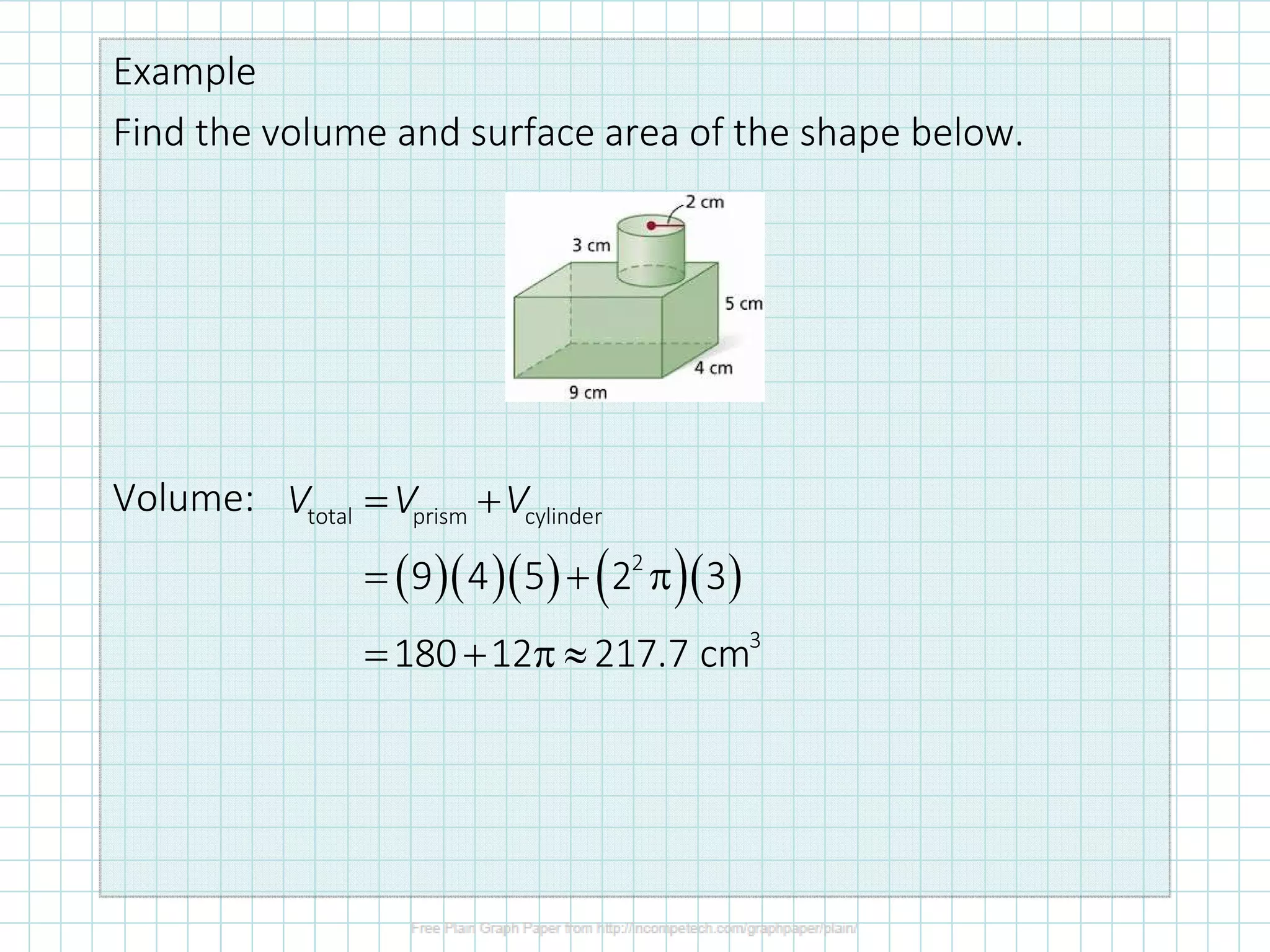
Find the volume and surface area of the shape below.
Volume:
( )( )( ) ( )( )
total prism cylinder
2
3
9 4 5 2 3
180 12 217.7 cm
V V V= +
= + π
= + π ≈
Example
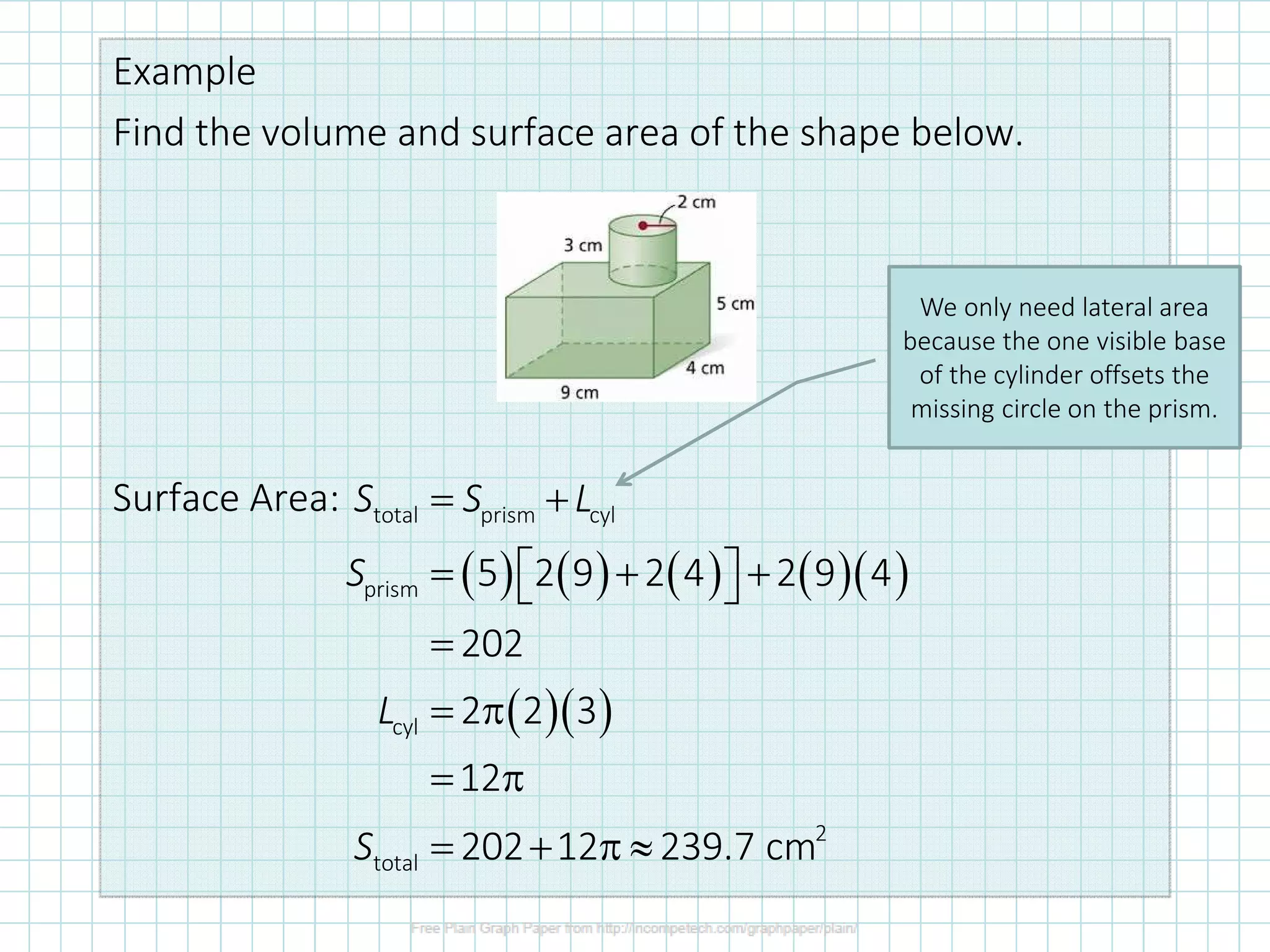
Find the volume and surface area of the shape below.
Surface Area:
( ) ( ) ( ) ( )( )
( )( )
total prism cyl
prism
cyl
2
total
5 2 9 2 4 2 9 4
202
2 2 3
12
202 12 239.7 cm
S S L
S
L
S
= +
 = + + 
=
= π
= π
= + π ≈
We only need lateral area
because the one visible base
of the cylinder offsets the
missing circle on the prism.

12.5 Composite Shapes

  • 1.
    Composite Shapes The studentis able to (I can): • Find the surface area and volume of composite figures
  • 2.
    Much like compositeplane figures, to find the surface area and volume of composite shapes, break them down into simpler shapes and combine. While volume is a fairly straightfoward process, when you calculate the surface area of a composite shape, you need to take into account portions of the shape that might be covered up by other shapes.
  • 3.
    Example Find the volumeand surface area of the shape below. Volume: ( )( )( ) ( )( ) total prism cylinder 2 3 9 4 5 2 3 180 12 217.7 cm V V V= + = + π = + π ≈
  • 4.
    Example Find the volumeand surface area of the shape below. Surface Area: ( ) ( ) ( ) ( )( ) ( )( ) total prism cyl prism cyl 2 total 5 2 9 2 4 2 9 4 202 2 2 3 12 202 12 239.7 cm S S L S L S = +  = + +  = = π = π = + π ≈ We only need lateral area because the one visible base of the cylinder offsets the missing circle on the prism.