NUCLEOTIDES & NUCLEIC ACIDS
Joel kapenda
Topic outline
Nucleotides
Nucleic Acids (RNA and DNA)
NUCLEOTIDES
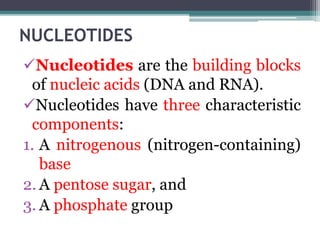
Nucleotides are the building blocks
of nucleic acids (DNA and RNA).
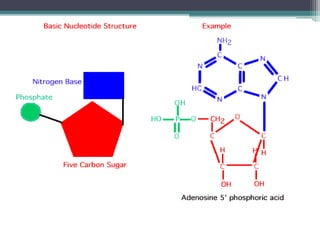
Nucleotides have three characteristic
components:
1. A nitrogenous (nitrogen-containing)
base
2. A pentose sugar, and
3. A phosphate group
 The molecule without the phosphate
group is called a nucleoside.
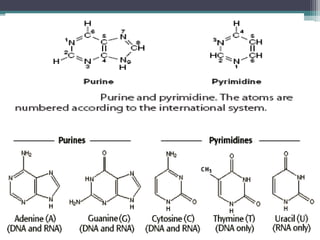
 The nitrogenous bases are derivatives
of two parent compounds,
pyrimidine and purine.
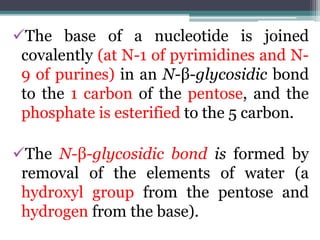
The base of a nucleotide is joined
covalently (at N-1 of pyrimidines and N-
9 of purines) in an N-β-glycosidic bond
to the 1 carbon of the pentose, and the
phosphate is esterified to the 5 carbon.
The N-β-glycosidic bond is formed by
removal of the elements of water (a
hydroxyl group from the pentose and
hydrogen from the base).
Importance of Nucleotides
Building blocks of nucleic acids
(Deoxyribonucleic Acid=DNA and
Ribonucleic acid=RNA).
Part of many coenzymes and serve as
- donors of phosphoryl groups (eg,
ATP or GTP),
- donors of sugars (eg, UDP-sugar or
GDP-sugars).
 Synthetic nucleotides
(purine and
pyrimidine)are analogs
used in
- chemotherapy of cancer
and HIV/AIDS. For
example, nucleoside
reverse transcriptase
inhibitors (NRTIs).
-Incorporated into growing viral DNA
chain; cause premature chain termination
due to inhibition of binding with incoming
nucleotide.
- as suppressors of the immune response
during organ transplantation (eg.
azathioprine=purine analogue).
NUCLEIC ACIDS (RNA and DNA)
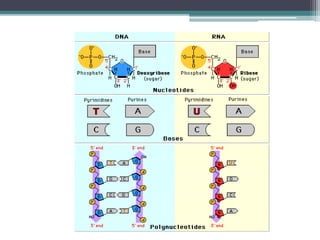
Both DNA and RNA contain two major
purine bases, adenine (A) and
guanine (G), and two major
pyrimidines.
In both DNA and RNA one of the
pyrimidines is cytosine (C), but the
second major pyrimidine is not the same
in both: it is thymine (T) in DNA and
uracil (U) in RNA.
 Two kinds of pentoses. DNA contain 2-
deoxy-D-ribose, and the ribonucleotide
units of RNA contain D-ribose.
PHOSPHODIESTER BONDS
The successive nucleotides of both DNA
and RNA are covalently linked through
phosphate-group “bridges,” in which the
5-phosphate group of one nucleotide unit
is joined to the 3-hydroxyl group of the
next nucleotide, creating a phospho-
diester linkage.
Nucleic acids containing 50 or fewer
nucleotides are generally called oligo-
nucleotides.
A longer nucleic acid is called a poly-
nucleotide.
The covalent backbones of nucleic acids
consist of alternating phosphate and
pentose residues, and the nitrogenous
bases may be regarded as side groups
joined to the backbone at regular
intervals.
The backbones of both DNA and RNA
are hydrophilic.
The hydroxyl groups of the sugar
residues form hydrogen bonds with
water.
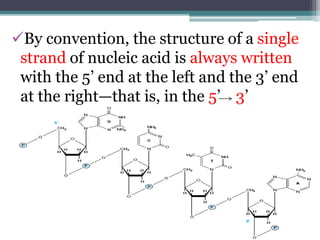
By convention, the structure of a single
strand of nucleic acid is always written
with the 5’ end at the left and the 3’ end
at the right—that is, in the 5’ 3’
direction.
Properties of Nucleotides
 Hydrogen bonds between bases permit
a complementary association of two
strands of nucleic acid.
 Hydrogen bonds involve the amino and
carbonyl groups of the bases in nucleic
acid molecules.
 Adenine(A) bonds specifically to
thymine(T) (or U).
 Guanine(G) bonds to cytosine(C).
 3 hydrogen bonds between G and C
 2 hydrogen bonds between A and T
DNA
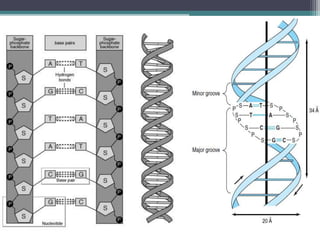
The hydrophilic backbones of
alternating deoxyribose and phosphate
groups are on the outside of the helix,
facing the surrounding water.
The pyrimidine and purine bases of
both strands are stacked inside the double
helix (hydrophobic)
The strands of DNA run in antiparallel
direction. Form a helical structure.
DNA Molecules Have Distinctive Base
Composition
The base composition of DNA generally
varies from one species to another.
DNA collected from different tissues of
the same organism have the same base
composition.
The base composition of DNA in a given
species does not change with an
organism’s age, nutritional state, or
changing environment.
RNA
RNA contains ribose rather than
deoxyribose of DNA.
Usually RNA exists as a single strand.
 RNA does not contain thymine except
in rare cases. Instead of thymine,
RNA contains ribonucleotide of
uracil.
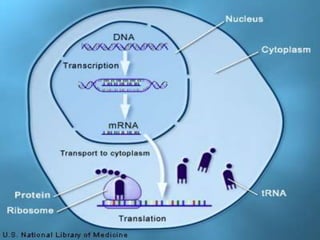
Types of RNAs
mRNA (messenger RNA) - transfer of
genetic information from DNA to protein
synthesizing machinery
rRNA (ribosome RNA) – have
structural roles and contribute to the
formation and function of ribosomes (the
organelle machinery for protein synthesis)
tRNA (transfer RNA) – serve as
adapters for the translation of the
information in the sequence of nucleotides of
the mRNA into specific amino acids.
Basic Functions of DNA and RNA
 DNA has two direct purposes: storage of
information (for protein synthesis) and
generation of new DNA (replication) and
RNA (ribonucleic acid).
 RNA is involved in the direct synthesis
of proteins (translation).
THE END

12.2NUCLEOTIDES & NUCLEIC ACIDS-1.pptx

  • 1.
    NUCLEOTIDES & NUCLEICACIDS Joel kapenda
  • 2.
  • 3.
    NUCLEOTIDES Nucleotides are thebuilding blocks of nucleic acids (DNA and RNA). Nucleotides have three characteristic components: 1. A nitrogenous (nitrogen-containing) base 2. A pentose sugar, and 3. A phosphate group
  • 4.
     The moleculewithout the phosphate group is called a nucleoside.  The nitrogenous bases are derivatives of two parent compounds, pyrimidine and purine.
  • 6.
    The base ofa nucleotide is joined covalently (at N-1 of pyrimidines and N- 9 of purines) in an N-β-glycosidic bond to the 1 carbon of the pentose, and the phosphate is esterified to the 5 carbon. The N-β-glycosidic bond is formed by removal of the elements of water (a hydroxyl group from the pentose and hydrogen from the base).
  • 8.
    Importance of Nucleotides Buildingblocks of nucleic acids (Deoxyribonucleic Acid=DNA and Ribonucleic acid=RNA). Part of many coenzymes and serve as - donors of phosphoryl groups (eg, ATP or GTP), - donors of sugars (eg, UDP-sugar or GDP-sugars).
  • 9.
     Synthetic nucleotides (purineand pyrimidine)are analogs used in - chemotherapy of cancer and HIV/AIDS. For example, nucleoside reverse transcriptase inhibitors (NRTIs).
  • 10.
    -Incorporated into growingviral DNA chain; cause premature chain termination due to inhibition of binding with incoming nucleotide. - as suppressors of the immune response during organ transplantation (eg. azathioprine=purine analogue).
  • 11.
    NUCLEIC ACIDS (RNAand DNA) Both DNA and RNA contain two major purine bases, adenine (A) and guanine (G), and two major pyrimidines. In both DNA and RNA one of the pyrimidines is cytosine (C), but the second major pyrimidine is not the same in both: it is thymine (T) in DNA and uracil (U) in RNA.
  • 12.
     Two kindsof pentoses. DNA contain 2- deoxy-D-ribose, and the ribonucleotide units of RNA contain D-ribose.
  • 13.
    PHOSPHODIESTER BONDS The successivenucleotides of both DNA and RNA are covalently linked through phosphate-group “bridges,” in which the 5-phosphate group of one nucleotide unit is joined to the 3-hydroxyl group of the next nucleotide, creating a phospho- diester linkage. Nucleic acids containing 50 or fewer nucleotides are generally called oligo- nucleotides. A longer nucleic acid is called a poly- nucleotide.
  • 14.
    The covalent backbonesof nucleic acids consist of alternating phosphate and pentose residues, and the nitrogenous bases may be regarded as side groups joined to the backbone at regular intervals. The backbones of both DNA and RNA are hydrophilic. The hydroxyl groups of the sugar residues form hydrogen bonds with water.
  • 15.
    By convention, thestructure of a single strand of nucleic acid is always written with the 5’ end at the left and the 3’ end at the right—that is, in the 5’ 3’ direction.
  • 16.
    Properties of Nucleotides Hydrogen bonds between bases permit a complementary association of two strands of nucleic acid.  Hydrogen bonds involve the amino and carbonyl groups of the bases in nucleic acid molecules.
  • 17.
     Adenine(A) bondsspecifically to thymine(T) (or U).  Guanine(G) bonds to cytosine(C).  3 hydrogen bonds between G and C  2 hydrogen bonds between A and T
  • 18.
    DNA The hydrophilic backbonesof alternating deoxyribose and phosphate groups are on the outside of the helix, facing the surrounding water. The pyrimidine and purine bases of both strands are stacked inside the double helix (hydrophobic) The strands of DNA run in antiparallel direction. Form a helical structure.
  • 20.
    DNA Molecules HaveDistinctive Base Composition The base composition of DNA generally varies from one species to another. DNA collected from different tissues of the same organism have the same base composition. The base composition of DNA in a given species does not change with an organism’s age, nutritional state, or changing environment.
  • 21.
    RNA RNA contains riboserather than deoxyribose of DNA. Usually RNA exists as a single strand.  RNA does not contain thymine except in rare cases. Instead of thymine, RNA contains ribonucleotide of uracil.
  • 23.
    Types of RNAs mRNA(messenger RNA) - transfer of genetic information from DNA to protein synthesizing machinery rRNA (ribosome RNA) – have structural roles and contribute to the formation and function of ribosomes (the organelle machinery for protein synthesis) tRNA (transfer RNA) – serve as adapters for the translation of the information in the sequence of nucleotides of the mRNA into specific amino acids.
  • 25.
    Basic Functions ofDNA and RNA  DNA has two direct purposes: storage of information (for protein synthesis) and generation of new DNA (replication) and RNA (ribonucleic acid).  RNA is involved in the direct synthesis of proteins (translation).
  • 26.