Accreditation System for Training  & Trainers in ASD:  a work in progress Anna Robinson [email_address] Charlene Tait [email_address]
Background to Project Funded for 2 years by Scottish Government: Why SSA & NCAS? National training framework Development of ASD awards  -  PDA in SVQ framework Range of training on offer delivered by a range of providers
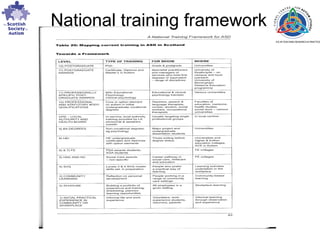
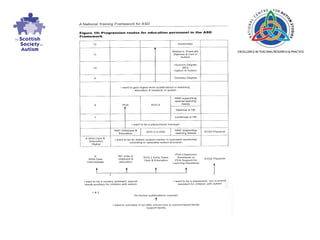
National training framework
 
Phase 1:  Consultation & development of   standards Phase 2:  Pilot groups “test out” standards Phase 3:  Translation of the levels; rework  standards, indicators & evidence  Phase 4:  Development of portfolio pathways &  CPD; ATAS “goes live”  Phases of the Project
Why Accreditation?  Our Hypothesis Proposal stage: Security – for purchasers, providers, consumers The potential impact on individuals with ASD-in terms of improved standards in service delivery “ Standardisation” – in terms of quality Contributes to a common body of knowledge across a range of practitioners involved with people with  ASD Complimentary to and supportive of other forms of regulation
Key Strands Accreditation of training providers – courses, materials etc Accreditation of trainers Accreditation of training/CPD portfolios
Pre-consultation thinking Perceived Issues: Cost Process Content Independence - accrediting body
The Consultation Process Why Consultation? 6 consultation events – 88 participants  Consultation by invitation On line consultation questionnaire Feedback informing development of accreditation system
Focused Consultation Key areas investigated: Need for accreditation Process of accreditation – rigour What should be evaluated? – components  How should training be evaluated?
Consultation Event Methods: Presentation – baseline of information Small group discussion – scribe Tasks related to key areas
Consultation Outcomes Explored the findings: Feedback reviewed Key themes identified “ Rogue” issues emerged
Consultation Themes Perspectives Quality assurance & Positive impact (12)  Costs (11)  Independent & who’s accrediting? (8) Duplication (5) Parent professional difference (2)  Professionalism / exclusivity (2) / Why specialism (1)
The System:  content  system’s remit (7) ethical practice (4) robust (3) Training levels (3) structure ongoing (reaccreditation) process (10) Direct observation & assessment (9) Trainers profile level (4)  A “merging” system (2) Registration (2) Consultation Themes
The System:  other issues  Visual branding (2) /  Quality assurance (3) intrinsic motivators (3)  Possible support process (3)  who’s monitoring & Lead role? (6) Consultation Themes
Consultation Themes The Standards Supporting evidence (11) Trainers credentials & profile level (10) Theory to practice (7)  Accessibility (5) ASD specialism (4) Practice guidelines (3) / Training resource transferability Multi-agency / collaborative (1)
“ Rogue Issues” higher management commitment  Why bother? Assessment of charities Geographical reach
Additional thoughts Experiential involvement of people with an ASD & ethical practice (6)
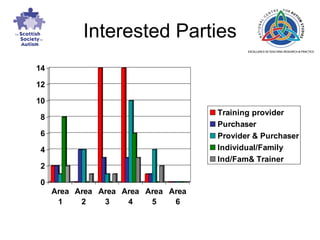
Interested Parties
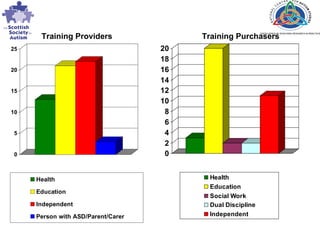
Training Providers Training Purchasers
Post-consultation thinking Training & service user community receptive to the concept Confirmation of issues and concerns- consistency of feedback across all 5 groups Additional areas  for final system identified Initial components of project design affirmed Standards easily identified- specific indicators more challenging
Next Steps Pilot groups testing model Development of all key strands Research efficacy / impact of accredited training to test initial hypothesis

pepe111

  • 1.
    Accreditation System forTraining & Trainers in ASD: a work in progress Anna Robinson [email_address] Charlene Tait [email_address]
  • 2.
    Background to ProjectFunded for 2 years by Scottish Government: Why SSA & NCAS? National training framework Development of ASD awards - PDA in SVQ framework Range of training on offer delivered by a range of providers
  • 3.
  • 4.
  • 5.
    Phase 1: Consultation & development of standards Phase 2: Pilot groups “test out” standards Phase 3: Translation of the levels; rework standards, indicators & evidence Phase 4: Development of portfolio pathways & CPD; ATAS “goes live” Phases of the Project
  • 6.
    Why Accreditation? Our Hypothesis Proposal stage: Security – for purchasers, providers, consumers The potential impact on individuals with ASD-in terms of improved standards in service delivery “ Standardisation” – in terms of quality Contributes to a common body of knowledge across a range of practitioners involved with people with ASD Complimentary to and supportive of other forms of regulation
  • 7.
    Key Strands Accreditationof training providers – courses, materials etc Accreditation of trainers Accreditation of training/CPD portfolios
  • 8.
    Pre-consultation thinking PerceivedIssues: Cost Process Content Independence - accrediting body
  • 9.
    The Consultation ProcessWhy Consultation? 6 consultation events – 88 participants Consultation by invitation On line consultation questionnaire Feedback informing development of accreditation system
  • 10.
    Focused Consultation Keyareas investigated: Need for accreditation Process of accreditation – rigour What should be evaluated? – components How should training be evaluated?
  • 11.
    Consultation Event Methods:Presentation – baseline of information Small group discussion – scribe Tasks related to key areas
  • 12.
    Consultation Outcomes Exploredthe findings: Feedback reviewed Key themes identified “ Rogue” issues emerged
  • 13.
    Consultation Themes PerspectivesQuality assurance & Positive impact (12) Costs (11) Independent & who’s accrediting? (8) Duplication (5) Parent professional difference (2) Professionalism / exclusivity (2) / Why specialism (1)
  • 14.
    The System: content system’s remit (7) ethical practice (4) robust (3) Training levels (3) structure ongoing (reaccreditation) process (10) Direct observation & assessment (9) Trainers profile level (4) A “merging” system (2) Registration (2) Consultation Themes
  • 15.
    The System: other issues Visual branding (2) / Quality assurance (3) intrinsic motivators (3) Possible support process (3) who’s monitoring & Lead role? (6) Consultation Themes
  • 16.
    Consultation Themes TheStandards Supporting evidence (11) Trainers credentials & profile level (10) Theory to practice (7) Accessibility (5) ASD specialism (4) Practice guidelines (3) / Training resource transferability Multi-agency / collaborative (1)
  • 17.
    “ Rogue Issues”higher management commitment Why bother? Assessment of charities Geographical reach
  • 18.
    Additional thoughts Experientialinvolvement of people with an ASD & ethical practice (6)
  • 19.
  • 20.
  • 21.
    Post-consultation thinking Training& service user community receptive to the concept Confirmation of issues and concerns- consistency of feedback across all 5 groups Additional areas for final system identified Initial components of project design affirmed Standards easily identified- specific indicators more challenging
  • 22.
    Next Steps Pilotgroups testing model Development of all key strands Research efficacy / impact of accredited training to test initial hypothesis