Values in work with older people - research in two care homes   Moira Dunworth PEPE Conference : 24 Jan 2008
Workshop Aims Process of the study and the implications for working with a range staff in a multi-disciplinary setting Research findings Training needs The implications for the service user - discussion
Process of the study Idea first!  Are SW values so different? Reading Funding – SWET Permission – local authority Questionnaire Managers – co-operation and planning Pilot and revise questionnaire Administer and collect questionnaires
Analysis Got help with the stats Coded the comments Deontological or  Utilitarian or Avoids the dilemma Played with the results Now trying it out on you!
A diverse staff group I was out of my comfort zone! Language and literacy issues How much truth to tell? Why should they help me? How to be neutral Issue of ‘right answer’
Findings - challenges Not possible to see ‘health’ and ‘social care’ How much was any difference down to management style rather than profession? Numbers quite small but the same as Osmo and Landau (2006)
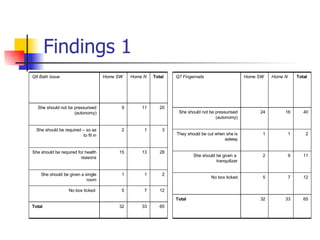
Findings 1 65 33 32 Total 12 7 5 No box ticked  2 1 1 She should be given a single room 28 13 15 She should be required for health reasons 3 1 2 She should be required – so as to fit in 20 11 9 She should not be pressurised (autonomy) Total Home N Home SW Q6 Bath Issue 65 33 32 Total 12 7 5 No box ticked 11 9 2 She should be given a  tranquilizer 2 1 1 They should be cut when she is asleep 40 16 24 She should not be pressurised (autonomy) Total Home N Home SW Q7 Fingernails
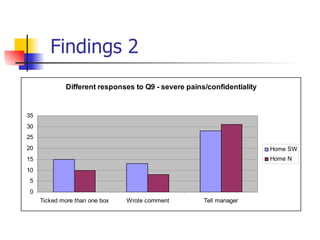
Findings 2
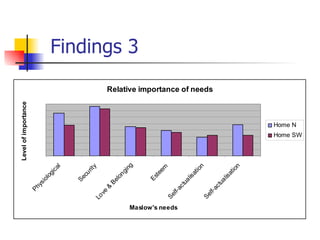
Findings 3
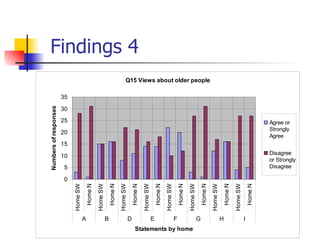
Findings 4
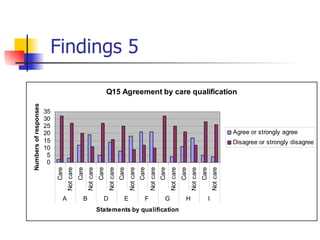
Findings 5
Main Conclusions Both homes worked on a social model of disability/age Home SW made more comments and gave more complex responses when faced with a list of options.  Home SW were more likely to write in resident’s notes Home N more often referred to a manager only  Care-qualified staff in both homes were more likely to make comments and to select more options from a list.  Very few staff made their reasoning explicit Overall respondents selected options and made comments which implied a utilitarian reasoning Deontological options are more popular the further the problem is removed from the necessity of action  All staff display some ageist assumptions, esp decision-making  - non care-qualified staff more ageist
Training needs Articulation of ethical principles Ageist assumptions Definition of ‘duty of care’ – for most, but not all, of the respondents this did not include the duty to respect autonomy when there was any safety risk. Conflation of responsibility of role and moral responsibility.  Development of autonomous moral decision-making  Record-keeping – very few respondents would record information about the situations presented
Implication for service users? ????? Discuss

pepe641

  • 1.
    Values in workwith older people - research in two care homes Moira Dunworth PEPE Conference : 24 Jan 2008
  • 2.
    Workshop Aims Processof the study and the implications for working with a range staff in a multi-disciplinary setting Research findings Training needs The implications for the service user - discussion
  • 3.
    Process of thestudy Idea first! Are SW values so different? Reading Funding – SWET Permission – local authority Questionnaire Managers – co-operation and planning Pilot and revise questionnaire Administer and collect questionnaires
  • 4.
    Analysis Got helpwith the stats Coded the comments Deontological or Utilitarian or Avoids the dilemma Played with the results Now trying it out on you!
  • 5.
    A diverse staffgroup I was out of my comfort zone! Language and literacy issues How much truth to tell? Why should they help me? How to be neutral Issue of ‘right answer’
  • 6.
    Findings - challengesNot possible to see ‘health’ and ‘social care’ How much was any difference down to management style rather than profession? Numbers quite small but the same as Osmo and Landau (2006)
  • 7.
    Findings 1 6533 32 Total 12 7 5 No box ticked 2 1 1 She should be given a single room 28 13 15 She should be required for health reasons 3 1 2 She should be required – so as to fit in 20 11 9 She should not be pressurised (autonomy) Total Home N Home SW Q6 Bath Issue 65 33 32 Total 12 7 5 No box ticked 11 9 2 She should be given a tranquilizer 2 1 1 They should be cut when she is asleep 40 16 24 She should not be pressurised (autonomy) Total Home N Home SW Q7 Fingernails
  • 8.
  • 9.
  • 10.
  • 11.
  • 12.
    Main Conclusions Bothhomes worked on a social model of disability/age Home SW made more comments and gave more complex responses when faced with a list of options. Home SW were more likely to write in resident’s notes Home N more often referred to a manager only Care-qualified staff in both homes were more likely to make comments and to select more options from a list. Very few staff made their reasoning explicit Overall respondents selected options and made comments which implied a utilitarian reasoning Deontological options are more popular the further the problem is removed from the necessity of action All staff display some ageist assumptions, esp decision-making - non care-qualified staff more ageist
  • 13.
    Training needs Articulationof ethical principles Ageist assumptions Definition of ‘duty of care’ – for most, but not all, of the respondents this did not include the duty to respect autonomy when there was any safety risk. Conflation of responsibility of role and moral responsibility. Development of autonomous moral decision-making Record-keeping – very few respondents would record information about the situations presented
  • 14.
    Implication for serviceusers? ????? Discuss