Is It My Job? Supporting the development and implementation of protocols relating to substance misuse and children.
Overview   Experiential exercise Hearing children’s experiences Short presentation  Plenary
Experiential Exercise   In  small groups please spend 5 minutes considering and recording words which describe the following :
What is society’s view of parenthood?
What is society’s view of parental substance misuse?
Hearing Children’s Experiences
For too long the needs and welfare of children in families affected by substance misuse have been overlooked. We must now concentrate our efforts on helping these children. Ministerial Forward GOPR 2003
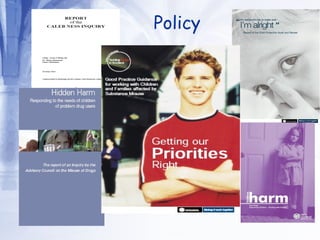
Policy
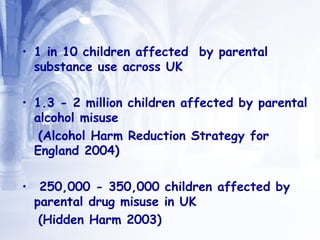
1 in 10 children affected  by parental substance use across UK 1.3 - 2 million children affected by parental alcohol misuse  (Alcohol Harm Reduction Strategy for England 2004) 250,000 - 350,000 children affected by parental drug misuse in UK (Hidden Harm 2003)
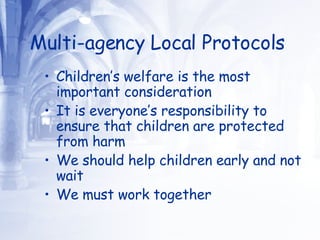
Multi-agency Local Protocols   Children’s welfare is the most important consideration It is everyone’s responsibility to ensure that children are protected from harm We should help children early and not wait We must work together
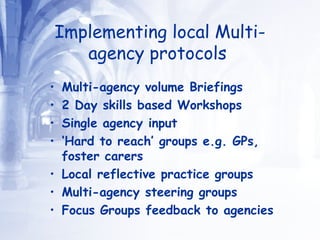
Implementing local Multi-agency protocols   Multi-agency volume Briefings 2 Day skills based Workshops Single agency input ‘ Hard to reach’ groups e.g. GPs, foster carers Local reflective practice groups Multi-agency steering groups Focus Groups feedback to agencies
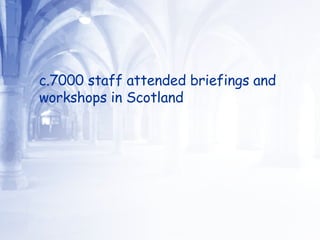
c.7000 staff attended briefings and workshops in Scotland
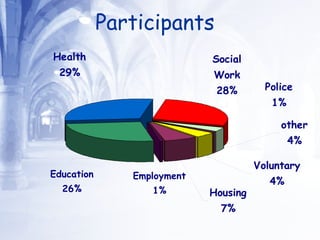
Participants
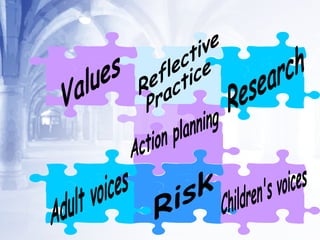
Reflective  Practice Research Children's voices Action planning Adult voices Values Risk
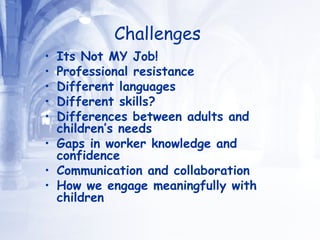
Challenges   Its Not MY Job!  Professional resistance  Different languages  Different skills? Differences between adults and children’s needs  Gaps in worker knowledge and confidence Communication and collaboration How we engage meaningfully with children
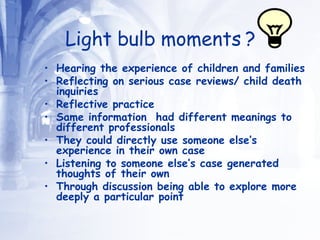
Light bulb moments ? Hearing the experience of children and families  Reflecting on serious case reviews/ child death inquiries Reflective practice  Same information  had different meanings to different professionals  They could directly use someone else’s experience in their own case Listening to someone else’s case generated thoughts of their own Through discussion being able to explore more deeply a particular point
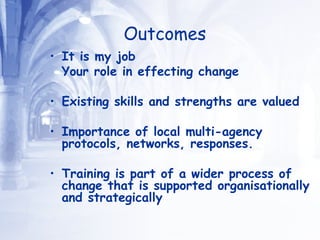
Outcomes It is my job  Your role in effecting change Existing skills and strengths are valued  Importance of local multi-agency protocols, networks, responses. Training is part of a wider process of change that is supported organisationally and strategically
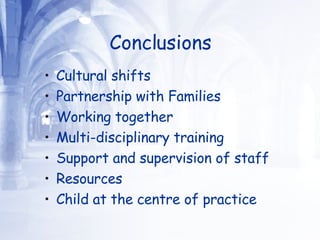
Conclusions Cultural shifts Partnership with Families Working together Multi-disciplinary training Support and supervision of staff Resources Child at the centre of practice

pepe661

  • 1.
    Is It MyJob? Supporting the development and implementation of protocols relating to substance misuse and children.
  • 2.
    Overview Experiential exercise Hearing children’s experiences Short presentation Plenary
  • 3.
    Experiential Exercise In small groups please spend 5 minutes considering and recording words which describe the following :
  • 4.
    What is society’sview of parenthood?
  • 5.
    What is society’sview of parental substance misuse?
  • 6.
  • 7.
    For too longthe needs and welfare of children in families affected by substance misuse have been overlooked. We must now concentrate our efforts on helping these children. Ministerial Forward GOPR 2003
  • 8.
  • 9.
    1 in 10children affected by parental substance use across UK 1.3 - 2 million children affected by parental alcohol misuse (Alcohol Harm Reduction Strategy for England 2004) 250,000 - 350,000 children affected by parental drug misuse in UK (Hidden Harm 2003)
  • 10.
    Multi-agency Local Protocols Children’s welfare is the most important consideration It is everyone’s responsibility to ensure that children are protected from harm We should help children early and not wait We must work together
  • 11.
    Implementing local Multi-agencyprotocols Multi-agency volume Briefings 2 Day skills based Workshops Single agency input ‘ Hard to reach’ groups e.g. GPs, foster carers Local reflective practice groups Multi-agency steering groups Focus Groups feedback to agencies
  • 12.
    c.7000 staff attendedbriefings and workshops in Scotland
  • 13.
  • 14.
    Reflective PracticeResearch Children's voices Action planning Adult voices Values Risk
  • 15.
    Challenges Its Not MY Job! Professional resistance Different languages Different skills? Differences between adults and children’s needs Gaps in worker knowledge and confidence Communication and collaboration How we engage meaningfully with children
  • 16.
    Light bulb moments? Hearing the experience of children and families Reflecting on serious case reviews/ child death inquiries Reflective practice Same information had different meanings to different professionals They could directly use someone else’s experience in their own case Listening to someone else’s case generated thoughts of their own Through discussion being able to explore more deeply a particular point
  • 17.
    Outcomes It ismy job Your role in effecting change Existing skills and strengths are valued Importance of local multi-agency protocols, networks, responses. Training is part of a wider process of change that is supported organisationally and strategically
  • 18.
    Conclusions Cultural shiftsPartnership with Families Working together Multi-disciplinary training Support and supervision of staff Resources Child at the centre of practice