The molecular pathogenesisof RA
Immune complexes
Complement fixation
Attract inflammatory
cell infiltrates
Tsokos. N Engl J Med 2004;350:2546–2548
McInnes et al. Nature Medicine 1997;3:189–195
Choy & Panayi. N Engl J Med 2001;344:907–916
TNF-a, IL-1, IL-6
metalloproteinases
TNF-a
IL-2
IFN-g
IL-17
RANKL
Articular cartilage
Production of metalloproteinases and other effector molecules
Migration of polymorphonuclear cells
Erosion of bone and cartilage
Pannus
Osteoclast Synoviocytes
Chondrocytes
MF
IL-4
IL-6
IL-10
RF, anti-CCP antibodies
IL-6, TNF-a,
IFN-g, lymphotoxin
Plasma
cell
B cell
T cell
APC
63.
Intervention with biologicscan occur at several different
points in the immunopathogenic pathways of RA
Plasma
cell
Tsokos. N Engl J Med 2004;350:2546–2548
McInnes et al. Nature Medicine 1997;3:189–195
Choy & Panayi. N Engl J Med 2001;344:907–916
IL-4
IL-6
IL-10
RF, anti-CCP antibodies
Immune complexes
Complement fixation
Attract inflammatory
cell infiltrates
IL-6, TNF-a,
IFN-g, lymphotoxin
TNF-a, IL-1, IL-6
metalloproteinases
TNF-a
IL-2
IFN-g
IL-17
RANKL
Articular cartilage
Production of metalloproteinases and other effector molecules
Migration of polymorphonuclear cells
Erosion of bone and cartilage
Pannus
Osteoclast Synoviocytes
Chondrocytes
B cell
MF
T cell
APC
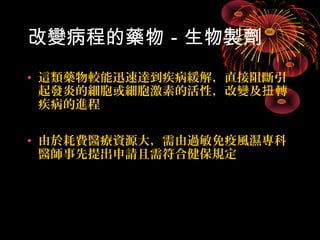
T cell costimulation
modulator: Abatacept
Anti-CD20: Rituximab
TNF inhibitor: Infliximab,
adalimumab, certolizumab,
golimumab, etanercept
Anti-IL-6R: Tocilizumab
#18 Clinical symptoms of OA
Joint pain is the primary clinical feature that prompts a person with OA to seek medical attention. The pain is usually described as a deep, dull ache, confined to the involved joint and aggravated upon use of the joint (especially by weight-bearing in the case of hip or knee OA) and relieved by rest. Pain is usually intermittent during the early phases of OA, but with disease progression may become more frequent or even constant, increasingly severe, and disabling. In advanced OA of the hip, nocturnal pain that interferes with sleep may be associated with effusion of the joint. Pain may be referred to other body sites.
Morning stiffness in OA is brief, usually lasting no more than 20 to 30 minutes after awakening, whereas morning stiffness in rheumatoid arthritis may last for hours. In the patient with OA, stiffness may recur during the day after periods of prolonged inactivity but usually subsides rapidly with use of the joint.
Joint function may be impaired or limited. Pain may be experienced upon normal use of the joint.
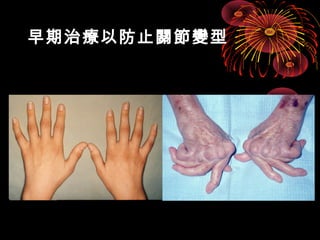
Joint shape may be abnormal due to soft tissue swelling or to hypertrophy of bones within the joint. This is most notable in OA of the hands.
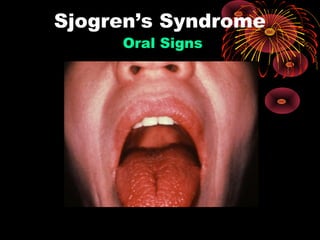
#30 Early signs of dry mouth due to Sjogren’s syndrome can include diminution of the sublingual salivary pool, cheilosis and loss of glistening of the tongue and mucous membranes. A tongue depressor may readily adhere to the sticky mucosal surfaces, as will undigested food particles. The patient may be unable to lick a standard letter envelope completely sealed. In advanced disease (pictured above), the tongue and mucosal surface become erythematous, fissured or ulcerated, and the sublingual salivary pool disappears.
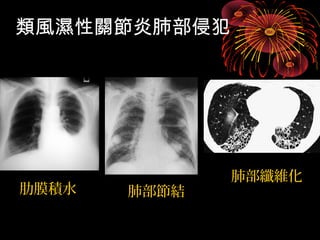
#48 Extra-Articular manifestations (or non-Joint manifestations) are important considerations with regards to RA, their appearance is associated with an increase in mortality and morbidity (decreased quality of life).
#51 Fig. 73.29 Digital tip and proximal infarcts in a patient with rheumatoid vasculitis.


















![你永遠不懂我傷悲
就像白天不懂夜的黑 [那英]
死不了, 活不好;
先啃骨,後蝕心。
這就是類風濕!](https://image.slidesharecdn.com/1030726-140918041942-phpapp01/85/1030726-32-320.jpg)