SELF INSTRUCTIONAL
MODULE
SELF INSTRUCTIONAL MODULE
 Self instruction learning is any increase in
knowledge, skill, accomplishment, or personal
development that an individual selects and brings
about by his or her own efforts using any method in
any circumstances at any time.
 “ A process in which individual take the initiative, with
or without the help of other, to diagnose their learning
need, formulate learning goals, identify resources for
learning, select and implement learning strategies
and evaluate learning outcomes.”
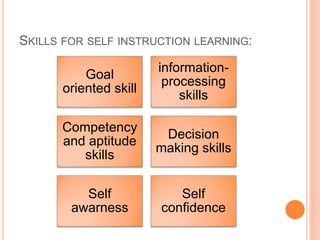
SKILLS FOR SELF INSTRUCTION LEARNING:
Goal
oriented skill
information-
processing
skills
Competency
and aptitude
skills
Decision
making skills
Self
awarness
Self
confidence
PRINCIPLES OF SELF INSTRUCTION LEARNING:
 It should be congruent with lifelong, natural and
individual learning drives.
 It should be adapted to the maturation,
transformation and transitions experienced by
students.
 It should be concerned with all aspects of a full life.
 Employ a full range of human capacities, including
senses, emotion and action as well as intellects.
 It should be conducted in setting suited to their
development.
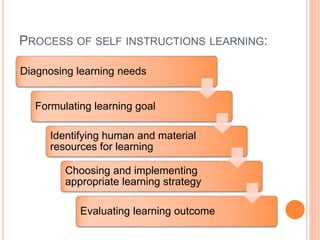
PROCESS OF SELF INSTRUCTIONS LEARNING:
Diagnosing learning needs
Formulating learning goal
Identifying human and material
resources for learning
Choosing and implementing
appropriate learning strategy
Evaluating learning outcome
ROLE OF TEACHER IN SELF INSTRUCTIONAL
LEARNING:
 Teach inquiry skills, decision making, personal
developments and self evaluation of work.
 Helps learners develop positive attitudes and feelings of
independence related to learning.
 Helps learners acquire the needs and assessment
techniques necessary to discover what objectives they
should set.
 Help the learners identify the starting point for a learning
project and understand the relevant modes of
examination and reporting.
 Create a partnership with the learner by negotiating a
learning contact for goals, strategies, resources and
evaluation criteria once they are decided.
 Act as advocates for educationally underserved
populations to facilitate their access to resources.
 Help match resources to the needs of the learners.
 Help learners locate resources
 Encourage critical thinking skills
 Create an atmosphere of openness and trust to
promote better performance.
ADVANTAGES:
 Allows learners to be more effective
learners.
 It helps the learner develop a sense of
responsibility.
 It can encourage students to develop their
own rules and leadership patterns.
 To be Motivated and persistent,
independence, self disciplined, self
confident and goal oriented.
DISADVANTAGES :
 Learners can easily be distracted by their
own needs, assumptions, values and
misperceptions.
 Research has shown some adults are
unable to engage in self instruction learning
because they lack independence,
confidence or resources.
 Needs to be combined with other learning
methods for content to be fully learned.
THANK YOU

10. self instructional module.pptx

  • 1.
  • 2.
    SELF INSTRUCTIONAL MODULE Self instruction learning is any increase in knowledge, skill, accomplishment, or personal development that an individual selects and brings about by his or her own efforts using any method in any circumstances at any time.  “ A process in which individual take the initiative, with or without the help of other, to diagnose their learning need, formulate learning goals, identify resources for learning, select and implement learning strategies and evaluate learning outcomes.”
  • 3.
    SKILLS FOR SELFINSTRUCTION LEARNING: Goal oriented skill information- processing skills Competency and aptitude skills Decision making skills Self awarness Self confidence
  • 4.
    PRINCIPLES OF SELFINSTRUCTION LEARNING:  It should be congruent with lifelong, natural and individual learning drives.  It should be adapted to the maturation, transformation and transitions experienced by students.  It should be concerned with all aspects of a full life.  Employ a full range of human capacities, including senses, emotion and action as well as intellects.  It should be conducted in setting suited to their development.
  • 5.
    PROCESS OF SELFINSTRUCTIONS LEARNING: Diagnosing learning needs Formulating learning goal Identifying human and material resources for learning Choosing and implementing appropriate learning strategy Evaluating learning outcome
  • 6.
    ROLE OF TEACHERIN SELF INSTRUCTIONAL LEARNING:  Teach inquiry skills, decision making, personal developments and self evaluation of work.  Helps learners develop positive attitudes and feelings of independence related to learning.  Helps learners acquire the needs and assessment techniques necessary to discover what objectives they should set.  Help the learners identify the starting point for a learning project and understand the relevant modes of examination and reporting.  Create a partnership with the learner by negotiating a learning contact for goals, strategies, resources and evaluation criteria once they are decided.
  • 7.
     Act asadvocates for educationally underserved populations to facilitate their access to resources.  Help match resources to the needs of the learners.  Help learners locate resources  Encourage critical thinking skills  Create an atmosphere of openness and trust to promote better performance.
  • 8.
    ADVANTAGES:  Allows learnersto be more effective learners.  It helps the learner develop a sense of responsibility.  It can encourage students to develop their own rules and leadership patterns.  To be Motivated and persistent, independence, self disciplined, self confident and goal oriented.
  • 9.
    DISADVANTAGES :  Learnerscan easily be distracted by their own needs, assumptions, values and misperceptions.  Research has shown some adults are unable to engage in self instruction learning because they lack independence, confidence or resources.  Needs to be combined with other learning methods for content to be fully learned.
  • 10.