Download to read offline
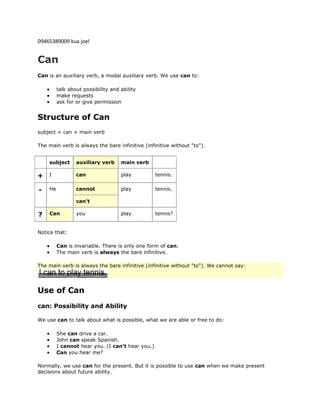
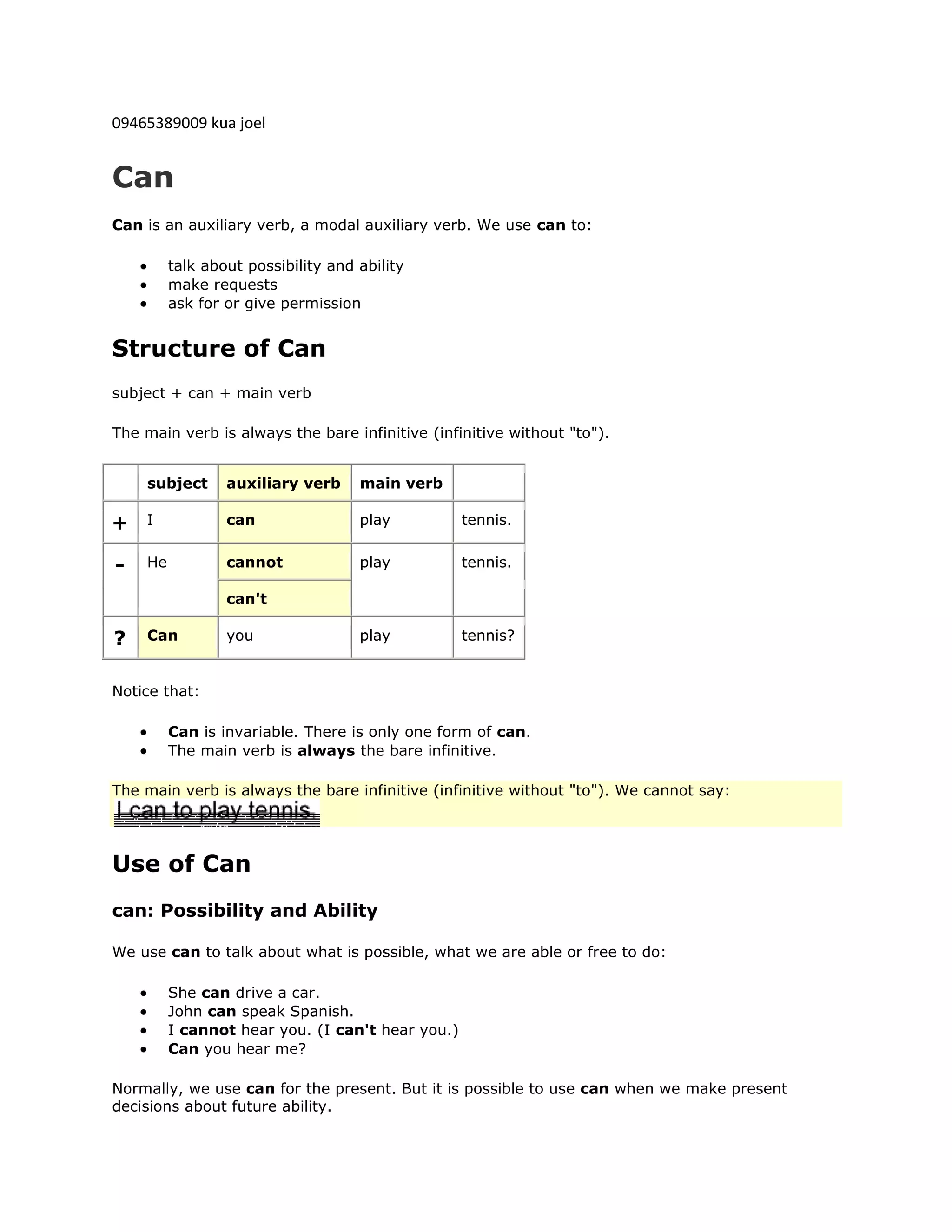
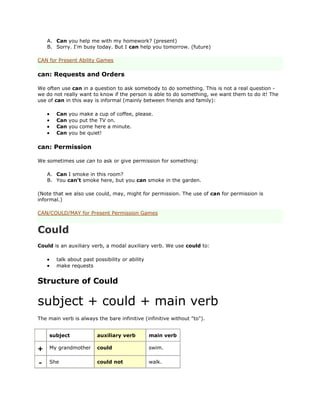
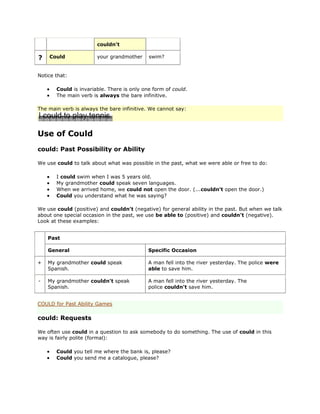
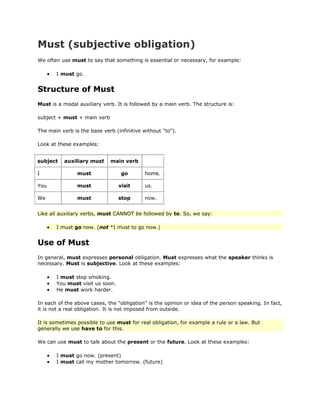
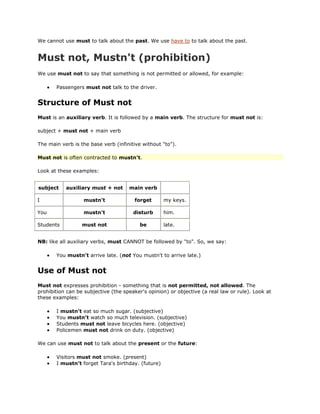
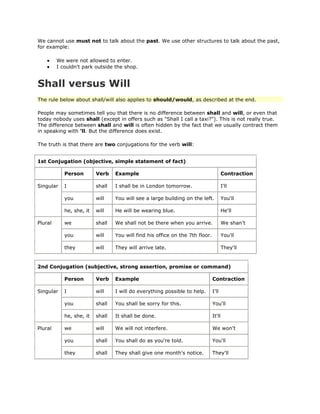

This document provides information on the auxiliary verbs can, could, must, shall, and will in English. It discusses their structure, uses, and differences. The key points are: - Can is used to talk about possibility, ability, requests and permission. Could is used similarly but for past tense. - Must is used to express necessity or obligation from the speaker's perspective. Must not and mustn't express prohibition. - Shall and will have different uses - shall for more objective statements and will for more subjective opinions. Shall is also used for promises or commands.


