The Adverb Clause How? Where? When? Why? To what extent? Under what condition?
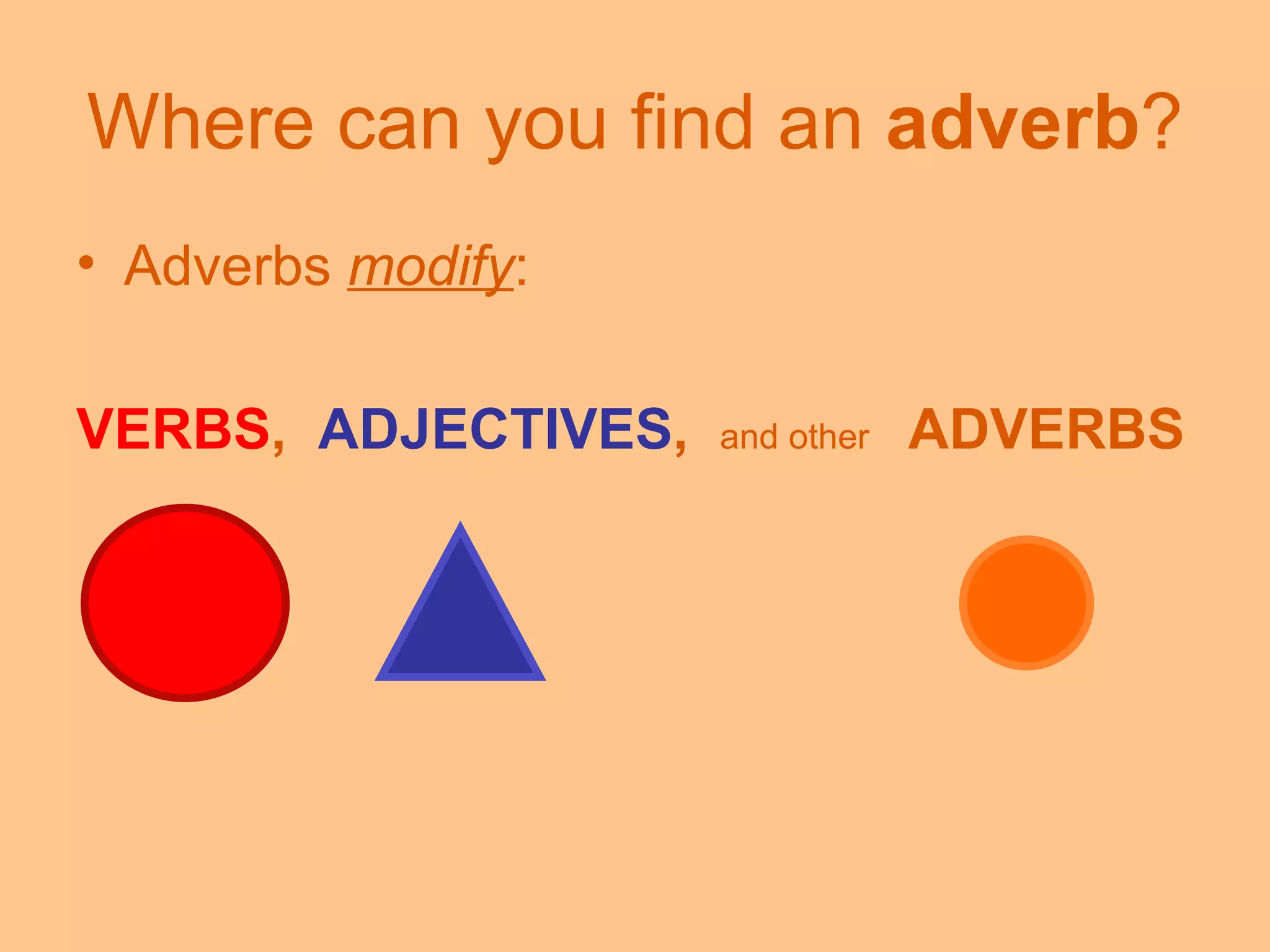
Where can you find an  adverb ? Adverbs  modify : VERBS ,   ADJECTIVES ,   and other  ADVERBS
… therefore you can find them: Nearly  anywhere  in the sentence… However, they are usually near the  verb ,  adjective  or  adverb  they modify (but not always) Examples : He  can   run   fast .  (tells:  how  he can run) She  really   likes  soccer.  (tells:  to what extent,  she likes…)
More Examples : They can swim  really   quickly .  (modifies the  adverb   quickly . It answers –  How  quickly?) He  is   not   enjoying  this activity.  (Just remember the word  not  is always an  adverb .) She  is   always  late for class.  (The words  always ,   never ,  sometimes ,  rarely ,  etc.  are also  adverbs )
Adverbs  answer  where … Your book is  here . Your pencil is  there . The birds are flying  high . The plane is flying  by .
Adverbs  answer  when … He came home  late . She woke  early . They are performing  now . She will do her homework  later .
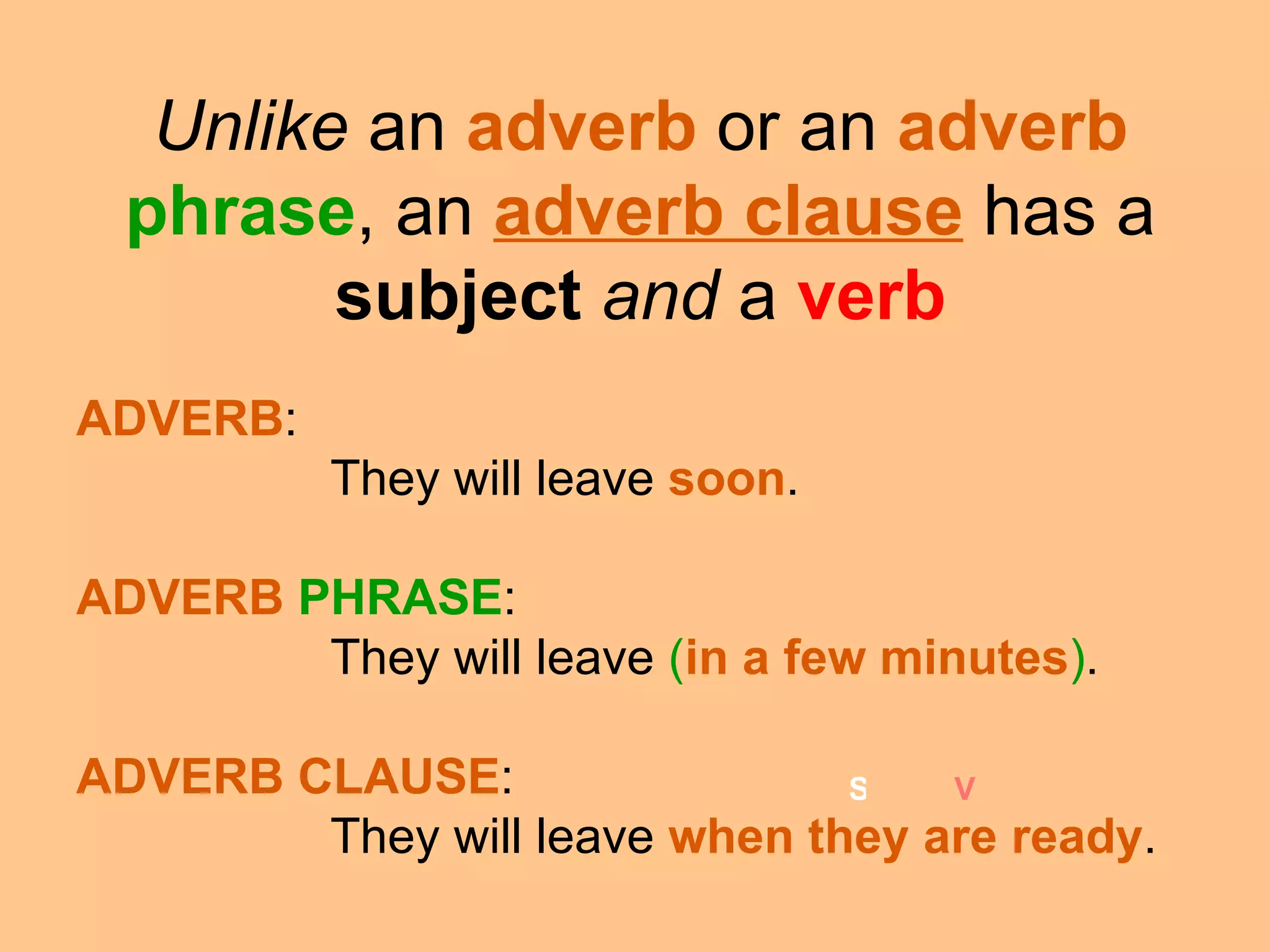
Unlike  an  adverb  or an  adverb  phrase , an  adverb clause  has a  subject   and  a  verb ADVERB :  They will leave  soon . ADVERB   PHRASE :  They will leave  ( in a few minutes ) . ADVERB CLAUSE :  They will leave  when they are ready . S V
Definition… An  adverb clause  is a subordinate (dependent clause) that modifies a  verb , an  adjective , or an  adverb . Like an  adverb  an  adverb clause  tells  where ,  when ,  how ,  why ,  to what extent  or  under what condition.
Adverb Clauses  can also be found nearly anywhere in the sentence… … beginning, middle or end… EXAMPLES : You may sit  wherever you wish . (modifies the verb  sit  and tells  where ) When spring sets in , many students go crazy. (modifies the verb  go  and tells  when ) Rachel and Sloane look  as though they have some exciting news for us . (modifies the verb  look , telling  how R. and S. look )
More examples… Happy  because she made an A , Katie hurried to phone her mom. (modifies the adjective  Happy , telling  why  Katie was happy.) Jake can climb higher   than I can . (modifies the adverb  higher , telling  to what extent  or how much  higher  Jake can climb) If it does not rain tomorrow , we will go to the beach for class. (modifies the verb  will go , telling  under what condition  we will go to the beach.)
COMMA RULES… When an  adverb clause  begins a sentence, it is followed by a  comma . ,
Subordinating Conjunctions: An  adverb clause  is introduced by a  subordinating conjunction —a word that shows the  relationship  between the  adverb clause  and the word or words that the clause  modifies .
Common Subordinating Conjunctions: after   as though since when although   because so that whenever as   before than where as if   how though wherever as long as   if unless whether as soon as   in order that until while
NOTE! The words  after ,  as ,  before ,  since , and  until  are also commonly used as  prepositions . Example : PREPOSITION : (After  lunch )  we’ll finish building the rocket. SUBORDINATING CONJUNCTION : After you wash the dishes , you can make the bed.
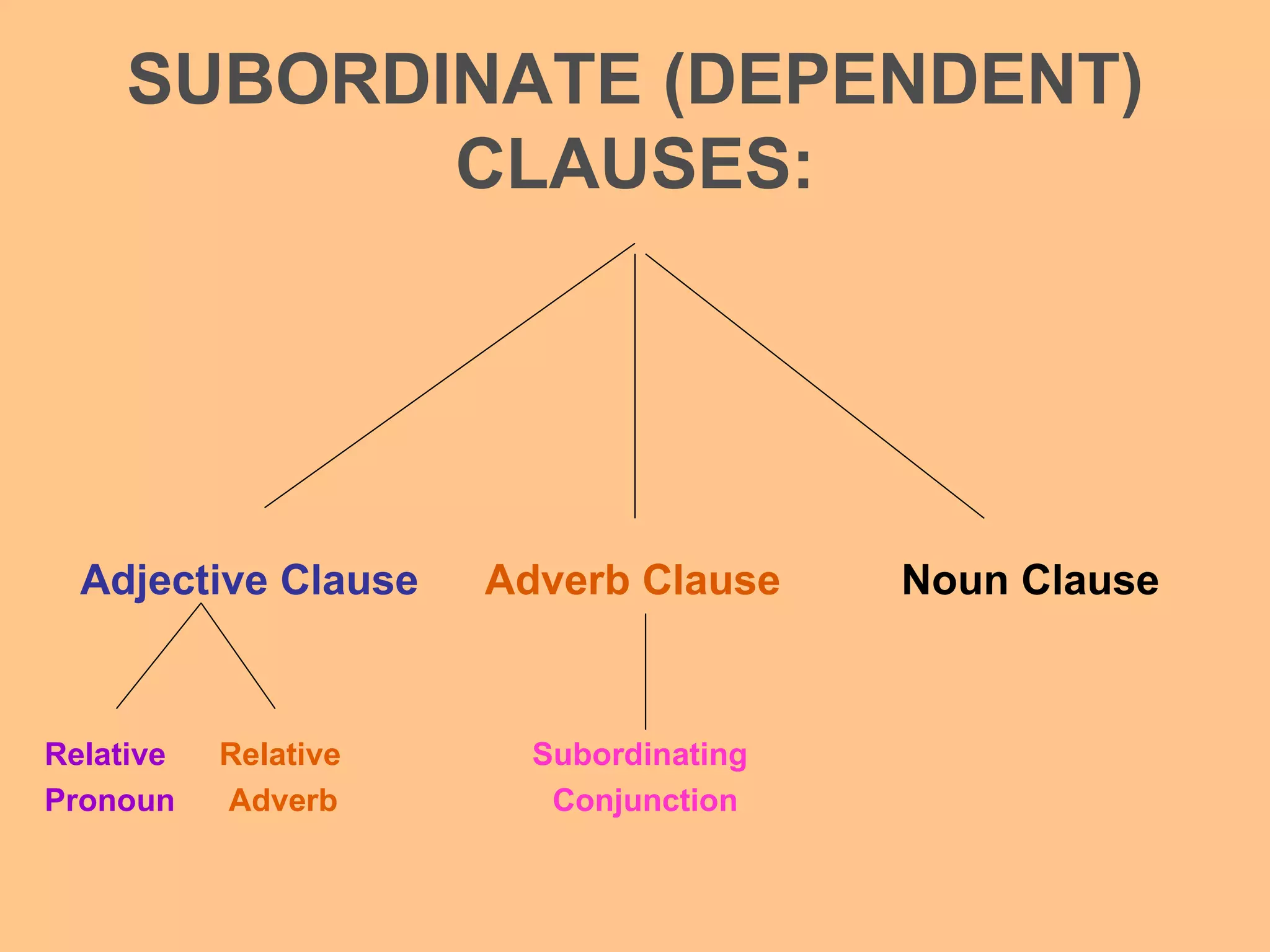
SUBORDINATE (DEPENDENT) CLAUSES: Adjective Clause   Adverb Clause   Noun Clause Relative   Relative   Subordinating Pronoun   Adverb   Conjunction

The Adverb Clause

  • 1.
    The Adverb ClauseHow? Where? When? Why? To what extent? Under what condition?
  • 2.
    Where can youfind an adverb ? Adverbs modify : VERBS , ADJECTIVES , and other ADVERBS
  • 3.
    … therefore youcan find them: Nearly anywhere in the sentence… However, they are usually near the verb , adjective or adverb they modify (but not always) Examples : He can run fast . (tells: how he can run) She really likes soccer. (tells: to what extent, she likes…)
  • 4.
    More Examples :They can swim really quickly . (modifies the adverb quickly . It answers – How quickly?) He is not enjoying this activity. (Just remember the word not is always an adverb .) She is always late for class. (The words always , never , sometimes , rarely , etc. are also adverbs )
  • 5.
    Adverbs answer where … Your book is here . Your pencil is there . The birds are flying high . The plane is flying by .
  • 6.
    Adverbs answer when … He came home late . She woke early . They are performing now . She will do her homework later .
  • 7.
    Unlike an adverb or an adverb phrase , an adverb clause has a subject and a verb ADVERB : They will leave soon . ADVERB PHRASE : They will leave ( in a few minutes ) . ADVERB CLAUSE : They will leave when they are ready . S V
  • 8.
    Definition… An adverb clause is a subordinate (dependent clause) that modifies a verb , an adjective , or an adverb . Like an adverb an adverb clause tells where , when , how , why , to what extent or under what condition.
  • 9.
    Adverb Clauses can also be found nearly anywhere in the sentence… … beginning, middle or end… EXAMPLES : You may sit wherever you wish . (modifies the verb sit and tells where ) When spring sets in , many students go crazy. (modifies the verb go and tells when ) Rachel and Sloane look as though they have some exciting news for us . (modifies the verb look , telling how R. and S. look )
  • 10.
    More examples… Happy because she made an A , Katie hurried to phone her mom. (modifies the adjective Happy , telling why Katie was happy.) Jake can climb higher than I can . (modifies the adverb higher , telling to what extent or how much higher Jake can climb) If it does not rain tomorrow , we will go to the beach for class. (modifies the verb will go , telling under what condition we will go to the beach.)
  • 11.
    COMMA RULES… Whenan adverb clause begins a sentence, it is followed by a comma . ,
  • 12.
    Subordinating Conjunctions: An adverb clause is introduced by a subordinating conjunction —a word that shows the relationship between the adverb clause and the word or words that the clause modifies .
  • 13.
    Common Subordinating Conjunctions:after as though since when although because so that whenever as before than where as if how though wherever as long as if unless whether as soon as in order that until while
  • 14.
    NOTE! The words after , as , before , since , and until are also commonly used as prepositions . Example : PREPOSITION : (After lunch ) we’ll finish building the rocket. SUBORDINATING CONJUNCTION : After you wash the dishes , you can make the bed.
  • 15.
    SUBORDINATE (DEPENDENT) CLAUSES:Adjective Clause Adverb Clause Noun Clause Relative Relative Subordinating Pronoun Adverb Conjunction