Modal Verbs 
By: 
Aornwara Nitkhosakul No.1 M.4/1 
Boonyisa Boonrod No.3 M.4/1 
Isaya Lorjisa-ard No.4 M.4/1
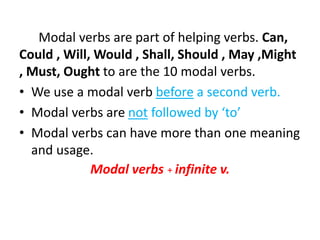
Modal verbs are part of helping verbs. Can, 
Could , Will, Would , Shall, Should , May ,Might 
, Must, Ought to are the 10 modal verbs. 
• We use a modal verb before a second verb. 
• Modal verbs are not followed by ‘to’ 
• Modal verbs can have more than one meaning 
and usage. 
Modal verbs + infinite v.
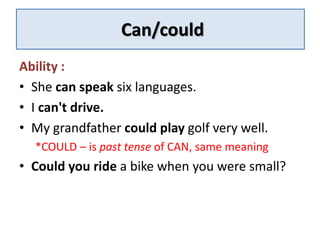
Can/could 
Ability : 
• She can speak six languages. 
• I can't drive. 
• My grandfather could play golf very well. 
*COULD – is past tense of CAN, same meaning 
• Could you ride a bike when you were small?
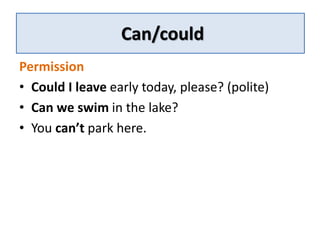
Can/could 
Permission 
• Could I leave early today, please? (polite) 
• Can we swim in the lake? 
• You can’t park here.
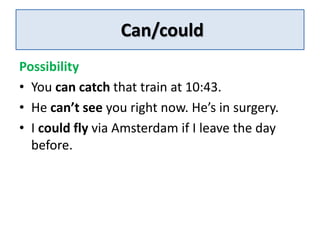
Can/could 
Possibility 
• You can catch that train at 10:43. 
• He can’t see you right now. He’s in surgery. 
• I could fly via Amsterdam if I leave the day 
before.
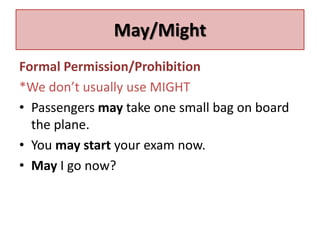
May/Might 
Formal Permission/Prohibition 
*We don’t usually use MIGHT 
• Passengers may take one small bag on board 
the plane. 
• You may start your exam now. 
• May I go now?
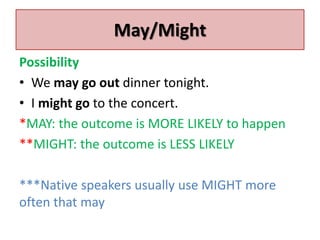
May/Might 
Possibility 
• We may go out dinner tonight. 
• I might go to the concert. 
*MAY: the outcome is MORE LIKELY to happen 
**MIGHT: the outcome is LESS LIKELY 
***Native speakers usually use MIGHT more 
often that may
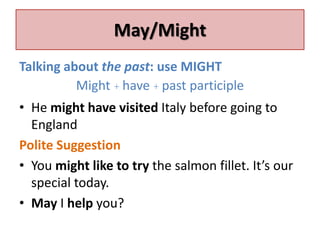
May/Might 
Talking about the past: use MIGHT 
Might + have + past participle 
• He might have visited Italy before going to 
England 
Polite Suggestion 
• You might like to try the salmon fillet. It’s our 
special today. 
• May I help you?
Will/would 
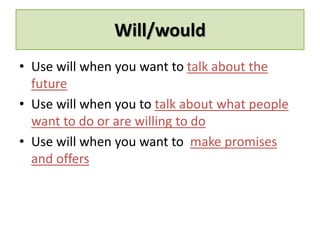
• Use will when you want to talk about the 
future 
• Use will when you to talk about what people 
want to do or are willing to do 
• Use will when you want to make promises 
and offers
Will /would 
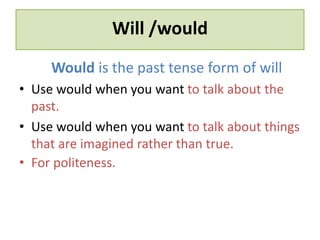
Would is the past tense form of will 
• Use would when you want to talk about the 
past. 
• Use would when you want to talk about things 
that are imagined rather than true. 
• For politeness.
Will /Would 
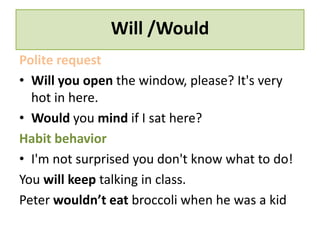
Polite request 
• Will you open the window, please? It's very 
hot in here. 
• Would you mind if I sat here? 
Habit behavior 
• I'm not surprised you don't know what to do! 
You will keep talking in class. 
Peter wouldn’t eat broccoli when he was a kid
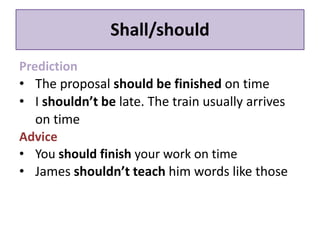
Shall/should 
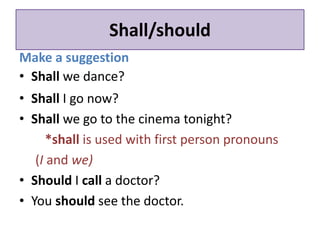
Make a suggestion 
• Shall we dance? 
• Shall I go now? 
• Shall we go to the cinema tonight? 
*shall is used with first person pronouns 
(I and we) 
• Should I call a doctor? 
• You should see the doctor.
Shall/should 
Prediction 
• The proposal should be finished on time 
• I shouldn’t be late. The train usually arrives 
on time 
Advice 
• You should finish your work on time 
• James shouldn’t teach him words like those
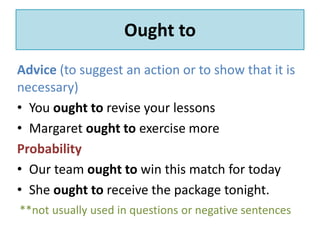
Ought to 
Advice (to suggest an action or to show that it is 
necessary) 
• You ought to revise your lessons 
• Margaret ought to exercise more 
Probability 
• Our team ought to win this match for today 
• She ought to receive the package tonight. 
**not usually used in questions or negative sentences
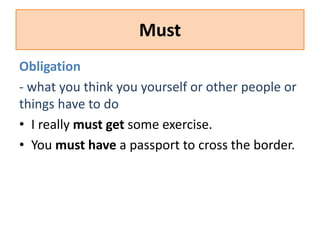
Must 
Obligation 
- what you think you yourself or other people or 
things have to do 
• I really must get some exercise. 
• You must have a passport to cross the border.
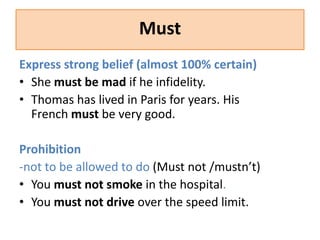
Must 
Express strong belief (almost 100% certain) 
• She must be mad if he infidelity. 
• Thomas has lived in Paris for years. His 
French must be very good. 
Prohibition 
-not to be allowed to do (Must not /mustn’t) 
• You must not smoke in the hospital. 
• You must not drive over the speed limit.

Modal Verbs

  • 1.
    Modal Verbs By: Aornwara Nitkhosakul No.1 M.4/1 Boonyisa Boonrod No.3 M.4/1 Isaya Lorjisa-ard No.4 M.4/1
  • 2.
    Modal verbs arepart of helping verbs. Can, Could , Will, Would , Shall, Should , May ,Might , Must, Ought to are the 10 modal verbs. • We use a modal verb before a second verb. • Modal verbs are not followed by ‘to’ • Modal verbs can have more than one meaning and usage. Modal verbs + infinite v.
  • 3.
    Can/could Ability : • She can speak six languages. • I can't drive. • My grandfather could play golf very well. *COULD – is past tense of CAN, same meaning • Could you ride a bike when you were small?
  • 4.
    Can/could Permission •Could I leave early today, please? (polite) • Can we swim in the lake? • You can’t park here.
  • 5.
    Can/could Possibility •You can catch that train at 10:43. • He can’t see you right now. He’s in surgery. • I could fly via Amsterdam if I leave the day before.
  • 6.
    May/Might Formal Permission/Prohibition *We don’t usually use MIGHT • Passengers may take one small bag on board the plane. • You may start your exam now. • May I go now?
  • 7.
    May/Might Possibility •We may go out dinner tonight. • I might go to the concert. *MAY: the outcome is MORE LIKELY to happen **MIGHT: the outcome is LESS LIKELY ***Native speakers usually use MIGHT more often that may
  • 8.
    May/Might Talking aboutthe past: use MIGHT Might + have + past participle • He might have visited Italy before going to England Polite Suggestion • You might like to try the salmon fillet. It’s our special today. • May I help you?
  • 9.
    Will/would • Usewill when you want to talk about the future • Use will when you to talk about what people want to do or are willing to do • Use will when you want to make promises and offers
  • 10.
    Will /would Wouldis the past tense form of will • Use would when you want to talk about the past. • Use would when you want to talk about things that are imagined rather than true. • For politeness.
  • 11.
    Will /Would Politerequest • Will you open the window, please? It's very hot in here. • Would you mind if I sat here? Habit behavior • I'm not surprised you don't know what to do! You will keep talking in class. Peter wouldn’t eat broccoli when he was a kid
  • 12.
    Shall/should Make asuggestion • Shall we dance? • Shall I go now? • Shall we go to the cinema tonight? *shall is used with first person pronouns (I and we) • Should I call a doctor? • You should see the doctor.
  • 13.
    Shall/should Prediction •The proposal should be finished on time • I shouldn’t be late. The train usually arrives on time Advice • You should finish your work on time • James shouldn’t teach him words like those
  • 14.
    Ought to Advice(to suggest an action or to show that it is necessary) • You ought to revise your lessons • Margaret ought to exercise more Probability • Our team ought to win this match for today • She ought to receive the package tonight. **not usually used in questions or negative sentences
  • 15.
    Must Obligation -what you think you yourself or other people or things have to do • I really must get some exercise. • You must have a passport to cross the border.
  • 16.
    Must Express strongbelief (almost 100% certain) • She must be mad if he infidelity. • Thomas has lived in Paris for years. His French must be very good. Prohibition -not to be allowed to do (Must not /mustn’t) • You must not smoke in the hospital. • You must not drive over the speed limit.