Resistance
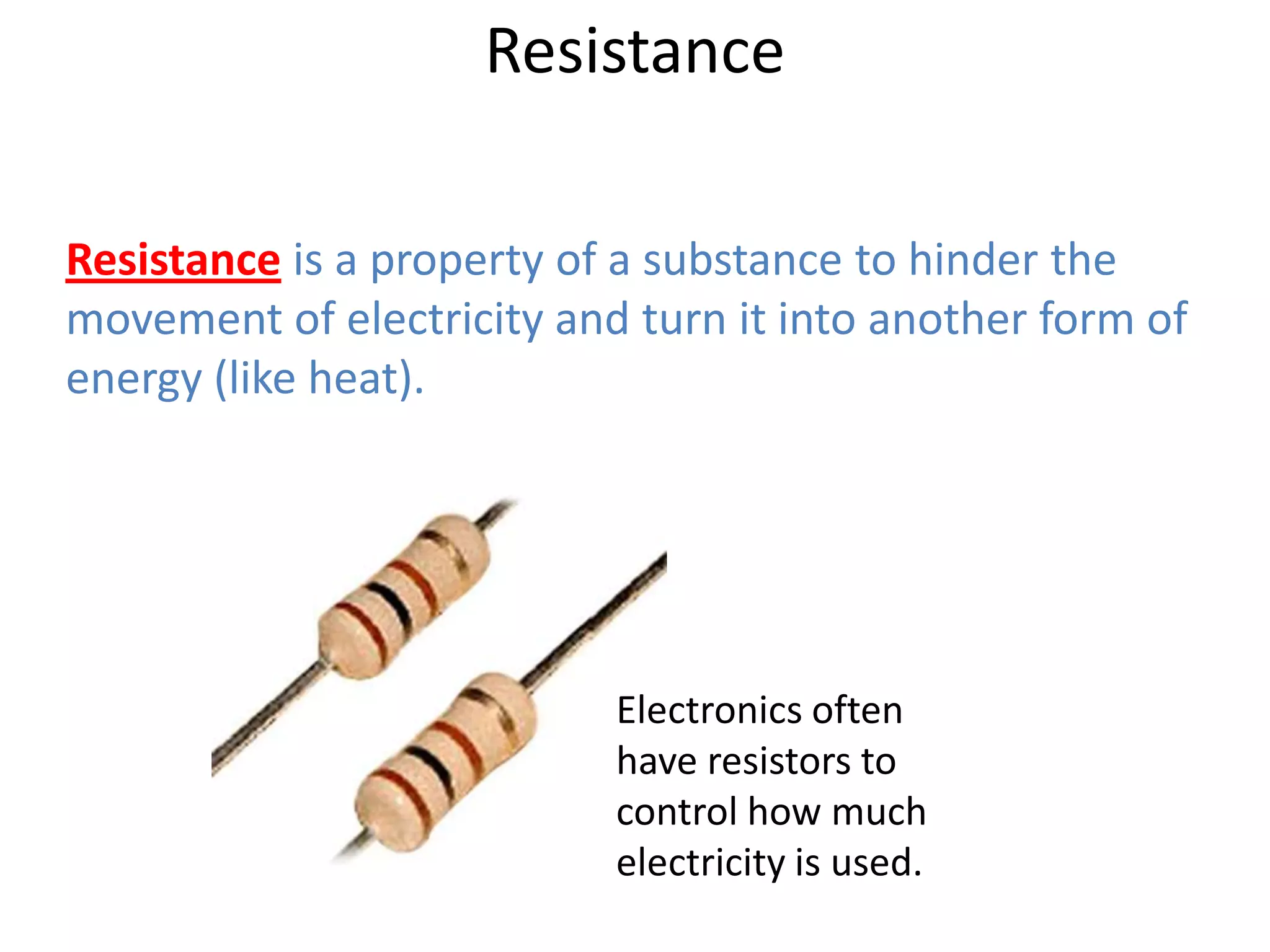
Resistance is aproperty of a substance to hinder the
movement of electricity and turn it into another form of
energy (like heat).
Electronics often
have resistors to
control how much
electricity is used.
Resistance
There are 4factors that affect how much a material will
resist the flow of electricity:
5.
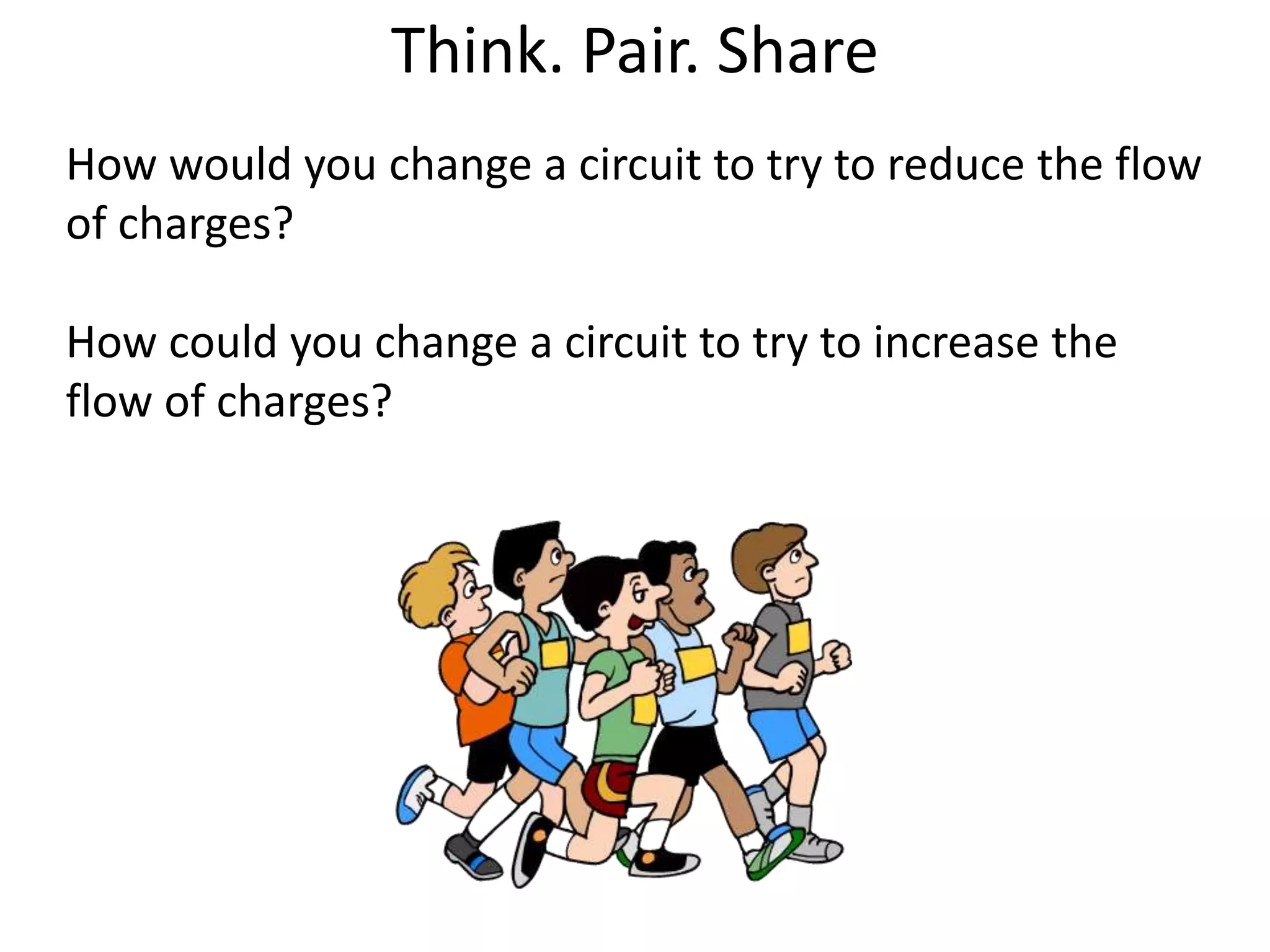
Think. Pair. Share
Howwould you change a circuit to try to reduce the flow
of charges?
How could you change a circuit to try to increase the
flow of charges?
6.
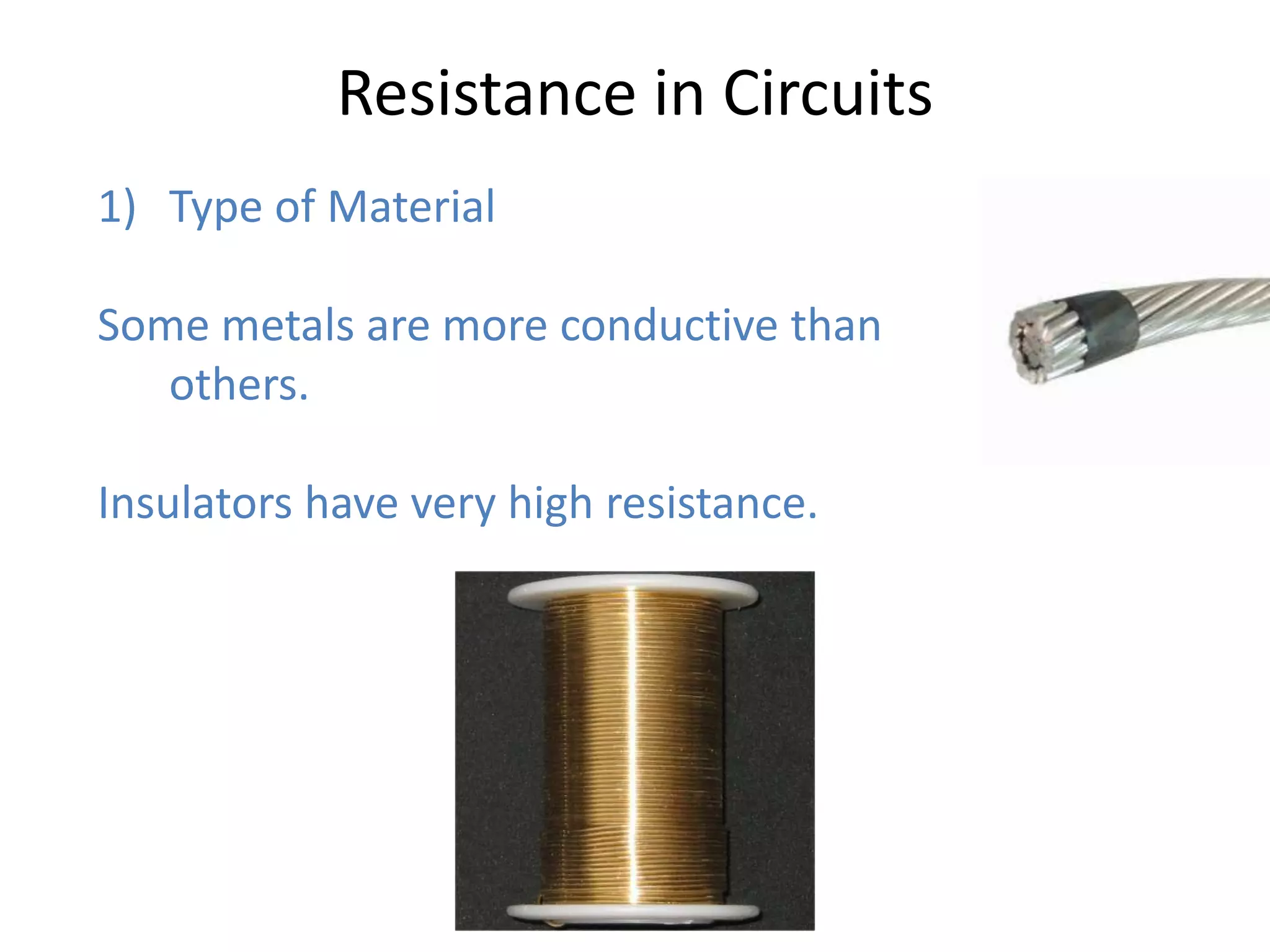
Resistance in Circuits
1)Type of Material
Some metals are more conductive than
others.
Insulators have very high resistance.
7.
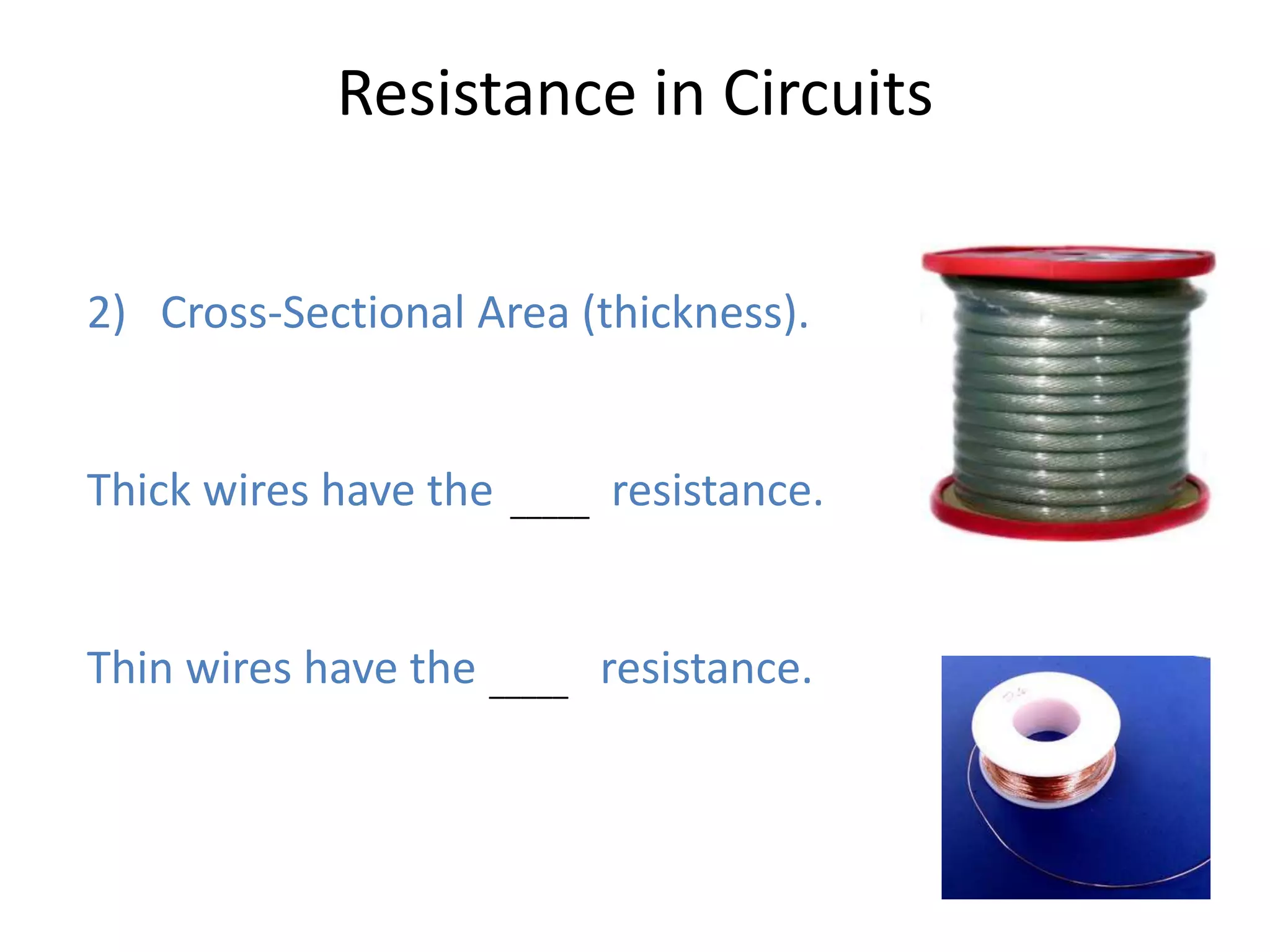
Resistance in Circuits
2)Cross-Sectional Area (thickness).
Thick wires have the least resistance.
_____
Thin wires have the most resistance.
_____
8.
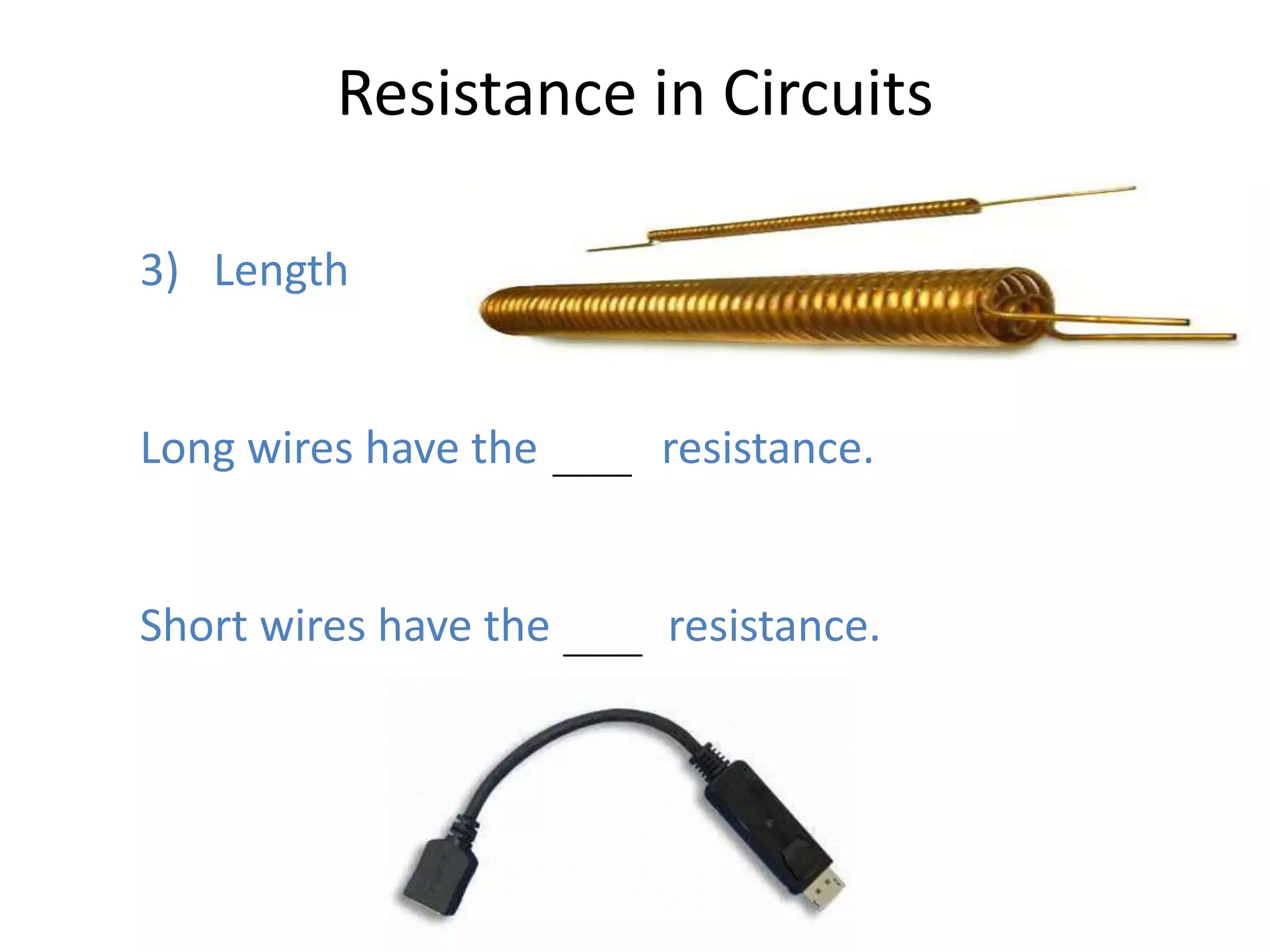
Resistance in Circuits
3)Length
Long wires have the most resistance.
_____
Short wires have the least resistance.
_____
9.
Resistance in Circuits
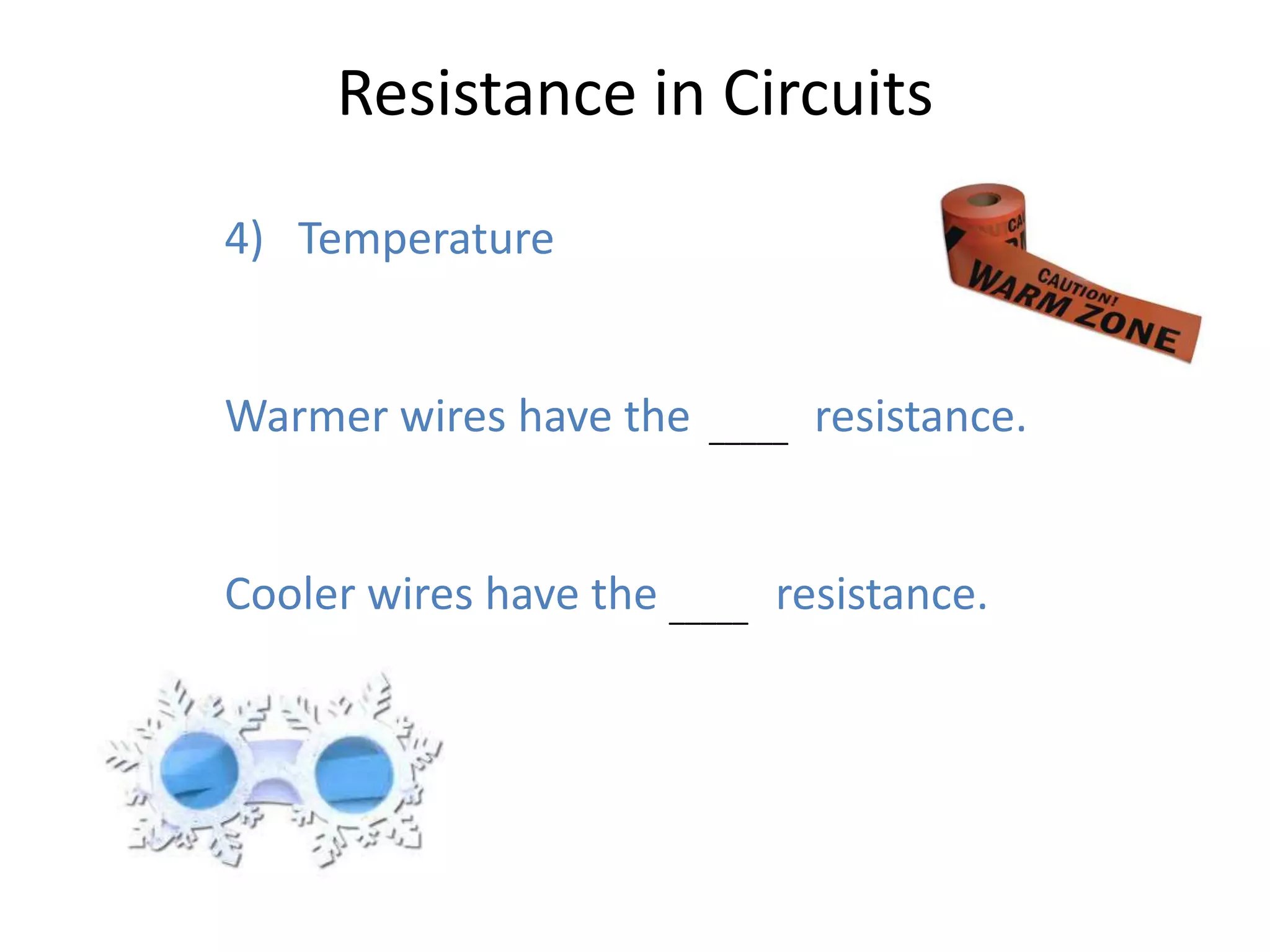
4)Temperature
Warmer wires have the most resistance.
_____
Cooler wires have the _____ resistance.
least
10.
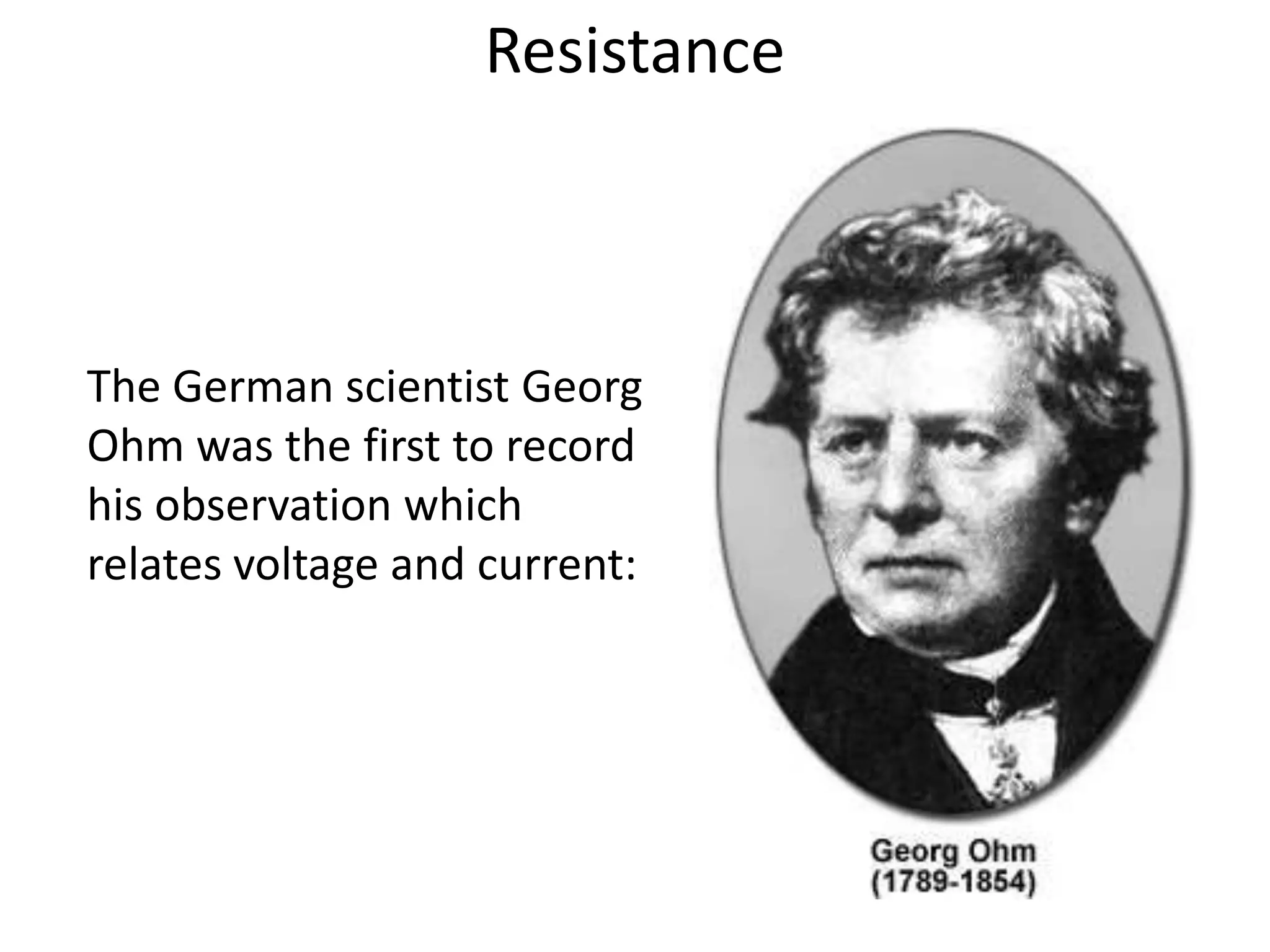
Resistance
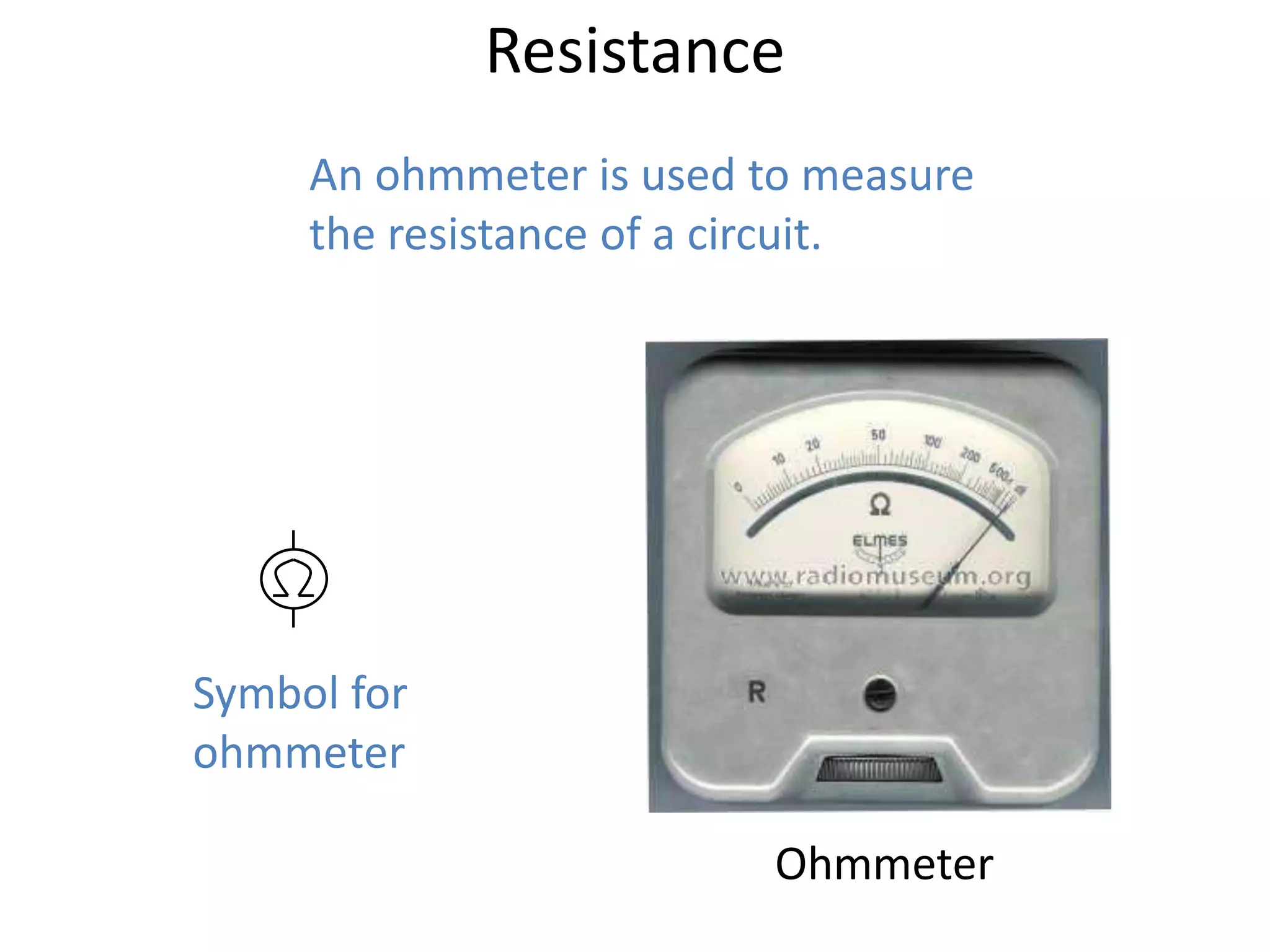
An ohmmeter is used to measure
the resistance of a circuit.
Symbol for
ohmmeter
Ohmmeter
Resistance
Ohm's Law:
The voltagebetween two points on a conductor is
directly related to the electric current flowing through
the conductor.
This means the graph of V vs I is a straight line.
15.
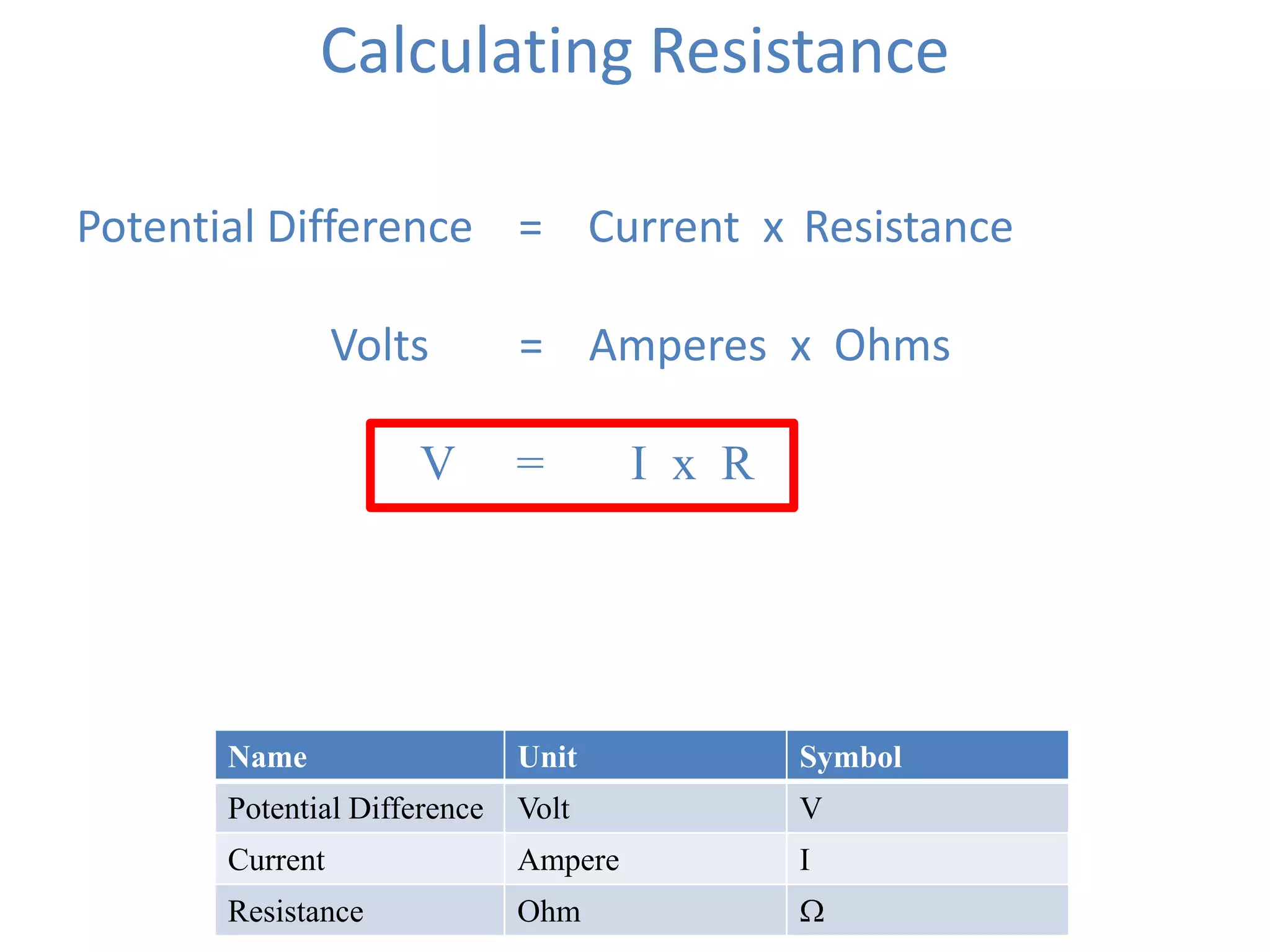
Calculating Resistance
Potential Difference= Current x Resistance
Volts = Amperes x Ohms
V = I x R
Name Unit Symbol
Potential Difference Volt V
Current Ampere I
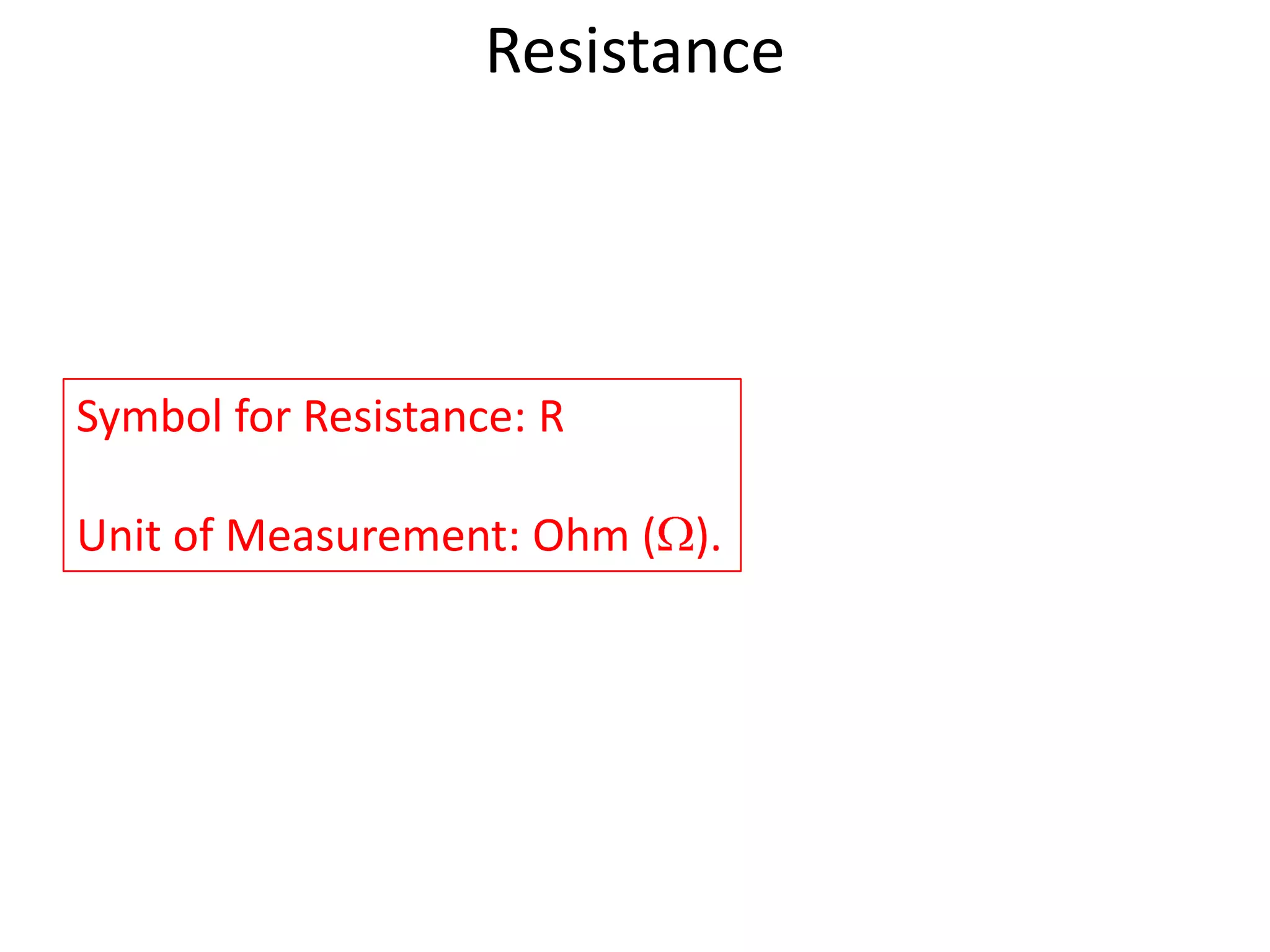
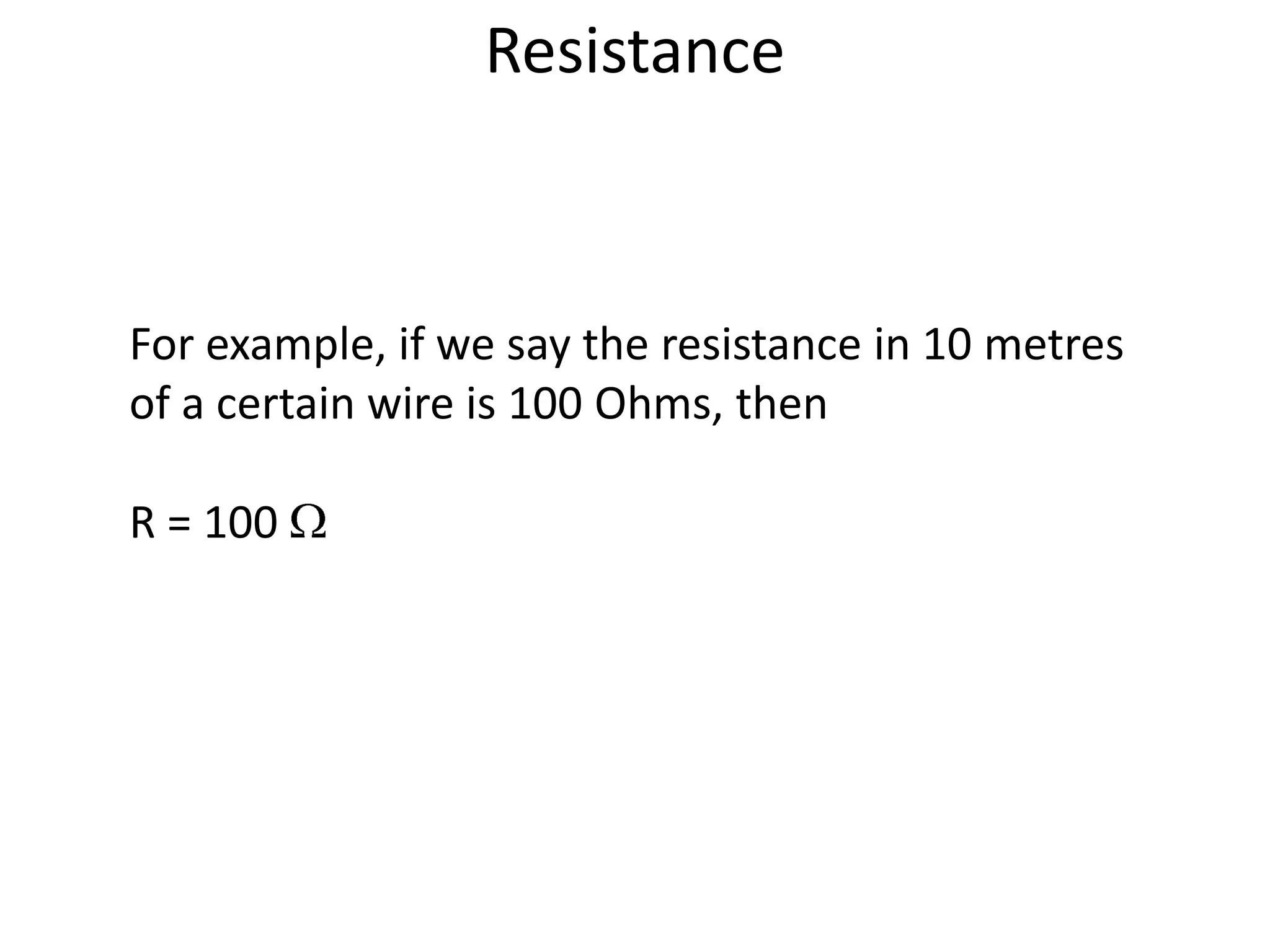
Resistance Ohm
16.
Try This.
(Problem SetResistance Question #1)
What is the potential difference across a tungsten
filament in a 100 W light bulb if the resistance in the
filament is 144 Ω and a current of 0.833 A is flowing
through it?
Answer: 120 V


![resistance [Ohm's law]](https://cdn.slidesharecdn.com/ss_thumbnails/ohmslaw-170402062803-thumbnail.jpg?width=640&height=640&fit=bounds)


![Applied physicsLec2[1]1111111111111.pptx](https://cdn.slidesharecdn.com/ss_thumbnails/appliedphysicslec21-251208140434-58c84185-thumbnail.jpg?width=640&height=640&fit=bounds)


