World Journal of Pharmaceutical Sciences
ISSN (Print): 2321-3310; ISSN (Online): 2321-3086
Published by Atom and Cell Publishers © All Rights Reserved
Available online at: http://www.wjpsonline.com/
Research Article

PREVAILENCE OF MIGRIANE IN A LOW INCOME COMMUNITY OF KARACHI
Riffat Yasmin*, Tehseen Quds*, Dr. Tanzeela Khan**
*Faculty of Pharmaceutical sciences, **Dow University of Health Sciences, Karachi,
Pakistan
Received: 08-12-2013 / Revised: 29-12-2013 / Accepted: 31-12-2013

ABSTRACT
Migraine is the most common problem affecting large population, with prevalence frequency 10-12 %. This
study was conducted to evaluate the prevalence of migraine in a low income community in Karachi from JuneOct, 2013. Three hundred and seven participants were involved in this study. For this purpose cross-sectional
community based questionnaire was designed in accordance with the diagnostic criteria given by International
Headache Society. Data collection was carried out by personal visit to patients and through clinics. It was
observed that females (65.5%) are more affected from migraine then male. 32.9% housewives reported that they
are suffering from migraine. This medical problem is common among youngsters (38.1%) than old citizens.
Employees working in different organizations (39.7%), were found to be mostly affected from migraine then
self employed persons. Majority of the migraine patients (41%) reported that they are suffering from common
symptoms including: photophobia, phonophobia, nausea, vomiting etc. Dietary habits of individuals were found
to be closely associated with migraine such as use of caffeine, chocolate are prominent; and their use is common
among 75% patients cumulatively.
It was evaluated that certain disease conditions i.e. stress (33.6%),
depression (22.1%) and anxiety (18.9%) are more common among sufferers of migraine.
Key words: Migraine, common symptoms, triggers, Pakistan

INTRODUCTION
Migraine is a common problem affecting vast
population of under developed countries. Migraine
has prevalence frequency i.e. 10-12 % and
categorized as 19th major problem worldwide.1 It is
characterized by pulsating, episodic pain which
occurs unilateral or bilateral, with varying intensity
of moderate to severe. The attacks of migraine may
last from 4 to 72 hours, and its other symptoms
include: nausea, vomiting, irritation to light
[photophobia],
and
irritation
to
sound
[phonophobia] etc.2,3 The possible cause of pain is
described as “migraine initiates in brain in
serotonergic and noradrenergic neurons. This
debilitating pain is because of the dilatation of
arteries sensitive to pain lies outside the brain
which also include scalp arteries”. Factors
responsible to trigger pain are important which
include stress, consumption of vasoactive amines
foods e.g. chocolate and cheese, allergy induced by
food, and hormonal changes may also induce pain.3
The International Headache Society (IHS),
described the clinical diagnosis of migraine into
two classes as migraine with Aura and without

Aura.1 Migraine with aura is also known as classic
migraine. In this type of migraine patient feels aura
half an hour before the actual pain starts. It has
transient focal neurological symptoms including
visual disturbance which is followed by headache.4
Migraine without aura is the most common type of
migraine. Its symptoms include sudden onset of
throbbing, unilateral pain which becomes more
severe on movement and may last for 4-72 hours if
untreated.5 In Pakistan diagnostic tools of migraine
are not frequently used therefore, unfortunately
patients remain un-diagnosed.6Several studies have
been conducted at community level 7-13 to evaluate
the prevalence of migraine but this study was
designed with the aim to evaluate the prevalence of
migraine in a low income community in Karachi
and to assess main triggers of migraine among
residents.
METHOD
This study was conducted in Akhter Colony
(Karachi) during June-Oct, 2013. For this study
total 307 participants were involved, 201 female
and 106 male. Approximately 350 questionnaires

*Corresponding Author Address: Riffat Yasmin, Faculty of Pharmaceutical sciences, Dow University of Health Sciences, Karachi,
Pakistan; E-mail: yasmin.pharmacist@gmail.com
Riffat Yasmin et al., World J Pharm Sci 2014; 2(1): 129-132

were analyzed of which 307 were properly filled
and included in this study and incomplete
questionnaire were excluded. To conduct this study
a cross-sectional community based questionnaire
was developed. The questionnaire was designed in
accordance with the diagnostic criteria given by
International Headache Society (IHS). Data was
collected by personal visit to patients and through
clinics where physicians provided the information
about their patients. Participants diagnosed with
migraine (with or without aura) were selected for
this study. A prior consent was taken from all
participants of this study. The questionnaire was
comprised of two sections including the
demographic and clinical characteristics of patients.
For collecting the clinical information of patients,
following items were included in the questionnaire:
 Number of migraine attack per
patient.
 Most common symptoms of migraine
attack during/before initiation of pain
 Duration of migraine attack
 Usual time of migraine attack
 Location of pain Usual cause of
migraine
 Inherited factor
 Intake of selected food items that may
initiate pain
 Any other medical problem along
with migraine
 Triggers that may initiate or
exaggerate pain

problems, causes of migraine, and triggers of
migraine among patients.
DISCUSSION
In the last decade headache has been a major
disorder suffering a large population in developing
countries.14,15 It produces best result when
treatment measures should take early. The most
common medications used for the management of
pain are NSAIDS and opioid analgesics,
administered at the onset of pain.16
This study reveals that women are more affected
from migraine than men, specially youngsters and
middle aged peoples are more affected from
migraine than old citizens. It has also been
evaluated by another study conducted by Lipton et
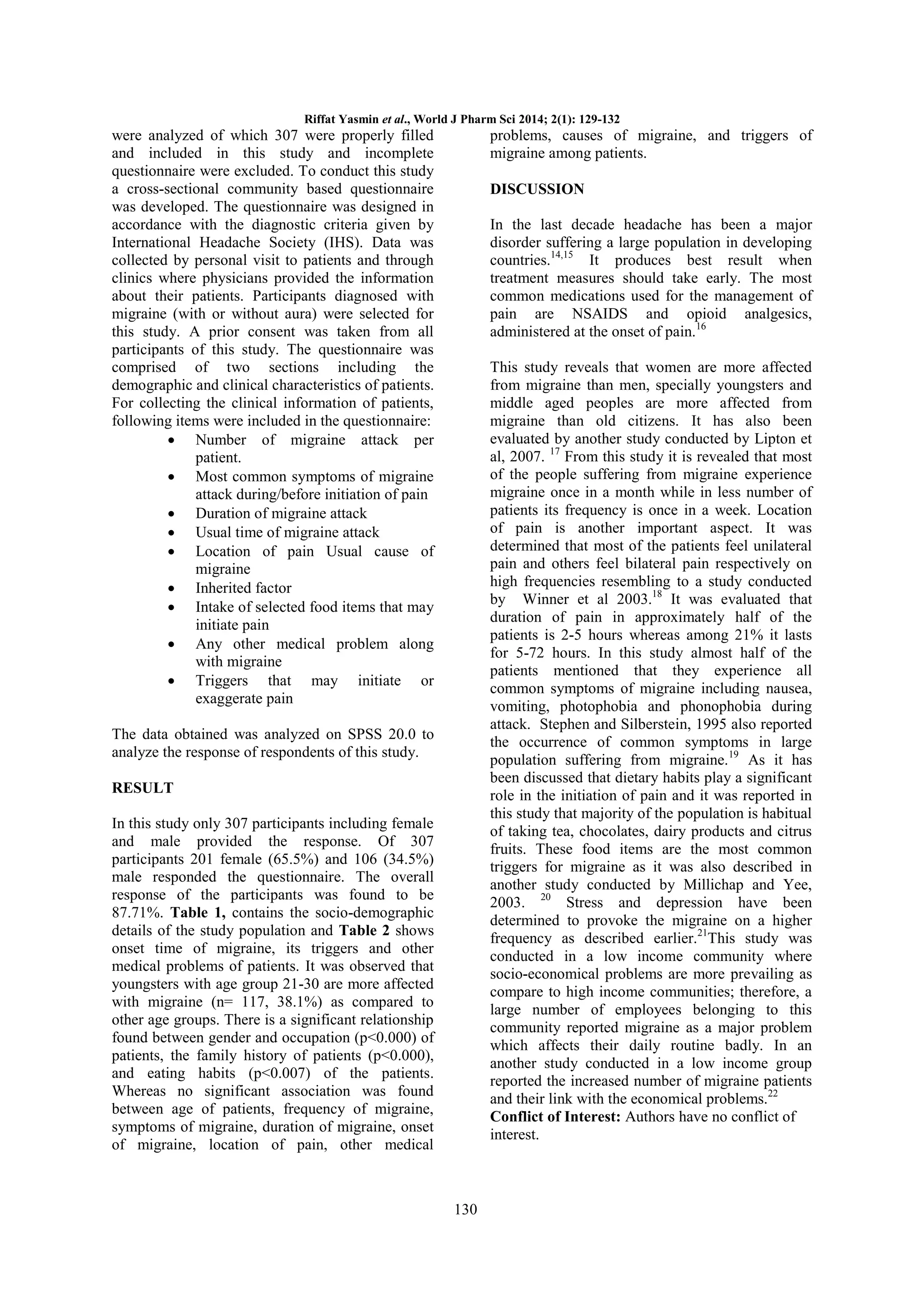
al, 2007. 17 From this study it is revealed that most
of the people suffering from migraine experience
migraine once in a month while in less number of
patients its frequency is once in a week. Location
of pain is another important aspect. It was
determined that most of the patients feel unilateral
pain and others feel bilateral pain respectively on
high frequencies resembling to a study conducted
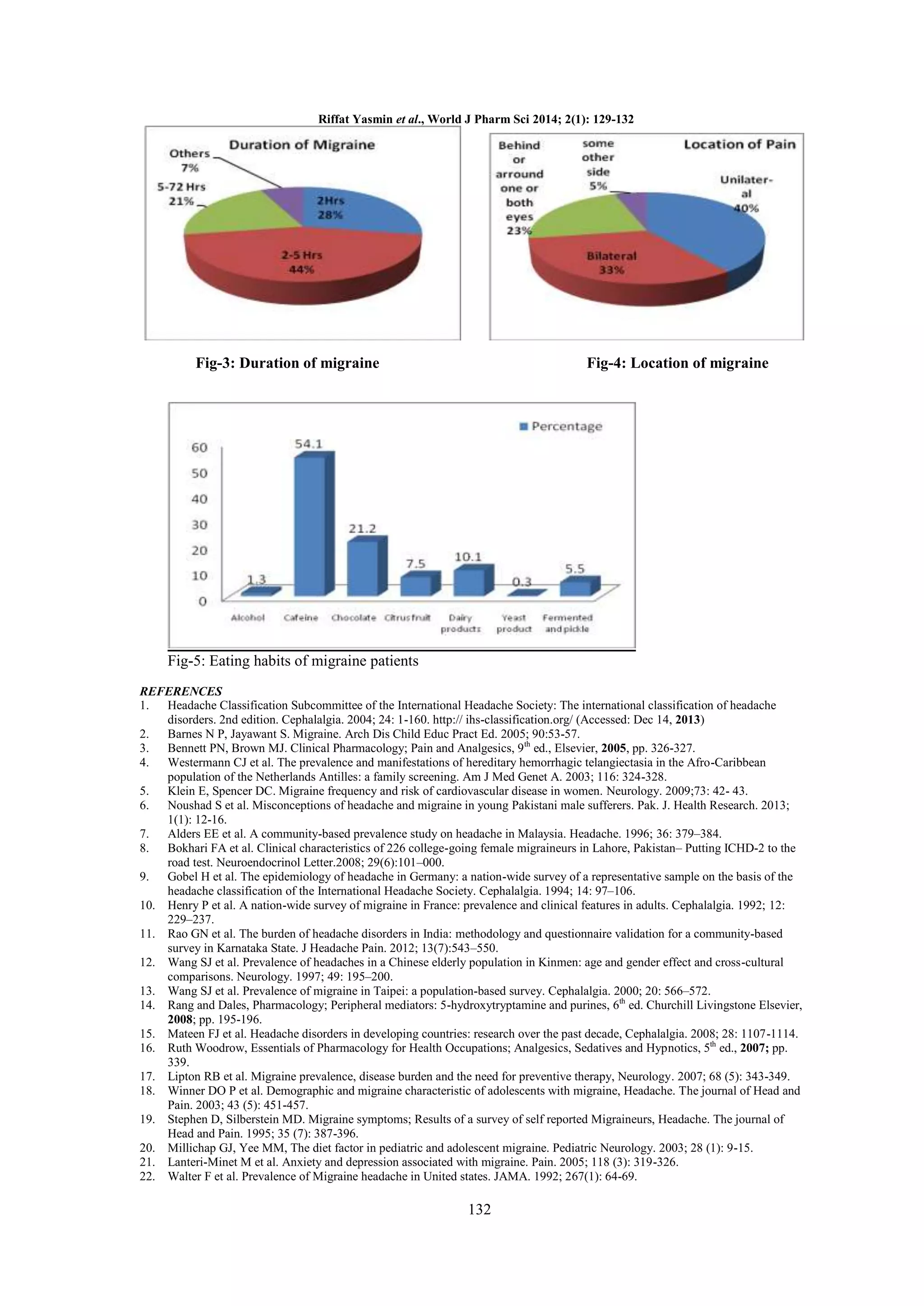
by Winner et al 2003.18 It was evaluated that
duration of pain in approximately half of the
patients is 2-5 hours whereas among 21% it lasts
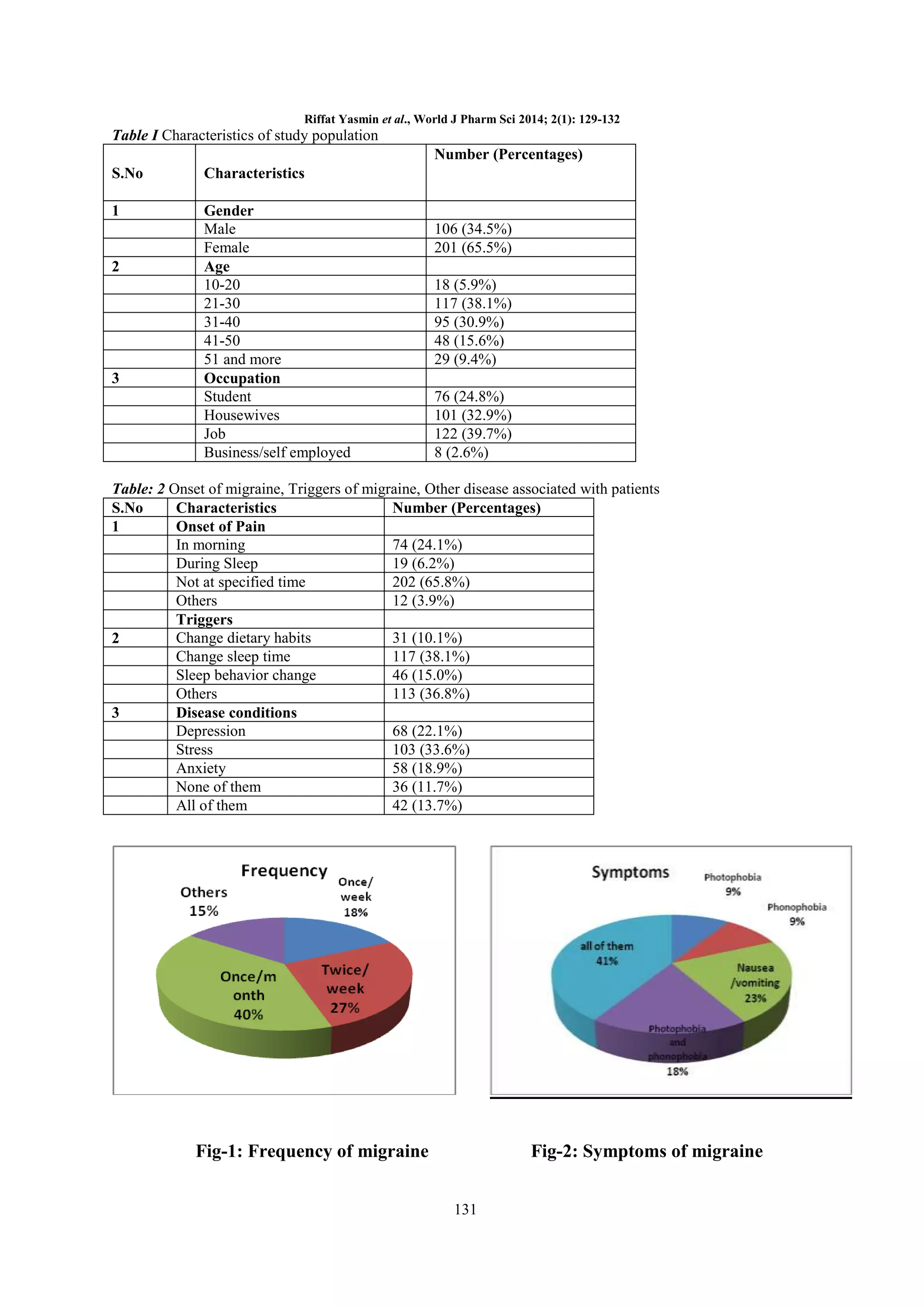
for 5-72 hours. In this study almost half of the
patients mentioned that they experience all
common symptoms of migraine including nausea,
vomiting, photophobia and phonophobia during
attack. Stephen and Silberstein, 1995 also reported
the occurrence of common symptoms in large
population suffering from migraine.19 As it has
been discussed that dietary habits play a significant
role in the initiation of pain and it was reported in
this study that majority of the population is habitual
of taking tea, chocolates, dairy products and citrus
fruits. These food items are the most common
triggers for migraine as it was also described in
another study conducted by Millichap and Yee,
2003. 20 Stress and depression have been
determined to provoke the migraine on a higher
frequency as described earlier.21This study was
conducted in a low income community where
socio-economical problems are more prevailing as
compare to high income communities; therefore, a
large number of employees belonging to this
community reported migraine as a major problem
which affects their daily routine badly. In an
another study conducted in a low income group
reported the increased number of migraine patients
and their link with the economical problems.22
Conflict of Interest: Authors have no conflict of
interest.

The data obtained was analyzed on SPSS 20.0 to
analyze the response of respondents of this study.
RESULT
In this study only 307 participants including female
and male provided the response. Of 307
participants 201 female (65.5%) and 106 (34.5%)
male responded the questionnaire. The overall
response of the participants was found to be
87.71%. Table 1, contains the socio-demographic
details of the study population and Table 2 shows
onset time of migraine, its triggers and other
medical problems of patients. It was observed that
youngsters with age group 21-30 are more affected
with migraine (n= 117, 38.1%) as compared to
other age groups. There is a significant relationship
found between gender and occupation (p<0.000) of
patients, the family history of patients (p<0.000),
and eating habits (p<0.007) of the patients.
Whereas no significant association was found
between age of patients, frequency of migraine,
symptoms of migraine, duration of migraine, onset
of migraine, location of pain, other medical

130
Riffat Yasmin et al., World J Pharm Sci 2014; 2(1): 129-132

Table I Characteristics of study population
Number (Percentages)
S.No

Characteristics

1

Gender
Male
Female
Age
10-20
21-30
31-40
41-50
51 and more
Occupation
Student
Housewives
Job
Business/self employed

2

3

106 (34.5%)
201 (65.5%)
18 (5.9%)
117 (38.1%)
95 (30.9%)
48 (15.6%)
29 (9.4%)
76 (24.8%)
101 (32.9%)
122 (39.7%)
8 (2.6%)

Table: 2 Onset of migraine, Triggers of migraine, Other disease associated with patients
S.No
Characteristics
Number (Percentages)
1
Onset of Pain
In morning
74 (24.1%)
During Sleep
19 (6.2%)
Not at specified time
202 (65.8%)
Others
12 (3.9%)
Triggers
Change dietary habits
31 (10.1%)
2
Change sleep time
117 (38.1%)
Sleep behavior change
46 (15.0%)
Others
113 (36.8%)
3
Disease conditions
Depression
68 (22.1%)
Stress
103 (33.6%)
Anxiety
58 (18.9%)
None of them
36 (11.7%)
All of them
42 (13.7%)

Fig-1: Frequency of migraine

Fig-2: Symptoms of migraine
131
Riffat Yasmin et al., World J Pharm Sci 2014; 2(1): 129-132

Fig-3: Duration of migraine

Fig-4: Location of migraine

Fig-5: Eating habits of migraine patients
REFERENCES
1. Headache Classification Subcommittee of the International Headache Society: The international classification of headache
disorders. 2nd edition. Cephalalgia. 2004; 24: 1-160. http:// ihs-classification.org/ (Accessed: Dec 14, 2013)
2. Barnes N P, Jayawant S. Migraine. Arch Dis Child Educ Pract Ed. 2005; 90:53-57.
3. Bennett PN, Brown MJ. Clinical Pharmacology; Pain and Analgesics, 9 th ed., Elsevier, 2005, pp. 326-327.
4. Westermann CJ et al. The prevalence and manifestations of hereditary hemorrhagic telangiectasia in the Afro-Caribbean
population of the Netherlands Antilles: a family screening. Am J Med Genet A. 2003; 116: 324-328.
5. Klein E, Spencer DC. Migraine frequency and risk of cardiovascular disease in women. Neurology. 2009;73: 42- 43.
6. Noushad S et al. Misconceptions of headache and migraine in young Pakistani male sufferers. Pak. J. Health Research. 2013;
1(1): 12-16.
7. Alders EE et al. A community-based prevalence study on headache in Malaysia. Headache. 1996; 36: 379–384.
8. Bokhari FA et al. Clinical characteristics of 226 college-going female migraineurs in Lahore, Pakistan– Putting ICHD-2 to the
road test. Neuroendocrinol Letter.2008; 29(6):101–000.
9. Gobel H et al. The epidemiology of headache in Germany: a nation-wide survey of a representative sample on the basis of the
headache classification of the International Headache Society. Cephalalgia. 1994; 14: 97–106.
10. Henry P et al. A nation-wide survey of migraine in France: prevalence and clinical features in adults. Cephalalgia. 1992; 12:
229–237.
11. Rao GN et al. The burden of headache disorders in India: methodology and questionnaire validation for a community-based
survey in Karnataka State. J Headache Pain. 2012; 13(7):543–550.
12. Wang SJ et al. Prevalence of headaches in a Chinese elderly population in Kinmen: age and gender effect and cross-cultural
comparisons. Neurology. 1997; 49: 195–200.
13. Wang SJ et al. Prevalence of migraine in Taipei: a population-based survey. Cephalalgia. 2000; 20: 566–572.
14. Rang and Dales, Pharmacology; Peripheral mediators: 5-hydroxytryptamine and purines, 6th ed. Churchill Livingstone Elsevier,
2008; pp. 195-196.
15. Mateen FJ et al. Headache disorders in developing countries: research over the past decade, Cephalalgia. 2008; 28: 1107-1114.
16. Ruth Woodrow, Essentials of Pharmacology for Health Occupations; Analgesics, Sedatives and Hypnotics, 5th ed., 2007; pp.
339.
17. Lipton RB et al. Migraine prevalence, disease burden and the need for preventive therapy, Neurology. 2007; 68 (5): 343-349.
18. Winner DO P et al. Demographic and migraine characteristic of adolescents with migraine, Headache. The journal of Head and
Pain. 2003; 43 (5): 451-457.
19. Stephen D, Silberstein MD. Migraine symptoms; Results of a survey of self reported Migraineurs, Headache. The journal of
Head and Pain. 1995; 35 (7): 387-396.
20. Millichap GJ, Yee MM, The diet factor in pediatric and adolescent migraine. Pediatric Neurology. 2003; 28 (1): 9-15.
21. Lanteri-Minet M et al. Anxiety and depression associated with migraine. Pain. 2005; 118 (3): 319-326.
22. Walter F et al. Prevalence of Migraine headache in United states. JAMA. 1992; 267(1): 64-69.

132

PREVAILENCE OF MIGRIANE IN A LOW INCOME COMMUNITY OF KARACHI

  • 1.
    World Journal ofPharmaceutical Sciences ISSN (Print): 2321-3310; ISSN (Online): 2321-3086 Published by Atom and Cell Publishers © All Rights Reserved Available online at: http://www.wjpsonline.com/ Research Article PREVAILENCE OF MIGRIANE IN A LOW INCOME COMMUNITY OF KARACHI Riffat Yasmin*, Tehseen Quds*, Dr. Tanzeela Khan** *Faculty of Pharmaceutical sciences, **Dow University of Health Sciences, Karachi, Pakistan Received: 08-12-2013 / Revised: 29-12-2013 / Accepted: 31-12-2013 ABSTRACT Migraine is the most common problem affecting large population, with prevalence frequency 10-12 %. This study was conducted to evaluate the prevalence of migraine in a low income community in Karachi from JuneOct, 2013. Three hundred and seven participants were involved in this study. For this purpose cross-sectional community based questionnaire was designed in accordance with the diagnostic criteria given by International Headache Society. Data collection was carried out by personal visit to patients and through clinics. It was observed that females (65.5%) are more affected from migraine then male. 32.9% housewives reported that they are suffering from migraine. This medical problem is common among youngsters (38.1%) than old citizens. Employees working in different organizations (39.7%), were found to be mostly affected from migraine then self employed persons. Majority of the migraine patients (41%) reported that they are suffering from common symptoms including: photophobia, phonophobia, nausea, vomiting etc. Dietary habits of individuals were found to be closely associated with migraine such as use of caffeine, chocolate are prominent; and their use is common among 75% patients cumulatively. It was evaluated that certain disease conditions i.e. stress (33.6%), depression (22.1%) and anxiety (18.9%) are more common among sufferers of migraine. Key words: Migraine, common symptoms, triggers, Pakistan INTRODUCTION Migraine is a common problem affecting vast population of under developed countries. Migraine has prevalence frequency i.e. 10-12 % and categorized as 19th major problem worldwide.1 It is characterized by pulsating, episodic pain which occurs unilateral or bilateral, with varying intensity of moderate to severe. The attacks of migraine may last from 4 to 72 hours, and its other symptoms include: nausea, vomiting, irritation to light [photophobia], and irritation to sound [phonophobia] etc.2,3 The possible cause of pain is described as “migraine initiates in brain in serotonergic and noradrenergic neurons. This debilitating pain is because of the dilatation of arteries sensitive to pain lies outside the brain which also include scalp arteries”. Factors responsible to trigger pain are important which include stress, consumption of vasoactive amines foods e.g. chocolate and cheese, allergy induced by food, and hormonal changes may also induce pain.3 The International Headache Society (IHS), described the clinical diagnosis of migraine into two classes as migraine with Aura and without Aura.1 Migraine with aura is also known as classic migraine. In this type of migraine patient feels aura half an hour before the actual pain starts. It has transient focal neurological symptoms including visual disturbance which is followed by headache.4 Migraine without aura is the most common type of migraine. Its symptoms include sudden onset of throbbing, unilateral pain which becomes more severe on movement and may last for 4-72 hours if untreated.5 In Pakistan diagnostic tools of migraine are not frequently used therefore, unfortunately patients remain un-diagnosed.6Several studies have been conducted at community level 7-13 to evaluate the prevalence of migraine but this study was designed with the aim to evaluate the prevalence of migraine in a low income community in Karachi and to assess main triggers of migraine among residents. METHOD This study was conducted in Akhter Colony (Karachi) during June-Oct, 2013. For this study total 307 participants were involved, 201 female and 106 male. Approximately 350 questionnaires *Corresponding Author Address: Riffat Yasmin, Faculty of Pharmaceutical sciences, Dow University of Health Sciences, Karachi, Pakistan; E-mail: yasmin.pharmacist@gmail.com
  • 2.
    Riffat Yasmin etal., World J Pharm Sci 2014; 2(1): 129-132 were analyzed of which 307 were properly filled and included in this study and incomplete questionnaire were excluded. To conduct this study a cross-sectional community based questionnaire was developed. The questionnaire was designed in accordance with the diagnostic criteria given by International Headache Society (IHS). Data was collected by personal visit to patients and through clinics where physicians provided the information about their patients. Participants diagnosed with migraine (with or without aura) were selected for this study. A prior consent was taken from all participants of this study. The questionnaire was comprised of two sections including the demographic and clinical characteristics of patients. For collecting the clinical information of patients, following items were included in the questionnaire:  Number of migraine attack per patient.  Most common symptoms of migraine attack during/before initiation of pain  Duration of migraine attack  Usual time of migraine attack  Location of pain Usual cause of migraine  Inherited factor  Intake of selected food items that may initiate pain  Any other medical problem along with migraine  Triggers that may initiate or exaggerate pain problems, causes of migraine, and triggers of migraine among patients. DISCUSSION In the last decade headache has been a major disorder suffering a large population in developing countries.14,15 It produces best result when treatment measures should take early. The most common medications used for the management of pain are NSAIDS and opioid analgesics, administered at the onset of pain.16 This study reveals that women are more affected from migraine than men, specially youngsters and middle aged peoples are more affected from migraine than old citizens. It has also been evaluated by another study conducted by Lipton et al, 2007. 17 From this study it is revealed that most of the people suffering from migraine experience migraine once in a month while in less number of patients its frequency is once in a week. Location of pain is another important aspect. It was determined that most of the patients feel unilateral pain and others feel bilateral pain respectively on high frequencies resembling to a study conducted by Winner et al 2003.18 It was evaluated that duration of pain in approximately half of the patients is 2-5 hours whereas among 21% it lasts for 5-72 hours. In this study almost half of the patients mentioned that they experience all common symptoms of migraine including nausea, vomiting, photophobia and phonophobia during attack. Stephen and Silberstein, 1995 also reported the occurrence of common symptoms in large population suffering from migraine.19 As it has been discussed that dietary habits play a significant role in the initiation of pain and it was reported in this study that majority of the population is habitual of taking tea, chocolates, dairy products and citrus fruits. These food items are the most common triggers for migraine as it was also described in another study conducted by Millichap and Yee, 2003. 20 Stress and depression have been determined to provoke the migraine on a higher frequency as described earlier.21This study was conducted in a low income community where socio-economical problems are more prevailing as compare to high income communities; therefore, a large number of employees belonging to this community reported migraine as a major problem which affects their daily routine badly. In an another study conducted in a low income group reported the increased number of migraine patients and their link with the economical problems.22 Conflict of Interest: Authors have no conflict of interest. The data obtained was analyzed on SPSS 20.0 to analyze the response of respondents of this study. RESULT In this study only 307 participants including female and male provided the response. Of 307 participants 201 female (65.5%) and 106 (34.5%) male responded the questionnaire. The overall response of the participants was found to be 87.71%. Table 1, contains the socio-demographic details of the study population and Table 2 shows onset time of migraine, its triggers and other medical problems of patients. It was observed that youngsters with age group 21-30 are more affected with migraine (n= 117, 38.1%) as compared to other age groups. There is a significant relationship found between gender and occupation (p<0.000) of patients, the family history of patients (p<0.000), and eating habits (p<0.007) of the patients. Whereas no significant association was found between age of patients, frequency of migraine, symptoms of migraine, duration of migraine, onset of migraine, location of pain, other medical 130
  • 3.
    Riffat Yasmin etal., World J Pharm Sci 2014; 2(1): 129-132 Table I Characteristics of study population Number (Percentages) S.No Characteristics 1 Gender Male Female Age 10-20 21-30 31-40 41-50 51 and more Occupation Student Housewives Job Business/self employed 2 3 106 (34.5%) 201 (65.5%) 18 (5.9%) 117 (38.1%) 95 (30.9%) 48 (15.6%) 29 (9.4%) 76 (24.8%) 101 (32.9%) 122 (39.7%) 8 (2.6%) Table: 2 Onset of migraine, Triggers of migraine, Other disease associated with patients S.No Characteristics Number (Percentages) 1 Onset of Pain In morning 74 (24.1%) During Sleep 19 (6.2%) Not at specified time 202 (65.8%) Others 12 (3.9%) Triggers Change dietary habits 31 (10.1%) 2 Change sleep time 117 (38.1%) Sleep behavior change 46 (15.0%) Others 113 (36.8%) 3 Disease conditions Depression 68 (22.1%) Stress 103 (33.6%) Anxiety 58 (18.9%) None of them 36 (11.7%) All of them 42 (13.7%) Fig-1: Frequency of migraine Fig-2: Symptoms of migraine 131
  • 4.
    Riffat Yasmin etal., World J Pharm Sci 2014; 2(1): 129-132 Fig-3: Duration of migraine Fig-4: Location of migraine Fig-5: Eating habits of migraine patients REFERENCES 1. Headache Classification Subcommittee of the International Headache Society: The international classification of headache disorders. 2nd edition. Cephalalgia. 2004; 24: 1-160. http:// ihs-classification.org/ (Accessed: Dec 14, 2013) 2. Barnes N P, Jayawant S. Migraine. Arch Dis Child Educ Pract Ed. 2005; 90:53-57. 3. Bennett PN, Brown MJ. Clinical Pharmacology; Pain and Analgesics, 9 th ed., Elsevier, 2005, pp. 326-327. 4. Westermann CJ et al. The prevalence and manifestations of hereditary hemorrhagic telangiectasia in the Afro-Caribbean population of the Netherlands Antilles: a family screening. Am J Med Genet A. 2003; 116: 324-328. 5. Klein E, Spencer DC. Migraine frequency and risk of cardiovascular disease in women. Neurology. 2009;73: 42- 43. 6. Noushad S et al. Misconceptions of headache and migraine in young Pakistani male sufferers. Pak. J. Health Research. 2013; 1(1): 12-16. 7. Alders EE et al. A community-based prevalence study on headache in Malaysia. Headache. 1996; 36: 379–384. 8. Bokhari FA et al. Clinical characteristics of 226 college-going female migraineurs in Lahore, Pakistan– Putting ICHD-2 to the road test. Neuroendocrinol Letter.2008; 29(6):101–000. 9. Gobel H et al. The epidemiology of headache in Germany: a nation-wide survey of a representative sample on the basis of the headache classification of the International Headache Society. Cephalalgia. 1994; 14: 97–106. 10. Henry P et al. A nation-wide survey of migraine in France: prevalence and clinical features in adults. Cephalalgia. 1992; 12: 229–237. 11. Rao GN et al. The burden of headache disorders in India: methodology and questionnaire validation for a community-based survey in Karnataka State. J Headache Pain. 2012; 13(7):543–550. 12. Wang SJ et al. Prevalence of headaches in a Chinese elderly population in Kinmen: age and gender effect and cross-cultural comparisons. Neurology. 1997; 49: 195–200. 13. Wang SJ et al. Prevalence of migraine in Taipei: a population-based survey. Cephalalgia. 2000; 20: 566–572. 14. Rang and Dales, Pharmacology; Peripheral mediators: 5-hydroxytryptamine and purines, 6th ed. Churchill Livingstone Elsevier, 2008; pp. 195-196. 15. Mateen FJ et al. Headache disorders in developing countries: research over the past decade, Cephalalgia. 2008; 28: 1107-1114. 16. Ruth Woodrow, Essentials of Pharmacology for Health Occupations; Analgesics, Sedatives and Hypnotics, 5th ed., 2007; pp. 339. 17. Lipton RB et al. Migraine prevalence, disease burden and the need for preventive therapy, Neurology. 2007; 68 (5): 343-349. 18. Winner DO P et al. Demographic and migraine characteristic of adolescents with migraine, Headache. The journal of Head and Pain. 2003; 43 (5): 451-457. 19. Stephen D, Silberstein MD. Migraine symptoms; Results of a survey of self reported Migraineurs, Headache. The journal of Head and Pain. 1995; 35 (7): 387-396. 20. Millichap GJ, Yee MM, The diet factor in pediatric and adolescent migraine. Pediatric Neurology. 2003; 28 (1): 9-15. 21. Lanteri-Minet M et al. Anxiety and depression associated with migraine. Pain. 2005; 118 (3): 319-326. 22. Walter F et al. Prevalence of Migraine headache in United states. JAMA. 1992; 267(1): 64-69. 132