Optical fibres 
S.P.B.Patel engineering college 
Linch,Mehsana 
Project by:- 
Patel Sujay A 
Patel Pratik C 
Patel Mithilesh 
Patel Princ 
Patel Saumil
Type of Optical fibres 
1> MATERIALS OF WHICH THE 
FIBRES ARE MADE. 
1) Plastic core with Plastic 
cladding. 
2) Glass core with Plastic 
cladding.[pcs] 
3) Glass core with Glass 
cladding.[scs] 
2>THE MODE OF 
PROPAGATION 
1> singlemode fiber. 
2> multimode fibre. 
3>THE REFRACTIVE 
INDEX(INDEX PROFILE). 
1)step-index fibre 
2)Gradedindex fibre
Type of fibres 
1> MATERIALS OF WHICH THE FIBRES ARE MADE. 
2>THE MODE OF PROPAGATION. 
3>THE REFRACTIVE INDEX(INDEX PROFILE).
Types of optical fbires based on material 
1) Plastic core with Plastic cladding. 
2) Glass core with Plastic cladding.[pcs] 
3) Glass core with Glass cladding.[scs]
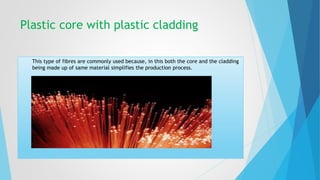
Plastic core with plastic cladding 
This type of fibres are commonly used because, in this both the core and the cladding 
being made up of same material simplifies the production process.
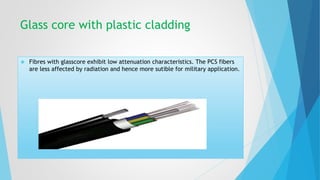
Glass core with plastic cladding 
 Fibres with glasscore exhibit low attenuation characteristics. The PCS fibers 
are less affected by radiation and hence more sutible for military application.
Glass core with glass cladding 
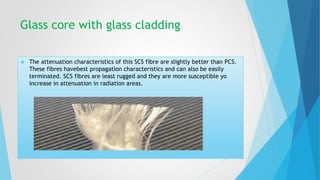
 The attenuation characteristics of this SCS fibre are slightly better than PCS. 
These fibres havebest propagation characteristics and can also be easily 
terminated. SCS fibres are least rugged and they are more susceptible yo 
increase in attenuation in radiation areas.
Propagation of light through an optical fibre 
Mode of propagation 
1> singlemode fiber. 
2> multimode fibre.
Singlemode fibre 
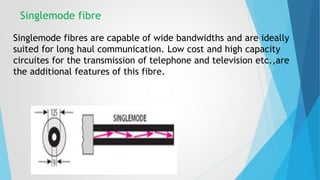
Singlemode fibres are capable of wide bandwidths and are ideally 
suited for long haul communication. Low cost and high capacity 
circuites for the transmission of telephone and television etc.,are 
the additional features of this fibre.
Multimode fibres 
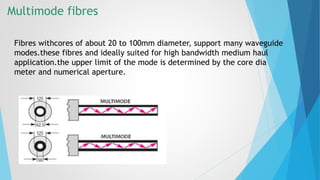
Fibres withcores of about 20 to 100mm diameter, support many waveguide 
modes.these fibres and ideally suited for high bandwidth medium haul 
application.the upper limit of the mode is determined by the core dia 
meter and numerical aperture.
Index pofile fibres 
1)step-index fibre 
2)Gradedindex fibre
Step-index fibre 
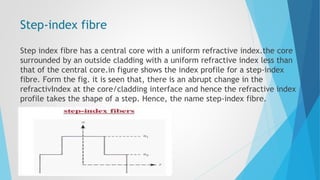
Step index fibre has a central core with a uniform refractive index.the core 
surrounded by an outside cladding with a uniform refractive index less than 
that of the central core.in figure shows the index profile for a step-index 
fibre. Form the fig. it is seen that, there is an abrupt change in the 
refractivIndex at the core/cladding interface and hence the refractive index 
profile takes the shape of a step. Hence, the name step-index fibre.
Graded index fiber(GRIN fibre) 
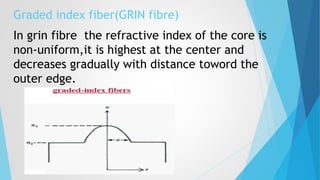
In grin fibre the refractive index of the core is 
non-uniform,it is highest at the center and 
decreases gradually with distance toword the 
outer edge.

01Opticalfibres

  • 1.
    Optical fibres S.P.B.Patelengineering college Linch,Mehsana Project by:- Patel Sujay A Patel Pratik C Patel Mithilesh Patel Princ Patel Saumil
  • 2.
    Type of Opticalfibres 1> MATERIALS OF WHICH THE FIBRES ARE MADE. 1) Plastic core with Plastic cladding. 2) Glass core with Plastic cladding.[pcs] 3) Glass core with Glass cladding.[scs] 2>THE MODE OF PROPAGATION 1> singlemode fiber. 2> multimode fibre. 3>THE REFRACTIVE INDEX(INDEX PROFILE). 1)step-index fibre 2)Gradedindex fibre
  • 3.
    Type of fibres 1> MATERIALS OF WHICH THE FIBRES ARE MADE. 2>THE MODE OF PROPAGATION. 3>THE REFRACTIVE INDEX(INDEX PROFILE).
  • 4.
    Types of opticalfbires based on material 1) Plastic core with Plastic cladding. 2) Glass core with Plastic cladding.[pcs] 3) Glass core with Glass cladding.[scs]
  • 5.
    Plastic core withplastic cladding This type of fibres are commonly used because, in this both the core and the cladding being made up of same material simplifies the production process.
  • 6.
    Glass core withplastic cladding  Fibres with glasscore exhibit low attenuation characteristics. The PCS fibers are less affected by radiation and hence more sutible for military application.
  • 7.
    Glass core withglass cladding  The attenuation characteristics of this SCS fibre are slightly better than PCS. These fibres havebest propagation characteristics and can also be easily terminated. SCS fibres are least rugged and they are more susceptible yo increase in attenuation in radiation areas.
  • 8.
    Propagation of lightthrough an optical fibre Mode of propagation 1> singlemode fiber. 2> multimode fibre.
  • 9.
    Singlemode fibre Singlemodefibres are capable of wide bandwidths and are ideally suited for long haul communication. Low cost and high capacity circuites for the transmission of telephone and television etc.,are the additional features of this fibre.
  • 10.
    Multimode fibres Fibreswithcores of about 20 to 100mm diameter, support many waveguide modes.these fibres and ideally suited for high bandwidth medium haul application.the upper limit of the mode is determined by the core dia meter and numerical aperture.
  • 11.
    Index pofile fibres 1)step-index fibre 2)Gradedindex fibre
  • 12.
    Step-index fibre Stepindex fibre has a central core with a uniform refractive index.the core surrounded by an outside cladding with a uniform refractive index less than that of the central core.in figure shows the index profile for a step-index fibre. Form the fig. it is seen that, there is an abrupt change in the refractivIndex at the core/cladding interface and hence the refractive index profile takes the shape of a step. Hence, the name step-index fibre.
  • 13.
    Graded index fiber(GRINfibre) In grin fibre the refractive index of the core is non-uniform,it is highest at the center and decreases gradually with distance toword the outer edge.