TYPES OF
FIBERS
SAGAR ADROJA
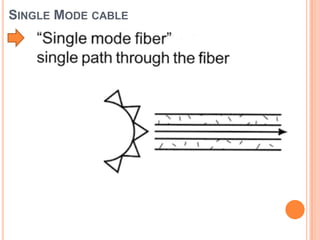
SINGLE MODE CABLE


Single Mode cable is a single stand (most
applications use 2 fibers) of glass fiber with a
diameter of 8.3 to 10 microns that has one mode
of transmission.

Single Modem fiber is used in many applications
where data is sent at multi-frequency (WDM
Wave-Division-Multiplexing) so only one cable is
needed - (single-mode on one single fiber).
Single-mode fiber gives you a higher transmission
rate and up to 50 times more distance than
multimode, but it also costs more
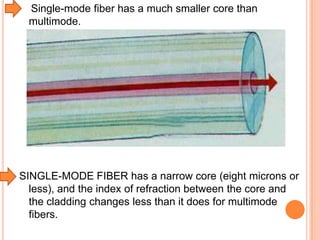
Single-mode fiber has a much smaller core than
multimode.

SINGLE-MODE FIBER has a narrow core (eight microns or
less), and the index of refraction between the core and
the cladding changes less than it does for multimode
fibers.


Light thus travels parallel to the axis, creating little pulse
dispersion.



Telephone and cable television networks install millions of
kilometers of this fiber every year.
C
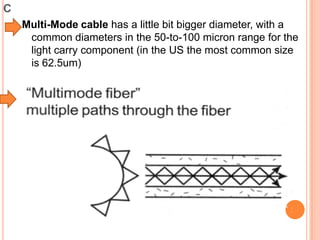
Multi-Mode cable has a little bit bigger diameter, with a
common diameters in the 50-to-100 micron range for the
light carry component (in the US the most common size
is 62.5um)
Most applications in which Multi-mode fiber is used, 2 fibers
are used (WDM is not normally used on multi-mode
fiber).
POF is a newer plastic-based cable which promises
performance similar to glass cable on very short runs, but
at a lower cost.
Multimode fiber gives you high bandwidth at high speeds
(10 to 100MBS - Gigabit to 275m to 2km) over medium
distances.
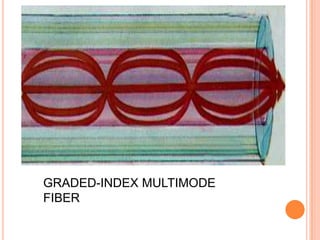
GRADED-INDEX MULTIMODE
FIBER
GRADED-INDEX MULTIMODE FIBER contains a core in
which the refractive index diminishes gradually from the
center axis out toward the cladding.
The higher refractive index at the center makes the light
rays moving down the axis advance more slowly than
those near the cladding.
rather than zigzagging off the cladding, light in the core
curves helically because of the graded index, reducing
its travel distance.
The shortened path and the higher speed allow light at the
periphery to arrive at a receiver at about the same time
as the slow but straight rays in the core axis.
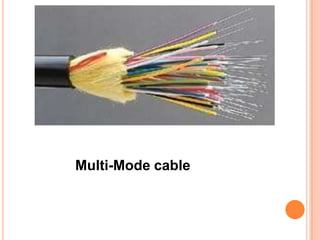
Multi-Mode cable
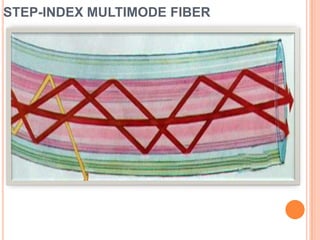
STEP-INDEX MULTIMODE FIBER
STEP-INDEX MULTIMODE FIBER has a large core,
up to 100 microns in diameter.
As a result, some of the light rays that make up the
digital pulse may travel a direct route, whereas
others zigzag as they bounce off the cladding.
These alternative pathways cause the different
groupings of light rays, referred to as modes, to
arrive separately at a receiving point.
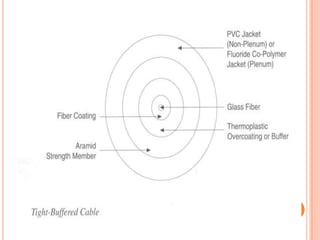
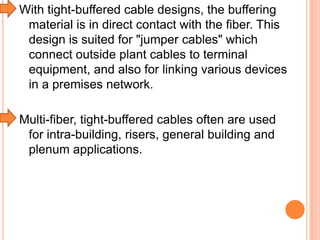
With tight-buffered cable designs, the buffering
material is in direct contact with the fiber. This
design is suited for "jumper cables" which
connect outside plant cables to terminal
equipment, and also for linking various devices
in a premises network.
Multi-fiber, tight-buffered cables often are used
for intra-building, risers, general building and
plenum applications.
DISTRIBUTION CABLE
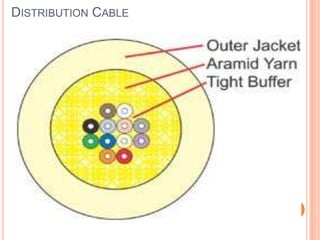
Distribution Cable (compact building
cable) packages individual 900µm
buffered fiber reducing size and cost
when compared to breakout cable.
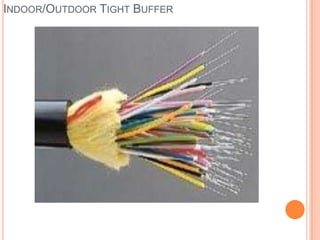
INDOOR/OUTDOOR TIGHT BUFFER
FIS now offers indoor/outdoor rated tight buffer cables in
Riser and Plenum rated versions.
These cables are flexible, easy to handle and simple to
install. Since they do not use gel, the connectors can be
terminated directly onto the fiber without difficult to use
breakout kits
This provides an easy and overall less expensive
installation. (Temperature rating -40ºC to +85ºC).
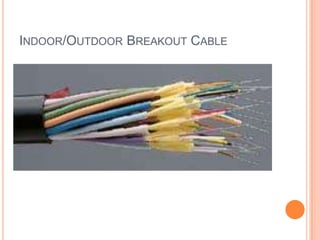
INDOOR/OUTDOOR BREAKOUT CABLE
FIS indoor/outdoor rated breakout style cables are
easy to install and simple to terminate without the
need for fanout kits.
These rugged and durable cables are OFNR rated so
they can be used indoors, while also having a -40c
to +85c operating temperature range and the
benefits of fungus, water and UV protection making
them perfect for outdoor applications.
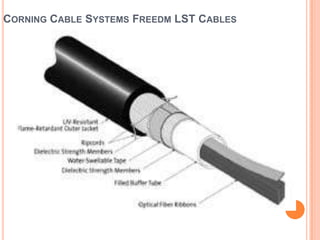
CORNING CABLE SYSTEMS FREEDM LST CABLES
Corning Cable Systems FREEDM® LST™ cables are
OFNR-rated, UV-resistant, fully waterblocked
indoor/outdoor cables.
This innovative DRY™ cable with water blocking technology
eliminates the need for traditional flooding compound,
providing more efficien.
Available in 62.5µm, 50µm, Singlemode and hybrid
versions.
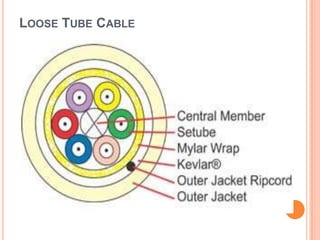
LOOSE TUBE CABLE
Loose tube cable is designed to endure outside
temperatures and high moisture conditions.

The fibers are loosely packaged in gel filled buffer tubes
to repel water.
Recommended for use between buildings that are
unprotected from outside elements.
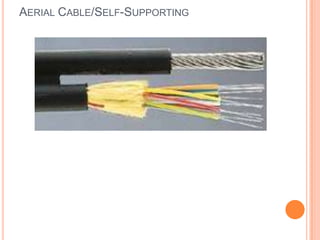
AERIAL CABLE/SELF-SUPPORTING
Aerial cable provides ease of installation and reduces
time and cost.

cable can easily be separated between the fiber and
the messenger. Temperature range ( -55ºC to
+85ºC)
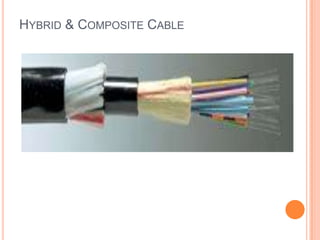
HYBRID & COMPOSITE CABLE
Hybrid cables offer the same great
benefits as our standard
indoor/outdoor cables, with the
convenience of installing multimode
and singlemode fibers all in one pull.
Our composite cables offer optical
fiber along with solid 14 gauge wires
suitable for a variety of uses including
power, grounding and other electronic
controls.
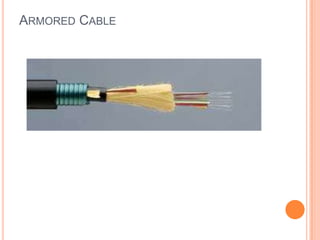
ARMORED CABLE
Armored cable can be used for rodent protection in
direct burial if required.

This cable is non-gel filled and can also be used in
aerial applications.

(Temperature rating -40ºC to +85ºC)
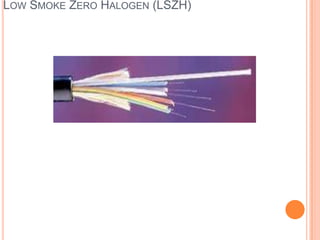
LOW SMOKE ZERO HALOGEN (LSZH)
Low Smoke Zero Halogen cables are offered as as
alternative for halogen free applications.

We offer them in many styles as well as simplex,
duplex and 1.6mm designs.

Since splicing is eliminated, termination hardware
and labor times are reduced, saving you time and

money.
THANK YOU FOR YOUR ATTENTION

Type of fiber

  • 1.
  • 2.
  • 3.
     Single Mode cableis a single stand (most applications use 2 fibers) of glass fiber with a diameter of 8.3 to 10 microns that has one mode of transmission. Single Modem fiber is used in many applications where data is sent at multi-frequency (WDM Wave-Division-Multiplexing) so only one cable is needed - (single-mode on one single fiber). Single-mode fiber gives you a higher transmission rate and up to 50 times more distance than multimode, but it also costs more
  • 4.
    Single-mode fiber hasa much smaller core than multimode. SINGLE-MODE FIBER has a narrow core (eight microns or less), and the index of refraction between the core and the cladding changes less than it does for multimode fibers.
  • 5.
     Light thus travelsparallel to the axis, creating little pulse dispersion.  Telephone and cable television networks install millions of kilometers of this fiber every year.
  • 6.
    C Multi-Mode cable hasa little bit bigger diameter, with a common diameters in the 50-to-100 micron range for the light carry component (in the US the most common size is 62.5um)
  • 7.
    Most applications inwhich Multi-mode fiber is used, 2 fibers are used (WDM is not normally used on multi-mode fiber). POF is a newer plastic-based cable which promises performance similar to glass cable on very short runs, but at a lower cost. Multimode fiber gives you high bandwidth at high speeds (10 to 100MBS - Gigabit to 275m to 2km) over medium distances.
  • 8.
  • 9.
    GRADED-INDEX MULTIMODE FIBERcontains a core in which the refractive index diminishes gradually from the center axis out toward the cladding. The higher refractive index at the center makes the light rays moving down the axis advance more slowly than those near the cladding. rather than zigzagging off the cladding, light in the core curves helically because of the graded index, reducing its travel distance. The shortened path and the higher speed allow light at the periphery to arrive at a receiver at about the same time as the slow but straight rays in the core axis.
  • 10.
  • 11.
  • 12.
    STEP-INDEX MULTIMODE FIBERhas a large core, up to 100 microns in diameter. As a result, some of the light rays that make up the digital pulse may travel a direct route, whereas others zigzag as they bounce off the cladding. These alternative pathways cause the different groupings of light rays, referred to as modes, to arrive separately at a receiving point.
  • 15.
    With tight-buffered cabledesigns, the buffering material is in direct contact with the fiber. This design is suited for "jumper cables" which connect outside plant cables to terminal equipment, and also for linking various devices in a premises network. Multi-fiber, tight-buffered cables often are used for intra-building, risers, general building and plenum applications.
  • 16.
  • 17.
    Distribution Cable (compactbuilding cable) packages individual 900µm buffered fiber reducing size and cost when compared to breakout cable.
  • 18.
  • 19.
    FIS now offersindoor/outdoor rated tight buffer cables in Riser and Plenum rated versions. These cables are flexible, easy to handle and simple to install. Since they do not use gel, the connectors can be terminated directly onto the fiber without difficult to use breakout kits This provides an easy and overall less expensive installation. (Temperature rating -40ºC to +85ºC).
  • 20.
  • 21.
    FIS indoor/outdoor ratedbreakout style cables are easy to install and simple to terminate without the need for fanout kits. These rugged and durable cables are OFNR rated so they can be used indoors, while also having a -40c to +85c operating temperature range and the benefits of fungus, water and UV protection making them perfect for outdoor applications.
  • 22.
    CORNING CABLE SYSTEMSFREEDM LST CABLES
  • 23.
    Corning Cable SystemsFREEDM® LST™ cables are OFNR-rated, UV-resistant, fully waterblocked indoor/outdoor cables. This innovative DRY™ cable with water blocking technology eliminates the need for traditional flooding compound, providing more efficien. Available in 62.5µm, 50µm, Singlemode and hybrid versions.
  • 24.
  • 25.
    Loose tube cableis designed to endure outside temperatures and high moisture conditions. The fibers are loosely packaged in gel filled buffer tubes to repel water. Recommended for use between buildings that are unprotected from outside elements.
  • 26.
  • 27.
    Aerial cable providesease of installation and reduces time and cost. cable can easily be separated between the fiber and the messenger. Temperature range ( -55ºC to +85ºC)
  • 28.
  • 29.
    Hybrid cables offerthe same great benefits as our standard indoor/outdoor cables, with the convenience of installing multimode and singlemode fibers all in one pull. Our composite cables offer optical fiber along with solid 14 gauge wires suitable for a variety of uses including power, grounding and other electronic controls.
  • 30.
  • 31.
    Armored cable canbe used for rodent protection in direct burial if required. This cable is non-gel filled and can also be used in aerial applications. (Temperature rating -40ºC to +85ºC)
  • 32.
    LOW SMOKE ZEROHALOGEN (LSZH)
  • 33.
    Low Smoke ZeroHalogen cables are offered as as alternative for halogen free applications. We offer them in many styles as well as simplex, duplex and 1.6mm designs. Since splicing is eliminated, termination hardware and labor times are reduced, saving you time and money.
  • 34.
    THANK YOU FORYOUR ATTENTION