PHY109
ENGINEERING
PHYSICS
Lab@Home Project
Topic:
Principle behind Resistive
sensors
Sensors
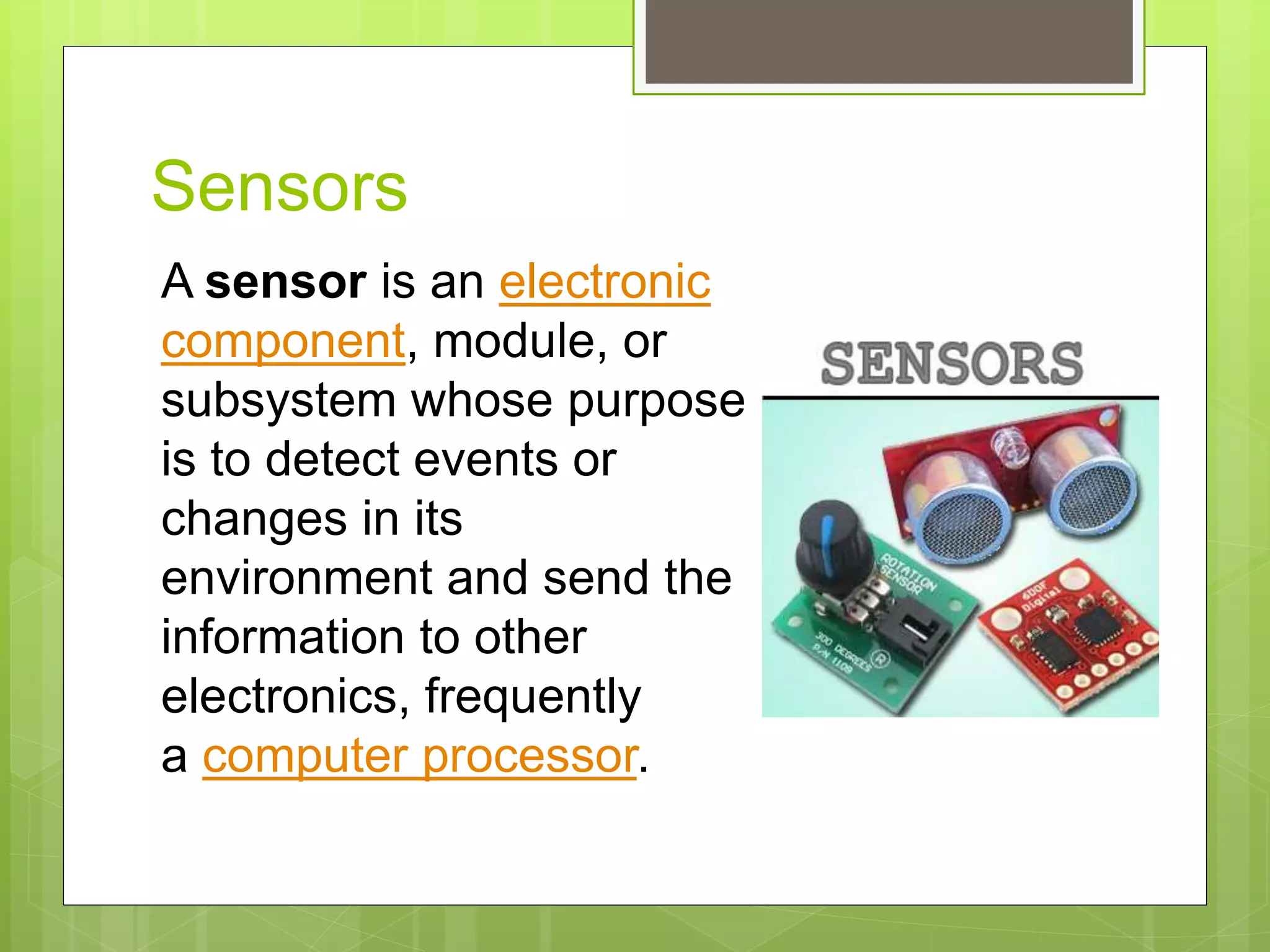
A sensor is an electronic
component, module, or
subsystem whose purpose
is to detect events or
changes in its
environment and send the
information to other
electronics, frequently
a computer processor.
Resistive sensors
Resistive sensors are
the sensors or resistors
which detect the
changes in their
resistance accordingly
monitored or reacted to
perform tasks.
Resistance
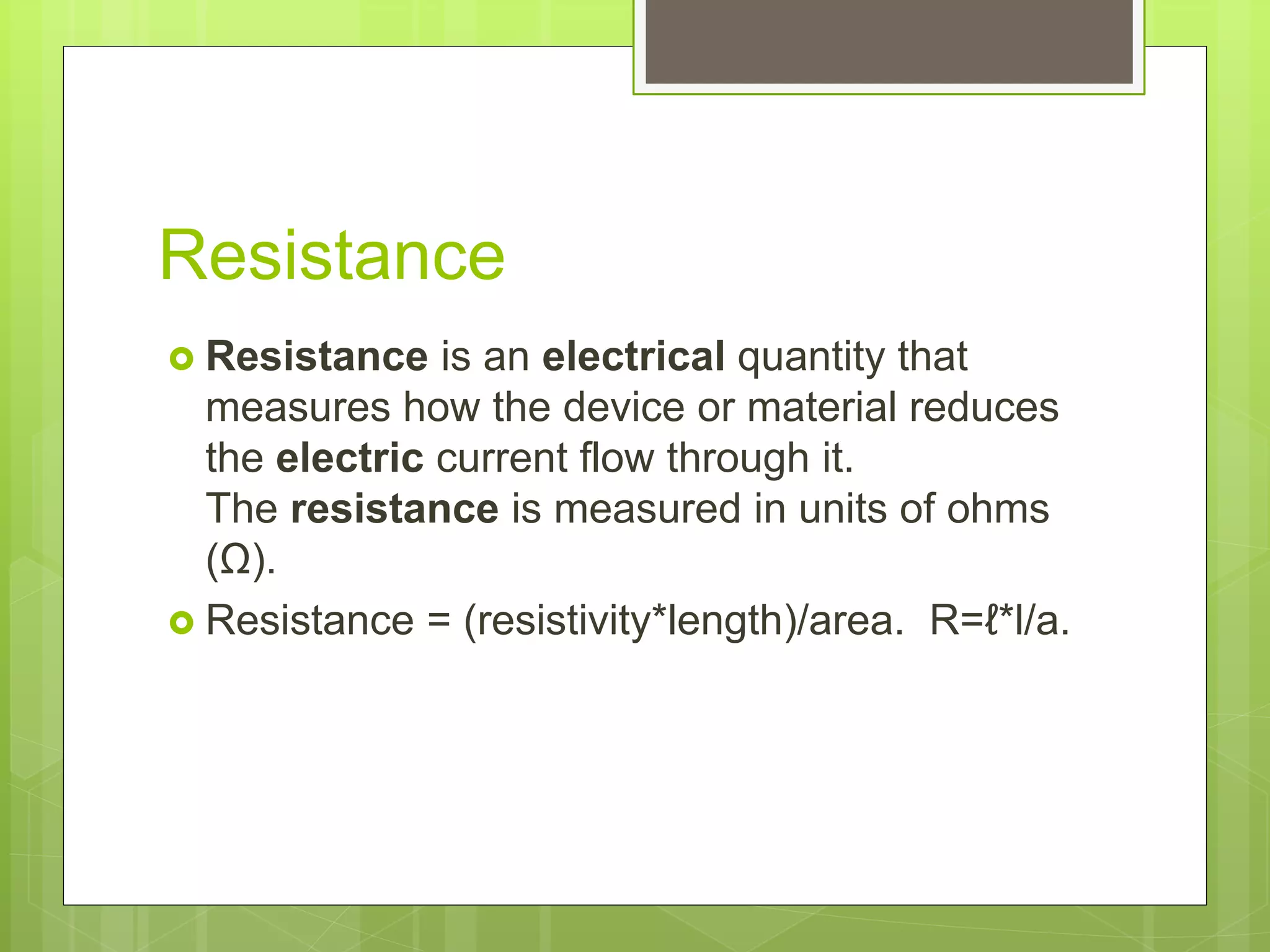
 Resistance is an electrical quantity that
measures how the device or material reduces
the electric current flow through it.
The resistance is measured in units of ohms
(Ω).
 Resistance = (resistivity*length)/area. R=ℓ*l/a.
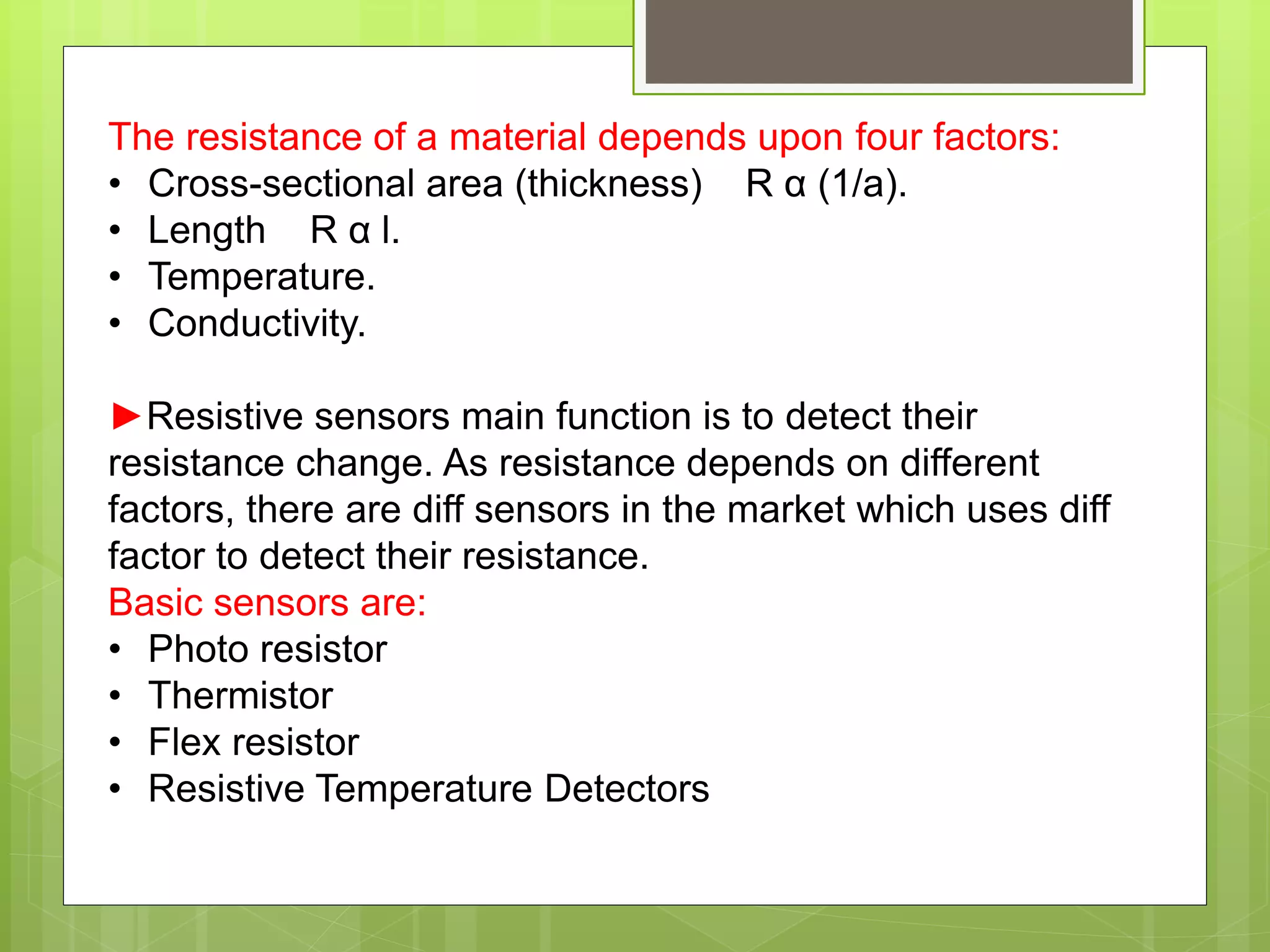
The resistance of a material depends upon four factors:
• Cross-sectional area (thickness) R α (1/a).
• Length R α l.
• Temperature.
• Conductivity.
►Resistive sensors main function is to detect their
resistance change. As resistance depends on different
factors, there are diff sensors in the market which uses diff
factor to detect their resistance.
Basic sensors are:
• Photo resistor
• Thermistor
• Flex resistor
• Resistive Temperature Detectors
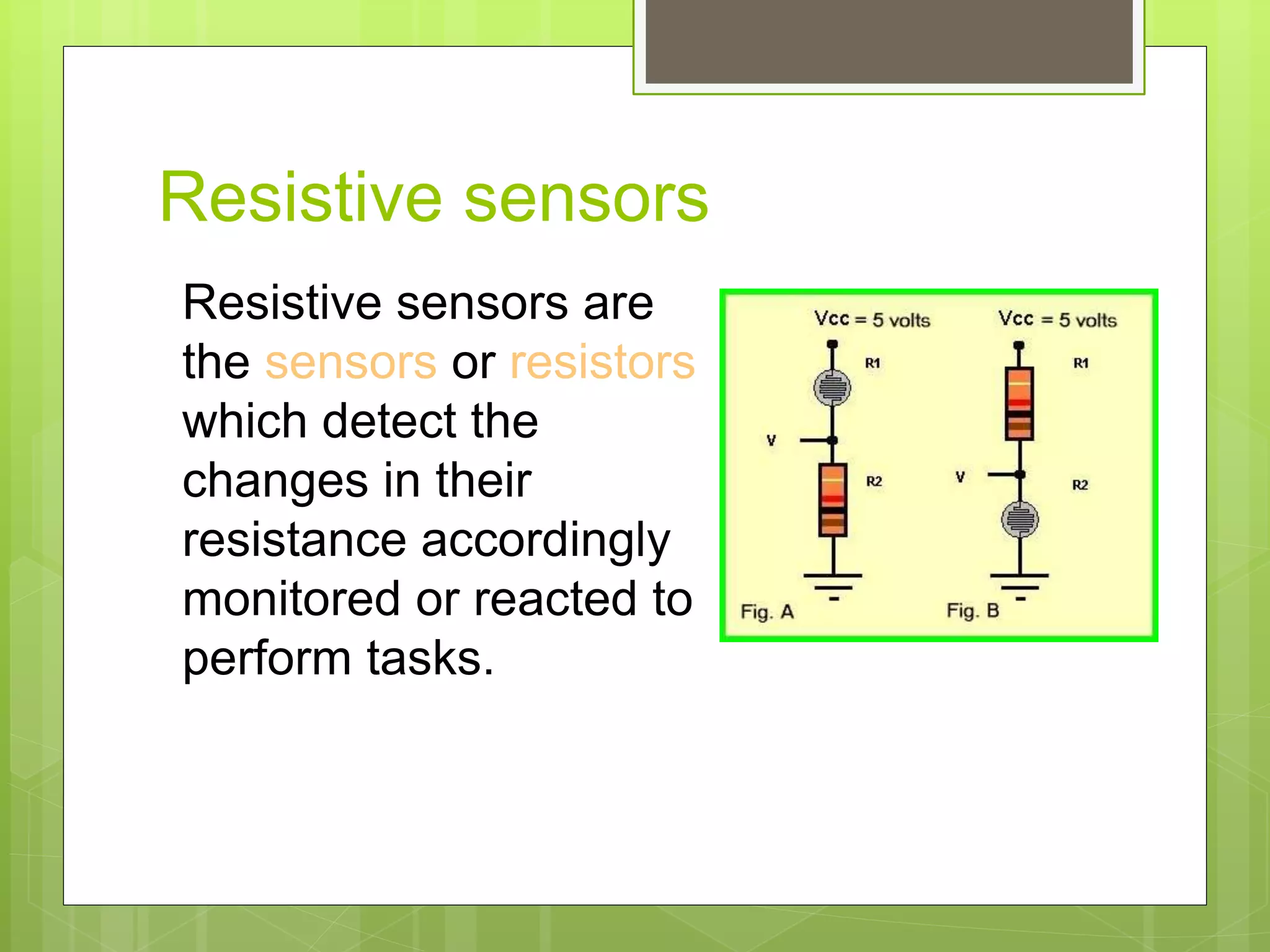
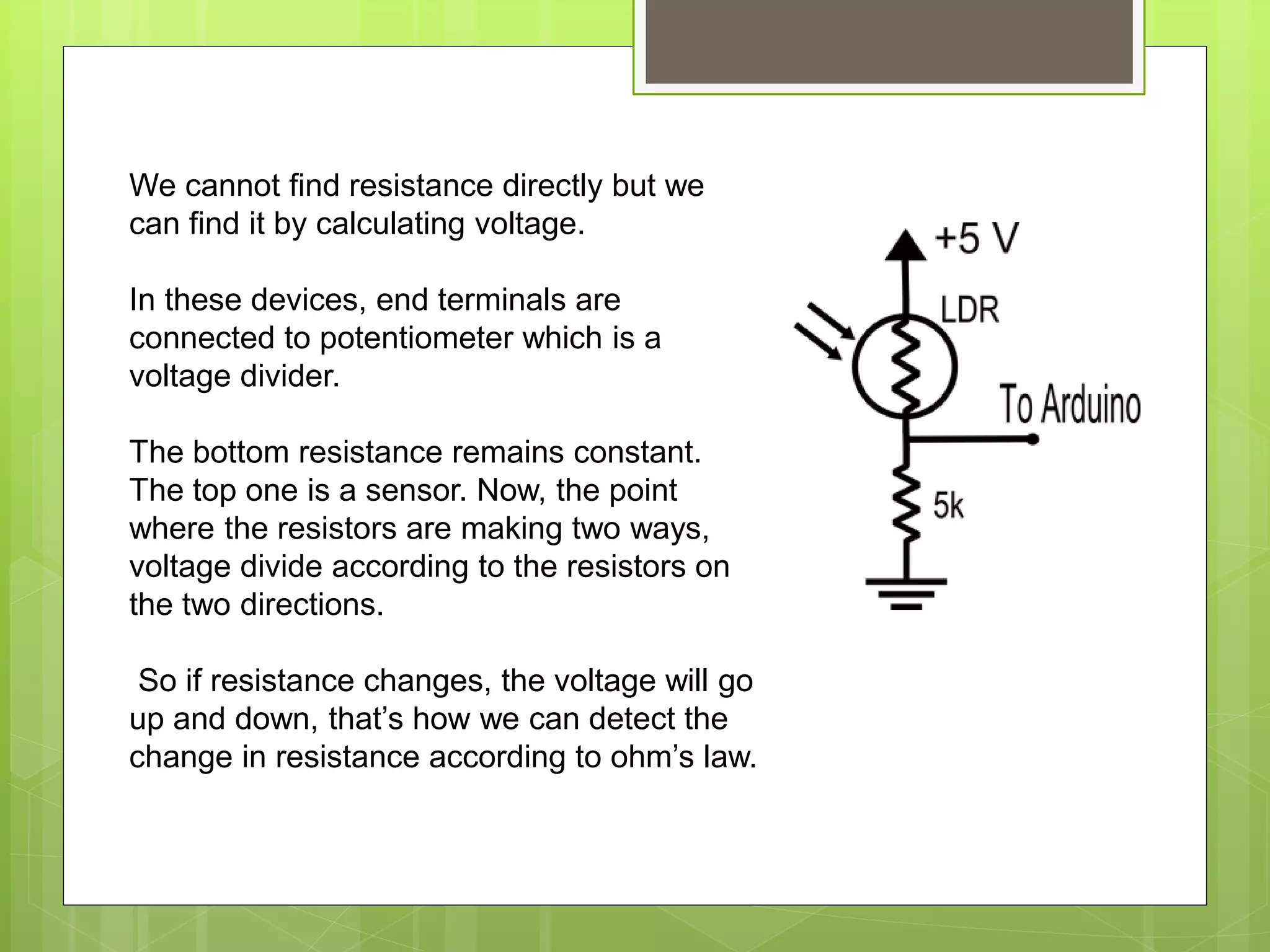
We cannot find resistance directly but we
can find it by calculating voltage.
In these devices, end terminals are
connected to potentiometer which is a
voltage divider.
The bottom resistance remains constant.
The top one is a sensor. Now, the point
where the resistors are making two ways,
voltage divide according to the resistors on
the two directions.
So if resistance changes, the voltage will go
up and down, that’s how we can detect the
change in resistance according to ohm’s law.
Photo sensor
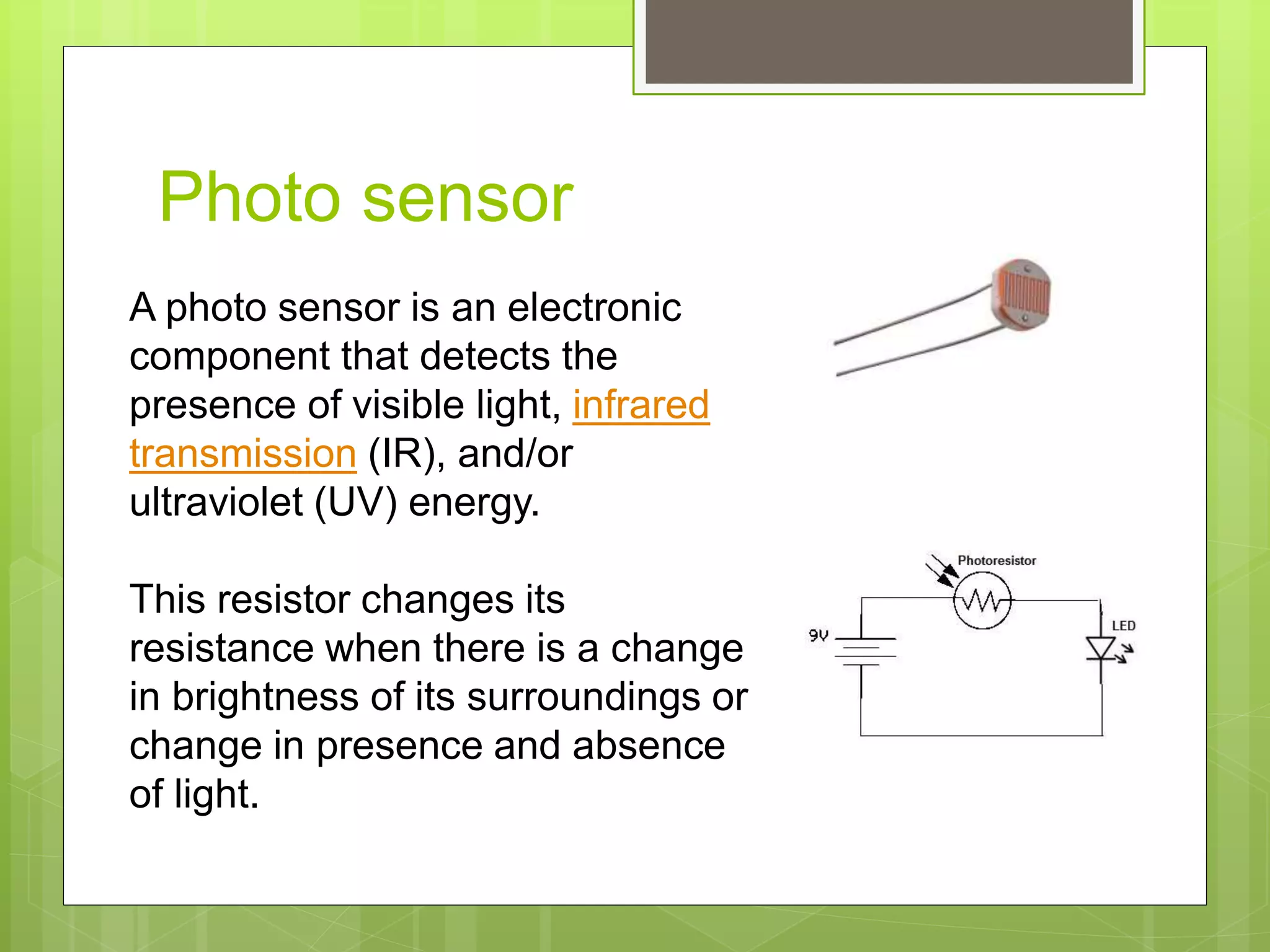
A photo sensor is an electronic
component that detects the
presence of visible light, infrared
transmission (IR), and/or
ultraviolet (UV) energy.
This resistor changes its
resistance when there is a change
in brightness of its surroundings or
change in presence and absence
of light.
Thermistor
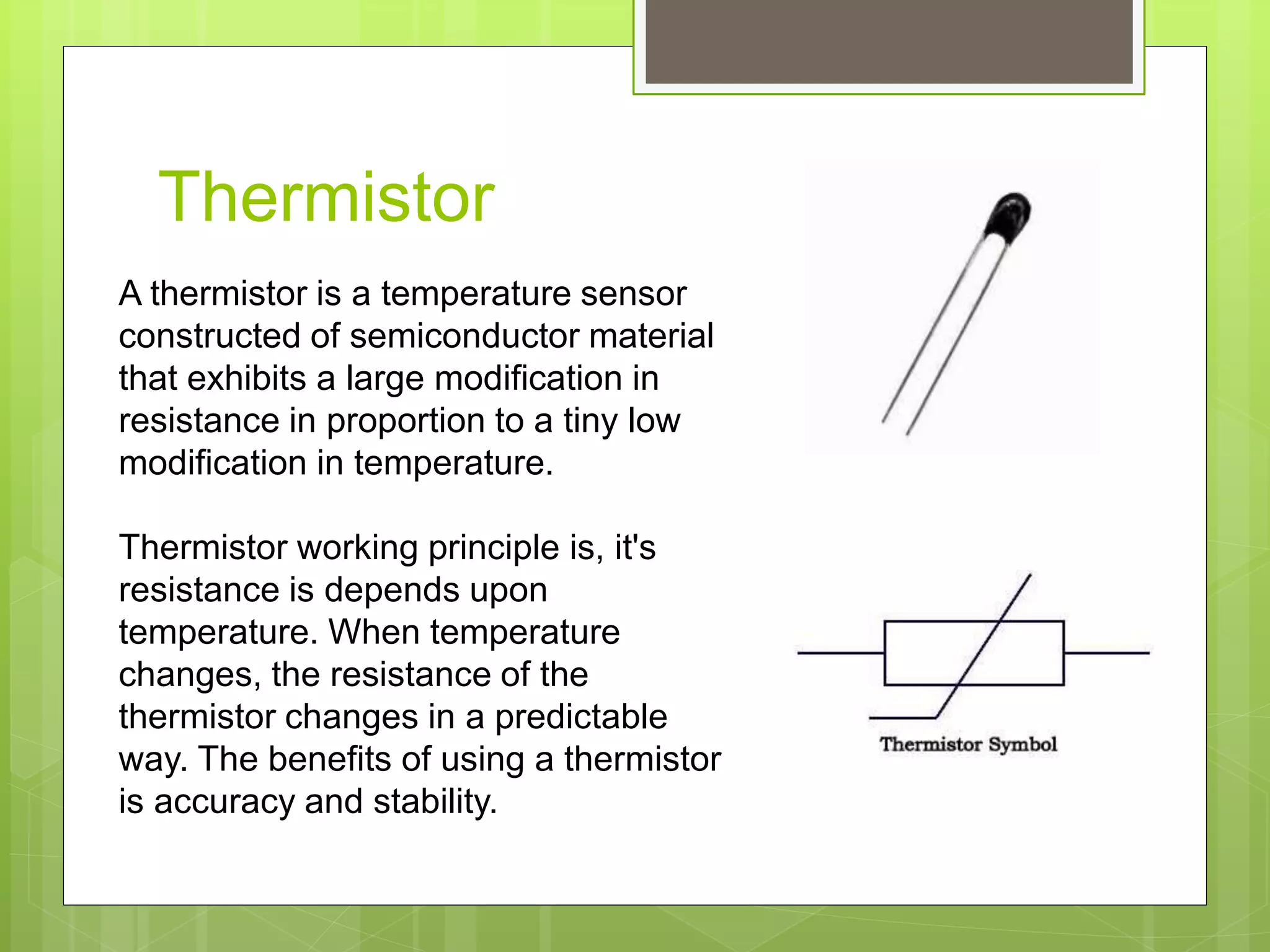
A thermistor is a temperature sensor
constructed of semiconductor material
that exhibits a large modification in
resistance in proportion to a tiny low
modification in temperature.
Thermistor working principle is, it's
resistance is depends upon
temperature. When temperature
changes, the resistance of the
thermistor changes in a predictable
way. The benefits of using a thermistor
is accuracy and stability.
Flex Sensor
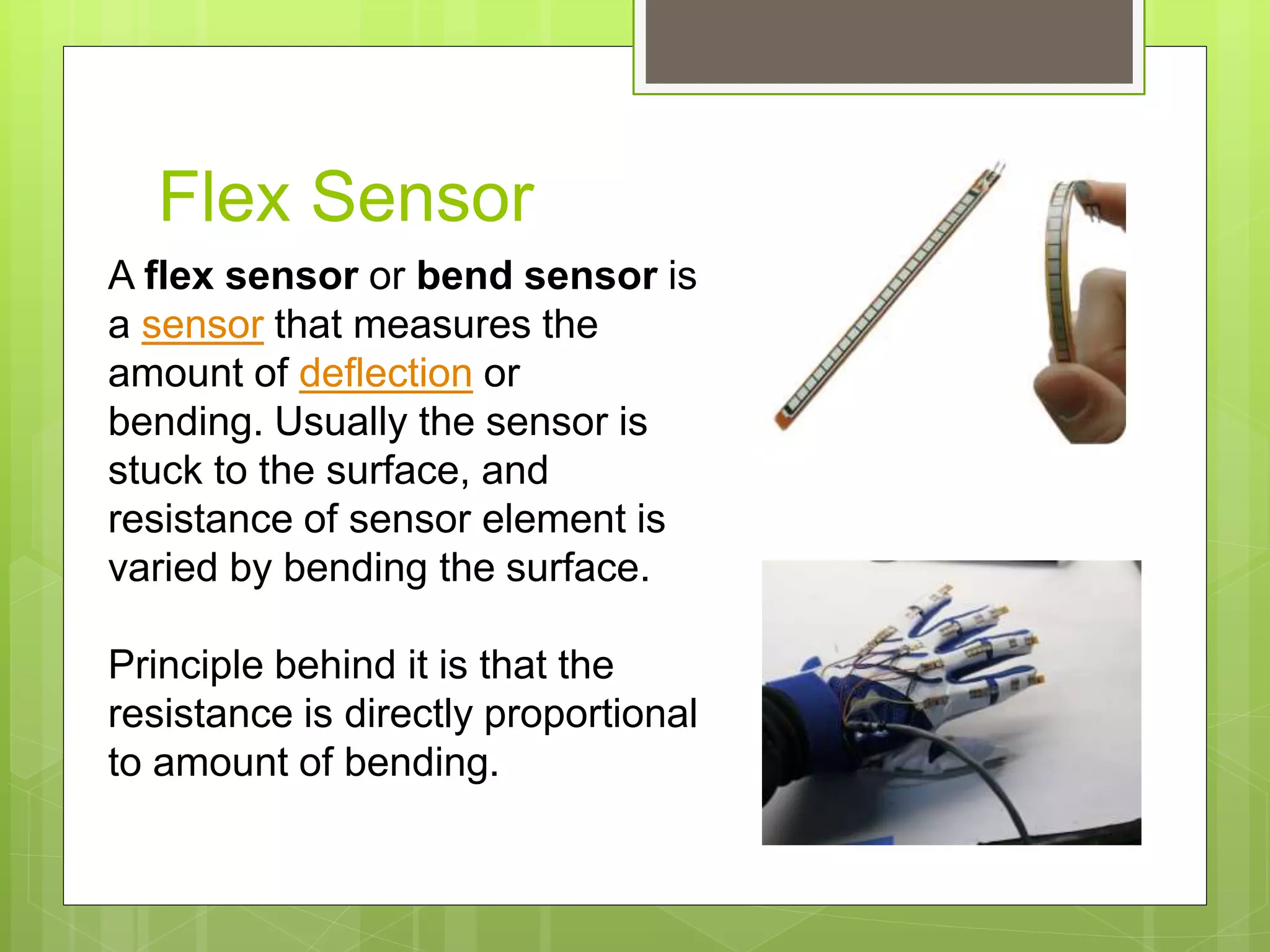
A flex sensor or bend sensor is
a sensor that measures the
amount of deflection or
bending. Usually the sensor is
stuck to the surface, and
resistance of sensor element is
varied by bending the surface.
Principle behind it is that the
resistance is directly proportional
to amount of bending.
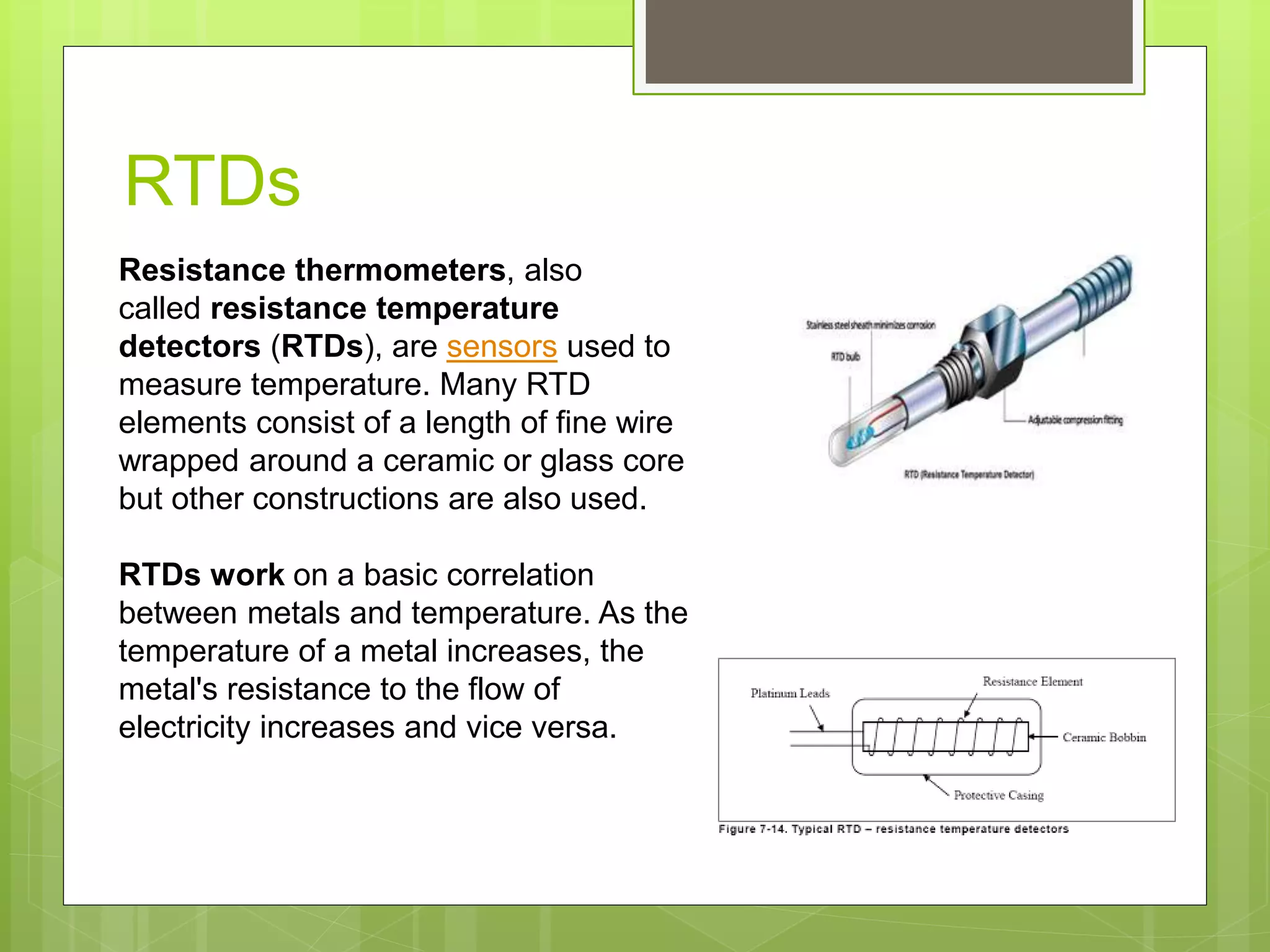
RTDs
Resistance thermometers, also
called resistance temperature
detectors (RTDs), are sensors used to
measure temperature. Many RTD
elements consist of a length of fine wire
wrapped around a ceramic or glass core
but other constructions are also used.
RTDs work on a basic correlation
between metals and temperature. As the
temperature of a metal increases, the
metal's resistance to the flow of
electricity increases and vice versa.
Principle behind resistive sensors.

Principle behind resistive sensors.

  • 1.
  • 2.
  • 3.
    Sensors A sensor isan electronic component, module, or subsystem whose purpose is to detect events or changes in its environment and send the information to other electronics, frequently a computer processor.
  • 4.
    Resistive sensors Resistive sensorsare the sensors or resistors which detect the changes in their resistance accordingly monitored or reacted to perform tasks.
  • 5.
    Resistance  Resistance isan electrical quantity that measures how the device or material reduces the electric current flow through it. The resistance is measured in units of ohms (Ω).  Resistance = (resistivity*length)/area. R=ℓ*l/a.
  • 6.
    The resistance ofa material depends upon four factors: • Cross-sectional area (thickness) R α (1/a). • Length R α l. • Temperature. • Conductivity. ►Resistive sensors main function is to detect their resistance change. As resistance depends on different factors, there are diff sensors in the market which uses diff factor to detect their resistance. Basic sensors are: • Photo resistor • Thermistor • Flex resistor • Resistive Temperature Detectors
  • 7.
    We cannot findresistance directly but we can find it by calculating voltage. In these devices, end terminals are connected to potentiometer which is a voltage divider. The bottom resistance remains constant. The top one is a sensor. Now, the point where the resistors are making two ways, voltage divide according to the resistors on the two directions. So if resistance changes, the voltage will go up and down, that’s how we can detect the change in resistance according to ohm’s law.
  • 8.
    Photo sensor A photosensor is an electronic component that detects the presence of visible light, infrared transmission (IR), and/or ultraviolet (UV) energy. This resistor changes its resistance when there is a change in brightness of its surroundings or change in presence and absence of light.
  • 9.
    Thermistor A thermistor isa temperature sensor constructed of semiconductor material that exhibits a large modification in resistance in proportion to a tiny low modification in temperature. Thermistor working principle is, it's resistance is depends upon temperature. When temperature changes, the resistance of the thermistor changes in a predictable way. The benefits of using a thermistor is accuracy and stability.
  • 10.
    Flex Sensor A flexsensor or bend sensor is a sensor that measures the amount of deflection or bending. Usually the sensor is stuck to the surface, and resistance of sensor element is varied by bending the surface. Principle behind it is that the resistance is directly proportional to amount of bending.
  • 11.
    RTDs Resistance thermometers, also calledresistance temperature detectors (RTDs), are sensors used to measure temperature. Many RTD elements consist of a length of fine wire wrapped around a ceramic or glass core but other constructions are also used. RTDs work on a basic correlation between metals and temperature. As the temperature of a metal increases, the metal's resistance to the flow of electricity increases and vice versa.