CULTURE
METHODS
PREPARED BY: ROMA GOYAL
Culture methods are done to:
• Isolate bacteria in pure culture from the clinical specimens
and their identification by various methods.
• Determination of antibiotic sensitivity.
• Prepare antigens for serodiagnosis of infective diseases.
• Maintain stock cultures.
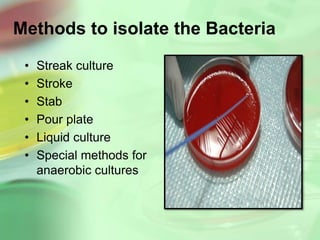
• Streak culture
• Stroke
• Stab
• Pour plate
• Liquid culture
• Special methods for
anaerobic cultures
Methods to isolate the Bacteria
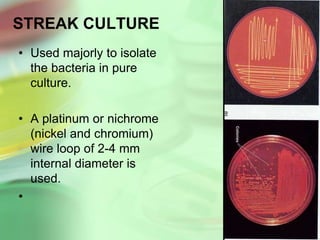
STREAK CULTURE
• Used majorly to isolate
the bacteria in pure
culture.
• A platinum or nichrome
(nickel and chromium)
wire loop of 2-4 mm
internal diameter is
used.
•
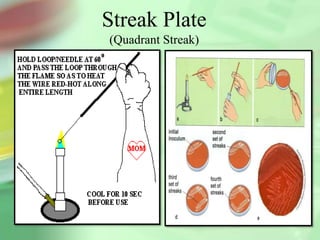
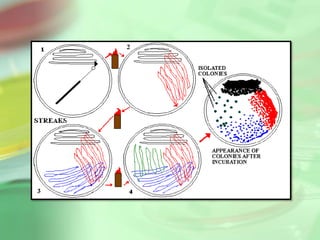
Streak Plate
(Quadrant Streak)
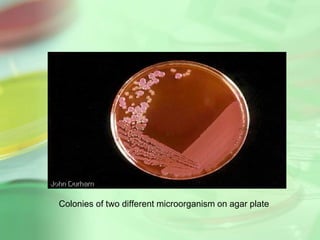
Colonies of two different microorganism on agar plate
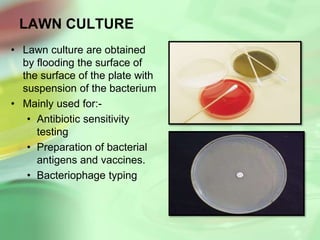
LAWN CULTURE
• Lawn culture are obtained
by flooding the surface of
the surface of the plate with
suspension of the bacterium
• Mainly used for:-
• Antibiotic sensitivity
testing
• Preparation of bacterial
antigens and vaccines.
• Bacteriophage typing
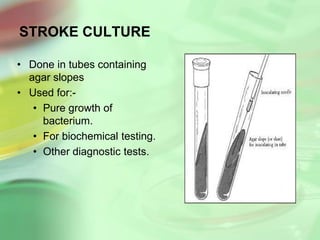
STROKE CULTURE
• Done in tubes containing
agar slopes
• Used for:-
• Pure growth of
bacterium.
• For biochemical testing.
• Other diagnostic tests.
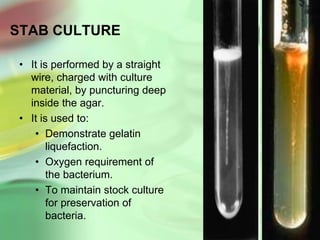
STAB CULTURE
• It is performed by a straight
wire, charged with culture
material, by puncturing deep
inside the agar.
• It is used to:
• Demonstrate gelatin
liquefaction.
• Oxygen requirement of
the bacterium.
• To maintain stock culture
for preservation of
bacteria.
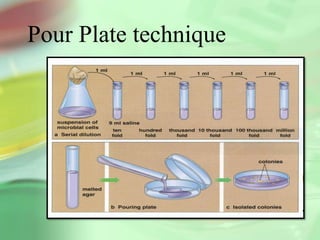
Pour Plate technique
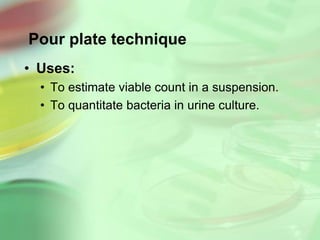
Pour plate technique
• Uses:
• To estimate viable count in a suspension.
• To quantitate bacteria in urine culture.
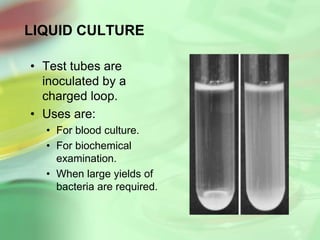
LIQUID CULTURE
• Test tubes are
inoculated by a
charged loop.
• Uses are:
• For blood culture.
• For biochemical
examination.
• When large yields of
bacteria are required.
Anaerobic Bacterial
Isolation and
Identification Needs
specified conditions
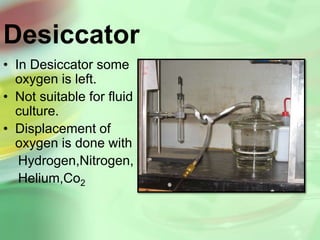
Desiccator
• In Desiccator some
oxygen is left.
• Not suitable for fluid
culture.
• Displacement of
oxygen is done with
Hydrogen,Nitrogen,
Helium,Co2
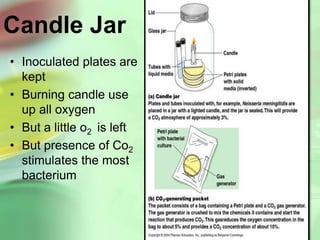
Candle Jar
• Inoculated plates are
kept
• Burning candle use
up all oxygen
• But a little o2 is left
• But presence of Co2
stimulates the most
bacterium
16
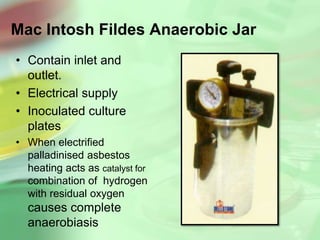
Mac Intosh Fildes Anaerobic Jar
• Contain inlet and
outlet.
• Electrical supply
• Inoculated culture
plates
• When electrified
palladinised asbestos
heating acts as catalyst for
combination of hydrogen
with residual oxygen
causes complete
anaerobiasis
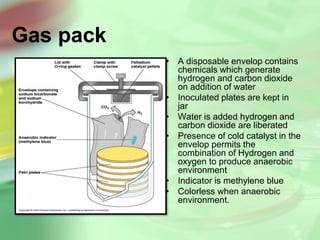
Gas pack
• A disposable envelop contains
chemicals which generate
hydrogen and carbon dioxide
on addition of water
• Inoculated plates are kept in
jar
• Water is added hydrogen and
carbon dioxide are liberated
• Presence of cold catalyst in the
envelop permits the
combination of Hydrogen and
oxygen to produce anaerobic
environment
• Indicator is methylene blue
• Colorless when anaerobic
environment.
Other Reducing agents
• Reducing agents
O.1% Thiglyclolate
0.1% Ascorbic acid
0.05 % cysteine.
• Cooked meat broth
• It is also known
as Robertson’s
cooked meat
broth(RCM).
ANAEROBIC CHAMBER
Bacterial Culture methods and method of anaerobiosis

Bacterial Culture methods and method of anaerobiosis

  • 1.
  • 2.
    Culture methods aredone to: • Isolate bacteria in pure culture from the clinical specimens and their identification by various methods. • Determination of antibiotic sensitivity. • Prepare antigens for serodiagnosis of infective diseases. • Maintain stock cultures.
  • 3.
    • Streak culture •Stroke • Stab • Pour plate • Liquid culture • Special methods for anaerobic cultures Methods to isolate the Bacteria
  • 4.
    STREAK CULTURE • Usedmajorly to isolate the bacteria in pure culture. • A platinum or nichrome (nickel and chromium) wire loop of 2-4 mm internal diameter is used. •
  • 5.
  • 7.
    Colonies of twodifferent microorganism on agar plate
  • 8.
    LAWN CULTURE • Lawnculture are obtained by flooding the surface of the surface of the plate with suspension of the bacterium • Mainly used for:- • Antibiotic sensitivity testing • Preparation of bacterial antigens and vaccines. • Bacteriophage typing
  • 9.
    STROKE CULTURE • Donein tubes containing agar slopes • Used for:- • Pure growth of bacterium. • For biochemical testing. • Other diagnostic tests.
  • 10.
    STAB CULTURE • Itis performed by a straight wire, charged with culture material, by puncturing deep inside the agar. • It is used to: • Demonstrate gelatin liquefaction. • Oxygen requirement of the bacterium. • To maintain stock culture for preservation of bacteria.
  • 11.
  • 12.
    Pour plate technique •Uses: • To estimate viable count in a suspension. • To quantitate bacteria in urine culture.
  • 13.
    LIQUID CULTURE • Testtubes are inoculated by a charged loop. • Uses are: • For blood culture. • For biochemical examination. • When large yields of bacteria are required.
  • 14.
  • 15.
    Desiccator • In Desiccatorsome oxygen is left. • Not suitable for fluid culture. • Displacement of oxygen is done with Hydrogen,Nitrogen, Helium,Co2
  • 16.
    Candle Jar • Inoculatedplates are kept • Burning candle use up all oxygen • But a little o2 is left • But presence of Co2 stimulates the most bacterium 16
  • 17.
    Mac Intosh FildesAnaerobic Jar • Contain inlet and outlet. • Electrical supply • Inoculated culture plates • When electrified palladinised asbestos heating acts as catalyst for combination of hydrogen with residual oxygen causes complete anaerobiasis
  • 18.
    Gas pack • Adisposable envelop contains chemicals which generate hydrogen and carbon dioxide on addition of water • Inoculated plates are kept in jar • Water is added hydrogen and carbon dioxide are liberated • Presence of cold catalyst in the envelop permits the combination of Hydrogen and oxygen to produce anaerobic environment • Indicator is methylene blue • Colorless when anaerobic environment.
  • 19.
    Other Reducing agents •Reducing agents O.1% Thiglyclolate 0.1% Ascorbic acid 0.05 % cysteine. • Cooked meat broth • It is also known as Robertson’s cooked meat broth(RCM).
  • 20.