Types of Environment 
Course No: 568 
Presented By: Rokonuzzaman 
MS 
Department of Geography and Environment 
University of Dhaka 
Date: 20.03.2014
Environment 
Environment is the sum total of all surroundings of a living organism, 
including natural forces and other living things 
Both biotic and abiotic components form environment. These two 
components interact with each other and they are interdependent. 
The environment consists of the interactions among plants, animals, 
soil, water, temperature, light, and other living and non-living things.
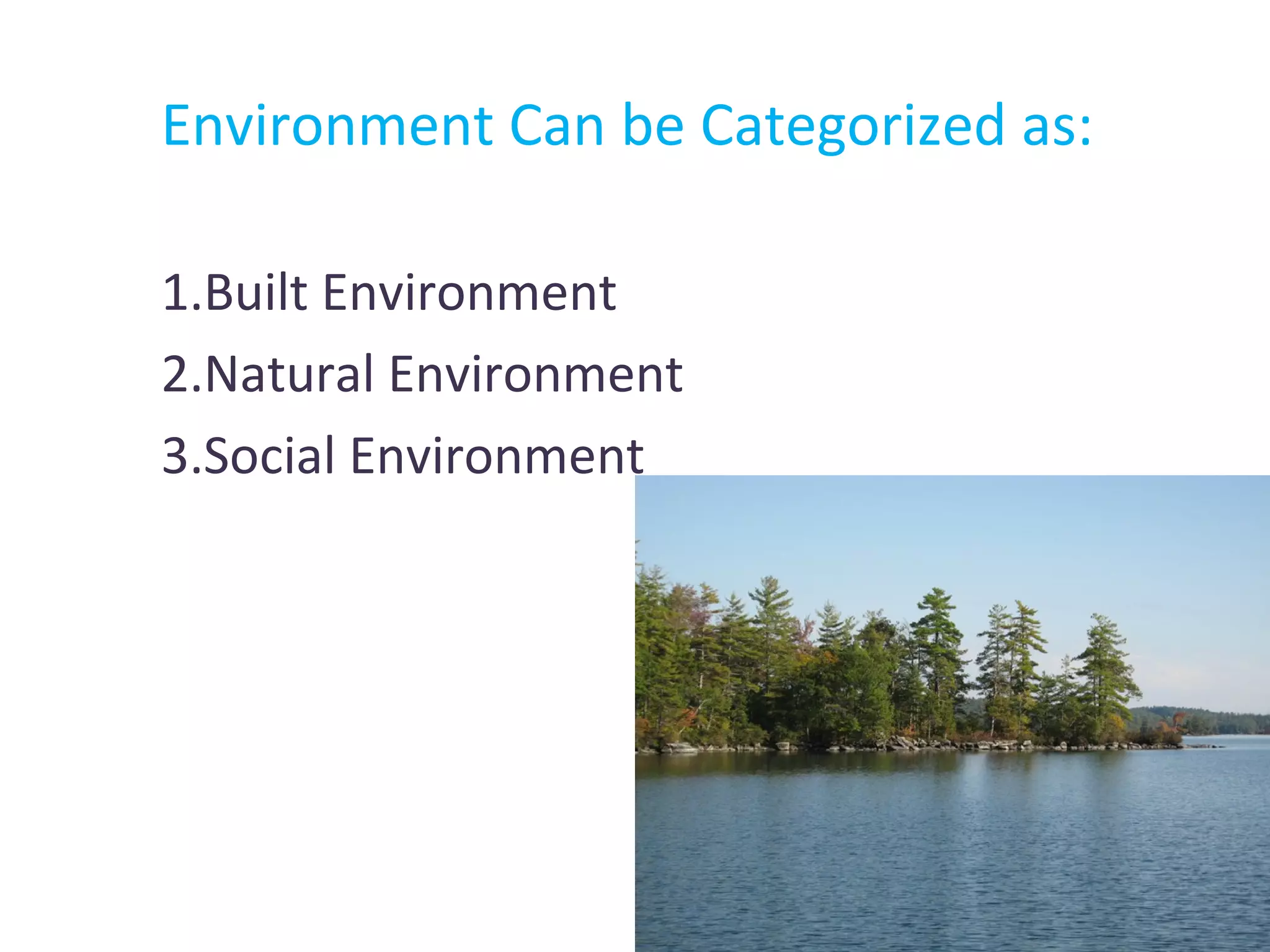
Environment Can be Categorized as: 
1.Built Environment 
2.Natural Environment 
3.Social Environment
Built Environment 
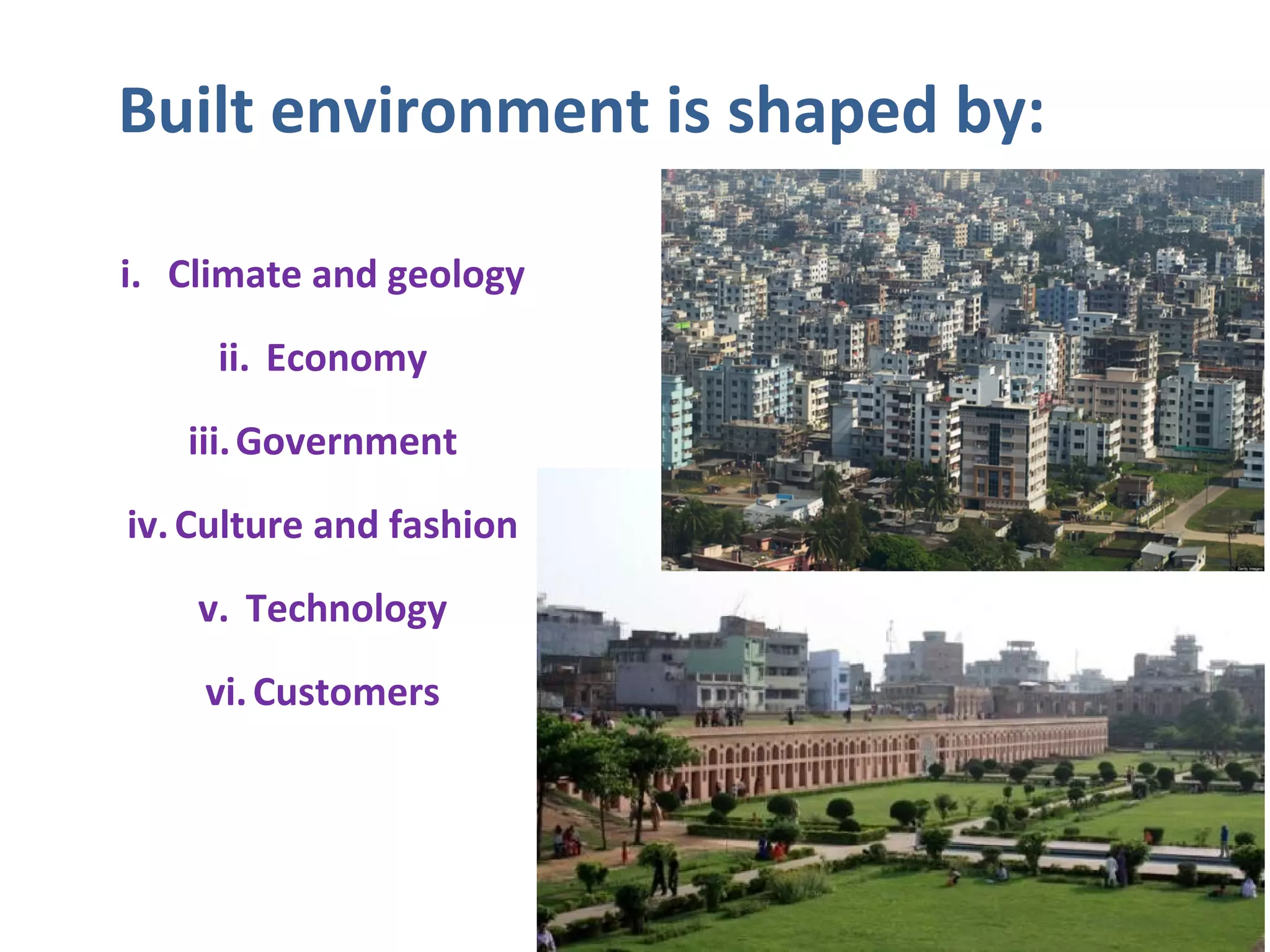
The term built environment refers to the human-made surroundings 
that provide the setting for human activity. 
The built environment encompasses places and spaces created or 
modified by people including buildings, parks or green spaces , and 
supporting infrastructures, such as water supply, or energy networks, 
transportation systems etc.
Built environment is shaped by: 
i. Climate and geology 
ii. Economy 
iii.Government 
iv. Culture and fashion 
v. Technology 
vi. Customers
Natural Environment 
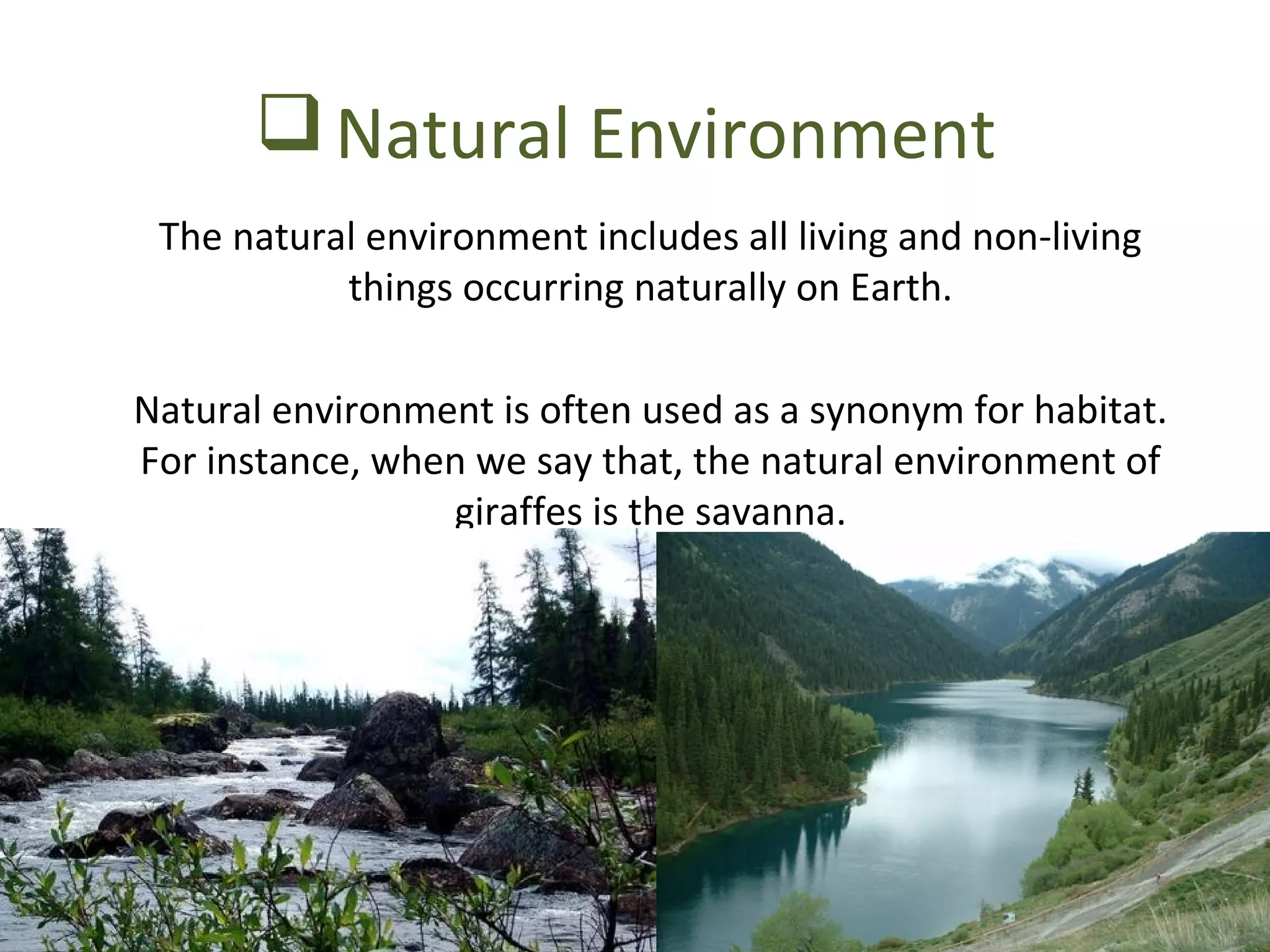
The natural environment includes all living and non-living 
things occurring naturally on Earth. 
Natural environment is often used as a synonym for habitat. 
For instance, when we say that, the natural environment of 
giraffes is the savanna.
Composition Natural Environment 
i. The Lithosphere: The lithosphere is the rigid outermost shell of a 
rocky planet defined on the basis of the mechanical properties. 
ii. The Hydrosphere: The hydrosphere refers to the combined mass of 
water found on, under, and over the surface of the planet. Ocean, 
rivers, lakes, ponds and as a whole all the water body of the earth. 
iii. The Atmosphere: The atmosphere of Earth is a layer of gases 
surrounding the planet Earth that is retained by Earth's gravity. The 
atmosphere protects life on Earth by absorbing ultraviolet solar 
radiation, warming the surface through greenhouse effect, and 
reducing temperature extremes between day and night.
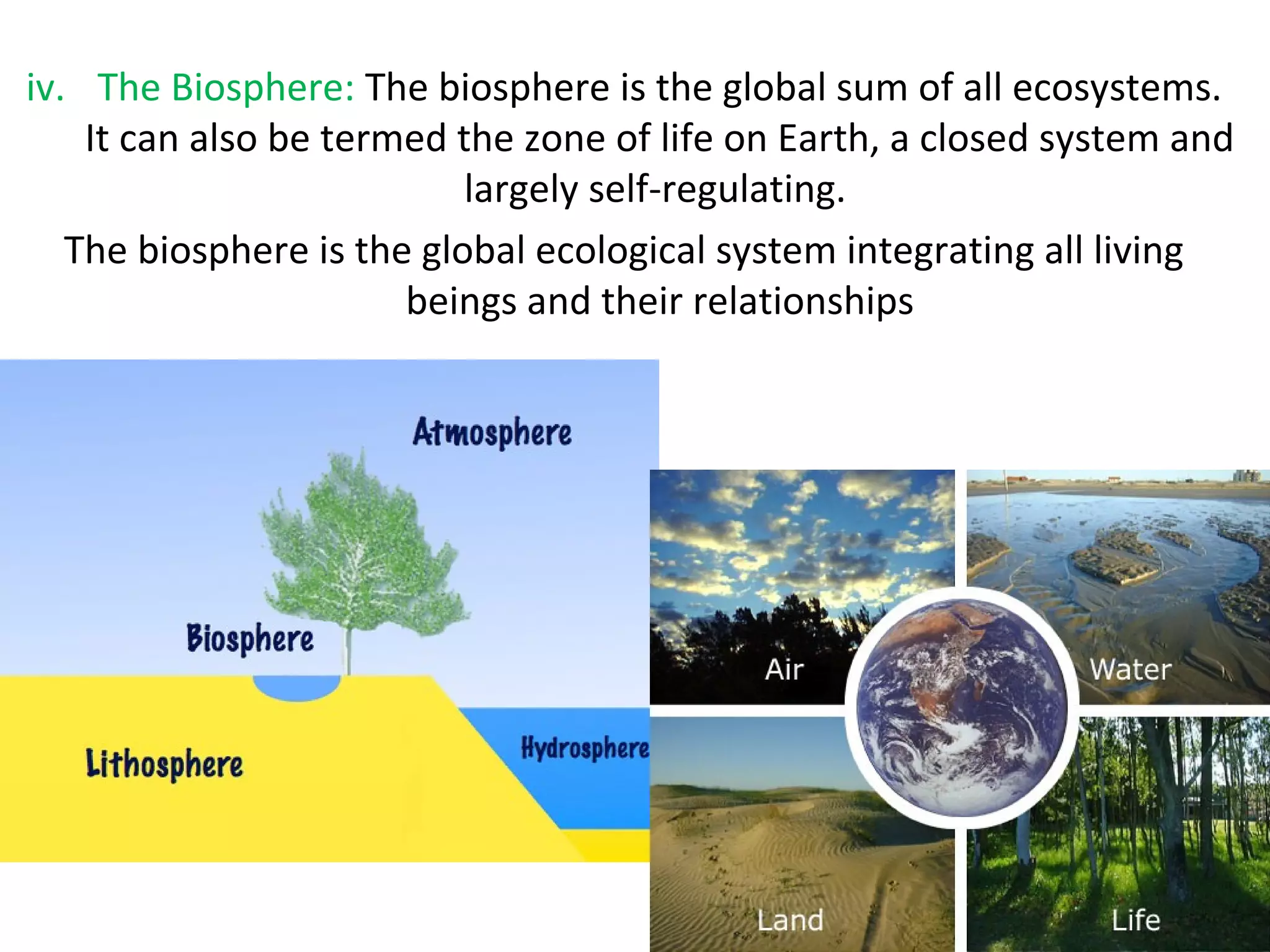
iv. The Biosphere: The biosphere is the global sum of all ecosystems. 
It can also be termed the zone of life on Earth, a closed system and 
largely self-regulating. 
The biosphere is the global ecological system integrating all living 
beings and their relationships
Social Environment 
The social environment refers to the immediate physical and social 
setting in which people live or in which something happens or develops. 
It includes the culture that the individual was educated or lives in, and 
the people and institutions with whom they interact. 
The interaction may be in person or through communication media, 
even anonymous or one-way and may not imply equality of social 
status.
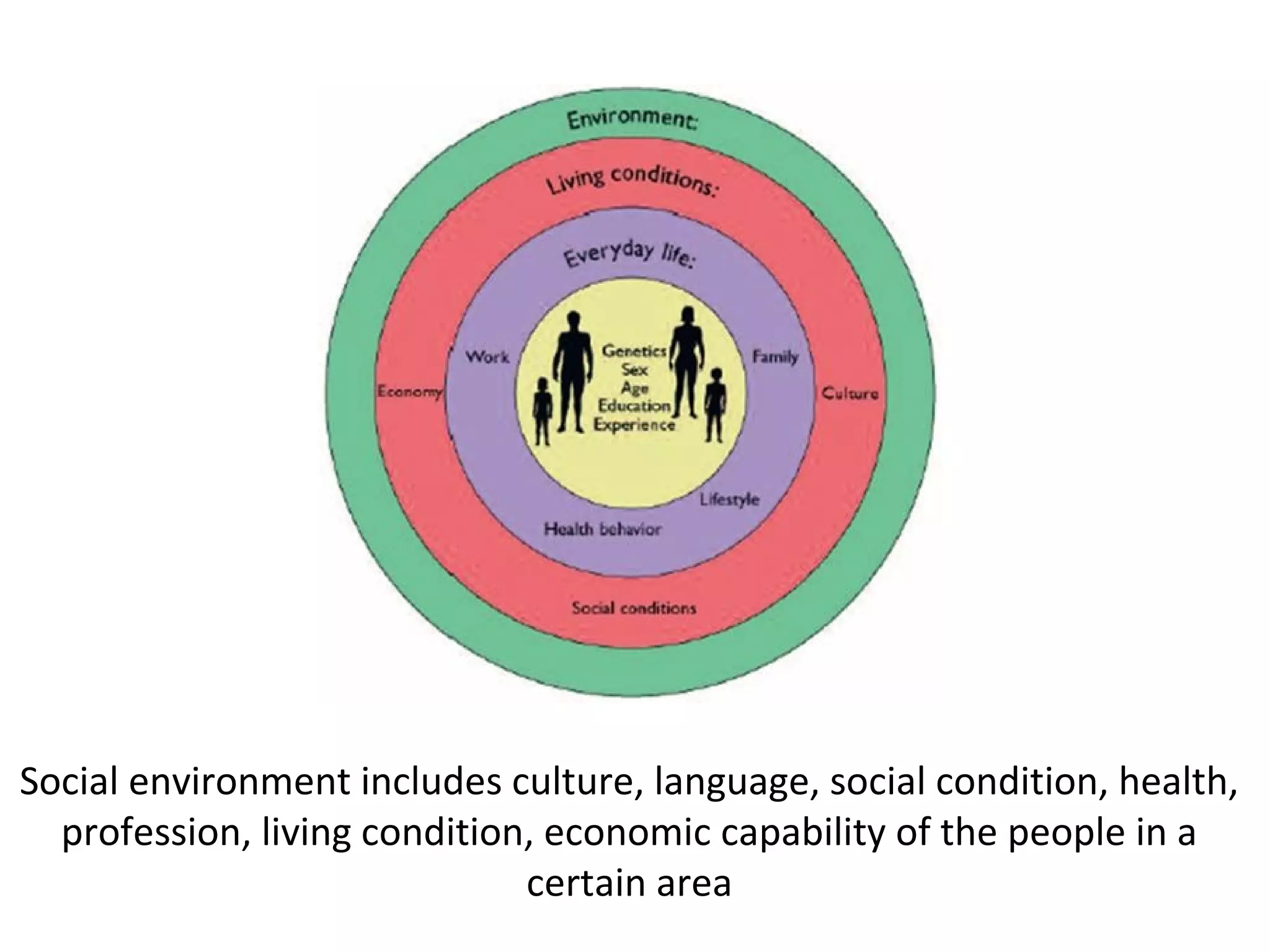
Social environment includes culture, language, social condition, health, 
profession, living condition, economic capability of the people in a 
certain area
Thank You All!!!!

Types of environment

  • 1.
    Types of Environment Course No: 568 Presented By: Rokonuzzaman MS Department of Geography and Environment University of Dhaka Date: 20.03.2014
  • 2.
    Environment Environment isthe sum total of all surroundings of a living organism, including natural forces and other living things Both biotic and abiotic components form environment. These two components interact with each other and they are interdependent. The environment consists of the interactions among plants, animals, soil, water, temperature, light, and other living and non-living things.
  • 3.
    Environment Can beCategorized as: 1.Built Environment 2.Natural Environment 3.Social Environment
  • 4.
    Built Environment Theterm built environment refers to the human-made surroundings that provide the setting for human activity. The built environment encompasses places and spaces created or modified by people including buildings, parks or green spaces , and supporting infrastructures, such as water supply, or energy networks, transportation systems etc.
  • 5.
    Built environment isshaped by: i. Climate and geology ii. Economy iii.Government iv. Culture and fashion v. Technology vi. Customers
  • 6.
    Natural Environment Thenatural environment includes all living and non-living things occurring naturally on Earth. Natural environment is often used as a synonym for habitat. For instance, when we say that, the natural environment of giraffes is the savanna.
  • 7.
    Composition Natural Environment i. The Lithosphere: The lithosphere is the rigid outermost shell of a rocky planet defined on the basis of the mechanical properties. ii. The Hydrosphere: The hydrosphere refers to the combined mass of water found on, under, and over the surface of the planet. Ocean, rivers, lakes, ponds and as a whole all the water body of the earth. iii. The Atmosphere: The atmosphere of Earth is a layer of gases surrounding the planet Earth that is retained by Earth's gravity. The atmosphere protects life on Earth by absorbing ultraviolet solar radiation, warming the surface through greenhouse effect, and reducing temperature extremes between day and night.
  • 8.
    iv. The Biosphere:The biosphere is the global sum of all ecosystems. It can also be termed the zone of life on Earth, a closed system and largely self-regulating. The biosphere is the global ecological system integrating all living beings and their relationships
  • 9.
    Social Environment Thesocial environment refers to the immediate physical and social setting in which people live or in which something happens or develops. It includes the culture that the individual was educated or lives in, and the people and institutions with whom they interact. The interaction may be in person or through communication media, even anonymous or one-way and may not imply equality of social status.
  • 10.
    Social environment includesculture, language, social condition, health, profession, living condition, economic capability of the people in a certain area
  • 11.