INTRODUCTION TO
ENVIRONMENTAL STUDIES
Mr.J. SURI BABU
Vishnu Institute of Technology
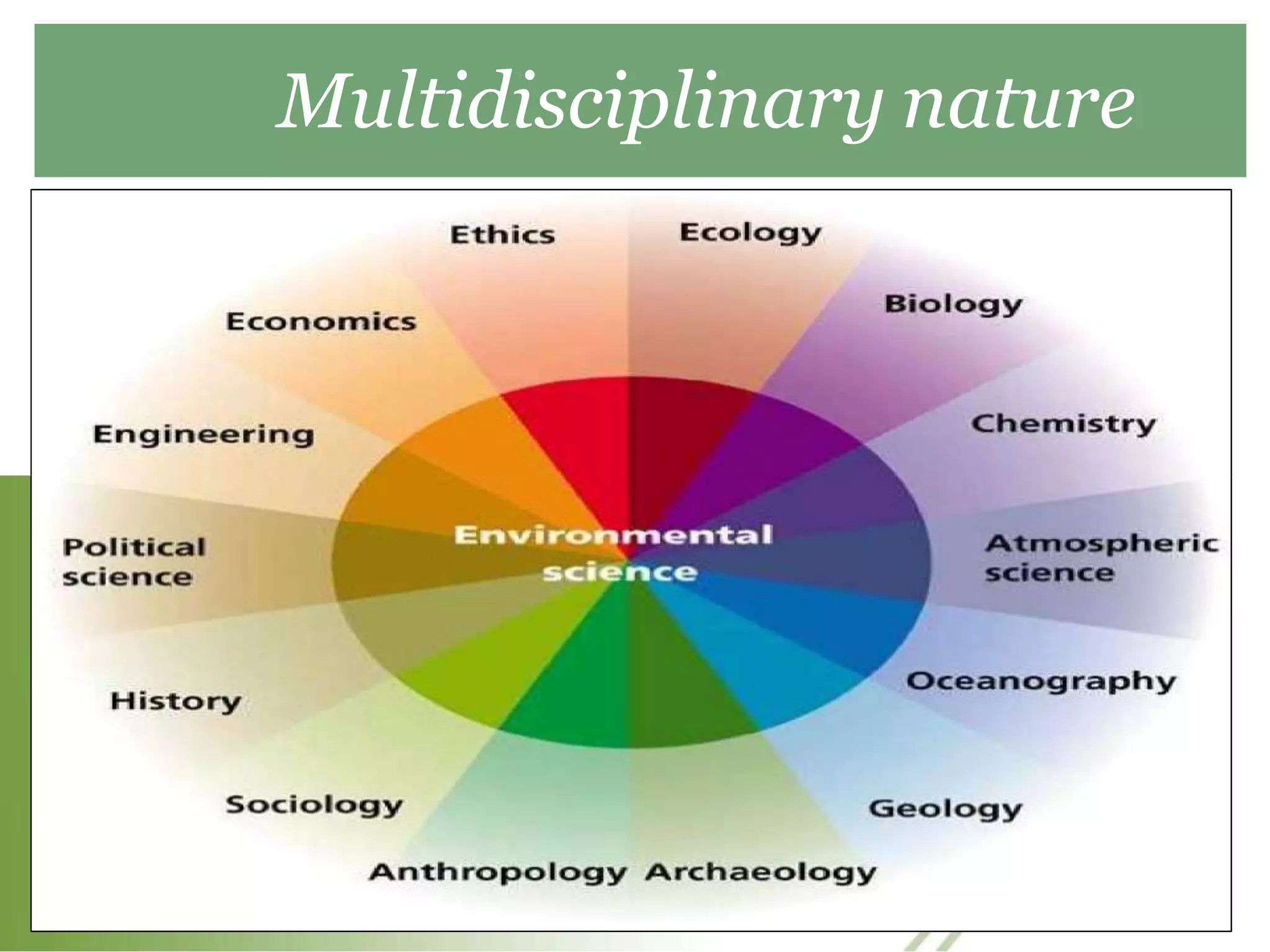
Multidisciplinary nature
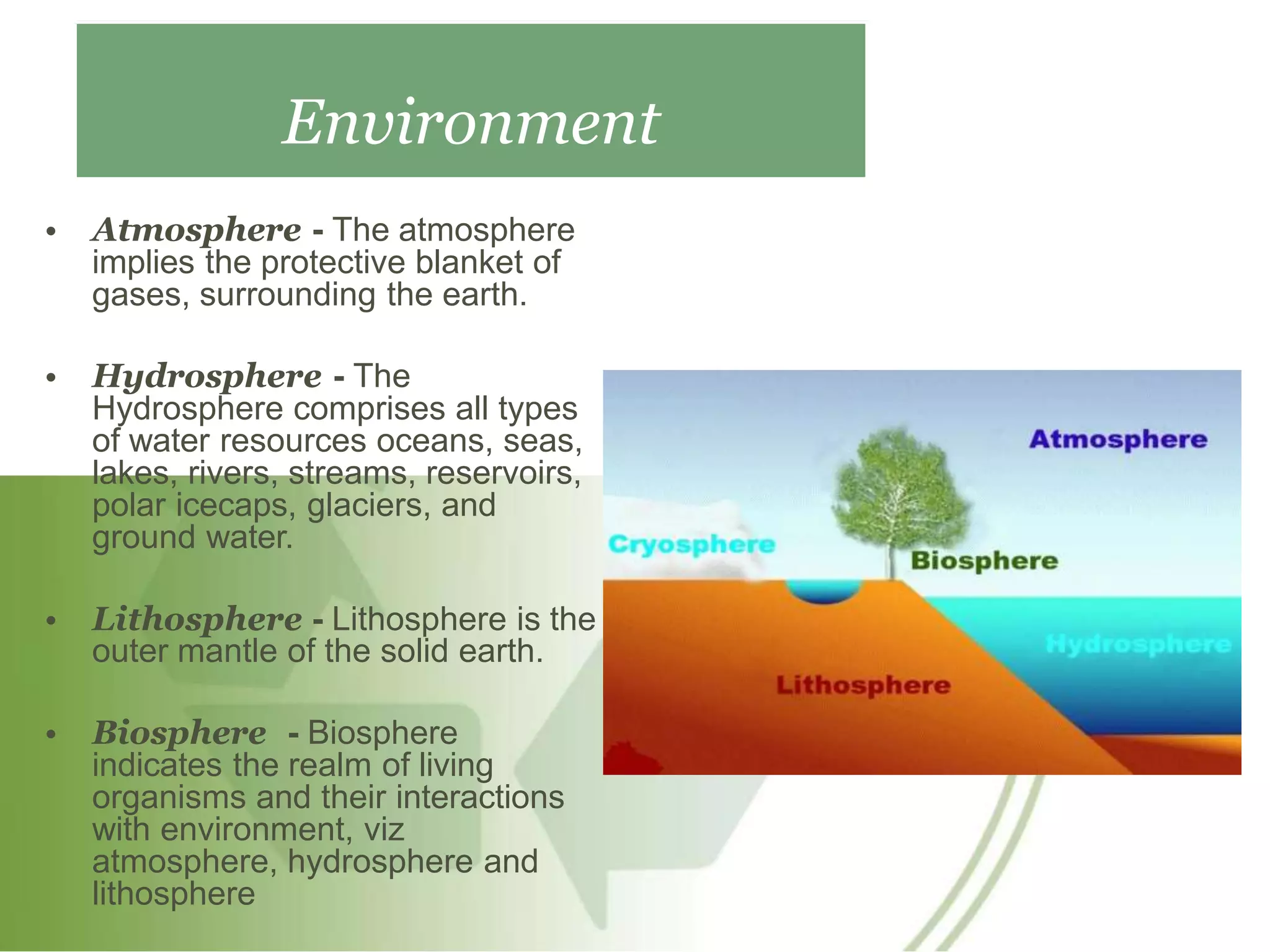
Environment
• Atmosphere - The atmosphere
implies the protective blanket of
gases, surrounding the earth.
• Hydrosphere - The
Hydrosphere comprises all types
of water resources oceans, seas,
lakes, rivers, streams, reservoirs,
polar icecaps, glaciers, and
ground water.
• Lithosphere - Lithosphere is the
outer mantle of the solid earth.
• Biosphere - Biosphere
indicates the realm of living
organisms and their interactions
with environment, viz
atmosphere, hydrosphere and
lithosphere
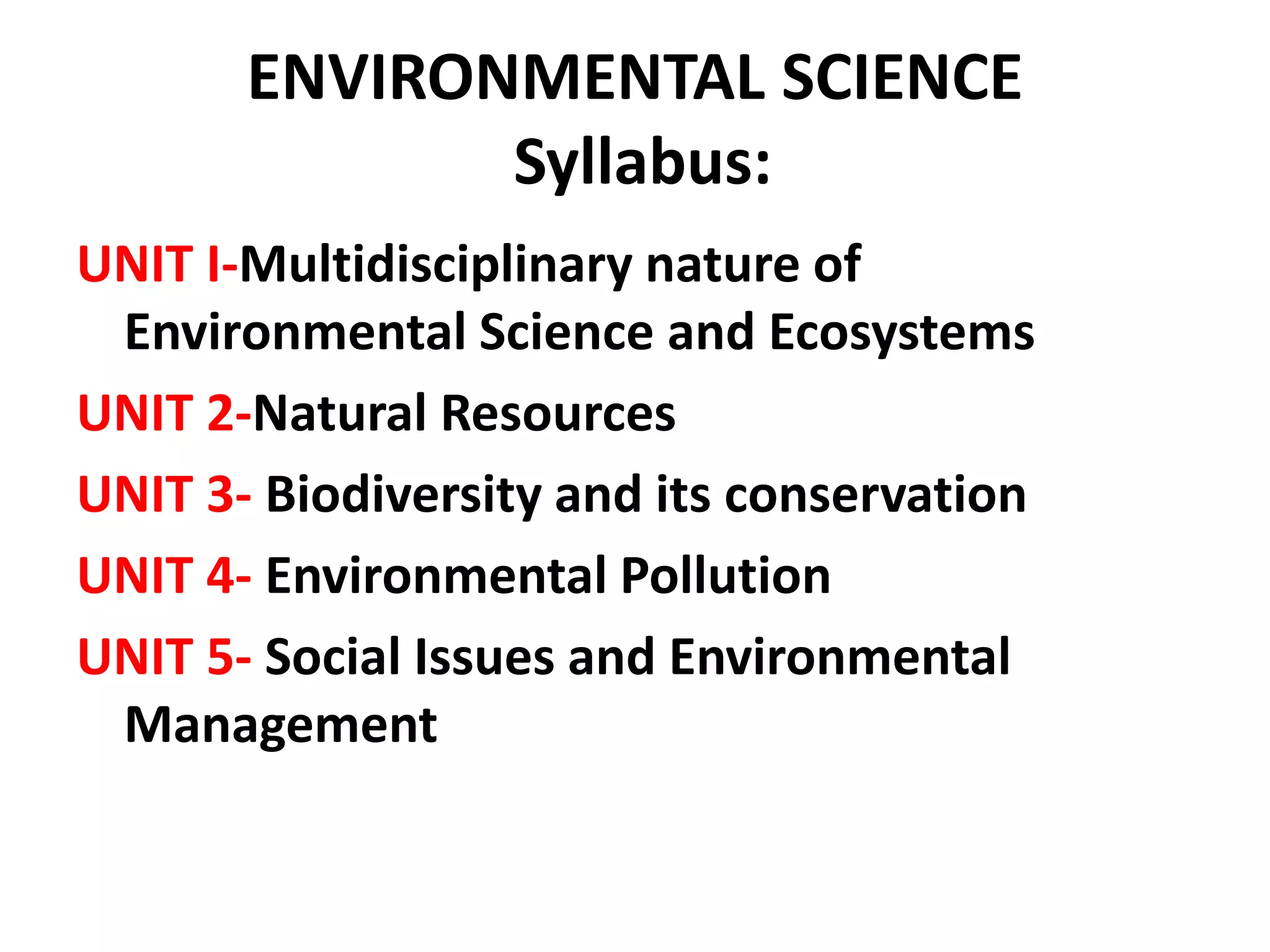
ENVIRONMENTAL SCIENCE
Syllabus:
UNIT I-Multidisciplinary nature of
Environmental Science and Ecosystems
UNIT 2-Natural Resources
UNIT 3- Biodiversity and its conservation
UNIT 4- Environmental Pollution
UNIT 5- Social Issues and Environmental
Management
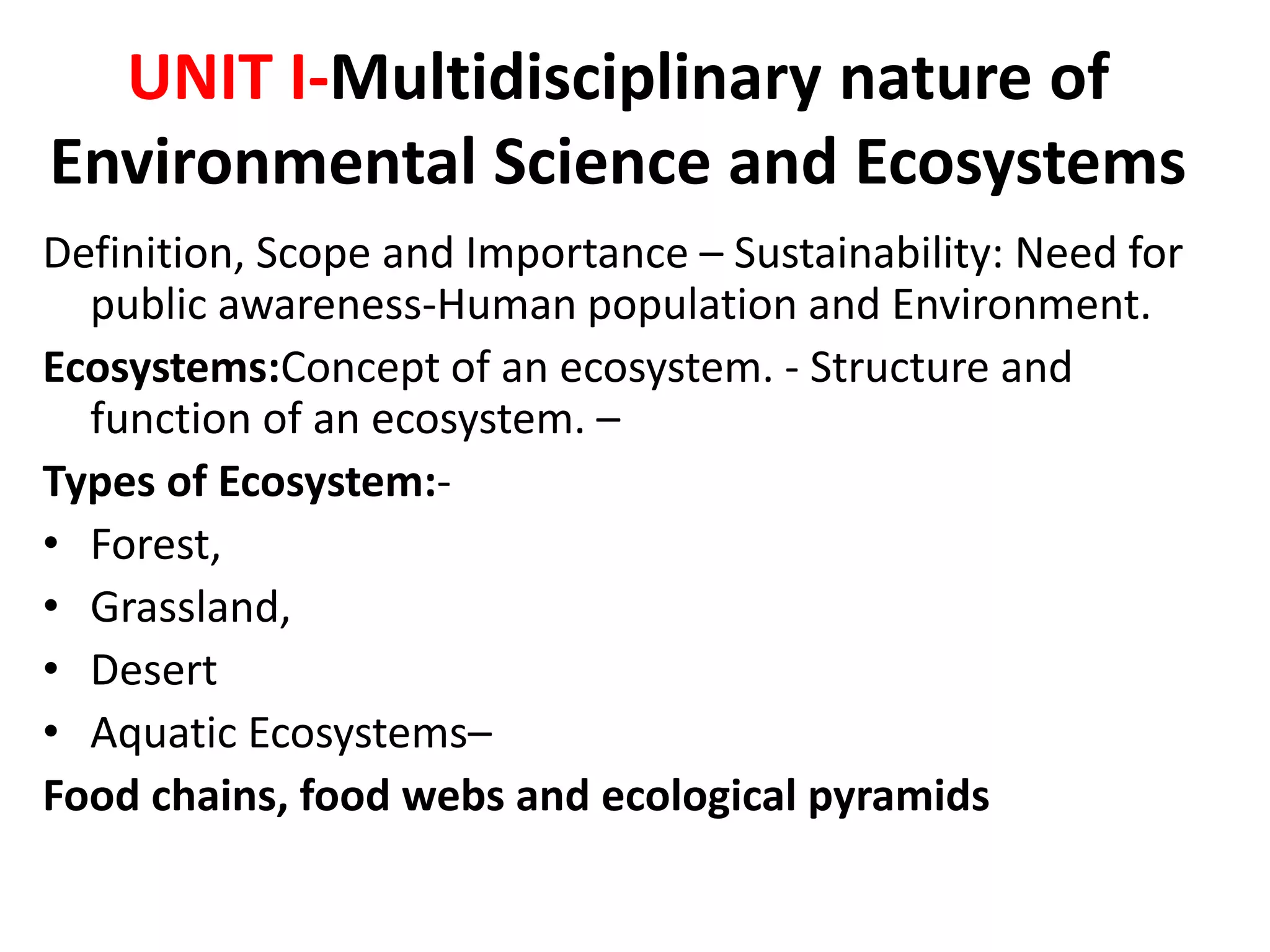
UNIT I-Multidisciplinary nature of
Environmental Science and Ecosystems
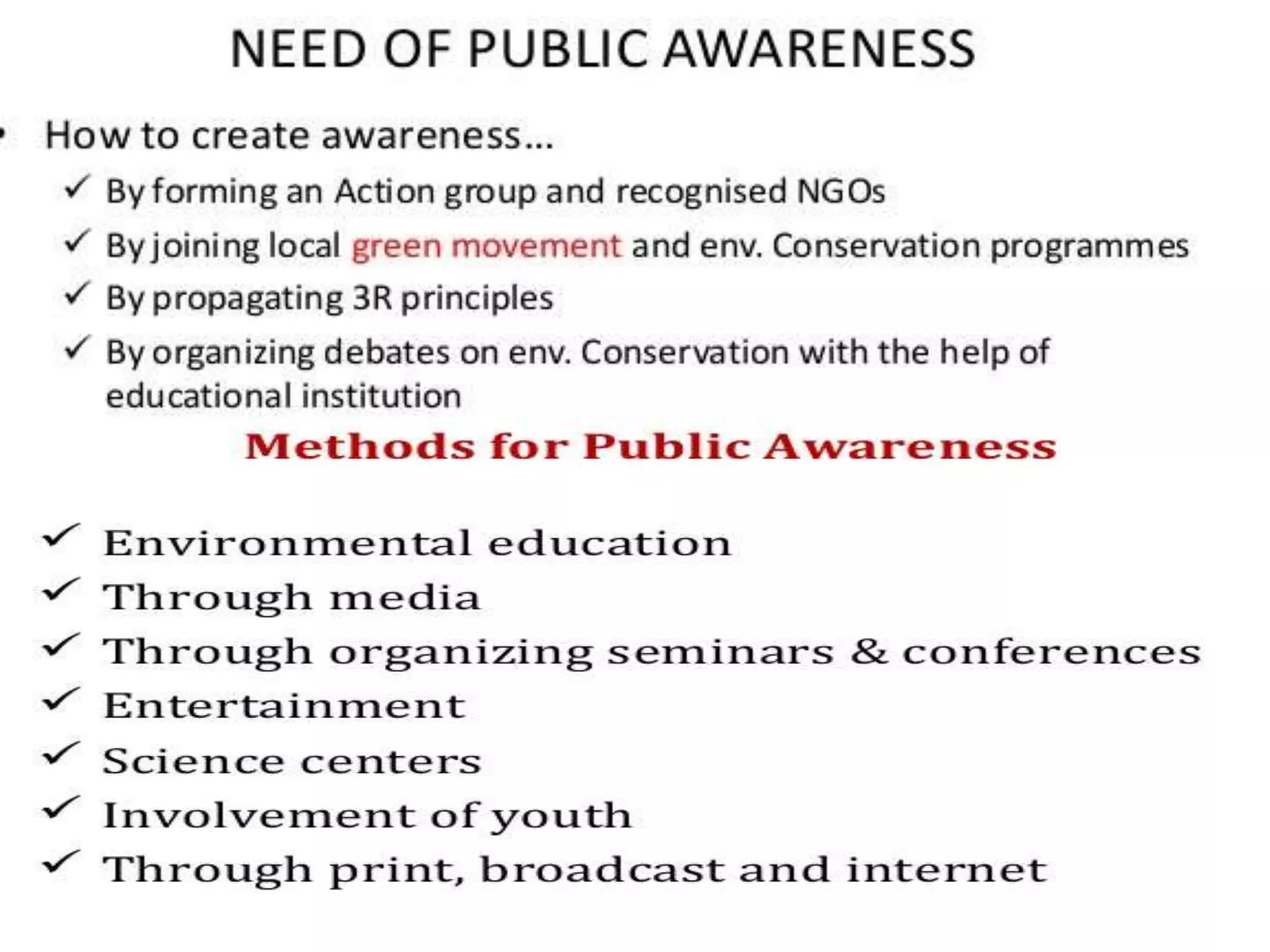
Definition, Scope and Importance – Sustainability: Need for
public awareness-Human population and Environment.
Ecosystems:Concept of an ecosystem. - Structure and
function of an ecosystem. –
Types of Ecosystem:-
• Forest,
• Grassland,
• Desert
• Aquatic Ecosystems–
Food chains, food webs and ecological pyramids
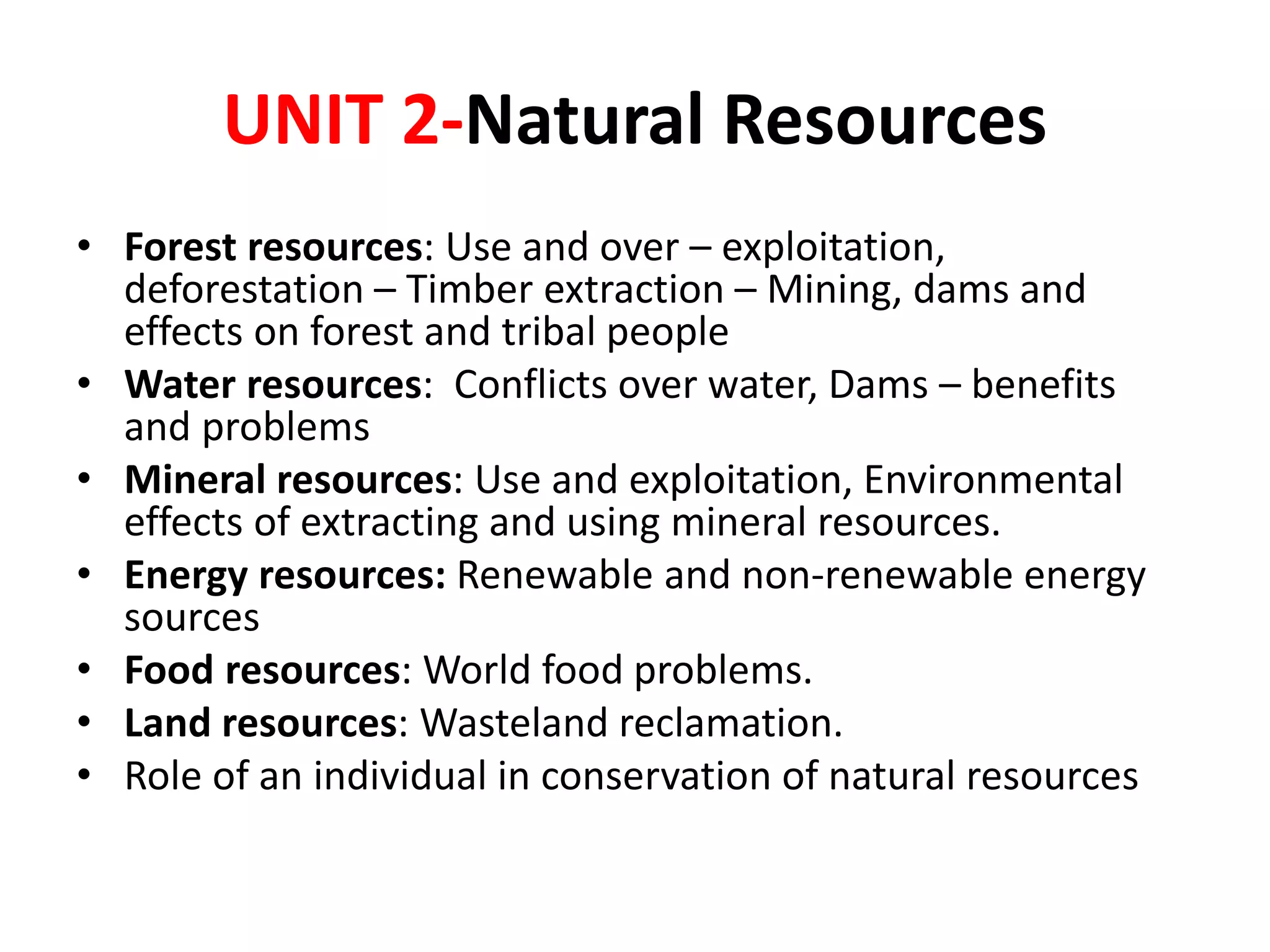
UNIT 2-Natural Resources
• Forest resources: Use and over – exploitation,
deforestation – Timber extraction – Mining, dams and
effects on forest and tribal people
• Water resources: Conflicts over water, Dams – benefits
and problems
• Mineral resources: Use and exploitation, Environmental
effects of extracting and using mineral resources.
• Energy resources: Renewable and non-renewable energy
sources
• Food resources: World food problems.
• Land resources: Wasteland reclamation.
• Role of an individual in conservation of natural resources
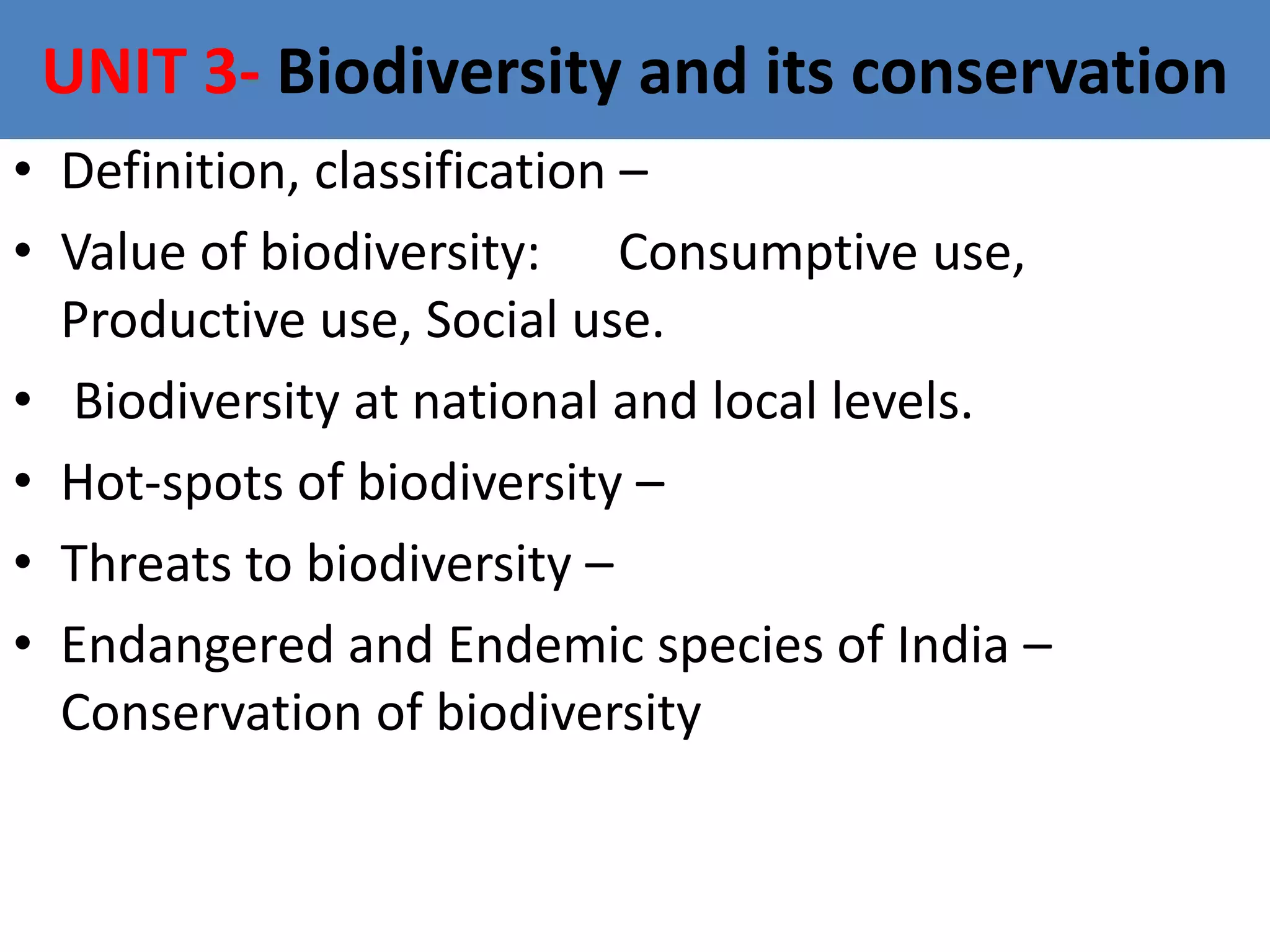
UNIT 3- Biodiversity and its conservation
• Definition, classification –
• Value of biodiversity: Consumptive use,
Productive use, Social use.
• Biodiversity at national and local levels.
• Hot-spots of biodiversity –
• Threats to biodiversity –
• Endangered and Endemic species of India –
Conservation of biodiversity
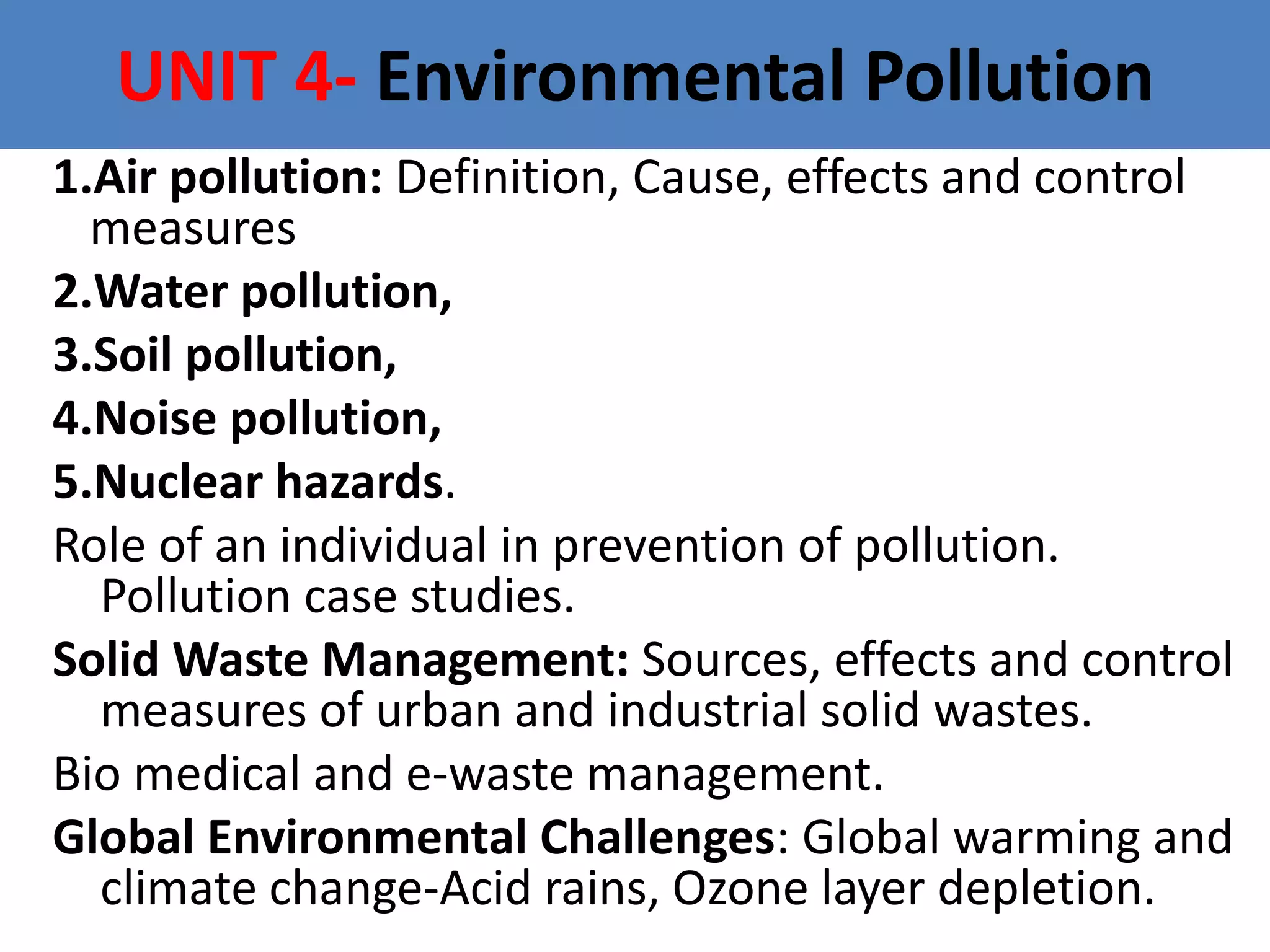
UNIT 4- Environmental Pollution
1.Air pollution: Definition, Cause, effects and control
measures
2.Water pollution,
3.Soil pollution,
4.Noise pollution,
5.Nuclear hazards.
Role of an individual in prevention of pollution.
Pollution case studies.
Solid Waste Management: Sources, effects and control
measures of urban and industrial solid wastes.
Bio medical and e-waste management.
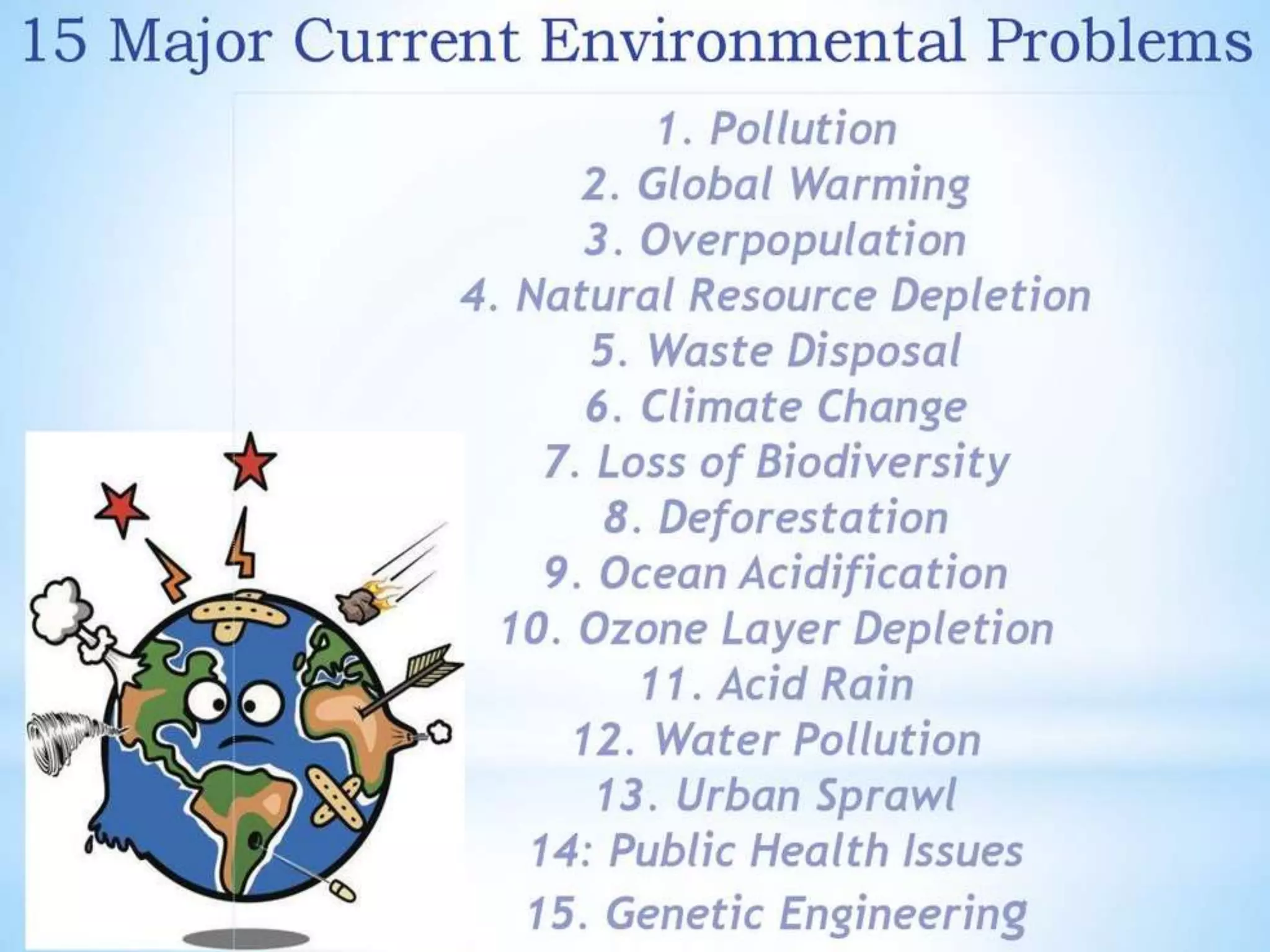
Global Environmental Challenges: Global warming and
climate change-Acid rains, Ozone layer depletion.
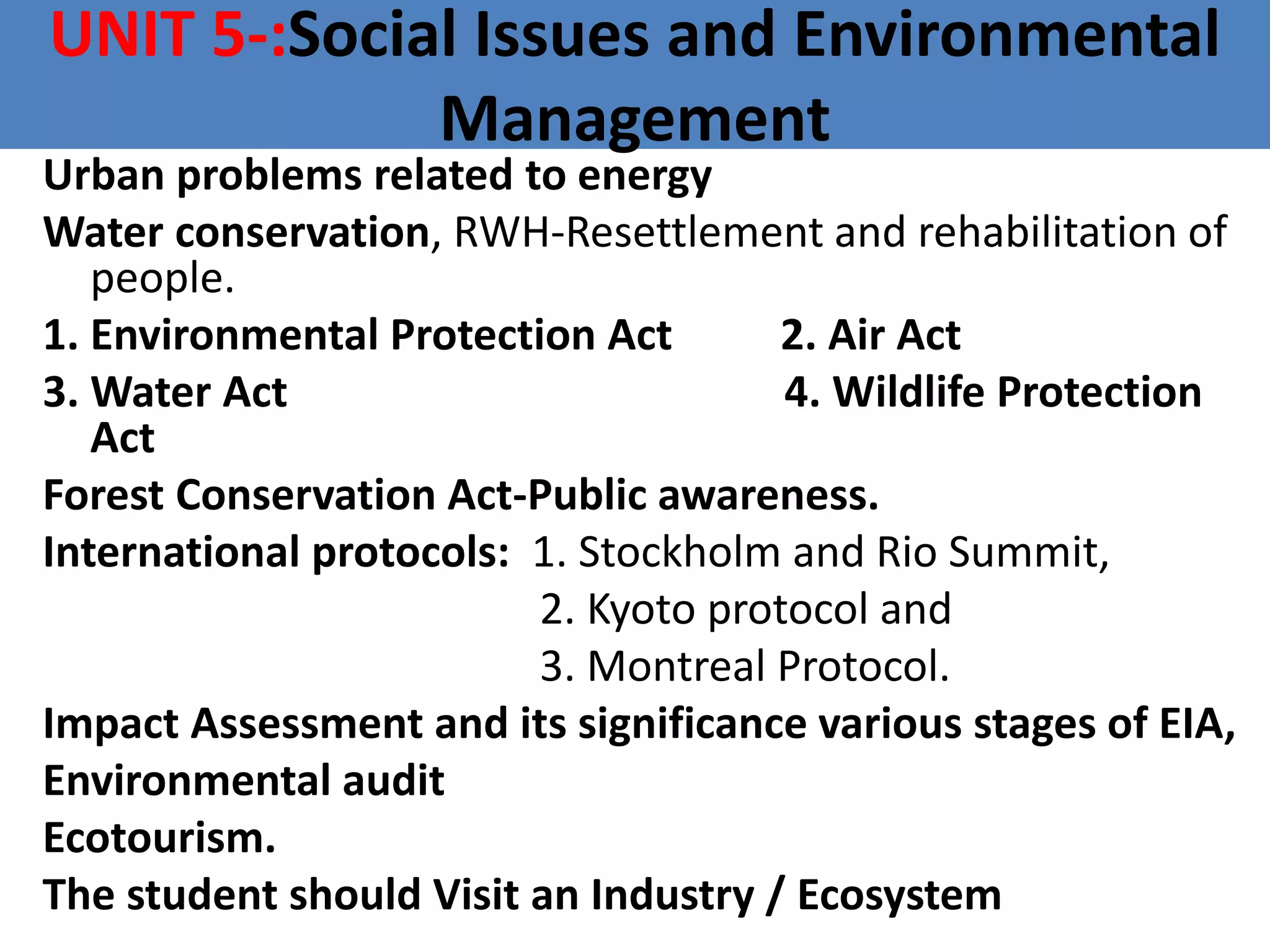
UNIT 5-:Social Issues and Environmental
Management
Urban problems related to energy
Water conservation, RWH-Resettlement and rehabilitation of
people.
1. Environmental Protection Act 2. Air Act
3. Water Act 4. Wildlife Protection
Act
Forest Conservation Act-Public awareness.
International protocols: 1. Stockholm and Rio Summit,
2. Kyoto protocol and
3. Montreal Protocol.
Impact Assessment and its significance various stages of EIA,
Environmental audit
Ecotourism.
The student should Visit an Industry / Ecosystem
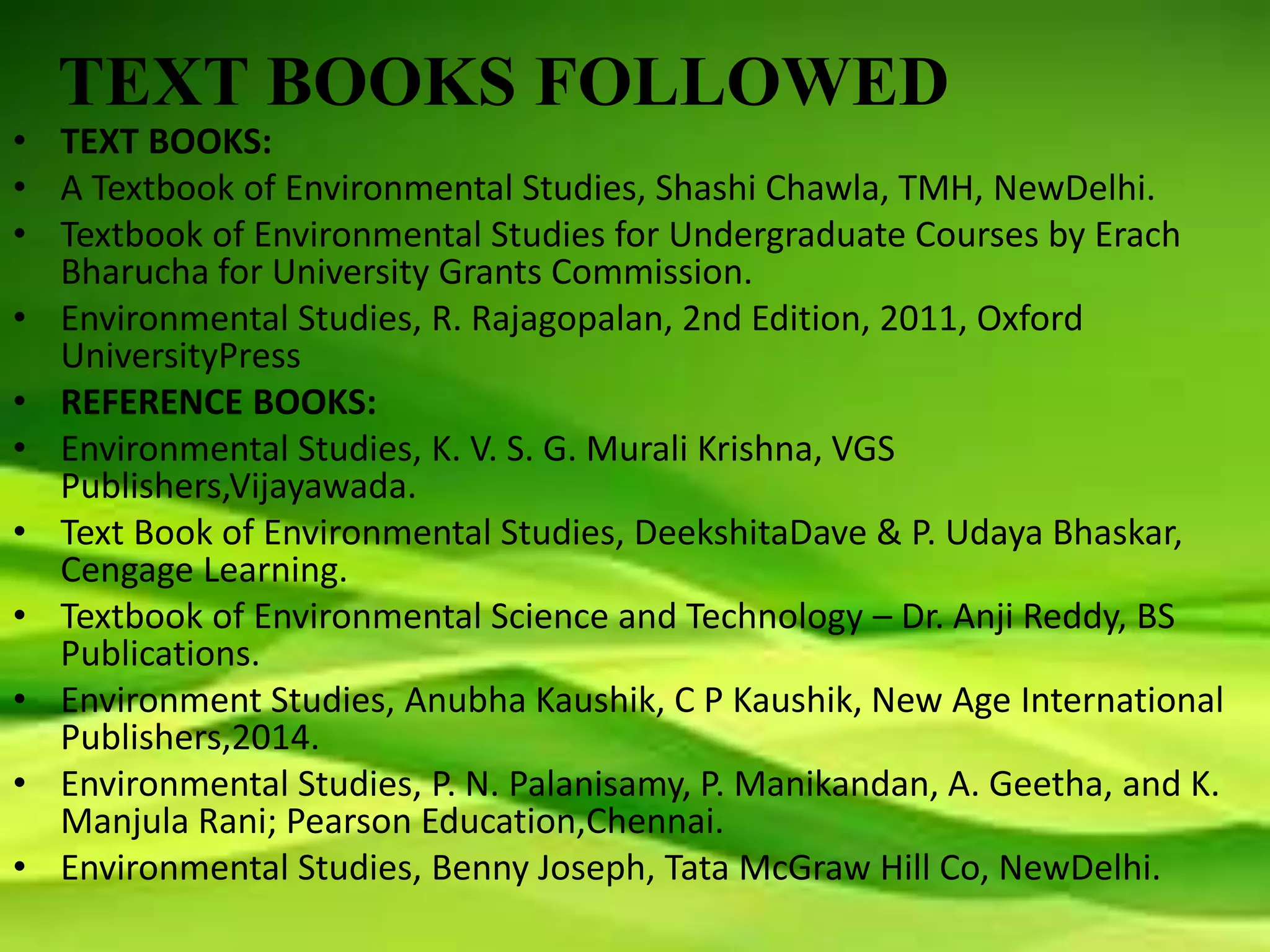
TEXT BOOKS FOLLOWED
• TEXT BOOKS:
• A Textbook of Environmental Studies, Shashi Chawla, TMH, NewDelhi.
• Textbook of Environmental Studies for Undergraduate Courses by Erach
Bharucha for University Grants Commission.
• Environmental Studies, R. Rajagopalan, 2nd Edition, 2011, Oxford
UniversityPress
• REFERENCE BOOKS:
• Environmental Studies, K. V. S. G. Murali Krishna, VGS
Publishers,Vijayawada.
• Text Book of Environmental Studies, DeekshitaDave & P. Udaya Bhaskar,
Cengage Learning.
• Textbook of Environmental Science and Technology – Dr. Anji Reddy, BS
Publications.
• Environment Studies, Anubha Kaushik, C P Kaushik, New Age International
Publishers,2014.
• Environmental Studies, P. N. Palanisamy, P. Manikandan, A. Geetha, and K.
Manjula Rani; Pearson Education,Chennai.
• Environmental Studies, Benny Joseph, Tata McGraw Hill Co, NewDelhi.
WE TRULY APPRECIATE THE
TIME YOU SHARED WITH US……

Environmental science introduction class

  • 1.
    INTRODUCTION TO ENVIRONMENTAL STUDIES Mr.J.SURI BABU Vishnu Institute of Technology
  • 4.
  • 9.
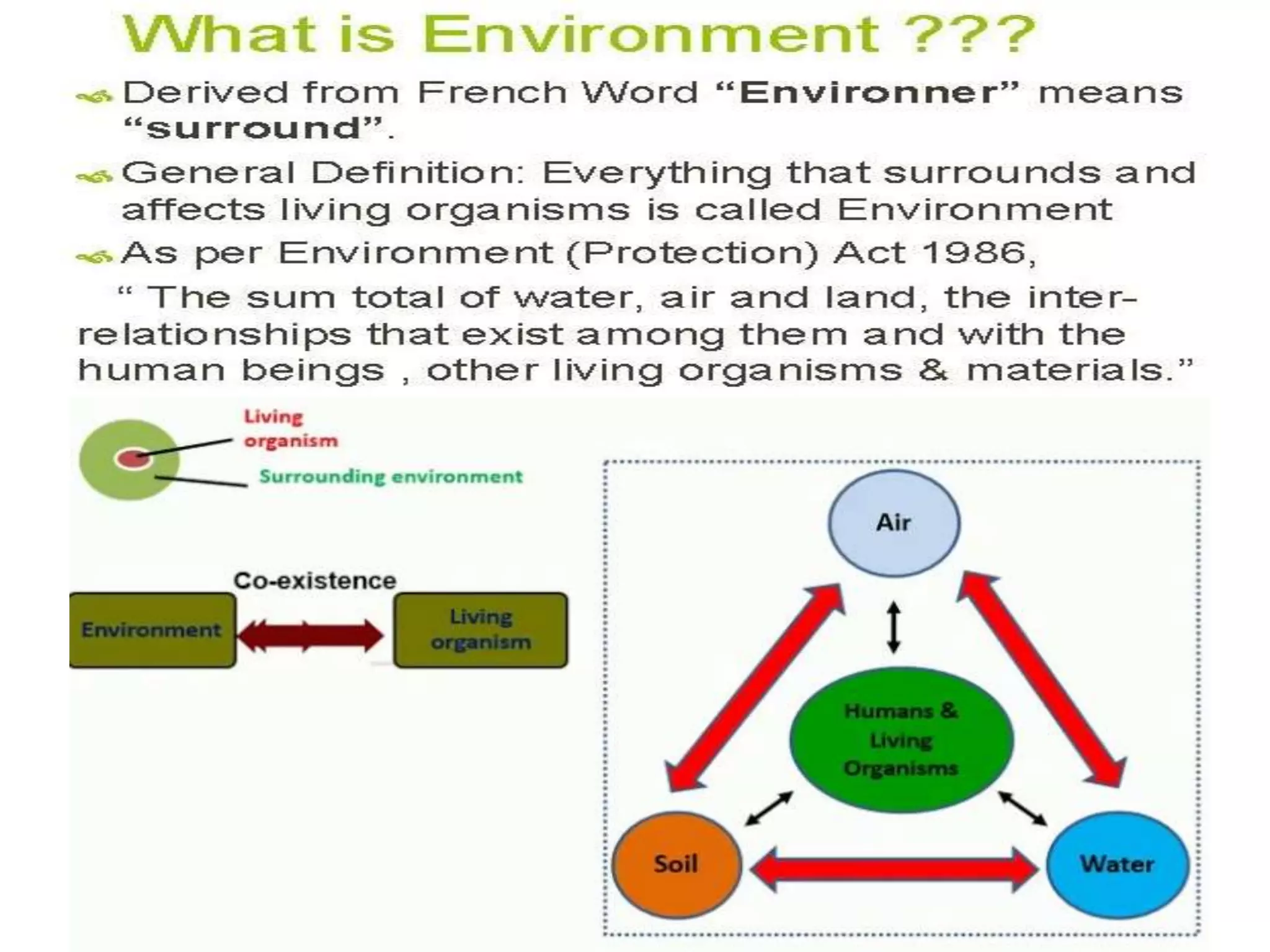
    Environment • Atmosphere -The atmosphere implies the protective blanket of gases, surrounding the earth. • Hydrosphere - The Hydrosphere comprises all types of water resources oceans, seas, lakes, rivers, streams, reservoirs, polar icecaps, glaciers, and ground water. • Lithosphere - Lithosphere is the outer mantle of the solid earth. • Biosphere - Biosphere indicates the realm of living organisms and their interactions with environment, viz atmosphere, hydrosphere and lithosphere
  • 10.
    ENVIRONMENTAL SCIENCE Syllabus: UNIT I-Multidisciplinarynature of Environmental Science and Ecosystems UNIT 2-Natural Resources UNIT 3- Biodiversity and its conservation UNIT 4- Environmental Pollution UNIT 5- Social Issues and Environmental Management
  • 11.
    UNIT I-Multidisciplinary natureof Environmental Science and Ecosystems Definition, Scope and Importance – Sustainability: Need for public awareness-Human population and Environment. Ecosystems:Concept of an ecosystem. - Structure and function of an ecosystem. – Types of Ecosystem:- • Forest, • Grassland, • Desert • Aquatic Ecosystems– Food chains, food webs and ecological pyramids
  • 12.
    UNIT 2-Natural Resources •Forest resources: Use and over – exploitation, deforestation – Timber extraction – Mining, dams and effects on forest and tribal people • Water resources: Conflicts over water, Dams – benefits and problems • Mineral resources: Use and exploitation, Environmental effects of extracting and using mineral resources. • Energy resources: Renewable and non-renewable energy sources • Food resources: World food problems. • Land resources: Wasteland reclamation. • Role of an individual in conservation of natural resources
  • 13.
    UNIT 3- Biodiversityand its conservation • Definition, classification – • Value of biodiversity: Consumptive use, Productive use, Social use. • Biodiversity at national and local levels. • Hot-spots of biodiversity – • Threats to biodiversity – • Endangered and Endemic species of India – Conservation of biodiversity
  • 14.
    UNIT 4- EnvironmentalPollution 1.Air pollution: Definition, Cause, effects and control measures 2.Water pollution, 3.Soil pollution, 4.Noise pollution, 5.Nuclear hazards. Role of an individual in prevention of pollution. Pollution case studies. Solid Waste Management: Sources, effects and control measures of urban and industrial solid wastes. Bio medical and e-waste management. Global Environmental Challenges: Global warming and climate change-Acid rains, Ozone layer depletion.
  • 15.
    UNIT 5-:Social Issuesand Environmental Management Urban problems related to energy Water conservation, RWH-Resettlement and rehabilitation of people. 1. Environmental Protection Act 2. Air Act 3. Water Act 4. Wildlife Protection Act Forest Conservation Act-Public awareness. International protocols: 1. Stockholm and Rio Summit, 2. Kyoto protocol and 3. Montreal Protocol. Impact Assessment and its significance various stages of EIA, Environmental audit Ecotourism. The student should Visit an Industry / Ecosystem
  • 16.
    TEXT BOOKS FOLLOWED •TEXT BOOKS: • A Textbook of Environmental Studies, Shashi Chawla, TMH, NewDelhi. • Textbook of Environmental Studies for Undergraduate Courses by Erach Bharucha for University Grants Commission. • Environmental Studies, R. Rajagopalan, 2nd Edition, 2011, Oxford UniversityPress • REFERENCE BOOKS: • Environmental Studies, K. V. S. G. Murali Krishna, VGS Publishers,Vijayawada. • Text Book of Environmental Studies, DeekshitaDave & P. Udaya Bhaskar, Cengage Learning. • Textbook of Environmental Science and Technology – Dr. Anji Reddy, BS Publications. • Environment Studies, Anubha Kaushik, C P Kaushik, New Age International Publishers,2014. • Environmental Studies, P. N. Palanisamy, P. Manikandan, A. Geetha, and K. Manjula Rani; Pearson Education,Chennai. • Environmental Studies, Benny Joseph, Tata McGraw Hill Co, NewDelhi.
  • 17.
    WE TRULY APPRECIATETHE TIME YOU SHARED WITH US……