ENVIRONMENT
INTRODUCTION
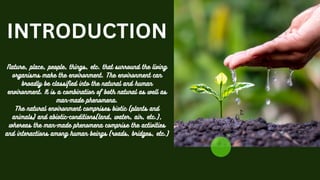
Nature, place, people, things, etc. that surround the living
organisms make the environment. The environment can
broadly be classified into the natural and human
environment. It is a combination of both natural as well as
man-made phenomena.
The natural environment comprises biotic (plants and
animals) and abiotic-conditions(land, water, air, etc.),
whereas the man-made phenomena comprise the activities
and interactions among human beings (roads, bridges, etc.)
Environment is our basic life support
System.it provides the air we breath,
the water we drink , the food we
eatand the land where we live.
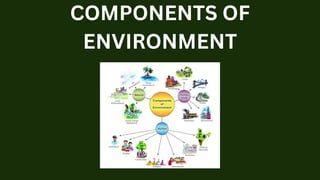
COMPONENTS OF
ENVIRONMENT
BIOTIC
It refers to the world of
living organisms, such
as plant and animals
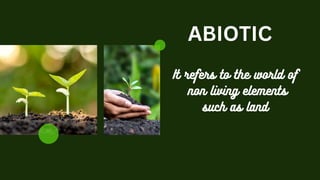
ABIOTIC
It refers to the world of
non living elements
such as land
NATURAL ENVIRONMENT
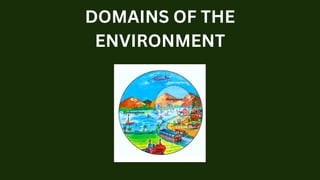
Lang, water, air, plants and animals comprises the natural environment. Lithosphere,
atmosphere, hydrosphere and biosphere are the four domains of the natural
environment. Lithosphere is the solid crust or the hard top layer of the earth. It
contains landforms like mountains, plateaus, plains and valleys. Hydrosphere is the
domain of water. It comprises water bodies like rivers, lakes, seas, oceans, etc. The
atmosphere is the thin layer of earth that surrounds the earth. It protects us from the
harmful rays and scorching heat of the sun. Biosphere is a narrow zone of the earth
where land, water and air interact with each other to support life
DOMAINS OF THE
ENVIRONMENT
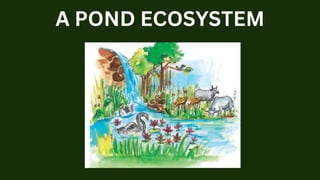
What is ecosystem?
The relation between the living organisms as well as the
relation between the organisms and their surrounding
form the ecosystem. There could be an ecosystem of
large rainforest, grassland, desert, mountains, lake,
river, ocean and even a small pond.
A POND ECOSYSTEM
HUMAN ENVIRONMENT
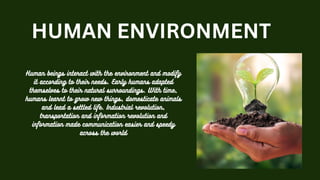
Human beings interact with the environment and modify
it according to their needs. Early humans adapted
themselves to their natural surroundings. With time,
humans learnt to grow new things, domesticate animals
and lead a settled life. Industrial revolution,
transportation and information revolution and
information made communication easier and speedy
across the world
THANK YOU

Class 7 Geography chapter no. 01 Environment

  • 1.
  • 2.
    INTRODUCTION Nature, place, people,things, etc. that surround the living organisms make the environment. The environment can broadly be classified into the natural and human environment. It is a combination of both natural as well as man-made phenomena. The natural environment comprises biotic (plants and animals) and abiotic-conditions(land, water, air, etc.), whereas the man-made phenomena comprise the activities and interactions among human beings (roads, bridges, etc.)
  • 3.
    Environment is ourbasic life support System.it provides the air we breath, the water we drink , the food we eatand the land where we live.
  • 4.
  • 5.
    BIOTIC It refers tothe world of living organisms, such as plant and animals
  • 6.
    ABIOTIC It refers tothe world of non living elements such as land
  • 7.
    NATURAL ENVIRONMENT Lang, water,air, plants and animals comprises the natural environment. Lithosphere, atmosphere, hydrosphere and biosphere are the four domains of the natural environment. Lithosphere is the solid crust or the hard top layer of the earth. It contains landforms like mountains, plateaus, plains and valleys. Hydrosphere is the domain of water. It comprises water bodies like rivers, lakes, seas, oceans, etc. The atmosphere is the thin layer of earth that surrounds the earth. It protects us from the harmful rays and scorching heat of the sun. Biosphere is a narrow zone of the earth where land, water and air interact with each other to support life
  • 8.
  • 9.
    What is ecosystem? Therelation between the living organisms as well as the relation between the organisms and their surrounding form the ecosystem. There could be an ecosystem of large rainforest, grassland, desert, mountains, lake, river, ocean and even a small pond.
  • 10.
  • 11.
    HUMAN ENVIRONMENT Human beingsinteract with the environment and modify it according to their needs. Early humans adapted themselves to their natural surroundings. With time, humans learnt to grow new things, domesticate animals and lead a settled life. Industrial revolution, transportation and information revolution and information made communication easier and speedy across the world
  • 12.