19CYM101T
ENVIRONMENTAL SCIENCE
UNIT-1 :
• Environmental segments Structure of atmosphere
• Composition of atmosphere
• Air Pollution Sources
• Effects–acid rain, ozone layer depletion and greenhouse
effect
• Control measures of air pollution AR.D.JENIFER NIVEDHA
ENVIRONMENT
The word Environment is derived from the French word “Environ” which means “surrounding”. Our surrounding
includes biotic factors like human beings, Plants, animals, microbes, etc and abiotic factors such as light, air, water,
soil, etc. Environment is a complex of many variables, which surrounds man as well as the living organisms.
Definitions of Environment : Environment is defined as, “the sum of total of all the living and non – living things around
us influencing one another”.
Environmental Science is the systematic, scientific study of the environment in combination with living organisms.
Environment functions
(1) Provides the supply of resources
The environment offers resources for production.
It includes both renewable and non-renewable resources.
Examples: Wood for furniture, soil, land, etc.
(2) Sustains life
The environment includes the sun, soil, water, and air, which are essential for human life.
It sustains life by providing genetic and biodiversity.
(3) Assimilates waste
Production and consumption activities generate waste.
This occurs mostly in the form of garbage.
The environment helps in getting rid of the garbage.
(4) Enhances the quality of life
Human beings enjoy the beauty of nature that includes rivers, mountains, deserts, etc.
TYPES OF ENVIRONMENT
Environment can be divided into two categories
•Natural environment (biotic)
• Man – environment ( Abiotic)
Natural environment: Natural environment is characterized by natural components. All biotic (living) and
abiotic components (non-living) are created through a natural process. Creation of these biotic and abiotic
components do not require any human support. Example: soil, water, air, tree, radiations, noise, etc.,
Man – environment: Man is the most powerful environmental agent. He modifies the environment using modern
technologies, according to his needs to a great extent. Thus the man-made environment is created by man.
Example: House, road, schools, railway lines, parks, etc.,
ENVIRONMENTAL SEGMENTS:
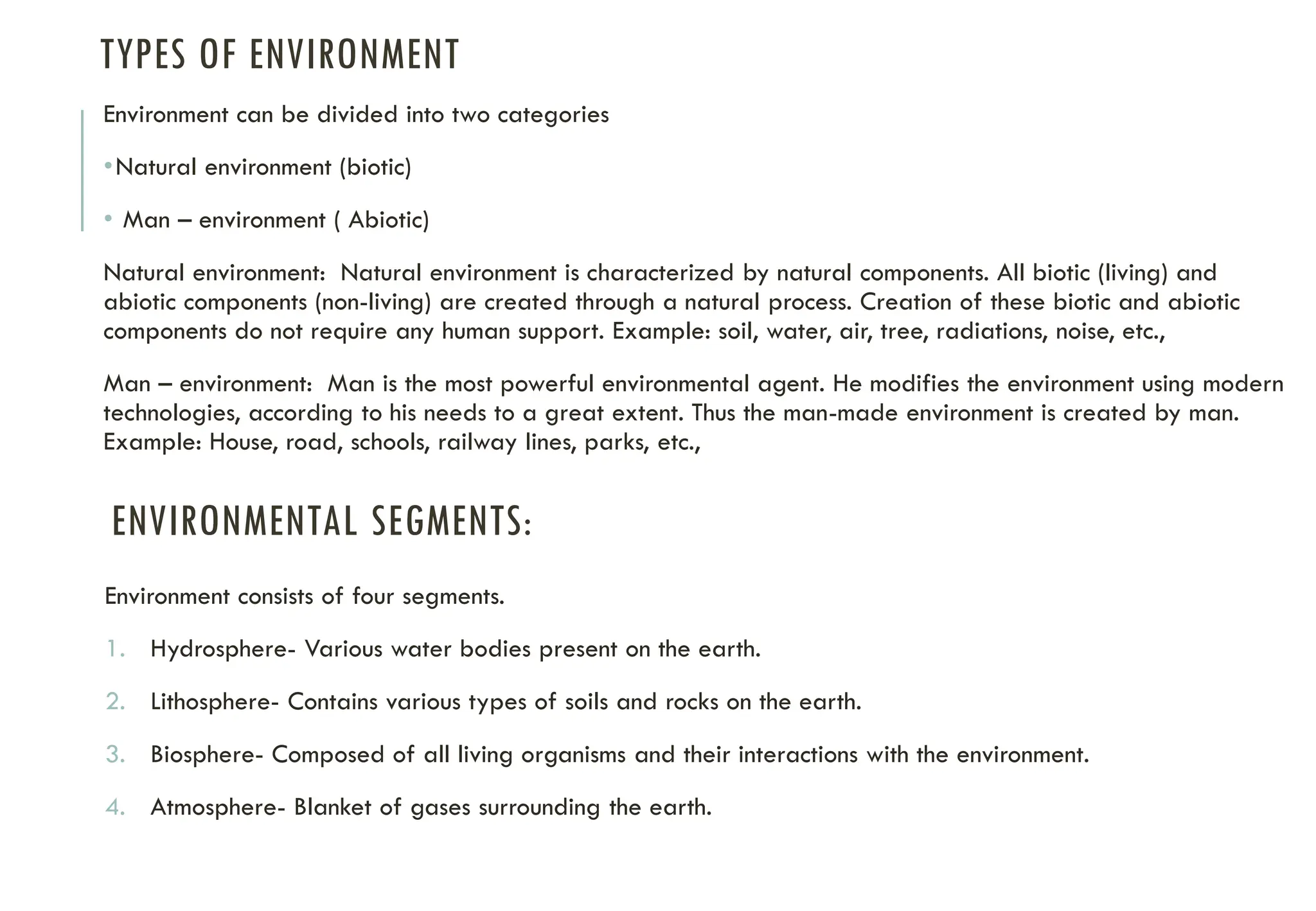
Environment consists of four segments.
1. Hydrosphere- Various water bodies present on the earth.
2. Lithosphere- Contains various types of soils and rocks on the earth.
3. Biosphere- Composed of all living organisms and their interactions with the environment.
4. Atmosphere- Blanket of gases surrounding the earth.
HYDROSPHERE
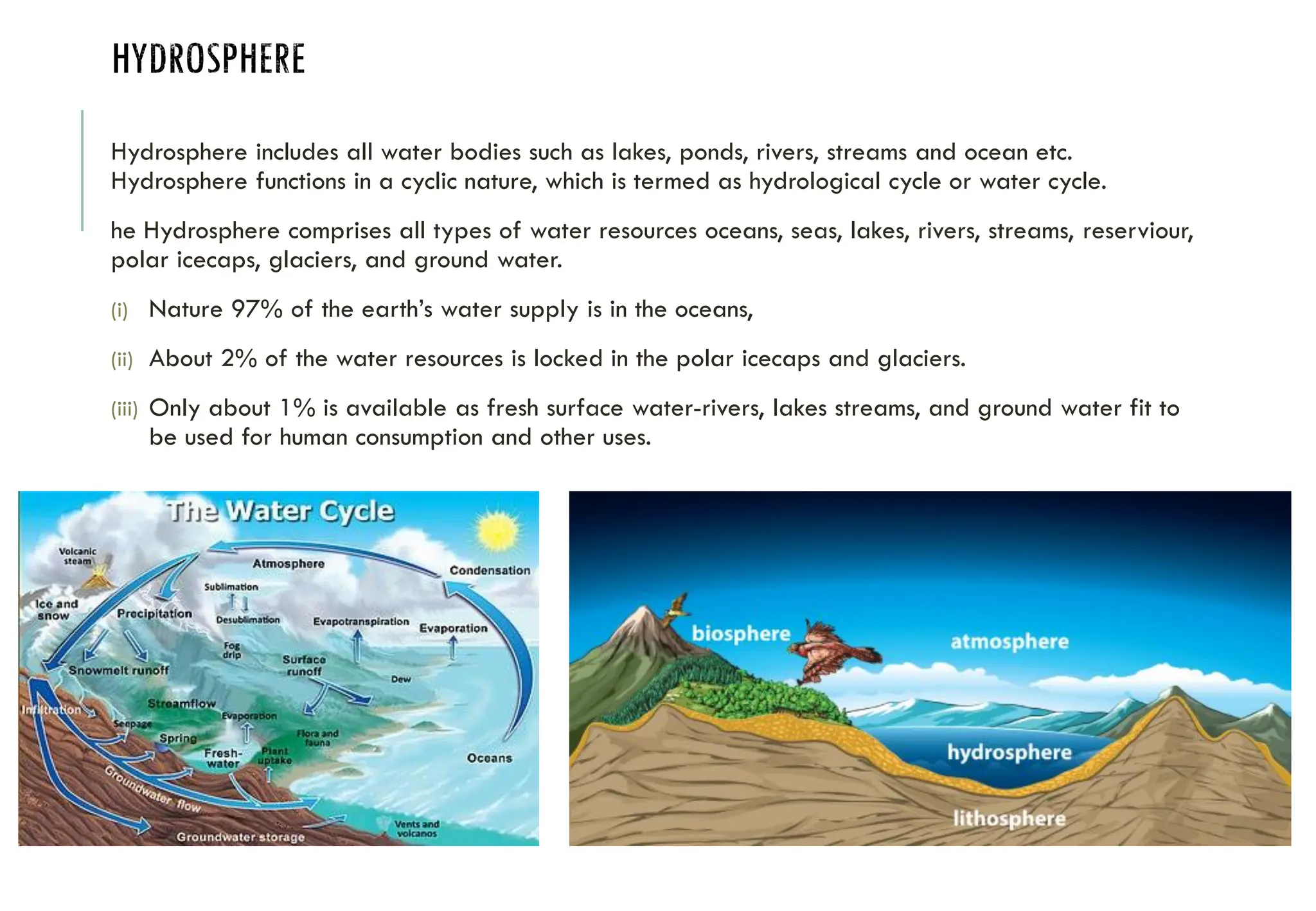
Hydrosphere includes all water bodies such as lakes, ponds, rivers, streams and ocean etc.
Hydrosphere functions in a cyclic nature, which is termed as hydrological cycle or water cycle.
he Hydrosphere comprises all types of water resources oceans, seas, lakes, rivers, streams, reserviour,
polar icecaps, glaciers, and ground water.
(i) Nature 97% of the earth’s water supply is in the oceans,
(ii) About 2% of the water resources is locked in the polar icecaps and glaciers.
(iii) Only about 1% is available as fresh surface water-rivers, lakes streams, and ground water fit to
be used for human consumption and other uses.
LITHOSPHERE
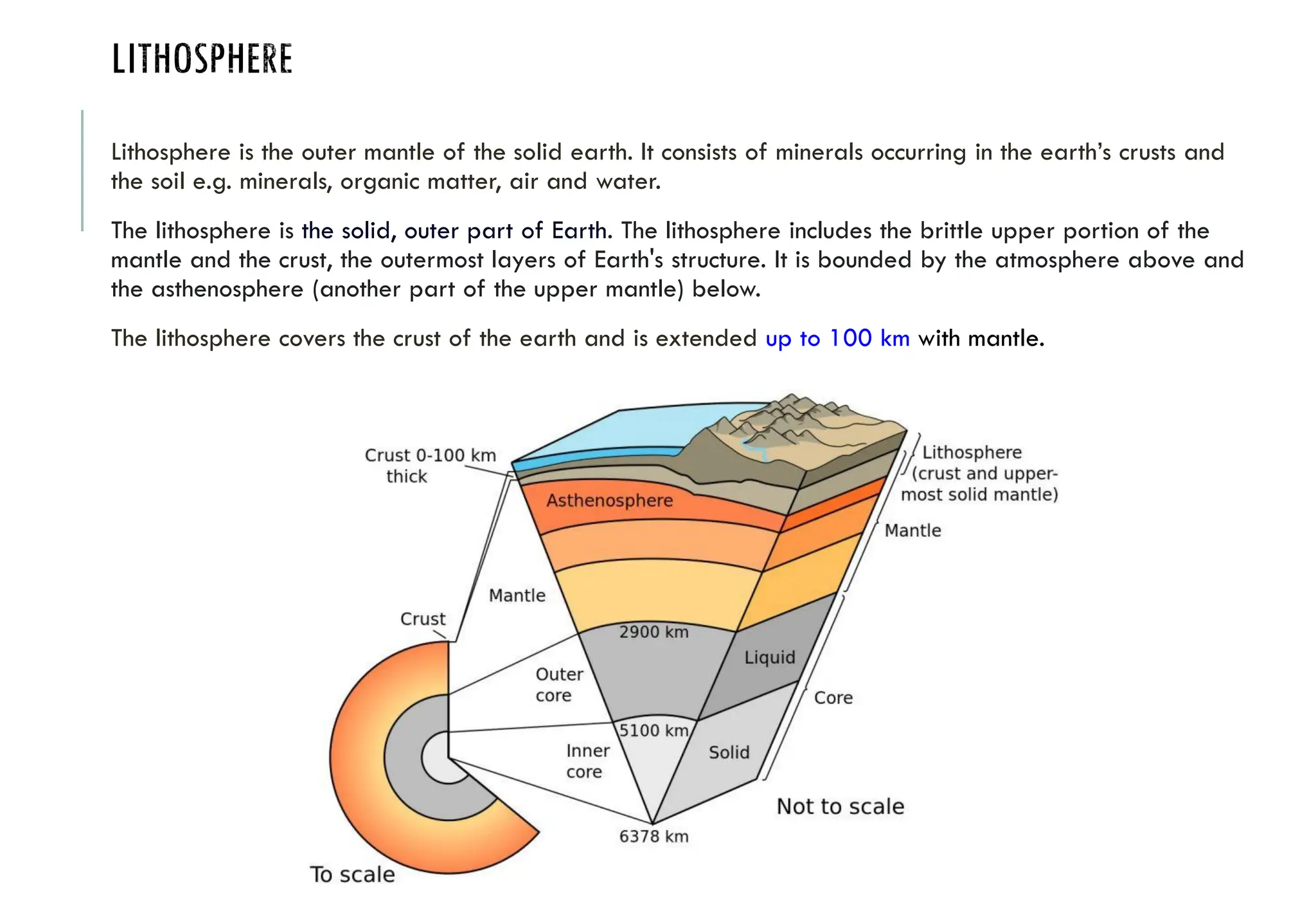
Lithosphere is the outer mantle of the solid earth. It consists of minerals occurring in the earth’s crusts and
the soil e.g. minerals, organic matter, air and water.
The lithosphere is the solid, outer part of Earth. The lithosphere includes the brittle upper portion of the
mantle and the crust, the outermost layers of Earth's structure. It is bounded by the atmosphere above and
the asthenosphere (another part of the upper mantle) below.
The lithosphere covers the crust of the earth and is extended up to 100 km with mantle.
BIOSPHERE
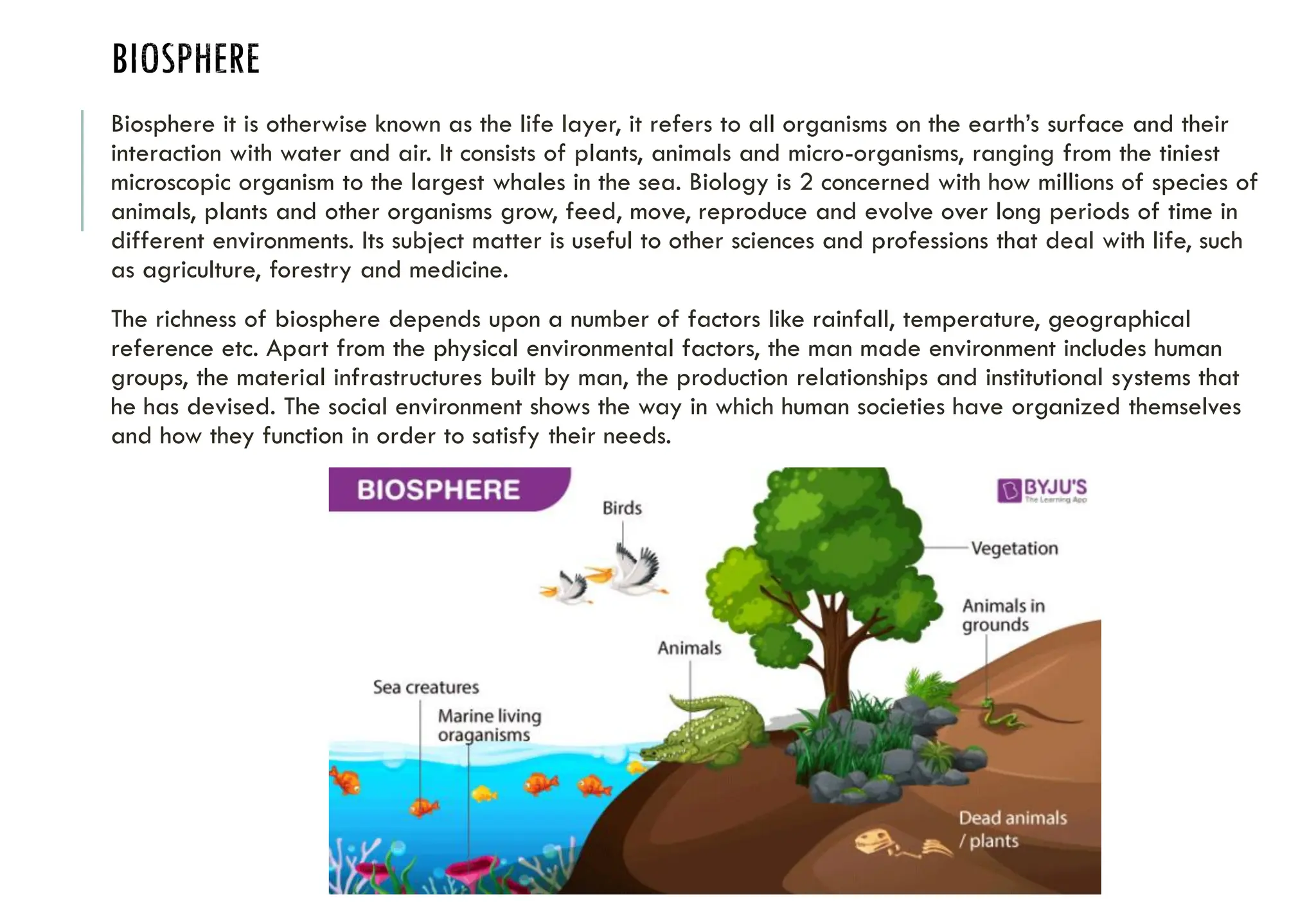
Biosphere it is otherwise known as the life layer, it refers to all organisms on the earth’s surface and their
interaction with water and air. It consists of plants, animals and micro-organisms, ranging from the tiniest
microscopic organism to the largest whales in the sea. Biology is 2 concerned with how millions of species of
animals, plants and other organisms grow, feed, move, reproduce and evolve over long periods of time in
different environments. Its subject matter is useful to other sciences and professions that deal with life, such
as agriculture, forestry and medicine.
The richness of biosphere depends upon a number of factors like rainfall, temperature, geographical
reference etc. Apart from the physical environmental factors, the man made environment includes human
groups, the material infrastructures built by man, the production relationships and institutional systems that
he has devised. The social environment shows the way in which human societies have organized themselves
and how they function in order to satisfy their needs.
ATMOSPHERE
Atmosphere is a thin layer which contains gases like oxygen, carbon dioxide etc.
and which protects the solid earth and human beings from the harmful radiations
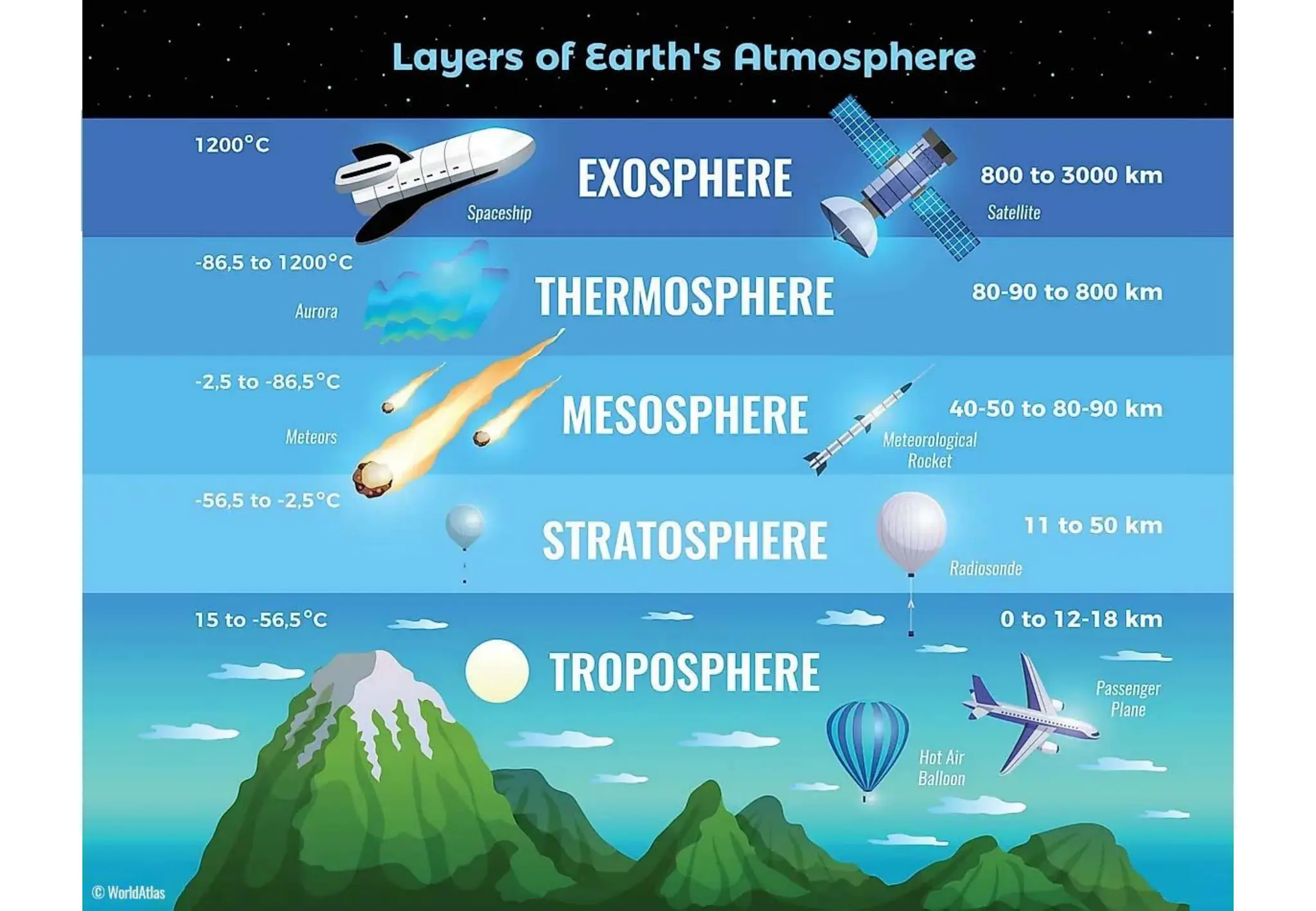
of the sun. There are five concentric layers within the atmosphere, which can be
differentiated on the basis of temperature and each layer has its own
characteristics.
The atmosphere implies the protective blanket of gases, surrounding the earth:
(a) It sustains life on the earth.
(b) It saves it from the hostile environment of outer space.
(c) It absorbs most of the cosmic rays from outer space and a major portion of
the electromagnetic radiation from the sun.
(d) It transmits only here ultraviolet, visible, near infrared radiation (300 to
2500 nm) and radio waves. (0.14 to 40 m) while filtering out tissue-
damaging ultra violate waves below about 300 nm. The atmosphere is
composed of nitrogen and oxygen. Besides, argon, carbon dioxide, and
trace gases.
STRUCTURE OF ATMOSPHERE
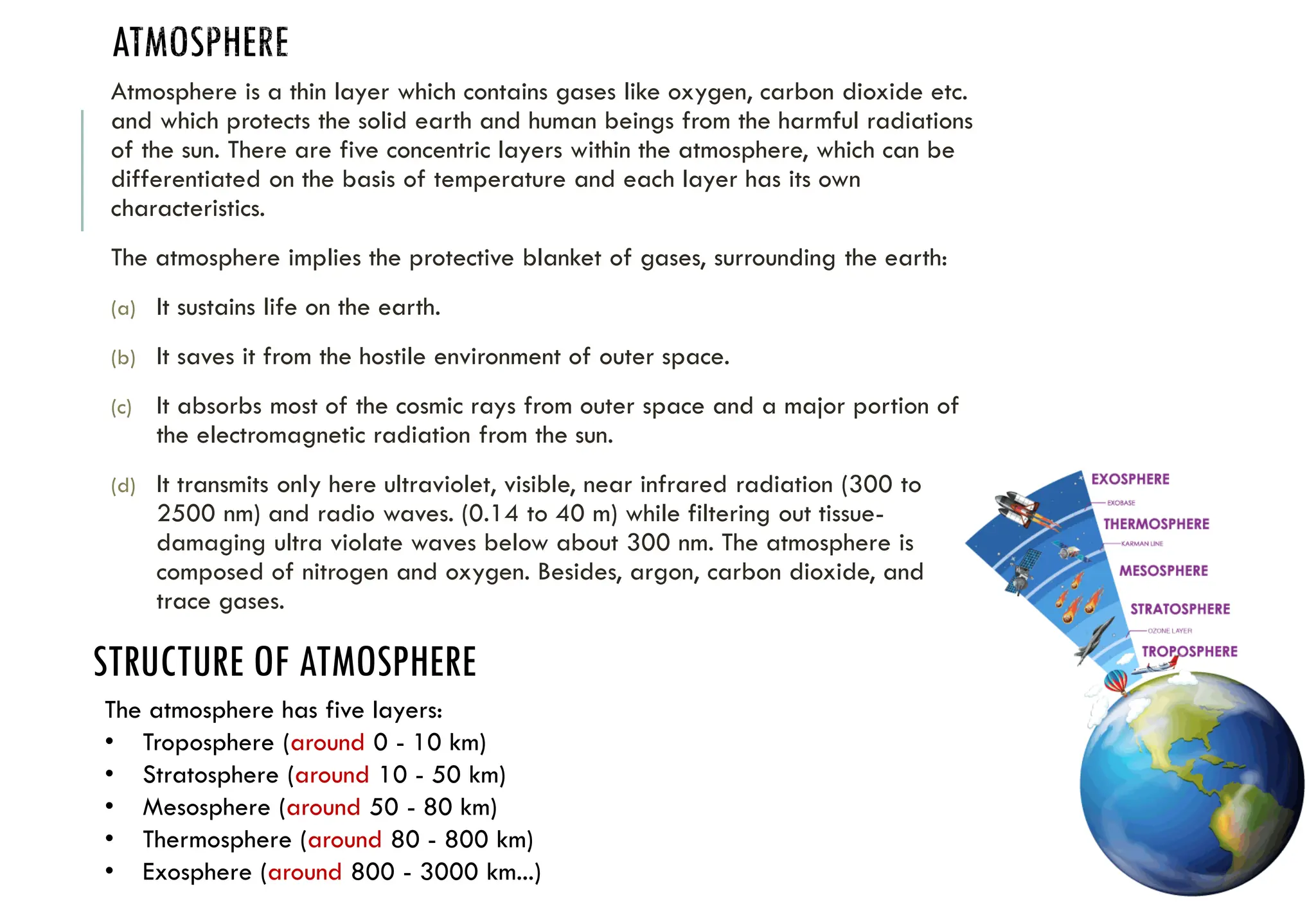
The atmosphere has five layers:
• Troposphere (around 0 - 10 km)
• Stratosphere (around 10 - 50 km)
• Mesosphere (around 50 - 80 km)
• Thermosphere (around 80 - 800 km)
• Exosphere (around 800 - 3000 km...)
TYPES OF ATMOSPHERE - ENVIRONMENTAL SCIENCE

TYPES OF ATMOSPHERE - ENVIRONMENTAL SCIENCE

  • 1.
    19CYM101T ENVIRONMENTAL SCIENCE UNIT-1 : •Environmental segments Structure of atmosphere • Composition of atmosphere • Air Pollution Sources • Effects–acid rain, ozone layer depletion and greenhouse effect • Control measures of air pollution AR.D.JENIFER NIVEDHA
  • 2.
    ENVIRONMENT The word Environmentis derived from the French word “Environ” which means “surrounding”. Our surrounding includes biotic factors like human beings, Plants, animals, microbes, etc and abiotic factors such as light, air, water, soil, etc. Environment is a complex of many variables, which surrounds man as well as the living organisms. Definitions of Environment : Environment is defined as, “the sum of total of all the living and non – living things around us influencing one another”. Environmental Science is the systematic, scientific study of the environment in combination with living organisms. Environment functions (1) Provides the supply of resources The environment offers resources for production. It includes both renewable and non-renewable resources. Examples: Wood for furniture, soil, land, etc. (2) Sustains life The environment includes the sun, soil, water, and air, which are essential for human life. It sustains life by providing genetic and biodiversity. (3) Assimilates waste Production and consumption activities generate waste. This occurs mostly in the form of garbage. The environment helps in getting rid of the garbage. (4) Enhances the quality of life Human beings enjoy the beauty of nature that includes rivers, mountains, deserts, etc.
  • 4.
    TYPES OF ENVIRONMENT Environmentcan be divided into two categories •Natural environment (biotic) • Man – environment ( Abiotic) Natural environment: Natural environment is characterized by natural components. All biotic (living) and abiotic components (non-living) are created through a natural process. Creation of these biotic and abiotic components do not require any human support. Example: soil, water, air, tree, radiations, noise, etc., Man – environment: Man is the most powerful environmental agent. He modifies the environment using modern technologies, according to his needs to a great extent. Thus the man-made environment is created by man. Example: House, road, schools, railway lines, parks, etc., ENVIRONMENTAL SEGMENTS: Environment consists of four segments. 1. Hydrosphere- Various water bodies present on the earth. 2. Lithosphere- Contains various types of soils and rocks on the earth. 3. Biosphere- Composed of all living organisms and their interactions with the environment. 4. Atmosphere- Blanket of gases surrounding the earth.
  • 5.
    HYDROSPHERE Hydrosphere includes allwater bodies such as lakes, ponds, rivers, streams and ocean etc. Hydrosphere functions in a cyclic nature, which is termed as hydrological cycle or water cycle. he Hydrosphere comprises all types of water resources oceans, seas, lakes, rivers, streams, reserviour, polar icecaps, glaciers, and ground water. (i) Nature 97% of the earth’s water supply is in the oceans, (ii) About 2% of the water resources is locked in the polar icecaps and glaciers. (iii) Only about 1% is available as fresh surface water-rivers, lakes streams, and ground water fit to be used for human consumption and other uses.
  • 6.
    LITHOSPHERE Lithosphere is theouter mantle of the solid earth. It consists of minerals occurring in the earth’s crusts and the soil e.g. minerals, organic matter, air and water. The lithosphere is the solid, outer part of Earth. The lithosphere includes the brittle upper portion of the mantle and the crust, the outermost layers of Earth's structure. It is bounded by the atmosphere above and the asthenosphere (another part of the upper mantle) below. The lithosphere covers the crust of the earth and is extended up to 100 km with mantle.
  • 7.
    BIOSPHERE Biosphere it isotherwise known as the life layer, it refers to all organisms on the earth’s surface and their interaction with water and air. It consists of plants, animals and micro-organisms, ranging from the tiniest microscopic organism to the largest whales in the sea. Biology is 2 concerned with how millions of species of animals, plants and other organisms grow, feed, move, reproduce and evolve over long periods of time in different environments. Its subject matter is useful to other sciences and professions that deal with life, such as agriculture, forestry and medicine. The richness of biosphere depends upon a number of factors like rainfall, temperature, geographical reference etc. Apart from the physical environmental factors, the man made environment includes human groups, the material infrastructures built by man, the production relationships and institutional systems that he has devised. The social environment shows the way in which human societies have organized themselves and how they function in order to satisfy their needs.
  • 8.
    ATMOSPHERE Atmosphere is athin layer which contains gases like oxygen, carbon dioxide etc. and which protects the solid earth and human beings from the harmful radiations of the sun. There are five concentric layers within the atmosphere, which can be differentiated on the basis of temperature and each layer has its own characteristics. The atmosphere implies the protective blanket of gases, surrounding the earth: (a) It sustains life on the earth. (b) It saves it from the hostile environment of outer space. (c) It absorbs most of the cosmic rays from outer space and a major portion of the electromagnetic radiation from the sun. (d) It transmits only here ultraviolet, visible, near infrared radiation (300 to 2500 nm) and radio waves. (0.14 to 40 m) while filtering out tissue- damaging ultra violate waves below about 300 nm. The atmosphere is composed of nitrogen and oxygen. Besides, argon, carbon dioxide, and trace gases. STRUCTURE OF ATMOSPHERE The atmosphere has five layers: • Troposphere (around 0 - 10 km) • Stratosphere (around 10 - 50 km) • Mesosphere (around 50 - 80 km) • Thermosphere (around 80 - 800 km) • Exosphere (around 800 - 3000 km...)