BACTERIAL
PHOTOSYNTHESIS
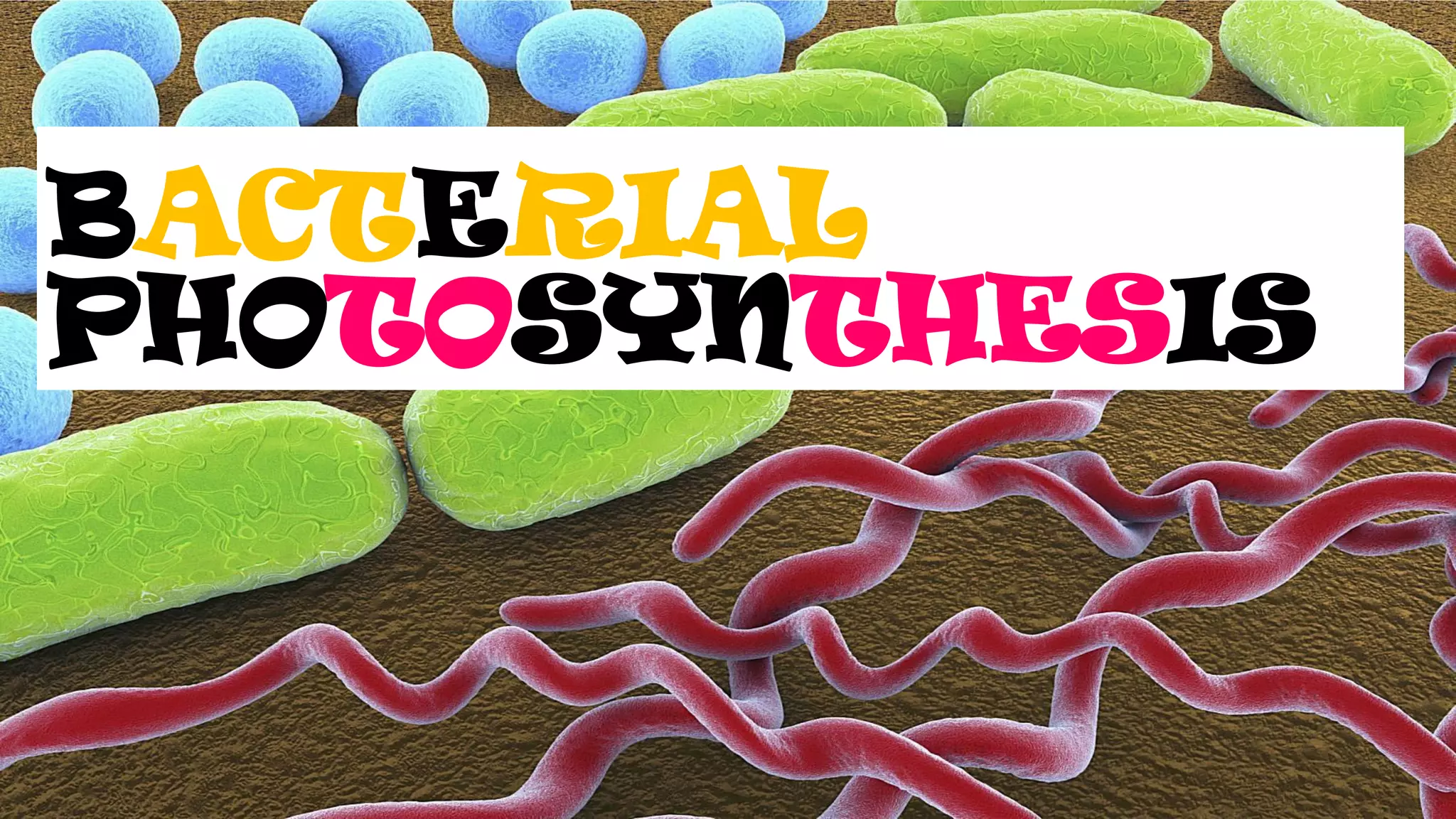
BACTERIAL
PHOTOSYNTHESIS
WHAT ARE
PHOTOSYNTHETIC
BACTERIA?
2
3
 They are special types of bacteria that contain light absorbing pigments and
reaction centers which make them capable of converting light energy into
chemical energy.
 Cyanobacteria contain chlorophyll while other forms of bacteria contain
bacteriochlorophyll.
 Bacteriochlorophyll resembles chlorophyll, it absorbs light of a longer
wavelength than chlorophyll.
 Bacteriochlorophyll a is the most common form of bacteriochlorophyll but
other forms include b, c, d, e, f and g.
4
BACTERIAL
PHOTOSYNTHESIS
Oxygenic
photosynthesis
Anoxygenic
Photosynthesis
5
 Cyanobacteria perform photosynthesis using water as an electron donor in a
similar manner to plants. This results in the production of oxygen and is known as
oxygenic photosynthesis.
 Bacteria that contain bacteriochlorophyll do not use water as an electron donor
and therefore do not produce oxygen. This is known as anoxygenic
photosynthesis.
6
7
Oxygenic photosynthetic bacteria
 They perform photosynthesis in a similar manner to plants.
 They contain light-harvesting pigments, absorb carbon dioxide, and release oxygen.
 Cyanobacteria or Cyanophyta are the only form of oxygenic photosynthetic bacteria known to
date.
 There are, however, several species of Cyanobacteria. They are often blue-green in color and are
thought to have contributed to the biodiversity on Earth by helping to convert the Earth’s early
oxygen-deficient atmosphere to an oxygen-rich environment.
 This transformation meant that most anaerobic organisms that thrived in the absence of oxygen
eventually became extinct and new organisms that were dependent on oxygen began to emerge.
8
9
 They consume carbon dioxide but do not release oxygen.
 These include
 Green and Purple bacteria
 Filamentous Anoxygenic Phototrophs (FAPs),
 Phototrophic Acidobacteria,
 Phototrophic Heliobacteria.
 Let’s look at the differences between these types of bacteria a little more closely.
Anoxygenic photosynthetic bacteria
10
The reason behind the name “PURPLE” “SULFUR” Bacteria is because of
the colour that is seen. These bacteria are seen purple to pink.
This is because of the presence of carotenoids in the bacterial
chlorophyll. The bacterial chlorophyll produces a pigment. This
pigmented element in their structure gives the purple bacteria a
predominant purple colour to them. When the bacterial colonies occur
in many numbers, purple to pink colour surface or water is observed
even in naked eyes.
11
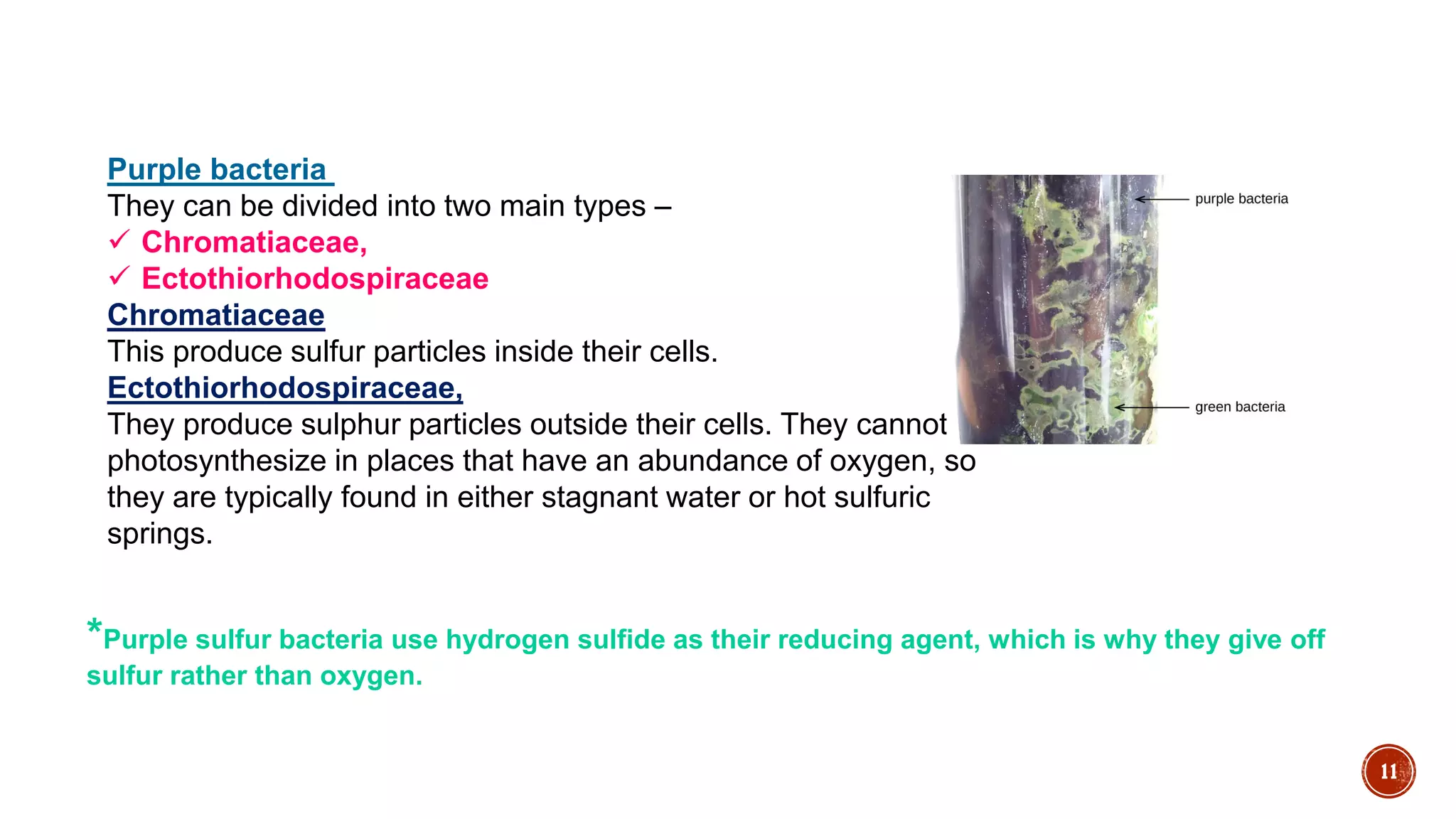
Purple bacteria
They can be divided into two main types –
 Chromatiaceae,
 Ectothiorhodospiraceae
Chromatiaceae
This produce sulfur particles inside their cells.
Ectothiorhodospiraceae,
They produce sulphur particles outside their cells. They cannot
photosynthesize in places that have an abundance of oxygen, so
they are typically found in either stagnant water or hot sulfuric
springs.
*Purple sulfur bacteria use hydrogen sulfide as their reducing agent, which is why they give off
sulfur rather than oxygen.
12
Carbon dioxide + hydrogen sulfide → simple sugars + water+Sulfur (Anoxic condition)
The purple sulfur bacteria take the carbon dioxide and oxidize the hydrogen sulfide ( which
produces a rotten egg odour),
it produces simple sugar molecules, water and sulfur.
Purple sulfur bacteria- Anoxygenic photosynthesis.
13
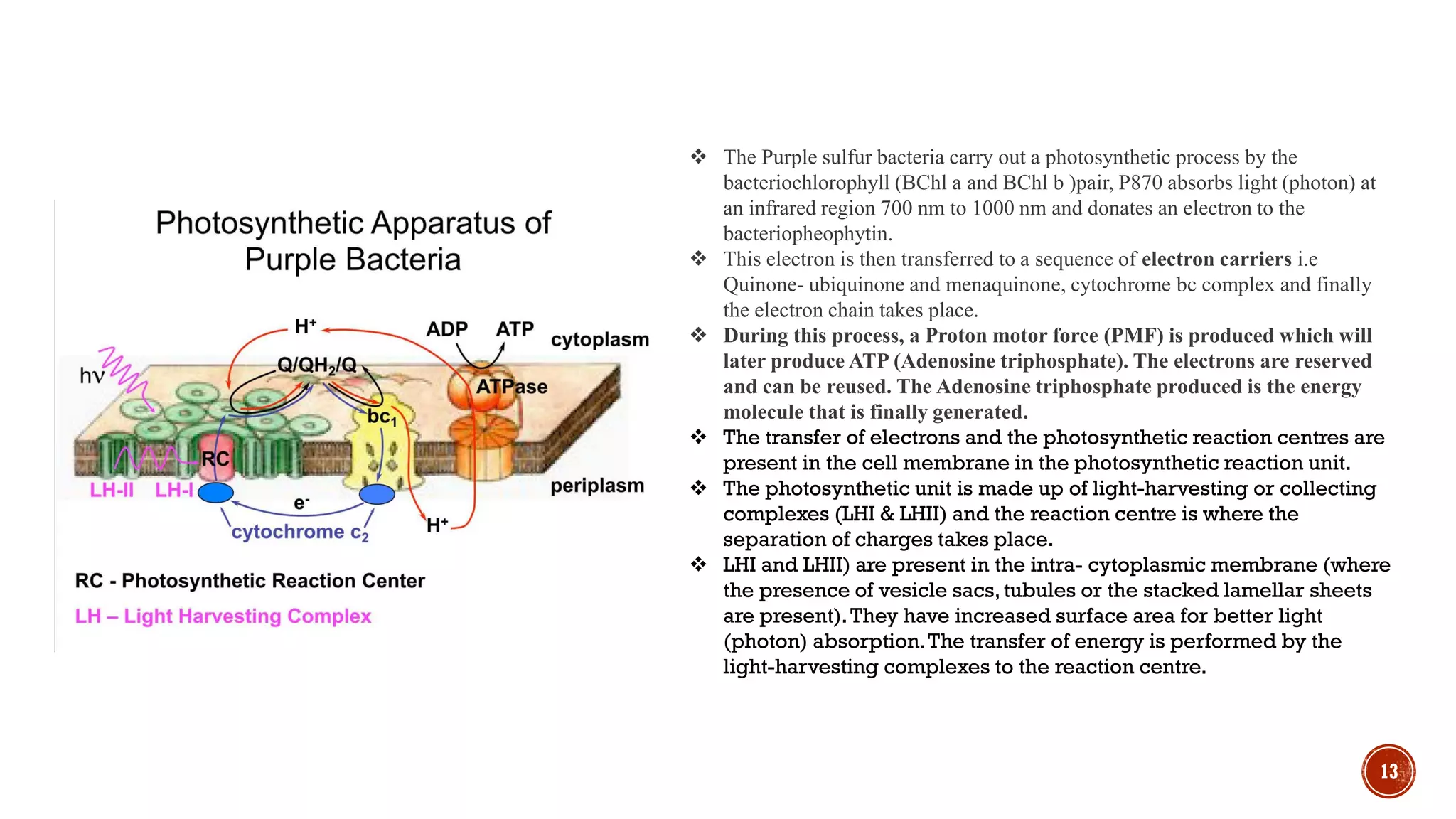
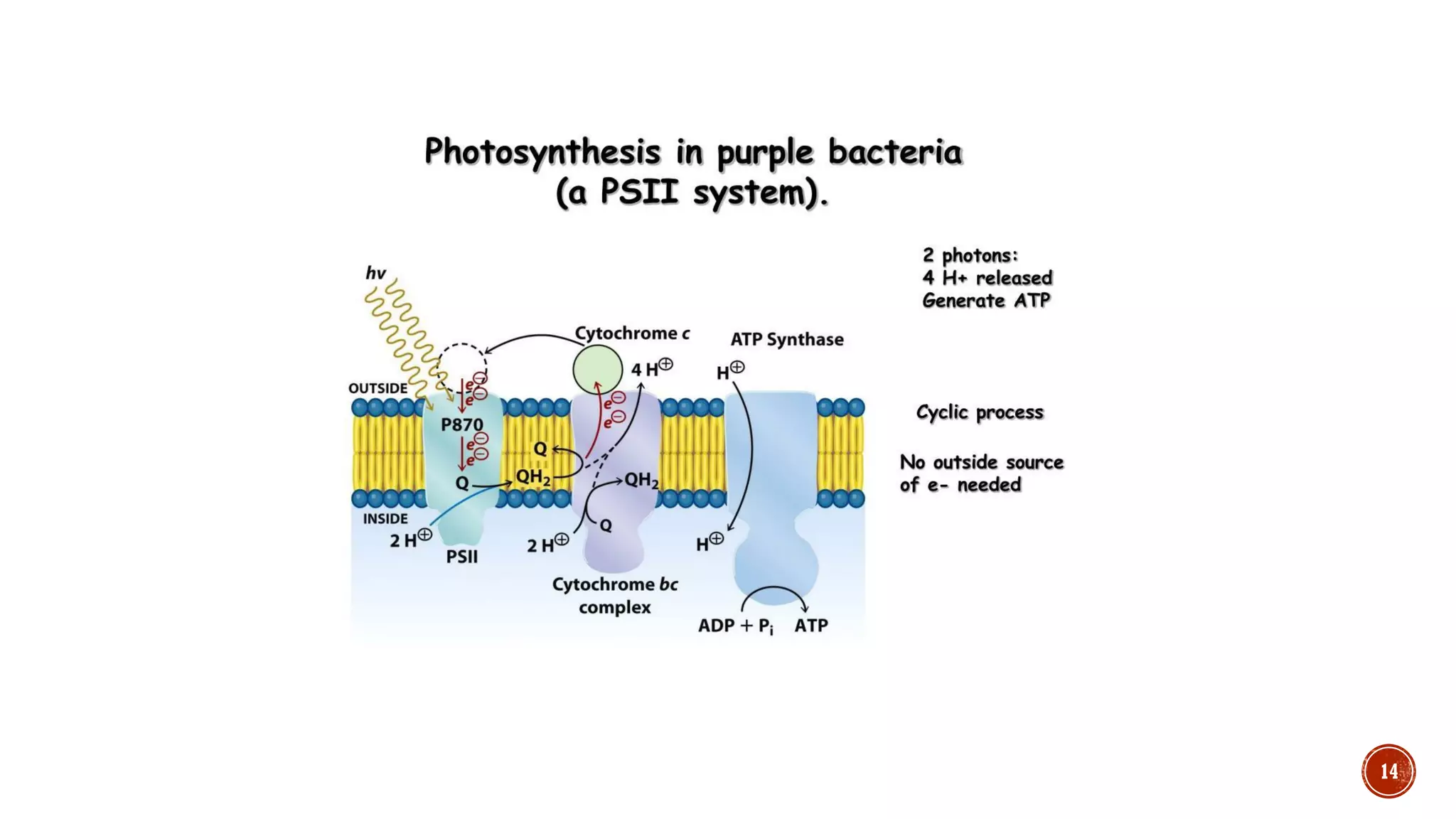
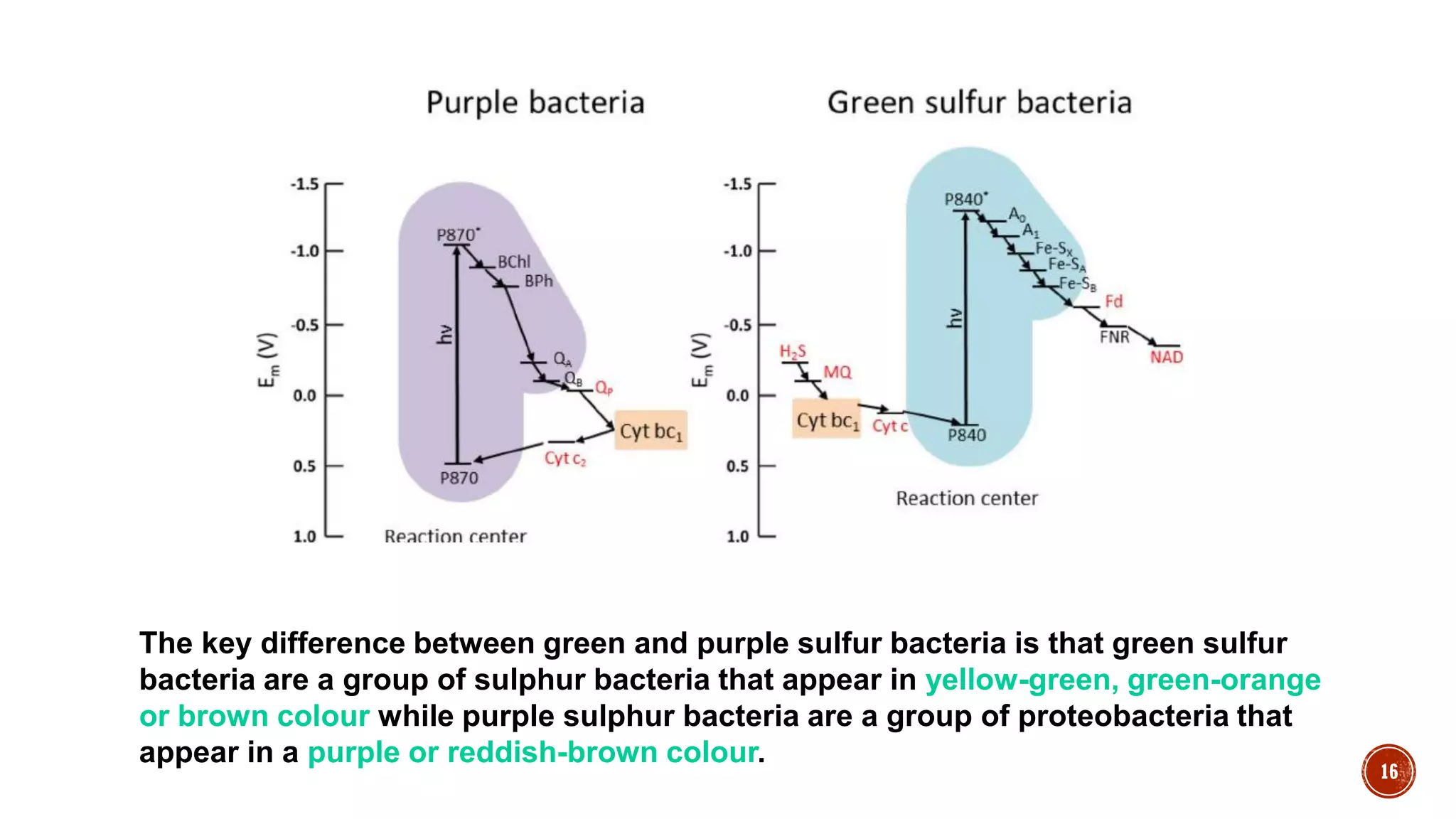
 The Purple sulfur bacteria carry out a photosynthetic process by the
bacteriochlorophyll (BChl a and BChl b )pair, P870 absorbs light (photon) at
an infrared region 700 nm to 1000 nm and donates an electron to the
bacteriopheophytin.
 This electron is then transferred to a sequence of electron carriers i.e
Quinone- ubiquinone and menaquinone, cytochrome bc complex and finally
the electron chain takes place.
 During this process, a Proton motor force (PMF) is produced which will
later produce ATP (Adenosine triphosphate). The electrons are reserved
and can be reused. The Adenosine triphosphate produced is the energy
molecule that is finally generated.
 The transfer of electrons and the photosynthetic reaction centres are
present in the cell membrane in the photosynthetic reaction unit.
 The photosynthetic unit is made up of light-harvesting or collecting
complexes (LHI & LHII) and the reaction centre is where the
separation of charges takes place.
 LHI and LHII) are present in the intra- cytoplasmic membrane (where
the presence of vesicle sacs,tubules or the stacked lamellar sheets
are present).They have increased surface area for better light
(photon) absorption.The transfer of energy is performed by the
light-harvesting complexes to the reaction centre.
14
15
Purple non-sulfur bacteria
 They do not release sulfur because instead of using hydrogen sulfide as its reducing
agent, they use hydrogen.
 While these bacteria can tolerate small amounts of sulfur, they tolerate much less than
purple or green sulfur bacteria, and too much hydrogen sulfide is toxic to them.
The purple non-sulfur bacteria can be Photoheterotrophs ( organisms that produce energy
with the help of light but they can not use carbon dioxide as primary C (carbon) source),
Photoautotrophs (The organisms that use light. carbon dioxide and can make their own food
with the aid of photosynthesis process), chemoheterotrophs( The organisms that get energy by
chemical substances and also consume different other organisms to grow).
The purple non-sulfur bacteria can not use sulfur from hydrogen sulfide or any other sulfur sources as the electron
donor for the carbon dioxide reduction. Hence, it is known as purple non-sulfur bacteria and also high sulfur
content is toxic for this group of bacteria. Eg Rhodopseudomonas, Rhodospirillum.
Purple photosynthetic bacteria, which are typical anoxygenic photosynthetic bacteria, are
classified into purple sulfur and purple non-sulfur bacteria. Purple sulfur bacteria use sulfide
and hydrogen as an electron donor, whereas purple non-sulfur bacteria utilize organic
compounds
16
The key difference between green and purple sulfur bacteria is that green sulfur
bacteria are a group of sulphur bacteria that appear in yellow-green, green-orange
or brown colour while purple sulphur bacteria are a group of proteobacteria that
appear in a purple or reddish-brown colour.
17
 They generally do not move (non-motile), and can
come in multiple shapes such as spheres, rods, and
spirals.
 These bacteria have been found deep in the ocean
near a black smoker in Mexico, where they survived off
the light of a thermal vent.
 They have also been found underwater near Indonesia.
 These bacteria can survive in extreme conditions, like
the other types of photosynthetic bacteria, suggesting
an evolutionary potential for life in places otherwise
thought uninhabitable.
Green sulfur bacteria
18
 Green sulfur bacteria are strict anaerobes that are capable of photosynthesis.
 Green sulfur bacteria absorb longer wavelengths of light than purple sulfate bacteria.
 Green sulfur-reducing bacteria also occur in anaerobic, sulfate-containing environments including
wetlands and overloaded facultative lagoons.
What do green sulfur bacteria do?
 Green sulfur bacteria oxidize inorganic sulfur compounds to use as electron donors for anaerobic
photosynthesis, specifically in carbon dioxide fixation.
 They usually prefer to utilize sulfide over other sulfur compounds as an electron donor, however they
can utilize thiosulfate or H2.
 Green sulfur bacteria exhibit activity from a Type-1 secretion system and a ferredoxin-NADP+
oxidoreductase to generate reduced iron, a trait that evolved to support nitrogen fixation.
 green sulfur bacteria use bacteriochlorophylls to perform photosynthesis.
19
Phototrophic Acidobacteria
commonly found in acidic habitats
 Acidobacteria belong to the kingdom Bacteria. As such, they are prokaryotic cells that lack a
true nucleus and membrane-bound organelles.
 This is an ancient group whose members lack the outer membrane.
 consists of a wide variety of organisms that can be found in different environments across the world
(metal-contaminated soils to hot springs, etc.).
 They found in a lot of soils and are fairly diverse.
 However, not much is known about this grouping of bacteria, because they are fairly new, the
first being found in 1991.
20
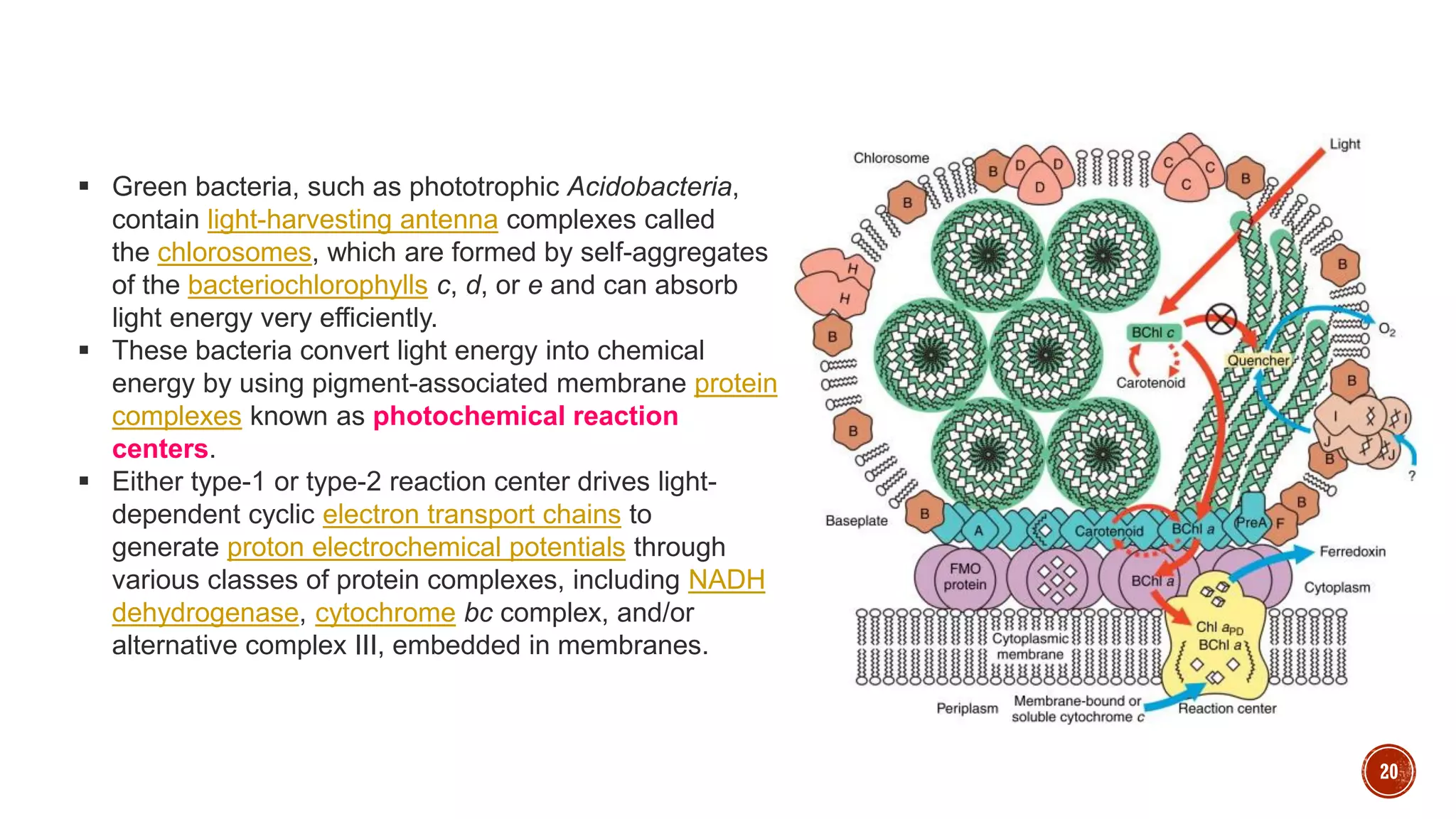
 Green bacteria, such as phototrophic Acidobacteria,
contain light-harvesting antenna complexes called
the chlorosomes, which are formed by self-aggregates
of the bacteriochlorophylls c, d, or e and can absorb
light energy very efficiently.
 These bacteria convert light energy into chemical
energy by using pigment-associated membrane protein
complexes known as photochemical reaction
centers.
 Either type-1 or type-2 reaction center drives light-
dependent cyclic electron transport chains to
generate proton electrochemical potentials through
various classes of protein complexes, including NADH
dehydrogenase, cytochrome bc complex, and/or
alternative complex III, embedded in membranes.
21
 Chlorosomes, the largest known photosynthetic antenna structures, are literally sacs of
chlorophyll.
 Chlorosomes are the light-harvesting organelles.
 The size and light-harvesting efficiency of chlorosomes allow green bacteria to thrive at
much lower light intensities than all other phototrophs.
 each cell contains 200–250 chlorosomes.
 do not contain quinones,
 BChl dimer is the basic assembly unit.
 The Qy absorption maximum of the BChl c monomers (∼667 nm)
 A protein–lipid monolayer envelope containing a high proportion of glycolipids surrounds
each chlorosome.
 CsmA is an abundant, structurally conserved, low-molecular-weight protein that binds a
single BChl a molecule as well as one or more carotenoids.
 The CsmA molecules form an oligomeric, paracrystalline array known as the baseplate,
which serves to join the chlorosome to the underlying BChl-a-binding, Fenna–Matthews–
Olson (FMO) protein.
 chlorosome membrane (Csm)
 The Fe–S clusters of a CsmI–CsmJ heterotetramer appear to play an important role in
reactivating excitation energy transfer by reducing the quenching species within the
chlorosome after oxidation of chlorobiumquinone when cells have been exposed to
oxygen.
22
Phototrophic Heliobacteria
 Also found in soils, especially water-saturated fields, like rice paddies.
 They use a particular type of bacteriochlorophyll, labelled g, which differentiates them from
other types of photosynthetic bacteria.
 They are photoheterotrophs, which means that they cannot use carbon dioxide as their
primary source of carbon.
 Heliobacteria are strictly anaerobic, anoxygenic phototrophic bacteria.
 have a Gram-positive cell structure and are capable of producing heat-
resistant endospores.
 Phototrophy in heliobacteria is carried out using an FeS-type (type-I) homodimeric
reaction centre that represents the simplest known photosynthetic apparatus.
 Heliobacteria and green-sulfur bacteria employ a similar contingent of electron
transfer cofactors, the polypeptides that bind the cofactors are significantly different.
23
 Direct absorption of light or resonance energy
transfer from surrounding light-harvesting
complexes excites special-pair chlorophylls in
photosystem I.
 Excited-state electrons move rapidly within the
reaction center from these chlorophylls through two
accessory chlorophylls to an iron-sulfur center.
 The pathway includes a quinone in cyanobacteria
and chloroplasts.
 Electrons then move to the iron-sulfur center of a
subunit on the cytoplasmic side of the membrane.
 The subsequent events in green sulfur bacteria
and heliobacteria include electron transfer by
the soluble protein ferredoxin to an NAD reductase,
followed by transfer by a lipid intermediate
to cytochrome bc complex, and then back to the
reaction center via a cytochrome c.
24
Green and red filamentous anoxygenic
phototrophs (FAPs)
 Previously called green non-sulfur bacteria, until it was discovered that they
could also use sulfur components to work through their processes.
 This type of bacteria uses filaments to move around.
 The color depends on the type of bacteriochlorophyll the particular organism
uses.
 What is also unique about this form of bacteria is that it can either be
 photoautotrophic, meaning they create their own energy through the sun’s
energy;
 chemoorganotropic, which requires a source of carbon; or
photoheterotrophic, which, as explained above, means they don’t use carbon
dioxide for their carbon source.
25
Planpurple sulphur bacteria photosynthesis
- Bing imagest
Photosynthesis in Bacteria
(photosynthesiseducation.com)
Purple Sulfur Bacteria
Photosynthesis:Why,When,How And
Detailed Facts (lambdageeks.com)
purple sulphur bacteria
photosynthesis - Bing ima
THANK YOU
THANK YOU

BACTERIAL PHOTOSYNTHESIS

  • 1.
  • 2.
  • 3.
    3  They arespecial types of bacteria that contain light absorbing pigments and reaction centers which make them capable of converting light energy into chemical energy.  Cyanobacteria contain chlorophyll while other forms of bacteria contain bacteriochlorophyll.  Bacteriochlorophyll resembles chlorophyll, it absorbs light of a longer wavelength than chlorophyll.  Bacteriochlorophyll a is the most common form of bacteriochlorophyll but other forms include b, c, d, e, f and g.
  • 4.
  • 5.
    5  Cyanobacteria performphotosynthesis using water as an electron donor in a similar manner to plants. This results in the production of oxygen and is known as oxygenic photosynthesis.  Bacteria that contain bacteriochlorophyll do not use water as an electron donor and therefore do not produce oxygen. This is known as anoxygenic photosynthesis.
  • 6.
  • 7.
    7 Oxygenic photosynthetic bacteria They perform photosynthesis in a similar manner to plants.  They contain light-harvesting pigments, absorb carbon dioxide, and release oxygen.  Cyanobacteria or Cyanophyta are the only form of oxygenic photosynthetic bacteria known to date.  There are, however, several species of Cyanobacteria. They are often blue-green in color and are thought to have contributed to the biodiversity on Earth by helping to convert the Earth’s early oxygen-deficient atmosphere to an oxygen-rich environment.  This transformation meant that most anaerobic organisms that thrived in the absence of oxygen eventually became extinct and new organisms that were dependent on oxygen began to emerge.
  • 8.
  • 9.
    9  They consumecarbon dioxide but do not release oxygen.  These include  Green and Purple bacteria  Filamentous Anoxygenic Phototrophs (FAPs),  Phototrophic Acidobacteria,  Phototrophic Heliobacteria.  Let’s look at the differences between these types of bacteria a little more closely. Anoxygenic photosynthetic bacteria
  • 10.
    10 The reason behindthe name “PURPLE” “SULFUR” Bacteria is because of the colour that is seen. These bacteria are seen purple to pink. This is because of the presence of carotenoids in the bacterial chlorophyll. The bacterial chlorophyll produces a pigment. This pigmented element in their structure gives the purple bacteria a predominant purple colour to them. When the bacterial colonies occur in many numbers, purple to pink colour surface or water is observed even in naked eyes.
  • 11.
    11 Purple bacteria They canbe divided into two main types –  Chromatiaceae,  Ectothiorhodospiraceae Chromatiaceae This produce sulfur particles inside their cells. Ectothiorhodospiraceae, They produce sulphur particles outside their cells. They cannot photosynthesize in places that have an abundance of oxygen, so they are typically found in either stagnant water or hot sulfuric springs. *Purple sulfur bacteria use hydrogen sulfide as their reducing agent, which is why they give off sulfur rather than oxygen.
  • 12.
    12 Carbon dioxide +hydrogen sulfide → simple sugars + water+Sulfur (Anoxic condition) The purple sulfur bacteria take the carbon dioxide and oxidize the hydrogen sulfide ( which produces a rotten egg odour), it produces simple sugar molecules, water and sulfur. Purple sulfur bacteria- Anoxygenic photosynthesis.
  • 13.
    13  The Purplesulfur bacteria carry out a photosynthetic process by the bacteriochlorophyll (BChl a and BChl b )pair, P870 absorbs light (photon) at an infrared region 700 nm to 1000 nm and donates an electron to the bacteriopheophytin.  This electron is then transferred to a sequence of electron carriers i.e Quinone- ubiquinone and menaquinone, cytochrome bc complex and finally the electron chain takes place.  During this process, a Proton motor force (PMF) is produced which will later produce ATP (Adenosine triphosphate). The electrons are reserved and can be reused. The Adenosine triphosphate produced is the energy molecule that is finally generated.  The transfer of electrons and the photosynthetic reaction centres are present in the cell membrane in the photosynthetic reaction unit.  The photosynthetic unit is made up of light-harvesting or collecting complexes (LHI & LHII) and the reaction centre is where the separation of charges takes place.  LHI and LHII) are present in the intra- cytoplasmic membrane (where the presence of vesicle sacs,tubules or the stacked lamellar sheets are present).They have increased surface area for better light (photon) absorption.The transfer of energy is performed by the light-harvesting complexes to the reaction centre.
  • 14.
  • 15.
    15 Purple non-sulfur bacteria They do not release sulfur because instead of using hydrogen sulfide as its reducing agent, they use hydrogen.  While these bacteria can tolerate small amounts of sulfur, they tolerate much less than purple or green sulfur bacteria, and too much hydrogen sulfide is toxic to them. The purple non-sulfur bacteria can be Photoheterotrophs ( organisms that produce energy with the help of light but they can not use carbon dioxide as primary C (carbon) source), Photoautotrophs (The organisms that use light. carbon dioxide and can make their own food with the aid of photosynthesis process), chemoheterotrophs( The organisms that get energy by chemical substances and also consume different other organisms to grow). The purple non-sulfur bacteria can not use sulfur from hydrogen sulfide or any other sulfur sources as the electron donor for the carbon dioxide reduction. Hence, it is known as purple non-sulfur bacteria and also high sulfur content is toxic for this group of bacteria. Eg Rhodopseudomonas, Rhodospirillum. Purple photosynthetic bacteria, which are typical anoxygenic photosynthetic bacteria, are classified into purple sulfur and purple non-sulfur bacteria. Purple sulfur bacteria use sulfide and hydrogen as an electron donor, whereas purple non-sulfur bacteria utilize organic compounds
  • 16.
    16 The key differencebetween green and purple sulfur bacteria is that green sulfur bacteria are a group of sulphur bacteria that appear in yellow-green, green-orange or brown colour while purple sulphur bacteria are a group of proteobacteria that appear in a purple or reddish-brown colour.
  • 17.
    17  They generallydo not move (non-motile), and can come in multiple shapes such as spheres, rods, and spirals.  These bacteria have been found deep in the ocean near a black smoker in Mexico, where they survived off the light of a thermal vent.  They have also been found underwater near Indonesia.  These bacteria can survive in extreme conditions, like the other types of photosynthetic bacteria, suggesting an evolutionary potential for life in places otherwise thought uninhabitable. Green sulfur bacteria
  • 18.
    18  Green sulfurbacteria are strict anaerobes that are capable of photosynthesis.  Green sulfur bacteria absorb longer wavelengths of light than purple sulfate bacteria.  Green sulfur-reducing bacteria also occur in anaerobic, sulfate-containing environments including wetlands and overloaded facultative lagoons. What do green sulfur bacteria do?  Green sulfur bacteria oxidize inorganic sulfur compounds to use as electron donors for anaerobic photosynthesis, specifically in carbon dioxide fixation.  They usually prefer to utilize sulfide over other sulfur compounds as an electron donor, however they can utilize thiosulfate or H2.  Green sulfur bacteria exhibit activity from a Type-1 secretion system and a ferredoxin-NADP+ oxidoreductase to generate reduced iron, a trait that evolved to support nitrogen fixation.  green sulfur bacteria use bacteriochlorophylls to perform photosynthesis.
  • 19.
    19 Phototrophic Acidobacteria commonly foundin acidic habitats  Acidobacteria belong to the kingdom Bacteria. As such, they are prokaryotic cells that lack a true nucleus and membrane-bound organelles.  This is an ancient group whose members lack the outer membrane.  consists of a wide variety of organisms that can be found in different environments across the world (metal-contaminated soils to hot springs, etc.).  They found in a lot of soils and are fairly diverse.  However, not much is known about this grouping of bacteria, because they are fairly new, the first being found in 1991.
  • 20.
    20  Green bacteria,such as phototrophic Acidobacteria, contain light-harvesting antenna complexes called the chlorosomes, which are formed by self-aggregates of the bacteriochlorophylls c, d, or e and can absorb light energy very efficiently.  These bacteria convert light energy into chemical energy by using pigment-associated membrane protein complexes known as photochemical reaction centers.  Either type-1 or type-2 reaction center drives light- dependent cyclic electron transport chains to generate proton electrochemical potentials through various classes of protein complexes, including NADH dehydrogenase, cytochrome bc complex, and/or alternative complex III, embedded in membranes.
  • 21.
    21  Chlorosomes, thelargest known photosynthetic antenna structures, are literally sacs of chlorophyll.  Chlorosomes are the light-harvesting organelles.  The size and light-harvesting efficiency of chlorosomes allow green bacteria to thrive at much lower light intensities than all other phototrophs.  each cell contains 200–250 chlorosomes.  do not contain quinones,  BChl dimer is the basic assembly unit.  The Qy absorption maximum of the BChl c monomers (∼667 nm)  A protein–lipid monolayer envelope containing a high proportion of glycolipids surrounds each chlorosome.  CsmA is an abundant, structurally conserved, low-molecular-weight protein that binds a single BChl a molecule as well as one or more carotenoids.  The CsmA molecules form an oligomeric, paracrystalline array known as the baseplate, which serves to join the chlorosome to the underlying BChl-a-binding, Fenna–Matthews– Olson (FMO) protein.  chlorosome membrane (Csm)  The Fe–S clusters of a CsmI–CsmJ heterotetramer appear to play an important role in reactivating excitation energy transfer by reducing the quenching species within the chlorosome after oxidation of chlorobiumquinone when cells have been exposed to oxygen.
  • 22.
    22 Phototrophic Heliobacteria  Alsofound in soils, especially water-saturated fields, like rice paddies.  They use a particular type of bacteriochlorophyll, labelled g, which differentiates them from other types of photosynthetic bacteria.  They are photoheterotrophs, which means that they cannot use carbon dioxide as their primary source of carbon.  Heliobacteria are strictly anaerobic, anoxygenic phototrophic bacteria.  have a Gram-positive cell structure and are capable of producing heat- resistant endospores.  Phototrophy in heliobacteria is carried out using an FeS-type (type-I) homodimeric reaction centre that represents the simplest known photosynthetic apparatus.  Heliobacteria and green-sulfur bacteria employ a similar contingent of electron transfer cofactors, the polypeptides that bind the cofactors are significantly different.
  • 23.
    23  Direct absorptionof light or resonance energy transfer from surrounding light-harvesting complexes excites special-pair chlorophylls in photosystem I.  Excited-state electrons move rapidly within the reaction center from these chlorophylls through two accessory chlorophylls to an iron-sulfur center.  The pathway includes a quinone in cyanobacteria and chloroplasts.  Electrons then move to the iron-sulfur center of a subunit on the cytoplasmic side of the membrane.  The subsequent events in green sulfur bacteria and heliobacteria include electron transfer by the soluble protein ferredoxin to an NAD reductase, followed by transfer by a lipid intermediate to cytochrome bc complex, and then back to the reaction center via a cytochrome c.
  • 24.
    24 Green and redfilamentous anoxygenic phototrophs (FAPs)  Previously called green non-sulfur bacteria, until it was discovered that they could also use sulfur components to work through their processes.  This type of bacteria uses filaments to move around.  The color depends on the type of bacteriochlorophyll the particular organism uses.  What is also unique about this form of bacteria is that it can either be  photoautotrophic, meaning they create their own energy through the sun’s energy;  chemoorganotropic, which requires a source of carbon; or photoheterotrophic, which, as explained above, means they don’t use carbon dioxide for their carbon source.
  • 25.
    25 Planpurple sulphur bacteriaphotosynthesis - Bing imagest Photosynthesis in Bacteria (photosynthesiseducation.com) Purple Sulfur Bacteria Photosynthesis:Why,When,How And Detailed Facts (lambdageeks.com) purple sulphur bacteria photosynthesis - Bing ima
  • 26.