HYPHENS AND 
DASHES 
By Haley Adams and Niki Voulgaris
Differences between Hyphens and Dashes 
Hyphens- 
• Shorter in length 
• Connect word parts 
• Used to make compound 
numbers 
• Avoid awkward letter 
combinations 
• Join prefixes, suffixes and 
noun phrases 
Dashes– 
• Double in length (when typing 
put two hyphens together to 
make a dash) 
• Indicates a break or 
interruption in thought 
• Used as substitute for small 
phrases 
• Used a substitute for 
parentheses and commas
Hyphens 
•Join two or more words, serving as a single 
adjective BEFORE the noun. 
• Ex: well-known author Ex: Chocolate-covered peanuts 
•After the noun the compounds are NOT 
hyphenated 
• Ex: The author is well known Ex: The peanuts were chocolate 
covered
Hyphens 
•Used for compound numbers 
• Ex: thirty-two, twenty-four 
•To avoid awkward combination of letters 
• Ex: re-sign the petition (vs. resign from office)
Hyphens 
•Used with most prefixes to avoid making a 
compound 
• Ex: ex-husband, anti-American, pre-civil war 
• Used with letters and the suffix “elect” 
• Ex: T-shirt Ex: mayor-elect 
•Used to complete a noun phrase 
• Ex: on-the-fly, out-of-date
Dashes 
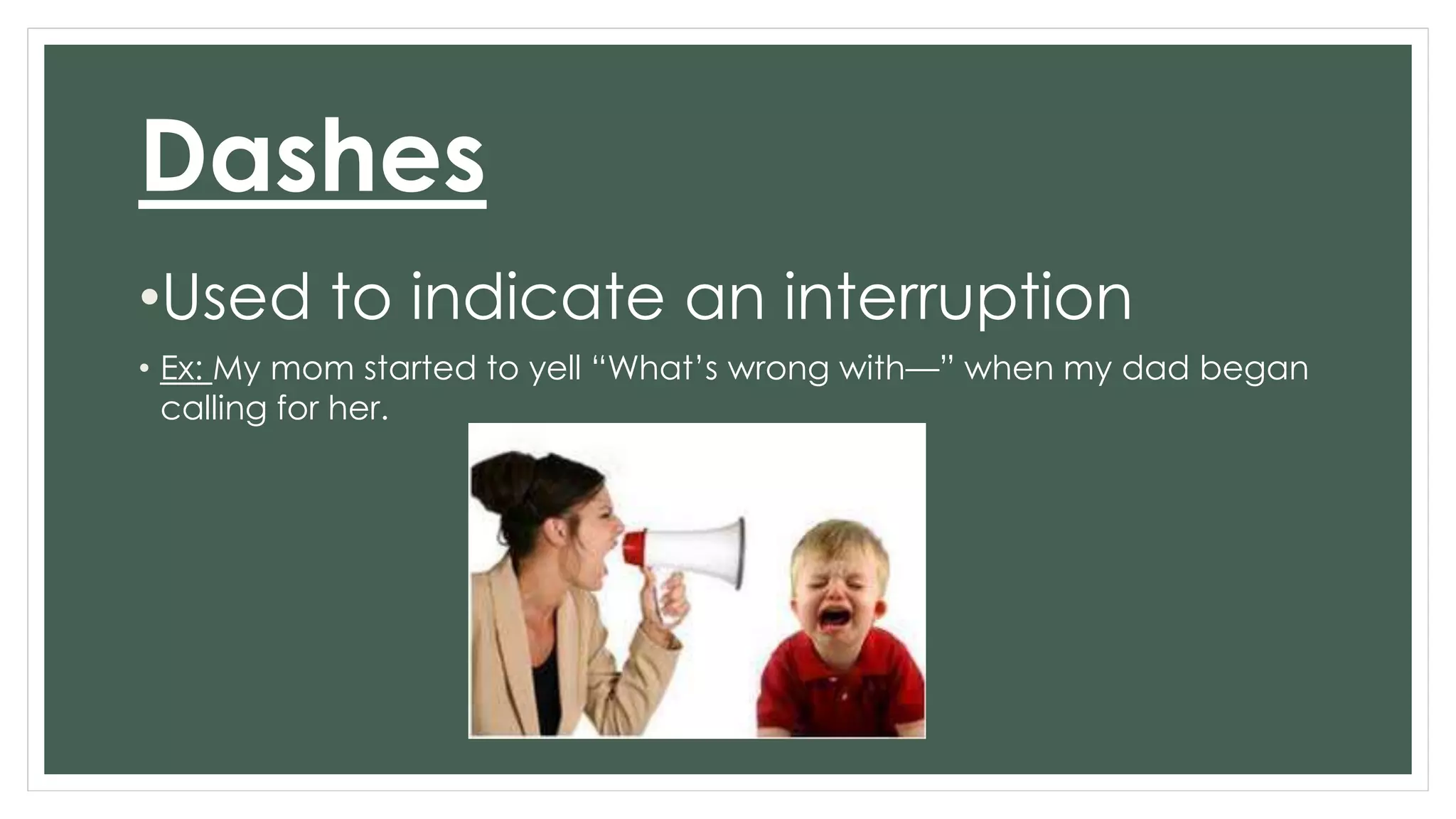
•Used to indicate an interruption 
• Ex: My mom started to yell “What’s wrong with—” when my dad began 
calling for her.
Dashes 
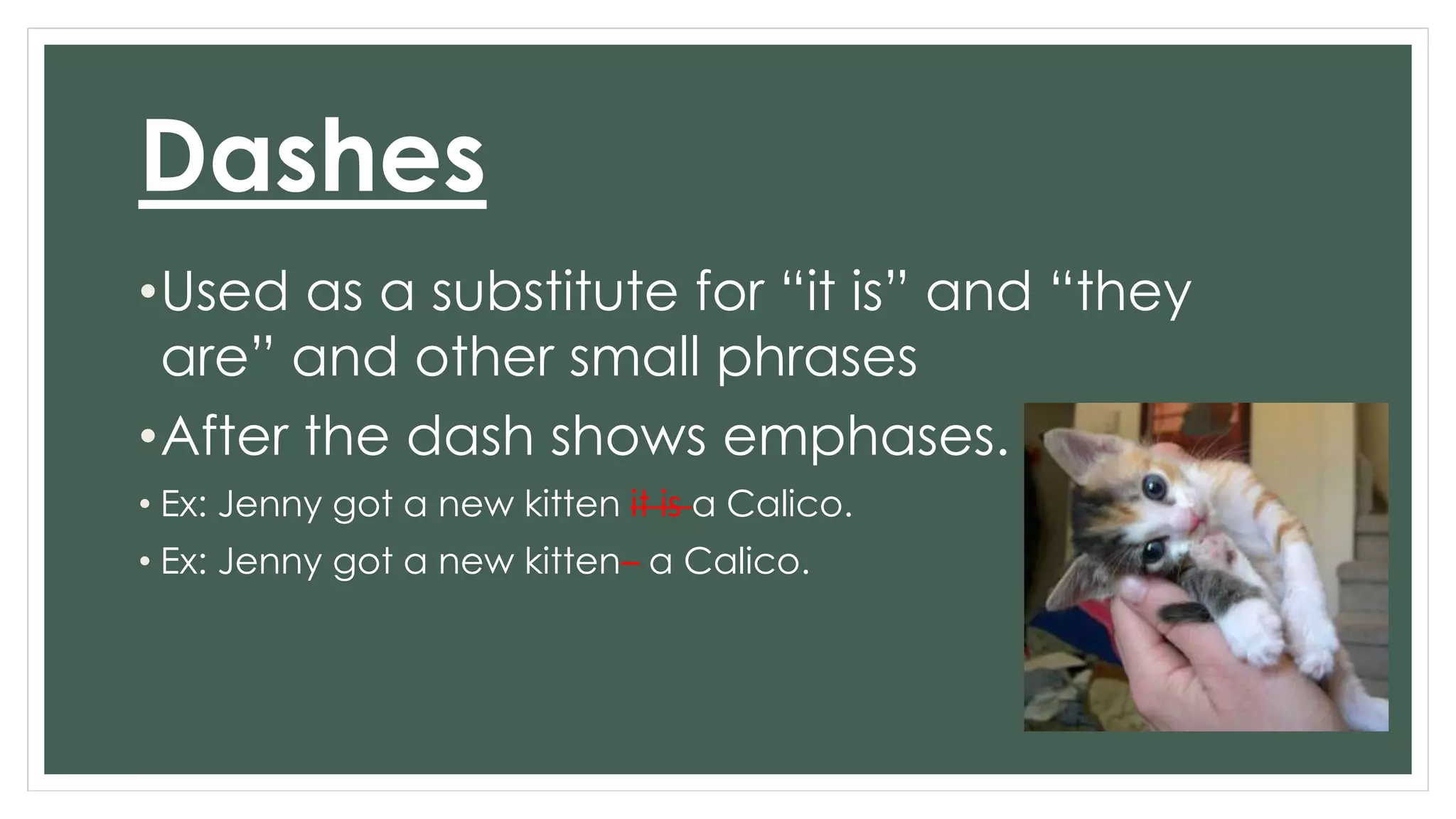
•Used as a substitute for “it is” and “they 
are” and other small phrases 
•After the dash shows emphases. 
• Ex: Jenny got a new kitten it is a Calico. 
• Ex: Jenny got a new kitten– a Calico.
Dashes 
•Used as a substitute for parentheses and 
commas. 
• Ex: I think dogs are better than cats (they come when you call, and are 
a mans best friend) but my mom still won’t budge and get us a dog. 
• Ex: I think dogs are better than cats– they come when you call, and are 
a mans best friend– but my mom still won’t budge and get us a dog.

Hyphens and dashes

  • 1.
    HYPHENS AND DASHES By Haley Adams and Niki Voulgaris
  • 2.
    Differences between Hyphensand Dashes Hyphens- • Shorter in length • Connect word parts • Used to make compound numbers • Avoid awkward letter combinations • Join prefixes, suffixes and noun phrases Dashes– • Double in length (when typing put two hyphens together to make a dash) • Indicates a break or interruption in thought • Used as substitute for small phrases • Used a substitute for parentheses and commas
  • 3.
    Hyphens •Join twoor more words, serving as a single adjective BEFORE the noun. • Ex: well-known author Ex: Chocolate-covered peanuts •After the noun the compounds are NOT hyphenated • Ex: The author is well known Ex: The peanuts were chocolate covered
  • 4.
    Hyphens •Used forcompound numbers • Ex: thirty-two, twenty-four •To avoid awkward combination of letters • Ex: re-sign the petition (vs. resign from office)
  • 5.
    Hyphens •Used withmost prefixes to avoid making a compound • Ex: ex-husband, anti-American, pre-civil war • Used with letters and the suffix “elect” • Ex: T-shirt Ex: mayor-elect •Used to complete a noun phrase • Ex: on-the-fly, out-of-date
  • 6.
    Dashes •Used toindicate an interruption • Ex: My mom started to yell “What’s wrong with—” when my dad began calling for her.
  • 7.
    Dashes •Used asa substitute for “it is” and “they are” and other small phrases •After the dash shows emphases. • Ex: Jenny got a new kitten it is a Calico. • Ex: Jenny got a new kitten– a Calico.
  • 8.
    Dashes •Used asa substitute for parentheses and commas. • Ex: I think dogs are better than cats (they come when you call, and are a mans best friend) but my mom still won’t budge and get us a dog. • Ex: I think dogs are better than cats– they come when you call, and are a mans best friend– but my mom still won’t budge and get us a dog.