PRESENTATION ON:

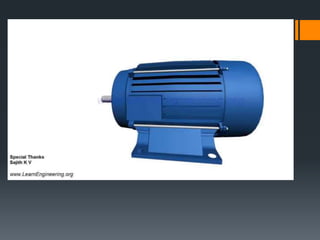
INDUCTION MOTOR
PRESENTING BY:
MUHAMMAD WAQAR
ELECTRIC MOTOR
An electric motor is an electromechanical device
that converts electrical energy to mechanical energy.

The mechanical energy can be used to perform
work such as rotating a pump impeller, fan, blower,
driving a compressor, lifting materials etc.
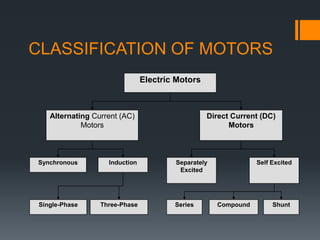
CLASSIFICATION OF MOTORS
Electric Motors

Alternating Current (AC)
Motors

Synchronous

Induction

Single-Phase

Three-Phase

Direct Current (DC)
Motors

Separately
Excited

Series

Self Excited

Compound

Shunt
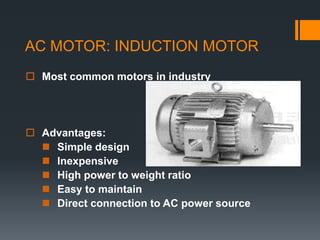
AC MOTOR: INDUCTION MOTOR
 Most common motors in industry

 Advantages:
 Simple design
 Inexpensive
 High power to weight ratio
 Easy to maintain
 Direct connection to AC power source
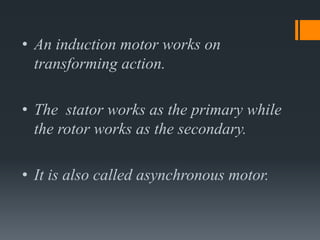
• An induction motor works on
transforming action.
• The stator works as the primary while
the rotor works as the secondary.
• It is also called asynchronous motor.
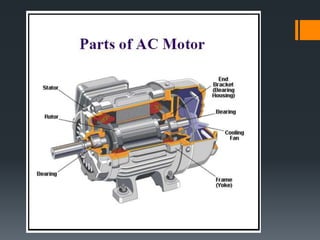
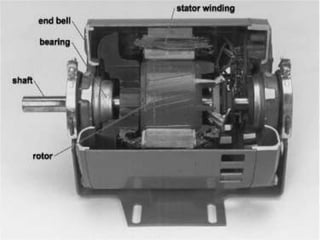
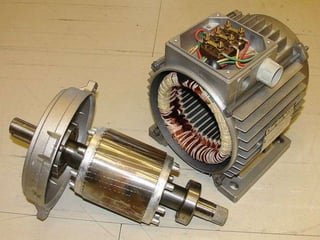
• It consists of two parts:
1. Stator - It is the stationary part of the
motor.
2. Rotor - It is the rotating part of the
motor.
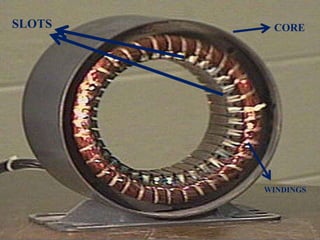
SLOTS

CORE

WINDINGS
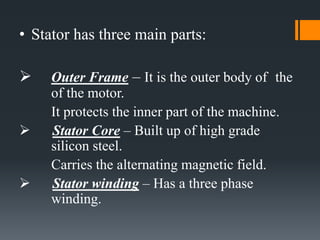
• Stator has three main parts:





Outer Frame – It is the outer body of the
of the motor.
It protects the inner part of the machine.
Stator Core – Built up of high grade
silicon steel.
Carries the alternating magnetic field.
Stator winding – Has a three phase
winding.
• There are two types of rotors which are
employed in 3 – phase induction motor.
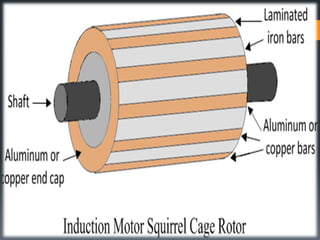
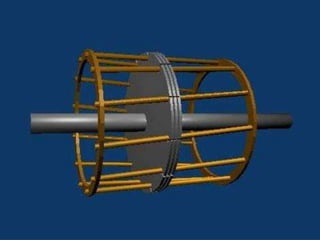
 Squirrel

 Phase

Cage Rotor.

Wound/ Slip Ring Rotor.
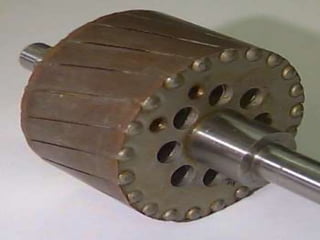
• It consists of a laminated cylindrical core
having semi closed circular slots at the outer
periphery.
• Copper or aluminum bar conductors are placed
in these slots and short circuited at each end by
copper or aluminum rings called short
circuiting rings.
• The rotor winding is permanently short
circuited and it is not possible to add any
external resistance.
• The rotor slots are not parallel to the shaft but
skewed to –

 Reduce humming .
Provide smoother torque for different positions
of rotor.
Reduce magnetic locking of stator and rotor.
PHASE
WOUND
ROTOR
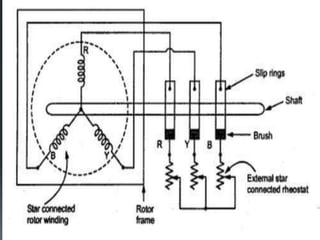
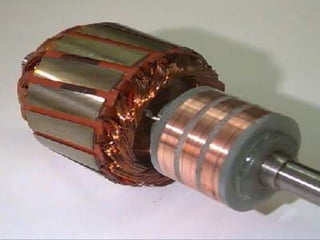
• It is also called SLIP RING ROTOR

• Consists of a laminated core having semi closed slots
at the outer periphery and carries a 3-phase insulated
winding.
• The rotor is wound for the same number of poles as
that of stator.
• The three finish terminals are connected together
forming a star point and the three star terminals are
connected to three slip rings fixed on the shaft.
• Principle of Operation
 A rotating field is set up in the stator when a 3- Phase
supply is given.
 The stationary rotor cut the revolving field and due to
electromagnetic induction an e.m.f. is induced in the rotor
conductor.
 As the rotor conductor is short circuited current flows
through them.
 It becomes a current carrying conductor in magnetic field
and start rotating.
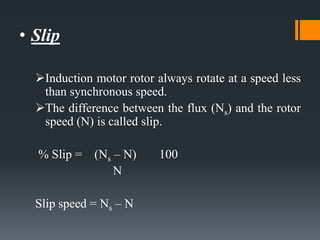
• Slip
Induction motor rotor always rotate at a speed less
than synchronous speed.
The difference between the flux (Ns) and the rotor
speed (N) is called slip.

% Slip = (Ns – N)
N
Slip speed = Ns – N

100
Presentation on induction motor

Presentation on induction motor

  • 1.
  • 2.
    ELECTRIC MOTOR An electricmotor is an electromechanical device that converts electrical energy to mechanical energy. The mechanical energy can be used to perform work such as rotating a pump impeller, fan, blower, driving a compressor, lifting materials etc.
  • 3.
    CLASSIFICATION OF MOTORS ElectricMotors Alternating Current (AC) Motors Synchronous Induction Single-Phase Three-Phase Direct Current (DC) Motors Separately Excited Series Self Excited Compound Shunt
  • 4.
    AC MOTOR: INDUCTIONMOTOR  Most common motors in industry  Advantages:  Simple design  Inexpensive  High power to weight ratio  Easy to maintain  Direct connection to AC power source
  • 6.
    • An inductionmotor works on transforming action. • The stator works as the primary while the rotor works as the secondary. • It is also called asynchronous motor.
  • 7.
    • It consistsof two parts: 1. Stator - It is the stationary part of the motor. 2. Rotor - It is the rotating part of the motor.
  • 9.
  • 10.
    • Stator hasthree main parts:    Outer Frame – It is the outer body of the of the motor. It protects the inner part of the machine. Stator Core – Built up of high grade silicon steel. Carries the alternating magnetic field. Stator winding – Has a three phase winding.
  • 12.
    • There aretwo types of rotors which are employed in 3 – phase induction motor.  Squirrel  Phase Cage Rotor. Wound/ Slip Ring Rotor.
  • 14.
    • It consistsof a laminated cylindrical core having semi closed circular slots at the outer periphery. • Copper or aluminum bar conductors are placed in these slots and short circuited at each end by copper or aluminum rings called short circuiting rings. • The rotor winding is permanently short circuited and it is not possible to add any external resistance.
  • 15.
    • The rotorslots are not parallel to the shaft but skewed to –  Reduce humming . Provide smoother torque for different positions of rotor. Reduce magnetic locking of stator and rotor.
  • 19.
  • 21.
    • It isalso called SLIP RING ROTOR • Consists of a laminated core having semi closed slots at the outer periphery and carries a 3-phase insulated winding. • The rotor is wound for the same number of poles as that of stator. • The three finish terminals are connected together forming a star point and the three star terminals are connected to three slip rings fixed on the shaft.
  • 23.
    • Principle ofOperation  A rotating field is set up in the stator when a 3- Phase supply is given.  The stationary rotor cut the revolving field and due to electromagnetic induction an e.m.f. is induced in the rotor conductor.  As the rotor conductor is short circuited current flows through them.  It becomes a current carrying conductor in magnetic field and start rotating.
  • 24.
    • Slip Induction motorrotor always rotate at a speed less than synchronous speed. The difference between the flux (Ns) and the rotor speed (N) is called slip. % Slip = (Ns – N) N Slip speed = Ns – N 100