By Matthew Mailhot
What is PCP? 
 Chemical Name: Phencyclidine 
 White crystalline powder (in its pure 
form) 
 Easily dissolves in water or alcohol 
 Bitter tasting 
 Schedule II drug
Street Names 
 Angel Dust 
 Boat 
 Hog 
 Love Boat 
 Peace Pill 
 Animal Tranquilizer 
 Embalming Fluid 
 Ozone 
 Rocket Fuel 
 Wack 
 Shermans 
 Black Dust 
 Cliffhanger 
 Crystal T 
 Dipper 
 Goon Dust 
 Happy Sticks 
 Lethal Weapon 
 Magic Dust 
 Peter Pan 
 Paz 
 Kools
Ways PCP is Administered 
 Smoked 
 Swallowed 
 Injected 
 Snorted
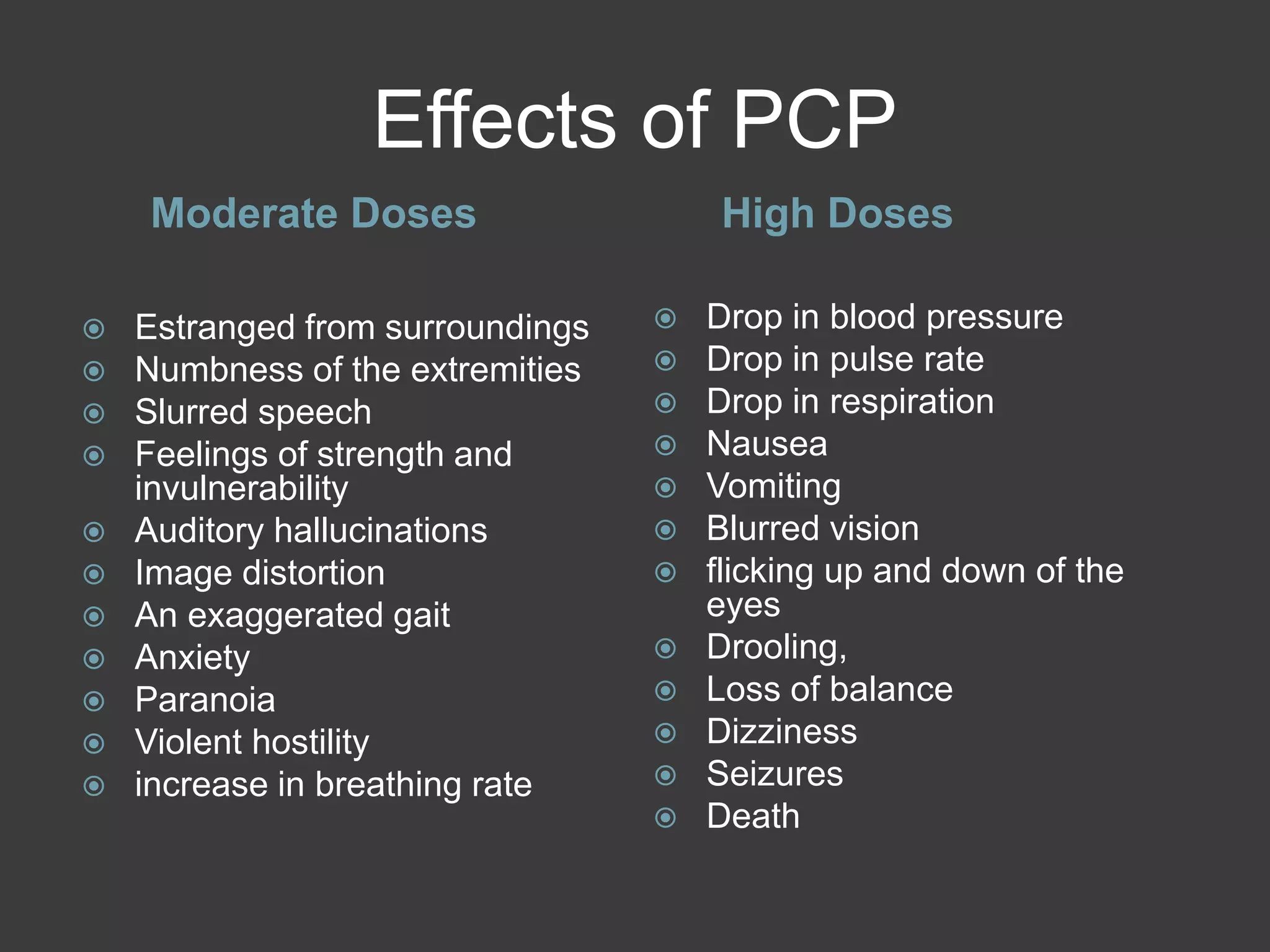
Effects of PCP 
Moderate Doses High Doses 
 Estranged from surroundings 
 Numbness of the extremities 
 Slurred speech 
 Feelings of strength and 
invulnerability 
 Auditory hallucinations 
 Image distortion 
 An exaggerated gait 
 Anxiety 
 Paranoia 
 Violent hostility 
 increase in breathing rate 
 Drop in blood pressure 
 Drop in pulse rate 
 Drop in respiration 
 Nausea 
 Vomiting 
 Blurred vision 
 flicking up and down of the 
eyes 
 Drooling, 
 Loss of balance 
 Dizziness 
 Seizures 
 Death
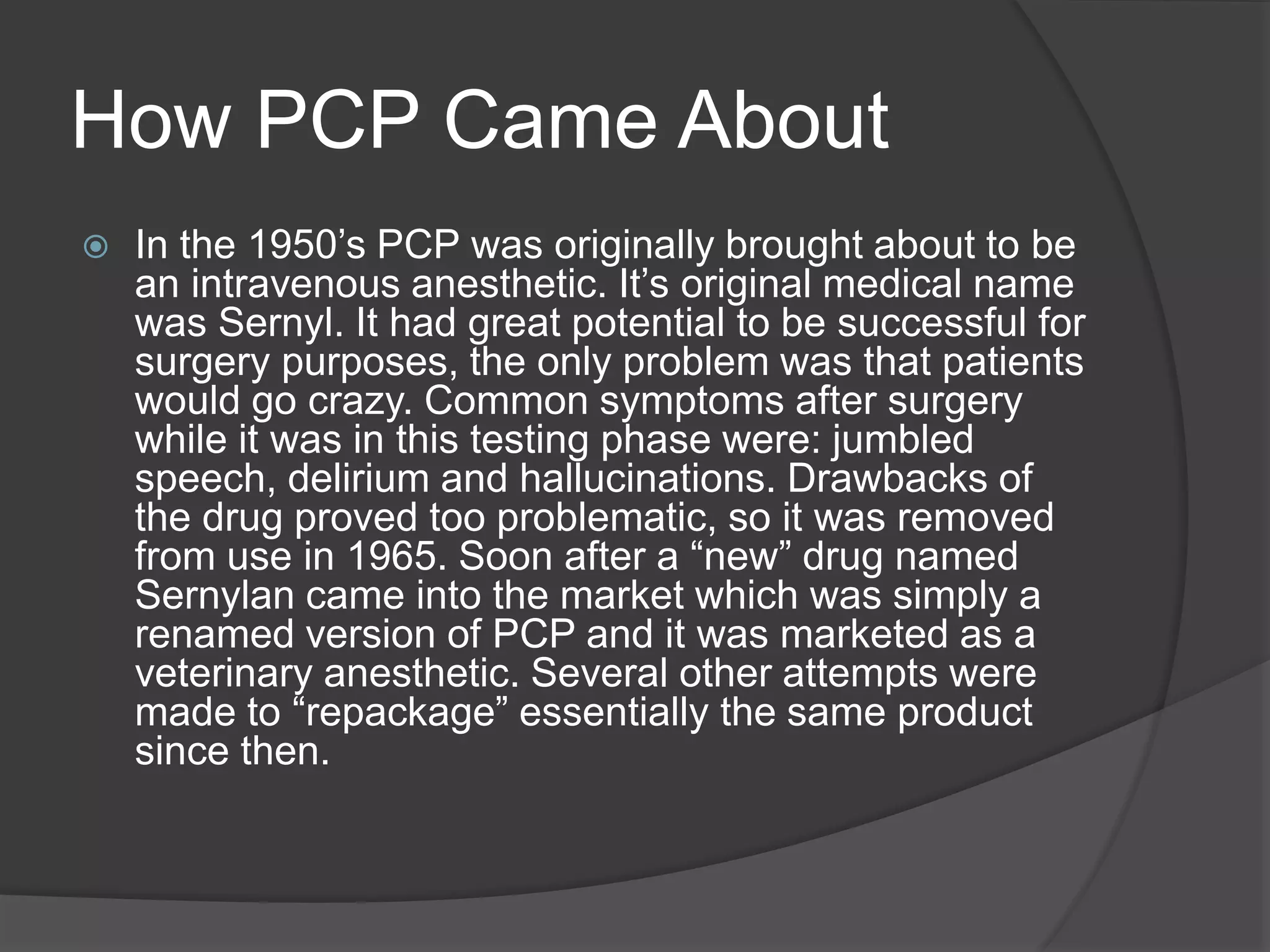
How PCP Came About 
 In the 1950’s PCP was originally brought about to be 
an intravenous anesthetic. It’s original medical name 
was Sernyl. It had great potential to be successful for 
surgery purposes, the only problem was that patients 
would go crazy. Common symptoms after surgery 
while it was in this testing phase were: jumbled 
speech, delirium and hallucinations. Drawbacks of 
the drug proved too problematic, so it was removed 
from use in 1965. Soon after a “new” drug named 
Sernylan came into the market which was simply a 
renamed version of PCP and it was marketed as a 
veterinary anesthetic. Several other attempts were 
made to “repackage” essentially the same product 
since then.
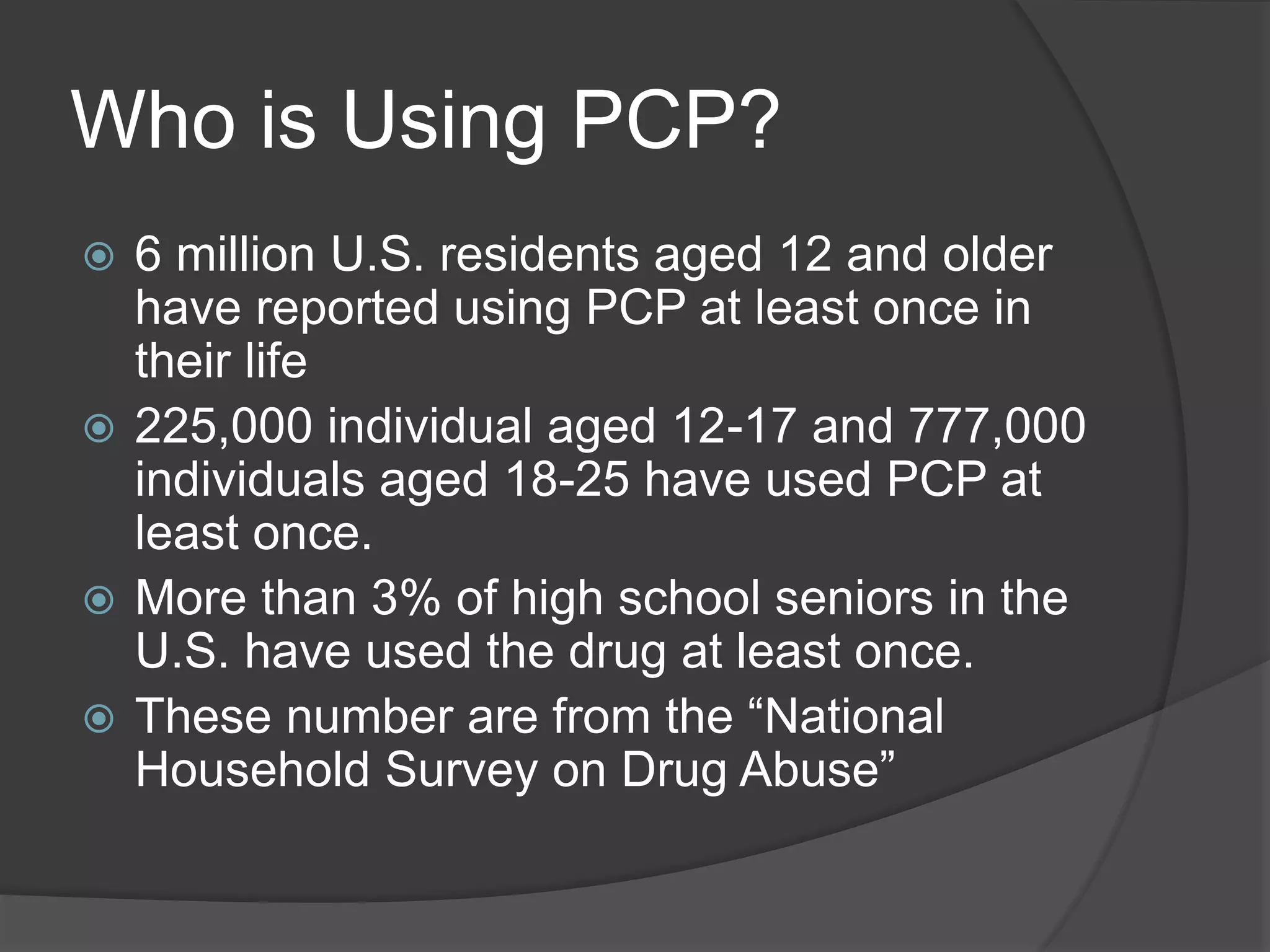
Who is Using PCP? 
 6 million U.S. residents aged 12 and older 
have reported using PCP at least once in 
their life 
 225,000 individual aged 12-17 and 777,000 
individuals aged 18-25 have used PCP at 
least once. 
 More than 3% of high school seniors in the 
U.S. have used the drug at least once. 
 These number are from the “National 
Household Survey on Drug Abuse”
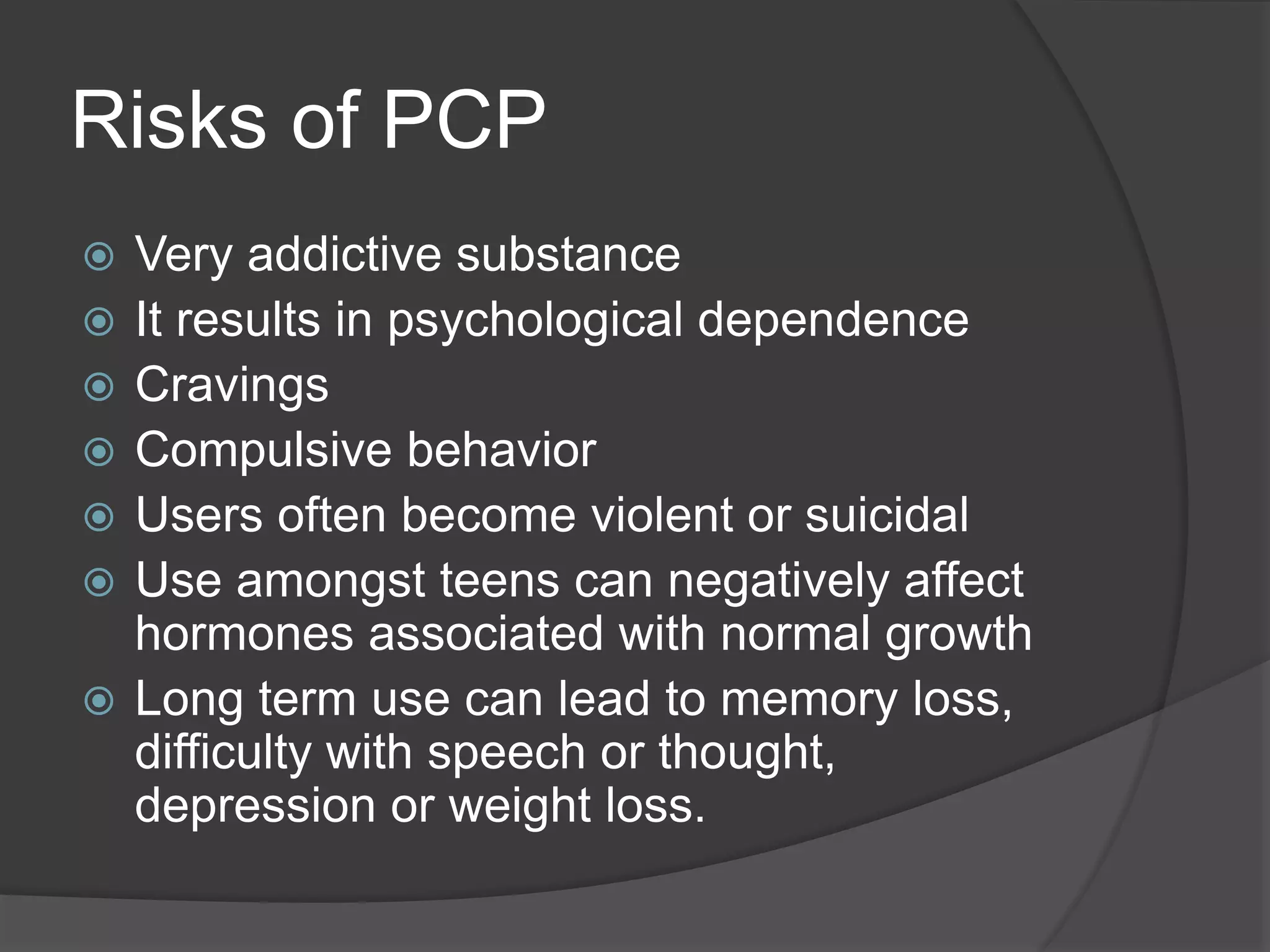
Risks of PCP 
 Very addictive substance 
 It results in psychological dependence 
 Cravings 
 Compulsive behavior 
 Users often become violent or suicidal 
 Use amongst teens can negatively affect 
hormones associated with normal growth 
 Long term use can lead to memory loss, 
difficulty with speech or thought, 
depression or weight loss.
My Thoughts 
 PCP in my opinion is one of the more dangerous drugs. 
Although it does not seem to be physically addicting like 
some drugs, it is heavily psychologically addicting. PCP is 
a depressant meaning that it slows your body down. It 
lowers your heart rate and decreases your respiration as 
well as your blood pressure. These are potentially very 
serious effects that can lead to very harmful 
complications. Like many drugs, the user gains a 
tolerance to PCP, meaning that you need more and more 
of it to get the same high. If taken in high enough doses 
this stuff can cause cardiac failure. PCP also produces 
psychological side effects, but It’s the physiological ones 
that play havoc with your internal organs that I believe 
makes this one of the most dangerous recreational drugs.
Quote 
 The author of one of my sources said “For many users, a 
more immediate danger involves the "behavioral toxicity" 
of the drug”. She explains that the dumb, stupid behavior 
such as car accidents and drowning that usually occur 
with the use of this drug are one of the more serious 
consequences. Sometimes I wonder how effective and 
fair our drug laws are, that someone can have their whole 
life ruined through our justice system because of a 
mistake that effects only their own life. However when 
people start negatively affecting other’s lives once on 
drugs like crashing into them with a car, there should 
definitely be consequences. I also think this is one of the 
most serious side effects because the behavior that 
comes out of this drug has the potential to harm innocent 
bystanders.
Discussion Question 
 Do you believe that PCP is a common 
drug in our community, either in WSU or 
Worcester as a whole?
Sources 
 Burns RS, Lerner S, Corrado R. Drugs.com. 5 May 
2014. 9 November 2014 
<http://www.drugs.com/illicit/pcp.html>. 
 National Drug Intelligence Center. 1 January 2006. 9 
November 2014 
<http://www.justice.gov/archive/ndic/pubs4/4440/#W 
hat>. 
 NIDA. March 2011. 9 November 2014 
<http://www.drugabuse.gov/drugs-abuse/commonly-abused- 
drugs-charts/commonly-abused-drugs-chart>. 
 Turney, Lisa. Do It Now. October 2012. 9 November 
2014 <http://www.doitnow.org/pages/123.html>.

PCP

  • 1.
  • 2.
    What is PCP?  Chemical Name: Phencyclidine  White crystalline powder (in its pure form)  Easily dissolves in water or alcohol  Bitter tasting  Schedule II drug
  • 3.
    Street Names Angel Dust  Boat  Hog  Love Boat  Peace Pill  Animal Tranquilizer  Embalming Fluid  Ozone  Rocket Fuel  Wack  Shermans  Black Dust  Cliffhanger  Crystal T  Dipper  Goon Dust  Happy Sticks  Lethal Weapon  Magic Dust  Peter Pan  Paz  Kools
  • 4.
    Ways PCP isAdministered  Smoked  Swallowed  Injected  Snorted
  • 5.
    Effects of PCP Moderate Doses High Doses  Estranged from surroundings  Numbness of the extremities  Slurred speech  Feelings of strength and invulnerability  Auditory hallucinations  Image distortion  An exaggerated gait  Anxiety  Paranoia  Violent hostility  increase in breathing rate  Drop in blood pressure  Drop in pulse rate  Drop in respiration  Nausea  Vomiting  Blurred vision  flicking up and down of the eyes  Drooling,  Loss of balance  Dizziness  Seizures  Death
  • 6.
    How PCP CameAbout  In the 1950’s PCP was originally brought about to be an intravenous anesthetic. It’s original medical name was Sernyl. It had great potential to be successful for surgery purposes, the only problem was that patients would go crazy. Common symptoms after surgery while it was in this testing phase were: jumbled speech, delirium and hallucinations. Drawbacks of the drug proved too problematic, so it was removed from use in 1965. Soon after a “new” drug named Sernylan came into the market which was simply a renamed version of PCP and it was marketed as a veterinary anesthetic. Several other attempts were made to “repackage” essentially the same product since then.
  • 7.
    Who is UsingPCP?  6 million U.S. residents aged 12 and older have reported using PCP at least once in their life  225,000 individual aged 12-17 and 777,000 individuals aged 18-25 have used PCP at least once.  More than 3% of high school seniors in the U.S. have used the drug at least once.  These number are from the “National Household Survey on Drug Abuse”
  • 8.
    Risks of PCP  Very addictive substance  It results in psychological dependence  Cravings  Compulsive behavior  Users often become violent or suicidal  Use amongst teens can negatively affect hormones associated with normal growth  Long term use can lead to memory loss, difficulty with speech or thought, depression or weight loss.
  • 9.
    My Thoughts PCP in my opinion is one of the more dangerous drugs. Although it does not seem to be physically addicting like some drugs, it is heavily psychologically addicting. PCP is a depressant meaning that it slows your body down. It lowers your heart rate and decreases your respiration as well as your blood pressure. These are potentially very serious effects that can lead to very harmful complications. Like many drugs, the user gains a tolerance to PCP, meaning that you need more and more of it to get the same high. If taken in high enough doses this stuff can cause cardiac failure. PCP also produces psychological side effects, but It’s the physiological ones that play havoc with your internal organs that I believe makes this one of the most dangerous recreational drugs.
  • 10.
    Quote  Theauthor of one of my sources said “For many users, a more immediate danger involves the "behavioral toxicity" of the drug”. She explains that the dumb, stupid behavior such as car accidents and drowning that usually occur with the use of this drug are one of the more serious consequences. Sometimes I wonder how effective and fair our drug laws are, that someone can have their whole life ruined through our justice system because of a mistake that effects only their own life. However when people start negatively affecting other’s lives once on drugs like crashing into them with a car, there should definitely be consequences. I also think this is one of the most serious side effects because the behavior that comes out of this drug has the potential to harm innocent bystanders.
  • 11.
    Discussion Question Do you believe that PCP is a common drug in our community, either in WSU or Worcester as a whole?
  • 12.
    Sources  BurnsRS, Lerner S, Corrado R. Drugs.com. 5 May 2014. 9 November 2014 <http://www.drugs.com/illicit/pcp.html>.  National Drug Intelligence Center. 1 January 2006. 9 November 2014 <http://www.justice.gov/archive/ndic/pubs4/4440/#W hat>.  NIDA. March 2011. 9 November 2014 <http://www.drugabuse.gov/drugs-abuse/commonly-abused- drugs-charts/commonly-abused-drugs-chart>.  Turney, Lisa. Do It Now. October 2012. 9 November 2014 <http://www.doitnow.org/pages/123.html>.