1
 INTRODUCTION
 HISTORICAL BACKGROUND
 CLASSIFICATION
 PHARMACOLOGICAL ACTIONS
 ADVERSE EFFECTS
 USES
 ADDICTION
 CONCLUSION
2
 The word analgesic derived from Greek words.
• “An”-without
• “Algos”-pain
3
 An analgesic or pain killer is any member of the
group of drugs used to achieve analgesia, relief
from pain.
 Analgesia simply means the absence of pain
without losing consciousness.
4
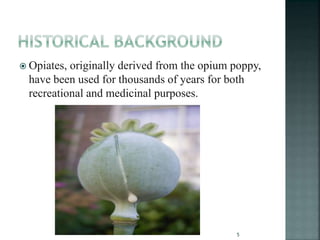
 Opiates, originally derived from the opium poppy,
have been used for thousands of years for both
recreational and medicinal purposes.
5
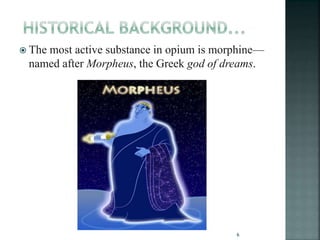
 The most active substance in opium is morphine—
named after Morpheus, the Greek god of dreams.
6
 In the sixteenth century, laudanum, opium prepared in an
alcoholic solution, was used as a painkiller.
 It was used widely as a painkiller during the American
Civil War, and many soldiers became addicted.
7
 Throughout the early 19th century, the recreational use of
opium grew and by 1830, the British dependence on the
drug reached an all-time high.
 So, the British government banned opioids in their
country but started exporting it to China.
 The Chinese also got addicted to it, and started doing
crime activities.
8
 So, the Chinese emperor requested the British
Government to stop the opium trade, but they
refused.
 The British sent warships to the coast of China in
1839 in response to China’s attempt to suppress
the opium trade, here begins the “First Opium
War.”
 The British won the war, conquered areas of China
and started expanding the trade of opium.
9
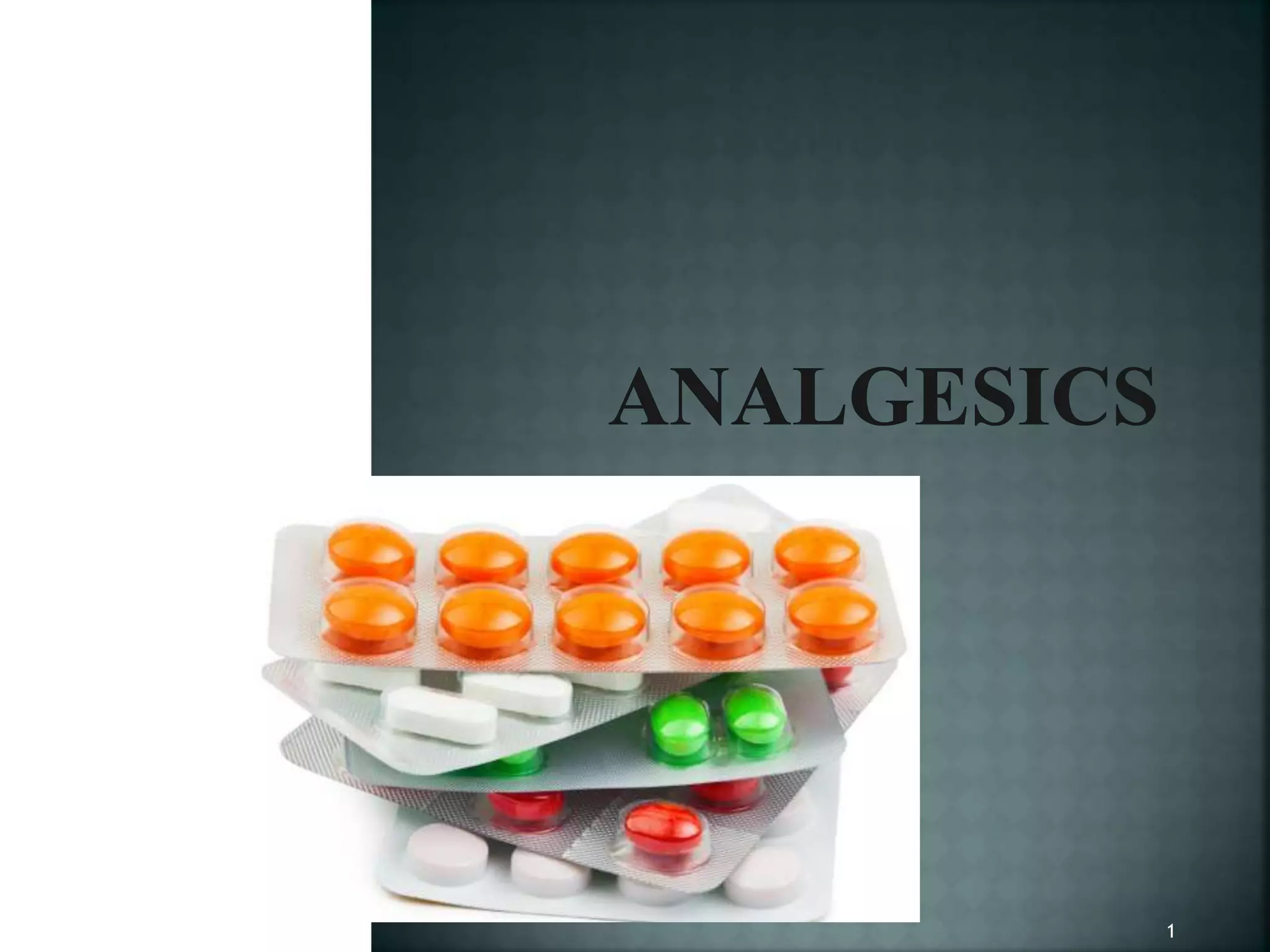
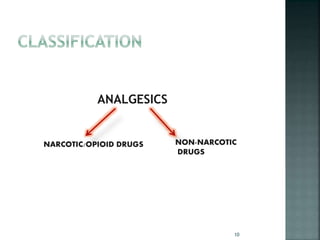
ANALGESICS
NARCOTIC/OPIOID DRUGS NON-NARCOTIC
DRUGS
10
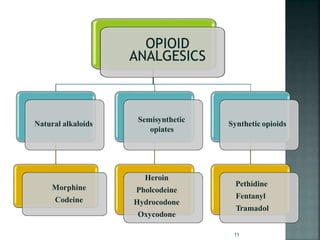
Natural alkaloids
Morphine
Codeine
Semisynthetic
opiates
Heroin
Pholcodeine
Hydrocodone
Oxycodone
Synthetic opioids
Pethidine
Fentanyl
Tramadol
11
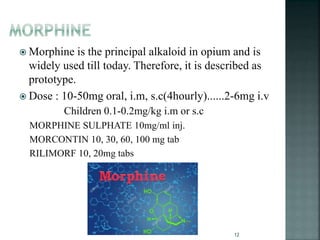
 Morphine is the principal alkaloid in opium and is
widely used till today. Therefore, it is described as
prototype.
 Dose : 10-50mg oral, i.m, s.c(4hourly)......2-6mg i.v
Children 0.1-0.2mg/kg i.m or s.c
MORPHINE SULPHATE 10mg/ml inj.
MORCONTIN 10, 30, 60, 100 mg tab
RILIMORF 10, 20mg tabs
12
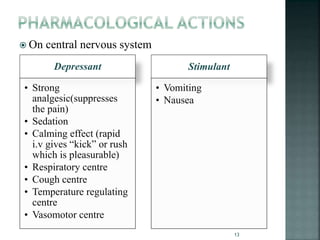
 On central nervous system
Depressant
• Strong
analgesic(suppresses
the pain)
• Sedation
• Calming effect (rapid
i.v gives “kick” or rush
which is pleasurable)
• Respiratory centre
• Cough centre
• Temperature regulating
centre
• Vasomotor centre
Stimulant
• Vomiting
• Nausea
13
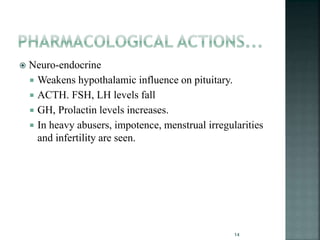
 Neuro-endocrine
 Weakens hypothalamic influence on pituitary.
 ACTH. FSH, LH levels fall
 GH, Prolactin levels increases.
 In heavy abusers, impotence, menstrual irregularities
and infertility are seen.
14
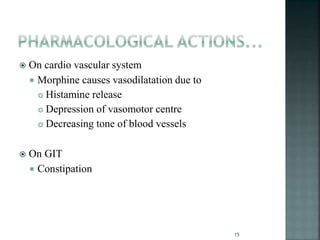
 On cardio vascular system
 Morphine causes vasodilatation due to
 Histamine release
 Depression of vasomotor centre
 Decreasing tone of blood vessels
 On GIT
 Constipation
15
 It is primarily metabolized in liver
 Plasma t1/2 of morphine—2-3hours
 Elimination is almost complete in 24 hours
 Small amounts may persist.
 Sedation, mental clouding, lethargy
 Vomiting, constipation
 Blurring of vision, fall in BP, urinary retention
16
>50mg of morphine i.m produces serious toxicity.
Respiration is slow and depressed.
Cyanosis , sweating.
Pinpoint pupil
Coma
Treatment:
Gastric lavage with potassium permanganate 0.2%
Artificial respiration with O2 – CO2 mixture
Specific antidotes: Naloxone (0.4-0.8mg i.v for every 2-3
mins till respiration picks up)
17
 Tolerance: (failure of responsiveness to the usual dose
of the drug)
Tolerance develops to the analgesic and respiratory
depressant actions of morphine after 10-14 days.
But no tolerance develops to the constipating and
miotic actions of morphine. Morphine addict always
has constipation.
Cross-tolerance occurs between morphine and various
other narcotic analgesics.
18
19
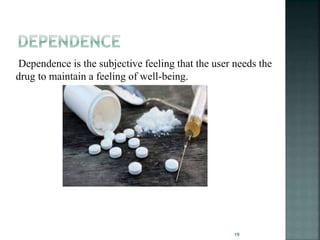
Dependence is the subjective feeling that the user needs the
drug to maintain a feeling of well-being.
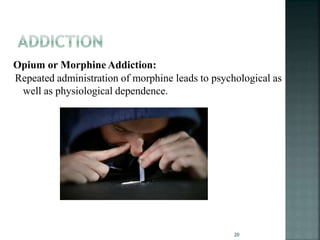
Opium or Morphine Addiction:
Repeated administration of morphine leads to psychological as
well as physiological dependence.
20
 Inattentiveness
 Euphoria
 Poor performance
 Depressed consciousness
 Impaired respiration
 Decreased sexual interest
 Vision problems
 Collapsed veins
 Coma
 Death
21
The withdrawal symptoms are characterized by:
 Rhinorrhea.
 Lacrimation.
 Restless sleep and insomnia.
 Dilated pupils.
 Vomiting.
 Diarrhea.
22
 Severe muscle cramps.
 Severe headache.
 Patient refuses food leading to dehydration and acidosis.
Treatment of Morphine Addiction:
1. Withdrawal of morphine and substitution therapy with
methadone
 Then, methadone is withdrawn gradually over a period of 3-5
days.
 It is an addicting drug but the withdrawal symptoms of
methadone are less than those of morphine.
2. Sedatives to help sleeping.
23
 Infants and elderly are more susceptible to the
respiratory depressant action of morphine.
 Morphine is risky in patients with respiratory
insufficiency.
 Morphine can precipitate asthmatic attack by its
histamine releasing action.
 Contraindicated in patients with head injury.
24
 Elderly male: chances of urinary retention are
high.
 Hypothyroidism, liver and kidney disease patients
are more sensitive to morphine.
 Unstable personalities: are liable to continue with
its use and become addicted.
25
 It is methyl-morphine, occurs naturally in opium,
and is partly converted in the body to morphine.
 Cannot relieve severe pain.
 Cough suppressant.
 Single oral dose acts for 4-6hours.
 Constipation is prominent.
 Dose : 7.5-30mg (every 6 hours) for cough
15-60mg (every 6hours) for pain
26
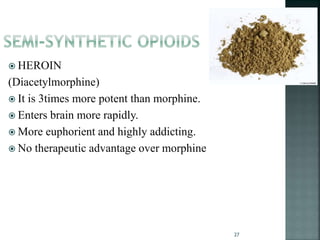
 HEROIN
(Diacetylmorphine)
 It is 3times more potent than morphine.
 Enters brain more rapidly.
 More euphorient and highly addicting.
 No therapeutic advantage over morphine
27
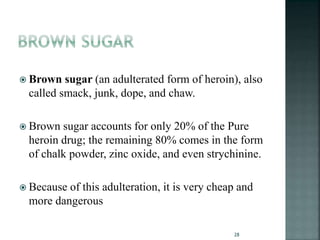
 Brown sugar (an adulterated form of heroin), also
called smack, junk, dope, and chaw.
 Brown sugar accounts for only 20% of the Pure
heroin drug; the remaining 80% comes in the form
of chalk powder, zinc oxide, and even strychinine.
 Because of this adulteration, it is very cheap and
more dangerous
28
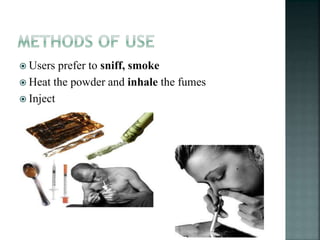
 Users prefer to sniff, smoke
 Heat the powder and inhale the fumes
 Inject
29
30
 PETHIDINE
 Pethidine was synthesized as an atropine substitute in
1939.
 Morphine-like action (analgesic).
 To relieve labour pain.
 As pre-anesthetic medication instead of morphine.
 Better than morphine in renal and biliary colics.
31
Difference from morphine:
 Its analgesic action is 1/10 that of morphine.
 It does not depress cough.
 It does not depress respiration in therapeutic doses.
 It does not cause constipation.
 Has atropine-like action.
 Pupil is dilated.
 Tolerance and addiction are less than with morphine.
 Dose: 50-100 mg orally or parenterally (S.C. or I.M).
32
Analgesic potency is 80 times that of morphine.
Duration of action shorter than morphine and pethidine.
Uses:
1. As analgesic alone.
2. With a tranquillizer to produce Neuroleptanalgesia (a
state of sedation and analgesia) which is used in
minor procedures e.g. bronchoscopy or in obstetrics.
33
 A potent analgesic.
 With long duration of action.
 Depresses respiratory and cough centers.
 Causes addiction but the withdrawal symptoms are
milder than morphine.
 Dose: 60mg daily
 Uses:
1. Analgesic.
2. Treatment of opium (morphine) addiction.
34
 Dose : 50-100mg oral/i.m (every 4-6hours)
 CONTRAMAL,DOMADOL,TRAMAZAC 50mg
cap,50mg/ml inj 1ml
 Used to treat short–lasting pain due to dental
problems, visceral illness.
 Abuse potential is low
35
NALOXONE
 Drug of choice for morphine poisoning and reversing
neonatal asphyxia due to opioid use during labor
 Injected intravenously (0.4-0.8 mg every 2-3mins, max
10mg) it promptly antagonizes all actions of morphine.
 It is inactive orally because of high first pass metabolism
in liver.
36
 NALTIMA, NALTROX 50mg tab
 Chemically related to naloxane.
 Differs from naloxane in being orally active.
 Alcohol craving also reduced by naltrexone and
used to prevent relapse of heavy drinking.
37
 Dental pain is mostly associated with
inflammation.
 NSAIDS are more effective than opioids.
 Occasionally employed as additional drugs with
paracetomol, ibuprofen to boost the analgesic
effect.
38
 Codeine, tramadol are used as additional drugs.
 The place of analgesics in dental pain is secondary
to treatment of the cause of pain by appropriate
local (antiseptics, root canal therapy)and
systemic(antibiotics) measures.
39
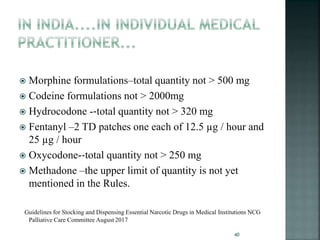
 Morphine formulations–total quantity not > 500 mg
 Codeine formulations not > 2000mg
 Hydrocodone -‐total quantity not > 320 mg
 Fentanyl –2 TD patches one each of 12.5 µg / hour and
25 µg / hour
 Oxycodone-‐total quantity not > 250 mg
 Methadone –the upper limit of quantity is not yet
mentioned in the Rules.
Guidelines for Stocking and Dispensing Essential Narcotic Drugs in Medical Institutions NCG
Palliative Care Committee August 2017
40
 Palliative care is specialized medical care for
people with a serious illness. This type of care is
focused on providing relief from the symptoms
and stress of a serious illness. The goal is to
improve quality of life for both the patient and the
family.
41
42
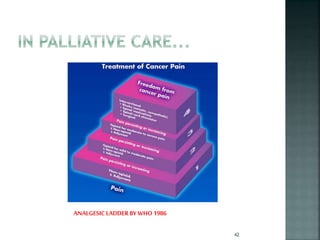
ANALGESICLADDERBY WHO 1986
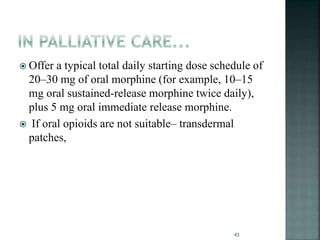
 Offer a typical total daily starting dose schedule of
20–30 mg of oral morphine (for example, 10–15
mg oral sustained-release morphine twice daily),
plus 5 mg oral immediate release morphine.
 If oral opioids are not suitable– transdermal
patches,
43
 A transdermal fentanyl 12 microgram patch
equates to approximately 45 mg oral morphine
daily.
 Inform about constipation, nausea and drowsiness
due to morphine and manage accordingly.
44
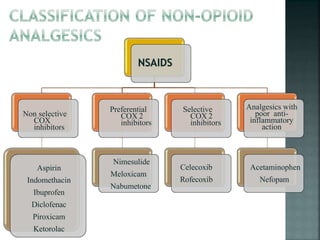
Non selective
COX
inhibitors
Aspirin
Indomethacin
Ibuprofen
Diclofenac
Piroxicam
Ketorolac
Preferential
COX 2
inhibitors
Nimesulide
Meloxicam
Nabumetone
Selective
COX 2
inhibitors
Celecoxib
Rofecoxib
Analgesics with
poor anti-
inflammatory
action
Acetaminophen
Nefopam
 By 1897, German chemist Felix Hoffman and the
Bayer company prompted a new age of
pharmacology by introducing aspirin.
 Other NSAIDs were developed from the 1950s.
46
 1971,Vane and coworkers made the landmark
observation that NSAIDs blocked prostoglandin (PG)
generation.
 Prostaglandins are produced from arachidonic
acid(abudant in brain) by the enzyme cyclo-
oxygenase.
47
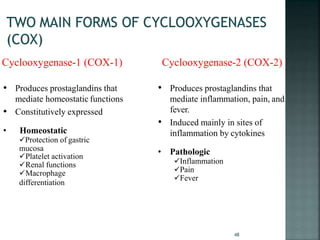
Cyclooxygenase-1 (COX-1) Cyclooxygenase-2 (COX-2)
• Produces prostaglandins that
mediate inflammation, pain, and
fever.
• Induced mainly in sites of
inflammation by cytokines
• Pathologic
Inflammation
Pain
Fever
• Produces prostaglandins that
mediate homeostatic functions
• Constitutively expressed
• Homeostatic
Protection of gastric
mucosa
Platelet activation
Renal functions
Macrophage
differentiation
48
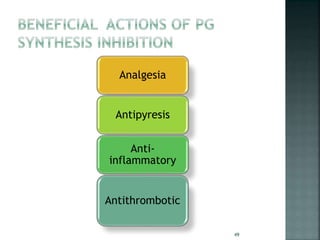
Analgesia
Antipyresis
Anti-
inflammatory
Antithrombotic
49
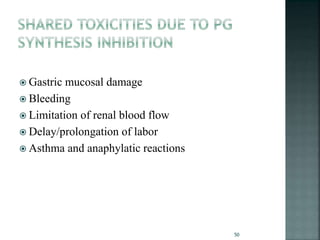
 Gastric mucosal damage
 Bleeding
 Limitation of renal blood flow
 Delay/prolongation of labor
 Asthma and anaphylatic reactions
50
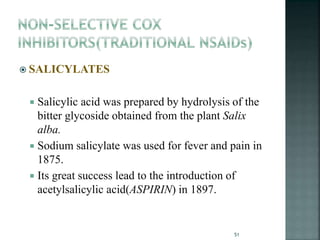
 SALICYLATES
 Salicylic acid was prepared by hydrolysis of the
bitter glycoside obtained from the plant Salix
alba.
 Sodium salicylate was used for fever and pain in
1875.
 Its great success lead to the introduction of
acetylsalicylic acid(ASPIRIN) in 1897.
51
 Aspirin is acetylsalicylic acid.
 Rapidly converted in the body to salicylic acid,
which is responsible for most of its
pharmacological actions.
52
TRADE NAMES
Colsprin 100,325,650 mg tabs
Ecosprin 75,150,325 mg tabs
Dispirin 350mg tab.
53
 Aspirin has
 Analgesic, antipyretic and anti-inflammatory action.
 It interferes with platelet aggregation and bleeding
time is prolonged to nearly twice the normal value.
 It effectively relieves inflammatory, tissue injury
related, connective tissue and integumental pain.
54
 Aspirin is rapidly de-acetylated in the gut wall,
liver, plasma and other tissues to release salicylic
acid which is the major circulating and active
form.
 Entry into brain is slow, but aspirin freely crosses
placenta.
 The metabolites are excreted by glomerular
filtration as well as tubular secretion.
55
 The plasma t1/2 of aspirin as such is 15-20min, but
taken together with that of released salicylic acid,
it is 3-5 hours.
 t1/2 of anti-inflammatory doses may be 8-12
hours.
 Thus, elimination is dose dependent.
56
 At analgesic dose(0.3-1.5g/day)
 Nausea
 Vomiting
 Epigastric distress
 Increased occult blood loss in stools
 Rashes
 Rhinorrhoea
57
 At inflammatory dose(3-5 g/day)
 Acute salicylate poisoning
Salicylism—dizziness, tinnitus, vertigo, reversible impairment of hearing
and vision, excitement and mental confusion, hyperventilation and
electrolyte imbalance.
vomiting, dehydration, electrolyte imbalance, acidotic breathing, petechial
hemorrhages, restlessness, delirium, hallucinations, hyperpyrexia,
convulsions, coma and death.
Treatment-i.v fluid with Na, K, HCO3 and glucose
58
 Contradicted in patients with peptic ulcer, bleeding
tendencies
 In chronic liver disease, aspirin precipitate hepatic
necrosis.
 Should be avoided in diabetics, congestive heart
failure, pregnancy and breast feeding mothers.
 Should be stopped 1week before dental extraction
and elective surgery.
59
 Aspirin displaces warfarin, naproxen,
sulfonylureas, phenytoin and methtrexate from
binding sites on plasma proteins.
 Aspirin also blunts diuretic action of furosemide
and thiazides.
60
 IBUPROFEN
 analgesic and antipyretic
 Rheumatoid arthritis, osteoarthritis
 Very popular in dentistry. Suppress post-operative
swelling .
 Dose: 400-600mg TDS
 BRUFEN,EMFLAM,IBUSYNTH
200,400,600mg tab
 IBUGESIC 100mg/5ml syrup
61
 Well absorbed orally, highly bound to plasma
proteins.
 They enter brain, synovial fluid and cross placenta.
 They are largely metabolized in liver and excreted
in bile as well as urine
 Similar to other NSAIDs decrease actions of
thiazides, furosemide and beta blockers
62
 Dose 250-500mg TDS
 MEDOL 250,500mg cap
 MEFTAL 200,500mg tab,100mg/5ml susp
 PONSTAN 125,250,500mg tab, 50mg/ml syrup
 Analgesic, antipyretic
 Diarrhoea is the most important side effect.
 Hemolytic anaemia is rare but serious
complication.
63
PIROXICAM
 Dose 20mg BD for 2days followed by 20mg OD
 DOLONOX, PIROX 10, 20mg cap, 20mg/ml inj
 PIRICAM 10,20mg cap
 Used as long term anti-inflammatory drug in
arthritis, relatively more toxic.
 Heart burn, nausea, anorexia are the common side
effects
64
KETOROLAC
 Dose: 15-30mg i.m or i.v(every 4-6hrs)
orally 10-20mg (every 6hrs)
0.5mg/kg for children
 KETOROL, ZOROVON,TOROLAC 10mg tab
 Analgesic and anti-inflammatory
 Adverse effects-nausea, abdominal pain,
ulceration, dyspesia, drowsiness
65
 INDOMETHACIN
 Dose : 25-50mg BD
 IDICIN, INDOCAP 25mg cap,75mg cap
 INDOFLAM 25,75 mg caps,1% eyedrop.
 Anti-inflammatory and anti-pyretic
 Gastric irritation, nausea, anorexia, diarrhoea, head
ache, hallucinations are prominent
66
 Analgesic and antipyretic
 METAMIZOL(ANALGIN)- widely used in India but
banned since JUNE 2013 due to its high gastric and
CNS toxicity.
 Dose: 150-300mg TDS
 In SARIDON, ANAFEBRIN:
Propyphenazone150mg+paracetamol 250mg
 Taken as self medication for headache, toothache,
bodyache, fever, etc.
67
DICLOFENAC SODIUM
 Dose : 50mg TDS, then BD
 VOVERAN, DICLONAC 75mg deep i.m
 Used in arthritis, tooth ache, dysmenorrhoea
 Afford quick relief of pain
 Adverse effects: nausea, headache, dizziness,
rashes, gastric pain.
ACECLOFENAC-similar properties, tolerance is
better with diclofenac
Dose : 100mg BD
ACECLO, DOLOKIND 100mg tab,200mg tab
68
 Currently 3 selective COX-2 inhibitors available in
India- Celecoxib, Etoricoxib and Paracoxib.
 Do not inhibit platelet aggregation or prolong
bleeding time.
 Used for dental pain, arthritis without affecting
platelet function
 Dry mouth, apthous ulcers, taste disturbances,
abdominal pain, rise in BP and paresthesias are its
adverse effects.
69
PARACETAMOL (ACETAMINOPHEN)
Dose : Adults 325-650mg
Children 10-15mg/kg.
CROCIN 0.5,1.0g tabs, METACIN, PARACIN 500mg tab,
CALPOL 500mg tab, 125mg /5ml syrup.
 It is the de-ethylated active metabolite of phenacetin, was
introduced in the last century but has come into common
use only since 1950.
70
3-4 times/day
 Analgesic for headache, toothache,
musculoskeletal pain, etc.
 Best anti-pyretic.
 Can be used in all age groups, pregnant/lactating
women.
 Does not have significant drug interactions.
 Preferred over aspirin.
71
 Paracetomol is well absorbed orally, plasma t1/2 is
2-3hours, effects after an oral dose last for 3-
5hours.
 It is conjugated with glucuronic acid and sulfate
 Excreted rapidly in urine.
72
 It occurs specially in small children who have low
hepatic glucuronide conjugating ability.
 If a large dose(>10g) is taken, serious toxicity can occur.
 Early----Nausea, vomiting, abdominal pain, liver
tenderness with no loss of consciousness.
 After 12-18 hours, hepatic and renal tubular necrosis
 Leading to coma and death.
73
 If the levels are lower-recovery obtained with
supportive treatment.
 Antidote---N acetylcysteine infused i.v
 It is practically ineffective if started 12-16 hours or
more after paracetomol ingestion.
74
 NSAIDs are the main stay for the management of
acute dental pain.
 Mild-moderate pain with little inflammation-
paracetomol or ibuprofen.
 Postextraction- diclofenac or ibuprofen or
ketorolac
75
 Patients with Gastric intolerance- paracetamol
 History of asthma or anaphylactic reaction to
aspirin-diclofenac
 Pediatric patients- paracetamol, ibuprofen
 Pregnancy- paracetamol, low dose aspirin
76
 Before prescription of any analgesic, the dental
practitioner should have a clear idea on its advantages
and disadvantages, mechanism of action,
pharmacokinetics ,adverse effects in general and in
relation to that individual patient, whilst reducing the
risks and providing a streamlined treatment.
 A clinicians goal should be, to avoid chronic use of
any analgesic whenever possible.
77
 Essentials of Medical Pharmacology-6th edition- KD
Tripathi
 Goodman & Gilman's The Pharmacological Basis Of
Therapeutics - 11th Ed. (2006)
 Opioids in palliative care: full guideline (May 2012)
 Raymond ‘s The Essence of Analgesia and Analgesics-
2nd edition.
 Lynch ME, Watson CP (2006) The pharmacotherapy
of chronic pain: a review. Pain Res Manag 11: 11-38.
78
 Dionne RA, Berthold CW (2001) Therapeutic uses of
non-steroidal anti-inflammatory drugs in dentistry. Crit
Rev Oral Biol Med 12: 315-330.
 Haas DA (2002) Opioid agonists and antagonists, Pain
and anxiety control in dentistry. Philadelphia, USA
114-128.
 . Thapa D, Rastogi V, Ahuja V (2011) Cancer pain
management-current status. J Anaesthesiol Clin
Pharmacol 27: 162-168
79
80

Analgesics

  • 1.
  • 2.
     INTRODUCTION  HISTORICALBACKGROUND  CLASSIFICATION  PHARMACOLOGICAL ACTIONS  ADVERSE EFFECTS  USES  ADDICTION  CONCLUSION 2
  • 3.
     The wordanalgesic derived from Greek words. • “An”-without • “Algos”-pain 3
  • 4.
     An analgesicor pain killer is any member of the group of drugs used to achieve analgesia, relief from pain.  Analgesia simply means the absence of pain without losing consciousness. 4
  • 5.
     Opiates, originallyderived from the opium poppy, have been used for thousands of years for both recreational and medicinal purposes. 5
  • 6.
     The mostactive substance in opium is morphine— named after Morpheus, the Greek god of dreams. 6
  • 7.
     In thesixteenth century, laudanum, opium prepared in an alcoholic solution, was used as a painkiller.  It was used widely as a painkiller during the American Civil War, and many soldiers became addicted. 7
  • 8.
     Throughout theearly 19th century, the recreational use of opium grew and by 1830, the British dependence on the drug reached an all-time high.  So, the British government banned opioids in their country but started exporting it to China.  The Chinese also got addicted to it, and started doing crime activities. 8
  • 9.
     So, theChinese emperor requested the British Government to stop the opium trade, but they refused.  The British sent warships to the coast of China in 1839 in response to China’s attempt to suppress the opium trade, here begins the “First Opium War.”  The British won the war, conquered areas of China and started expanding the trade of opium. 9
  • 10.
  • 11.
  • 12.
     Morphine isthe principal alkaloid in opium and is widely used till today. Therefore, it is described as prototype.  Dose : 10-50mg oral, i.m, s.c(4hourly)......2-6mg i.v Children 0.1-0.2mg/kg i.m or s.c MORPHINE SULPHATE 10mg/ml inj. MORCONTIN 10, 30, 60, 100 mg tab RILIMORF 10, 20mg tabs 12
  • 13.
     On centralnervous system Depressant • Strong analgesic(suppresses the pain) • Sedation • Calming effect (rapid i.v gives “kick” or rush which is pleasurable) • Respiratory centre • Cough centre • Temperature regulating centre • Vasomotor centre Stimulant • Vomiting • Nausea 13
  • 14.
     Neuro-endocrine  Weakenshypothalamic influence on pituitary.  ACTH. FSH, LH levels fall  GH, Prolactin levels increases.  In heavy abusers, impotence, menstrual irregularities and infertility are seen. 14
  • 15.
     On cardiovascular system  Morphine causes vasodilatation due to  Histamine release  Depression of vasomotor centre  Decreasing tone of blood vessels  On GIT  Constipation 15
  • 16.
     It isprimarily metabolized in liver  Plasma t1/2 of morphine—2-3hours  Elimination is almost complete in 24 hours  Small amounts may persist.  Sedation, mental clouding, lethargy  Vomiting, constipation  Blurring of vision, fall in BP, urinary retention 16
  • 17.
    >50mg of morphinei.m produces serious toxicity. Respiration is slow and depressed. Cyanosis , sweating. Pinpoint pupil Coma Treatment: Gastric lavage with potassium permanganate 0.2% Artificial respiration with O2 – CO2 mixture Specific antidotes: Naloxone (0.4-0.8mg i.v for every 2-3 mins till respiration picks up) 17
  • 18.
     Tolerance: (failureof responsiveness to the usual dose of the drug) Tolerance develops to the analgesic and respiratory depressant actions of morphine after 10-14 days. But no tolerance develops to the constipating and miotic actions of morphine. Morphine addict always has constipation. Cross-tolerance occurs between morphine and various other narcotic analgesics. 18
  • 19.
    19 Dependence is thesubjective feeling that the user needs the drug to maintain a feeling of well-being.
  • 20.
    Opium or MorphineAddiction: Repeated administration of morphine leads to psychological as well as physiological dependence. 20
  • 21.
     Inattentiveness  Euphoria Poor performance  Depressed consciousness  Impaired respiration  Decreased sexual interest  Vision problems  Collapsed veins  Coma  Death 21
  • 22.
    The withdrawal symptomsare characterized by:  Rhinorrhea.  Lacrimation.  Restless sleep and insomnia.  Dilated pupils.  Vomiting.  Diarrhea. 22
  • 23.
     Severe musclecramps.  Severe headache.  Patient refuses food leading to dehydration and acidosis. Treatment of Morphine Addiction: 1. Withdrawal of morphine and substitution therapy with methadone  Then, methadone is withdrawn gradually over a period of 3-5 days.  It is an addicting drug but the withdrawal symptoms of methadone are less than those of morphine. 2. Sedatives to help sleeping. 23
  • 24.
     Infants andelderly are more susceptible to the respiratory depressant action of morphine.  Morphine is risky in patients with respiratory insufficiency.  Morphine can precipitate asthmatic attack by its histamine releasing action.  Contraindicated in patients with head injury. 24
  • 25.
     Elderly male:chances of urinary retention are high.  Hypothyroidism, liver and kidney disease patients are more sensitive to morphine.  Unstable personalities: are liable to continue with its use and become addicted. 25
  • 26.
     It ismethyl-morphine, occurs naturally in opium, and is partly converted in the body to morphine.  Cannot relieve severe pain.  Cough suppressant.  Single oral dose acts for 4-6hours.  Constipation is prominent.  Dose : 7.5-30mg (every 6 hours) for cough 15-60mg (every 6hours) for pain 26
  • 27.
     HEROIN (Diacetylmorphine)  Itis 3times more potent than morphine.  Enters brain more rapidly.  More euphorient and highly addicting.  No therapeutic advantage over morphine 27
  • 28.
     Brown sugar(an adulterated form of heroin), also called smack, junk, dope, and chaw.  Brown sugar accounts for only 20% of the Pure heroin drug; the remaining 80% comes in the form of chalk powder, zinc oxide, and even strychinine.  Because of this adulteration, it is very cheap and more dangerous 28
  • 29.
     Users preferto sniff, smoke  Heat the powder and inhale the fumes  Inject 29
  • 30.
  • 31.
     PETHIDINE  Pethidinewas synthesized as an atropine substitute in 1939.  Morphine-like action (analgesic).  To relieve labour pain.  As pre-anesthetic medication instead of morphine.  Better than morphine in renal and biliary colics. 31
  • 32.
    Difference from morphine: Its analgesic action is 1/10 that of morphine.  It does not depress cough.  It does not depress respiration in therapeutic doses.  It does not cause constipation.  Has atropine-like action.  Pupil is dilated.  Tolerance and addiction are less than with morphine.  Dose: 50-100 mg orally or parenterally (S.C. or I.M). 32
  • 33.
    Analgesic potency is80 times that of morphine. Duration of action shorter than morphine and pethidine. Uses: 1. As analgesic alone. 2. With a tranquillizer to produce Neuroleptanalgesia (a state of sedation and analgesia) which is used in minor procedures e.g. bronchoscopy or in obstetrics. 33
  • 34.
     A potentanalgesic.  With long duration of action.  Depresses respiratory and cough centers.  Causes addiction but the withdrawal symptoms are milder than morphine.  Dose: 60mg daily  Uses: 1. Analgesic. 2. Treatment of opium (morphine) addiction. 34
  • 35.
     Dose :50-100mg oral/i.m (every 4-6hours)  CONTRAMAL,DOMADOL,TRAMAZAC 50mg cap,50mg/ml inj 1ml  Used to treat short–lasting pain due to dental problems, visceral illness.  Abuse potential is low 35
  • 36.
    NALOXONE  Drug ofchoice for morphine poisoning and reversing neonatal asphyxia due to opioid use during labor  Injected intravenously (0.4-0.8 mg every 2-3mins, max 10mg) it promptly antagonizes all actions of morphine.  It is inactive orally because of high first pass metabolism in liver. 36
  • 37.
     NALTIMA, NALTROX50mg tab  Chemically related to naloxane.  Differs from naloxane in being orally active.  Alcohol craving also reduced by naltrexone and used to prevent relapse of heavy drinking. 37
  • 38.
     Dental painis mostly associated with inflammation.  NSAIDS are more effective than opioids.  Occasionally employed as additional drugs with paracetomol, ibuprofen to boost the analgesic effect. 38
  • 39.
     Codeine, tramadolare used as additional drugs.  The place of analgesics in dental pain is secondary to treatment of the cause of pain by appropriate local (antiseptics, root canal therapy)and systemic(antibiotics) measures. 39
  • 40.
     Morphine formulations–totalquantity not > 500 mg  Codeine formulations not > 2000mg  Hydrocodone -‐total quantity not > 320 mg  Fentanyl –2 TD patches one each of 12.5 µg / hour and 25 µg / hour  Oxycodone-‐total quantity not > 250 mg  Methadone –the upper limit of quantity is not yet mentioned in the Rules. Guidelines for Stocking and Dispensing Essential Narcotic Drugs in Medical Institutions NCG Palliative Care Committee August 2017 40
  • 41.
     Palliative careis specialized medical care for people with a serious illness. This type of care is focused on providing relief from the symptoms and stress of a serious illness. The goal is to improve quality of life for both the patient and the family. 41
  • 42.
  • 43.
     Offer atypical total daily starting dose schedule of 20–30 mg of oral morphine (for example, 10–15 mg oral sustained-release morphine twice daily), plus 5 mg oral immediate release morphine.  If oral opioids are not suitable– transdermal patches, 43
  • 44.
     A transdermalfentanyl 12 microgram patch equates to approximately 45 mg oral morphine daily.  Inform about constipation, nausea and drowsiness due to morphine and manage accordingly. 44
  • 45.
  • 46.
     By 1897,German chemist Felix Hoffman and the Bayer company prompted a new age of pharmacology by introducing aspirin.  Other NSAIDs were developed from the 1950s. 46
  • 47.
     1971,Vane andcoworkers made the landmark observation that NSAIDs blocked prostoglandin (PG) generation.  Prostaglandins are produced from arachidonic acid(abudant in brain) by the enzyme cyclo- oxygenase. 47
  • 48.
    Cyclooxygenase-1 (COX-1) Cyclooxygenase-2(COX-2) • Produces prostaglandins that mediate inflammation, pain, and fever. • Induced mainly in sites of inflammation by cytokines • Pathologic Inflammation Pain Fever • Produces prostaglandins that mediate homeostatic functions • Constitutively expressed • Homeostatic Protection of gastric mucosa Platelet activation Renal functions Macrophage differentiation 48
  • 49.
  • 50.
     Gastric mucosaldamage  Bleeding  Limitation of renal blood flow  Delay/prolongation of labor  Asthma and anaphylatic reactions 50
  • 51.
     SALICYLATES  Salicylicacid was prepared by hydrolysis of the bitter glycoside obtained from the plant Salix alba.  Sodium salicylate was used for fever and pain in 1875.  Its great success lead to the introduction of acetylsalicylic acid(ASPIRIN) in 1897. 51
  • 52.
     Aspirin isacetylsalicylic acid.  Rapidly converted in the body to salicylic acid, which is responsible for most of its pharmacological actions. 52
  • 53.
    TRADE NAMES Colsprin 100,325,650mg tabs Ecosprin 75,150,325 mg tabs Dispirin 350mg tab. 53
  • 54.
     Aspirin has Analgesic, antipyretic and anti-inflammatory action.  It interferes with platelet aggregation and bleeding time is prolonged to nearly twice the normal value.  It effectively relieves inflammatory, tissue injury related, connective tissue and integumental pain. 54
  • 55.
     Aspirin israpidly de-acetylated in the gut wall, liver, plasma and other tissues to release salicylic acid which is the major circulating and active form.  Entry into brain is slow, but aspirin freely crosses placenta.  The metabolites are excreted by glomerular filtration as well as tubular secretion. 55
  • 56.
     The plasmat1/2 of aspirin as such is 15-20min, but taken together with that of released salicylic acid, it is 3-5 hours.  t1/2 of anti-inflammatory doses may be 8-12 hours.  Thus, elimination is dose dependent. 56
  • 57.
     At analgesicdose(0.3-1.5g/day)  Nausea  Vomiting  Epigastric distress  Increased occult blood loss in stools  Rashes  Rhinorrhoea 57
  • 58.
     At inflammatorydose(3-5 g/day)  Acute salicylate poisoning Salicylism—dizziness, tinnitus, vertigo, reversible impairment of hearing and vision, excitement and mental confusion, hyperventilation and electrolyte imbalance. vomiting, dehydration, electrolyte imbalance, acidotic breathing, petechial hemorrhages, restlessness, delirium, hallucinations, hyperpyrexia, convulsions, coma and death. Treatment-i.v fluid with Na, K, HCO3 and glucose 58
  • 59.
     Contradicted inpatients with peptic ulcer, bleeding tendencies  In chronic liver disease, aspirin precipitate hepatic necrosis.  Should be avoided in diabetics, congestive heart failure, pregnancy and breast feeding mothers.  Should be stopped 1week before dental extraction and elective surgery. 59
  • 60.
     Aspirin displaceswarfarin, naproxen, sulfonylureas, phenytoin and methtrexate from binding sites on plasma proteins.  Aspirin also blunts diuretic action of furosemide and thiazides. 60
  • 61.
     IBUPROFEN  analgesicand antipyretic  Rheumatoid arthritis, osteoarthritis  Very popular in dentistry. Suppress post-operative swelling .  Dose: 400-600mg TDS  BRUFEN,EMFLAM,IBUSYNTH 200,400,600mg tab  IBUGESIC 100mg/5ml syrup 61
  • 62.
     Well absorbedorally, highly bound to plasma proteins.  They enter brain, synovial fluid and cross placenta.  They are largely metabolized in liver and excreted in bile as well as urine  Similar to other NSAIDs decrease actions of thiazides, furosemide and beta blockers 62
  • 63.
     Dose 250-500mgTDS  MEDOL 250,500mg cap  MEFTAL 200,500mg tab,100mg/5ml susp  PONSTAN 125,250,500mg tab, 50mg/ml syrup  Analgesic, antipyretic  Diarrhoea is the most important side effect.  Hemolytic anaemia is rare but serious complication. 63
  • 64.
    PIROXICAM  Dose 20mgBD for 2days followed by 20mg OD  DOLONOX, PIROX 10, 20mg cap, 20mg/ml inj  PIRICAM 10,20mg cap  Used as long term anti-inflammatory drug in arthritis, relatively more toxic.  Heart burn, nausea, anorexia are the common side effects 64
  • 65.
    KETOROLAC  Dose: 15-30mgi.m or i.v(every 4-6hrs) orally 10-20mg (every 6hrs) 0.5mg/kg for children  KETOROL, ZOROVON,TOROLAC 10mg tab  Analgesic and anti-inflammatory  Adverse effects-nausea, abdominal pain, ulceration, dyspesia, drowsiness 65
  • 66.
     INDOMETHACIN  Dose: 25-50mg BD  IDICIN, INDOCAP 25mg cap,75mg cap  INDOFLAM 25,75 mg caps,1% eyedrop.  Anti-inflammatory and anti-pyretic  Gastric irritation, nausea, anorexia, diarrhoea, head ache, hallucinations are prominent 66
  • 67.
     Analgesic andantipyretic  METAMIZOL(ANALGIN)- widely used in India but banned since JUNE 2013 due to its high gastric and CNS toxicity.  Dose: 150-300mg TDS  In SARIDON, ANAFEBRIN: Propyphenazone150mg+paracetamol 250mg  Taken as self medication for headache, toothache, bodyache, fever, etc. 67
  • 68.
    DICLOFENAC SODIUM  Dose: 50mg TDS, then BD  VOVERAN, DICLONAC 75mg deep i.m  Used in arthritis, tooth ache, dysmenorrhoea  Afford quick relief of pain  Adverse effects: nausea, headache, dizziness, rashes, gastric pain. ACECLOFENAC-similar properties, tolerance is better with diclofenac Dose : 100mg BD ACECLO, DOLOKIND 100mg tab,200mg tab 68
  • 69.
     Currently 3selective COX-2 inhibitors available in India- Celecoxib, Etoricoxib and Paracoxib.  Do not inhibit platelet aggregation or prolong bleeding time.  Used for dental pain, arthritis without affecting platelet function  Dry mouth, apthous ulcers, taste disturbances, abdominal pain, rise in BP and paresthesias are its adverse effects. 69
  • 70.
    PARACETAMOL (ACETAMINOPHEN) Dose :Adults 325-650mg Children 10-15mg/kg. CROCIN 0.5,1.0g tabs, METACIN, PARACIN 500mg tab, CALPOL 500mg tab, 125mg /5ml syrup.  It is the de-ethylated active metabolite of phenacetin, was introduced in the last century but has come into common use only since 1950. 70 3-4 times/day
  • 71.
     Analgesic forheadache, toothache, musculoskeletal pain, etc.  Best anti-pyretic.  Can be used in all age groups, pregnant/lactating women.  Does not have significant drug interactions.  Preferred over aspirin. 71
  • 72.
     Paracetomol iswell absorbed orally, plasma t1/2 is 2-3hours, effects after an oral dose last for 3- 5hours.  It is conjugated with glucuronic acid and sulfate  Excreted rapidly in urine. 72
  • 73.
     It occursspecially in small children who have low hepatic glucuronide conjugating ability.  If a large dose(>10g) is taken, serious toxicity can occur.  Early----Nausea, vomiting, abdominal pain, liver tenderness with no loss of consciousness.  After 12-18 hours, hepatic and renal tubular necrosis  Leading to coma and death. 73
  • 74.
     If thelevels are lower-recovery obtained with supportive treatment.  Antidote---N acetylcysteine infused i.v  It is practically ineffective if started 12-16 hours or more after paracetomol ingestion. 74
  • 75.
     NSAIDs arethe main stay for the management of acute dental pain.  Mild-moderate pain with little inflammation- paracetomol or ibuprofen.  Postextraction- diclofenac or ibuprofen or ketorolac 75
  • 76.
     Patients withGastric intolerance- paracetamol  History of asthma or anaphylactic reaction to aspirin-diclofenac  Pediatric patients- paracetamol, ibuprofen  Pregnancy- paracetamol, low dose aspirin 76
  • 77.
     Before prescriptionof any analgesic, the dental practitioner should have a clear idea on its advantages and disadvantages, mechanism of action, pharmacokinetics ,adverse effects in general and in relation to that individual patient, whilst reducing the risks and providing a streamlined treatment.  A clinicians goal should be, to avoid chronic use of any analgesic whenever possible. 77
  • 78.
     Essentials ofMedical Pharmacology-6th edition- KD Tripathi  Goodman & Gilman's The Pharmacological Basis Of Therapeutics - 11th Ed. (2006)  Opioids in palliative care: full guideline (May 2012)  Raymond ‘s The Essence of Analgesia and Analgesics- 2nd edition.  Lynch ME, Watson CP (2006) The pharmacotherapy of chronic pain: a review. Pain Res Manag 11: 11-38. 78
  • 79.
     Dionne RA,Berthold CW (2001) Therapeutic uses of non-steroidal anti-inflammatory drugs in dentistry. Crit Rev Oral Biol Med 12: 315-330.  Haas DA (2002) Opioid agonists and antagonists, Pain and anxiety control in dentistry. Philadelphia, USA 114-128.  . Thapa D, Rastogi V, Ahuja V (2011) Cancer pain management-current status. J Anaesthesiol Clin Pharmacol 27: 162-168 79
  • 80.