WELCOME TO OUR
PRESENTATION
BY GROUP - 3
CHAPTER - 03
Cost Advantage
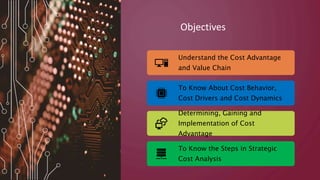
Objectives
Understand the Cost Advantage
and Value Chain
To Know About Cost Behavior,
Cost Drivers and Cost Dynamics
Determining, Gaining and
Implementation of Cost
Advantage
To Know the Steps in Strategic
Cost Analysis
Cost Advantage
A company has a cost advantage when it can
produce a product or provide a service at a
lower cost than its competitors
Elements of Cost
Advantage
• Access to low-cost raw materials
• Efficient processes and technologies
• Low distribution and sales costs
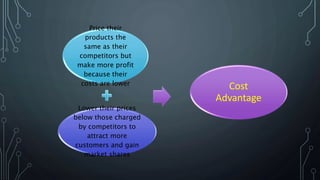
Price their
products the
same as their
competitors but
make more profit
because their
costs are lower
Lower their prices
below those charged
by competitors to
attract more
customers and gain
market shares
Cost
Advantage
The Value Chain
and Cost Analysis
• The behavior of a firm's costs and its
relative cost position stem from the value
activities the firm performs in competing
in an industry.
• Cost advantage results if the firm achieves
a lower cumulative cost of performing
value activities than its competitors.
The Value Chain and
Cost Analysis
Defining the Value Chain for
Cost Analysis
Determining the Purposes of
Cost Analysis
Assigning the Cost and Assets
First Cut Analysis of Costs
Cost Behavior
Cost behavior is an indicator of how a cost
will change in total when there is a change in
some activity.
It is also the manner in which expenses are
impacted by changes in business activity.
Cost Drivers
Interrelationship
s
Integration
Timing
Location
Economies of Scale
Learning
The Pattern of
Capacity Utilization
Linkages
The Cost of
Purchased
Inputs
• The cost of purchased inputs is an
integral part of the cost of a value activity,
and the cost drivers described above
determine the behavior of input costs.
• Purchased inputs divide into purchased
operating inputs and purchased assets.
Segment Cost Behavior
The cost analysis at the segment level must
often supplement analysis at the business
unit level. Identifying important differences in
the value activities for different segments is a
starting point in segment cost analysis.

In practice, however, a business unit usually
produces a number of different product
varieties and sells them to a number of
different buyers . It may also employ a
number of different distributions channels.
Segment Cost Behavior
A firm should analyze the costs of those product lines,
buyer types, or other portions of its activities that:
 Have significantly different value chains
 Appear to have different cost drivers
 Employ questionable procedures for allocating costs
Cost
Dynamics
Cost dynamics refers analysis of cost
behavior how the absolute and relative
cost of value activities will change over
time independent of its strategy. Porter
terms this cost dynamics.
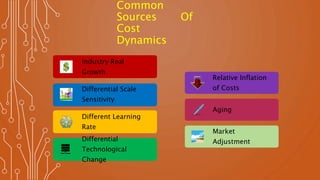
Common
Sources Of
Cost
Dynamics
Relative Inflation
of Costs
Aging
Market
Adjustment
Industry Real
Growth
Differential Scale
Sensitivity
Different Learning
Rate
Differential
Technological
Change
Determining
the Relative
Cost of
Competitors
• First Step: Determining competitor costs
is to identify competitor value chains and
how activities are performed by them.
• Second Step: Typically improve the
accuracy of estimates of competitor’s
costs by examining several competitors
simultaneously.
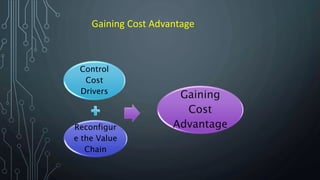
Gaining Cost Advantage
Control
Cost
Drivers
Reconfigur
e the Value
Chain
Gaining
Cost
Advantage
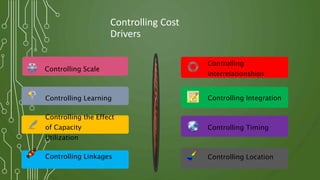
Controlling Cost
Drivers
Controlling Scale
Controlling Learning
Controlling the Effect
of Capacity
Utilization
Controlling Linkages
Controlling
Interrelationships
Controlling Integration
Controlling Timing
Controlling Location
Reconfigurin
g the Value
Chain
• A different production process
• Differences in automation
• Direct sales instead of indirect sales
• A new distribution channel
• A new raw material
• New advertising media
Sustainability of
Cost Advantage
Cost advantage is sustainable if there are
entry or mobility barriers that prevent
competitors from imitating its sources.
Some drivers, however, tend to be more
sustainable than others:
• Economic of scale
• Economics of learning
• Process, technology & Design
• Capacity
• Input cost
Implementati
on and Cost
Advantage
Costs do not go down automatically or by
accident. No cost driver works automatically.
Factors contribute to a firm's ability to achieve
cost leadership.
• Training and motivation of employees firm's
culture
• Adoption of formal cost reduction programs
• Constant pursuit of automation
• Strong belief in the learning curve
Pitfalls in Cost
Leadership
Strategies
Exclusive Focus
on the Cost of
Manufacturing
Activities
Ignoring
Procurement
Overlooking
Indirect or Small
Activities
False Perception
of Cost Drivers
Failure to Exploit
Linkages
Unwitting Cross
Subsidy
Steps in Strategic
Cost Analysis
1. Identify the appropriate value chain and assign costs and assets to it.
2. Diagnose the cost drivers of each value activity and how they interact.
3. Identify competitor value chains, and determine the relative cost of
competitors and the sources of cost differences.
4. Ensure that cost reduction efforts do not erode differentiation, or make a
conscious choice to do so.
5. Test the cost reduction strategy for sustainability
THANK YOU

Cost Advantage.pptx

  • 1.
  • 2.
  • 3.
    Objectives Understand the CostAdvantage and Value Chain To Know About Cost Behavior, Cost Drivers and Cost Dynamics Determining, Gaining and Implementation of Cost Advantage To Know the Steps in Strategic Cost Analysis
  • 4.
    Cost Advantage A companyhas a cost advantage when it can produce a product or provide a service at a lower cost than its competitors
  • 5.
    Elements of Cost Advantage •Access to low-cost raw materials • Efficient processes and technologies • Low distribution and sales costs
  • 6.
    Price their products the sameas their competitors but make more profit because their costs are lower Lower their prices below those charged by competitors to attract more customers and gain market shares Cost Advantage
  • 7.
    The Value Chain andCost Analysis • The behavior of a firm's costs and its relative cost position stem from the value activities the firm performs in competing in an industry. • Cost advantage results if the firm achieves a lower cumulative cost of performing value activities than its competitors.
  • 8.
    The Value Chainand Cost Analysis Defining the Value Chain for Cost Analysis Determining the Purposes of Cost Analysis Assigning the Cost and Assets First Cut Analysis of Costs
  • 9.
    Cost Behavior Cost behavioris an indicator of how a cost will change in total when there is a change in some activity. It is also the manner in which expenses are impacted by changes in business activity.
  • 10.
    Cost Drivers Interrelationship s Integration Timing Location Economies ofScale Learning The Pattern of Capacity Utilization Linkages
  • 11.
    The Cost of Purchased Inputs •The cost of purchased inputs is an integral part of the cost of a value activity, and the cost drivers described above determine the behavior of input costs. • Purchased inputs divide into purchased operating inputs and purchased assets.
  • 12.
    Segment Cost Behavior Thecost analysis at the segment level must often supplement analysis at the business unit level. Identifying important differences in the value activities for different segments is a starting point in segment cost analysis. In practice, however, a business unit usually produces a number of different product varieties and sells them to a number of different buyers . It may also employ a number of different distributions channels.
  • 13.
    Segment Cost Behavior Afirm should analyze the costs of those product lines, buyer types, or other portions of its activities that:  Have significantly different value chains  Appear to have different cost drivers  Employ questionable procedures for allocating costs
  • 14.
    Cost Dynamics Cost dynamics refersanalysis of cost behavior how the absolute and relative cost of value activities will change over time independent of its strategy. Porter terms this cost dynamics.
  • 15.
    Common Sources Of Cost Dynamics Relative Inflation ofCosts Aging Market Adjustment Industry Real Growth Differential Scale Sensitivity Different Learning Rate Differential Technological Change
  • 16.
    Determining the Relative Cost of Competitors •First Step: Determining competitor costs is to identify competitor value chains and how activities are performed by them. • Second Step: Typically improve the accuracy of estimates of competitor’s costs by examining several competitors simultaneously.
  • 17.
    Gaining Cost Advantage Control Cost Drivers Reconfigur ethe Value Chain Gaining Cost Advantage
  • 18.
    Controlling Cost Drivers Controlling Scale ControllingLearning Controlling the Effect of Capacity Utilization Controlling Linkages Controlling Interrelationships Controlling Integration Controlling Timing Controlling Location
  • 19.
    Reconfigurin g the Value Chain •A different production process • Differences in automation • Direct sales instead of indirect sales • A new distribution channel • A new raw material • New advertising media
  • 20.
    Sustainability of Cost Advantage Costadvantage is sustainable if there are entry or mobility barriers that prevent competitors from imitating its sources. Some drivers, however, tend to be more sustainable than others: • Economic of scale • Economics of learning • Process, technology & Design • Capacity • Input cost
  • 21.
    Implementati on and Cost Advantage Costsdo not go down automatically or by accident. No cost driver works automatically. Factors contribute to a firm's ability to achieve cost leadership. • Training and motivation of employees firm's culture • Adoption of formal cost reduction programs • Constant pursuit of automation • Strong belief in the learning curve
  • 22.
    Pitfalls in Cost Leadership Strategies ExclusiveFocus on the Cost of Manufacturing Activities Ignoring Procurement Overlooking Indirect or Small Activities False Perception of Cost Drivers Failure to Exploit Linkages Unwitting Cross Subsidy
  • 23.
    Steps in Strategic CostAnalysis 1. Identify the appropriate value chain and assign costs and assets to it. 2. Diagnose the cost drivers of each value activity and how they interact. 3. Identify competitor value chains, and determine the relative cost of competitors and the sources of cost differences. 4. Ensure that cost reduction efforts do not erode differentiation, or make a conscious choice to do so. 5. Test the cost reduction strategy for sustainability
  • 24.