Competitive Advantage Author: Michael Porter Instructor: Wesley Shu
How a firm can actually create and sustain a competitive advantage in its industry
Two Basic Types Cost leadership Differentiation
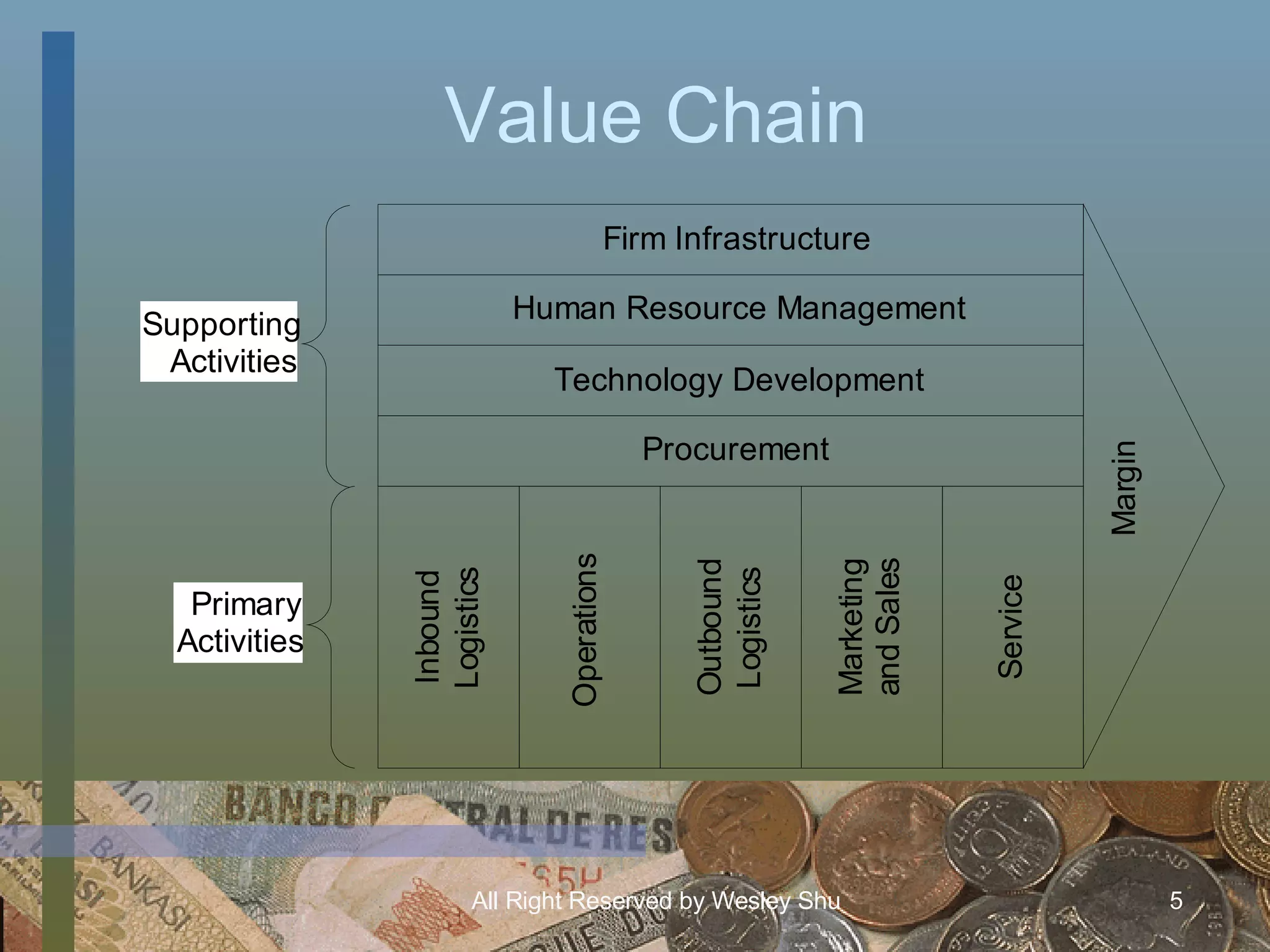
Value Chain Identify which activities contributing to cost leadership and differentiation Analyze the source of competitive advantage
Value Chain
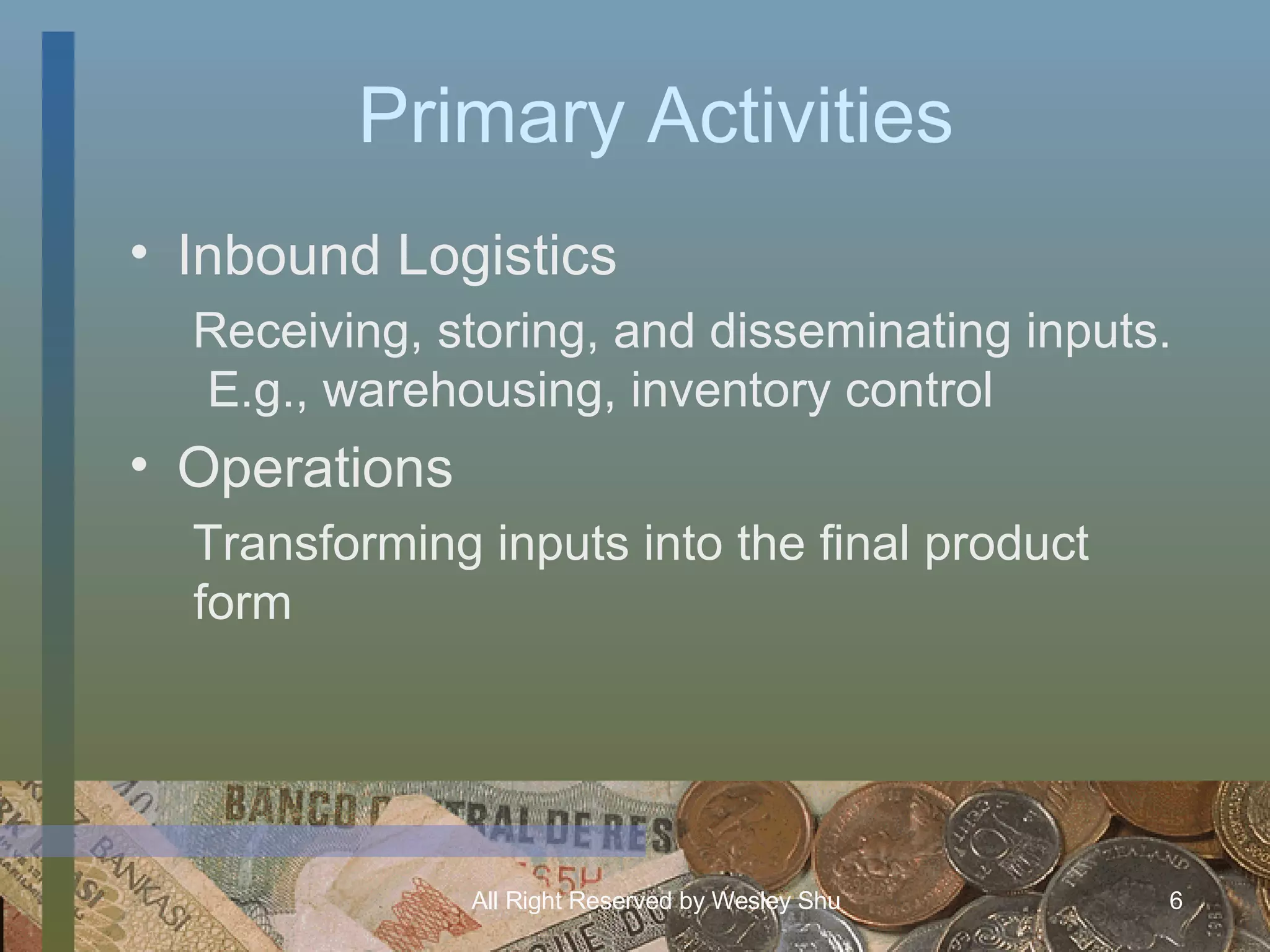
Primary Activities Inbound Logistics Receiving, storing, and disseminating inputs.  E.g., warehousing, inventory control Operations Transforming inputs into the final product form
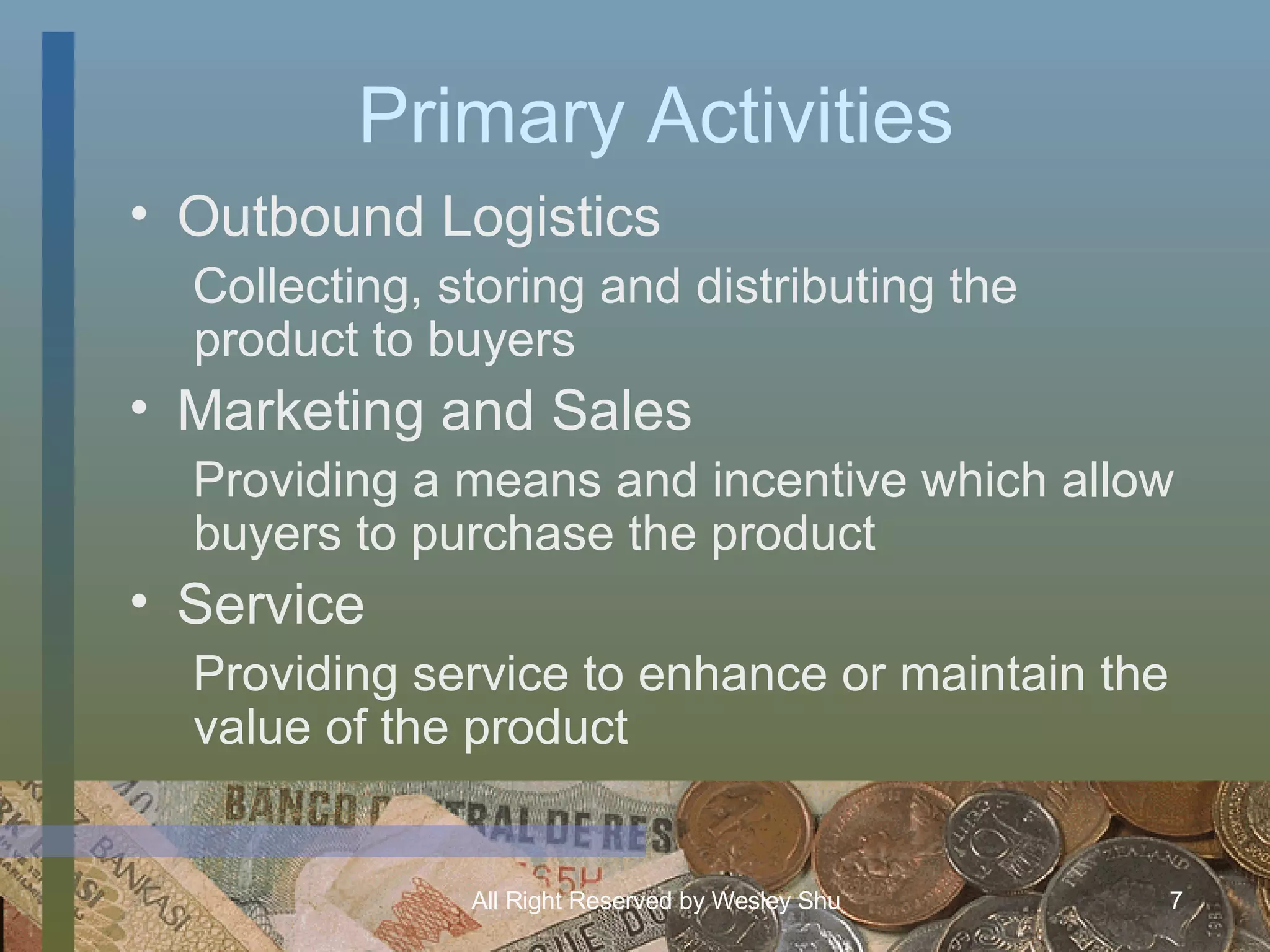
Primary Activities Outbound Logistics Collecting, storing and distributing the product to buyers Marketing and Sales Providing a means and incentive which allow buyers to purchase the product Service Providing service to enhance or maintain the value of the product
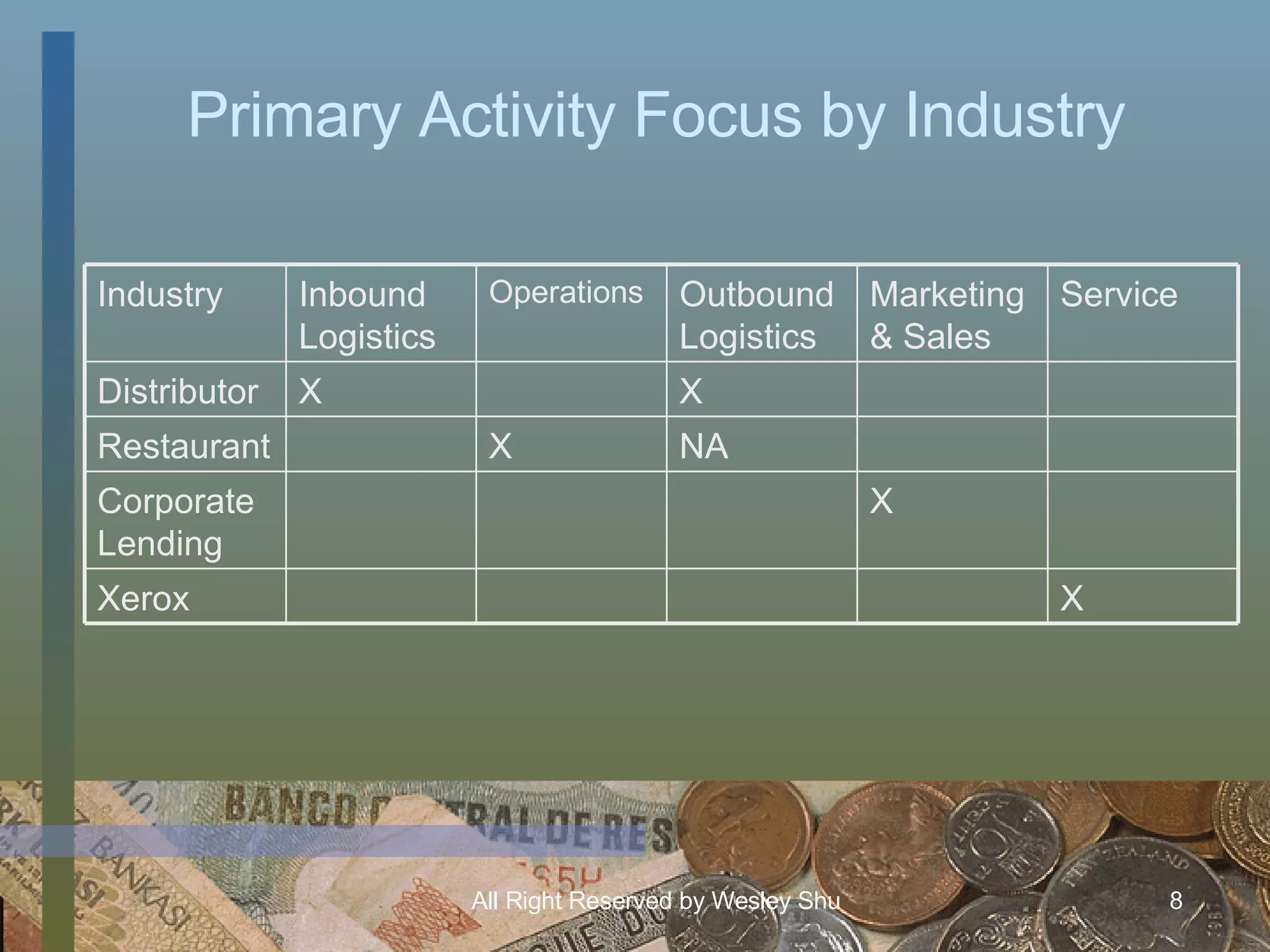
Primary Activity Focus by Industry X Marketing & Sales X Xerox Corporate Lending NA X Restaurant X X Distributor Service Outbound Logistics Operations Inbound Logistics Industry
Support Activities Procurement Function of purchasing inputs used in the value chain Technology Development
Support Activities Human Resource Management Firm Infrastructure planning, finance, accounting, legal, etc.
Competitive Scope Segment Scope Differences required to serve different product or buyer segment Vertical Scope Division of activities between a firm and its suppliers, channels, and buyers
Competitive Scope Geographic Scope Different geographic areas Industry Scope Interrelationships among business units
“ Generic” Competitive Advantage Cost Leadership Differentiation Focus
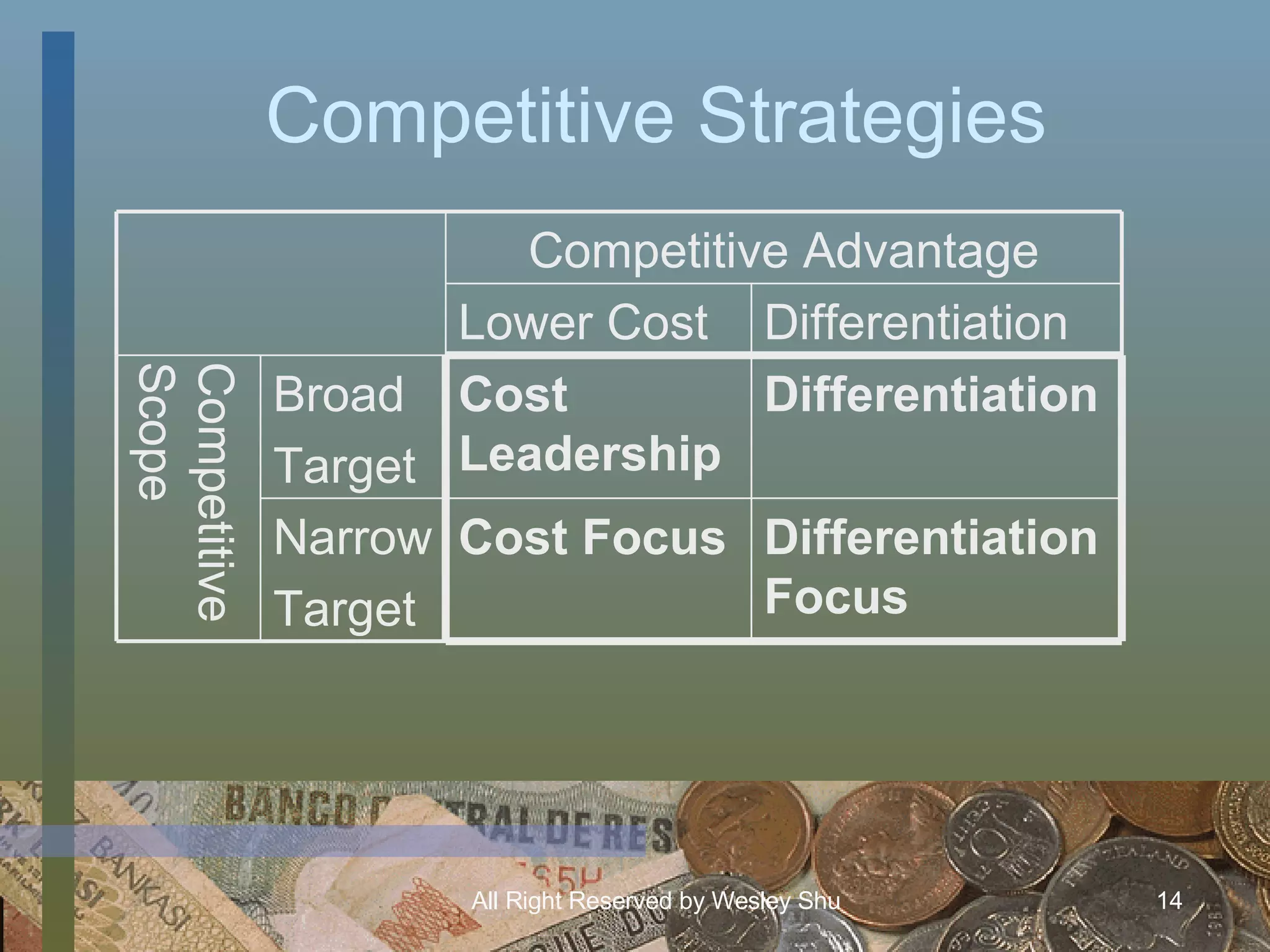
Competitive Strategies Differentiation Focus Cost Focus Narrow Target Differentiation Cost Leadership Broad Target Competitive Scope Differentiation Lower Cost Competitive Advantage
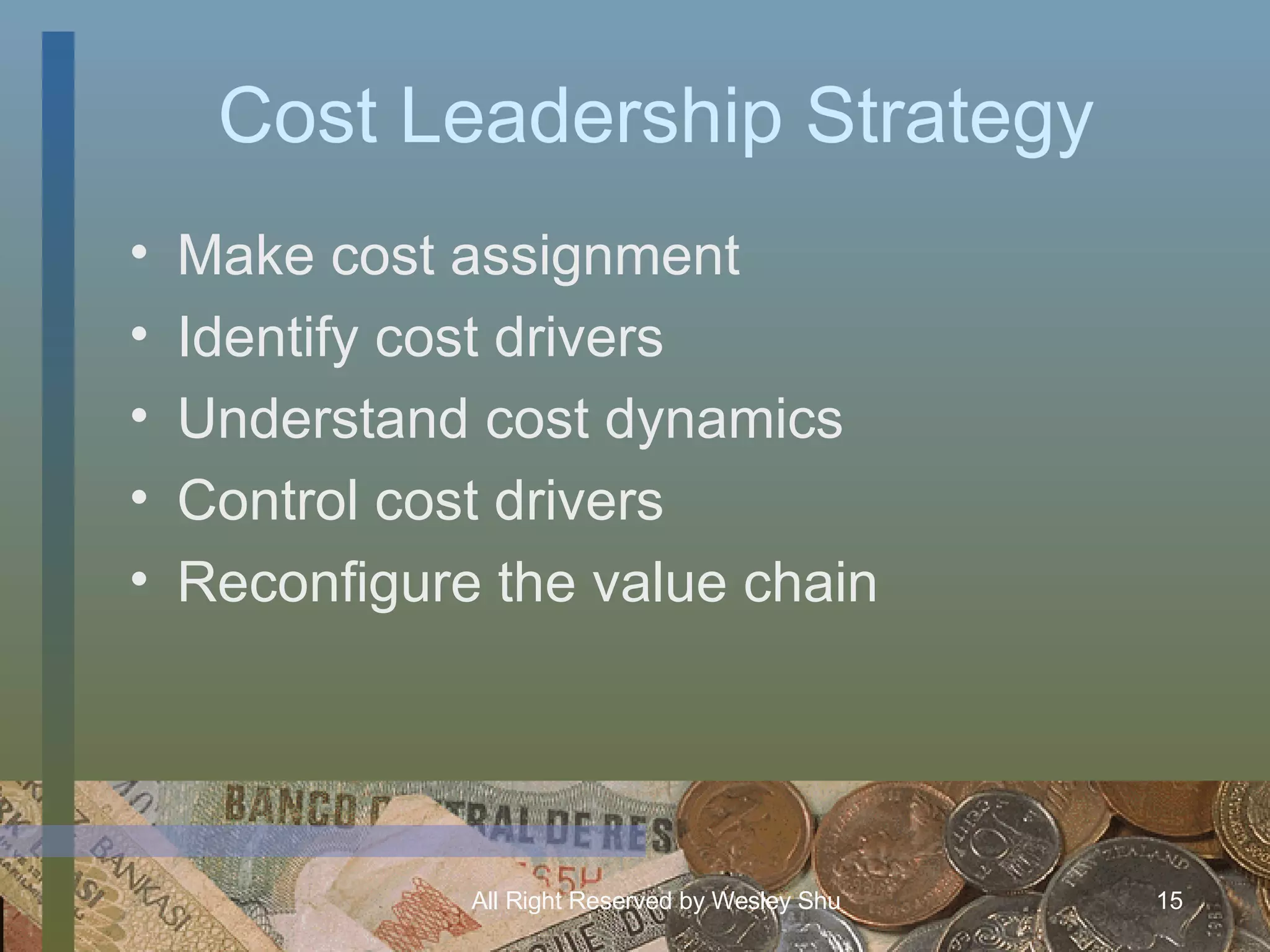
Cost Leadership Strategy Make cost assignment Identify cost drivers Understand cost dynamics Control cost drivers Reconfigure the value chain
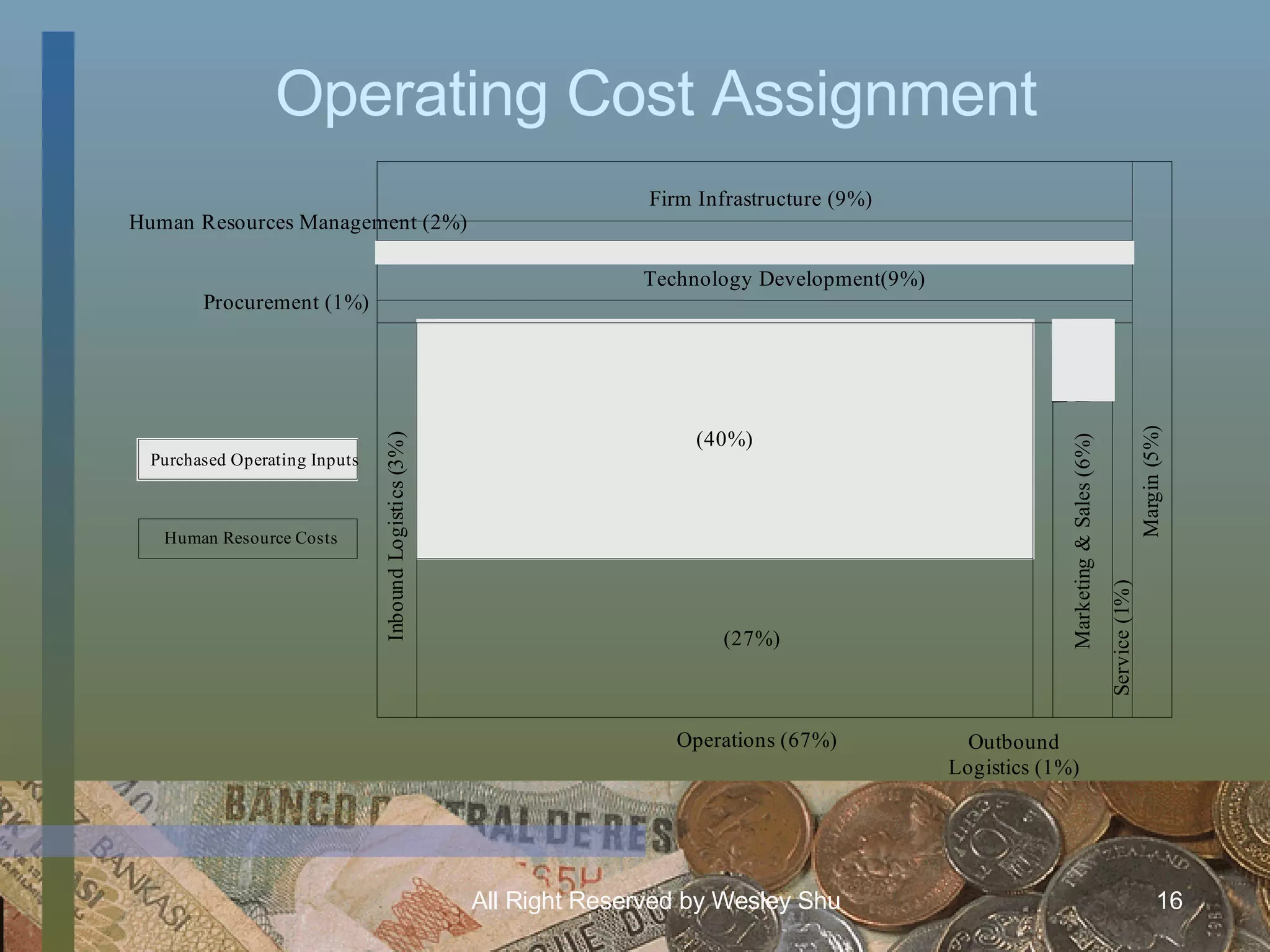
Operating Cost Assignment
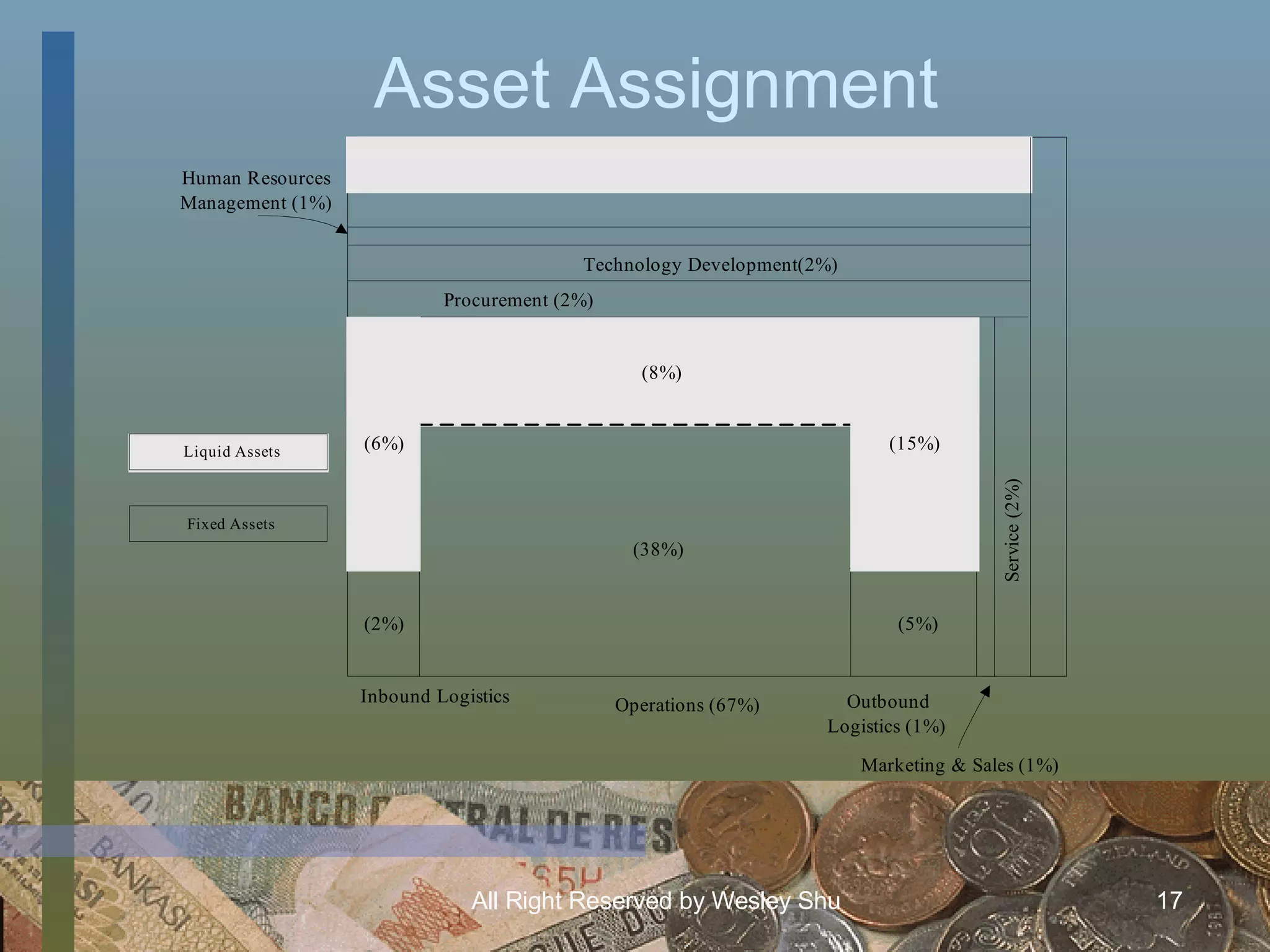
Asset Assignment
Cost Leadership – Cost Drivers Economies or diseconomies of scale Learning and spillover Pattern of capacity utilization Linkages  How other activities are performed Linkages within the Value Chain Vertical Linkages
Cost Leadership – Cost Drivers Interrelationships With other business units within a firm Integration Vertical integration in a value activity Timing
Cost Leadership – Cost Drivers Discretionary policies Policies that reflect a firm’s strategy Location Institutional factors e.g., government regulations, financial incentives, unionization, etc.
Identify Cost Drivers
Cost Dynamics What cause the change of cost drivers
Cost Dynamics Industry real growth Differential scale sensitivity Different learning rates Differential technological change Relative inflation of costs Aging Market adjustment
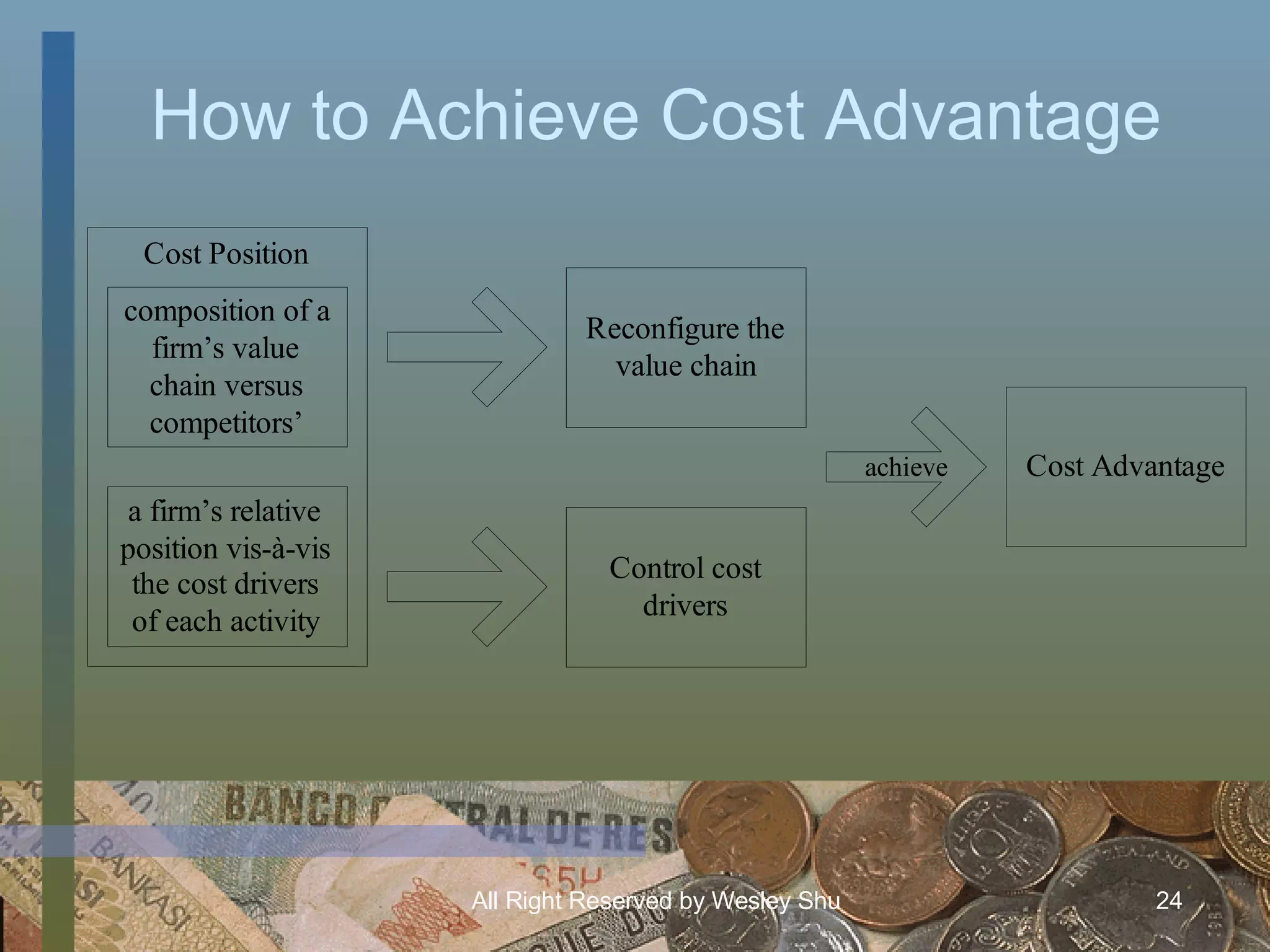
How to Achieve Cost Advantage
Analyze Cost Advantage
Control Cost Drivers
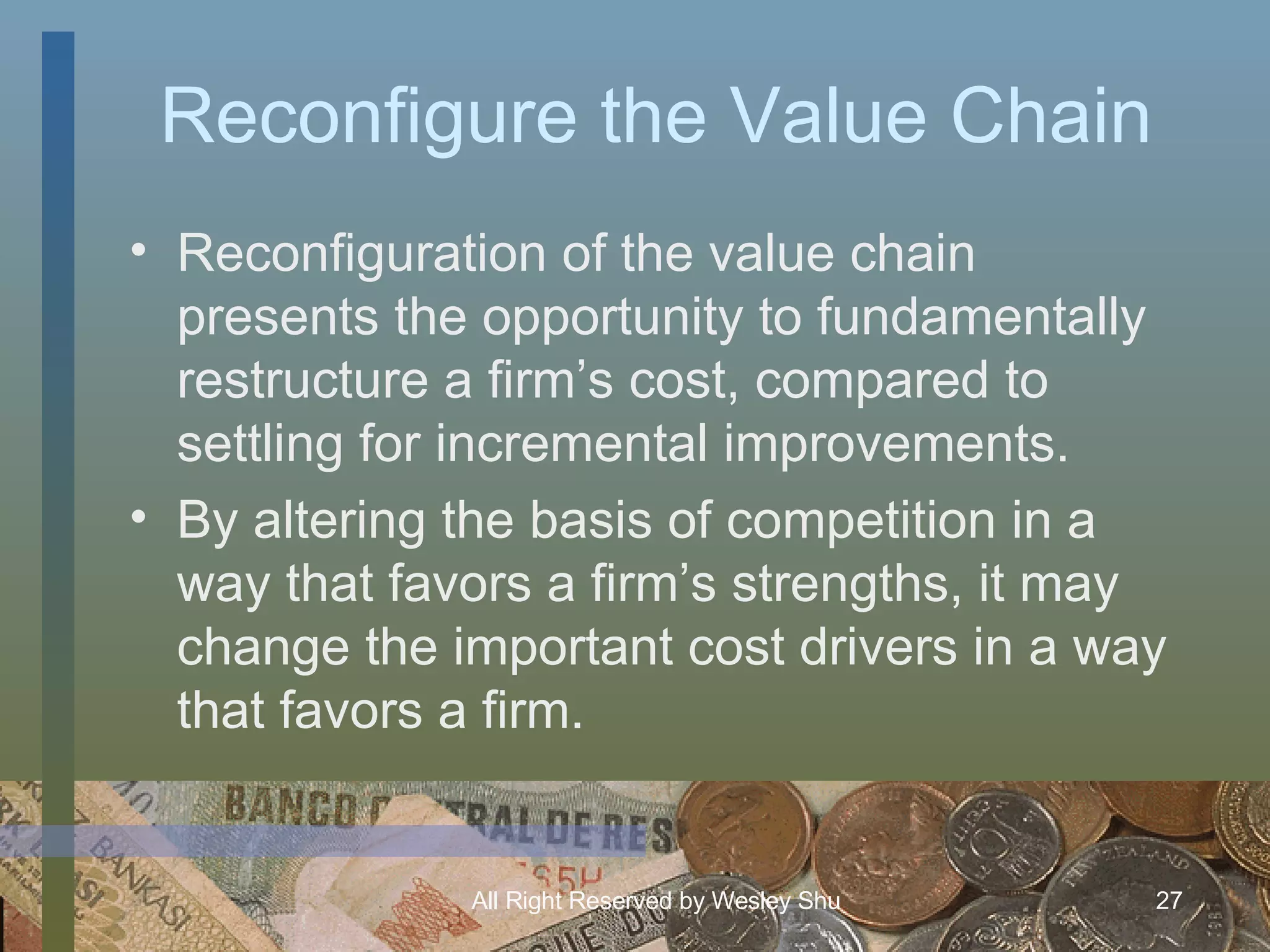
Reconfigure the Value Chain Reconfiguration of the value chain presents the opportunity to fundamentally restructure a firm’s cost, compared to settling for incremental improvements. By altering the basis of competition in a way that favors a firm’s strengths, it may change the important cost drivers in a way that favors a firm.
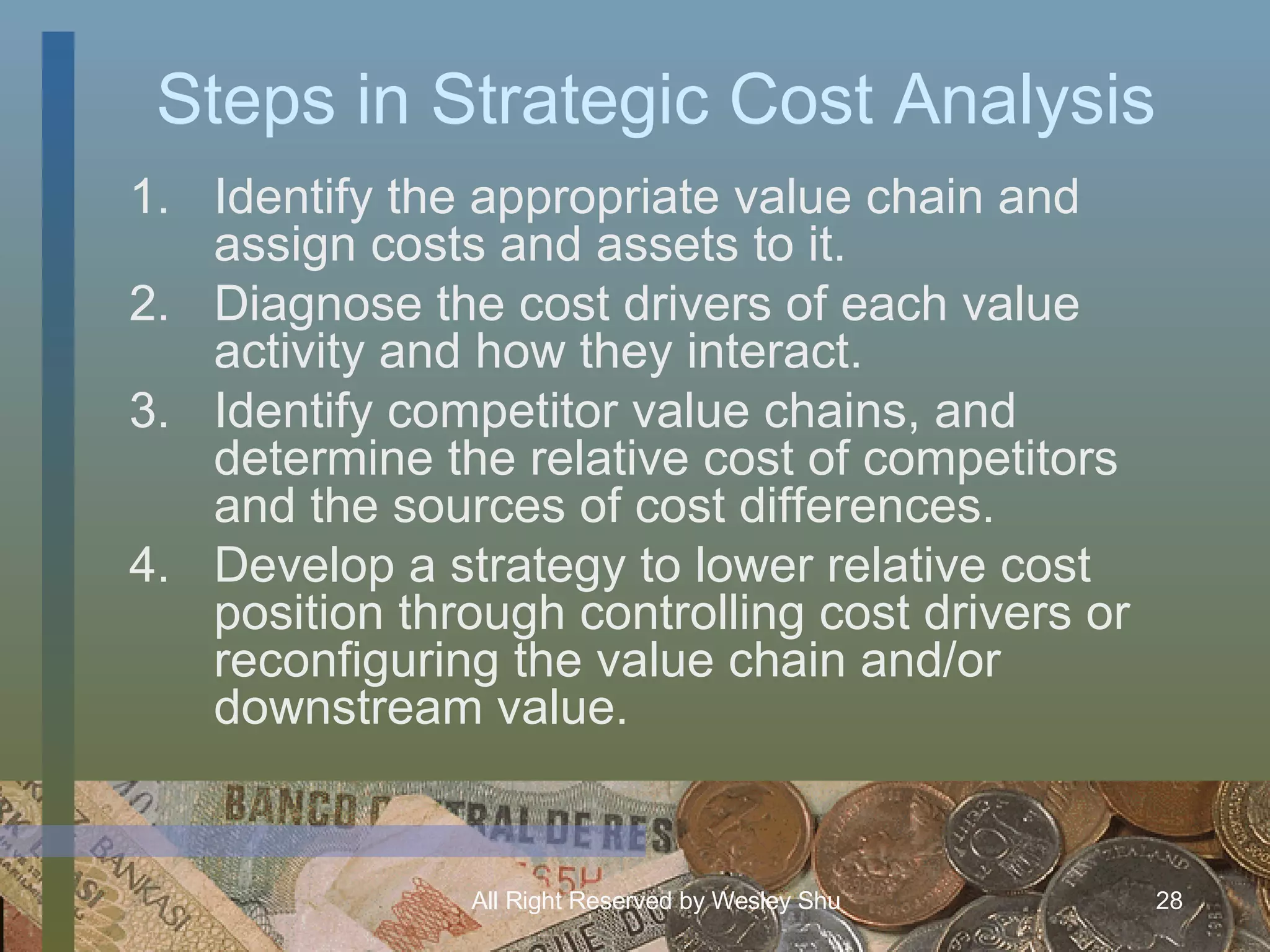
Steps in Strategic Cost Analysis Identify the appropriate value chain and assign costs and assets to it. Diagnose the cost drivers of each value activity and how they interact. Identify competitor value chains, and determine the relative cost of competitors and the sources of cost differences. Develop a strategy to lower relative cost position through controlling cost drivers or reconfiguring the value chain and/or downstream value.
Cost Focus A firm dedicates its efforts to a well-chosen segment of an industry can often lower its costs significantly.
Differentiation Emphasize on a unique source of differentiation in the Value Chain, rather than on products or markets only Differentiation base on buyers’ value, not only difference that buyers do not value  Should consider the cost of differentiation
 
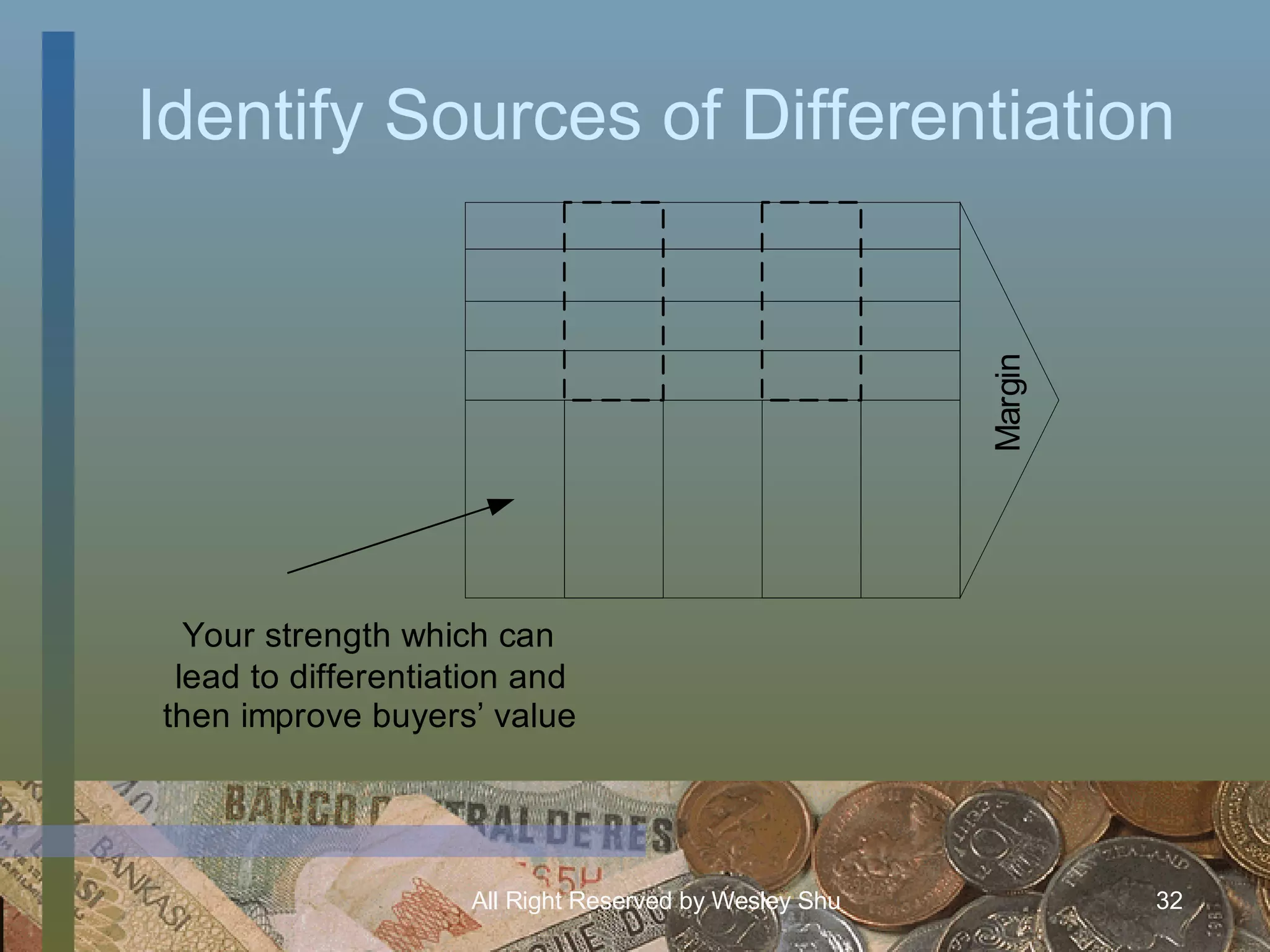
Identify Sources of Differentiation
Drivers of Uniqueness Policy Choices Linkages Linkages within the value chain Supplier linkages Channel linkages Timing Be the first Location
Drivers of Uniqueness Interrelationship Sharing a value activity with sister business units. E.g., sharing a sales force for both insurance and other financial products Proprietary learning Integration – e.g., integrating online systems to current ordering systems Scale Institutional factors – e.g., “Madame’s route”
Why buyers purchase? Purchasing Criteria User criteria – firms to meet them by lowering cost or raising buyer performance Signaling criteria
Differentiation for creating Buyer Value by Lowering buyer cost Raising buyer performance Signaling the value Linking the firm’s value chain to the buyer’s value chain Through
Steps in Differentiation Determine who the real buyer is Identify the buyer’s value chain and the firm’s impact on it Determine ranked buyer purchasing criteria Assess the existing and potential sources of uniqueness in a firm’s value chain
Steps in Differentiation Identify the cost of existing and potential sources of differentiation Choose the configuration of value activities that creates the most valuable differentiation for the buyer relative to cost of differentiating Test the chosen differentiation strategy for sustainability Reduce cost in activities that do not affect the chosen forms of differentiation
Discussion:  Red Ocean to Blue Ocean
Other Discussion Creative Industries Supply Chain Management What is “Buyer’s Value Chain”?

Michael Porters Competitive Advantage 6110

  • 1.
    Competitive Advantage Author:Michael Porter Instructor: Wesley Shu
  • 2.
    How a firmcan actually create and sustain a competitive advantage in its industry
  • 3.
    Two Basic TypesCost leadership Differentiation
  • 4.
    Value Chain Identifywhich activities contributing to cost leadership and differentiation Analyze the source of competitive advantage
  • 5.
  • 6.
    Primary Activities InboundLogistics Receiving, storing, and disseminating inputs. E.g., warehousing, inventory control Operations Transforming inputs into the final product form
  • 7.
    Primary Activities OutboundLogistics Collecting, storing and distributing the product to buyers Marketing and Sales Providing a means and incentive which allow buyers to purchase the product Service Providing service to enhance or maintain the value of the product
  • 8.
    Primary Activity Focusby Industry X Marketing & Sales X Xerox Corporate Lending NA X Restaurant X X Distributor Service Outbound Logistics Operations Inbound Logistics Industry
  • 9.
    Support Activities ProcurementFunction of purchasing inputs used in the value chain Technology Development
  • 10.
    Support Activities HumanResource Management Firm Infrastructure planning, finance, accounting, legal, etc.
  • 11.
    Competitive Scope SegmentScope Differences required to serve different product or buyer segment Vertical Scope Division of activities between a firm and its suppliers, channels, and buyers
  • 12.
    Competitive Scope GeographicScope Different geographic areas Industry Scope Interrelationships among business units
  • 13.
    “ Generic” CompetitiveAdvantage Cost Leadership Differentiation Focus
  • 14.
    Competitive Strategies DifferentiationFocus Cost Focus Narrow Target Differentiation Cost Leadership Broad Target Competitive Scope Differentiation Lower Cost Competitive Advantage
  • 15.
    Cost Leadership StrategyMake cost assignment Identify cost drivers Understand cost dynamics Control cost drivers Reconfigure the value chain
  • 16.
  • 17.
  • 18.
    Cost Leadership –Cost Drivers Economies or diseconomies of scale Learning and spillover Pattern of capacity utilization Linkages How other activities are performed Linkages within the Value Chain Vertical Linkages
  • 19.
    Cost Leadership –Cost Drivers Interrelationships With other business units within a firm Integration Vertical integration in a value activity Timing
  • 20.
    Cost Leadership –Cost Drivers Discretionary policies Policies that reflect a firm’s strategy Location Institutional factors e.g., government regulations, financial incentives, unionization, etc.
  • 21.
  • 22.
    Cost Dynamics Whatcause the change of cost drivers
  • 23.
    Cost Dynamics Industryreal growth Differential scale sensitivity Different learning rates Differential technological change Relative inflation of costs Aging Market adjustment
  • 24.
    How to AchieveCost Advantage
  • 25.
  • 26.
  • 27.
    Reconfigure the ValueChain Reconfiguration of the value chain presents the opportunity to fundamentally restructure a firm’s cost, compared to settling for incremental improvements. By altering the basis of competition in a way that favors a firm’s strengths, it may change the important cost drivers in a way that favors a firm.
  • 28.
    Steps in StrategicCost Analysis Identify the appropriate value chain and assign costs and assets to it. Diagnose the cost drivers of each value activity and how they interact. Identify competitor value chains, and determine the relative cost of competitors and the sources of cost differences. Develop a strategy to lower relative cost position through controlling cost drivers or reconfiguring the value chain and/or downstream value.
  • 29.
    Cost Focus Afirm dedicates its efforts to a well-chosen segment of an industry can often lower its costs significantly.
  • 30.
    Differentiation Emphasize ona unique source of differentiation in the Value Chain, rather than on products or markets only Differentiation base on buyers’ value, not only difference that buyers do not value Should consider the cost of differentiation
  • 31.
  • 32.
    Identify Sources ofDifferentiation
  • 33.
    Drivers of UniquenessPolicy Choices Linkages Linkages within the value chain Supplier linkages Channel linkages Timing Be the first Location
  • 34.
    Drivers of UniquenessInterrelationship Sharing a value activity with sister business units. E.g., sharing a sales force for both insurance and other financial products Proprietary learning Integration – e.g., integrating online systems to current ordering systems Scale Institutional factors – e.g., “Madame’s route”
  • 35.
    Why buyers purchase?Purchasing Criteria User criteria – firms to meet them by lowering cost or raising buyer performance Signaling criteria
  • 36.
    Differentiation for creatingBuyer Value by Lowering buyer cost Raising buyer performance Signaling the value Linking the firm’s value chain to the buyer’s value chain Through
  • 37.
    Steps in DifferentiationDetermine who the real buyer is Identify the buyer’s value chain and the firm’s impact on it Determine ranked buyer purchasing criteria Assess the existing and potential sources of uniqueness in a firm’s value chain
  • 38.
    Steps in DifferentiationIdentify the cost of existing and potential sources of differentiation Choose the configuration of value activities that creates the most valuable differentiation for the buyer relative to cost of differentiating Test the chosen differentiation strategy for sustainability Reduce cost in activities that do not affect the chosen forms of differentiation
  • 39.
    Discussion: RedOcean to Blue Ocean
  • 40.
    Other Discussion CreativeIndustries Supply Chain Management What is “Buyer’s Value Chain”?