DIGITAL IMAGE PROCESSING
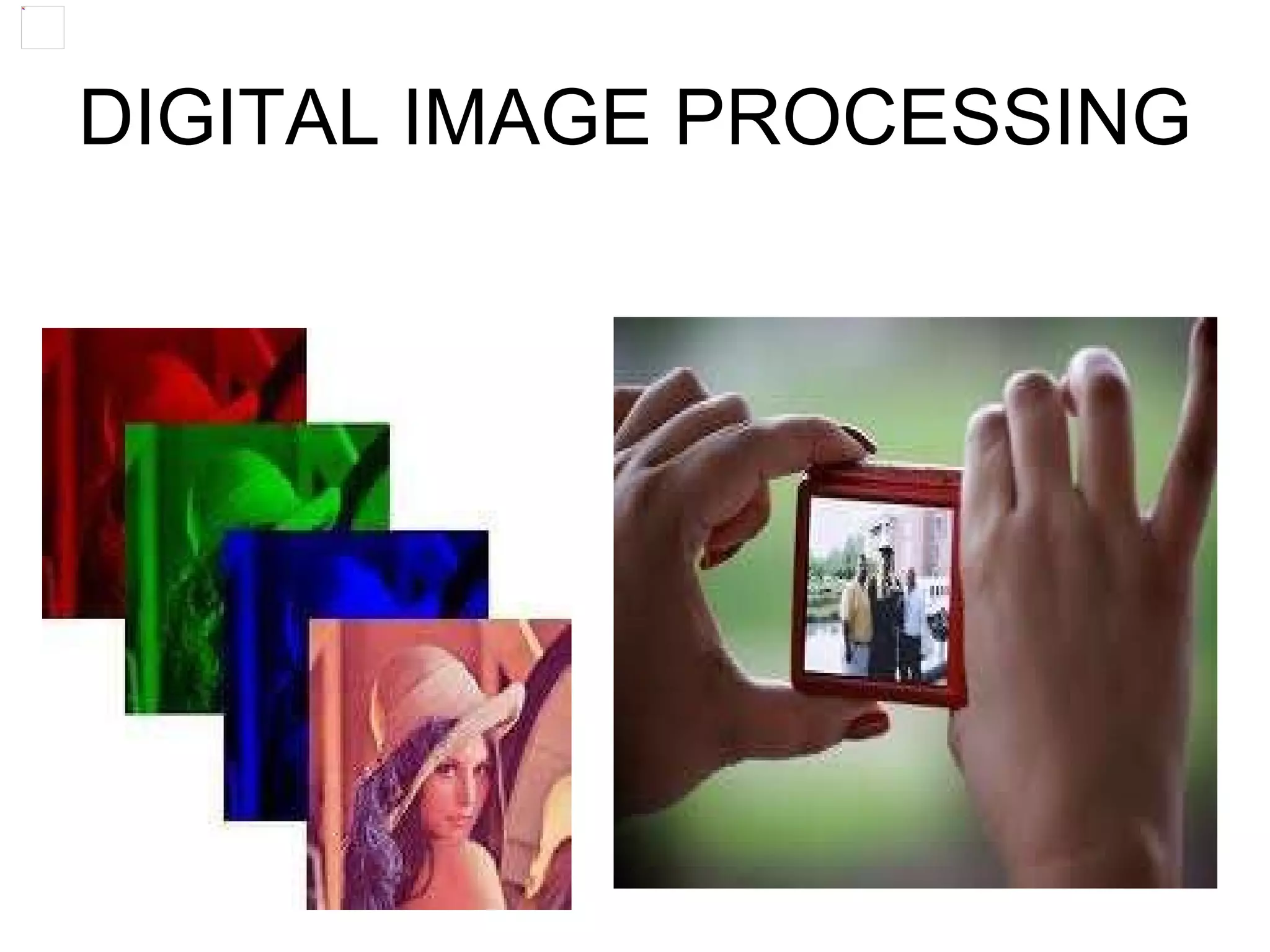
Meaning of digital image processing Digital :Information represented in discrete (digits) form. Image :A reproduction of the form of a person or object . Processing :performing a series of actions or operations on data to convert into information DIP: The  Digital image processing  is the use of computer algorithms to perform image processing on digital images.
Functional Categories of Image Processing  Image Restoration: used   for data errors, noise, and  distortions introduced during the scanning, recording. I mage Enhancement  : Enhancement is the modification of an image to alter its impact on the viewer  Information Extraction  : utilize computers to provide corrected and improved images for study by human interpreters.
Steps in image processing Image Acquisition Image enhancement Image Restoration   Colour image Processing   Wavelets   Compression   Segmentation
Need of image processing The digital image is “invisible” .it must be prepared for viewing on one or more o/p devices(laser printer, monitor etc) The digital image can be optimized for the application by enhancing for altering the appearances of structures within it.
Application of digital image processing Medical applications  Restorations and enhancements  Digital cinema  Image transmission and coding  Color processing  Remote sensing  Robot vision Image processing architectures  Video processing
Filtering in image processing The filtering used to eliminating noise. This filter performs spatial filtering on each individual pixel in an image using the grey level values in a square or rectangular window surrounding each pixel. For example: a1 a2 a3  a4 a5 a6 3x3 filter window  a7 a8 a9  The average filter computes the sum of all pixels in the filter window and then divides the sum by the number of pixels in the filter window: Filtered pixel = (a1 + a2 + a3 + a4 ... + a9) / 9
Technologies Pixelization Principal components analysis Independent component analysis Hidden markov models Self organizing maps Neural networks  Wavelets
Advantages  Digital image proseeing made digital image can be  noise free . It can be made available in any desired format. (X-rays, photo negatives, improved image, etc) Digital imaging is the ability of the operator to post-process the image .It means manipulate the pixel shades to correct image density and contrast . Images can be stored in the computer memory and easily retrieved on the same computer screen . Digital imaging allows the electronic transmission of images to third-party providers
Disadvantages The initial cost can be high depending on the system used . If  computer  is crashes then pics that have not been printed and filed into Book Albums that are lost. Digital cameras which are used for digital image processing have some disadvantages like: Memory Card Problems   Higher Cost   Battery Consumption
 

Digital image processing

  • 1.
  • 2.
    Meaning of digitalimage processing Digital :Information represented in discrete (digits) form. Image :A reproduction of the form of a person or object . Processing :performing a series of actions or operations on data to convert into information DIP: The  Digital image processing  is the use of computer algorithms to perform image processing on digital images.
  • 3.
    Functional Categories ofImage Processing Image Restoration: used   for data errors, noise, and distortions introduced during the scanning, recording. I mage Enhancement  : Enhancement is the modification of an image to alter its impact on the viewer Information Extraction  : utilize computers to provide corrected and improved images for study by human interpreters.
  • 4.
    Steps in imageprocessing Image Acquisition Image enhancement Image Restoration Colour image Processing Wavelets Compression Segmentation
  • 5.
    Need of imageprocessing The digital image is “invisible” .it must be prepared for viewing on one or more o/p devices(laser printer, monitor etc) The digital image can be optimized for the application by enhancing for altering the appearances of structures within it.
  • 6.
    Application of digitalimage processing Medical applications Restorations and enhancements Digital cinema Image transmission and coding Color processing Remote sensing Robot vision Image processing architectures Video processing
  • 7.
    Filtering in imageprocessing The filtering used to eliminating noise. This filter performs spatial filtering on each individual pixel in an image using the grey level values in a square or rectangular window surrounding each pixel. For example: a1 a2 a3  a4 a5 a6 3x3 filter window  a7 a8 a9  The average filter computes the sum of all pixels in the filter window and then divides the sum by the number of pixels in the filter window: Filtered pixel = (a1 + a2 + a3 + a4 ... + a9) / 9
  • 8.
    Technologies Pixelization Principalcomponents analysis Independent component analysis Hidden markov models Self organizing maps Neural networks Wavelets
  • 9.
    Advantages Digitalimage proseeing made digital image can be noise free . It can be made available in any desired format. (X-rays, photo negatives, improved image, etc) Digital imaging is the ability of the operator to post-process the image .It means manipulate the pixel shades to correct image density and contrast . Images can be stored in the computer memory and easily retrieved on the same computer screen . Digital imaging allows the electronic transmission of images to third-party providers
  • 10.
    Disadvantages The initialcost can be high depending on the system used . If computer is crashes then pics that have not been printed and filed into Book Albums that are lost. Digital cameras which are used for digital image processing have some disadvantages like: Memory Card Problems Higher Cost Battery Consumption
  • 11.