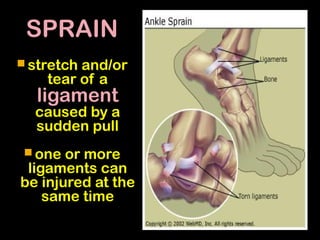
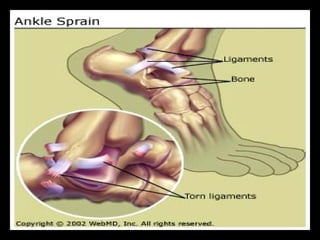
SPRAIN
 stretch and/or
tear of a
ligament
caused by a
sudden pull
 one or more
ligaments can
be injured at the
same time
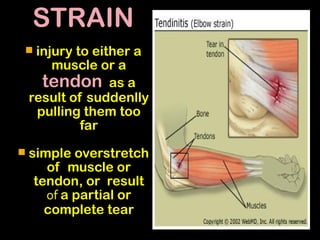
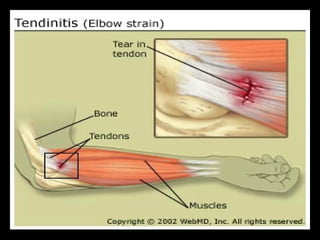
STRAIN
 injury to either a
muscle or a
tendon as a
result of suddenlly
pulling them too
far
 simple overstretch
of muscle or
tendon, or result
of a partial or
complete tear
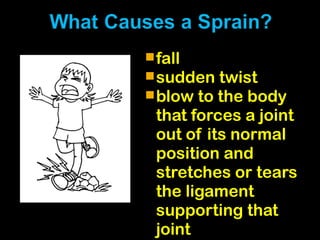
fall
sudden twist
blow to the body
that forces a joint
out of its normal
position and
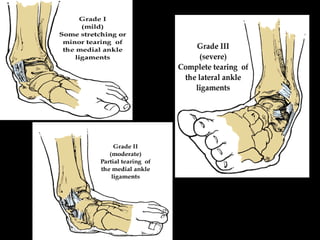
stretches or tears
the ligament
supporting that
joint
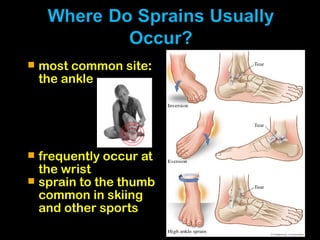
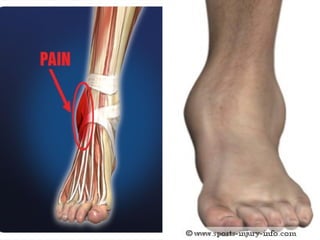
 most common site:
the ankle
 frequently occur at
the wrist
 sprain to the thumb
common in skiing
and other sports
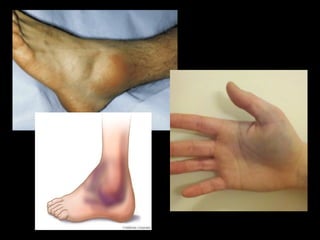
pain
swelling
bruising
loss of functional ability
sometimes a pop or tear
when the injury happens
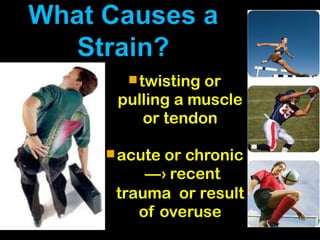
twisting or
pulling a muscle
or tendon
acute or chronic
—› recent
trauma or result
of overuse
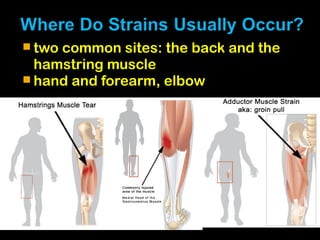
 two common sites: the back and the
hamstring muscle
 hand and forearm, elbow
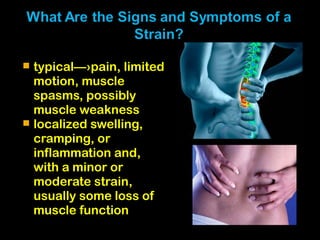
 typical—›pain, limited
motion, muscle
spasms, possibly
muscle weakness
 localized swelling,
cramping, or
inflammation and,
with a minor or
moderate strain,
usually some loss of
muscle function
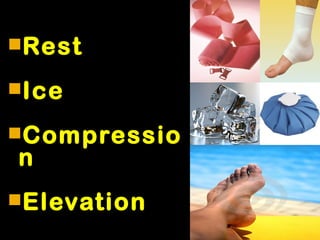
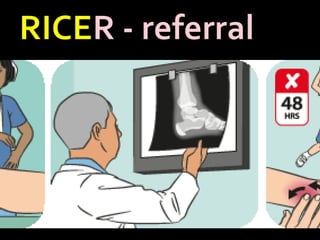
RICETherapy
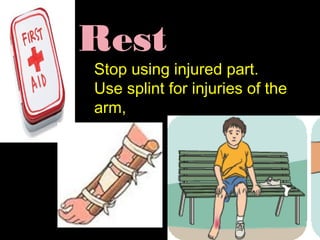
Rest
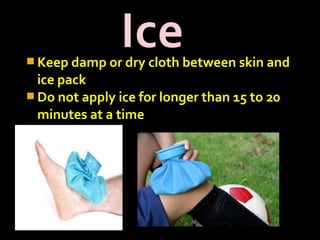
Ice
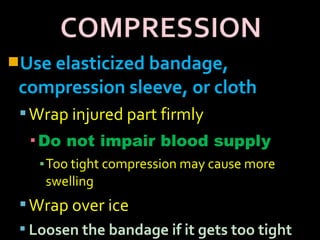
Compressio
n
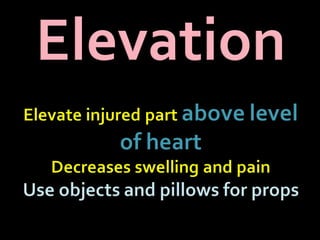
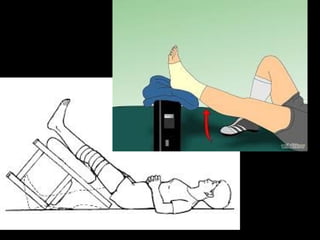
Elevation
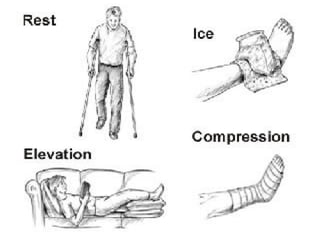
Rest
Stop using injured part.
Use splint for injuries of the
arm, elbow, wrist, or hand
 Keep damp or dry cloth between skin and
ice pack
 Do not apply ice for longer than 15 to 20
minutes at a time
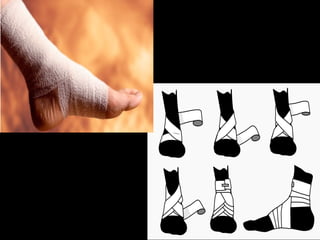
Use elasticized bandage,
compression sleeve, or cloth
Wrap injured part firmly
▪Do not impair blood supply
▪Too tight compression may cause more
swelling
Wrap over ice
 Loosen the bandage if it gets too tight
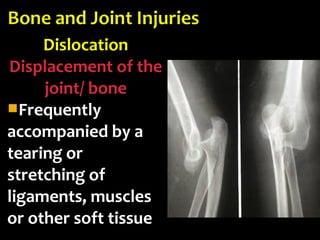
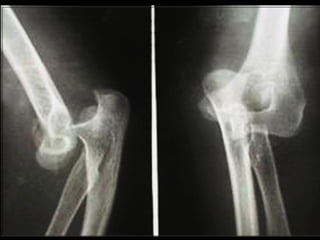
Dislocation
Displacement of the
joint/ bone
Frequently
accompanied by a
tearing or
stretching of
ligaments, muscles
or other soft tissue
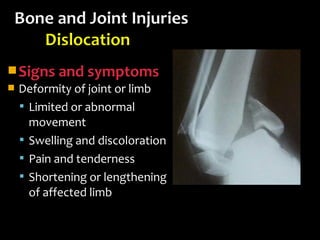
Signs and symptoms
 Deformity of joint or limb
 Limited or abnormal
movement
 Swelling and discoloration
 Pain and tenderness
 Shortening or lengthening
of affected limb
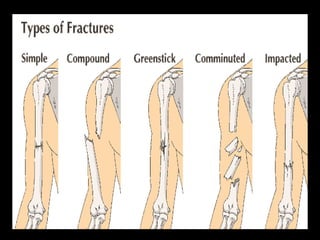
A break or a crack in a bone is
called a fracture.
Many types of fractures are difficult to
determine.
If a fracture is suspected, it’s wise to get it
checked out
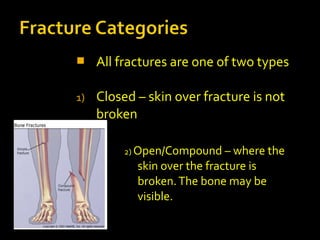
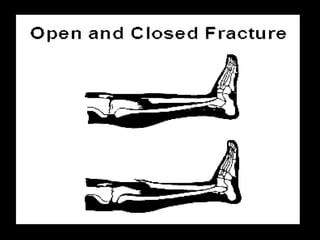
 All fractures are one of two types
1) Closed – skin over fracture is not
broken
2) Open/Compound – where the
skin over the fracture is
broken.The bone may be
visible.
FIRST AID CARE
 Basically the same as first aid for
fractures
 IMMOBILIZE the affected part in the
position in which it is found by using
splints and/or slings
 Avoid any movement of part because
movement can lead to additional injury
to nerves, blood vessels and other
tissues in the area
 Obtain medical help immediately
Stop the activity.
Survey the injured area.
First Aid if qualified.
Get help if not.
Determine if additional medical
attention is necessary.
Splints
Devices that can be used to immobilize
injured parts when fractures,
dislocations and other similar injuries
are present or suspected
Many commercial splints are available
 Inflatable or air splints
 Padded boards
 Traction splints (used for fractured femur)
Strain sprain fracture

Strain sprain fracture

  • 2.
    SPRAIN  stretch and/or tearof a ligament caused by a sudden pull  one or more ligaments can be injured at the same time
  • 4.
    STRAIN  injury toeither a muscle or a tendon as a result of suddenlly pulling them too far  simple overstretch of muscle or tendon, or result of a partial or complete tear
  • 6.
    fall sudden twist blow tothe body that forces a joint out of its normal position and stretches or tears the ligament supporting that joint
  • 7.
     most commonsite: the ankle  frequently occur at the wrist  sprain to the thumb common in skiing and other sports
  • 8.
    pain swelling bruising loss of functionalability sometimes a pop or tear when the injury happens

  • 12.
    twisting or pulling amuscle or tendon acute or chronic —› recent trauma or result of overuse
  • 13.
     two commonsites: the back and the hamstring muscle  hand and forearm, elbow
  • 14.
     typical—›pain, limited motion,muscle spasms, possibly muscle weakness  localized swelling, cramping, or inflammation and, with a minor or moderate strain, usually some loss of muscle function
  • 15.
  • 16.
  • 18.
    Rest Stop using injuredpart. Use splint for injuries of the arm, elbow, wrist, or hand
  • 19.
     Keep dampor dry cloth between skin and ice pack  Do not apply ice for longer than 15 to 20 minutes at a time
  • 20.
    Use elasticized bandage, compressionsleeve, or cloth Wrap injured part firmly ▪Do not impair blood supply ▪Too tight compression may cause more swelling Wrap over ice  Loosen the bandage if it gets too tight
  • 26.
    Dislocation Displacement of the joint/bone Frequently accompanied by a tearing or stretching of ligaments, muscles or other soft tissue
  • 28.
    Signs and symptoms Deformity of joint or limb  Limited or abnormal movement  Swelling and discoloration  Pain and tenderness  Shortening or lengthening of affected limb
  • 29.
    A break ora crack in a bone is called a fracture. Many types of fractures are difficult to determine. If a fracture is suspected, it’s wise to get it checked out
  • 30.
     All fracturesare one of two types 1) Closed – skin over fracture is not broken 2) Open/Compound – where the skin over the fracture is broken.The bone may be visible.
  • 33.
    FIRST AID CARE Basically the same as first aid for fractures  IMMOBILIZE the affected part in the position in which it is found by using splints and/or slings  Avoid any movement of part because movement can lead to additional injury to nerves, blood vessels and other tissues in the area  Obtain medical help immediately
  • 34.
    Stop the activity. Surveythe injured area. First Aid if qualified. Get help if not. Determine if additional medical attention is necessary.
  • 35.
    Splints Devices that canbe used to immobilize injured parts when fractures, dislocations and other similar injuries are present or suspected Many commercial splints are available  Inflatable or air splints  Padded boards  Traction splints (used for fractured femur)