A 2 M E D I A S T U D I E S R E S E A R C H
CHARACTER AND
NARRATIVE THEORIES
GOFFMAN’S CHARACTER THEORY
• Erving Goffman's character theory suggests that there
are four main types of broad character in a media text or
production;
• The protagonist (leading character)
• The deuteragonist (secondary character)
• The bit player (minor character whose specific
background the audience is not aware of)
• The fool (a character that uses humour to convey
messages)
The protagonist
The deuteragonist
The fool
The bit player
PROPP’S CHARACTER THEORY
• Vladimir Propp says the same types of character appear in all
stories:
• The villain - struggles against the hero
• The dispatcher – sends the hero on a quest. May be the
princess’ father.
• The donor - prepares the hero or gives the hero some magical
object
• The helper - helps the hero in the quest
• The princess/heroine – marries the hero
• The false hero - perceived as good character in beginning but
emerges as evil
• The hero - AKA victim/seeker/paladin/winner, usually marries
the princess
The hero
The villain
The dispatcher The donor
The helper(s)
The false hero
The princess/heroine
STRUGGLE AND RECOGNITION SCENE
• Struggle scene
• There is a struggle between the hero and the villain.
• The hero is branded.
• The villain is overcome.
• Recognition scene
• Hero is recognised and false hero/villain is unmasked.
• The hero gets the princess.
Struggle scene Recognition scene
TODOROV’S NARRATIVE THEORY
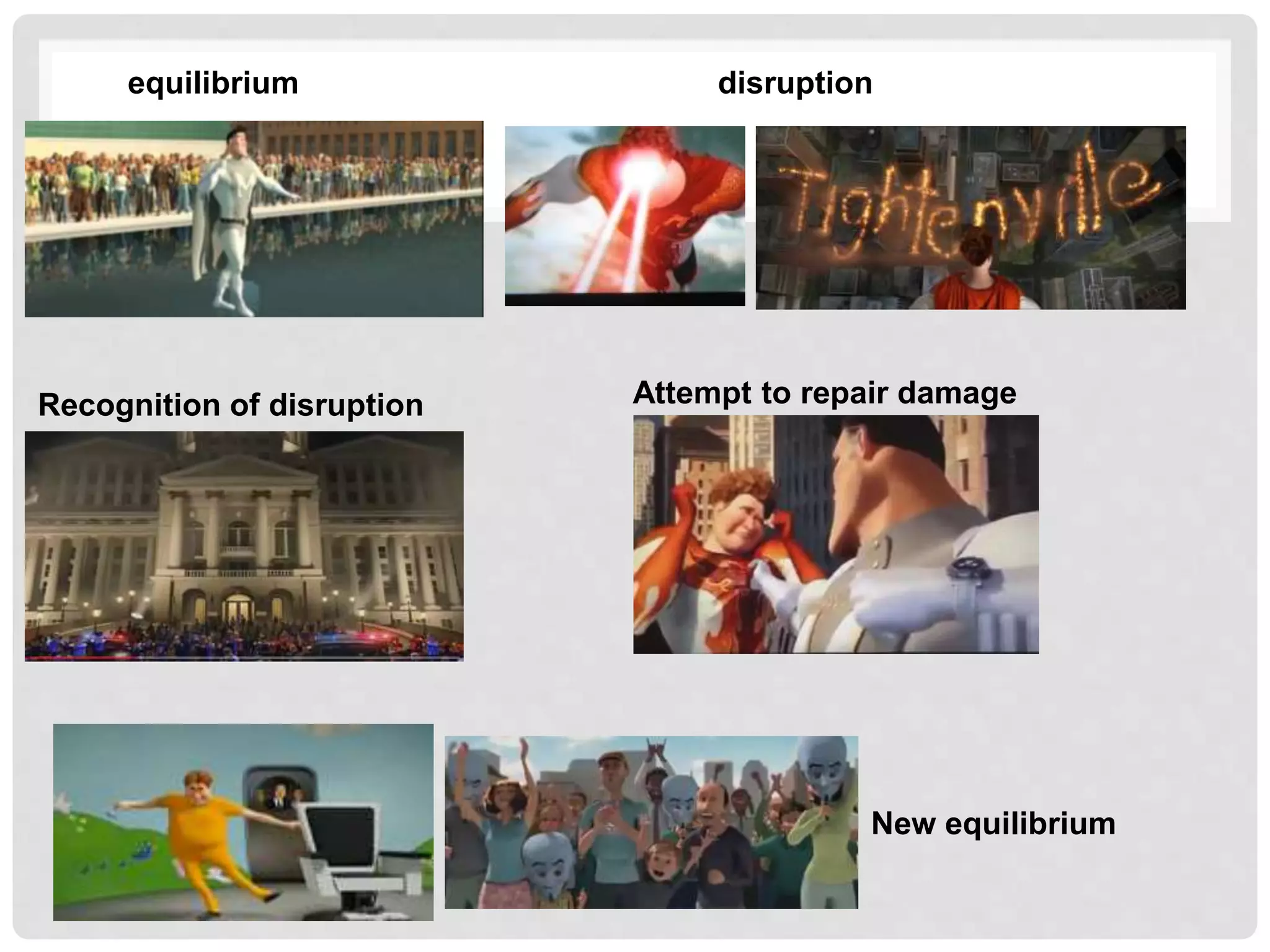
• 1) A state of equilibrium – All is as it should be
• 2) A disruption by an event
• 3) A recognition that the disruption has occurred
• 4) An attempt to repair the damage (of disruption)
• 5) return of a new equilibrium
equilibrium disruption
Recognition of disruption Attempt to repair damage
New equilibrium
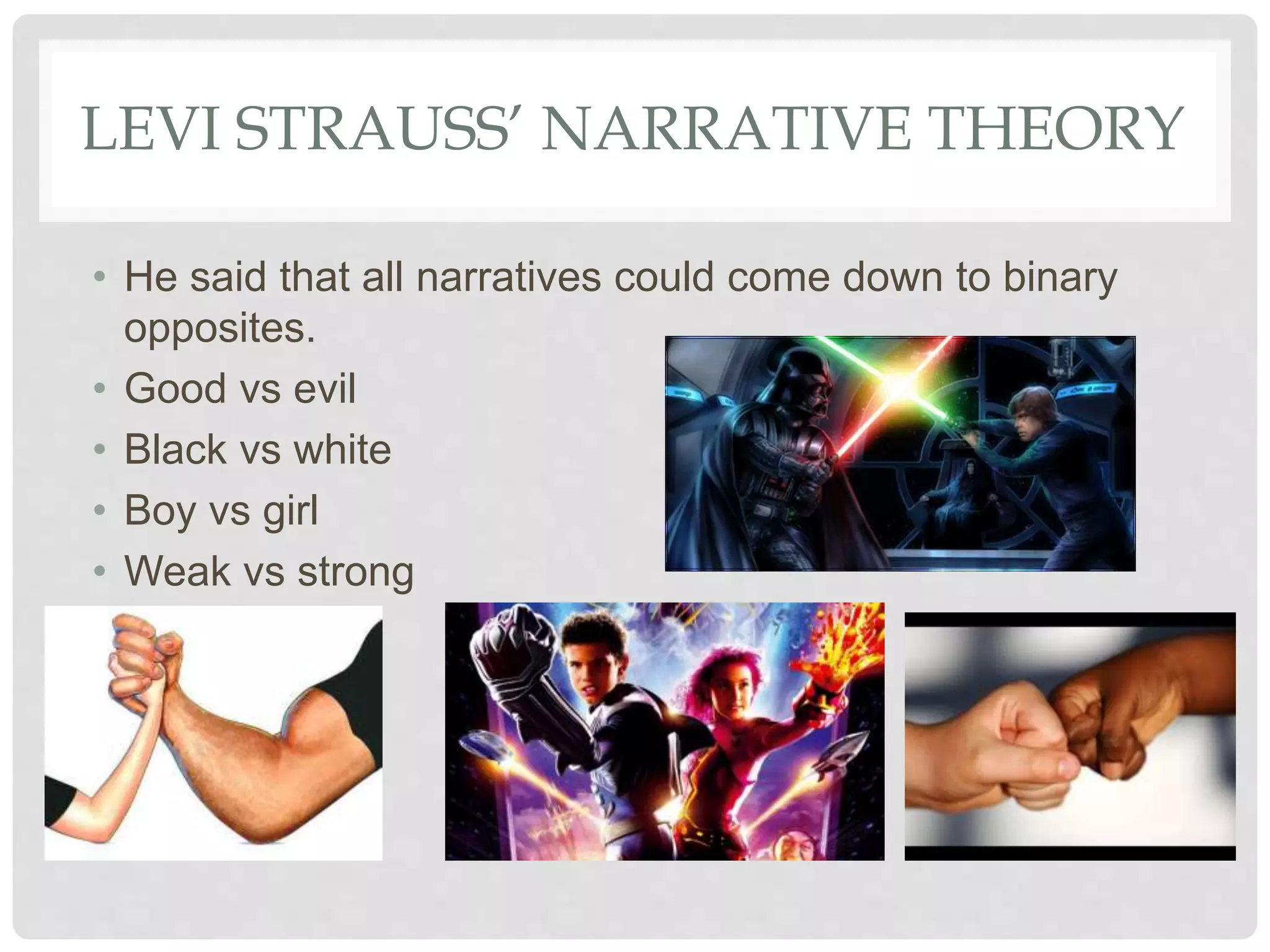
LEVI STRAUSS’ NARRATIVE THEORY
• He said that all narratives could come down to binary
opposites.
• Good vs evil
• Black vs white
• Boy vs girl
• Weak vs strong

Character theory

  • 1.
    A 2 ME D I A S T U D I E S R E S E A R C H CHARACTER AND NARRATIVE THEORIES
  • 2.
    GOFFMAN’S CHARACTER THEORY •Erving Goffman's character theory suggests that there are four main types of broad character in a media text or production; • The protagonist (leading character) • The deuteragonist (secondary character) • The bit player (minor character whose specific background the audience is not aware of) • The fool (a character that uses humour to convey messages)
  • 3.
  • 4.
    PROPP’S CHARACTER THEORY •Vladimir Propp says the same types of character appear in all stories: • The villain - struggles against the hero • The dispatcher – sends the hero on a quest. May be the princess’ father. • The donor - prepares the hero or gives the hero some magical object • The helper - helps the hero in the quest • The princess/heroine – marries the hero • The false hero - perceived as good character in beginning but emerges as evil • The hero - AKA victim/seeker/paladin/winner, usually marries the princess
  • 5.
    The hero The villain Thedispatcher The donor The helper(s) The false hero The princess/heroine
  • 6.
    STRUGGLE AND RECOGNITIONSCENE • Struggle scene • There is a struggle between the hero and the villain. • The hero is branded. • The villain is overcome. • Recognition scene • Hero is recognised and false hero/villain is unmasked. • The hero gets the princess.
  • 7.
  • 8.
    TODOROV’S NARRATIVE THEORY •1) A state of equilibrium – All is as it should be • 2) A disruption by an event • 3) A recognition that the disruption has occurred • 4) An attempt to repair the damage (of disruption) • 5) return of a new equilibrium
  • 9.
    equilibrium disruption Recognition ofdisruption Attempt to repair damage New equilibrium
  • 10.
    LEVI STRAUSS’ NARRATIVETHEORY • He said that all narratives could come down to binary opposites. • Good vs evil • Black vs white • Boy vs girl • Weak vs strong