Exam revision sheet – Media Studies A2 level Q1(b)


Narrative theory

Branigan has said that, “narrative is a way of organising...data into a cause and
effect chain of events with a beginning, middle and end…”

We tend to see most things in this way, for example, a day at school. When thinking
of our own lives, we tend not to see lots of mini fragments, but a big story with a
beginning, middle and end. In a way, narratives help us make sense of the world.

Kruger, Rayner and Wall have gone as far as to say, “narrative is an important
source of reassurance in a hostile universe.” There is clearly some validity in this.
We like to think that there will be a “happy ever after” for all of us. This is why so
many people go to watch films. Even if our own lives are uncertain, we know that
things will work out for the best in the world of a film—most of the time.

Narrative is part of the pleasure that audiences gain from Hollywood entertainment in
particular. Things often make sense in the narrative of a film that do not make sense
in ‘real’ life. There are usually clearly defined motives/reasons in films that ‘cause’
other things to happen. In life, this is not always so and it can make things difficult to
understand. Think back, if you can, to being a little child, you probably remember
asking ‘but why?’ all the time. You may have heard the answer ‘it just is’ and felt very
frustrated. Films do not generally do this, they give us pleasure in part because they
tell us ‘why’.

Some narrative techniques:

Enigma – a puzzle, a narrative technique designed to intrigue the viewer and
encourage them to watch further.

Retardation – Holding back key information from the audience so they are unsure
what is happening and likely to watch further to find out.

Ellipsis - a basic narrative technique used in classical continuity editing which sees
time compressed in order for the narrative to progress more quickly (editing out the
boring bits!)

Twist – an unexpected turn of events designed to shock the audience.
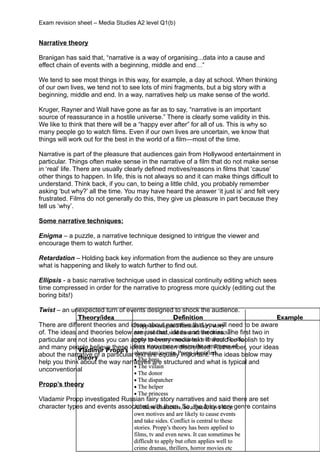
               Theory/idea                         Definition                               Example
There are different theories and ideas about narrative that you will need to be aware
                                   Propp investigated Russian fairy story
of. The ideas  and theories below are just that,said there are theories. The first two in
                                   narratives and ideas and set character
particular are  not ideas you can apply to every media text. It wouldSo, the
                                   types and events associated with them. be foolish to try
and many people believe these ideas story genre contains the same types of
                                   fairy have been discredited. Remember, your ideas
               Vladimir Propp’s characters/events. Propp identified:
about the narrative of a particular text are equally important. The ideas below may
               theory              • The hero
help you think about the way narratives are structured and what is typical and
                                   • The villain
unconventional
                                   • The donor
                                   • The dispatcher
Propp’s theory                     • The helper
                                   • The princess
Vladamir Propp investigated Russian fairy story narratives and said there are set
character types and events associated with them. So,argued, have their genre contains
                                All these characters, he the fairy story
                                   own motives and are likely to cause events
                                   and take sides. Conflict is central to these
                                   stories. Propp’s theory has been applied to
                                   films, tv and even news. It can sometimes be
                                   difficult to apply but often applies well to
                                   crime dramas, thrillers, horror movies etc
Exam revision sheet – Media Studies A2 level Q1(b)


the same types of characters/events. Propp identified:

· The hero
· The villain
· The donor
· The dispatcher
· The helper
· The princess

All these characters, he argued, have their own motives and are likely to cause
events and take sides. Conflict is central to these stories. Propp’s theory has been
applied to films, television and even news. It can sometimes be difficult to apply but
often applies well to crime dramas, thrillers, horror movies etc

Todorov’s theory

Todorov’s idea is perhaps more useful to you. He saw narratives as structured
around a basic formula:

Equilibrium - Disequilibrium - New equilibrium

Equilibrium means balance, so the idea is that with most narratives there is calm at
the start, then a disruption that causes things to become upset or unbalanced. Then,
at the end, things return to some sort of balanced, calm state. Of course, there can
be numerous disruptions within the plot and often there is some kind of climax before
the final state of calm is achieved.

Classical Hollywood narrative

This is a typical Hollywood narrative structure, whereby the story is driven by the
protagonist (main character) and there is a strong sense of closure: all enigmas that
are raised are resolved at the end. You need to be aware of this traditional structure
so you can comment when a film does not do this, e.g. it leaves some loose ends or
leaves the audience in suspense. Examples are The Italian Job or Lock, Stock and
Two Smoking Barrels.

Causality
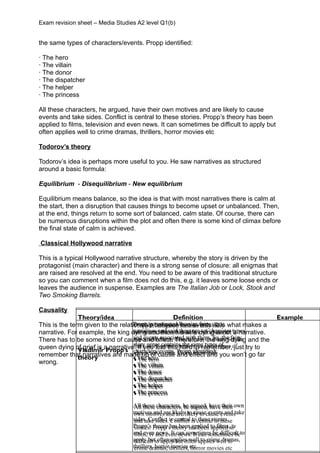
               Theory/idea                           Definition                            Example
This is the term given to the relationship betweenRussian fairy story what makes a
                                    Propp investigated Russian fairy story
                                    Propp investigated two events. It is
narrative. For  example, the king dying andand said there are set character a narrative.
                                    narratives and said there aredying is not types
                                    narratives then his wife set character
There has to be some kind of cause and effect. associated with So, the fairy and the
                
                                    and eventsevents Therefore, the king dying
                                    types and associated with them. them. So, the
queen dying of grief is a narrative. If you find this hardsame types of
                                    story genre genre contains the same types of
                                    fairy story contains the to remember, just try to
               Vladimir Propp’s characters/events. Propp identified:
                                    characters/events. Propp identified:
remember that narratives are made upherocause and effect and you won’t go far
                                            of
               theory               • The hero
                                    • The
wrong.                              • The villain
                                    • The villain
                                    • The donor
                                    • The donor
                                    • The dispatcher
                                    • The dispatcher
                                    • The helper
                                    • The helper
                                    • The princess
                                    • The princess

                                    All these characters, he argued, have their own
                                    All these characters, he argued, have their
                                    motives and are likelylikely to cause eventstake
                                    own motives and are to cause events and
                                    sides. Conflict is central is centralstories.
                                    and take sides. Conflict to these to these
                                    Propp’s Propp’shas been applied to films,to
                                    stories. theory theory has been applied tv
                                    and even and evencan sometimes be difficult to
                                    films, tv news. It news. It can sometimes be
                                    apply butto apply but often applies well to
                                    difficult often applies well to crime dramas,
                                    thrillers, horrorthrillers, etc
                                    crime dramas, movies horror movies etc

Narrative theory

  • 1.
    Exam revision sheet– Media Studies A2 level Q1(b) Narrative theory Branigan has said that, “narrative is a way of organising...data into a cause and effect chain of events with a beginning, middle and end…” We tend to see most things in this way, for example, a day at school. When thinking of our own lives, we tend not to see lots of mini fragments, but a big story with a beginning, middle and end. In a way, narratives help us make sense of the world. Kruger, Rayner and Wall have gone as far as to say, “narrative is an important source of reassurance in a hostile universe.” There is clearly some validity in this. We like to think that there will be a “happy ever after” for all of us. This is why so many people go to watch films. Even if our own lives are uncertain, we know that things will work out for the best in the world of a film—most of the time. Narrative is part of the pleasure that audiences gain from Hollywood entertainment in particular. Things often make sense in the narrative of a film that do not make sense in ‘real’ life. There are usually clearly defined motives/reasons in films that ‘cause’ other things to happen. In life, this is not always so and it can make things difficult to understand. Think back, if you can, to being a little child, you probably remember asking ‘but why?’ all the time. You may have heard the answer ‘it just is’ and felt very frustrated. Films do not generally do this, they give us pleasure in part because they tell us ‘why’. Some narrative techniques: Enigma – a puzzle, a narrative technique designed to intrigue the viewer and encourage them to watch further. Retardation – Holding back key information from the audience so they are unsure what is happening and likely to watch further to find out. Ellipsis - a basic narrative technique used in classical continuity editing which sees time compressed in order for the narrative to progress more quickly (editing out the boring bits!) Twist – an unexpected turn of events designed to shock the audience. Theory/idea Definition Example There are different theories and ideas about narrative that you will need to be aware Propp investigated Russian fairy story of. The ideas  and theories below are just that,said there are theories. The first two in narratives and ideas and set character particular are  not ideas you can apply to every media text. It wouldSo, the types and events associated with them. be foolish to try and many people believe these ideas story genre contains the same types of fairy have been discredited. Remember, your ideas Vladimir Propp’s characters/events. Propp identified: about the narrative of a particular text are equally important. The ideas below may theory • The hero help you think about the way narratives are structured and what is typical and • The villain unconventional • The donor • The dispatcher Propp’s theory • The helper • The princess Vladamir Propp investigated Russian fairy story narratives and said there are set character types and events associated with them. So,argued, have their genre contains All these characters, he the fairy story own motives and are likely to cause events and take sides. Conflict is central to these stories. Propp’s theory has been applied to films, tv and even news. It can sometimes be difficult to apply but often applies well to crime dramas, thrillers, horror movies etc
  • 2.
    Exam revision sheet– Media Studies A2 level Q1(b) the same types of characters/events. Propp identified: · The hero · The villain · The donor · The dispatcher · The helper · The princess All these characters, he argued, have their own motives and are likely to cause events and take sides. Conflict is central to these stories. Propp’s theory has been applied to films, television and even news. It can sometimes be difficult to apply but often applies well to crime dramas, thrillers, horror movies etc Todorov’s theory Todorov’s idea is perhaps more useful to you. He saw narratives as structured around a basic formula: Equilibrium - Disequilibrium - New equilibrium Equilibrium means balance, so the idea is that with most narratives there is calm at the start, then a disruption that causes things to become upset or unbalanced. Then, at the end, things return to some sort of balanced, calm state. Of course, there can be numerous disruptions within the plot and often there is some kind of climax before the final state of calm is achieved. Classical Hollywood narrative This is a typical Hollywood narrative structure, whereby the story is driven by the protagonist (main character) and there is a strong sense of closure: all enigmas that are raised are resolved at the end. You need to be aware of this traditional structure so you can comment when a film does not do this, e.g. it leaves some loose ends or leaves the audience in suspense. Examples are The Italian Job or Lock, Stock and Two Smoking Barrels. Causality Theory/idea Definition Example This is the term given to the relationship betweenRussian fairy story what makes a Propp investigated Russian fairy story Propp investigated two events. It is narrative. For  example, the king dying andand said there are set character a narrative. narratives and said there aredying is not types narratives then his wife set character There has to be some kind of cause and effect. associated with So, the fairy and the   and eventsevents Therefore, the king dying types and associated with them. them. So, the queen dying of grief is a narrative. If you find this hardsame types of story genre genre contains the same types of fairy story contains the to remember, just try to Vladimir Propp’s characters/events. Propp identified: characters/events. Propp identified: remember that narratives are made upherocause and effect and you won’t go far of theory • The hero • The wrong. • The villain • The villain • The donor • The donor • The dispatcher • The dispatcher • The helper • The helper • The princess • The princess All these characters, he argued, have their own All these characters, he argued, have their motives and are likelylikely to cause eventstake own motives and are to cause events and sides. Conflict is central is centralstories. and take sides. Conflict to these to these Propp’s Propp’shas been applied to films,to stories. theory theory has been applied tv and even and evencan sometimes be difficult to films, tv news. It news. It can sometimes be apply butto apply but often applies well to difficult often applies well to crime dramas, thrillers, horrorthrillers, etc crime dramas, movies horror movies etc