Principles of Training
Learning Objectives...

• Define and explain the principles of
  training.

• Apply the principles of training to
  examples from a PEP.
Starter...
• Complete the match it work sheet for
  definitions.

1.   Individual Needs
2.    Specificity
3.   Progressive Overload
4.   Rest
5.   Recovery
6.   FITT
7.   Reversibility
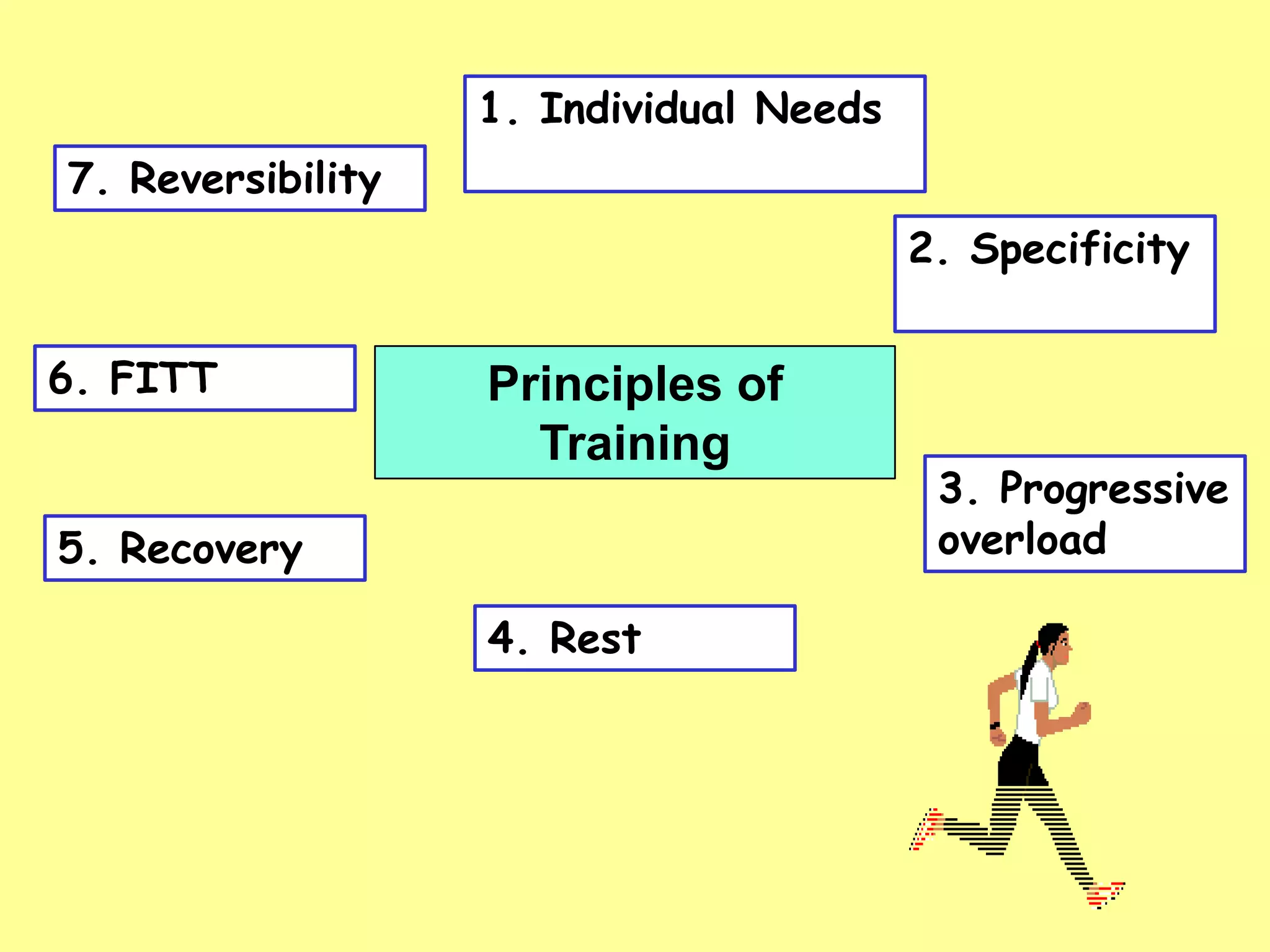
1. Individual Needs
7. Reversibility
                                         2. Specificity


6. FITT            Principles of
                     Training
                                          3. Progressive
5. Recovery                               overload

                   4. Rest
Individual Needs
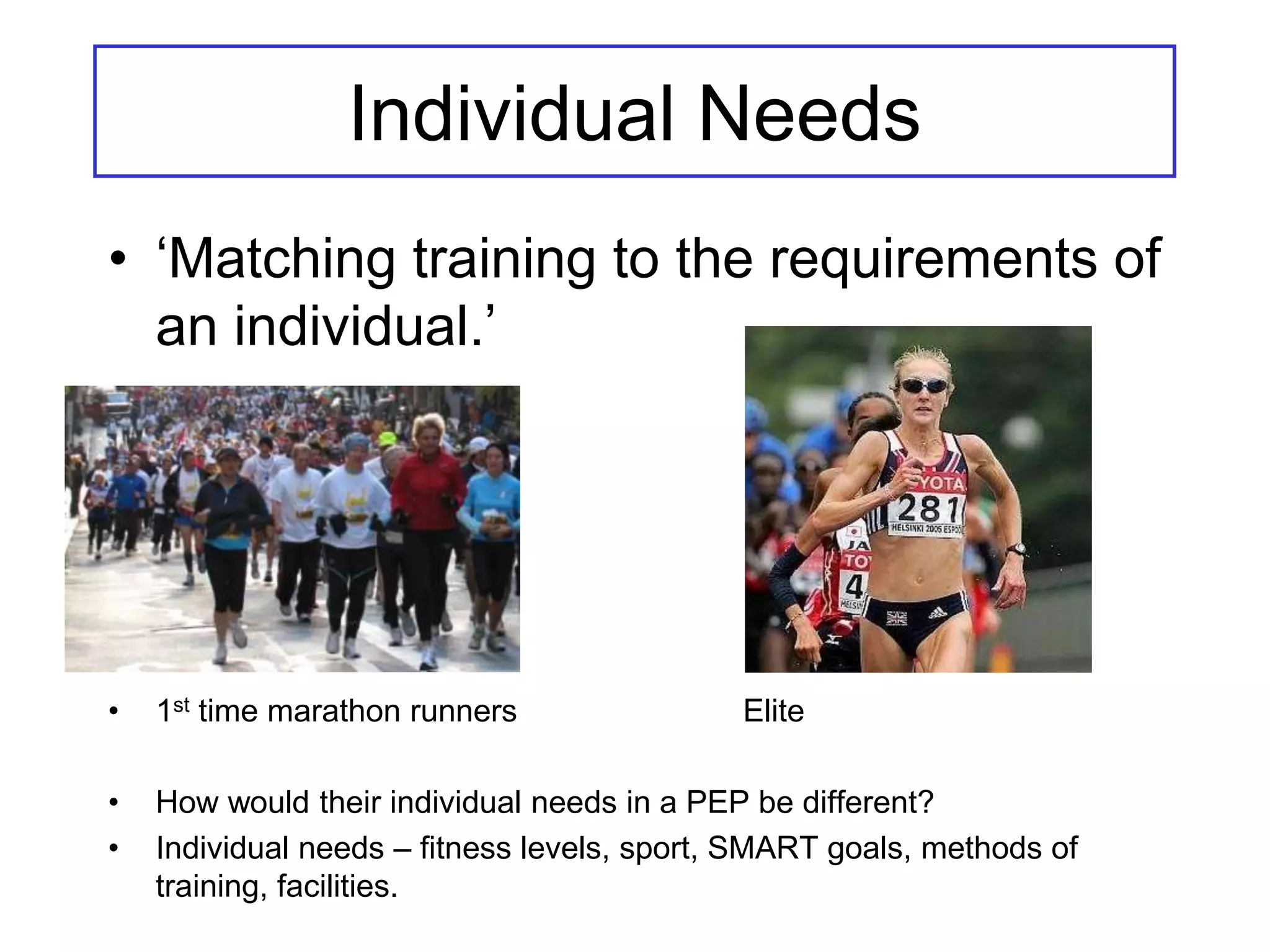
• ‘Matching training to the requirements of
  an individual.’


•   1st time marathon runners                Elite

•   How would their individual needs in a PEP be different?
•   Individual needs – fitness levels, sport, SMART goals, methods of
    training, facilities.
SPECIFICITY
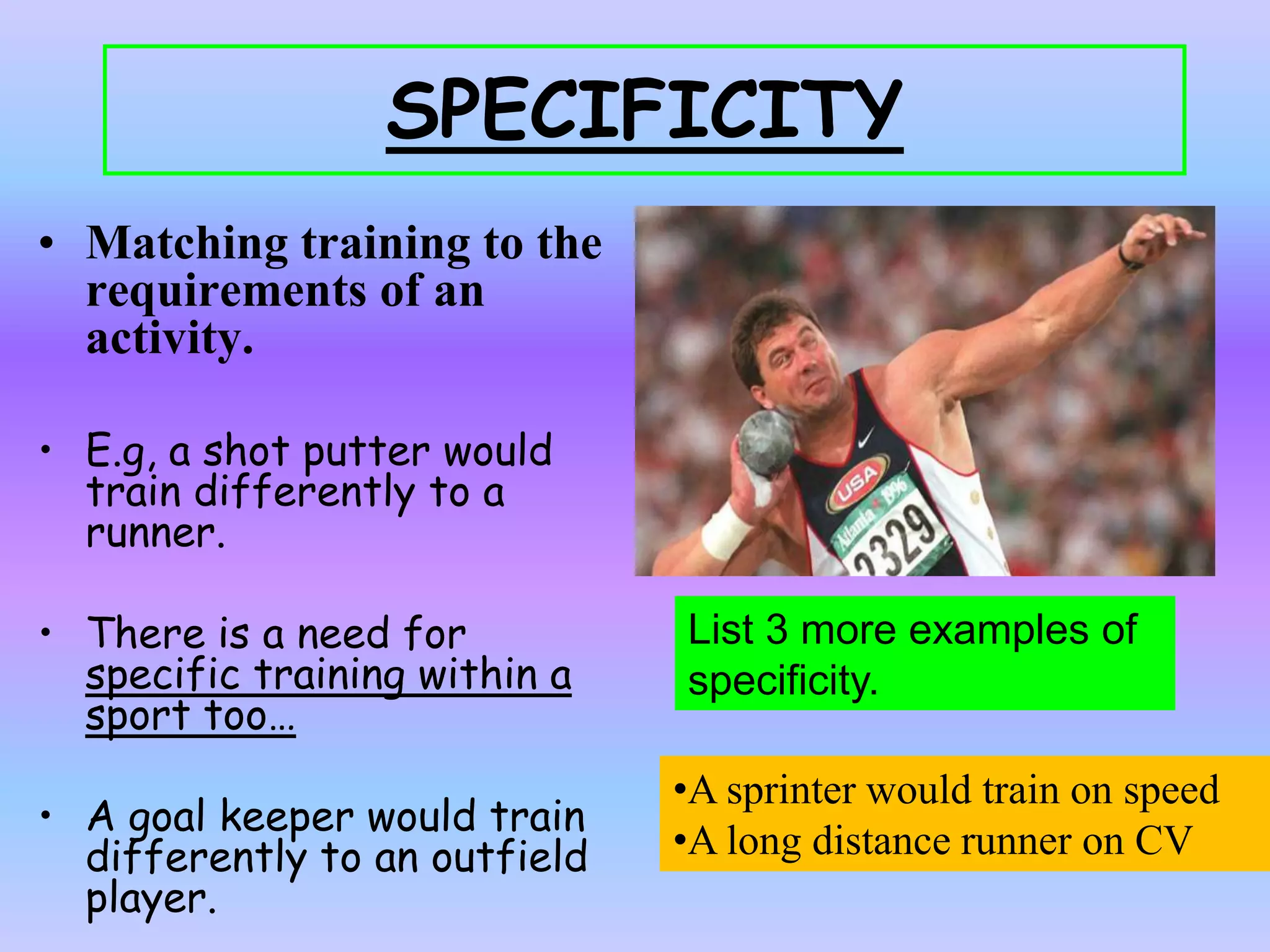
• Matching training to the
  requirements of an
  activity.

• E.g, a shot putter would
  train differently to a
  runner.

• There is a need for          List 3 more examples of
  specific training within a   specificity.
  sport too…
                               •A sprinter would train on speed
• A goal keeper would train
  differently to an outfield   •A long distance runner on CV
  player.
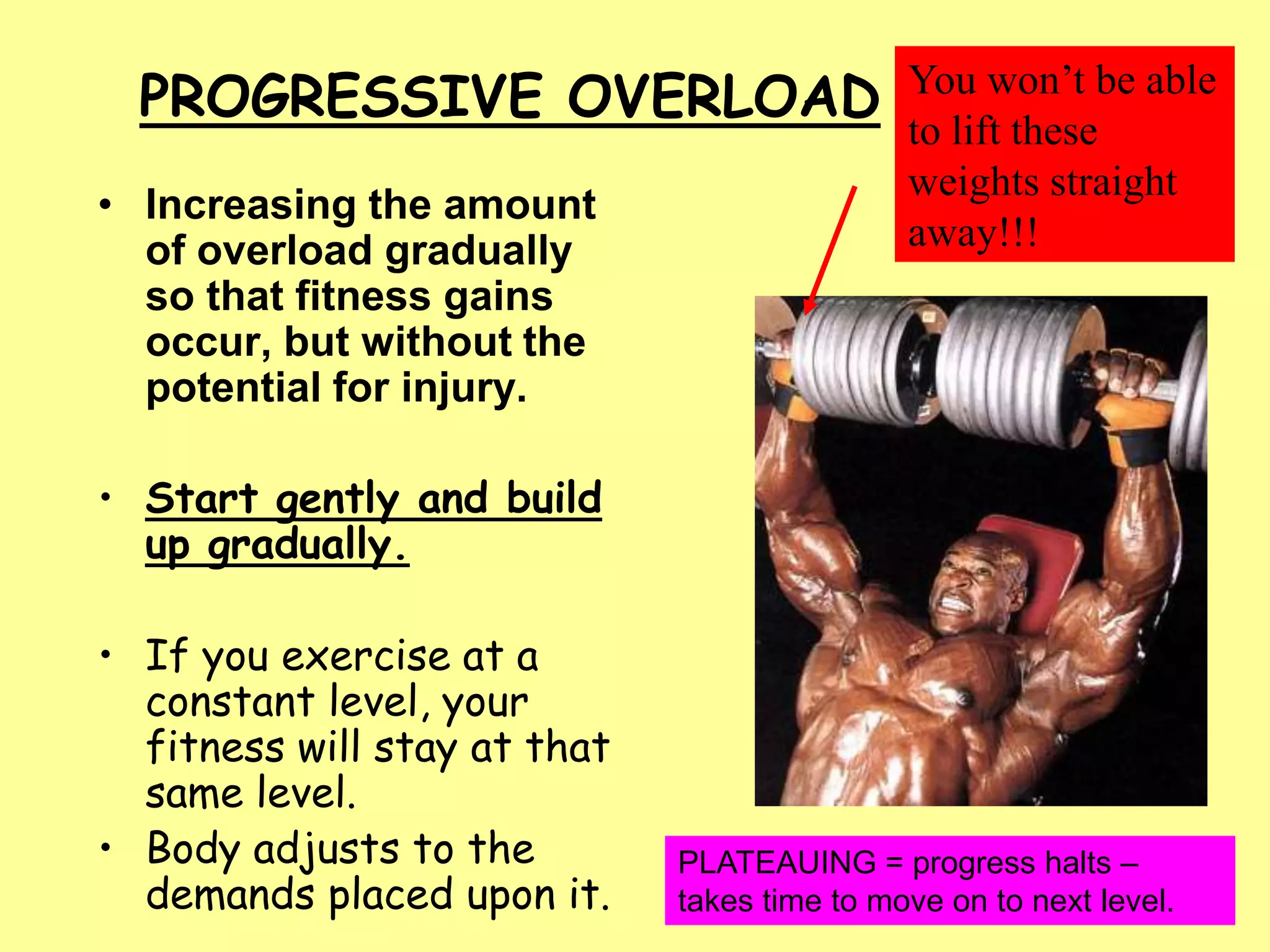
PROGRESSIVE OVERLOAD                        You won’t be able
                                              to lift these
                                              weights straight
• Increasing the amount
  of overload gradually                       away!!!
  so that fitness gains
  occur, but without the
  potential for injury.

• Start gently and build
  up gradually.

• If you exercise at a
  constant level, your
  fitness will stay at that
  same level.
• Body adjusts to the         PLATEAUING = progress halts –
  demands placed upon it.     takes time to move on to next level.
• Overload means training harder than you
  normally do.
• Working at a higher range of intensity.
• Training in the TARGET ZONE
• E.g. for strength training – lifting a
  weight at 60-80% of maximum effort.
• CV 60 – 80% Max HR.
• Usually apply overload every 2 weeks
OVERLOAD

• Fitness can only be improved by doing
  more than usual.

• Making the body work harder than
  normal in order to improve.

• To OVERLOAD you need to apply the
  FITT principle!
• F = Frequency.
  How often you need to train to
  improve.
• I = Intensity.
  How hard you train.
• T = Time
  How long each training session lasts.
• T = Type
  What sort of training you do.
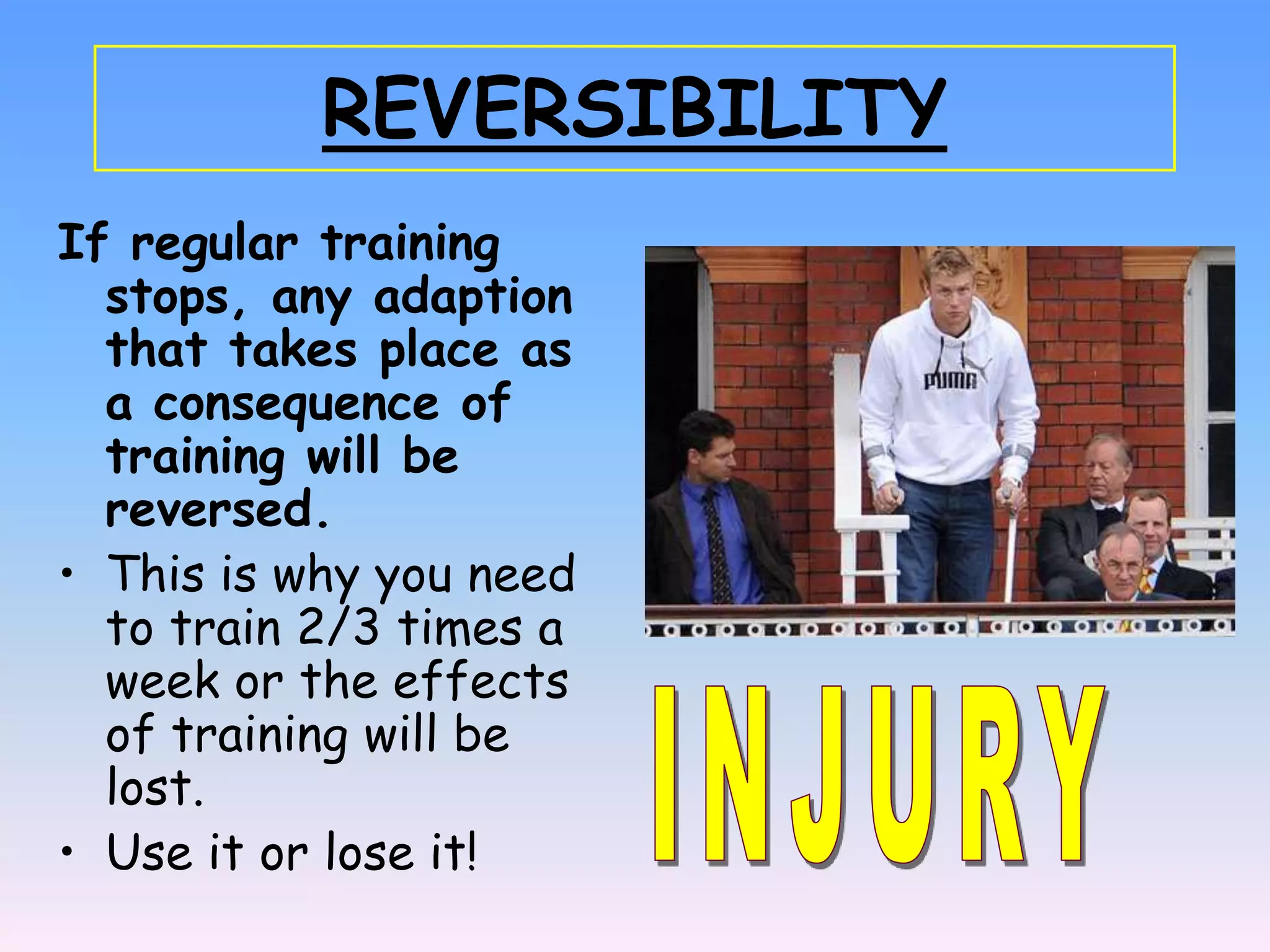
REVERSIBILITY
If regular training
  stops, any adaption
  that takes place as
  a consequence of
  training will be
  reversed.
• This is why you need
  to train 2/3 times a
  week or the effects
  of training will be
  lost.
• Use it or lose it!
Rest and Recovery

• Rest = The time given to recovery.

• Recovery = The time required to repair
  damage to the body caused by training or
  competition.

• PEP – someone training 5X a week would probably train on 3
  days, take day off to recover and allow adaption to take place. Train
   for the next 2 days, rest on the 7th day.
TASK:
• Apply your knowledge and understanding
  by creating a guide for young athletes to
  use. (See work sheet).

• Give specific examples of how to apply
  each of the principles of training in order
  to improve fitness for a chosen sport.

Principles of training

  • 1.
  • 2.
    Learning Objectives... • Defineand explain the principles of training. • Apply the principles of training to examples from a PEP.
  • 3.
    Starter... • Complete thematch it work sheet for definitions. 1. Individual Needs 2. Specificity 3. Progressive Overload 4. Rest 5. Recovery 6. FITT 7. Reversibility
  • 4.
    1. Individual Needs 7.Reversibility 2. Specificity 6. FITT Principles of Training 3. Progressive 5. Recovery overload 4. Rest
  • 5.
    Individual Needs • ‘Matchingtraining to the requirements of an individual.’ • 1st time marathon runners Elite • How would their individual needs in a PEP be different? • Individual needs – fitness levels, sport, SMART goals, methods of training, facilities.
  • 6.
    SPECIFICITY • Matching trainingto the requirements of an activity. • E.g, a shot putter would train differently to a runner. • There is a need for List 3 more examples of specific training within a specificity. sport too… •A sprinter would train on speed • A goal keeper would train differently to an outfield •A long distance runner on CV player.
  • 7.
    PROGRESSIVE OVERLOAD You won’t be able to lift these weights straight • Increasing the amount of overload gradually away!!! so that fitness gains occur, but without the potential for injury. • Start gently and build up gradually. • If you exercise at a constant level, your fitness will stay at that same level. • Body adjusts to the PLATEAUING = progress halts – demands placed upon it. takes time to move on to next level.
  • 8.
    • Overload meanstraining harder than you normally do. • Working at a higher range of intensity. • Training in the TARGET ZONE • E.g. for strength training – lifting a weight at 60-80% of maximum effort. • CV 60 – 80% Max HR. • Usually apply overload every 2 weeks
  • 9.
    OVERLOAD • Fitness canonly be improved by doing more than usual. • Making the body work harder than normal in order to improve. • To OVERLOAD you need to apply the FITT principle!
  • 10.
    • F =Frequency. How often you need to train to improve. • I = Intensity. How hard you train. • T = Time How long each training session lasts. • T = Type What sort of training you do.
  • 11.
    REVERSIBILITY If regular training stops, any adaption that takes place as a consequence of training will be reversed. • This is why you need to train 2/3 times a week or the effects of training will be lost. • Use it or lose it!
  • 12.
    Rest and Recovery •Rest = The time given to recovery. • Recovery = The time required to repair damage to the body caused by training or competition. • PEP – someone training 5X a week would probably train on 3 days, take day off to recover and allow adaption to take place. Train for the next 2 days, rest on the 7th day.
  • 13.
    TASK: • Apply yourknowledge and understanding by creating a guide for young athletes to use. (See work sheet). • Give specific examples of how to apply each of the principles of training in order to improve fitness for a chosen sport.