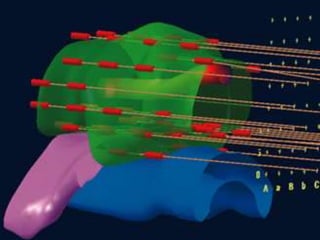
Radiation Therapy in Prostate 
Cancer 
Lokesh Viswanath M.D. 
Professor, Radiation Oncology, 
Kidwai Memorial Institute of Oncology 2014
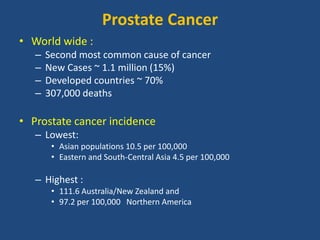
Prostate Cancer 
• World wide : 
– Second most common cause of cancer 
– New Cases ~ 1.1 million (15%) 
– Developed countries ~ 70% 
– 307,000 deaths 
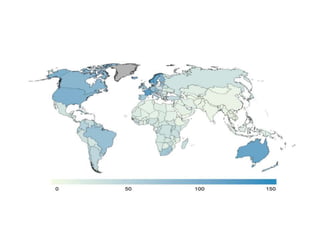
• Prostate cancer incidence 
– Lowest: 
• Asian populations 10.5 per 100,000 
• Eastern and South-Central Asia 4.5 per 100,000 
– Highest : 
• 111.6 Australia/New Zealand and 
• 97.2 per 100,000 Northern America
In India 
• Previously – thought - prevalence of prostate cancer in 
India is far lower compared to western countries 
• but … 
– increased migration rural to urban areas 
– changing life styles 
– increased awareness 
– easy access to medical facility 
….. 
– more cases of prostate cancer are being picked up 
– we are not very far behind the rate from western countries. 
– Current incidence rate of prostate cancer in India is ~ 10.66 
per 100000 population
Current India Data: 
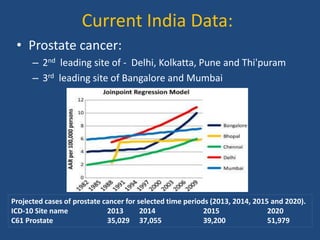
• Prostate cancer: 
– 2nd leading site of - Delhi, Kolkatta, Pune and Thi'puram 
– 3rd leading site of Bangalore and Mumbai 
Projected cases of prostate cancer for selected time periods (2013, 2014, 2015 and 2020). 
ICD-10 Site name 2013 2014 2015 2020 
C61 Prostate 35,029 37,055 39,200 51,979
Prostate : Anatomy 
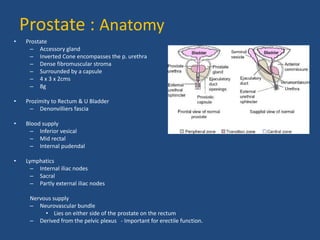
• Prostate 
– Accessory gland 
– Inverted Cone encompasses the p. urethra 
– Dense fibromuscular stroma 
– Surrounded by a capsule 
– 4 x 3 x 2cms 
– 8g 
• Prozimity to Rectum & U Bladder 
– Denonvilliers fascia 
• Blood supply 
– Inferior vesical 
– Mid rectal 
– Internal pudendal 
• Lymphatics 
– Internal iliac nodes 
– Sacral 
– Partly external iliac nodes 
Nervous supply 
– Neurovascular bundle 
• Lies on either side of the prostate on the rectum 
– Derived from the pelvic plexus - Important for erectile function.
Epidemiology 
• Risk factors 
– Increasing age 
– Family history 
– African-American 
– Dietary factors. 
• Race 
– Incidence doubled in African Americans compared to white Americans. 
• Genetics 
– Common among relatives with early-onset prostate cancer 
– Susceptibility locus 
• Chromosome 1, band Q24 
• Found in < 10% of prostate cancer patients 
• Nutritional factors - protective effect against prostate cancer 
– Reduced fat intake 
– Soy protein 
– Lycopene 
– Vitamin E 
– Selenium
Clinical Manifestations : Symptoms 
• Early state (organ confined) 
– Asymptomatic 
• Locally advanced 
– Obstructive voiding symptoms 
• Hesitancy 
• Intermittent urinary stream 
• Decreased force of stream 
– May have growth into the urethra or bladder neck 
– Hematuria 
– Hematospermia 
• Advanced (spread to the regional pelvic lymph nodes) 
– Edema of the lower extremities 
– Pelvic and perineal discomfort
Clinical Manifestations : 2 
• of Metastasis : 
– Most commonly to bone (frequently asymptomatic) 
• Can cause severe and unremitting pain 
– Bone metastasis 
• Can result in pathologic fractures or 
• Spinal cord compression 
– Visceral metastases (rare) 
– Can develop pulmonary, hepatic, pleural, peritoneal, and 
central nervous system metastases late in the natural 
history or after hormonal therapies fail.
Clinical Signs 
• Routine 
Clinical history and clinical examination 
Rectal examination 
• Signs: PR examination - Abnormal 
• ( +ve for Malignancy 25-50%) 
• Hard nodule / extremely firm 
• Evaluate for disease extension in 
– Lateral sulcus 
– superior
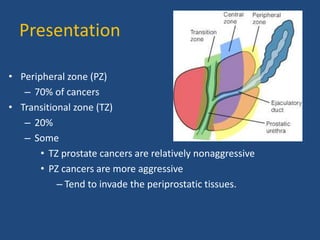
Presentation 
• Peripheral zone (PZ) 
– 70% of cancers 
• Transitional zone (TZ) 
– 20% 
– Some 
• TZ prostate cancers are relatively nonaggressive 
• PZ cancers are more aggressive 
– Tend to invade the periprostatic tissues.
Investigations 
Routine: Laboratory 
Complete blood cell count, 
blood chemistry 
Serum PSA (total, free, complex PSA:: ratio of Free : Total 
PSA < 0.2 - likely Prostate Ca. ) 
(Normal Age-Specific Limits for PSA - 
Plasma acid phosphatases (prostatic/total) 
Testosterone 
Other Experimental: 
RT PCR for mRNA of PSA & PSMA 
+ve - Extraprostatic – 72% 
-ve - Organ confined - 88%
Staging Tests 
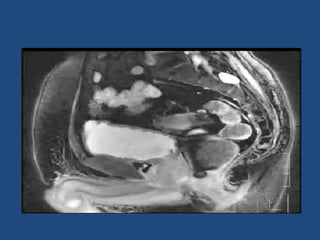
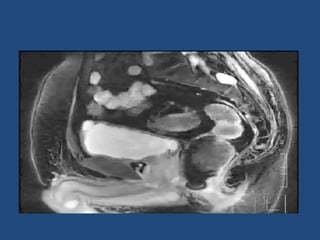
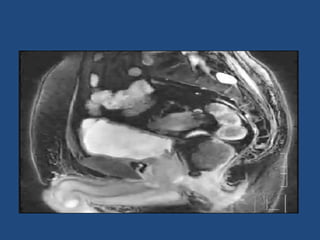
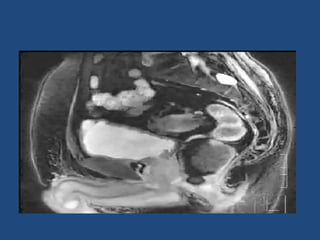
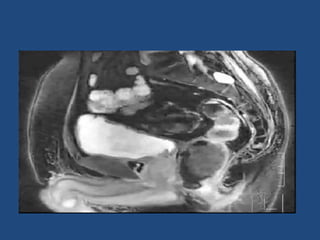
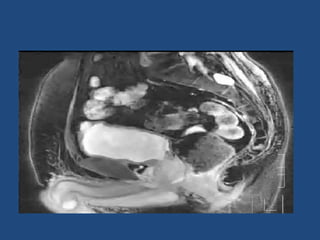
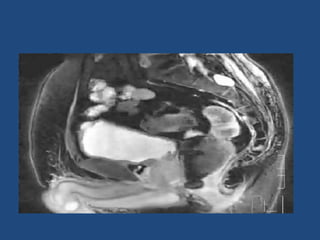
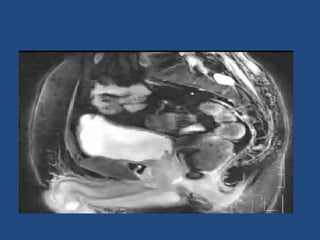
1. Magnetic resonance imaging (MRI) – 
defn Apex, NV bundle, ano rectal wall, intra prostatic dises location, capsular extension, 
seminal vesicle involvement 
1. T2 axial / coronal : neurovascular bundle , penile bulb 
2. PZ - T2 Normal – high signal , Tumor – Low signal , T1 – Hemorrhage – Low 
signal intensity 
3. Extracapsular extension : focal, irregular capsular bulge, invasion of NV bundle, 
obliteration of rectoprostatic angle 
4. endorectal MRSI – MR spectroscopy : metabolic activity and extra capsular 
extension, seminal vesicle invasion : Increase coline 
2. Transrectal ultrasound (TRUS) : 
» Ca – variable echo, hyper – 69%, margin - poorly defined , 
3. Transrectal or transperineal biopsy : 
– 16 guage , 10 -18 core (base, apex, both lateral, mid, lat peripheral zone) 
– Core length 
4. Chest radiograph (high risk for metastatic disease) 
5. Computed tomography (CT) scans – pelvis node assesment 
6. Radionuclide bone scans : Indicated: PSA>20, Gleason score ≥8, Bone pain 
Other: 
1. PET/CT with 11C- Acetate - detecting microscopic +LN
Others : essential base line evaluation 
• Erectile function 
• Bowel : SI/LI/Rectum/Anal Sphincters 
• Bladder : Flow/rate
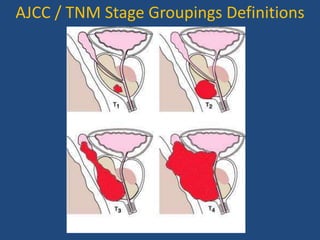
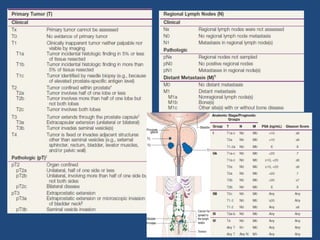
AJCC / TNM Stage Groupings Definitions
Pathology 
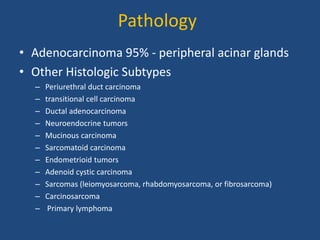
• Adenocarcinoma 95% - peripheral acinar glands 
• Other Histologic Subtypes 
– Periurethral duct carcinoma 
– transitional cell carcinoma 
– Ductal adenocarcinoma 
– Neuroendocrine tumors 
– Mucinous carcinoma 
– Sarcomatoid carcinoma 
– Endometrioid tumors 
– Adenoid cystic carcinoma 
– Sarcomas (leiomyosarcoma, rhabdomyosarcoma, or fibrosarcoma) 
– Carcinosarcoma 
– Primary lymphoma
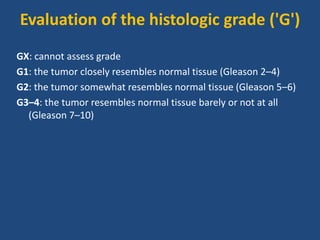
Evaluation of the histologic grade ('G') 
GX: cannot assess grade 
G1: the tumor closely resembles normal tissue (Gleason 2–4) 
G2: the tumor somewhat resembles normal tissue (Gleason 5–6) 
G3–4: the tumor resembles normal tissue barely or not at all 
(Gleason 7–10)
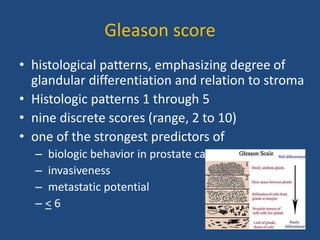
Gleason score 
• histological patterns, emphasizing degree of 
glandular differentiation and relation to stroma 
• Histologic patterns 1 through 5 
• nine discrete scores (range, 2 to 10) 
• one of the strongest predictors of 
– biologic behavior in prostate cancer 
– invasiveness 
– metastatic potential 
– < 6
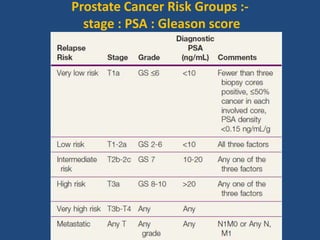
Prostate Cancer Risk Groups :- 
stage : PSA : Gleason score
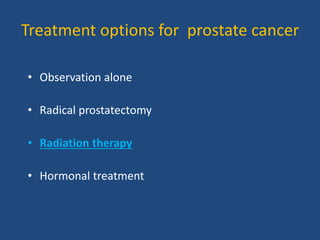
Treatment options for prostate cancer 
• Observation alone 
• Radical prostatectomy 
• Radiation therapy 
• Hormonal treatment
Overview Treatment Options by Stage for Prostate Cancer 
Stage ( AJCC TNM Staging Criteria) Standard Treatment Options 
Stage I •Watchful waiting or active surveillance 
•Radical prostatectomy 
•External-beam radiation therapy (EBRT) 
•Interstitial implantation of radioisotopes 
Stage II •Watchful waiting or active surveillance 
•Radical prostatectomy 
•External-beam radiation therapy (EBRT) with or without hormonal therapy 
•Interstitial implantation of radioisotopes 
Stage III •External-beam radiation therapy (EBRT) with or without hormonal therapy 
•Hormonal manipulations (orchiectomy or luteinizing hormone-releasing hormone [LH-RH] agonist) 
•Radical prostatectomy with or without EBRT 
•Watchful waiting or active surveillance 
Stage IV •Hormonal manipulations 
•Bisphosphonates 
•External-beam radiation therapy (EBRT) with or without hormonal therapy 
•Palliative radiation therapy 
•Palliative surgery with transurethral resection of the prostate (TURP) 
•Watchful waiting or active surveillance 
Recurrent •Chemotherapy for hormonal management of prostate cancer 
•Immunotherapy
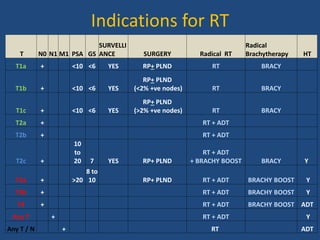
Indications for RT 
T N0 N1 M1 PSA GS 
SURVELLI 
ANCE SURGERY Radical RT 
Radical 
Brachytherapy HT 
T1a + <10 <6 YES RP+ PLND RT BRACY 
T1b + <10 <6 YES 
RP+ PLND 
(<2% +ve nodes) RT BRACY 
T1c + <10 <6 YES 
RP+ PLND 
(>2% +ve nodes) RT BRACY 
T2a + RT + ADT 
T2b + RT + ADT 
T2c + 
10 
to 
20 7 YES RP+ PLND 
RT + ADT 
+ BRACHY BOOST BRACY Y 
T3a + >20 
8 to 
10 RP+ PLND RT + ADT BRACHY BOOST Y 
T3b + RT + ADT BRACHY BOOST Y 
T4 + RT + ADT BRACHY BOOST ADT 
Any T + RT + ADT Y 
Any T / N + RT ADT
Radiation Therapy : Basics
Radiotherapy
• Radiation therapy is the art of using ionising 
radiation to destroy malignant tumours while 
being able to minimise damage to normal 
tissue.
Introduction 
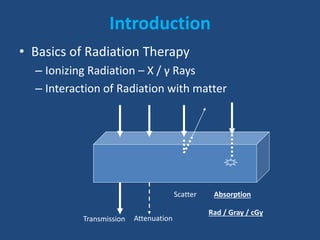
• Basics of Radiation Therapy 
– Ionizing Radiation – X / γ Rays 
– Interaction of Radiation with matter 
Transmission Attenuation 
Scatter Absorption 
Rad / Gray / cGy
Cancer Cell & Ionizing Radiation 
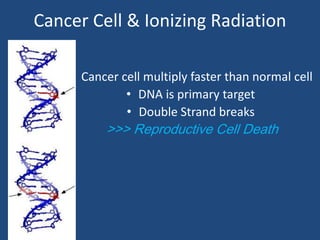
• Cancer cell multiply faster than normal cell 
• DNA is primary target 
• Double Strand breaks 
>>> Reproductive Cell Death
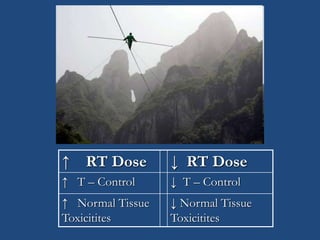
RT is a Double Edge Sword
↑ RT Dose ↓ RT Dose 
↑ T – Control ↓ T – Control 
↑ Normal Tissue 
Toxicitites 
↓ Normal Tissue 
Toxicitites
EQUIPMENTS
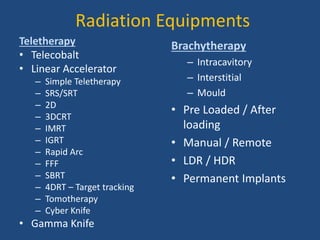
Radiation Equipments 
Teletherapy 
• Telecobalt 
• Linear Accelerator 
– Simple Teletherapy 
– SRS/SRT 
– 2D 
– 3DCRT 
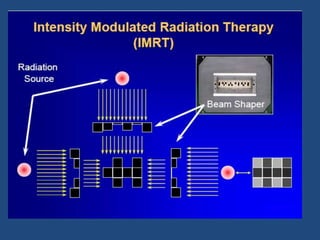
– IMRT 
– IGRT 
– Rapid Arc 
– FFF 
– SBRT 
– 4DRT – Target tracking 
– Tomotherapy 
– Cyber Knife 
• Gamma Knife 
Brachytherapy 
– Intracavitory 
– Interstitial 
– Mould 
• Pre Loaded / After 
loading 
• Manual / Remote 
• LDR / HDR 
• Permanent Implants
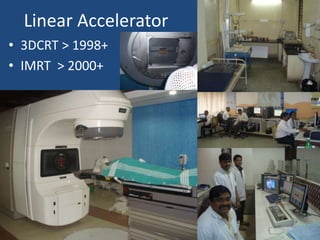
Linear Accelerator 
• 3DCRT > 1998+ 
• IMRT > 2000+
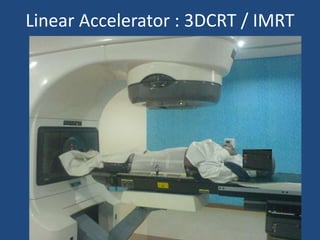
Linear Accelerator : 3DCRT / IMRT
Tomotherapy - 2003
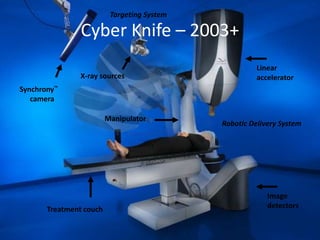
Synchrony™ 
camera 
Cyber Knife – 2003+ 
Treatment couch 
Linear 
accelerator 
Targeting System 
Manipulator 
Image 
detectors 
X-ray sources 
Robotic Delivery System
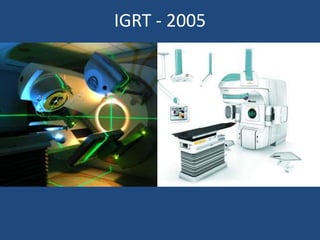
IGRT - 2005
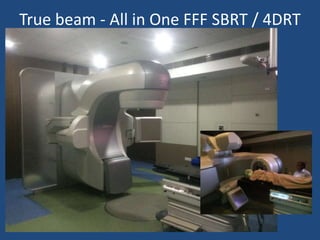
True beam - All in One FFF SBRT / 4DRT 
–
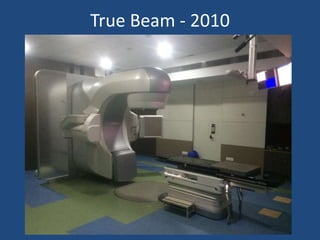
True Beam - 2010
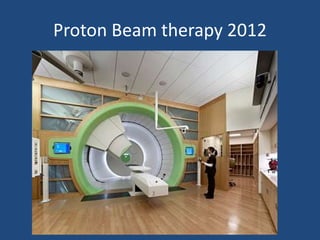
Proton Beam therapy 2012
Brachytherapy 
• LDR - Iridium wires – Manual Interstitial <Phased 
out> 
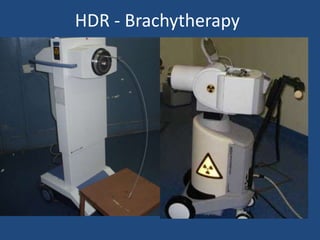
• HDR – Iridium / Cobalt 
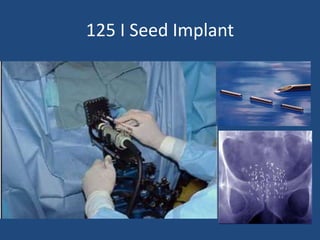
• Permanent Interstitial Implant – Iodine seeds
125 I Seed Implant
HDR - Brachytherapy
RT Planning Process
Radiation Therapy 
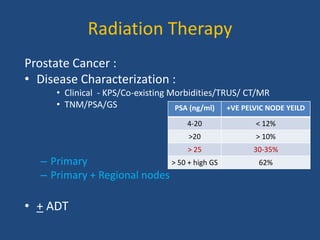
Prostate Cancer : 
• Disease Characterization : 
• Clinical - KPS/Co-existing Morbidities/TRUS/ CT/MR 
• TNM/PSA/GS 
– Primary 
– Primary + Regional nodes 
• + ADT 
PSA (ng/ml) +VE PELVIC NODE YEILD 
4-20 < 12% 
>20 > 10% 
> 25 30-35% 
> 50 + high GS 62%
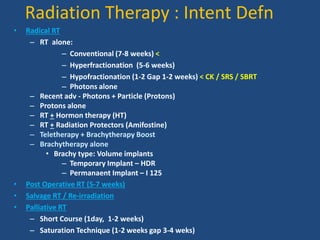
Radiation Therapy : Intent Defn 
• Radical RT 
– RT alone: 
– Conventional (7-8 weeks) < 
– Hyperfractionation (5-6 weeks) 
– Hypofractionation (1-2 Gap 1-2 weeks) < CK / SRS / SBRT 
– Photons alone 
– Recent adv - Photons + Particle (Protons) 
– Protons alone 
– RT + Hormon therapy (HT) 
– RT + Radiation Protectors (Amifostine) 
– Teletherapy + Brachytherapy Boost 
– Brachytherapy alone 
• Brachy type: Volume implants 
– Temporary Implant – HDR 
– Permanaent Implant – I 125 
• Post Operative RT (5-7 weeks) 
• Salvage RT / Re-irradiation 
• Palliative RT 
– Short Course (1day, 1-2 weeks) 
– Saturation Technique (1-2 weeks gap 3-4 weks)
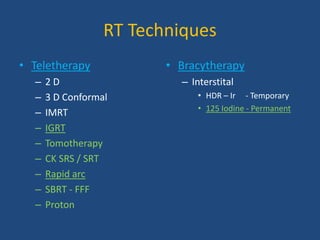
RT Techniques 
• Teletherapy 
– 2 D 
– 3 D Conformal 
– IMRT 
– IGRT 
– Tomotherapy 
– CK SRS / SRT 
– Rapid arc 
– SBRT - FFF 
– Proton 
• Bracytherapy 
– Interstital 
• HDR – Ir - Temporary 
• 125 Iodine - Permanent
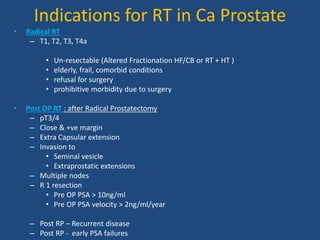
Indications for RT in Ca Prostate 
• Radical RT 
– T1, T2, T3, T4a 
• Un-resectable (Altered Fractionation HF/CB or RT + HT ) 
• elderly, frail, comorbid conditions 
• refusal for surgery 
• prohibitive morbidity due to surgery 
• Post OP RT : after Radical Prostatectomy 
– pT3/4 
– Close & +ve margin 
– Extra Capsular extension 
– Invasion to 
• Seminal vesicle 
• Extraprostatic extensions 
– Multiple nodes 
– R 1 resection 
• Pre OP PSA > 10ng/ml 
• Pre OP PSA velocity > 2ng/ml/year 
– Post RP – Recurrent disease 
– Post RP - early PSA failures
RADIOTHERAPY DOSE 
1. External : 
a. IMRT / IGRT / Rapid Arc / Protons : 
– > 7400 cGy to 7600 cGy / 6-8 wks 
– 180-200cGy / fr, 5fr/wk 
b. CK / SBRT / FFF : 5 – 20 Gy / fr, 3-5 fr 
c. Post-op.: 60-66 Gy / 6-7 wks 
d. Palliative RT: 30Gy/10f, 20Gy/5 or 4f, 7-8Gy/1f 
2. Brachytherapy : 
a. Alone : 6000 - 7000 cGy in 6 to 7 days. 
b. External + Brachytherapy 
Ext : 46-50 Gy in 4 1/2 - 5 1/2 wks. + 
Brachy : 2000-3000 cGy in 2-3 days 
HDR : 9.5Gy x 2f, as mono therapy 9.5Gy bid x 4f x 2dys 
I -125 : 0.2-0.9mCi, T1/2-17dy, 21Kev
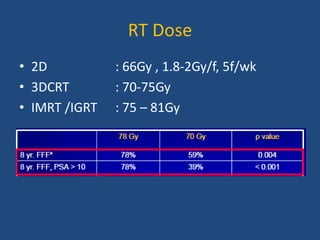
RT Dose 
• 2D : 66Gy , 1.8-2Gy/f, 5f/wk 
• 3DCRT : 70-75Gy 
• IMRT /IGRT : 75 – 81Gy
Patient
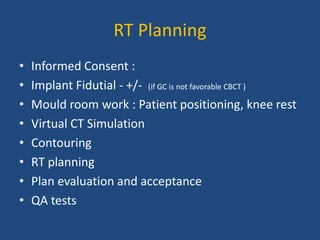
RT Planning 
• Informed Consent : 
• Implant Fidutial - +/- (if GC is not favorable CBCT ) 
• Mould room work : Patient positioning, knee rest 
• Virtual CT Simulation 
• Contouring 
• RT planning 
• Plan evaluation and acceptance 
• QA tests
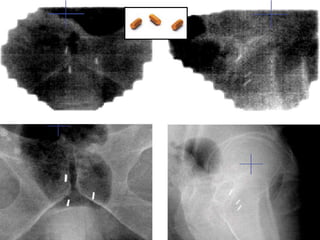
Fidutial Placement 
• TRUS Guided 
• 1 week prior to simulation
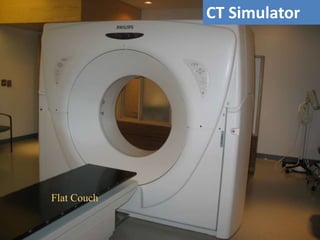
Flat Couch 
CT Simulator
Instructions for Virtual Simulation 
Mould room techniques: 
• Bowel / Bladder – post void (full – if u/s Tracking) 
• Patient Positioning : Supine (↓ P motion) / Prone 
• Thermoplastic mold – Pelvic cast - knee to mid thigh + Tattooe / 
Tegaderm 
• Knee rest 
Virtual simulation : Flat Couch 
– Patient repositioning 
– Pelvis : pubic symphysis - Laser set (mid / 2 lateral – 5cms post) – marking 
– Radio-opaque markers 
– CT Sim - 3mm 
– Scan : 20-30 cms above & 20-30 cms below the marker plane
Contouring 
• Data transfer : from CT sim to RT planning system – 
DICOM format 
• Patient registration : CT data / CT + MR Fusion data 
• Contouring : Target & Normal tissue 
– CTV – P alone / P + SV / P + SV + Pelvic Ly nodes 
– PTV – CTV + Margin 
• Cobalt / 2D / 3DCRT - 2cms 
• IMRT – 1cms (in all directions except rectal interface – 0.6cms) 
• IGRT – 0.6 cms all round 
• CK/SBRT – 0.3 cms all round 
– Prostatic apex definition – urethrogram / MRI
On the machine 
• Machine QA for the Planned treatment 
• Patient positioning and verification 
• Portal Imaging & setup verification + CBCT 
• Treatment plan execution 
• Daily QA 
• Daily Portal imaging /MV – KV / CBCT / 3D CBCT 
• Monitoring of Acute radiation reaction and 
supportive cares
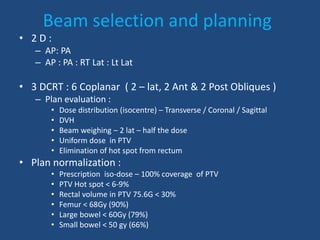
Beam selection and planning 
• 2 D : 
– AP: PA 
– AP : PA : RT Lat : Lt Lat 
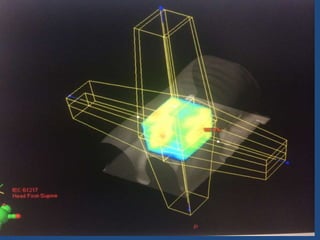
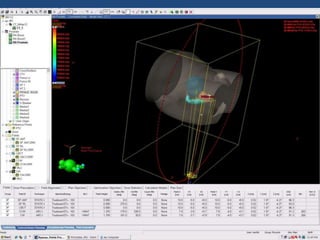
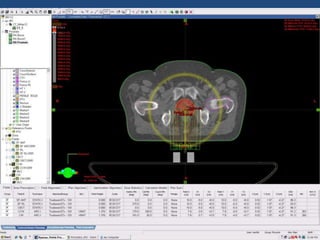
• 3 DCRT : 6 Coplanar ( 2 – lat, 2 Ant & 2 Post Obliques ) 
– Plan evaluation : 
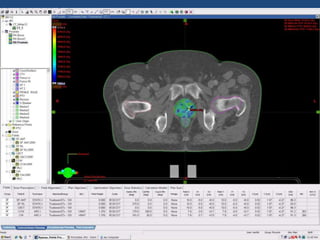
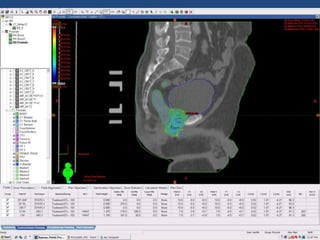
• Dose distribution (isocentre) – Transverse / Coronal / Sagittal 
• DVH 
• Beam weighing – 2 lat – half the dose 
• Uniform dose in PTV 
• Elimination of hot spot from rectum 
• Plan normalization : 
• Prescription iso-dose – 100% coverage of PTV 
• PTV Hot spot < 6-9% 
• Rectal volume in PTV 75.6G < 30% 
• Femur < 68Gy (90%) 
• Large bowel < 60Gy (79%) 
• Small bowel < 50 gy (66%)
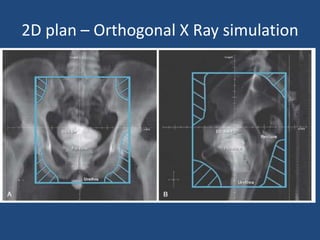
2D plan – Orthogonal X Ray simulation
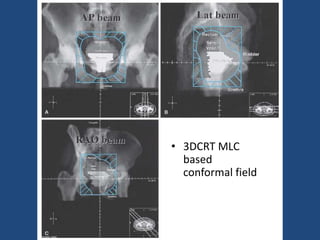
• 3DCRT MLC 
based 
conformal field
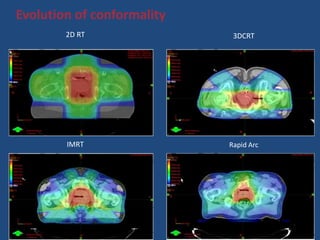
Evolution of conformality 
2D RT 3DCRT 
IMRT Rapid Arc
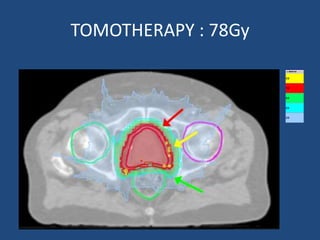
TOMOTHERAPY : 78Gy
AMS CONFIDENTIAL 
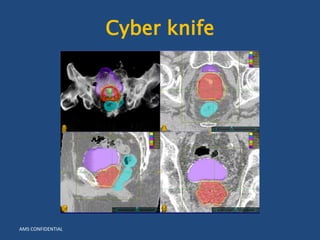
Cyber knife
Rapid Arc
Patient on Treatment
Protons
Proton Therapy vs. IMRT 
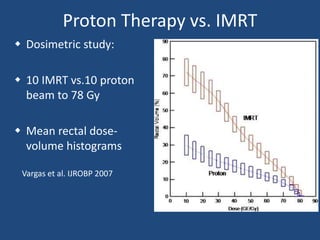
 Dosimetric study: 
 10 IMRT vs.10 proton 
beam to 78 Gy 
 Mean rectal dose-volume 
histograms 
Vargas et al. IJROBP 2007
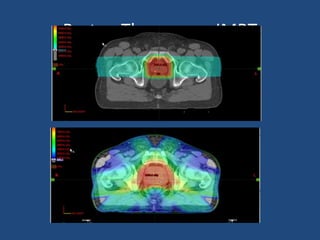
Proton Therapy vs. IMRT
Brachytherapy
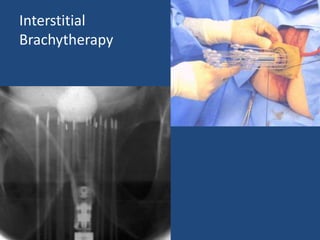
Interstitial 
Brachytherapy
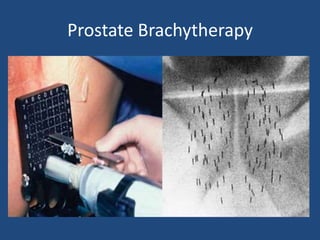
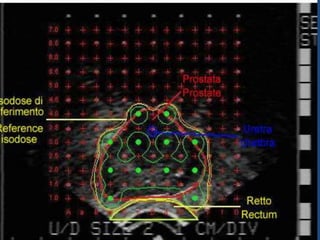
Prostate Brachytherapy
Prostate Brachytherapy 
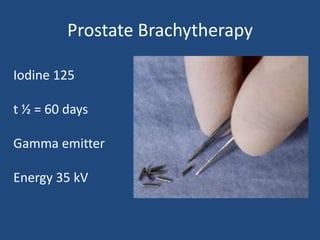
Iodine 125 
t ½ = 60 days 
Gamma emitter 
Energy 35 kV
During RT
Target Motion ITV Management 
• Daily localization IGRT techniques to account 
for interfraction motion: 
– intraprostatic fiducial markers with daily imaging 
– transabdominal US 
– daily in-room CT imaging 
– endorectal balloon immobilization 
• All of these methods employ daily imaging of 
the prostate in the treatment room.
Target Tracking 
• During RT 
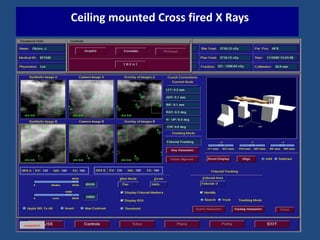
– Celing mounted Cross fired X-Ray / Fluro eg.CK, X Tack 
– 
• Before RT 
– Orthogonal KV / MV Portal imaging – best with fidutial 
– CBCT / Onrail CT – suitable for patients without 
fidutials
Ceiling mounted Cross fired X Rays
Motion Management 
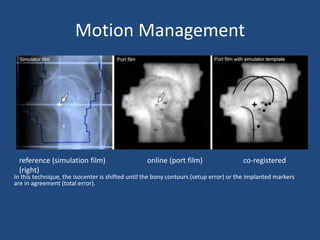
reference (simulation film) online (port film) co-registered 
(right) 
In this technique, the isocenter is shifted until the bony contours (setup error) or the implanted markers 
are in agreement (total error).
Motion Management 
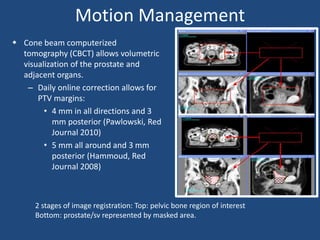
 Cone beam computerized 
tomography (CBCT) allows volumetric 
visualization of the prostate and 
adjacent organs. 
– Daily online correction allows for 
PTV margins: 
• 4 mm in all directions and 3 
mm posterior (Pawlowski, Red 
Journal 2010) 
• 5 mm all around and 3 mm 
posterior (Hammoud, Red 
Journal 2008) 
2 stages of image registration: Top: pelvic bone region of interest 
Bottom: prostate/sv represented by masked area.
Motion Management 
• Intrafraction Motion 
– Changes in position while the treatment beam is on 
(“second by second”) 
– Mostly from peristalsis/gas, pelvic floor movement, 
respiration coughing, etc. 
– Techniques to account for intrafraction motion: 
• RGRT (radiofrequency-guided RT techniques) 
• Rectal balloon 
• Bowel prep (anti-gas tablets and daily bm) 
• Consistent Bladder filling
Motion management 
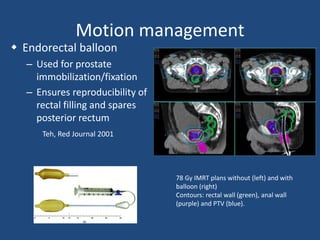
 Endorectal balloon 
– Used for prostate 
immobilization/fixation 
– Ensures reproducibility of 
rectal filling and spares 
posterior rectum 
Teh, Red Journal 2001 
78 Gy IMRT plans without (left) and with 
balloon (right) 
Contours: rectal wall (green), anal wall 
(purple) and PTV (blue).
Treatment results
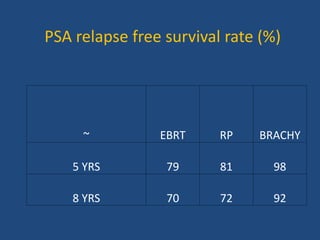
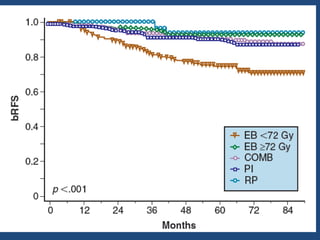
PSA relapse free survival rate (%) 
~ EBRT RP BRACHY 
5 YRS 79 81 98 
8 YRS 70 72 92
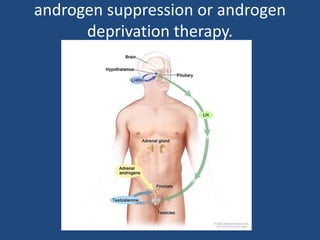
androgen suppression or androgen 
deprivation therapy.
most commonly used hormone 
therapies 
• Orchiectomy 
Medical Castration - reversible 
• luteinizing hormone-releasing hormone (LHRH) agonists – 
synthetic proteins - similar to LHRH and bind to the 
LHRH receptor in the pitutary gland- causes the pituitary gland 
to stop producing luteinizing hormone, which prevents 
testosterone from being produced- leuprolide, goserelin, 
and buserelin 
• LHRH antagonists - act by preventing LHRH from binding to 
its receptors in the pitutary gland
Toxicities 
Impotence rates 
• Brachy alone – 24% 
• Brachy + EBRT – 40% 
• EBRT alone – 45% 
• Nerve sparing RP – 66% 
• RP – 75% 
• Cryosurgery – 87% 
Urinary control 
• RP – 35% 
• RT – 97%
Summary and 
Conclusion
Advances in newer radiation 
technologies 
• Enhanced Normal Tissue Sparing 
• Reduces side effects 
• Dose Escalation has Improved Cure Rate 
• Higher Dose per Fraction reduces hospital visits 
• Reduce Number of fractions 
• Reduce Treatment Duration
Thank you

Radiation therapy in prostate cancer

  • 1.
    Radiation Therapy inProstate Cancer Lokesh Viswanath M.D. Professor, Radiation Oncology, Kidwai Memorial Institute of Oncology 2014
  • 2.
    Prostate Cancer •World wide : – Second most common cause of cancer – New Cases ~ 1.1 million (15%) – Developed countries ~ 70% – 307,000 deaths • Prostate cancer incidence – Lowest: • Asian populations 10.5 per 100,000 • Eastern and South-Central Asia 4.5 per 100,000 – Highest : • 111.6 Australia/New Zealand and • 97.2 per 100,000 Northern America
  • 4.
    In India •Previously – thought - prevalence of prostate cancer in India is far lower compared to western countries • but … – increased migration rural to urban areas – changing life styles – increased awareness – easy access to medical facility ….. – more cases of prostate cancer are being picked up – we are not very far behind the rate from western countries. – Current incidence rate of prostate cancer in India is ~ 10.66 per 100000 population
  • 5.
    Current India Data: • Prostate cancer: – 2nd leading site of - Delhi, Kolkatta, Pune and Thi'puram – 3rd leading site of Bangalore and Mumbai Projected cases of prostate cancer for selected time periods (2013, 2014, 2015 and 2020). ICD-10 Site name 2013 2014 2015 2020 C61 Prostate 35,029 37,055 39,200 51,979
  • 6.
    Prostate : Anatomy • Prostate – Accessory gland – Inverted Cone encompasses the p. urethra – Dense fibromuscular stroma – Surrounded by a capsule – 4 x 3 x 2cms – 8g • Prozimity to Rectum & U Bladder – Denonvilliers fascia • Blood supply – Inferior vesical – Mid rectal – Internal pudendal • Lymphatics – Internal iliac nodes – Sacral – Partly external iliac nodes Nervous supply – Neurovascular bundle • Lies on either side of the prostate on the rectum – Derived from the pelvic plexus - Important for erectile function.
  • 7.
    Epidemiology • Riskfactors – Increasing age – Family history – African-American – Dietary factors. • Race – Incidence doubled in African Americans compared to white Americans. • Genetics – Common among relatives with early-onset prostate cancer – Susceptibility locus • Chromosome 1, band Q24 • Found in < 10% of prostate cancer patients • Nutritional factors - protective effect against prostate cancer – Reduced fat intake – Soy protein – Lycopene – Vitamin E – Selenium
  • 8.
    Clinical Manifestations :Symptoms • Early state (organ confined) – Asymptomatic • Locally advanced – Obstructive voiding symptoms • Hesitancy • Intermittent urinary stream • Decreased force of stream – May have growth into the urethra or bladder neck – Hematuria – Hematospermia • Advanced (spread to the regional pelvic lymph nodes) – Edema of the lower extremities – Pelvic and perineal discomfort
  • 9.
    Clinical Manifestations :2 • of Metastasis : – Most commonly to bone (frequently asymptomatic) • Can cause severe and unremitting pain – Bone metastasis • Can result in pathologic fractures or • Spinal cord compression – Visceral metastases (rare) – Can develop pulmonary, hepatic, pleural, peritoneal, and central nervous system metastases late in the natural history or after hormonal therapies fail.
  • 10.
    Clinical Signs •Routine Clinical history and clinical examination Rectal examination • Signs: PR examination - Abnormal • ( +ve for Malignancy 25-50%) • Hard nodule / extremely firm • Evaluate for disease extension in – Lateral sulcus – superior
  • 11.
    Presentation • Peripheralzone (PZ) – 70% of cancers • Transitional zone (TZ) – 20% – Some • TZ prostate cancers are relatively nonaggressive • PZ cancers are more aggressive – Tend to invade the periprostatic tissues.
  • 12.
    Investigations Routine: Laboratory Complete blood cell count, blood chemistry Serum PSA (total, free, complex PSA:: ratio of Free : Total PSA < 0.2 - likely Prostate Ca. ) (Normal Age-Specific Limits for PSA - Plasma acid phosphatases (prostatic/total) Testosterone Other Experimental: RT PCR for mRNA of PSA & PSMA +ve - Extraprostatic – 72% -ve - Organ confined - 88%
  • 13.
    Staging Tests 1.Magnetic resonance imaging (MRI) – defn Apex, NV bundle, ano rectal wall, intra prostatic dises location, capsular extension, seminal vesicle involvement 1. T2 axial / coronal : neurovascular bundle , penile bulb 2. PZ - T2 Normal – high signal , Tumor – Low signal , T1 – Hemorrhage – Low signal intensity 3. Extracapsular extension : focal, irregular capsular bulge, invasion of NV bundle, obliteration of rectoprostatic angle 4. endorectal MRSI – MR spectroscopy : metabolic activity and extra capsular extension, seminal vesicle invasion : Increase coline 2. Transrectal ultrasound (TRUS) : » Ca – variable echo, hyper – 69%, margin - poorly defined , 3. Transrectal or transperineal biopsy : – 16 guage , 10 -18 core (base, apex, both lateral, mid, lat peripheral zone) – Core length 4. Chest radiograph (high risk for metastatic disease) 5. Computed tomography (CT) scans – pelvis node assesment 6. Radionuclide bone scans : Indicated: PSA>20, Gleason score ≥8, Bone pain Other: 1. PET/CT with 11C- Acetate - detecting microscopic +LN
  • 14.
    Others : essentialbase line evaluation • Erectile function • Bowel : SI/LI/Rectum/Anal Sphincters • Bladder : Flow/rate
  • 15.
    AJCC / TNMStage Groupings Definitions
  • 17.
    Pathology • Adenocarcinoma95% - peripheral acinar glands • Other Histologic Subtypes – Periurethral duct carcinoma – transitional cell carcinoma – Ductal adenocarcinoma – Neuroendocrine tumors – Mucinous carcinoma – Sarcomatoid carcinoma – Endometrioid tumors – Adenoid cystic carcinoma – Sarcomas (leiomyosarcoma, rhabdomyosarcoma, or fibrosarcoma) – Carcinosarcoma – Primary lymphoma
  • 18.
    Evaluation of thehistologic grade ('G') GX: cannot assess grade G1: the tumor closely resembles normal tissue (Gleason 2–4) G2: the tumor somewhat resembles normal tissue (Gleason 5–6) G3–4: the tumor resembles normal tissue barely or not at all (Gleason 7–10)
  • 19.
    Gleason score •histological patterns, emphasizing degree of glandular differentiation and relation to stroma • Histologic patterns 1 through 5 • nine discrete scores (range, 2 to 10) • one of the strongest predictors of – biologic behavior in prostate cancer – invasiveness – metastatic potential – < 6
  • 20.
    Prostate Cancer RiskGroups :- stage : PSA : Gleason score
  • 21.
    Treatment options forprostate cancer • Observation alone • Radical prostatectomy • Radiation therapy • Hormonal treatment
  • 22.
    Overview Treatment Optionsby Stage for Prostate Cancer Stage ( AJCC TNM Staging Criteria) Standard Treatment Options Stage I •Watchful waiting or active surveillance •Radical prostatectomy •External-beam radiation therapy (EBRT) •Interstitial implantation of radioisotopes Stage II •Watchful waiting or active surveillance •Radical prostatectomy •External-beam radiation therapy (EBRT) with or without hormonal therapy •Interstitial implantation of radioisotopes Stage III •External-beam radiation therapy (EBRT) with or without hormonal therapy •Hormonal manipulations (orchiectomy or luteinizing hormone-releasing hormone [LH-RH] agonist) •Radical prostatectomy with or without EBRT •Watchful waiting or active surveillance Stage IV •Hormonal manipulations •Bisphosphonates •External-beam radiation therapy (EBRT) with or without hormonal therapy •Palliative radiation therapy •Palliative surgery with transurethral resection of the prostate (TURP) •Watchful waiting or active surveillance Recurrent •Chemotherapy for hormonal management of prostate cancer •Immunotherapy
  • 23.
    Indications for RT T N0 N1 M1 PSA GS SURVELLI ANCE SURGERY Radical RT Radical Brachytherapy HT T1a + <10 <6 YES RP+ PLND RT BRACY T1b + <10 <6 YES RP+ PLND (<2% +ve nodes) RT BRACY T1c + <10 <6 YES RP+ PLND (>2% +ve nodes) RT BRACY T2a + RT + ADT T2b + RT + ADT T2c + 10 to 20 7 YES RP+ PLND RT + ADT + BRACHY BOOST BRACY Y T3a + >20 8 to 10 RP+ PLND RT + ADT BRACHY BOOST Y T3b + RT + ADT BRACHY BOOST Y T4 + RT + ADT BRACHY BOOST ADT Any T + RT + ADT Y Any T / N + RT ADT
  • 24.
  • 25.
  • 26.
    • Radiation therapyis the art of using ionising radiation to destroy malignant tumours while being able to minimise damage to normal tissue.
  • 27.
    Introduction • Basicsof Radiation Therapy – Ionizing Radiation – X / γ Rays – Interaction of Radiation with matter Transmission Attenuation Scatter Absorption Rad / Gray / cGy
  • 28.
    Cancer Cell &Ionizing Radiation • Cancer cell multiply faster than normal cell • DNA is primary target • Double Strand breaks >>> Reproductive Cell Death
  • 29.
    RT is aDouble Edge Sword
  • 30.
    ↑ RT Dose↓ RT Dose ↑ T – Control ↓ T – Control ↑ Normal Tissue Toxicitites ↓ Normal Tissue Toxicitites
  • 31.
  • 32.
    Radiation Equipments Teletherapy • Telecobalt • Linear Accelerator – Simple Teletherapy – SRS/SRT – 2D – 3DCRT – IMRT – IGRT – Rapid Arc – FFF – SBRT – 4DRT – Target tracking – Tomotherapy – Cyber Knife • Gamma Knife Brachytherapy – Intracavitory – Interstitial – Mould • Pre Loaded / After loading • Manual / Remote • LDR / HDR • Permanent Implants
  • 33.
    Linear Accelerator •3DCRT > 1998+ • IMRT > 2000+
  • 34.
  • 35.
  • 36.
    Synchrony™ camera CyberKnife – 2003+ Treatment couch Linear accelerator Targeting System Manipulator Image detectors X-ray sources Robotic Delivery System
  • 37.
  • 38.
    True beam -All in One FFF SBRT / 4DRT –
  • 39.
  • 40.
  • 41.
    Brachytherapy • LDR- Iridium wires – Manual Interstitial <Phased out> • HDR – Iridium / Cobalt • Permanent Interstitial Implant – Iodine seeds
  • 42.
    125 I SeedImplant
  • 43.
  • 44.
  • 45.
    Radiation Therapy ProstateCancer : • Disease Characterization : • Clinical - KPS/Co-existing Morbidities/TRUS/ CT/MR • TNM/PSA/GS – Primary – Primary + Regional nodes • + ADT PSA (ng/ml) +VE PELVIC NODE YEILD 4-20 < 12% >20 > 10% > 25 30-35% > 50 + high GS 62%
  • 46.
    Radiation Therapy :Intent Defn • Radical RT – RT alone: – Conventional (7-8 weeks) < – Hyperfractionation (5-6 weeks) – Hypofractionation (1-2 Gap 1-2 weeks) < CK / SRS / SBRT – Photons alone – Recent adv - Photons + Particle (Protons) – Protons alone – RT + Hormon therapy (HT) – RT + Radiation Protectors (Amifostine) – Teletherapy + Brachytherapy Boost – Brachytherapy alone • Brachy type: Volume implants – Temporary Implant – HDR – Permanaent Implant – I 125 • Post Operative RT (5-7 weeks) • Salvage RT / Re-irradiation • Palliative RT – Short Course (1day, 1-2 weeks) – Saturation Technique (1-2 weeks gap 3-4 weks)
  • 47.
    RT Techniques •Teletherapy – 2 D – 3 D Conformal – IMRT – IGRT – Tomotherapy – CK SRS / SRT – Rapid arc – SBRT - FFF – Proton • Bracytherapy – Interstital • HDR – Ir - Temporary • 125 Iodine - Permanent
  • 48.
    Indications for RTin Ca Prostate • Radical RT – T1, T2, T3, T4a • Un-resectable (Altered Fractionation HF/CB or RT + HT ) • elderly, frail, comorbid conditions • refusal for surgery • prohibitive morbidity due to surgery • Post OP RT : after Radical Prostatectomy – pT3/4 – Close & +ve margin – Extra Capsular extension – Invasion to • Seminal vesicle • Extraprostatic extensions – Multiple nodes – R 1 resection • Pre OP PSA > 10ng/ml • Pre OP PSA velocity > 2ng/ml/year – Post RP – Recurrent disease – Post RP - early PSA failures
  • 49.
    RADIOTHERAPY DOSE 1.External : a. IMRT / IGRT / Rapid Arc / Protons : – > 7400 cGy to 7600 cGy / 6-8 wks – 180-200cGy / fr, 5fr/wk b. CK / SBRT / FFF : 5 – 20 Gy / fr, 3-5 fr c. Post-op.: 60-66 Gy / 6-7 wks d. Palliative RT: 30Gy/10f, 20Gy/5 or 4f, 7-8Gy/1f 2. Brachytherapy : a. Alone : 6000 - 7000 cGy in 6 to 7 days. b. External + Brachytherapy Ext : 46-50 Gy in 4 1/2 - 5 1/2 wks. + Brachy : 2000-3000 cGy in 2-3 days HDR : 9.5Gy x 2f, as mono therapy 9.5Gy bid x 4f x 2dys I -125 : 0.2-0.9mCi, T1/2-17dy, 21Kev
  • 50.
    RT Dose •2D : 66Gy , 1.8-2Gy/f, 5f/wk • 3DCRT : 70-75Gy • IMRT /IGRT : 75 – 81Gy
  • 51.
  • 52.
    RT Planning •Informed Consent : • Implant Fidutial - +/- (if GC is not favorable CBCT ) • Mould room work : Patient positioning, knee rest • Virtual CT Simulation • Contouring • RT planning • Plan evaluation and acceptance • QA tests
  • 53.
    Fidutial Placement •TRUS Guided • 1 week prior to simulation
  • 54.
    Flat Couch CTSimulator
  • 55.
    Instructions for VirtualSimulation Mould room techniques: • Bowel / Bladder – post void (full – if u/s Tracking) • Patient Positioning : Supine (↓ P motion) / Prone • Thermoplastic mold – Pelvic cast - knee to mid thigh + Tattooe / Tegaderm • Knee rest Virtual simulation : Flat Couch – Patient repositioning – Pelvis : pubic symphysis - Laser set (mid / 2 lateral – 5cms post) – marking – Radio-opaque markers – CT Sim - 3mm – Scan : 20-30 cms above & 20-30 cms below the marker plane
  • 56.
    Contouring • Datatransfer : from CT sim to RT planning system – DICOM format • Patient registration : CT data / CT + MR Fusion data • Contouring : Target & Normal tissue – CTV – P alone / P + SV / P + SV + Pelvic Ly nodes – PTV – CTV + Margin • Cobalt / 2D / 3DCRT - 2cms • IMRT – 1cms (in all directions except rectal interface – 0.6cms) • IGRT – 0.6 cms all round • CK/SBRT – 0.3 cms all round – Prostatic apex definition – urethrogram / MRI
  • 57.
    On the machine • Machine QA for the Planned treatment • Patient positioning and verification • Portal Imaging & setup verification + CBCT • Treatment plan execution • Daily QA • Daily Portal imaging /MV – KV / CBCT / 3D CBCT • Monitoring of Acute radiation reaction and supportive cares
  • 59.
    Beam selection andplanning • 2 D : – AP: PA – AP : PA : RT Lat : Lt Lat • 3 DCRT : 6 Coplanar ( 2 – lat, 2 Ant & 2 Post Obliques ) – Plan evaluation : • Dose distribution (isocentre) – Transverse / Coronal / Sagittal • DVH • Beam weighing – 2 lat – half the dose • Uniform dose in PTV • Elimination of hot spot from rectum • Plan normalization : • Prescription iso-dose – 100% coverage of PTV • PTV Hot spot < 6-9% • Rectal volume in PTV 75.6G < 30% • Femur < 68Gy (90%) • Large bowel < 60Gy (79%) • Small bowel < 50 gy (66%)
  • 60.
    2D plan –Orthogonal X Ray simulation
  • 61.
    • 3DCRT MLC based conformal field
  • 64.
    Evolution of conformality 2D RT 3DCRT IMRT Rapid Arc
  • 66.
  • 67.
  • 68.
  • 75.
  • 76.
  • 77.
    Proton Therapy vs.IMRT  Dosimetric study:  10 IMRT vs.10 proton beam to 78 Gy  Mean rectal dose-volume histograms Vargas et al. IJROBP 2007
  • 78.
  • 79.
  • 80.
  • 81.
  • 82.
    Prostate Brachytherapy Iodine125 t ½ = 60 days Gamma emitter Energy 35 kV
  • 85.
  • 86.
    Target Motion ITVManagement • Daily localization IGRT techniques to account for interfraction motion: – intraprostatic fiducial markers with daily imaging – transabdominal US – daily in-room CT imaging – endorectal balloon immobilization • All of these methods employ daily imaging of the prostate in the treatment room.
  • 87.
    Target Tracking •During RT – Celing mounted Cross fired X-Ray / Fluro eg.CK, X Tack – • Before RT – Orthogonal KV / MV Portal imaging – best with fidutial – CBCT / Onrail CT – suitable for patients without fidutials
  • 88.
  • 89.
    Motion Management reference(simulation film) online (port film) co-registered (right) In this technique, the isocenter is shifted until the bony contours (setup error) or the implanted markers are in agreement (total error).
  • 90.
    Motion Management Cone beam computerized tomography (CBCT) allows volumetric visualization of the prostate and adjacent organs. – Daily online correction allows for PTV margins: • 4 mm in all directions and 3 mm posterior (Pawlowski, Red Journal 2010) • 5 mm all around and 3 mm posterior (Hammoud, Red Journal 2008) 2 stages of image registration: Top: pelvic bone region of interest Bottom: prostate/sv represented by masked area.
  • 91.
    Motion Management •Intrafraction Motion – Changes in position while the treatment beam is on (“second by second”) – Mostly from peristalsis/gas, pelvic floor movement, respiration coughing, etc. – Techniques to account for intrafraction motion: • RGRT (radiofrequency-guided RT techniques) • Rectal balloon • Bowel prep (anti-gas tablets and daily bm) • Consistent Bladder filling
  • 101.
    Motion management Endorectal balloon – Used for prostate immobilization/fixation – Ensures reproducibility of rectal filling and spares posterior rectum Teh, Red Journal 2001 78 Gy IMRT plans without (left) and with balloon (right) Contours: rectal wall (green), anal wall (purple) and PTV (blue).
  • 102.
  • 103.
    PSA relapse freesurvival rate (%) ~ EBRT RP BRACHY 5 YRS 79 81 98 8 YRS 70 72 92
  • 105.
    androgen suppression orandrogen deprivation therapy.
  • 106.
    most commonly usedhormone therapies • Orchiectomy Medical Castration - reversible • luteinizing hormone-releasing hormone (LHRH) agonists – synthetic proteins - similar to LHRH and bind to the LHRH receptor in the pitutary gland- causes the pituitary gland to stop producing luteinizing hormone, which prevents testosterone from being produced- leuprolide, goserelin, and buserelin • LHRH antagonists - act by preventing LHRH from binding to its receptors in the pitutary gland
  • 107.
    Toxicities Impotence rates • Brachy alone – 24% • Brachy + EBRT – 40% • EBRT alone – 45% • Nerve sparing RP – 66% • RP – 75% • Cryosurgery – 87% Urinary control • RP – 35% • RT – 97%
  • 108.
  • 109.
    Advances in newerradiation technologies • Enhanced Normal Tissue Sparing • Reduces side effects • Dose Escalation has Improved Cure Rate • Higher Dose per Fraction reduces hospital visits • Reduce Number of fractions • Reduce Treatment Duration
  • 110.