Prostate Cancer: Clinical Update
    James L. Gulley M.D., Ph.D., F.A.C.P.
Director, Clinical Trials Group & Deputy Chief
Laboratory of Tumor Immunology and Biology
Senior Investigator, Medical Oncology Branch
Center for Cancer Research
National Cancer Institute, NIH

                                                 1
Presentation Outline
I. Prostate Cancer detection and prognosis
II. Standard Local Therapy
III. Standard Systemic Therapy
    a. Androgen deprivation therapy (ADT)
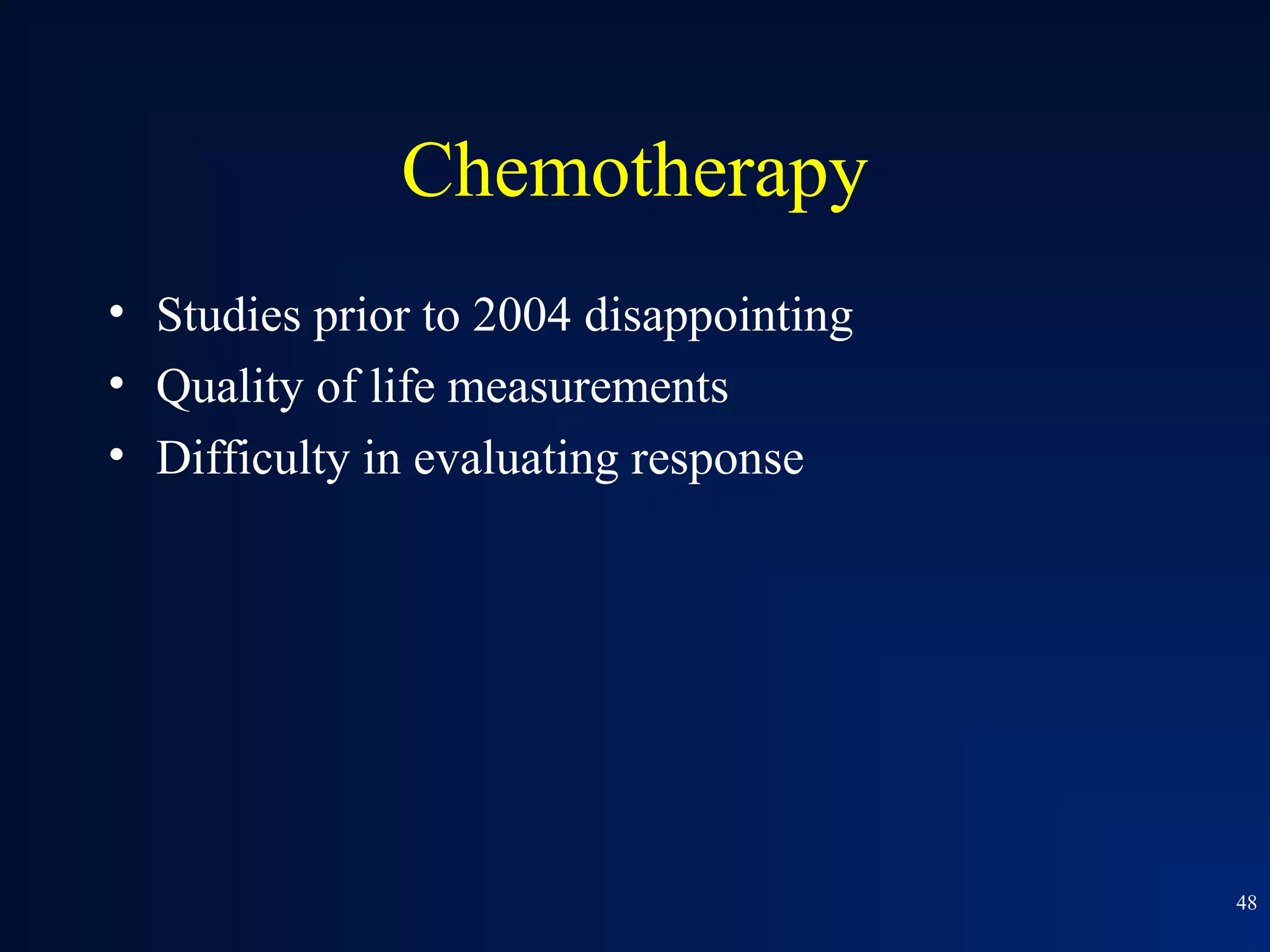
    b. Chemotherapy
    c. Bone targeted therapy
    d. Immunotherapy
IV. Future Directions
                                             2
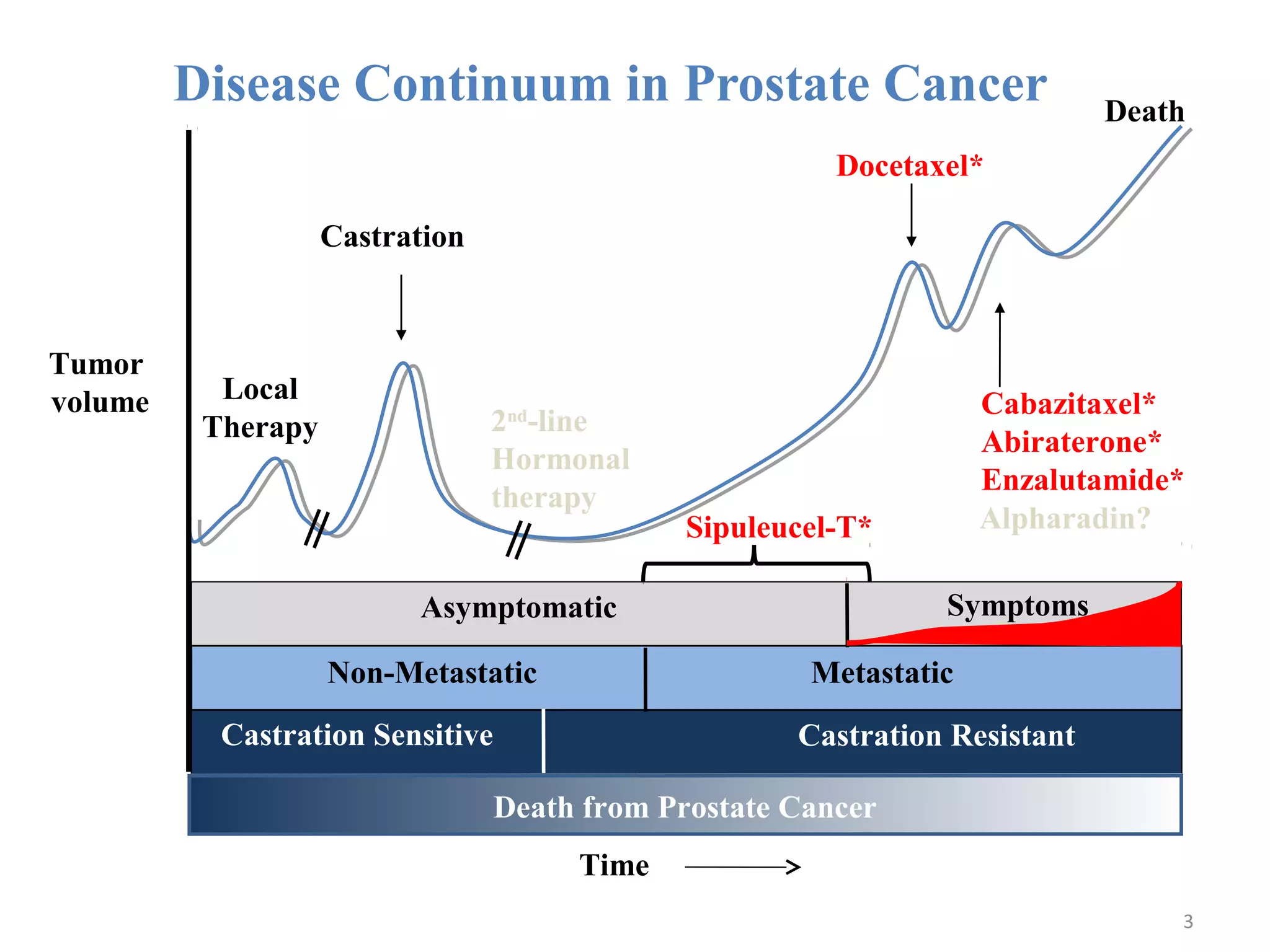
Disease Continuum in Prostate Cancer                                Death
                                                         Docetaxel*

                    Castration


Tumor
volume     Local                                                    Cabazitaxel*
          Therapy                2nd-line
                                                                    Abiraterone*
                                 Hormonal
                                                                    Enzalutamide*
                                 therapy
                                               Sipuleucel-T*        Alpharadin?

                          Asymptomatic                          Symptoms

                    Non-Metastatic                     Metastatic
           Castration Sensitive                       Castration Resistant

                                  Death from Prostate Cancer
                                       Time
                                                                                 3
Introduction
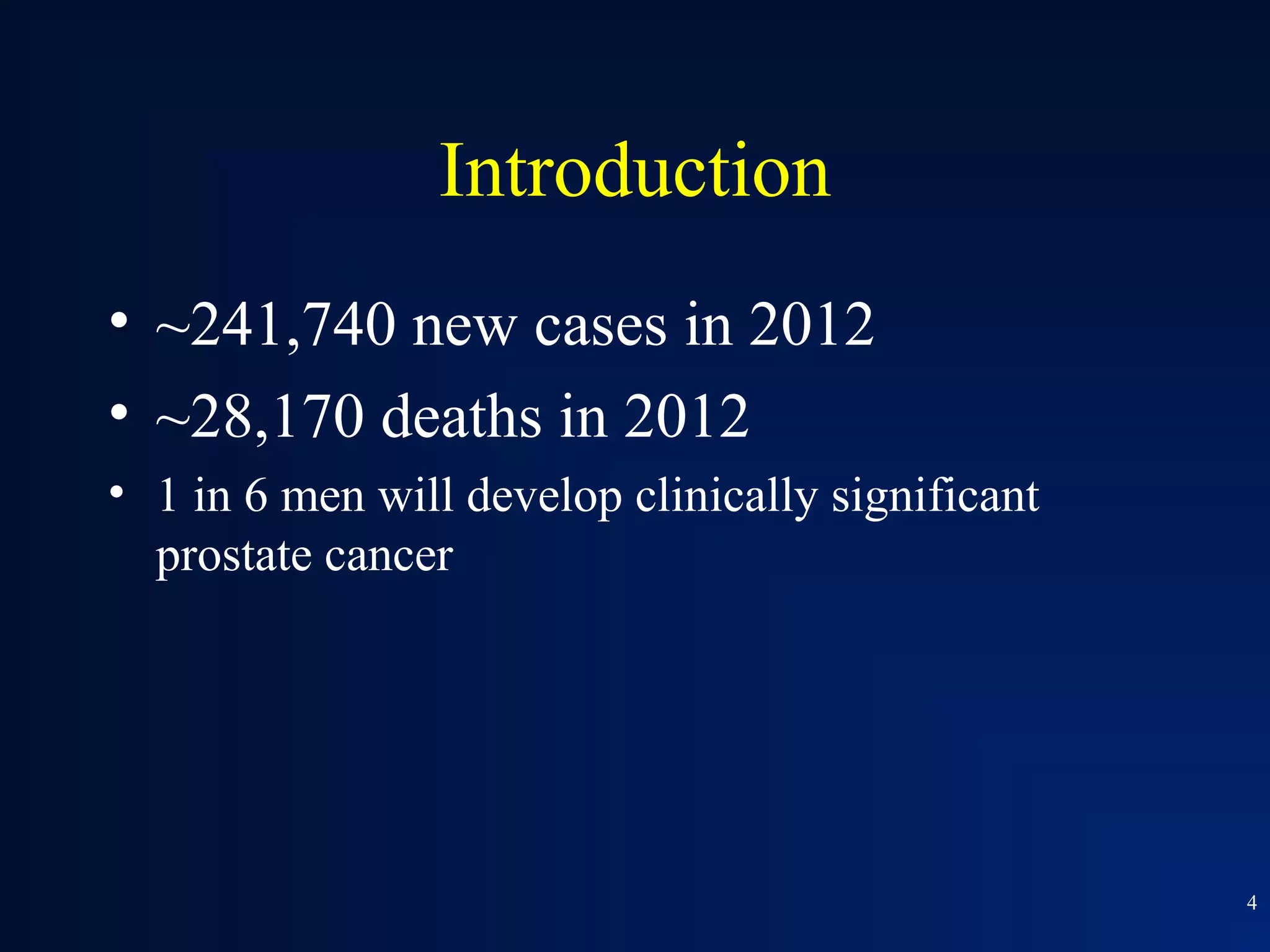
• ~241,740 new cases in 2012
• ~28,170 deaths in 2012
• 1 in 6 men will develop clinically significant
  prostate cancer


                                                   4
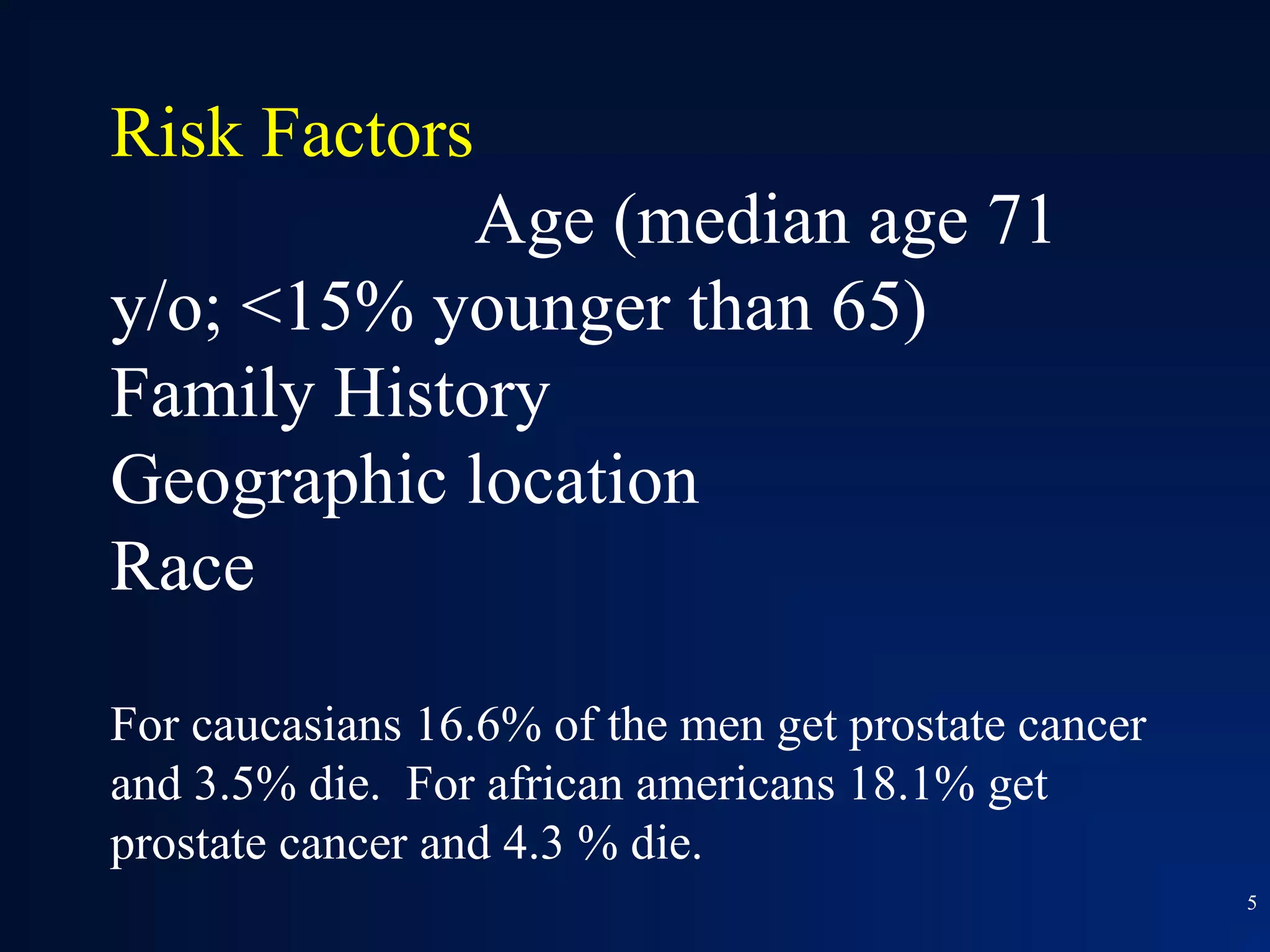
Risk Factors
            Age (median age 71
y/o; <15% younger than 65)
Family History
Geographic location
Race

For caucasians 16.6% of the men get prostate cancer
and 3.5% die. For african americans 18.1% get
prostate cancer and 4.3 % die.
                                                      5
Detection
May be detected due to
symptoms, physical finding or
through PSA screening.
Most patients in the US are
asymptomatic at the time of
diagnosis.
                                6
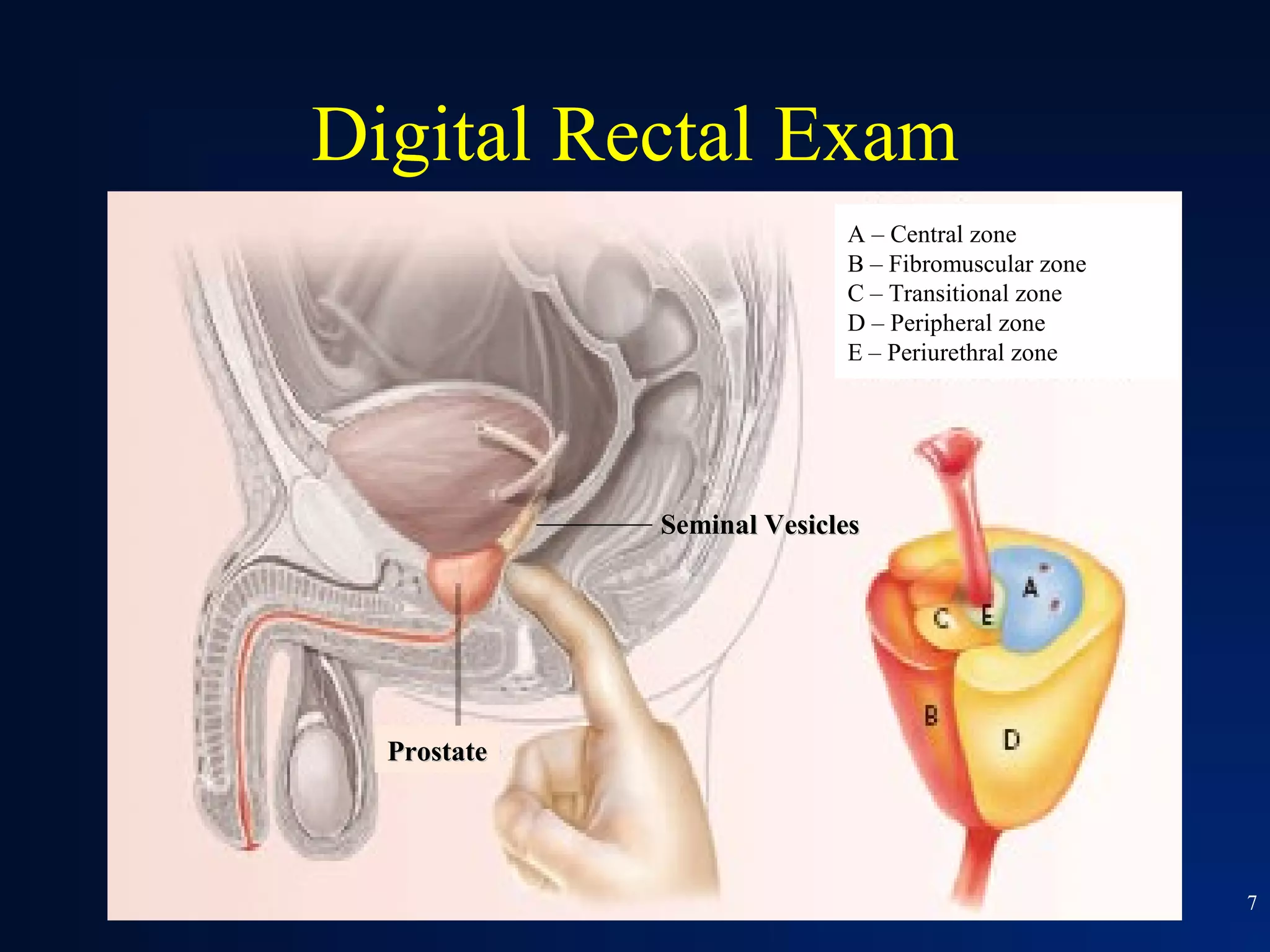
Digital Rectal Exam
                           A – Central zone
                           B – Fibromuscular zone
                           C – Transitional zone
                           D – Peripheral zone
                           E – Periurethral zone


             Seminal Vesicles


  Prostate


                                                    7
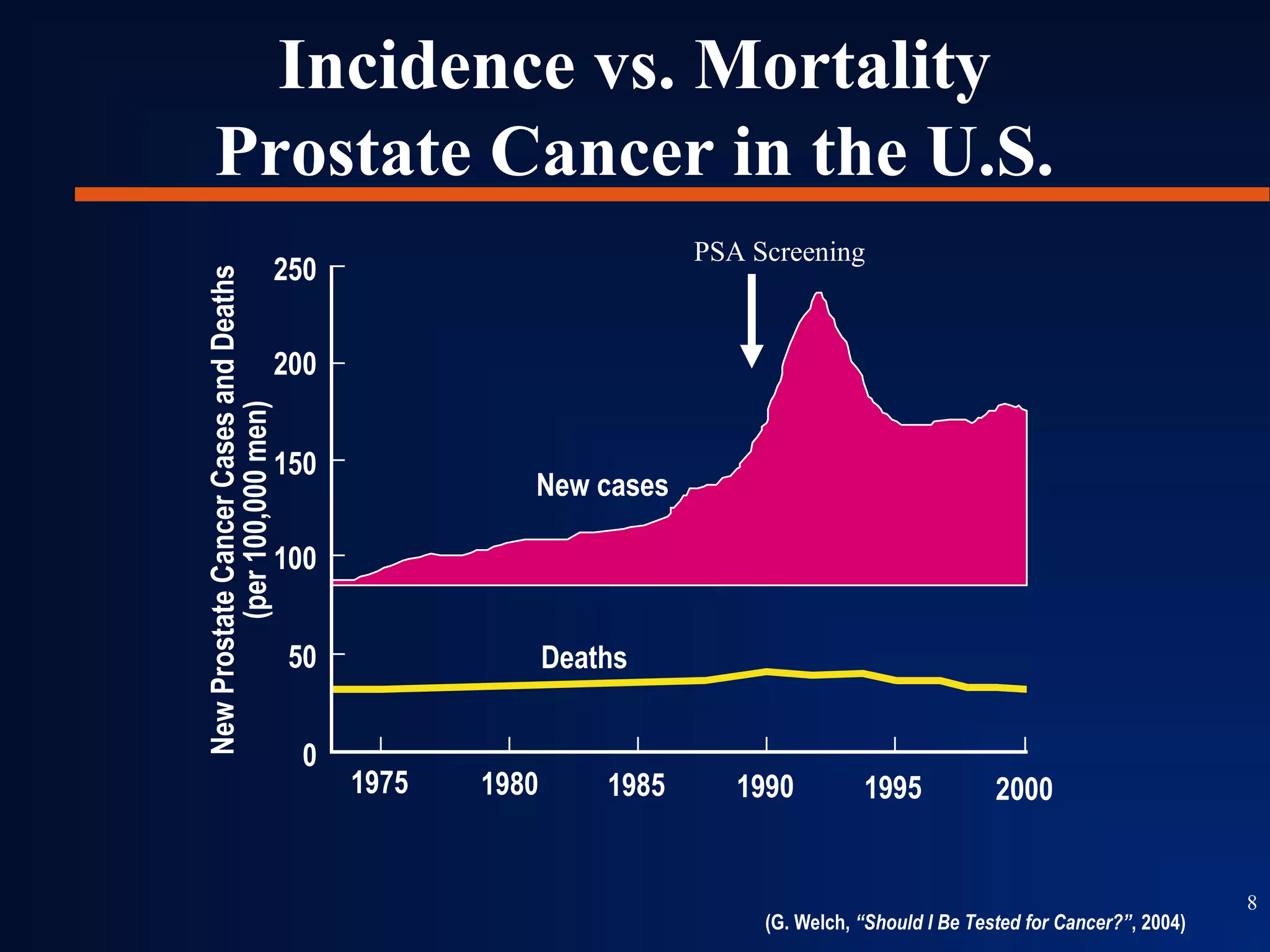
Incidence vs. Mortality
     Prostate Cancer in the U.S.
                                                                      PSA Screening
                                       250
New Prostate Cancer Cases and Deaths


                                       200
          (per 100,000 men)


                                       150
                                                       New cases

                                       100


                                        50                 Deaths


                                         0
                                             1975   1980       1985      1990         1995            2000


                                                                                                                                8
                                                                           (G. Welch, “Should I Be Tested for Cancer?”, 2004)
Does Screening Save Lives?
• PLCO Trial
   – N=76,693 men (screen vs. no screen)
   – After 7 years 50 vs. 44 deaths from PC
   – ?Too early
   – PSA test too available?
• ERSPC Trial
   – N=182,000 (screen vs. no screen)
   – At a median of 9 years, a 20% reduction in PC death
   – Different patient population than US?

                                                           9
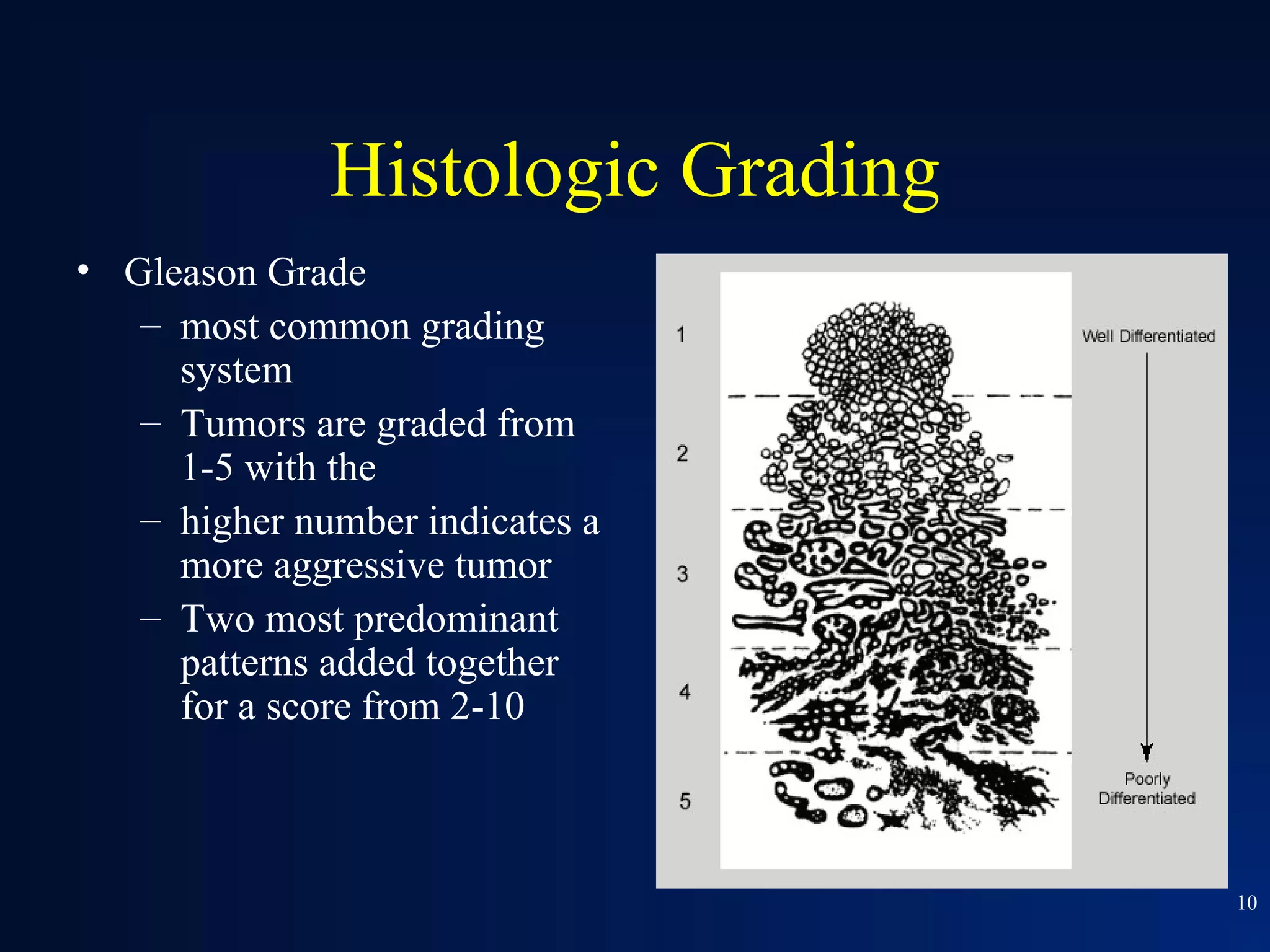
Histologic Grading
• Gleason Grade
   – most common grading
     system
   – Tumors are graded from
     1-5 with the
   – higher number indicates a
     more aggressive tumor
   – Two most predominant
     patterns added together
     for a score from 2-10


                                   10
Staging
    Stage I(A) has a T1a and is localized.
                  Stage II (B) has a T1b,
T1c, T2a, T2b and T2c and is localized to the
prostate.                       Stage III (C)
has a T3a and Teb and is locally advanced.
                            Stage IV(D) has a
T4N1M1 and is metastatic.


                                                11
Prognosis
• PSA at diagnosis, percent of tumor in a biopsy
  specimen, number of positive biopsies, Gleason
  Score and clinical stage are useful prognostic
  factors
• Nomograms are available to predict the likelihood
  of positive surgical margins, lymph node
  involvement and disease recurrence after local
  therapy.


                                                      12
Treatment
• Patients with a life expectancy of less than 10
  years and low grade/ low stage lesions may be
  candidates for active surveillance


                                                    13
Active
Surveillance
The chance of dying
of prostate cancer
decreases with:

Lower Gleason score
Older age (more
competing causes of
mortality)

                      14
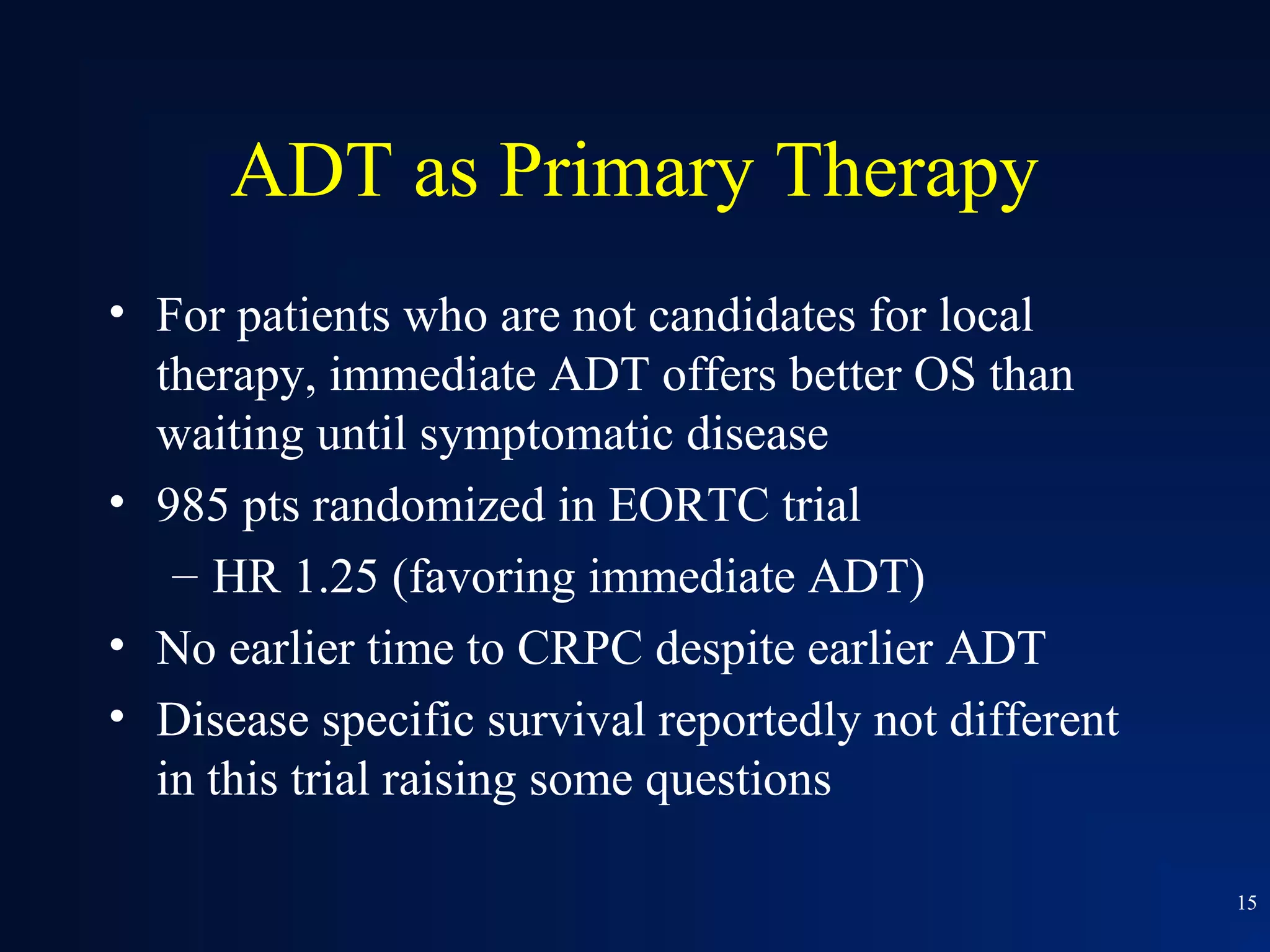
ADT as Primary Therapy
• For patients who are not candidates for local
  therapy, immediate ADT offers better OS than
  waiting until symptomatic disease
• 985 pts randomized in EORTC trial
   – HR 1.25 (favoring immediate ADT)
• No earlier time to CRPC despite earlier ADT
• Disease specific survival reportedly not different
  in this trial raising some questions

                                                       15
Treatment - continued
• Eradication of the cancer is the goal of therapy in
  patients with a life expectancy greater than 10
  years
   – Radical Prostatectomy
   – External-beam Radiation
   – Brachytherapy


                                                        16
Radical Prostatectomy
• Surgical removal of the prostate
• May be done with a retropubic, perineal, or
  laproscopic approach
• Most common side effects are impotence and
  incontinence


                                                17
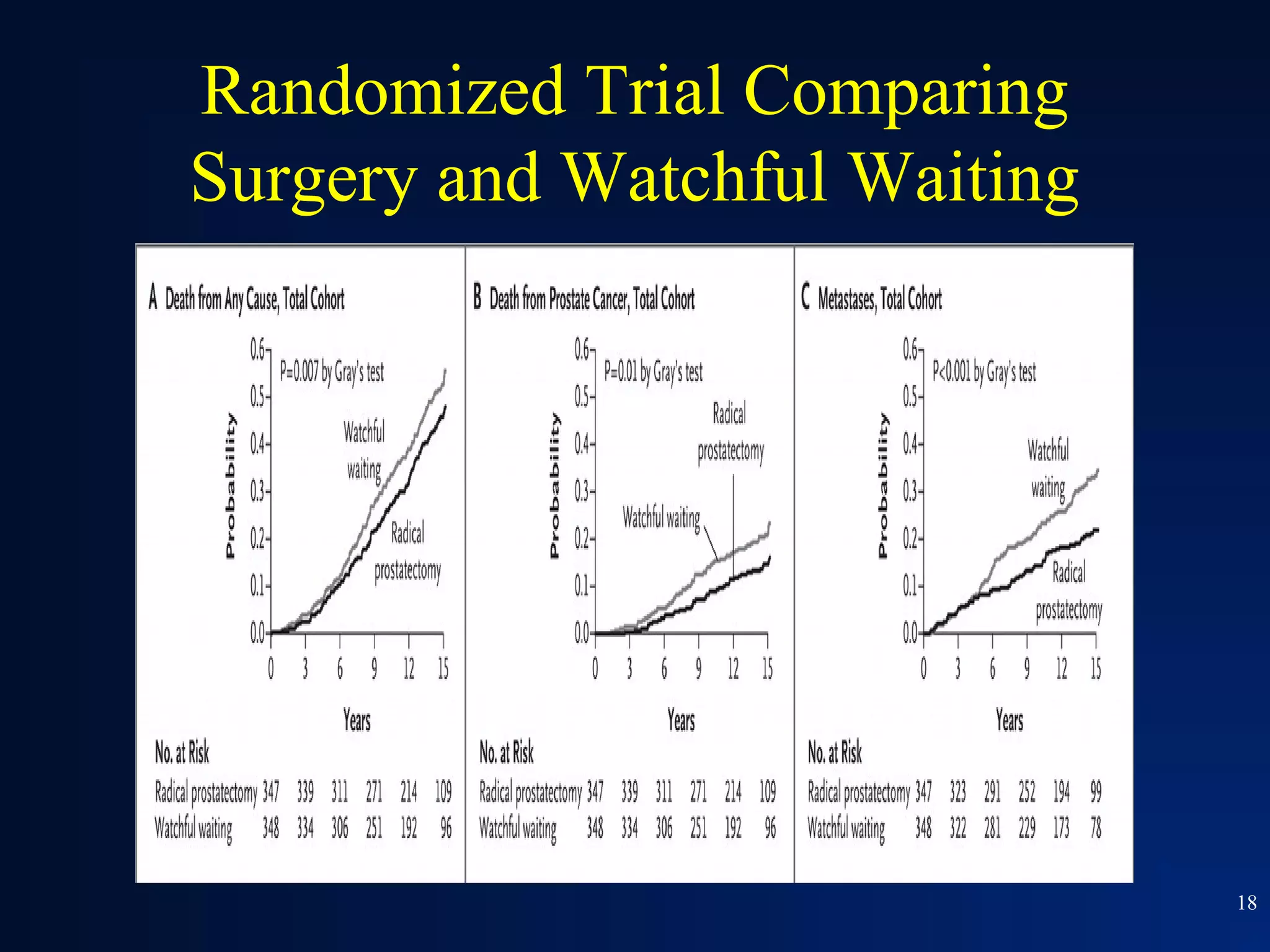
Randomized Trial Comparing
Surgery and Watchful Waiting


                               18
Randomized Trial Comparing
Surgery and Watchful Waiting


                               19
External-beam Radiation
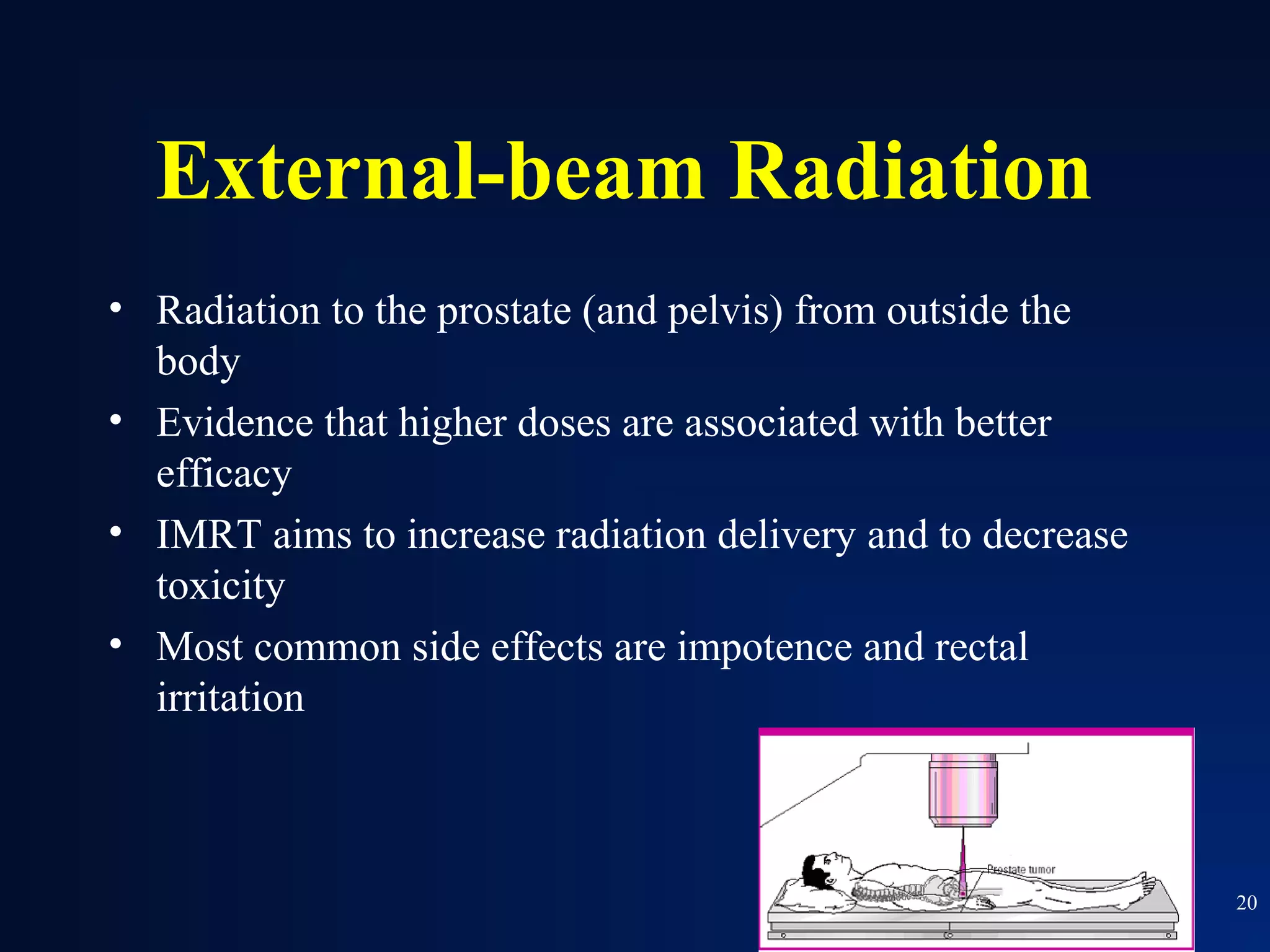
• Radiation to the prostate (and pelvis) from outside the
  body
• Evidence that higher doses are associated with better
  efficacy
• IMRT aims to increase radiation delivery and to decrease
  toxicity
• Most common side effects are impotence and rectal
  irritation


                                                             20
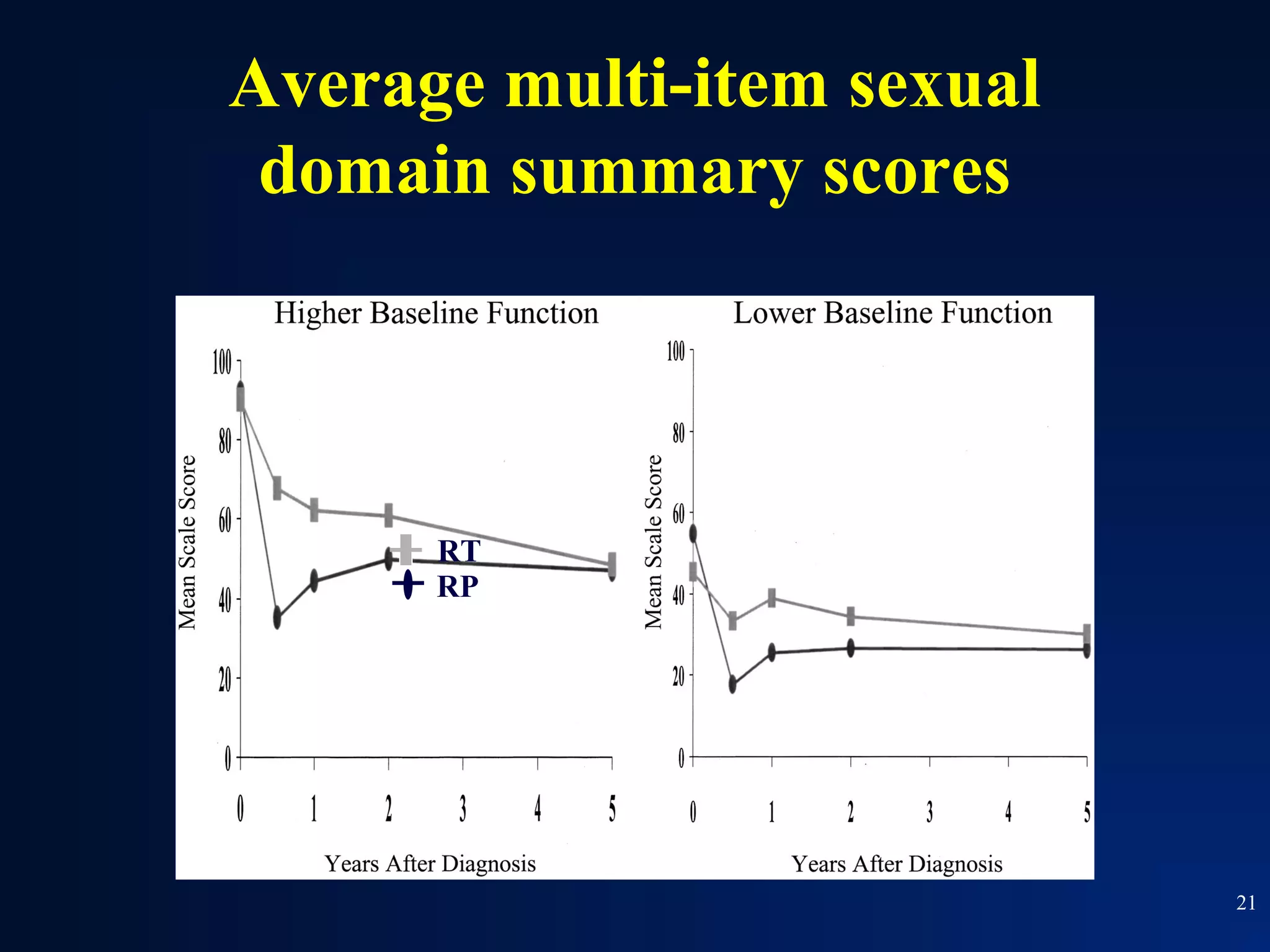
Average multi-item sexual
 domain summary scores


      RT
      RP


                            21
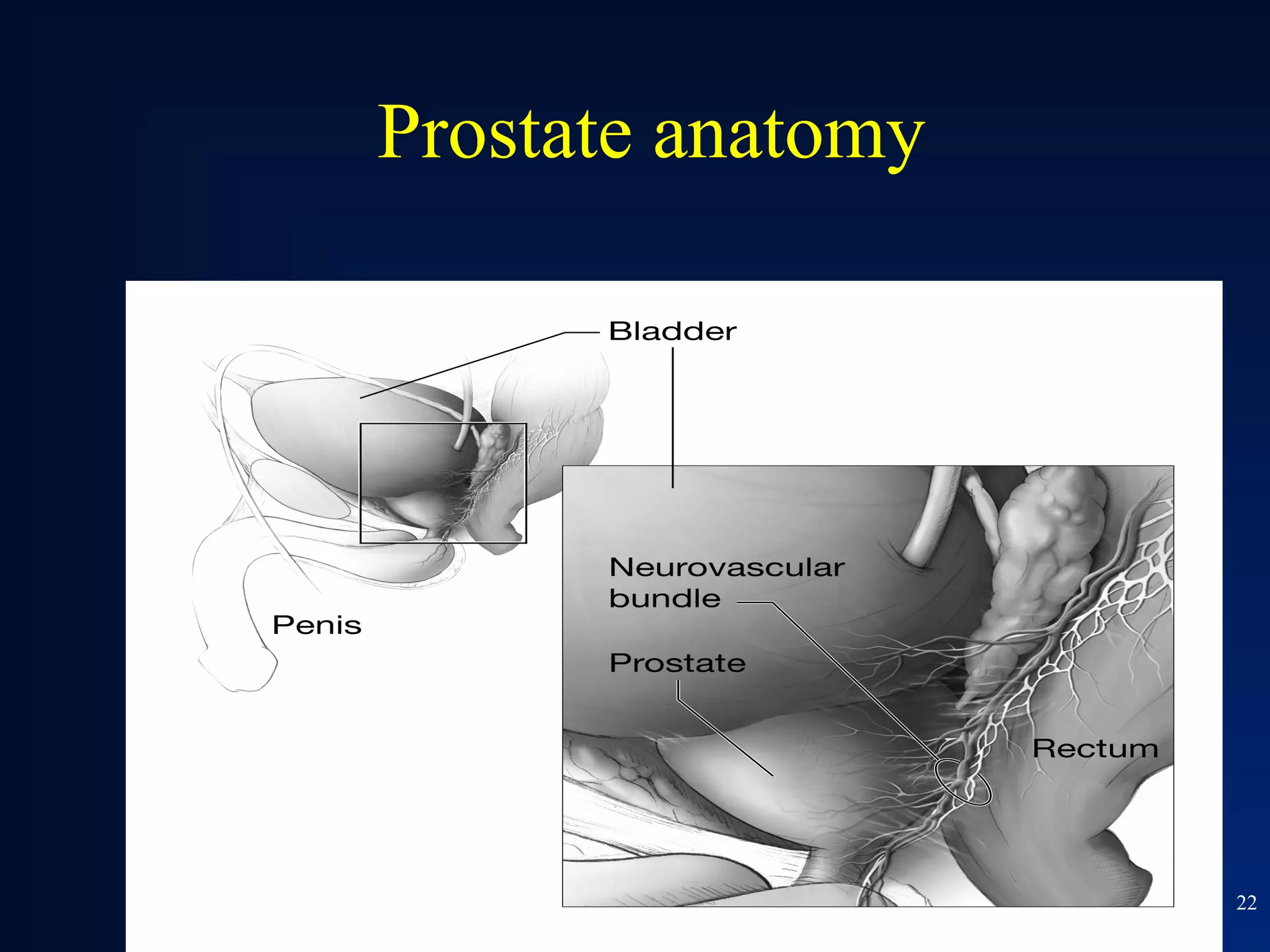
Prostate anatomy


                   22
Average multi-item incontinence
       summary scores


         RT
         RP


                                  23
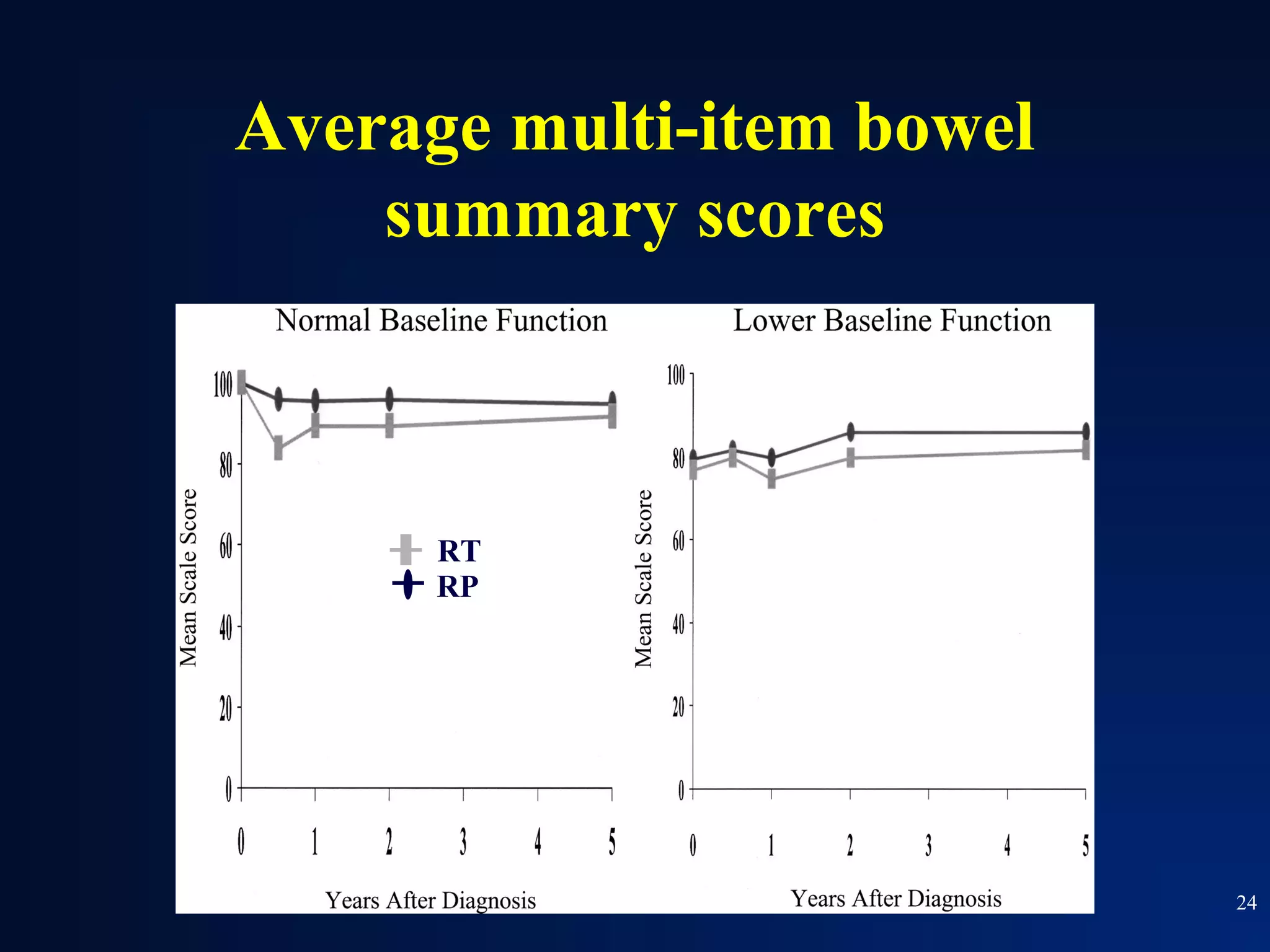
Average multi-item bowel
    summary scores


      RT
      RP


                           24
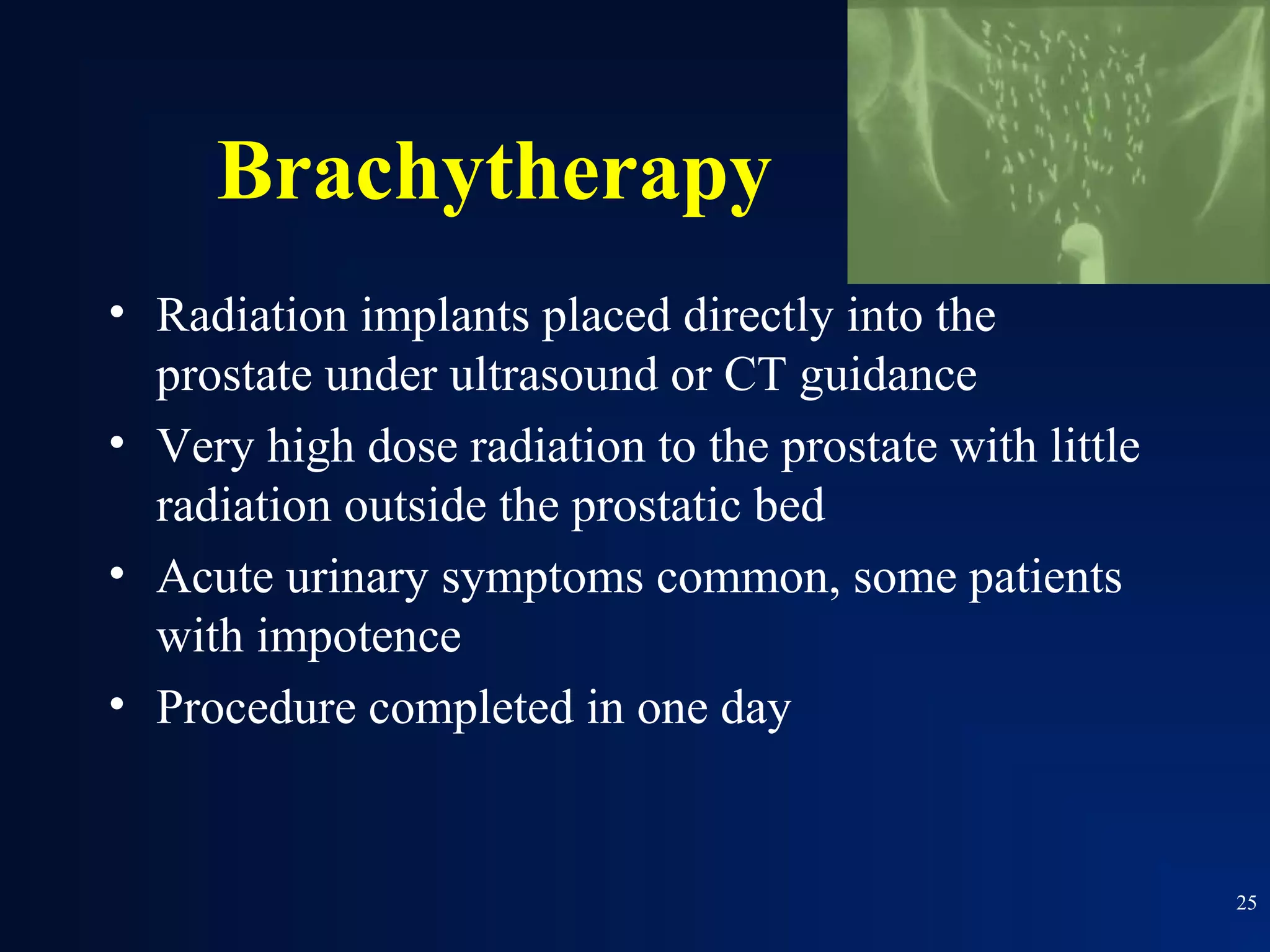
Brachytherapy
• Radiation implants placed directly into the
  prostate under ultrasound or CT guidance
• Very high dose radiation to the prostate with little
  radiation outside the prostatic bed
• Acute urinary symptoms common, some patients
  with impotence
• Procedure completed in one day


                                                         25
Treatment of Locally Advanced Disease

• Conservative management
• Hormonal therapy plus radiation
• Hormonal therapy plus surgery


                                        26
EORTC Trial
•   Randomized trial of radiotherapy ± ADT
•   Locally advanced prostate cancer (n=415)
•   Concurrent + adjuvant ADT continued for 3 years
•   Improved outcomes for combination:
     – Local control
     – metastases free survival
     – overall survival (62% vs. 78% 5 yr survival p=0.0002)


                                                               27
ECOG (Messing et al.)
• Randomized trial of immediate hormonal therapy vs.
  observation in men undergoing radical prostatectomy with
  evidence of positive lymph nodes
• 98 eligible patients enrolled
• Deaths by 11.9 years f/u
   – 17/47 immediate anti-androgen
   – 28/51 delayed therapy group (HR 1.84; p=0.04)
• Criticisms


                                                             28
Adjuvant RT
Randomized study of adjuvant RT vs. observation for
T3N0M0 (n=425) For adjuvant RT of 214 patients
53% had Metastasis free survival and 59% had
overall survival. For observation of 211 patients
46% had metastasis free survival and 48% had
overall survival.


                                                      29
Disease Continuum in Prostate Cancer


Tumor
volume     Local
          Therapy


                          Asymptomatic             Symptoms

                    Non-Metastatic       Metastatic
           Castration Sensitive          Castration Resistant


                                                                30
Biochemical Recurrence
• May be occult local or metastatic disease
• Options include additional local therapy, hormonal
  treatment or watchful waiting
• Virtually impossible to predict the impact of treatment on
  survival


                                                               31
Pound Data
• Probably the most important report on this population
  because of the limited use of radiation and hormonal
  therapy
• Over 15 years 1,997 patients underwent a radical
  prostatectomy, with 304 (15%) experiencing a PSA
  relapse.
• Of the 304, 103 (34 %) developed metastatic disease.


                                                          32
Pound Data (continued)
• No patients received hormonal therapy without clinically
  evident metastatic disease.
• Median time from PSA elevation to metastatic disease was
  8 years
• Median time to death after metastatic disease was 5 years.
• Prognostic factors predictive of outcome included the
  Gleason score in the surgical specimen, and PSA doubling
  time.


                                                               33
Disease Continuum in Prostate Cancer


Tumor
volume     Local
          Therapy


                          Asymptomatic             Symptoms

                    Non-Metastatic       Metastatic
           Castration Sensitive          Castration Resistant


                                                                34
Metastatic PC
• Prostate Cancer tends to spread to bone and lymph
  nodes
• However metastatic lesions have been found in
  virtually every part of the body including brain,
  liver and lungs.
• Many patients do not have measurable lesions thus
  traditional response criteria (RECIST) are difficult
  to use.

                                                         35
ADT Treatment of metastatic PC
• 1941 Charles Huggins showed that advanced PC was
  inhibited by decreasing Testosterone (castration or
  estrogen) and activated by adding testosterone.
• 1966 Nobel Prize in Medicine


                                                        36
Action of Androgens in Prostate Cells.
 Testosterone is metabolized to DHT
Action of Androgens in Prostate Cells.
DHT receptor complex enters nucleus.
Action of Androgens in Prostate Cells.
 DHT receptor complex alters gene
             expression
Action of Androgens in Prostate Cells.
mRNA is translated in cytosol into protein.
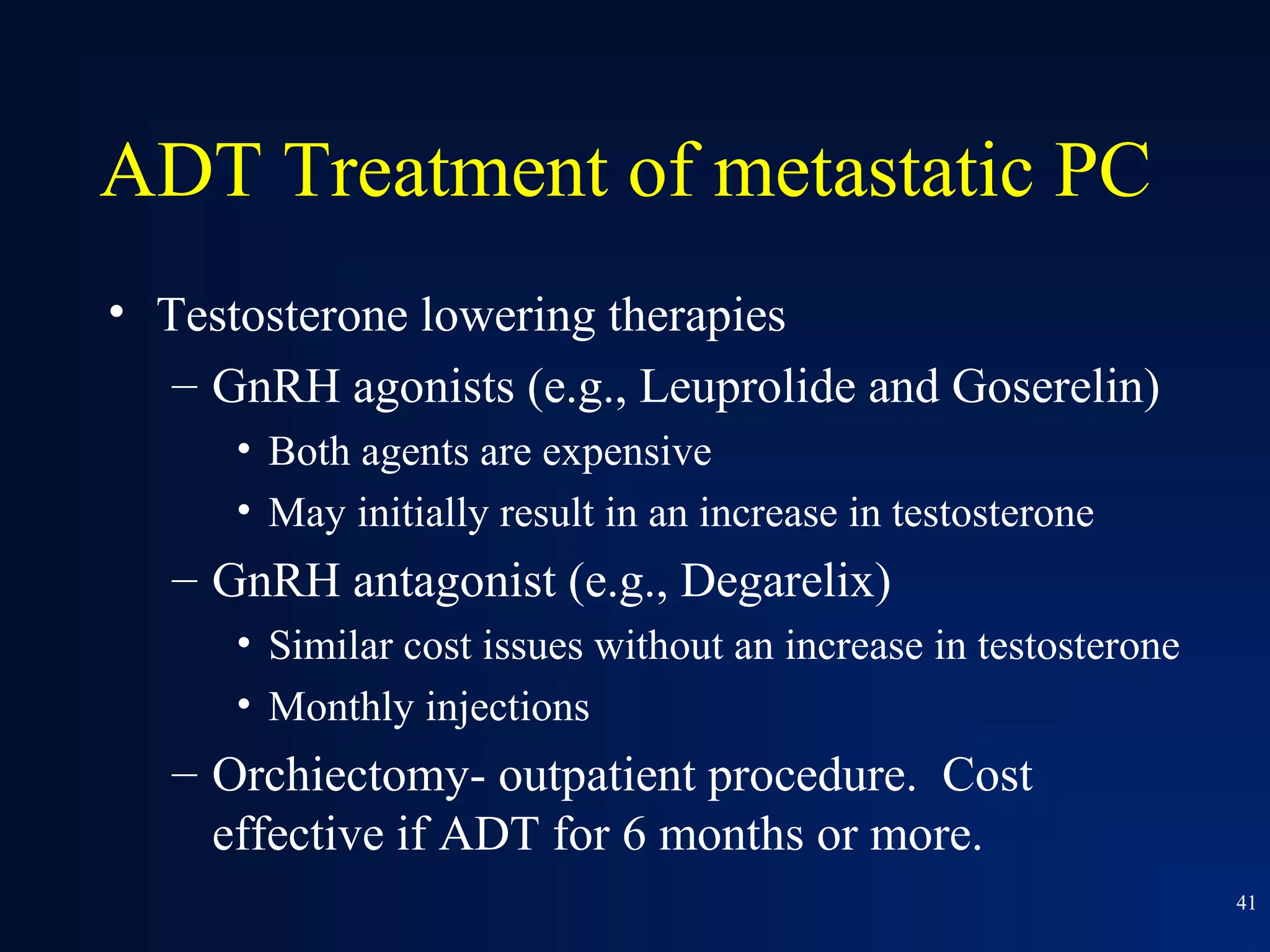
ADT Treatment of metastatic PC
• Testosterone lowering therapies
   – GnRH agonists (e.g., Leuprolide and Goserelin)
      • Both agents are expensive
      • May initially result in an increase in testosterone
   – GnRH antagonist (e.g., Degarelix)
      • Similar cost issues without an increase in testosterone
      • Monthly injections
   – Orchiectomy- outpatient procedure. Cost
     effective if ADT for 6 months or more.
                                                                  41
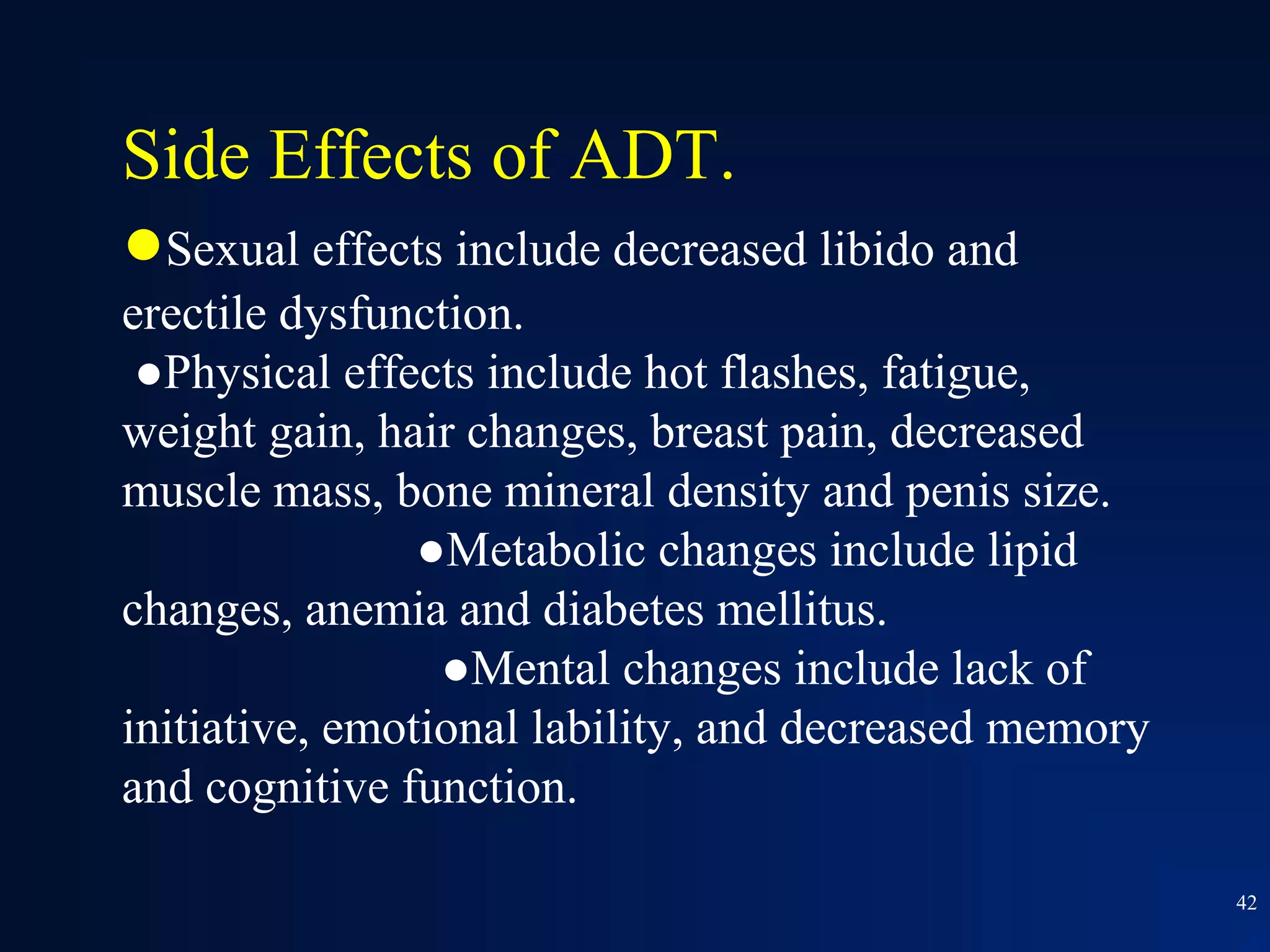
Side Effects of ADT.
●Sexual effects include decreased libido and
erectile dysfunction.
 ●Physical effects include hot flashes, fatigue,
weight gain, hair changes, breast pain, decreased
muscle mass, bone mineral density and penis size.
                ●Metabolic changes include lipid
changes, anemia and diabetes mellitus.
                 ●Mental changes include lack of
initiative, emotional lability, and decreased memory
and cognitive function.

                                                       42
Androgen Receptor Antagonists
• bicalutamide, nilutamide, flutamide and enzalutamide
• Do not ↓ Testosterone, bind androgen receptor and
  prevent anabolic (growth related) effects
• Different dosing schedules and potency
• Different side effect profile
• Similar activity and all may show “withdrawal
  response”


                                                         43
Combined Androgen Blockade
• Combination of anti-androgen with orchiectomy
  or GnRH-A
• Controversial results
• Not significantly more effective, but more
  expensive and may add toxicity


                                                  44
5-Year Survival in the 20 Randomized
Trials of CAB (AS plus Nilutamide or
       Flutamide) vs AS Alone
                                     6500 Men in 20 Trials
                                    of Nilutamide/Flutamide

                                                Androgen Suppression Only
                                                Androgen Suppression
                                                Antiandrogen
       Proportion Alive (%)


                                                       27.6% Treatment Better
                                                             by 2.9% (SE 1.3)
                                                             Logrank P=0.005
                                                      24.7%


                              Time Since Randomization (Years)
                                                                                45
Other Hormonal Agents
• Ketoconazole
• Abiraterone (recently approved)
• Patients may respond to multiple sequential
  hormonal manipulations


                                                46
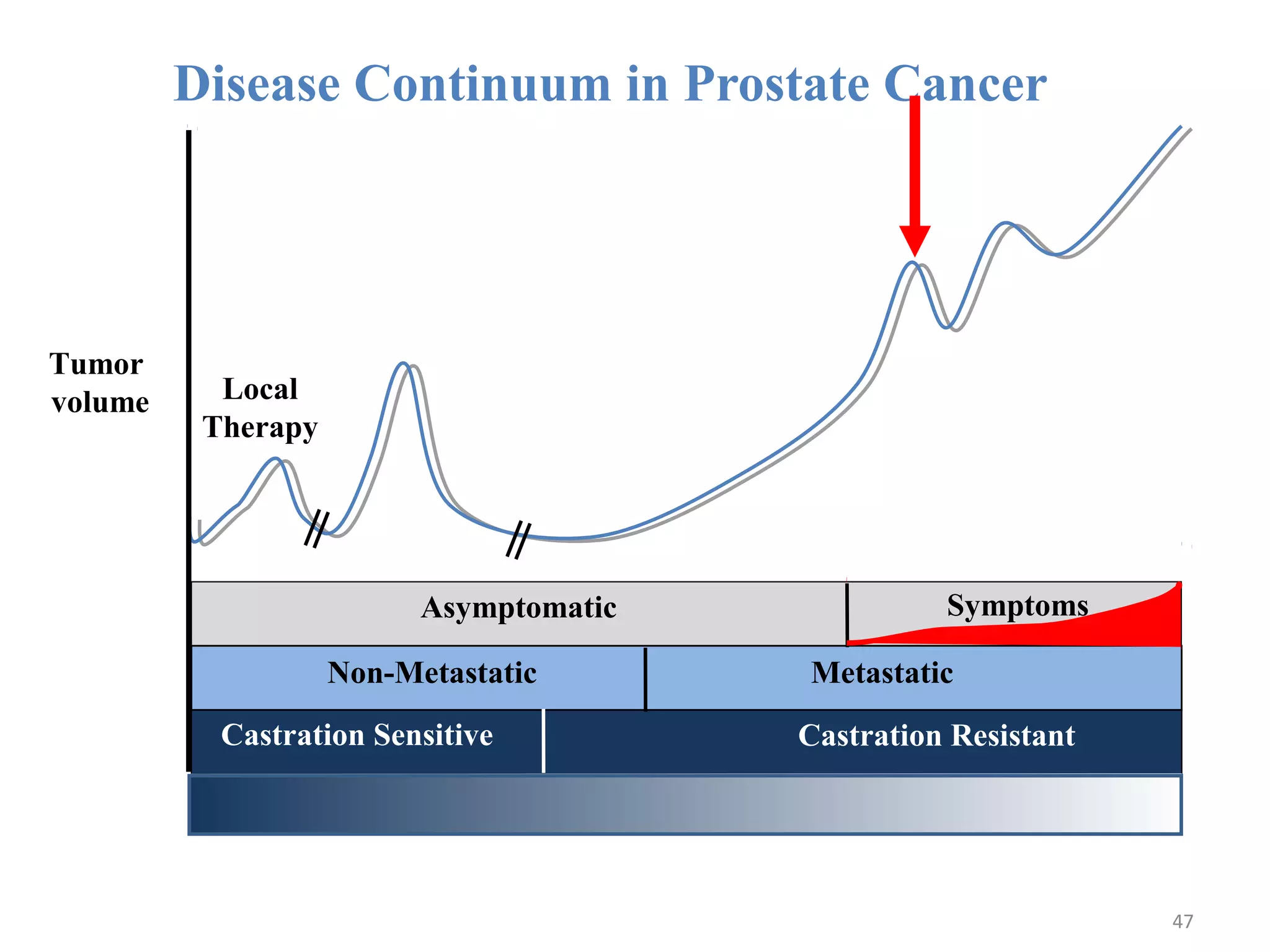
Disease Continuum in Prostate Cancer


Tumor
volume     Local
          Therapy


                          Asymptomatic             Symptoms

                    Non-Metastatic       Metastatic
           Castration Sensitive          Castration Resistant


                                                                47
Chemotherapy
• Studies prior to 2004 disappointing
• Quality of life measurements
• Difficulty in evaluating response


                                        48
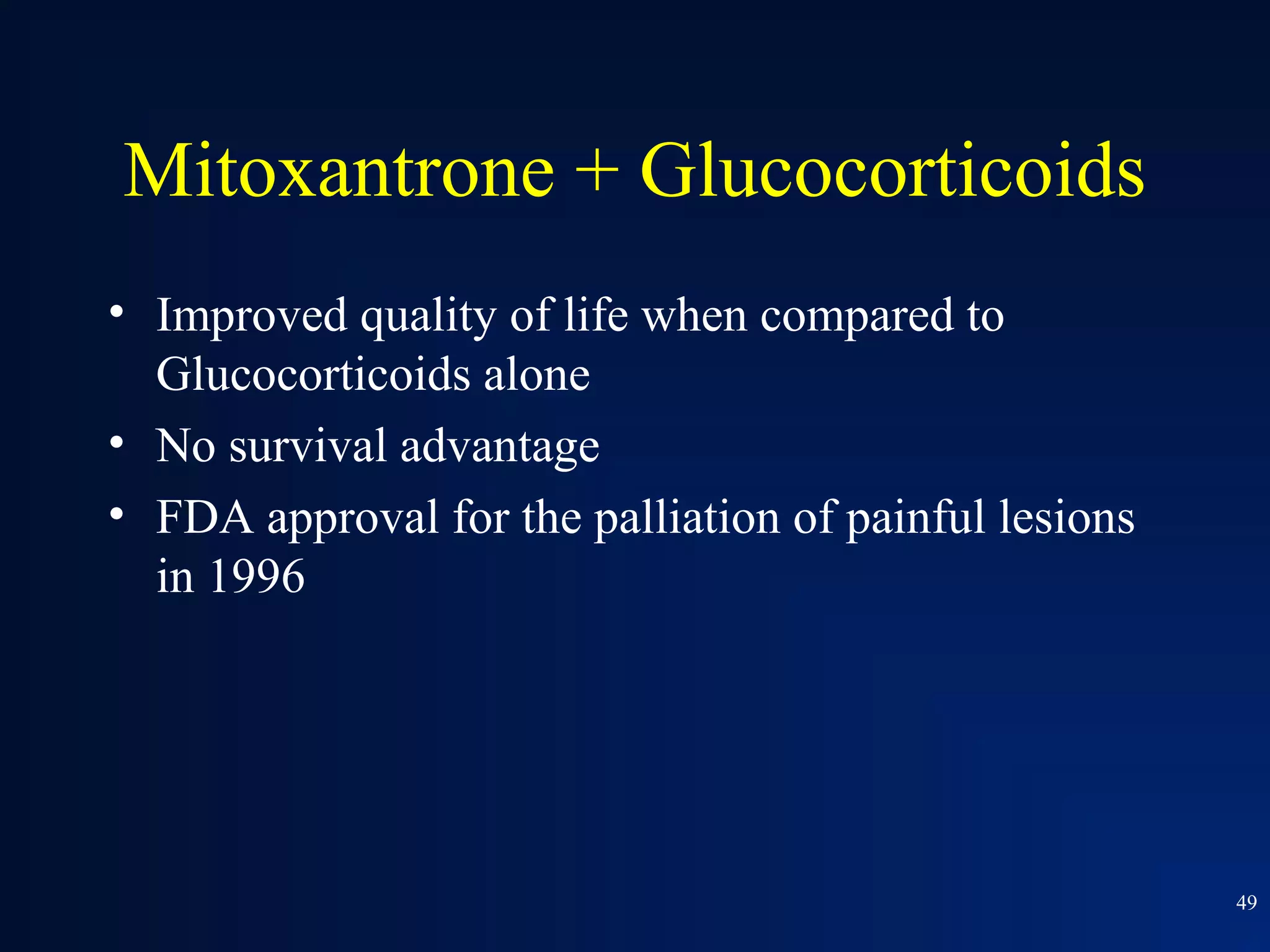
Mitoxantrone + Glucocorticoids
• Improved quality of life when compared to
  Glucocorticoids alone
• No survival advantage
• FDA approval for the palliation of painful lesions
  in 1996


                                                       49
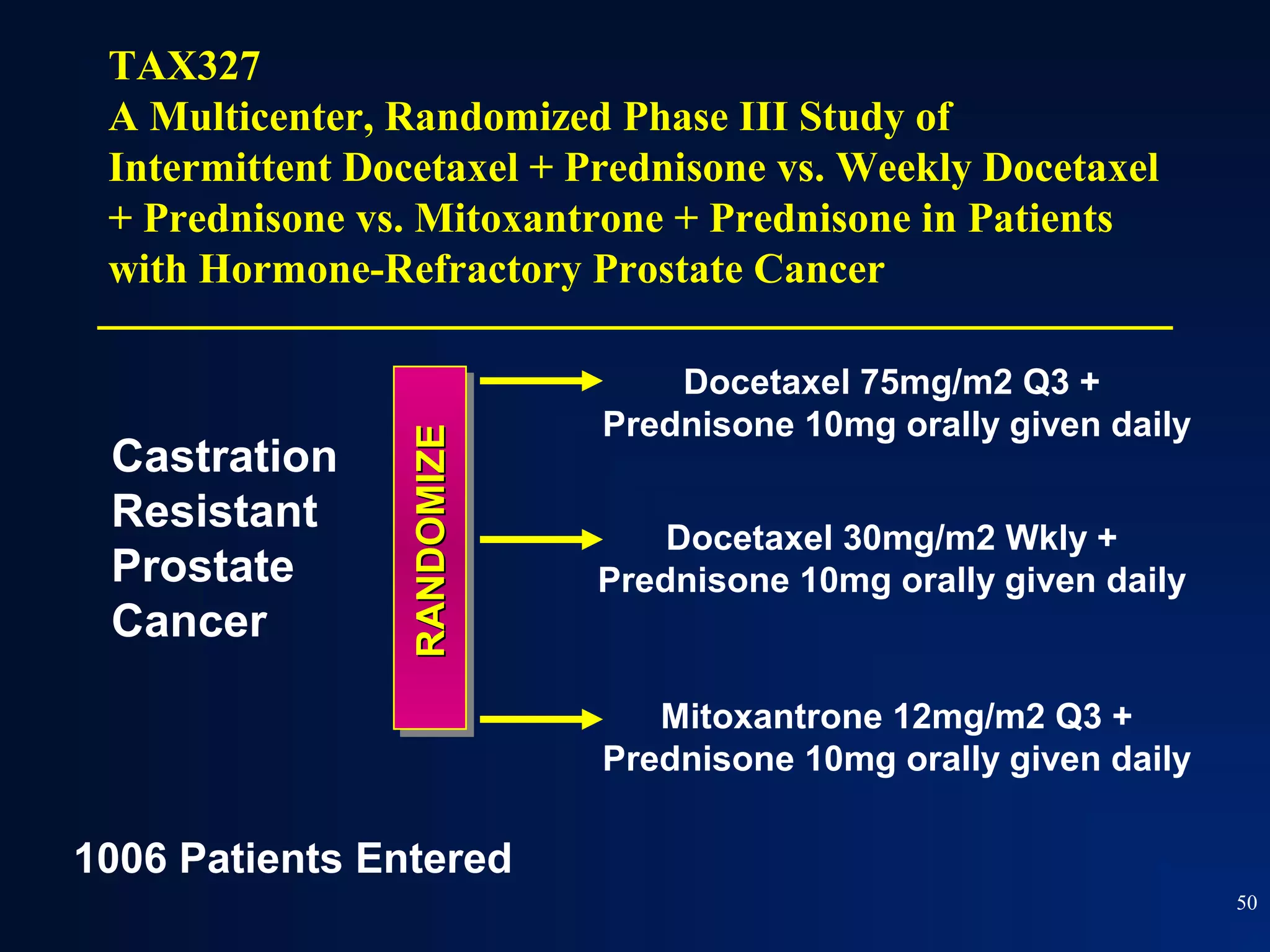
TAX327
 A Multicenter, Randomized Phase III Study of
 Intermittent Docetaxel + Prednisone vs. Weekly Docetaxel
 + Prednisone vs. Mitoxantrone + Prednisone in Patients
 with Hormone-Refractory Prostate Cancer

                                 Docetaxel 75mg/m2 Q3 +
                 RANDOMIZE   Prednisone 10mg orally given daily
 Castration
 Resistant
                                 Docetaxel 30mg/m2 Wkly +
 Prostate                    Prednisone 10mg orally given daily
 Cancer

                                Mitoxantrone 12mg/m2 Q3 +
                             Prednisone 10mg orally given daily

1006 Patients Entered
                                                                  50
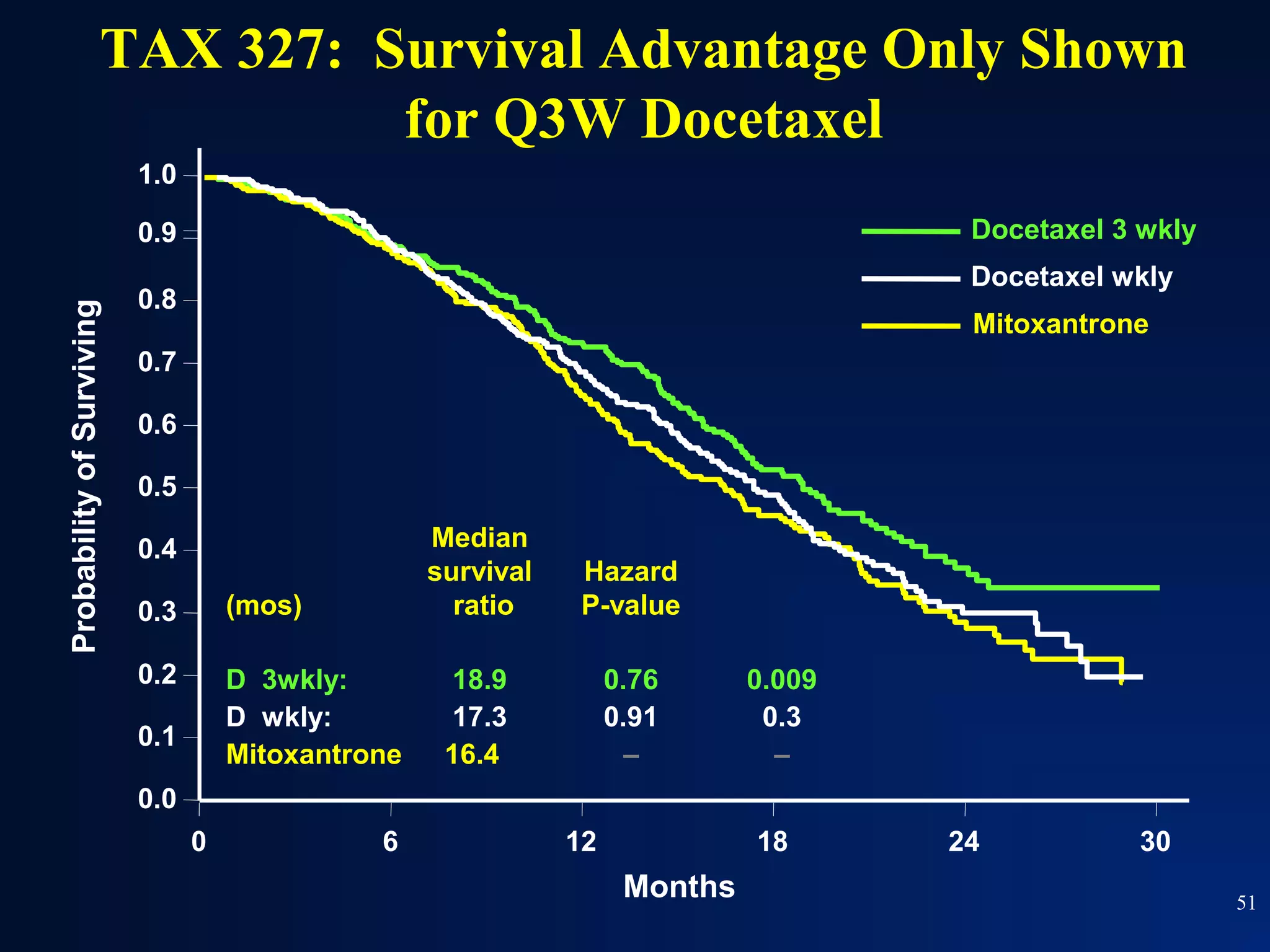
TAX 327: Survival Advantage Only Shown
                                for Q3W Docetaxel
                           1.0

                           0.9                                                         Docetaxel 3 wkly
                                                                                       Docetaxel wkly
                           0.8
Probability of Surviving


                                                                                       Mitoxantrone
                           0.7

                           0.6

                           0.5

                           0.4                      Median
                                                    survival    Hazard
                           0.3       (mos)            ratio     P-value

                           0.2       D 3wkly:        18.9           0.76      0.009
                                     D wkly:         17.3           0.91       0.3
                           0.1
                                     Mitoxantrone    16.4             –         –
                           0.0
                                 0             6               12             18      24          30
                                                                     Months                               51
Cabazitaxel
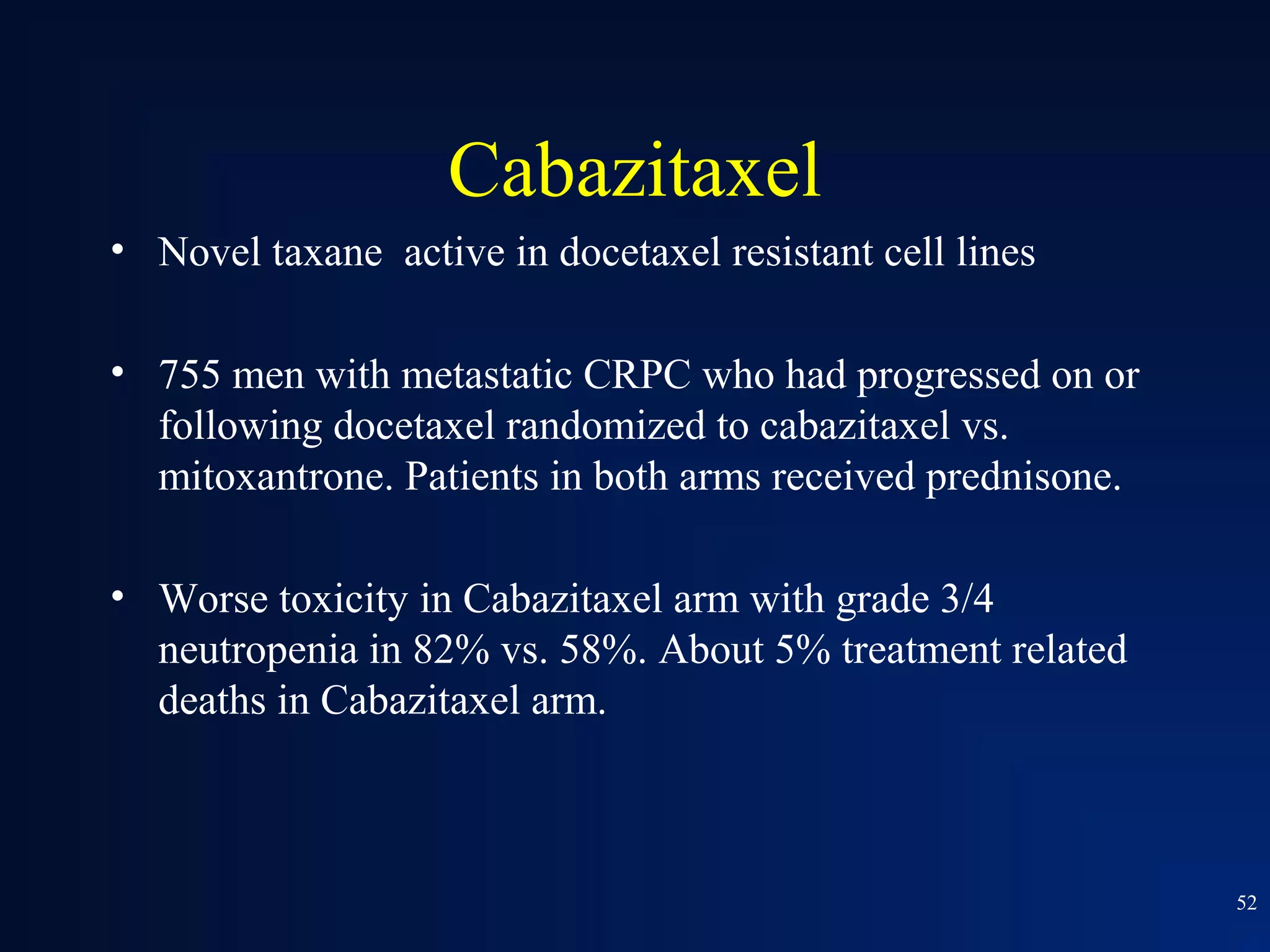
• Novel taxane active in docetaxel resistant cell lines

• 755 men with metastatic CRPC who had progressed on or
  following docetaxel randomized to cabazitaxel vs.
  mitoxantrone. Patients in both arms received prednisone.

• Worse toxicity in Cabazitaxel arm with grade 3/4
  neutropenia in 82% vs. 58%. About 5% treatment related
  deaths in Cabazitaxel arm.


                                                             52
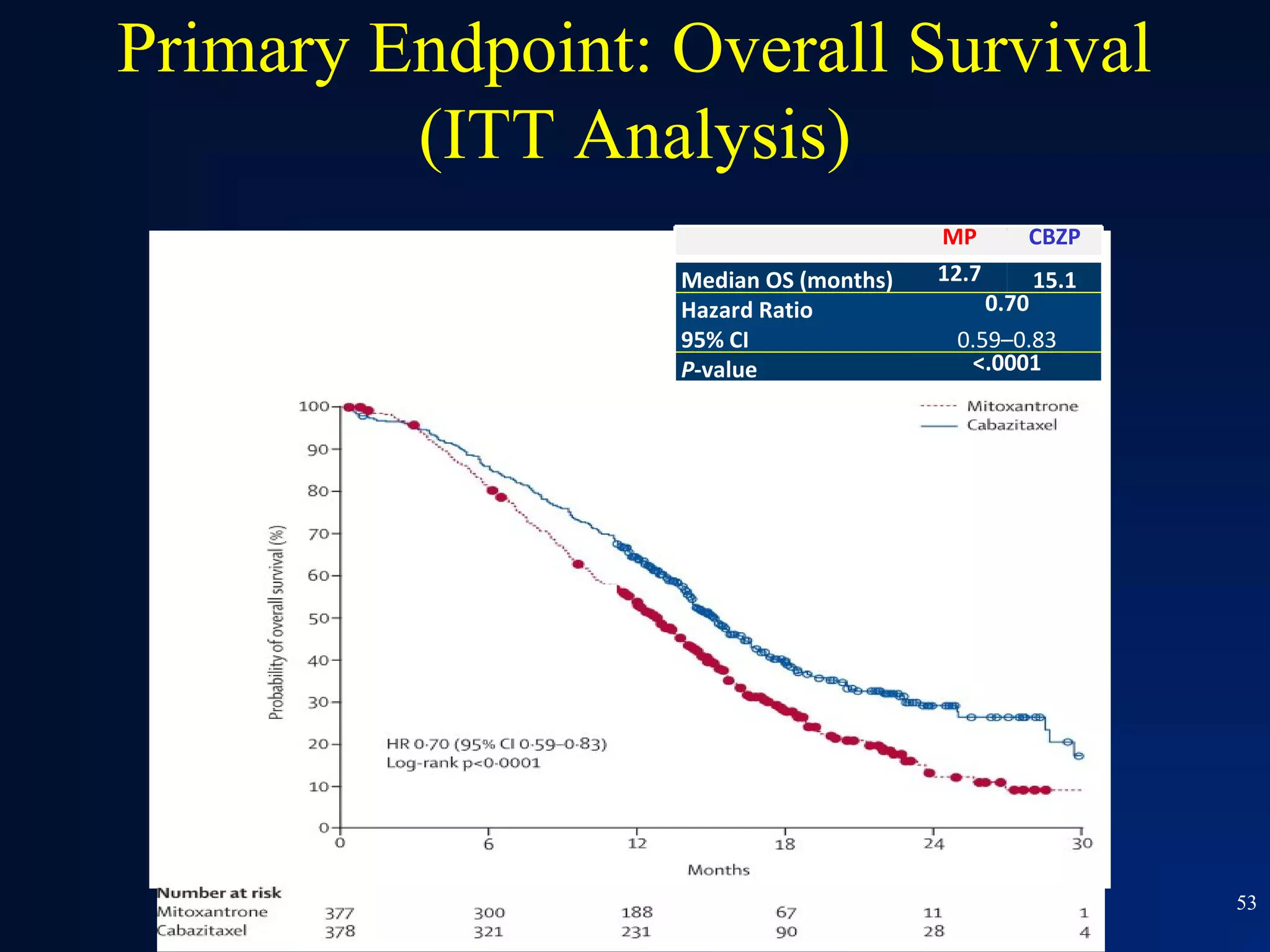
Primary Endpoint: Overall Survival
         (ITT Analysis)
                                       MP     CBZP
                  Median OS (months)   12.7   15.1
                  Hazard Ratio             0.70
                  95% CI                0.59–0.83
                  P-value                <.0001


                                                     53
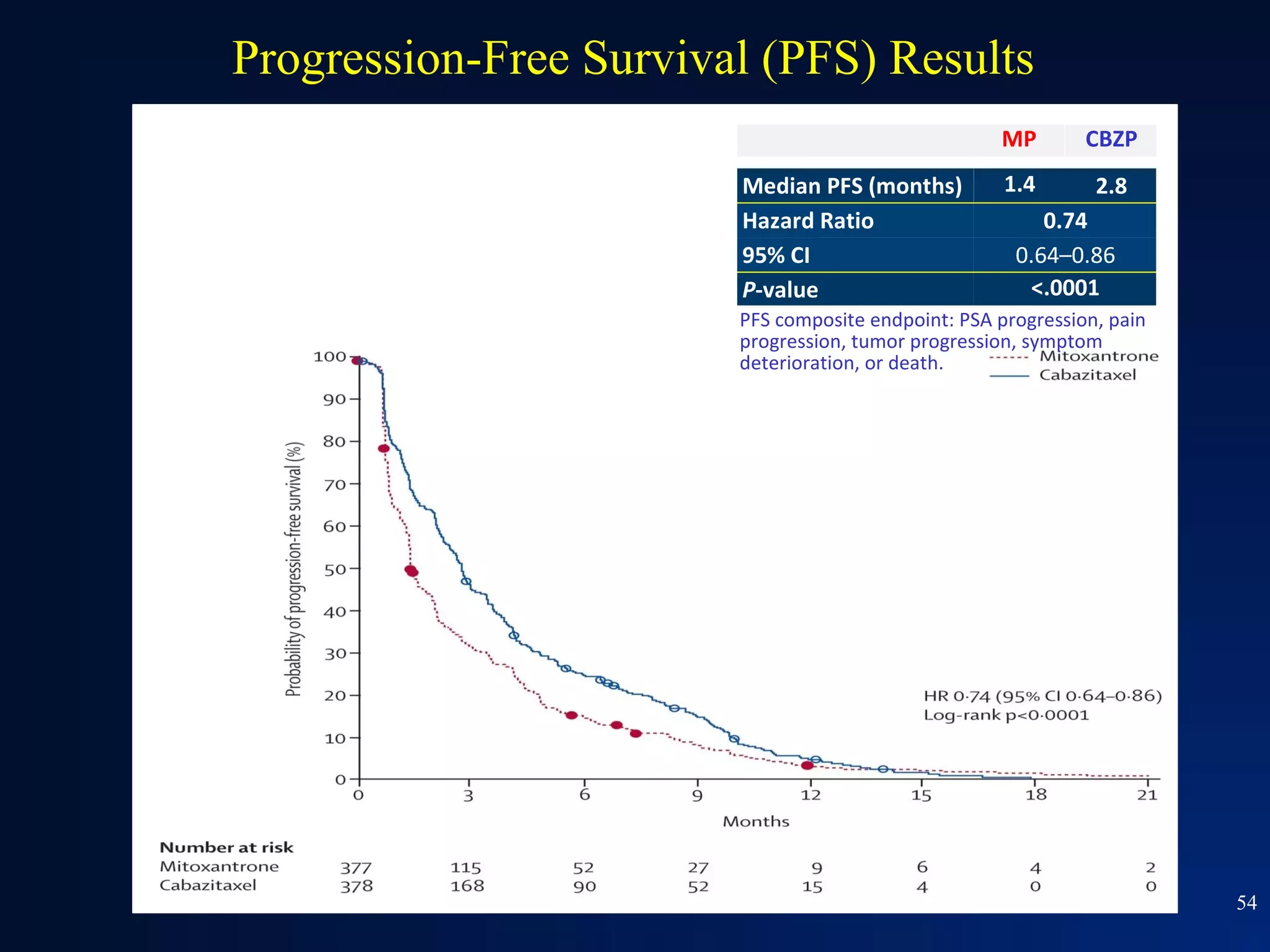
Progression-Free Survival (PFS) Results
                                                     MP       CBZP
                        Median PFS (months)          1.4       2.8
                        Hazard Ratio                     0.74
                        95% CI                        0.64–0.86
                        P-value                        <.0001
                        PFS composite endpoint: PSA progression, pain
                        progression, tumor progression, symptom
                        deterioration, or death.


                                                                        54
Abiraterone


              55
Randomized trial of
   Prednisone with
Abiraterone vs. Placebo


                          56
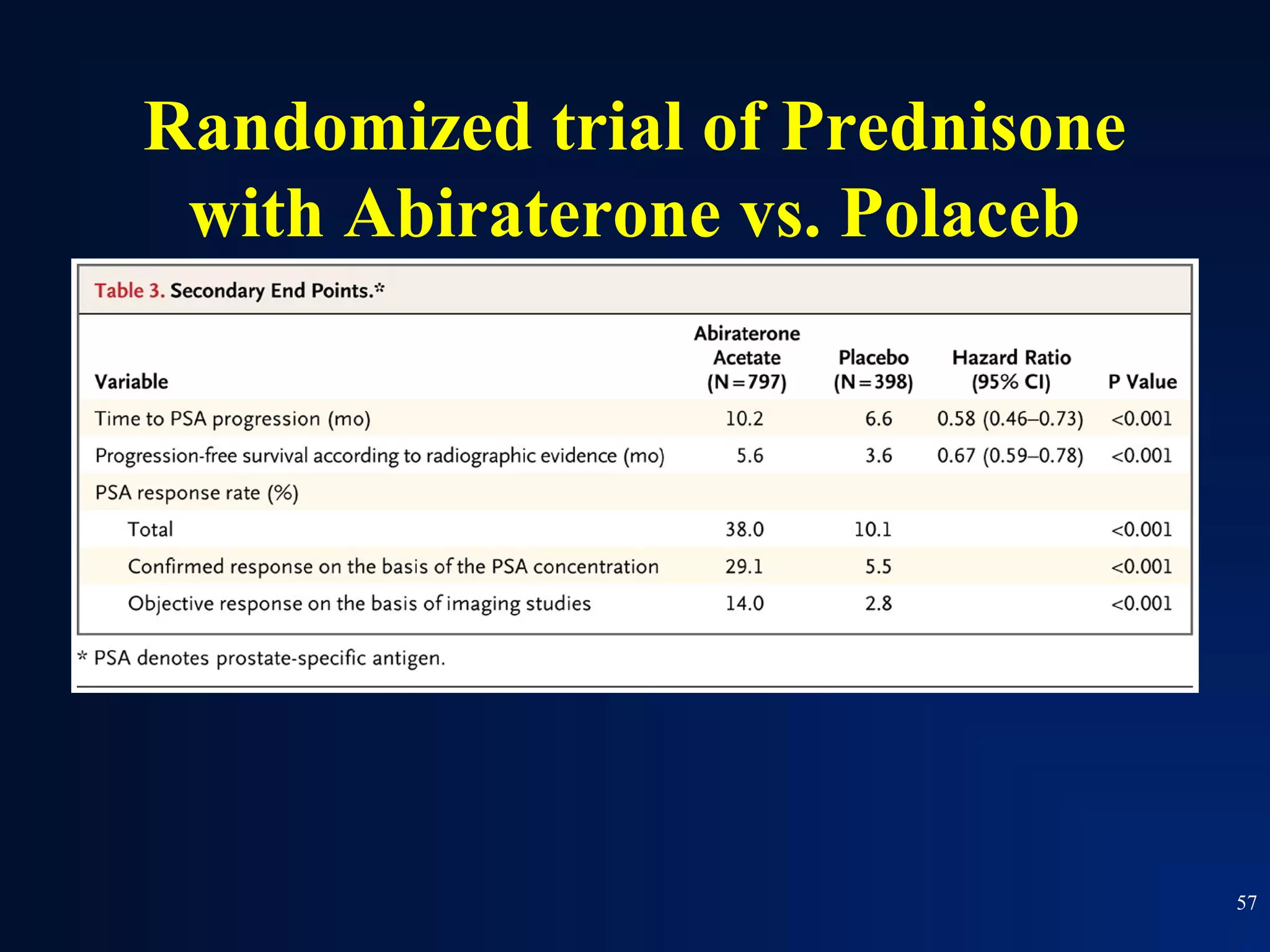
Randomized trial of Prednisone
 with Abiraterone vs. Polaceb


                                 57
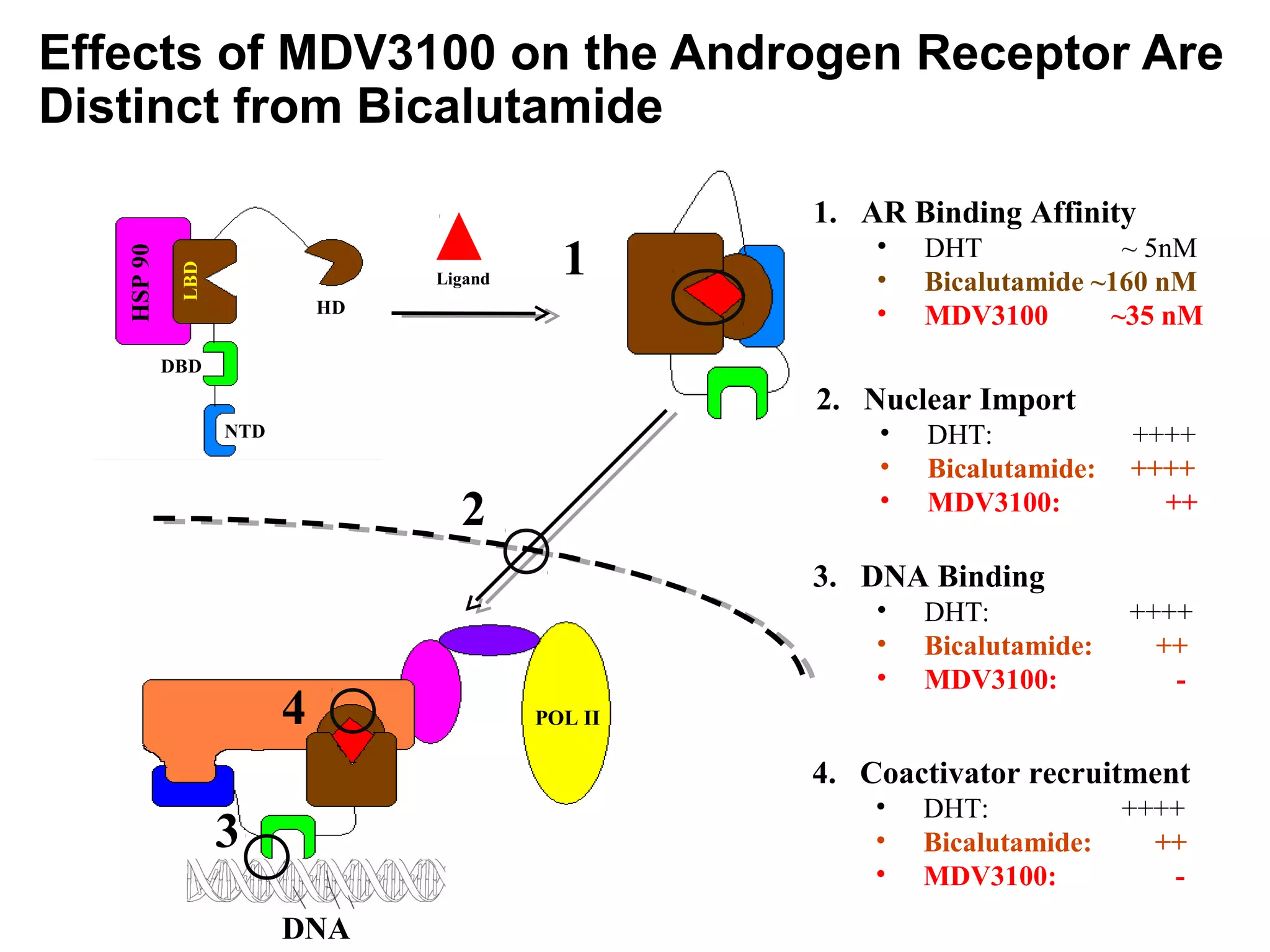
Effects of MDV3100 on the Androgen Receptor Are
Distinct from Bicalutamide

                                                    1. AR Binding Affinity
                                                        •
                                             1              DHT            ~ 5nM
   HSP 90
             LBD


                                  Ligand                •   Bicalutamide ~160 nM
                             HD                         •   MDV3100       ~35 nM
            DBD
                                                    2. Nuclear Import
                   NTD                                  •   DHT:            ++++
                                                        •   Bicalutamide:   ++++
                                    2                   •   MDV3100:          ++

                                                    3. DNA Binding
                                                        •   DHT:            ++++
                                                        •   Bicalutamide:     ++
                                                        •   MDV3100:           -
                         4                 POL II

                                                    4. Coactivator recruitment
                                                        •   DHT:            ++++
                   3                                    •   Bicalutamide:     ++
                                                        •   MDV3100:           -
                         DNA
Waterfall Plot of Percent PSA Change
from Baseline
     Chemotherapy-Naïve (N=65)   Post-Chemotherapy (N=75)


                  62% (40/65)                    51% (38/75)
                 >50% Decline                   >50% Decline
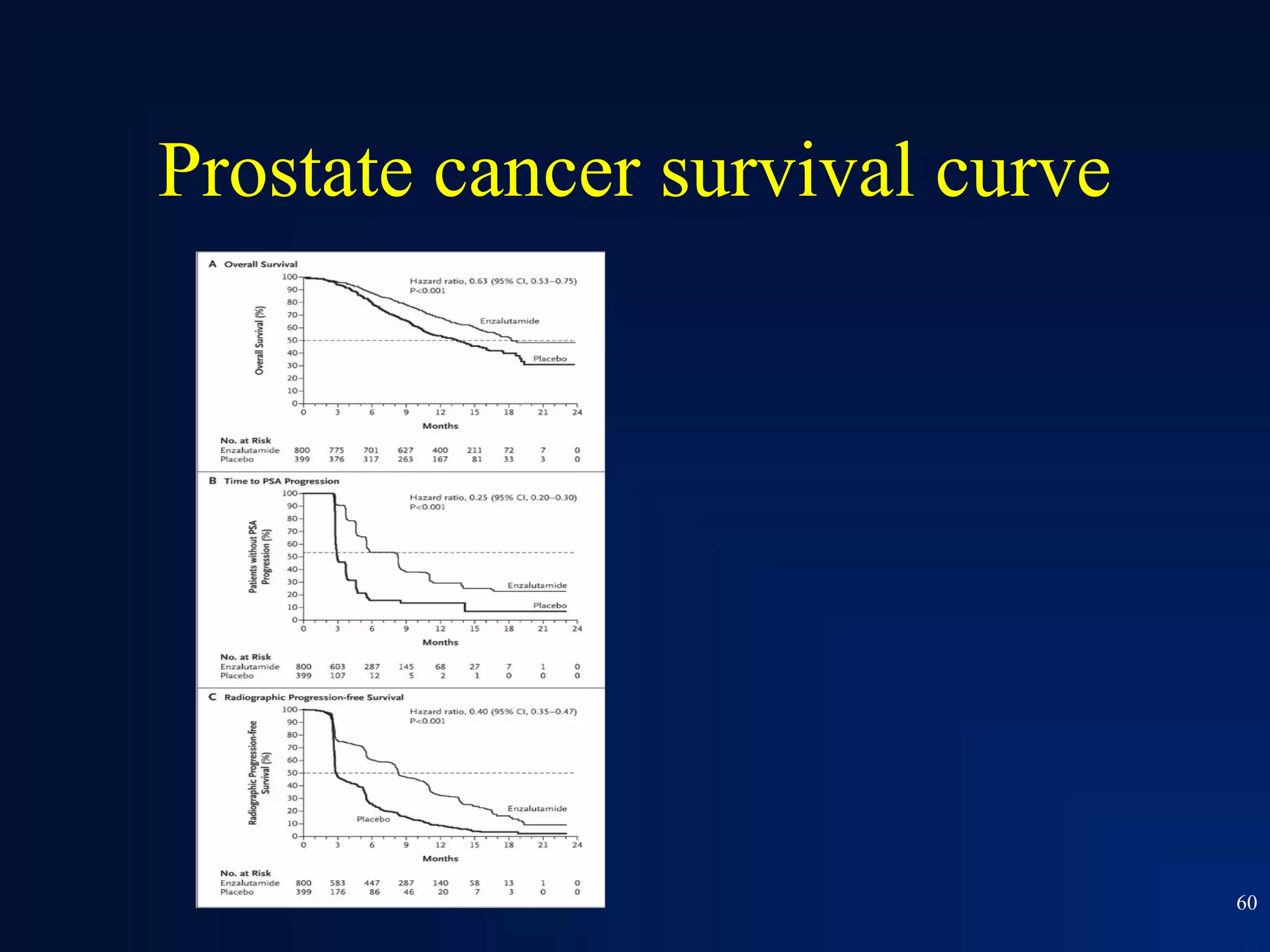
Prostate cancer survival curve


                                 60
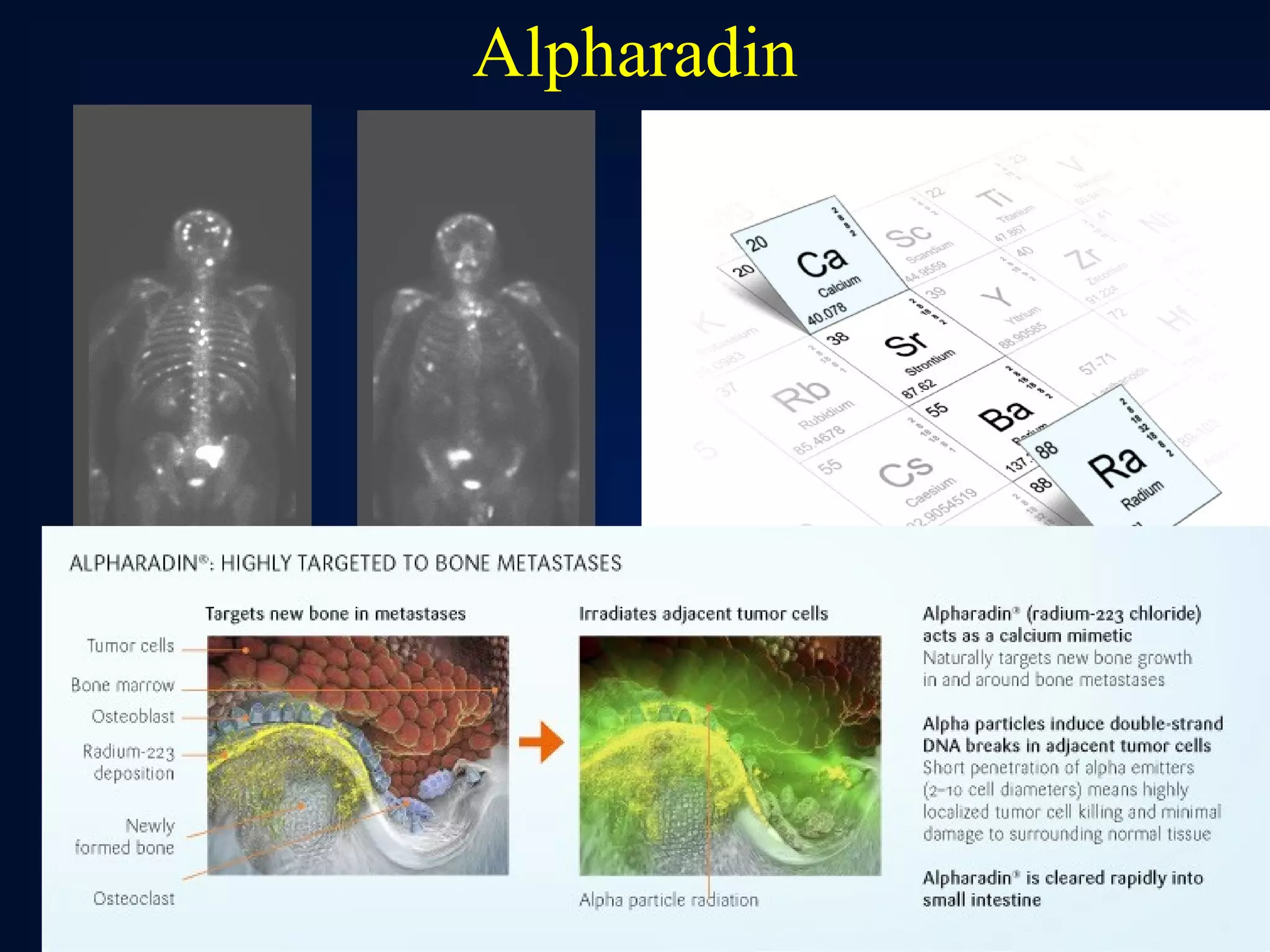
Alpharadin


             61
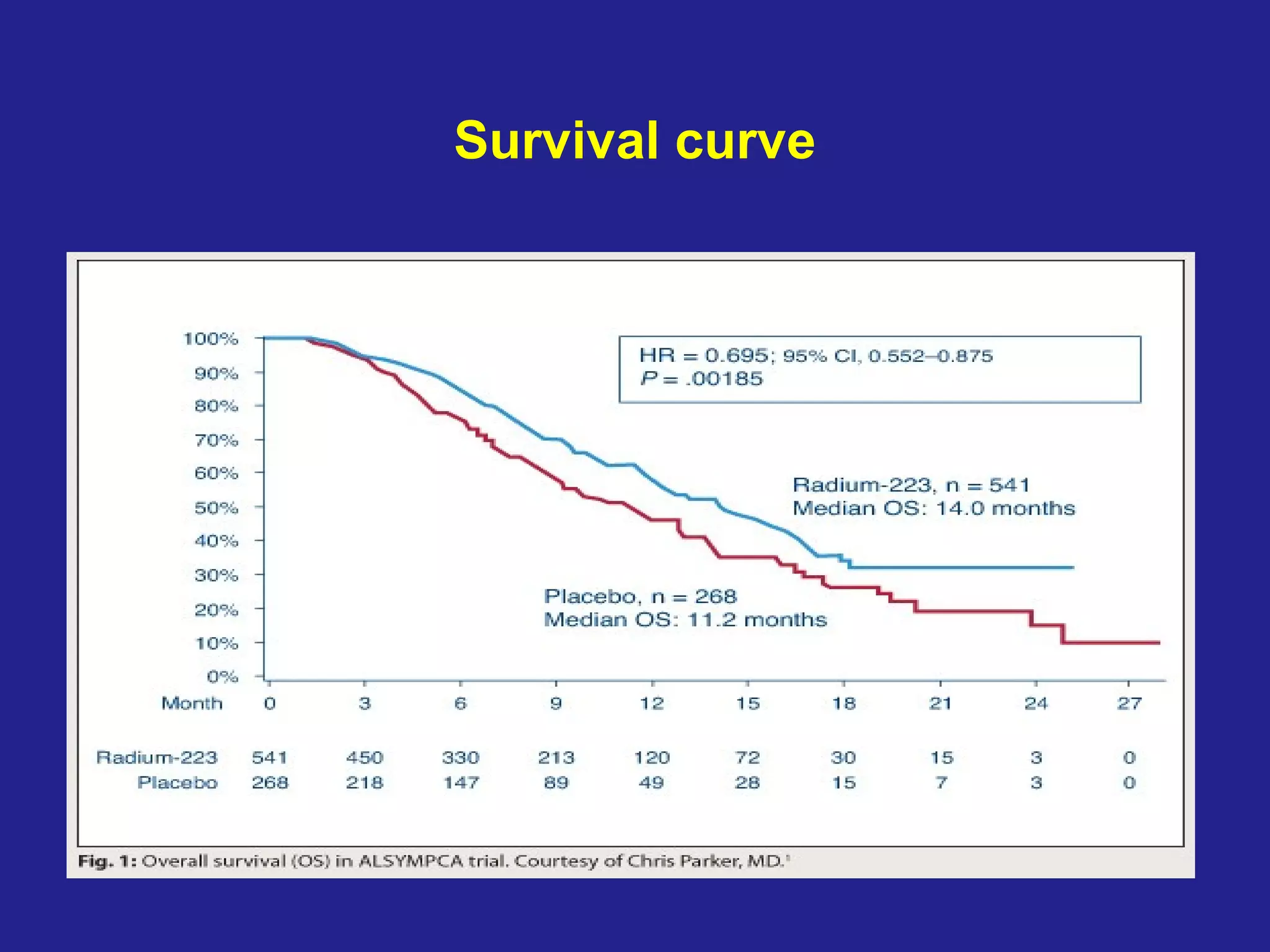
Survival curve
Therapeutic Vaccines


                       63
APC Vaccine: Sipuleucel-T (Provenge).
On day 1 Leukapheresis is is performed at a Center.
On day 2-3 sipuleucel-T is manufactured at a
company.
On day 3-4 the patient is infused at the Doctor’s
office.
IMPACT: Randomized Phase 3 Trial
(IMmunotherapy Prostate AdenoCarcinoma Treatment).
Patients (342) will be treated with Sipuleucel-T (Q 2 weeks
x 3). Patients (170) will be treated with Placebo (Q2 weeks
x 3). The primary endpoint is overall survival and the
secondary endpoint it time to objective disease
progression.


                                                          65
Sipuleucel-T: IMPACT Overall Survival:
                    Primary Endpoint Intent-to-Treat Population
                   100

                                                   P = 0.032 (Cox model)
                   75
                                                   HR = 0.775 [95% CI: 0.614, 0.979]
Percent Survival


                                                   Median Survival Benefit = 4.1 Mos.
                   50                                         Sipuleucel-T (n = 341)
                                                              Median Survival: 25.8 Mos.


                   25
                                 Placebo (n = 171)
                                 Median Survival: 21.7 Mos.
                    0
                         0   6     12   18    24   30   36    42   48   54   60   66

                                             Survival (Months)                             66
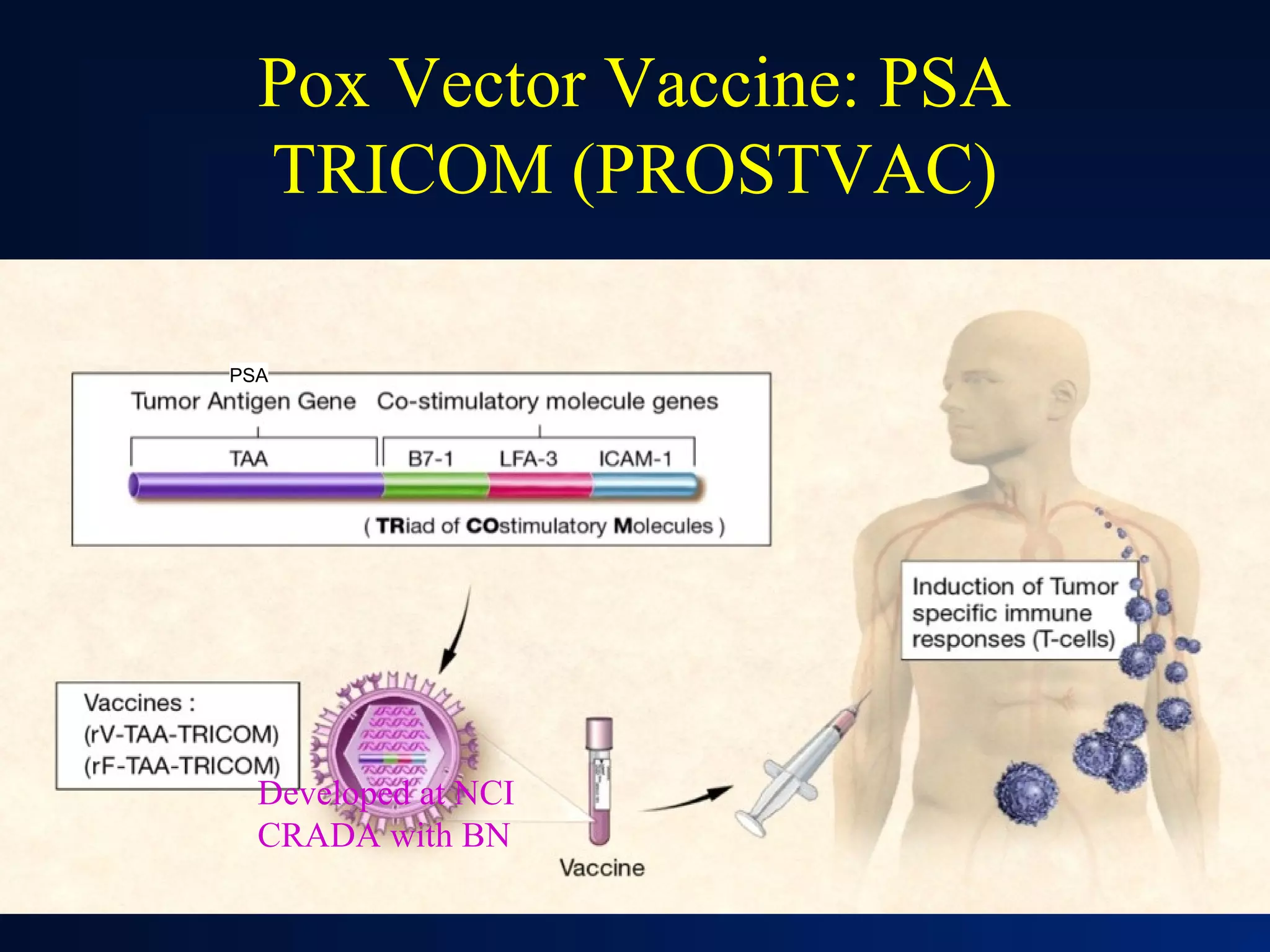
Pox Vector Vaccine: PSA
  TRICOM (PROSTVAC)

PSA


  Developed at NCI
  CRADA with BN
                            67
Randomized Controlled Double
Blind Phase II Study.
Patients (84) will be treated with PSA-TRICOM +
GM-CSF. Patients (42) will be treated with empty
vector + placebo. The primary endpoint is
progression free survival. The secondary endpoint
is overall survival.


                                                68
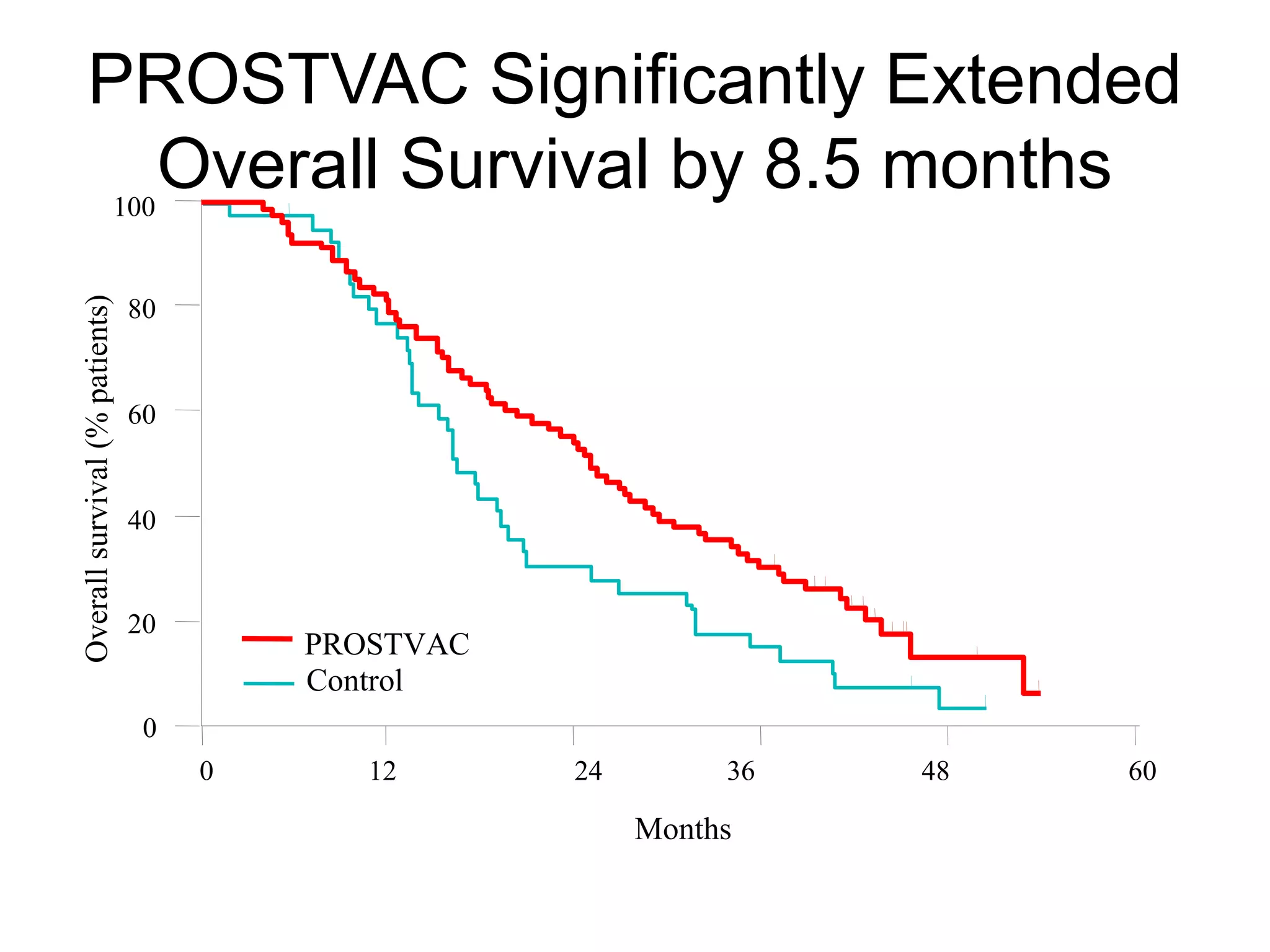
PROSTVAC Significantly Extended
        Overall Survival by 8.5 months
                            100


                                80
Overall survival (% patients)


                                60


                                40


                                20
                                         PROSTVAC
                                         Control
                                 0
                                     0      12      24        36   48   60

                                                         Months
Therapeutic vaccines vs. Conventional therapy.
●Conventional therapy targets the tumor or its
microenvironment. The action is immediate but is
limited by toxicity.
●Therapeutic vaccines target the immune system.
The action requires a memory response and is
delayed but requires an adequate immune system.
Tumor Growth Rate
                  †      †                   †
                                   Vaccine
Tumor Burden


                       Cytotoxic Therapy


                       Time
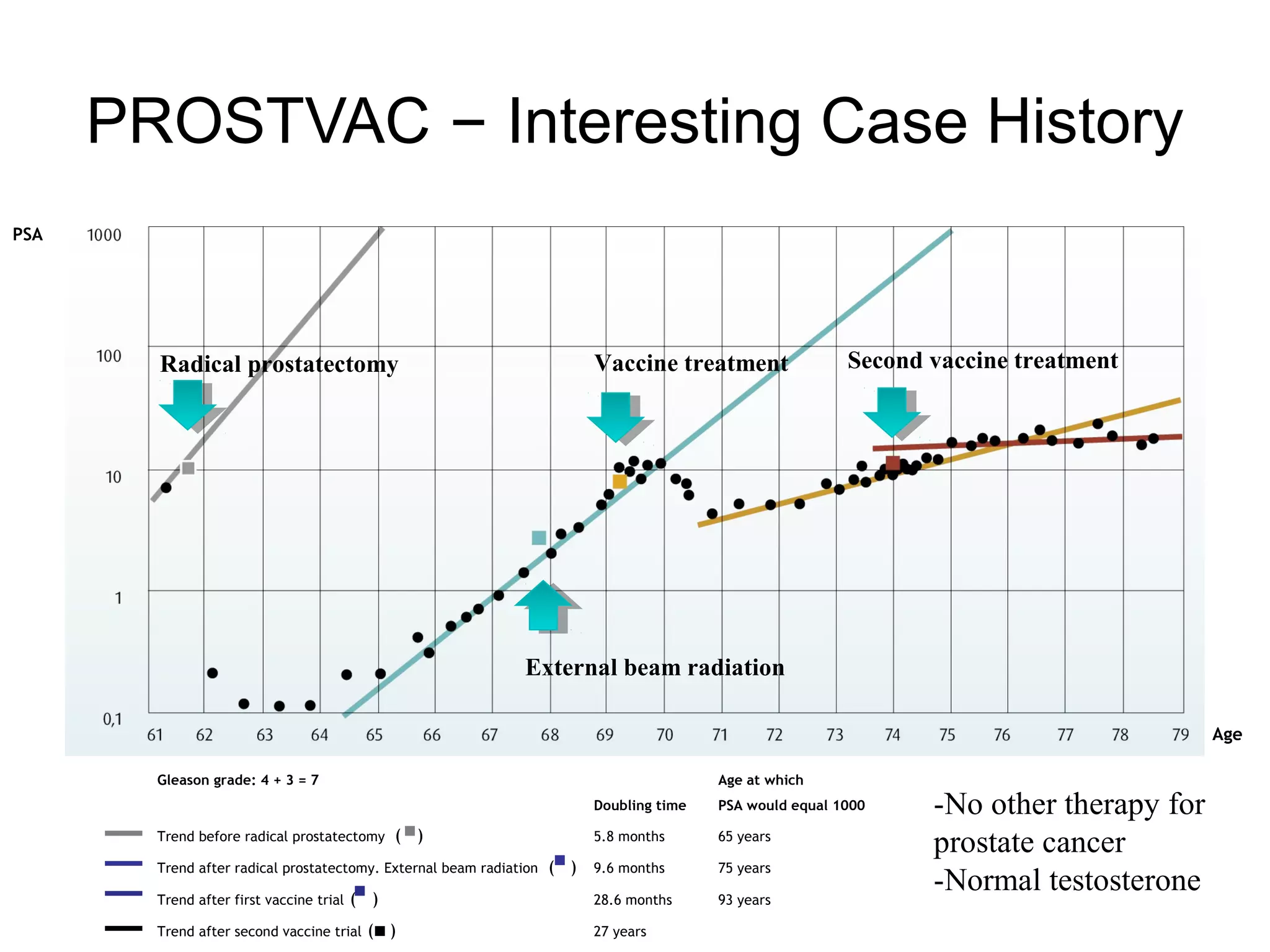
PROSTVAC – Interesting Case History
PSA


        Radical prostatectomy                                             Vaccine treatment                Second vaccine treatment


                                                                External beam radiation

                                                                                                                                          Age

        Gleason grade: 4 + 3 = 7                                                          Age at which
                                                                          Doubling time   PSA would equal 1000    -No other therapy for
        Trend before radical prostatectomy      ( )                       5.8 months      65 years
                                                                                                                  prostate cancer
        Trend after radical prostatectomy. External beam radiation   ( ) 9.6 months       75 years

        Trend after first vaccine trial   ( )                             28.6 months     93 years
                                                                                                                  -Normal testosterone
        Trend after second vaccine trial   ( )                            27 years
Current and Emerging Therapies in CRPC
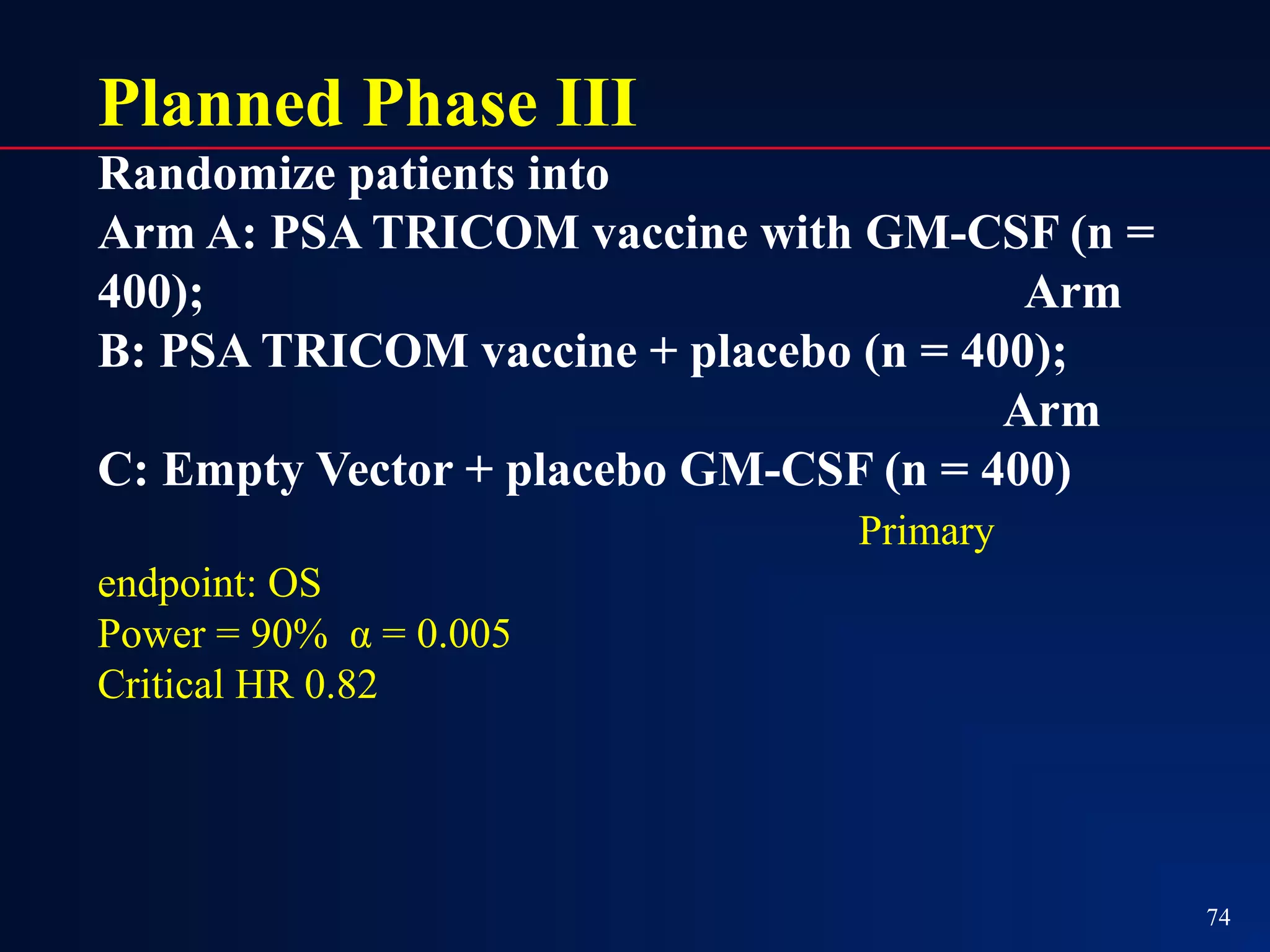
Planned Phase III
Randomize patients into
Arm A: PSA TRICOM vaccine with GM-CSF (n =
400);                                   Arm
B: PSA TRICOM vaccine + placebo (n = 400);
                                       Arm
C: Empty Vector + placebo GM-CSF (n = 400)
                              Primary
endpoint: OS
Power = 90% α = 0.005
Critical HR 0.82


                                              74
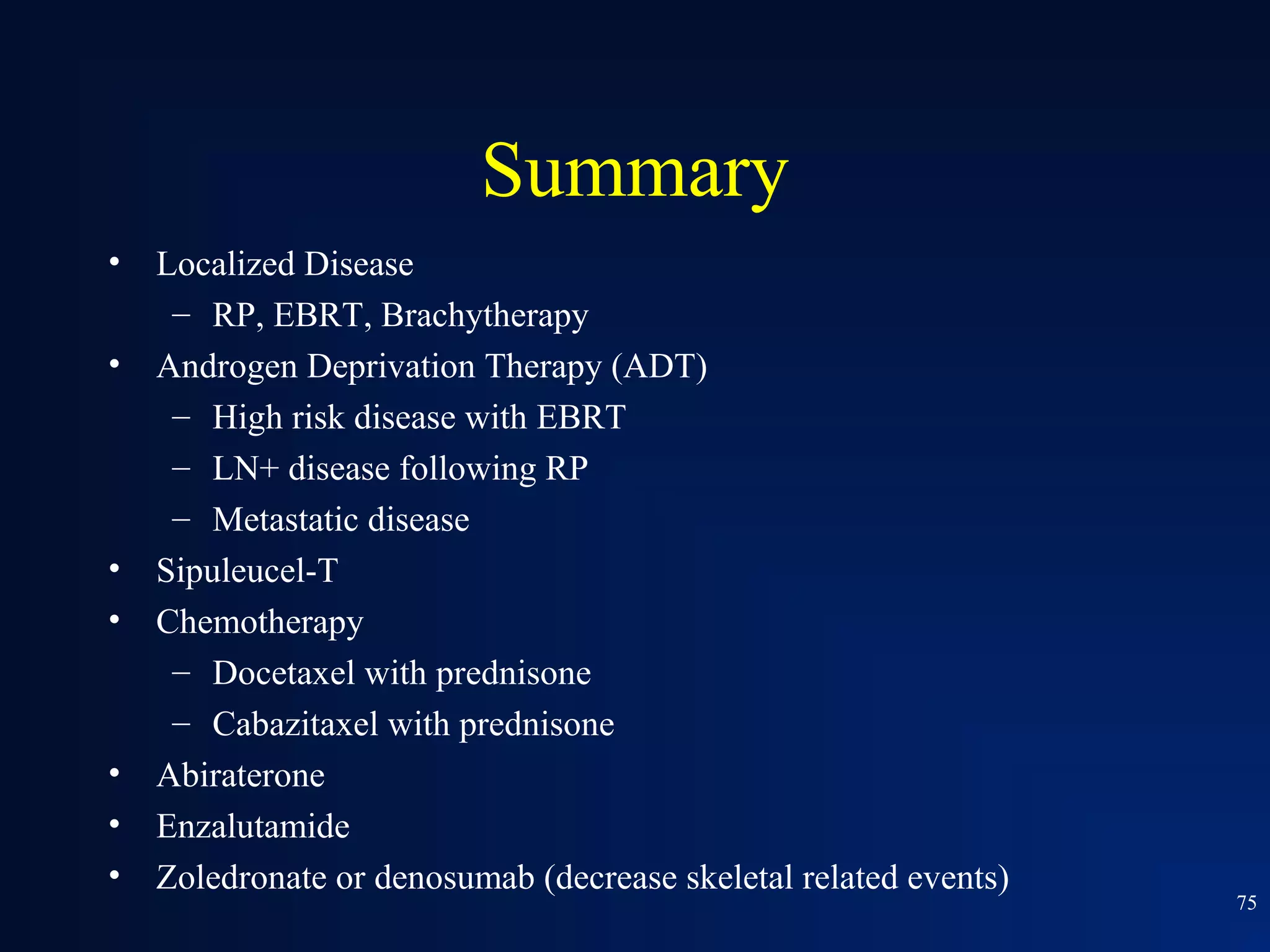
Summary
•   Localized Disease
     – RP, EBRT, Brachytherapy
•   Androgen Deprivation Therapy (ADT)
     – High risk disease with EBRT
     – LN+ disease following RP
     – Metastatic disease
•   Sipuleucel-T
•   Chemotherapy
     – Docetaxel with prednisone
     – Cabazitaxel with prednisone
•   Abiraterone
•   Enzalutamide
•   Zoledronate or denosumab (decrease skeletal related events)
                                                                  75
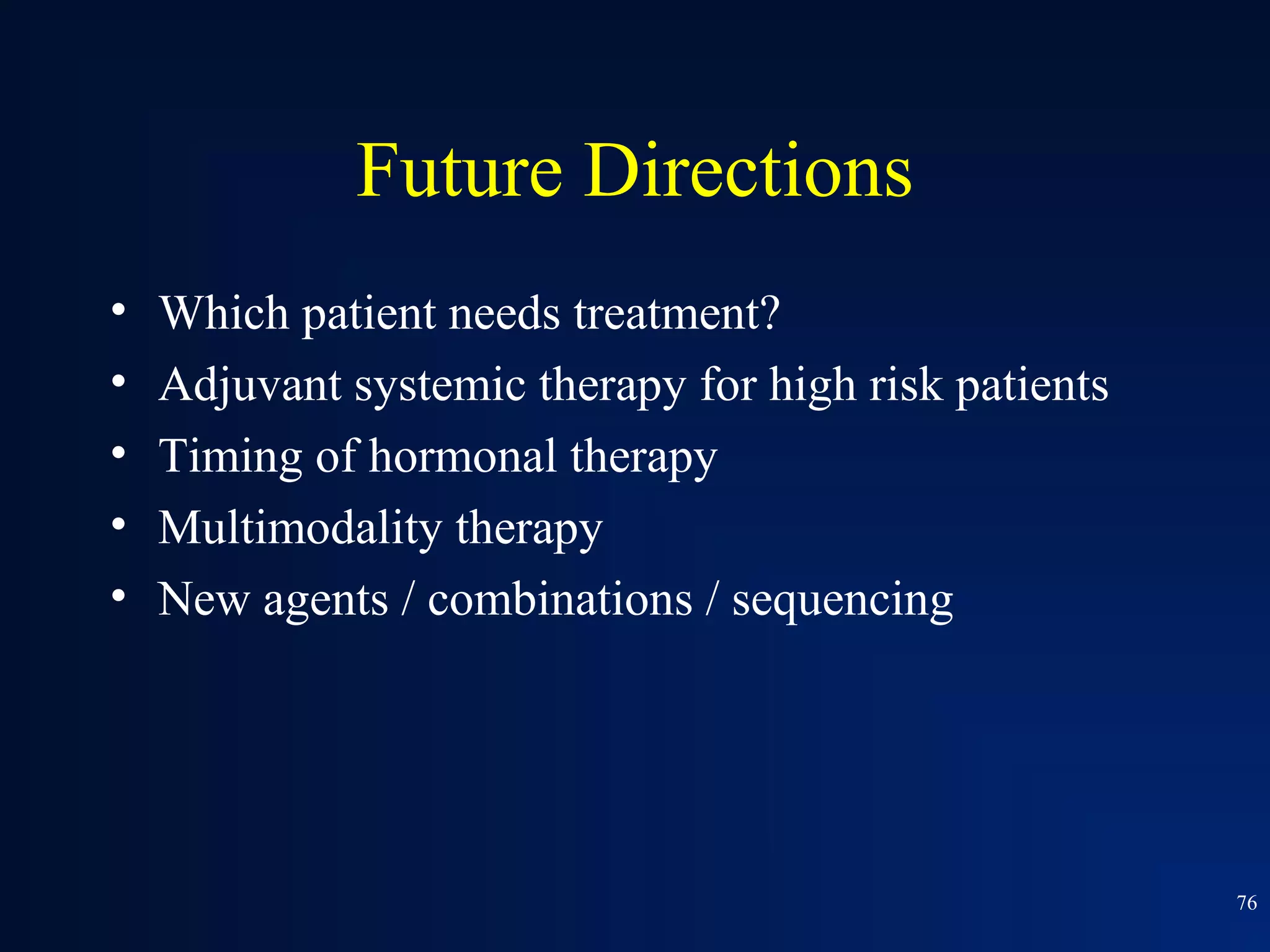
Future Directions
•   Which patient needs treatment?
•   Adjuvant systemic therapy for high risk patients
•   Timing of hormonal therapy
•   Multimodality therapy
•   New agents / combinations / sequencing


                                                       76

Prostate cancer

  • 1.
    Prostate Cancer: ClinicalUpdate James L. Gulley M.D., Ph.D., F.A.C.P. Director, Clinical Trials Group & Deputy Chief Laboratory of Tumor Immunology and Biology Senior Investigator, Medical Oncology Branch Center for Cancer Research National Cancer Institute, NIH 1
  • 2.
    Presentation Outline I. ProstateCancer detection and prognosis II. Standard Local Therapy III. Standard Systemic Therapy a. Androgen deprivation therapy (ADT) b. Chemotherapy c. Bone targeted therapy d. Immunotherapy IV. Future Directions 2
  • 3.
    Disease Continuum inProstate Cancer Death Docetaxel* Castration Tumor volume Local Cabazitaxel* Therapy 2nd-line Abiraterone* Hormonal Enzalutamide* therapy Sipuleucel-T* Alpharadin? Asymptomatic Symptoms Non-Metastatic Metastatic Castration Sensitive Castration Resistant Death from Prostate Cancer Time 3
  • 4.
    Introduction • ~241,740 newcases in 2012 • ~28,170 deaths in 2012 • 1 in 6 men will develop clinically significant prostate cancer 4
  • 5.
    Risk Factors Age (median age 71 y/o; <15% younger than 65) Family History Geographic location Race For caucasians 16.6% of the men get prostate cancer and 3.5% die. For african americans 18.1% get prostate cancer and 4.3 % die. 5
  • 6.
    Detection May be detecteddue to symptoms, physical finding or through PSA screening. Most patients in the US are asymptomatic at the time of diagnosis. 6
  • 7.
    Digital Rectal Exam A – Central zone B – Fibromuscular zone C – Transitional zone D – Peripheral zone E – Periurethral zone Seminal Vesicles Prostate 7
  • 8.
    Incidence vs. Mortality Prostate Cancer in the U.S. PSA Screening 250 New Prostate Cancer Cases and Deaths 200 (per 100,000 men) 150 New cases 100 50 Deaths 0 1975 1980 1985 1990 1995 2000 8 (G. Welch, “Should I Be Tested for Cancer?”, 2004)
  • 9.
    Does Screening SaveLives? • PLCO Trial – N=76,693 men (screen vs. no screen) – After 7 years 50 vs. 44 deaths from PC – ?Too early – PSA test too available? • ERSPC Trial – N=182,000 (screen vs. no screen) – At a median of 9 years, a 20% reduction in PC death – Different patient population than US? 9
  • 10.
    Histologic Grading • GleasonGrade – most common grading system – Tumors are graded from 1-5 with the – higher number indicates a more aggressive tumor – Two most predominant patterns added together for a score from 2-10 10
  • 11.
    Staging Stage I(A) has a T1a and is localized. Stage II (B) has a T1b, T1c, T2a, T2b and T2c and is localized to the prostate. Stage III (C) has a T3a and Teb and is locally advanced. Stage IV(D) has a T4N1M1 and is metastatic. 11
  • 12.
    Prognosis • PSA atdiagnosis, percent of tumor in a biopsy specimen, number of positive biopsies, Gleason Score and clinical stage are useful prognostic factors • Nomograms are available to predict the likelihood of positive surgical margins, lymph node involvement and disease recurrence after local therapy. 12
  • 13.
    Treatment • Patients witha life expectancy of less than 10 years and low grade/ low stage lesions may be candidates for active surveillance 13
  • 14.
    Active Surveillance The chance ofdying of prostate cancer decreases with: Lower Gleason score Older age (more competing causes of mortality) 14
  • 15.
    ADT as PrimaryTherapy • For patients who are not candidates for local therapy, immediate ADT offers better OS than waiting until symptomatic disease • 985 pts randomized in EORTC trial – HR 1.25 (favoring immediate ADT) • No earlier time to CRPC despite earlier ADT • Disease specific survival reportedly not different in this trial raising some questions 15
  • 16.
    Treatment - continued •Eradication of the cancer is the goal of therapy in patients with a life expectancy greater than 10 years – Radical Prostatectomy – External-beam Radiation – Brachytherapy 16
  • 17.
    Radical Prostatectomy • Surgicalremoval of the prostate • May be done with a retropubic, perineal, or laproscopic approach • Most common side effects are impotence and incontinence 17
  • 18.
    Randomized Trial Comparing Surgeryand Watchful Waiting 18
  • 19.
    Randomized Trial Comparing Surgeryand Watchful Waiting 19
  • 20.
    External-beam Radiation • Radiationto the prostate (and pelvis) from outside the body • Evidence that higher doses are associated with better efficacy • IMRT aims to increase radiation delivery and to decrease toxicity • Most common side effects are impotence and rectal irritation 20
  • 21.
    Average multi-item sexual domain summary scores RT RP 21
  • 22.
  • 23.
    Average multi-item incontinence summary scores RT RP 23
  • 24.
    Average multi-item bowel summary scores RT RP 24
  • 25.
    Brachytherapy • Radiation implantsplaced directly into the prostate under ultrasound or CT guidance • Very high dose radiation to the prostate with little radiation outside the prostatic bed • Acute urinary symptoms common, some patients with impotence • Procedure completed in one day 25
  • 26.
    Treatment of LocallyAdvanced Disease • Conservative management • Hormonal therapy plus radiation • Hormonal therapy plus surgery 26
  • 27.
    EORTC Trial • Randomized trial of radiotherapy ± ADT • Locally advanced prostate cancer (n=415) • Concurrent + adjuvant ADT continued for 3 years • Improved outcomes for combination: – Local control – metastases free survival – overall survival (62% vs. 78% 5 yr survival p=0.0002) 27
  • 28.
    ECOG (Messing etal.) • Randomized trial of immediate hormonal therapy vs. observation in men undergoing radical prostatectomy with evidence of positive lymph nodes • 98 eligible patients enrolled • Deaths by 11.9 years f/u – 17/47 immediate anti-androgen – 28/51 delayed therapy group (HR 1.84; p=0.04) • Criticisms 28
  • 29.
    Adjuvant RT Randomized studyof adjuvant RT vs. observation for T3N0M0 (n=425) For adjuvant RT of 214 patients 53% had Metastasis free survival and 59% had overall survival. For observation of 211 patients 46% had metastasis free survival and 48% had overall survival. 29
  • 30.
    Disease Continuum inProstate Cancer Tumor volume Local Therapy Asymptomatic Symptoms Non-Metastatic Metastatic Castration Sensitive Castration Resistant 30
  • 31.
    Biochemical Recurrence • Maybe occult local or metastatic disease • Options include additional local therapy, hormonal treatment or watchful waiting • Virtually impossible to predict the impact of treatment on survival 31
  • 32.
    Pound Data • Probablythe most important report on this population because of the limited use of radiation and hormonal therapy • Over 15 years 1,997 patients underwent a radical prostatectomy, with 304 (15%) experiencing a PSA relapse. • Of the 304, 103 (34 %) developed metastatic disease. 32
  • 33.
    Pound Data (continued) •No patients received hormonal therapy without clinically evident metastatic disease. • Median time from PSA elevation to metastatic disease was 8 years • Median time to death after metastatic disease was 5 years. • Prognostic factors predictive of outcome included the Gleason score in the surgical specimen, and PSA doubling time. 33
  • 34.
    Disease Continuum inProstate Cancer Tumor volume Local Therapy Asymptomatic Symptoms Non-Metastatic Metastatic Castration Sensitive Castration Resistant 34
  • 35.
    Metastatic PC • ProstateCancer tends to spread to bone and lymph nodes • However metastatic lesions have been found in virtually every part of the body including brain, liver and lungs. • Many patients do not have measurable lesions thus traditional response criteria (RECIST) are difficult to use. 35
  • 36.
    ADT Treatment ofmetastatic PC • 1941 Charles Huggins showed that advanced PC was inhibited by decreasing Testosterone (castration or estrogen) and activated by adding testosterone. • 1966 Nobel Prize in Medicine 36
  • 37.
    Action of Androgensin Prostate Cells. Testosterone is metabolized to DHT
  • 38.
    Action of Androgensin Prostate Cells. DHT receptor complex enters nucleus.
  • 39.
    Action of Androgensin Prostate Cells. DHT receptor complex alters gene expression
  • 40.
    Action of Androgensin Prostate Cells. mRNA is translated in cytosol into protein.
  • 41.
    ADT Treatment ofmetastatic PC • Testosterone lowering therapies – GnRH agonists (e.g., Leuprolide and Goserelin) • Both agents are expensive • May initially result in an increase in testosterone – GnRH antagonist (e.g., Degarelix) • Similar cost issues without an increase in testosterone • Monthly injections – Orchiectomy- outpatient procedure. Cost effective if ADT for 6 months or more. 41
  • 42.
    Side Effects ofADT. ●Sexual effects include decreased libido and erectile dysfunction. ●Physical effects include hot flashes, fatigue, weight gain, hair changes, breast pain, decreased muscle mass, bone mineral density and penis size. ●Metabolic changes include lipid changes, anemia and diabetes mellitus. ●Mental changes include lack of initiative, emotional lability, and decreased memory and cognitive function. 42
  • 43.
    Androgen Receptor Antagonists •bicalutamide, nilutamide, flutamide and enzalutamide • Do not ↓ Testosterone, bind androgen receptor and prevent anabolic (growth related) effects • Different dosing schedules and potency • Different side effect profile • Similar activity and all may show “withdrawal response” 43
  • 44.
    Combined Androgen Blockade •Combination of anti-androgen with orchiectomy or GnRH-A • Controversial results • Not significantly more effective, but more expensive and may add toxicity 44
  • 45.
    5-Year Survival inthe 20 Randomized Trials of CAB (AS plus Nilutamide or Flutamide) vs AS Alone 6500 Men in 20 Trials of Nilutamide/Flutamide Androgen Suppression Only Androgen Suppression Antiandrogen Proportion Alive (%) 27.6% Treatment Better by 2.9% (SE 1.3) Logrank P=0.005 24.7% Time Since Randomization (Years) 45
  • 46.
    Other Hormonal Agents •Ketoconazole • Abiraterone (recently approved) • Patients may respond to multiple sequential hormonal manipulations 46
  • 47.
    Disease Continuum inProstate Cancer Tumor volume Local Therapy Asymptomatic Symptoms Non-Metastatic Metastatic Castration Sensitive Castration Resistant 47
  • 48.
    Chemotherapy • Studies priorto 2004 disappointing • Quality of life measurements • Difficulty in evaluating response 48
  • 49.
    Mitoxantrone + Glucocorticoids •Improved quality of life when compared to Glucocorticoids alone • No survival advantage • FDA approval for the palliation of painful lesions in 1996 49
  • 50.
    TAX327 A Multicenter,Randomized Phase III Study of Intermittent Docetaxel + Prednisone vs. Weekly Docetaxel + Prednisone vs. Mitoxantrone + Prednisone in Patients with Hormone-Refractory Prostate Cancer Docetaxel 75mg/m2 Q3 + RANDOMIZE Prednisone 10mg orally given daily Castration Resistant Docetaxel 30mg/m2 Wkly + Prostate Prednisone 10mg orally given daily Cancer Mitoxantrone 12mg/m2 Q3 + Prednisone 10mg orally given daily 1006 Patients Entered 50
  • 51.
    TAX 327: SurvivalAdvantage Only Shown for Q3W Docetaxel 1.0 0.9 Docetaxel 3 wkly Docetaxel wkly 0.8 Probability of Surviving Mitoxantrone 0.7 0.6 0.5 0.4 Median survival Hazard 0.3 (mos) ratio P-value 0.2 D 3wkly: 18.9 0.76 0.009 D wkly: 17.3 0.91 0.3 0.1 Mitoxantrone 16.4 – – 0.0 0 6 12 18 24 30 Months 51
  • 52.
    Cabazitaxel • Novel taxaneactive in docetaxel resistant cell lines • 755 men with metastatic CRPC who had progressed on or following docetaxel randomized to cabazitaxel vs. mitoxantrone. Patients in both arms received prednisone. • Worse toxicity in Cabazitaxel arm with grade 3/4 neutropenia in 82% vs. 58%. About 5% treatment related deaths in Cabazitaxel arm. 52
  • 53.
    Primary Endpoint: OverallSurvival (ITT Analysis) MP CBZP Median OS (months) 12.7 15.1 Hazard Ratio 0.70 95% CI 0.59–0.83 P-value <.0001 53
  • 54.
    Progression-Free Survival (PFS)Results MP CBZP Median PFS (months) 1.4 2.8 Hazard Ratio 0.74 95% CI 0.64–0.86 P-value <.0001 PFS composite endpoint: PSA progression, pain progression, tumor progression, symptom deterioration, or death. 54
  • 55.
  • 56.
    Randomized trial of Prednisone with Abiraterone vs. Placebo 56
  • 57.
    Randomized trial ofPrednisone with Abiraterone vs. Polaceb 57
  • 58.
    Effects of MDV3100on the Androgen Receptor Are Distinct from Bicalutamide 1. AR Binding Affinity • 1 DHT ~ 5nM HSP 90 LBD Ligand • Bicalutamide ~160 nM HD • MDV3100 ~35 nM DBD 2. Nuclear Import NTD • DHT: ++++ • Bicalutamide: ++++ 2 • MDV3100: ++ 3. DNA Binding • DHT: ++++ • Bicalutamide: ++ • MDV3100: - 4 POL II 4. Coactivator recruitment • DHT: ++++ 3 • Bicalutamide: ++ • MDV3100: - DNA
  • 59.
    Waterfall Plot ofPercent PSA Change from Baseline Chemotherapy-Naïve (N=65) Post-Chemotherapy (N=75) 62% (40/65) 51% (38/75) >50% Decline >50% Decline
  • 60.
  • 61.
  • 62.
  • 63.
  • 64.
    APC Vaccine: Sipuleucel-T(Provenge). On day 1 Leukapheresis is is performed at a Center. On day 2-3 sipuleucel-T is manufactured at a company. On day 3-4 the patient is infused at the Doctor’s office.
  • 65.
    IMPACT: Randomized Phase3 Trial (IMmunotherapy Prostate AdenoCarcinoma Treatment). Patients (342) will be treated with Sipuleucel-T (Q 2 weeks x 3). Patients (170) will be treated with Placebo (Q2 weeks x 3). The primary endpoint is overall survival and the secondary endpoint it time to objective disease progression. 65
  • 66.
    Sipuleucel-T: IMPACT OverallSurvival: Primary Endpoint Intent-to-Treat Population 100 P = 0.032 (Cox model) 75 HR = 0.775 [95% CI: 0.614, 0.979] Percent Survival Median Survival Benefit = 4.1 Mos. 50 Sipuleucel-T (n = 341) Median Survival: 25.8 Mos. 25 Placebo (n = 171) Median Survival: 21.7 Mos. 0 0 6 12 18 24 30 36 42 48 54 60 66 Survival (Months) 66
  • 67.
    Pox Vector Vaccine:PSA TRICOM (PROSTVAC) PSA Developed at NCI CRADA with BN 67
  • 68.
    Randomized Controlled Double BlindPhase II Study. Patients (84) will be treated with PSA-TRICOM + GM-CSF. Patients (42) will be treated with empty vector + placebo. The primary endpoint is progression free survival. The secondary endpoint is overall survival. 68
  • 69.
    PROSTVAC Significantly Extended Overall Survival by 8.5 months 100 80 Overall survival (% patients) 60 40 20 PROSTVAC Control 0 0 12 24 36 48 60 Months
  • 70.
    Therapeutic vaccines vs.Conventional therapy. ●Conventional therapy targets the tumor or its microenvironment. The action is immediate but is limited by toxicity. ●Therapeutic vaccines target the immune system. The action requires a memory response and is delayed but requires an adequate immune system.
  • 71.
    Tumor Growth Rate † † † Vaccine Tumor Burden Cytotoxic Therapy Time
  • 72.
    PROSTVAC – InterestingCase History PSA Radical prostatectomy Vaccine treatment Second vaccine treatment External beam radiation Age Gleason grade: 4 + 3 = 7 Age at which Doubling time PSA would equal 1000 -No other therapy for Trend before radical prostatectomy ( ) 5.8 months 65 years prostate cancer Trend after radical prostatectomy. External beam radiation ( ) 9.6 months 75 years Trend after first vaccine trial ( ) 28.6 months 93 years -Normal testosterone Trend after second vaccine trial ( ) 27 years
  • 73.
    Current and EmergingTherapies in CRPC
  • 74.
    Planned Phase III Randomizepatients into Arm A: PSA TRICOM vaccine with GM-CSF (n = 400); Arm B: PSA TRICOM vaccine + placebo (n = 400); Arm C: Empty Vector + placebo GM-CSF (n = 400) Primary endpoint: OS Power = 90% α = 0.005 Critical HR 0.82 74
  • 75.
    Summary • Localized Disease – RP, EBRT, Brachytherapy • Androgen Deprivation Therapy (ADT) – High risk disease with EBRT – LN+ disease following RP – Metastatic disease • Sipuleucel-T • Chemotherapy – Docetaxel with prednisone – Cabazitaxel with prednisone • Abiraterone • Enzalutamide • Zoledronate or denosumab (decrease skeletal related events) 75
  • 76.
    Future Directions • Which patient needs treatment? • Adjuvant systemic therapy for high risk patients • Timing of hormonal therapy • Multimodality therapy • New agents / combinations / sequencing 76

Editor's Notes

  • #15 Prostate cancer–specific mortality rates were unchanged after 15 years of follow-up ( Table 3 ). The prostate cancer mortality rate was 33 per 1000 person-years during the first 15 years (95% CI, 28-38) and 18 per 1000 person-years after 15 years of follow-up (95% CI, 10-29). These rates were not statistically different after adjusting for the more favorable histology profiles among men who survived more than 15 years from diagnosis (rate ratio, 1.1; 95% CI, 0.6-1.9).
  • #19 Figure 1. Cumulative Incidence of Death from Any Cause, Death from Prostate Cancer, and Development of Metastases. The cumulative incidence of death from any cause, death from prostate cancer, and development of metastases in the radical-prostatectomy group and the watchful-waiting group is shown in the total cohort (Panels A, B, and C), in men 65 years of age or older (Panels D, E, and F), and in men younger than 65 years of age (Panels G, H, and I).
  • #20 Figure 1. Cumulative Incidence of Death from Any Cause, Death from Prostate Cancer, and Development of Metastases. The cumulative incidence of death from any cause, death from prostate cancer, and development of metastases in the radical-prostatectomy group and the watchful-waiting group is shown in the total cohort (Panels A, B, and C), in men 65 years of age or older (Panels D, E, and F), and in men younger than 65 years of age (Panels G, H, and I).
  • #22 Background: Men treated for clinically localized prostate cancer with either radical prostatectomy or external beam radiotherapy usually survive many years with the side effects of these treatments. We present treatment-specific quality-of-life outcomes for prostate cancer patients 5 years after initial diagnosis. Methods: The cohort consisted of men aged 55–74 years who were newly diagnosed with clinically localized prostate cancer in 1994–1995 and were treated with radical prostatectomy (n = 901) or external beam radiotherapy (n = 286). We used clinical and quality-of-life data previously collected at the time of diagnosis (i.e., baseline) and at the 2-year follow-up and data newly collected at 5 years after diagnosis to compare urinary, bowel, and sexual function and to examine temporal changes in those functions. Odds ratios (ORs) and adjusted percentages were calculated by logistic regression. All statistical tests were two-sided. Results: At 5 years after diagnosis, overall sexual function declined in both groups to approximately the same level. However, at 5 years after diagnosis, erectile dysfunction was more prevalent in the radical prostatectomy group than in the external beam radiotherapy group (79.3% versus 63.5%; OR = 2.5, 95% confidence interval [CI] = 1.6 to 3.8). Approximately 14%–16% of radical prostatectomy and 4% of external beam radiotherapy patients were incontinent at 5 years (OR = 4.4, 95% CI = 2.2 to 8.6). Bowel urgency and painful hemorrhoids were more common in the external beam radiotherapy group than in the radical prostatectomy group. All of these differences remained statistically significant after adjustment for confounders and for differences between treatment groups in some baseline characteristics. Conclusions: At 5 years after diagnosis, men treated with radical prostatectomy for localized prostate cancer continue to experience worse urinary incontinence than men treated with external beam radiotherapy. However, the two treatment groups were more similar to each other with respect to overall sexual function, mostly because of a continuing decline in erectile function among the external beam radiotherapy patients between years 2 and 5.
  • #30 Of 425 eligible men 211 were randomized to observation and 214 to adjuvant radiation. Of those men under observation 70 ultimately received radiotherapy. Metastasis-free survival was significantly greater with radiotherapy (93 of 214 events on the radiotherapy arm vs 114 of 211 events on observation; HR 0.71; 95% CI 0.54, 0.94; p = 0.016). Survival improved significantly with adjuvant radiation (88 deaths of 214 on the radiotherapy arm vs 110 deaths of 211 on observation; HR 0.72; 95% CI 0.55, 0.96; p = 0.023).
  • #37 Huggins C, Hodges C. Studies on prostatic cancer: The effect of castration, of estrogen and of androgen injection on serum phosphatases in metastatic carcinoma of the prostate. Cancer Res 1941; 1:293-299.
  • #46 Lecture Notes Five-year survival curves for only the trials that used nilutamide or flutamide show a 3% increase for CAB over AS alone. Of patients who received CAB, 27.6% were alive at 5 years versus 24.7% of patients who received AS alone ( P =0.005). However, the lower confidence limit for this 2.9% difference barely exceeds zero, giving it only weak statistical significance. In contrast, 5-year survival among patients who received CAB with cyproterone acetate (not shown) was only 15.4% versus 18.1% for patients in the AS alone group ( P =0.04). The poor result of cyproterone acetate may have been due to a chance adverse effect on nonprostate cancer deaths. 1. Prostate Cancer Trialists’ Collaborative Group. Maximum androgen blockade in advanced prostate cancer: an overview of the randomised trials. Lancet. 2000;355:1491-1498. Slide 73
  • #51 7 38
  • #57 Figure 1. Kaplan–Meier Estimates of Overall Survival, Time to PSA Progression, and Progression-free Survival According to Radiographic Evidence in the Intention-to-Treat Population.
  • #63 Pre-planned interim analysis positive for OS benefit Grades 3-4 neutropenia in 1.8% radium-223 compared to 0.8% placebo.
  • #68 11/19/12
  • #70 The median of survival of the patients taking Prostvac have improved about 50%. It was 25.1 month versus 16.6 months or eight and a month improvement and it had a ratio of .56 and the effect was statistically significant at the .006 level. It is a variable statistical measure of how survival was impacted depending on the number of patients. Even more impressive, if you look at the feature of the first 12 months in the curve which is fairly typical for me in the therapy is the patient who dies quickly do not benefit They delay the fact as the metric has a ratio. So, you lose about 30% of the patients in this study initially because it is such an aggressive disease. It progresses and dies before the vaccine can work. But still the remainder of the patients’ benefits has a large effect at the study of variable statistical
  • #71 11/19/12
  • #72 Tumor growth is a dynamic process and is the result of new cells dividing and other cells dying. The growth rate is the change in size of tumor over time. The intrinsic biology of the tumor as well as extrinsic factors such as therapies, affect the growth rate. However, chemotherapy only affects the growth rate while the chemotherapy is given. Immunotherapy may not cause dramatic changes in the tumor burden in a short period of time, but the continued cumulative pressure on the tumor, especially if started early in the disease course, may lead to substantial improvements in overall survival.
  • #74 Death within 30 days of study drug Cabazitaxel 5% Docetaxel 3% Sip-T 0.5%