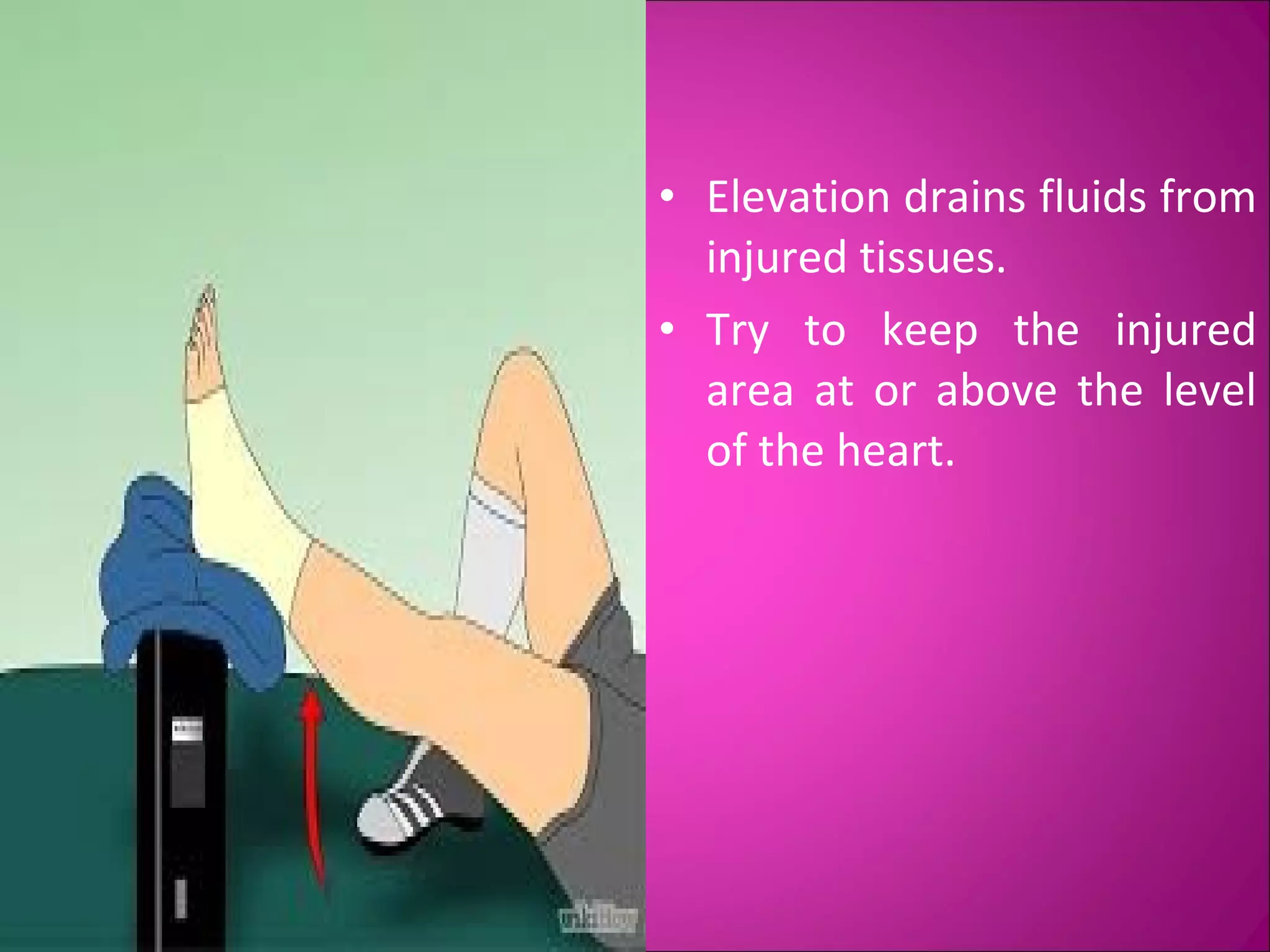
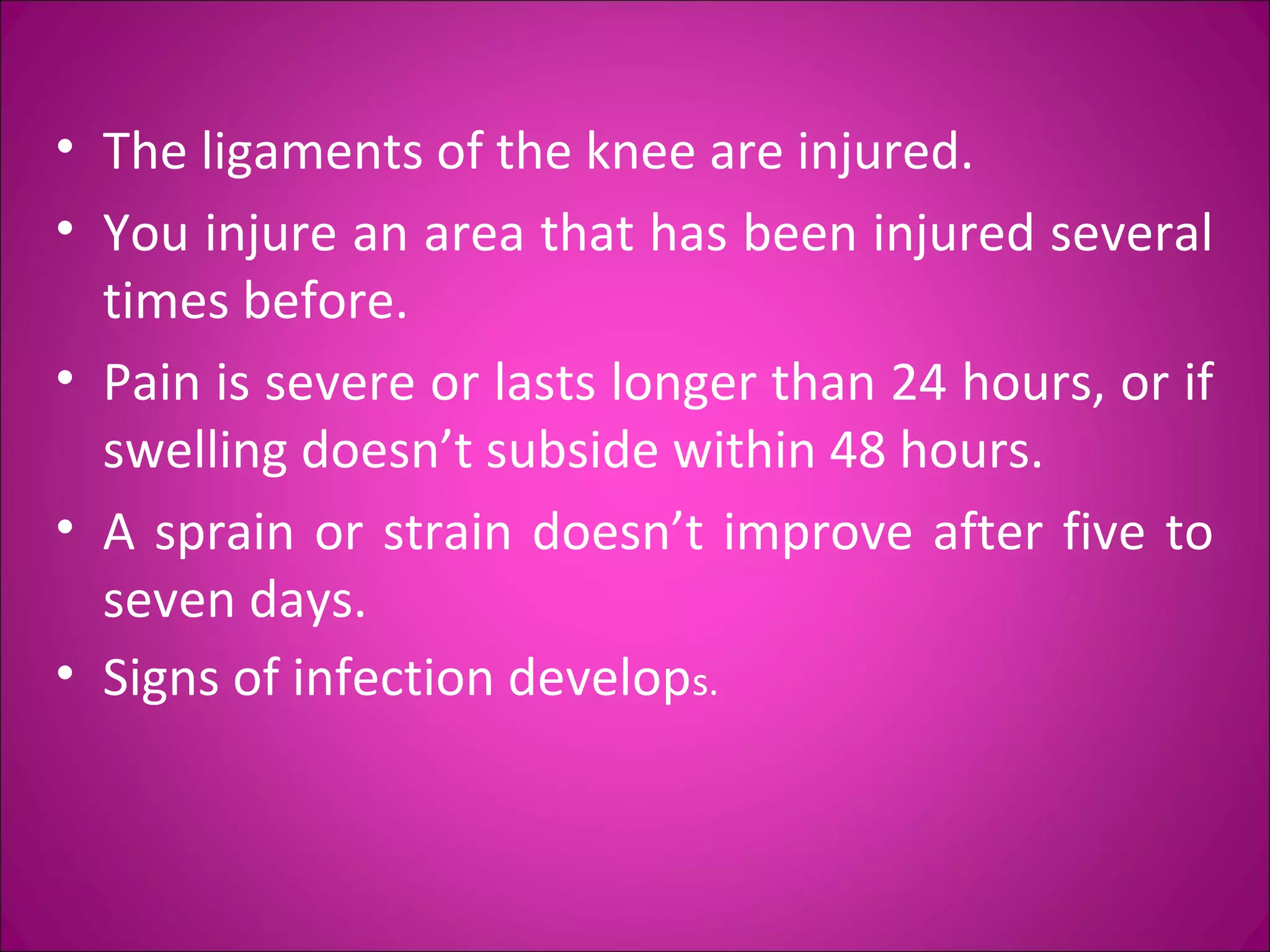
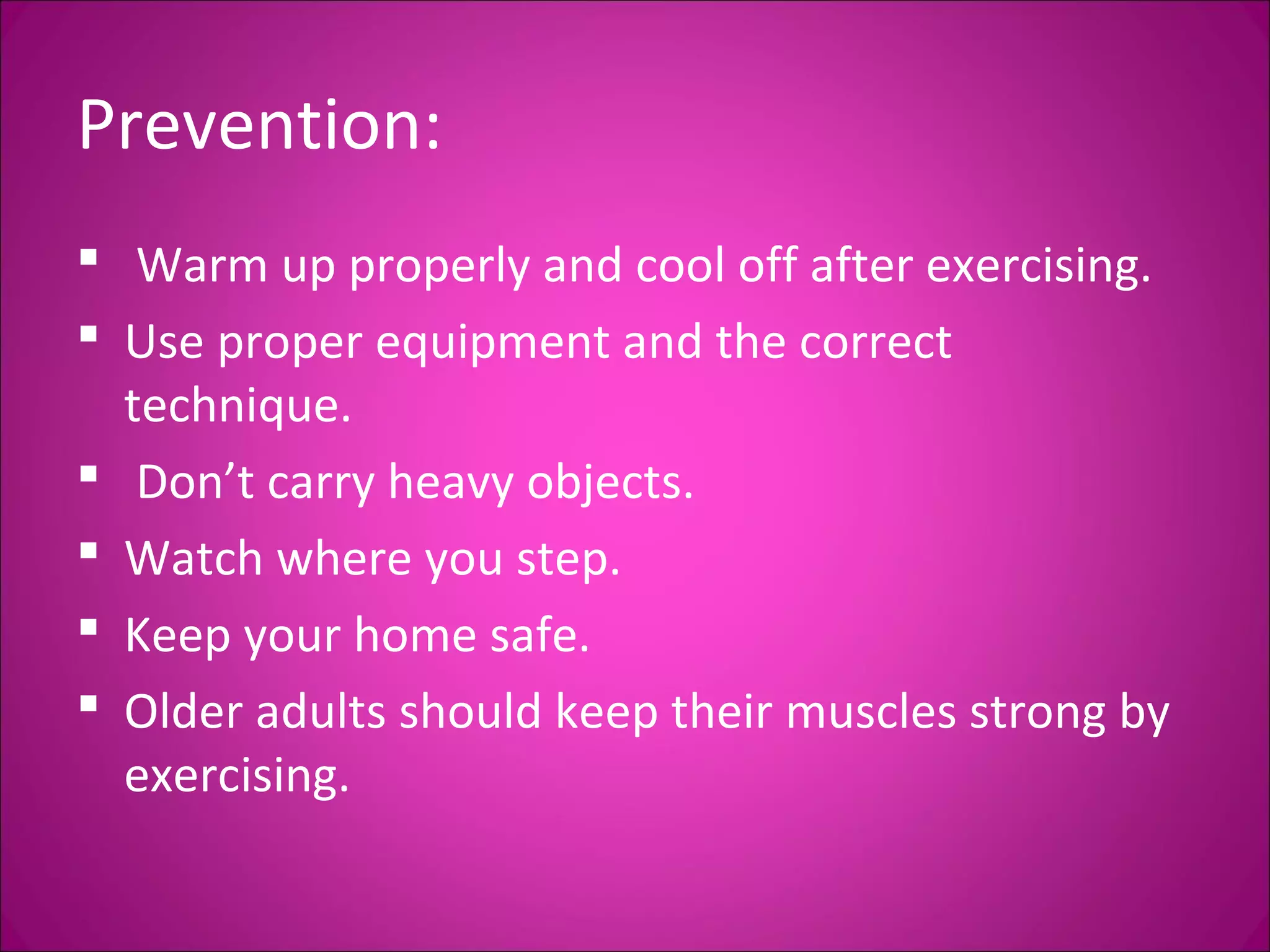
Question? 
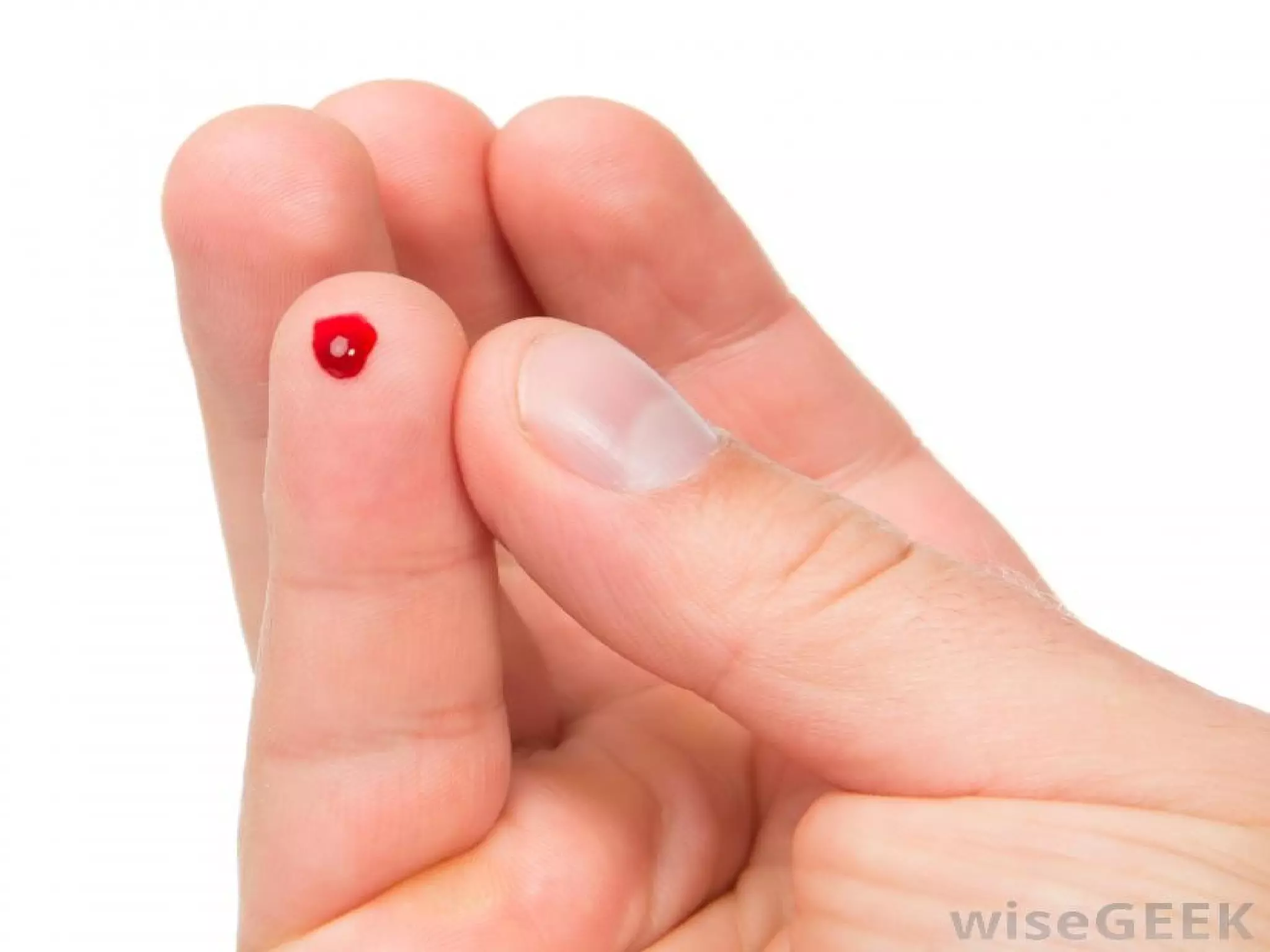
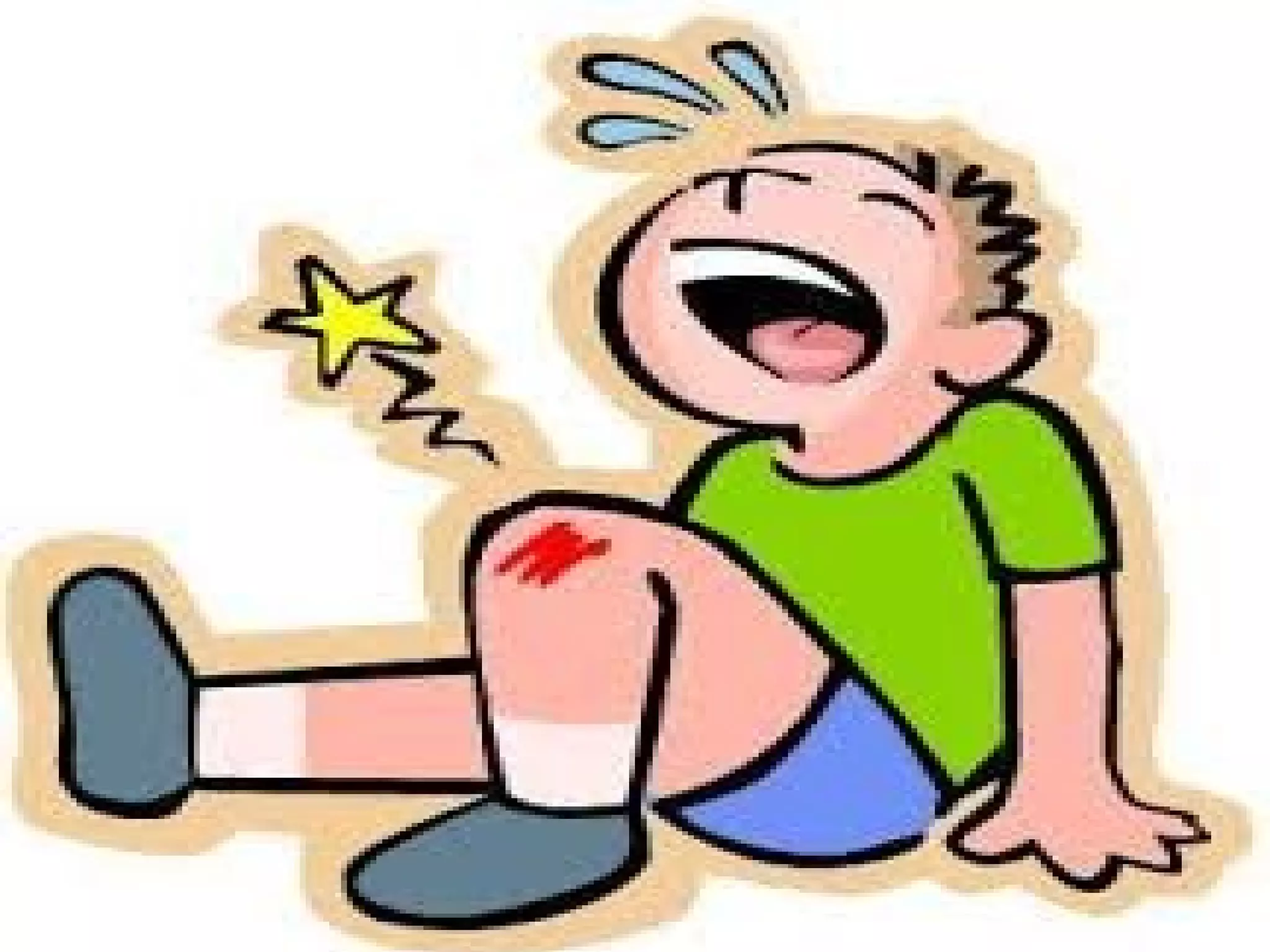
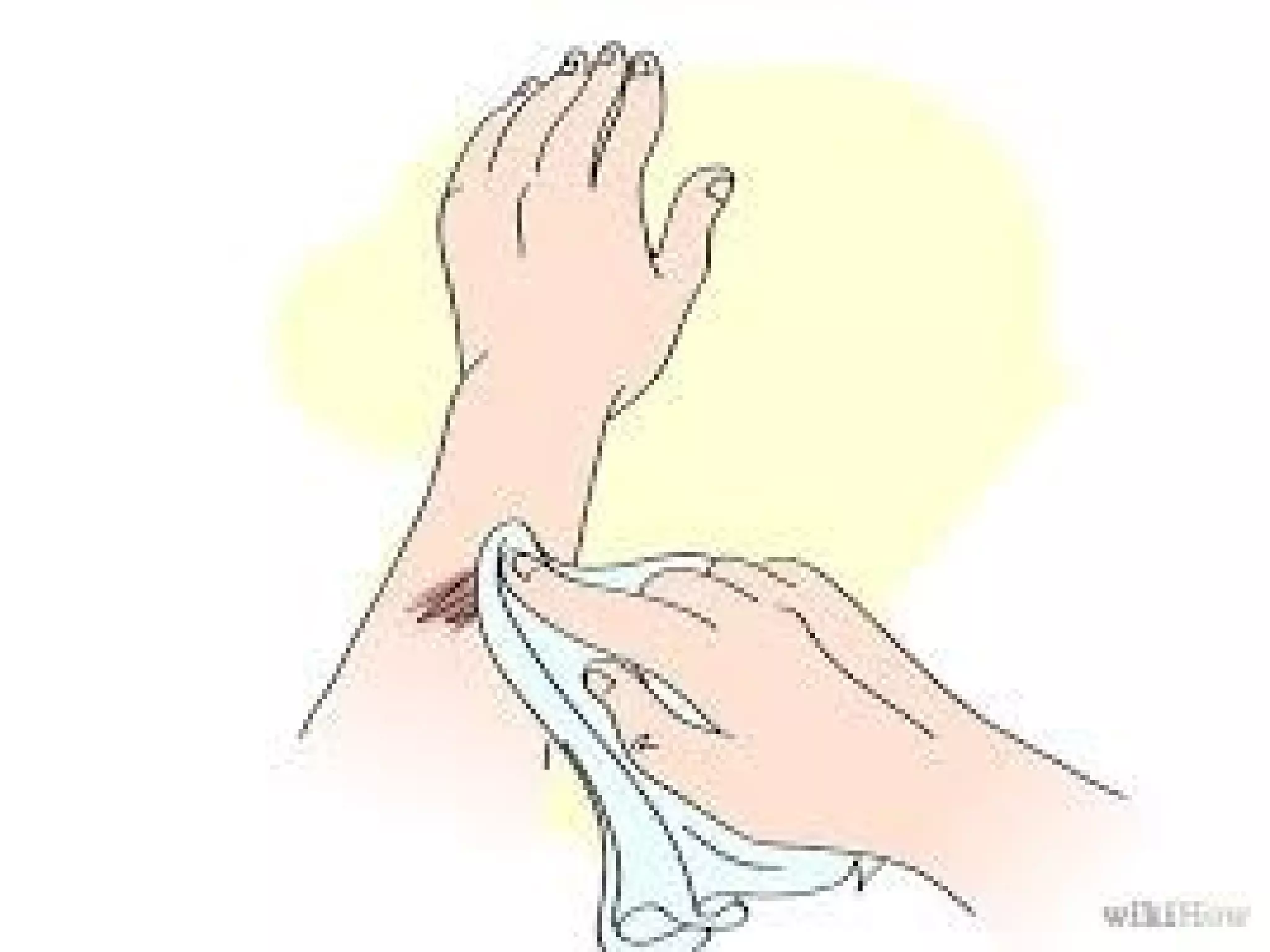
What will you do if the following 
situations happened to you?
Basic First Aid 
First Aid > is an immediate and temporary care given to 
a person who has been injured or suddenly taken ill. It 
includes self-help and home care if medical assistance is 
not available or delayed. 
Objectives: 
 To alleviate suffering 
 To prevent added / further injury or danger 
 To prolong life
Common Injury encountered by 
Officiating Officials and Athletes 
 Sprains 
 Strains 
 Heat Exhaustion 
Fractures 
 Dislocations
Sprain vs. Strain 
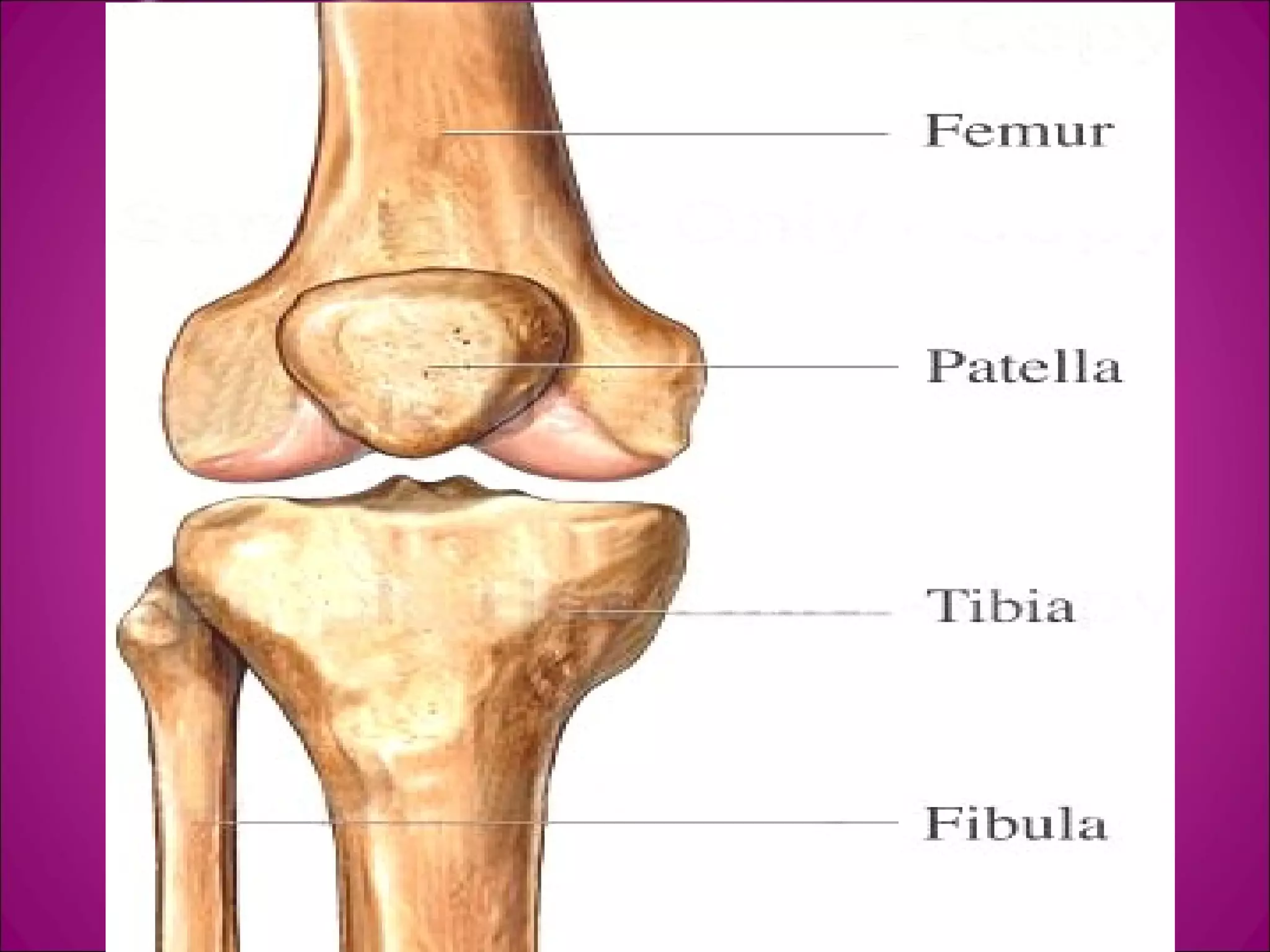
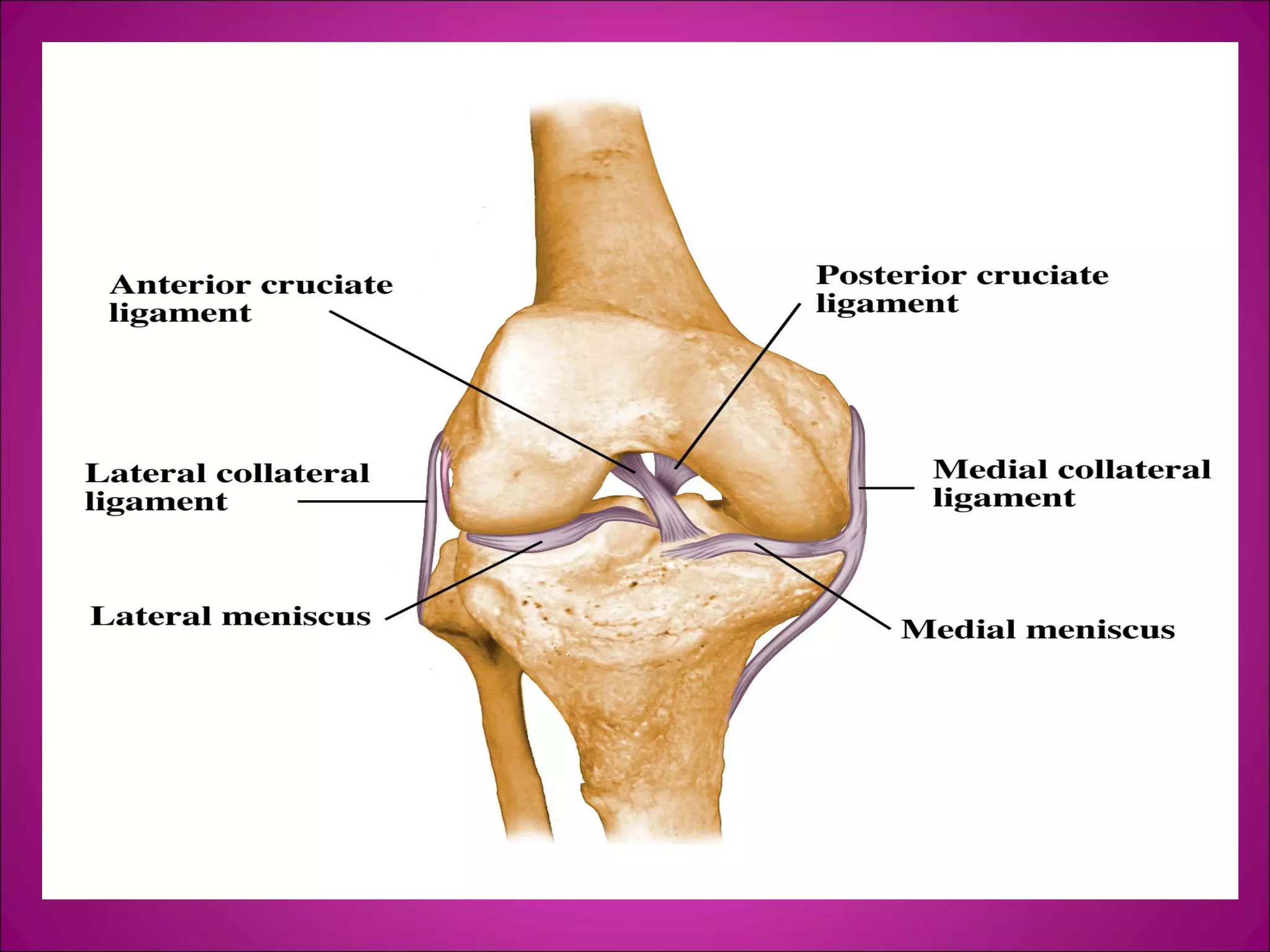
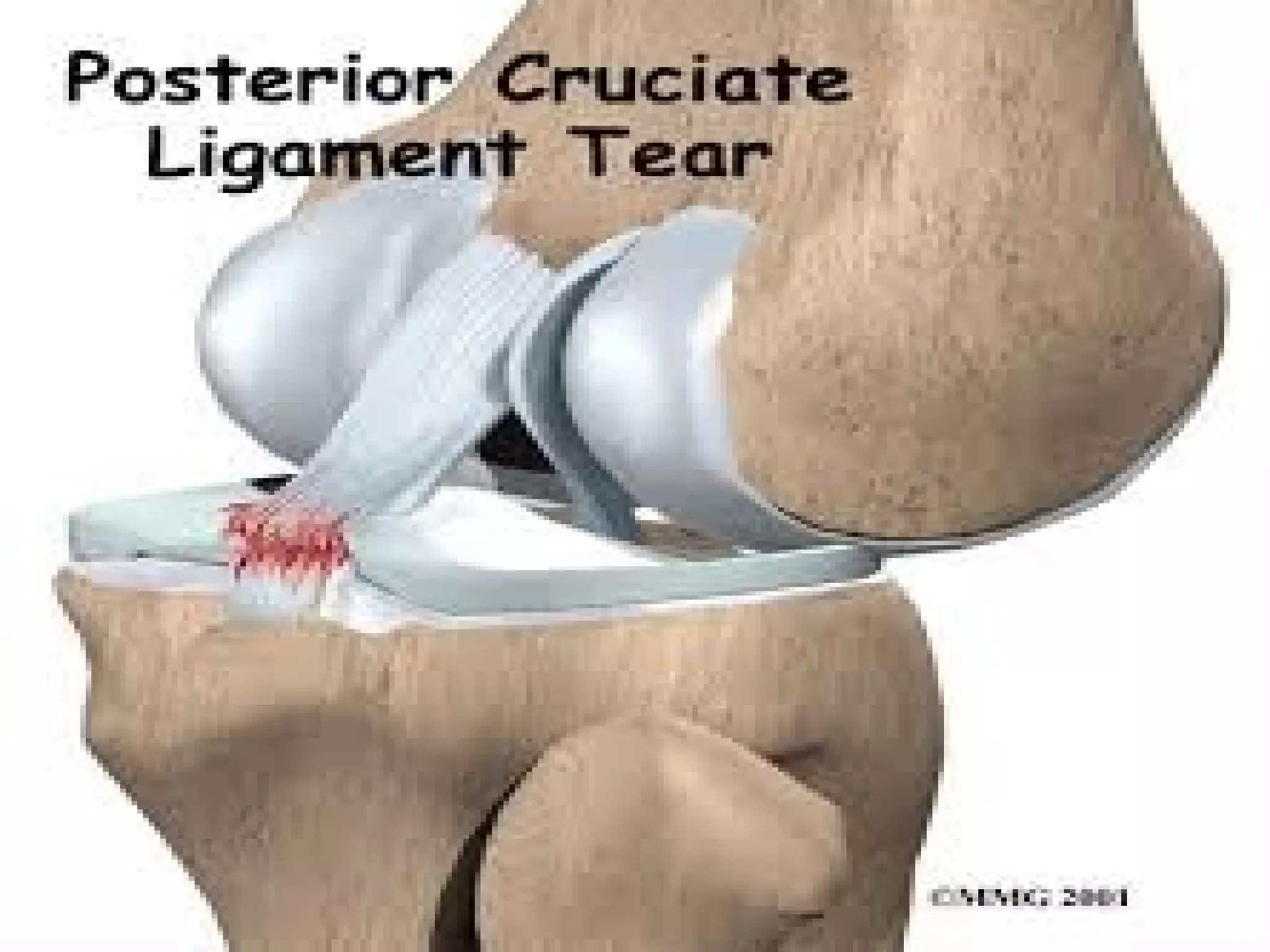
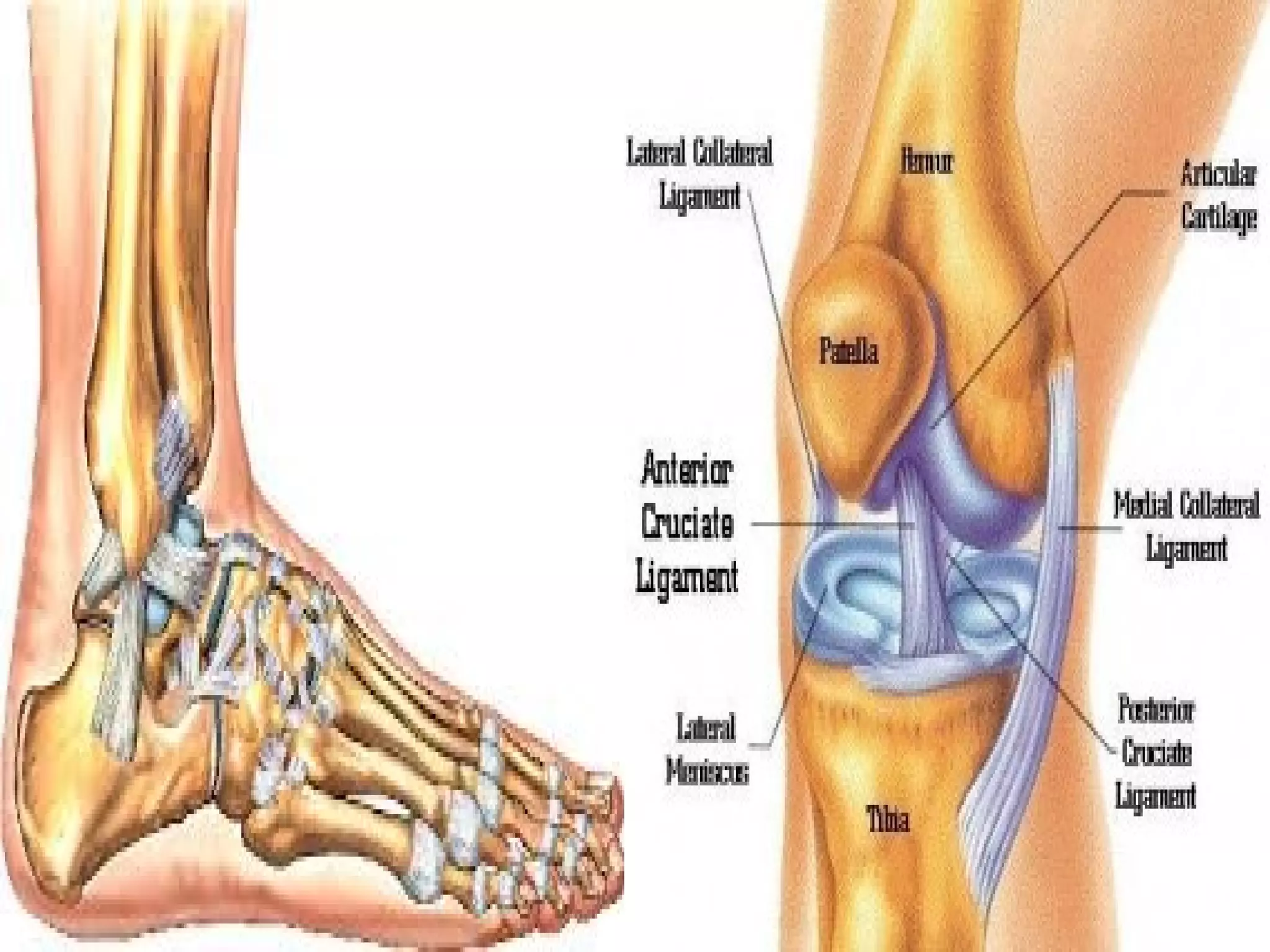
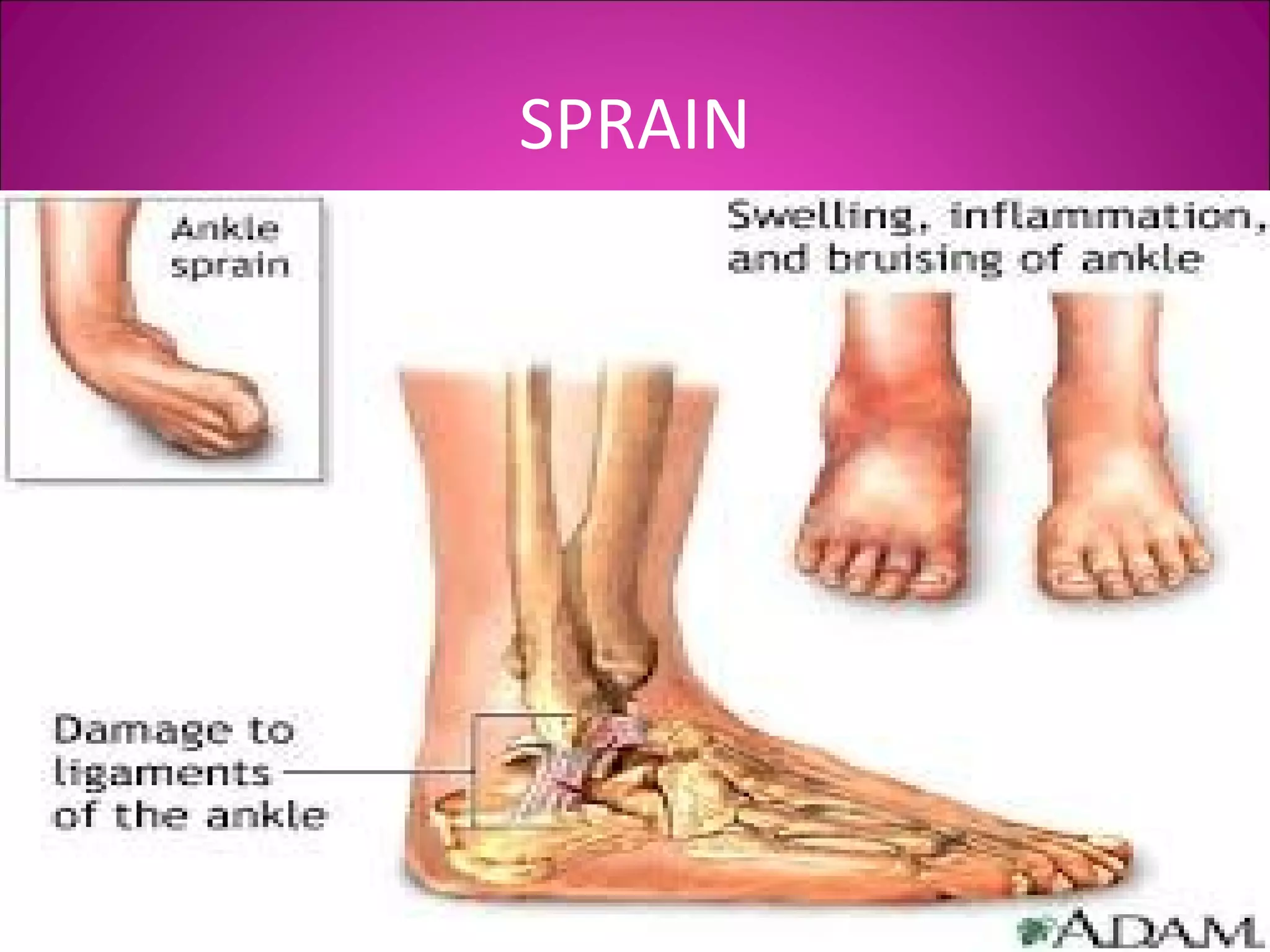
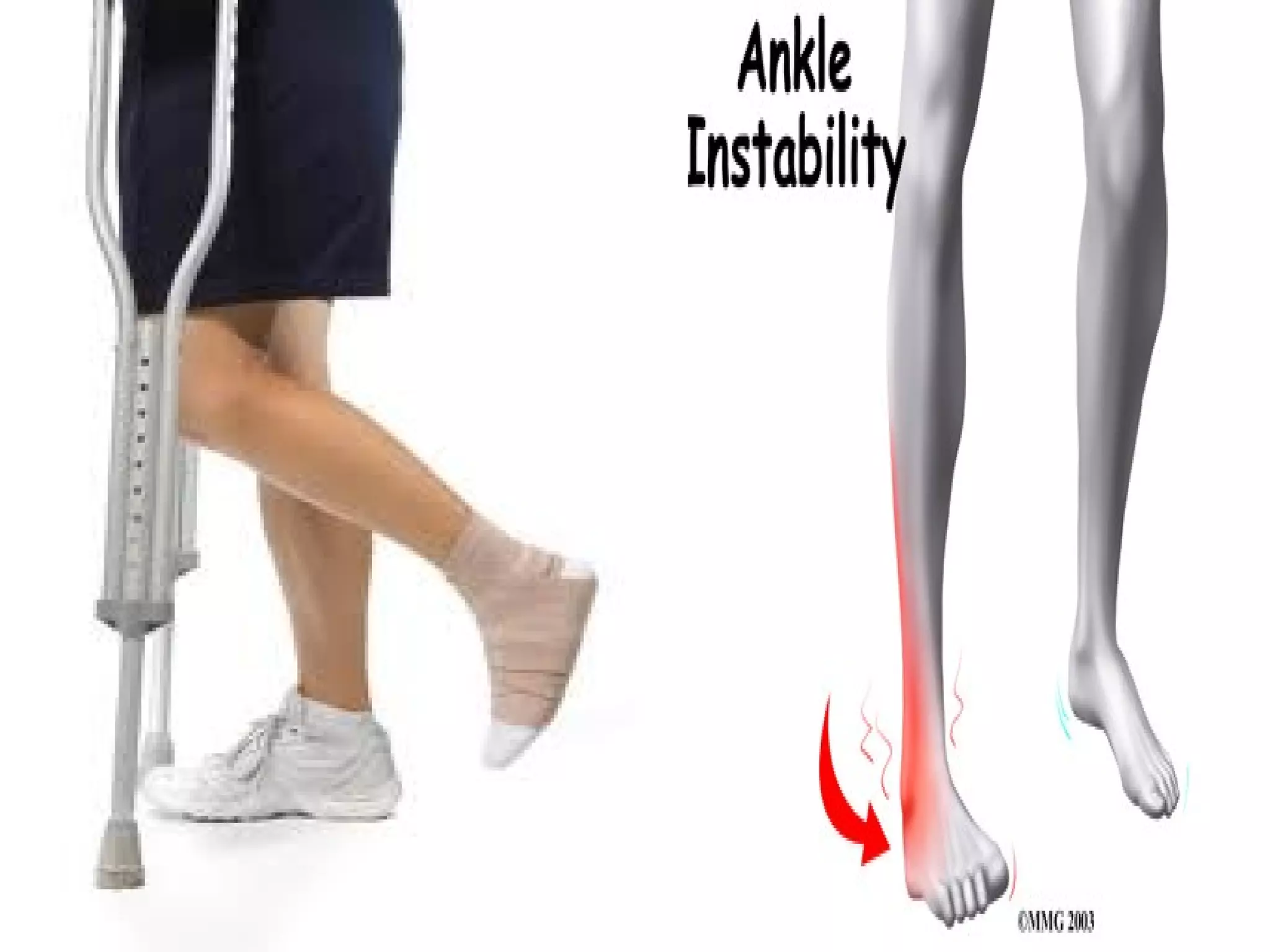
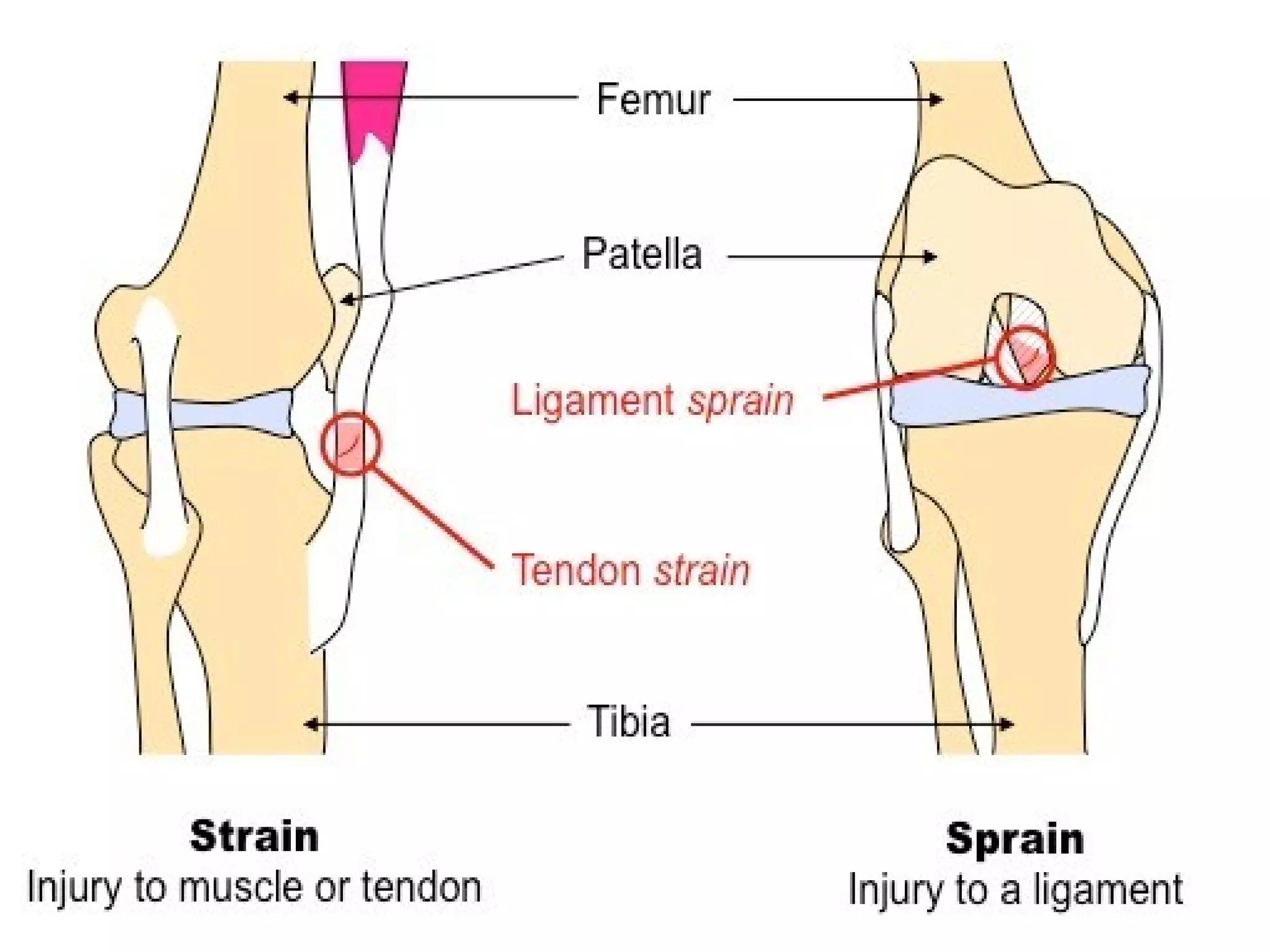
Sprain > is a stretch or tear of a ligament, the band of 
connective tissues that joins the end of one bone 
with another. Sprains are caused by trauma such as a 
fall or a blow to the body that knocks a joint out of 
position and, in the worst case, ruptures the 
supporting ligaments. 
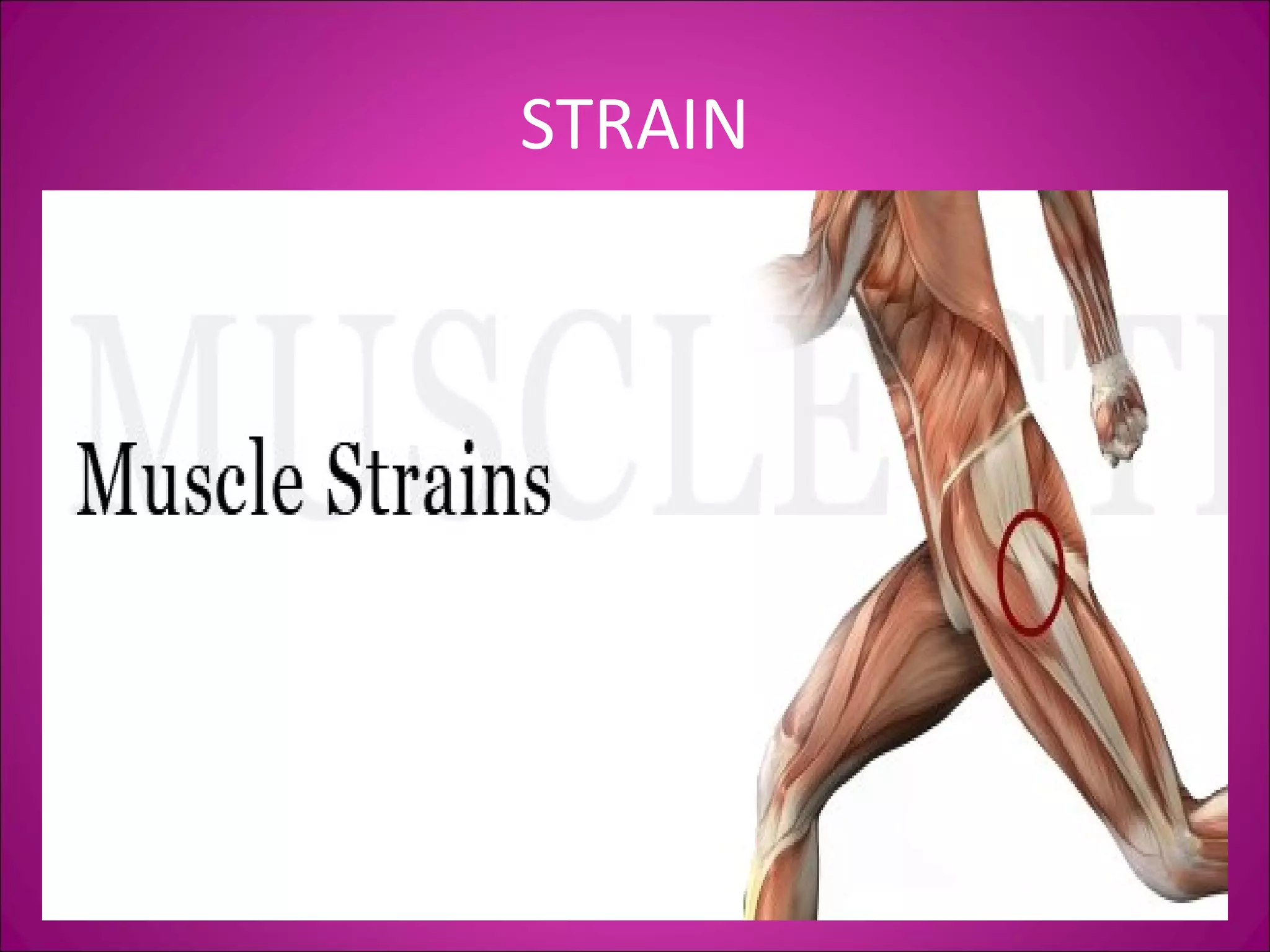
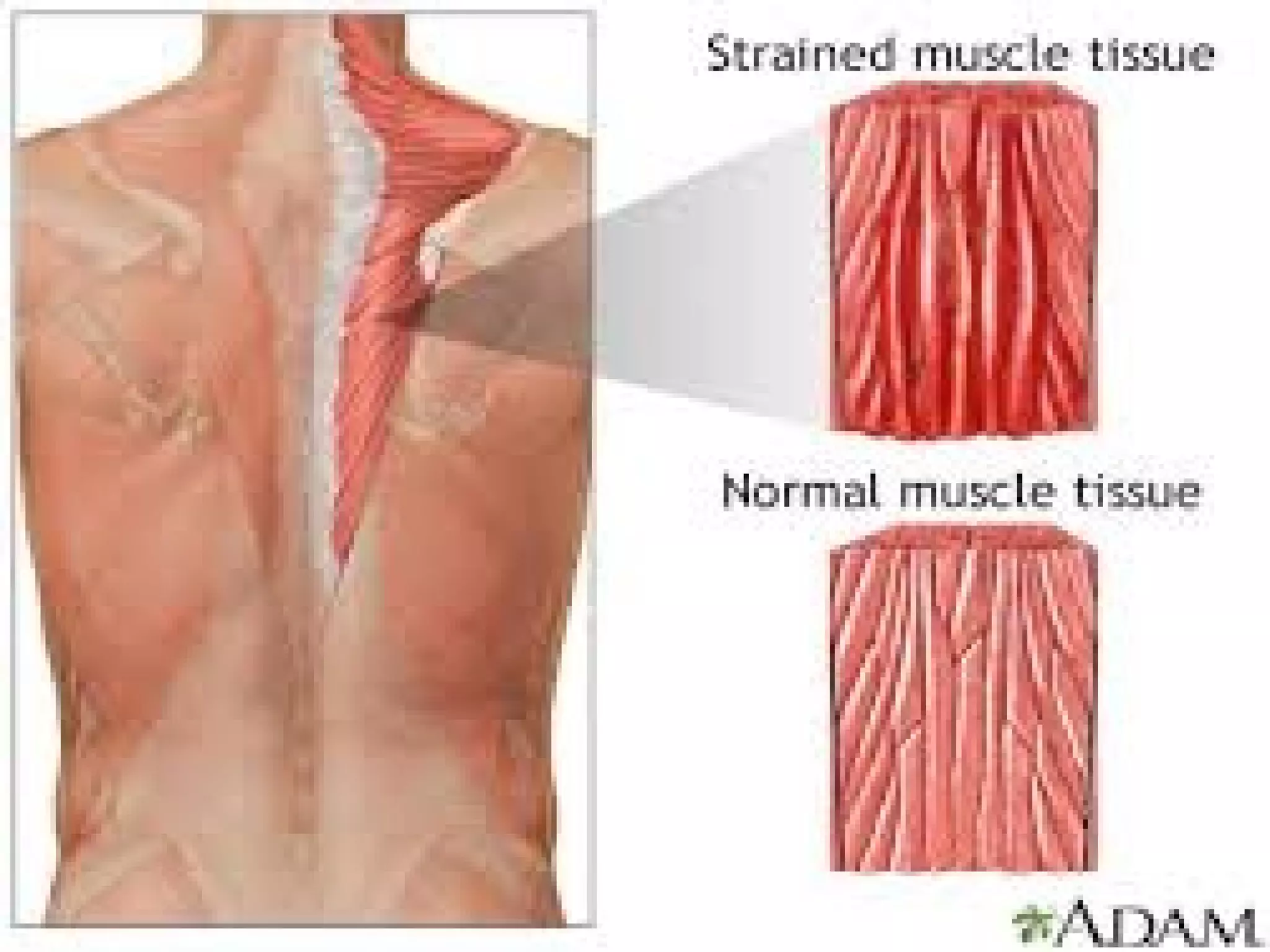
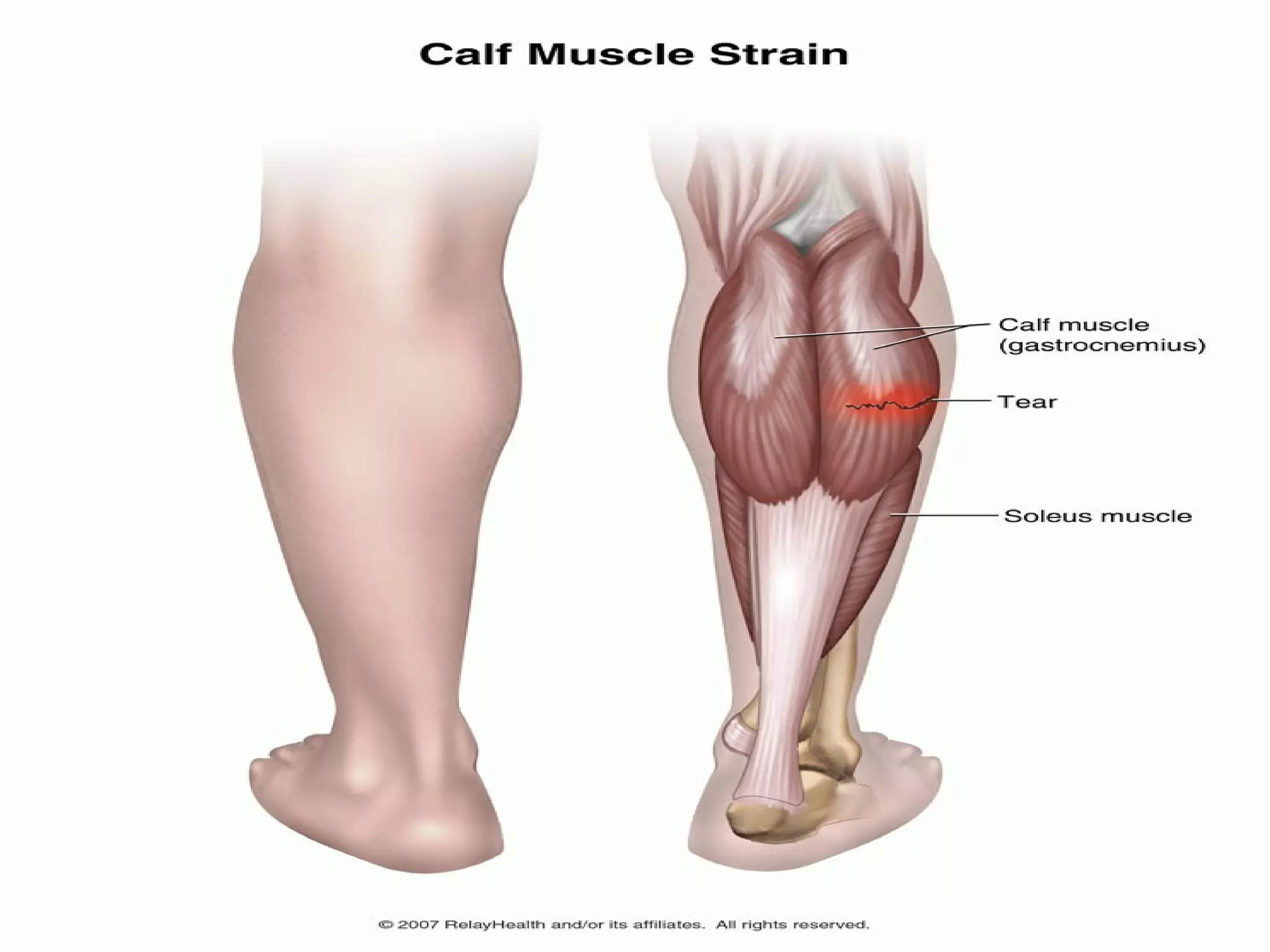
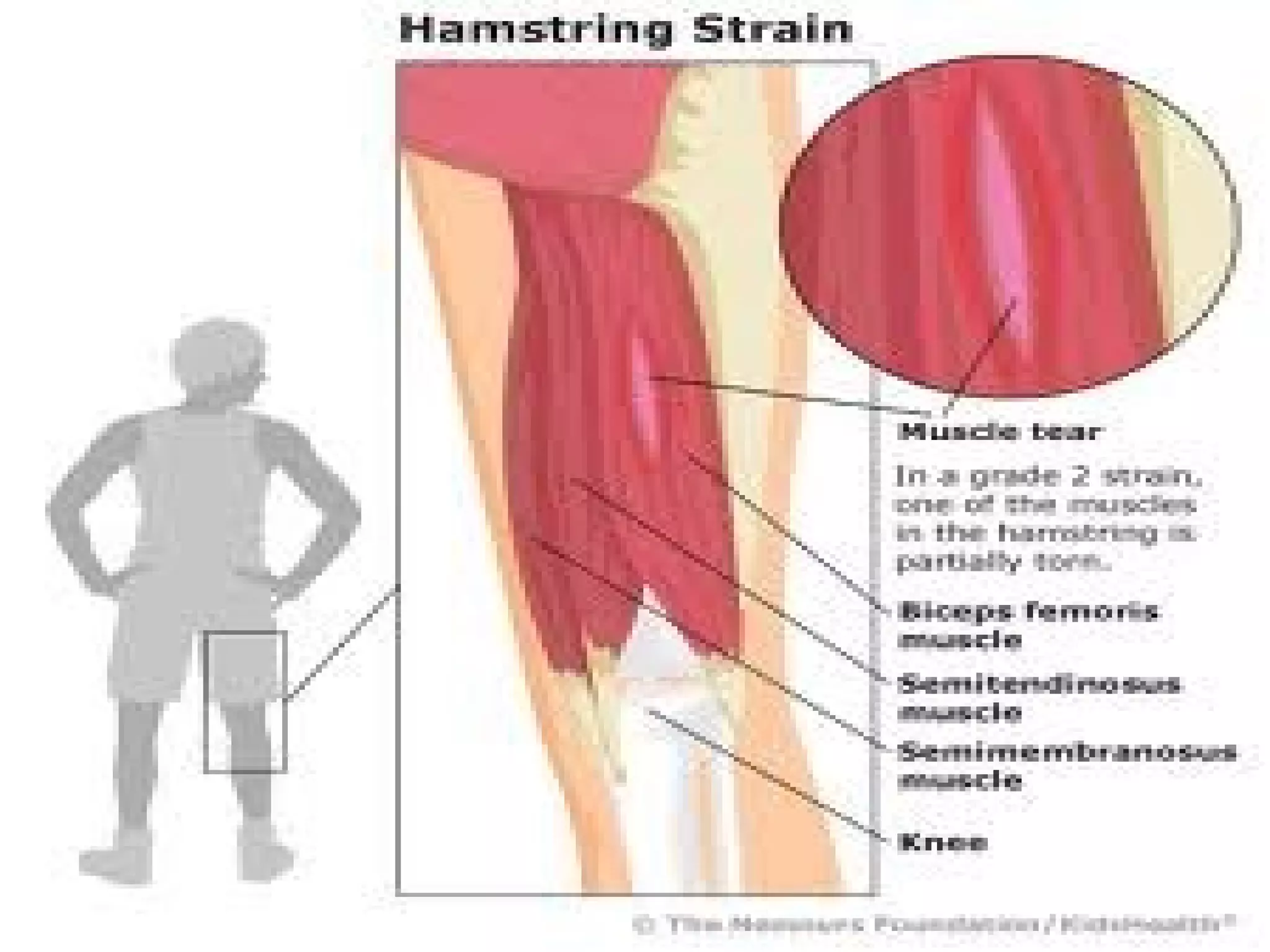
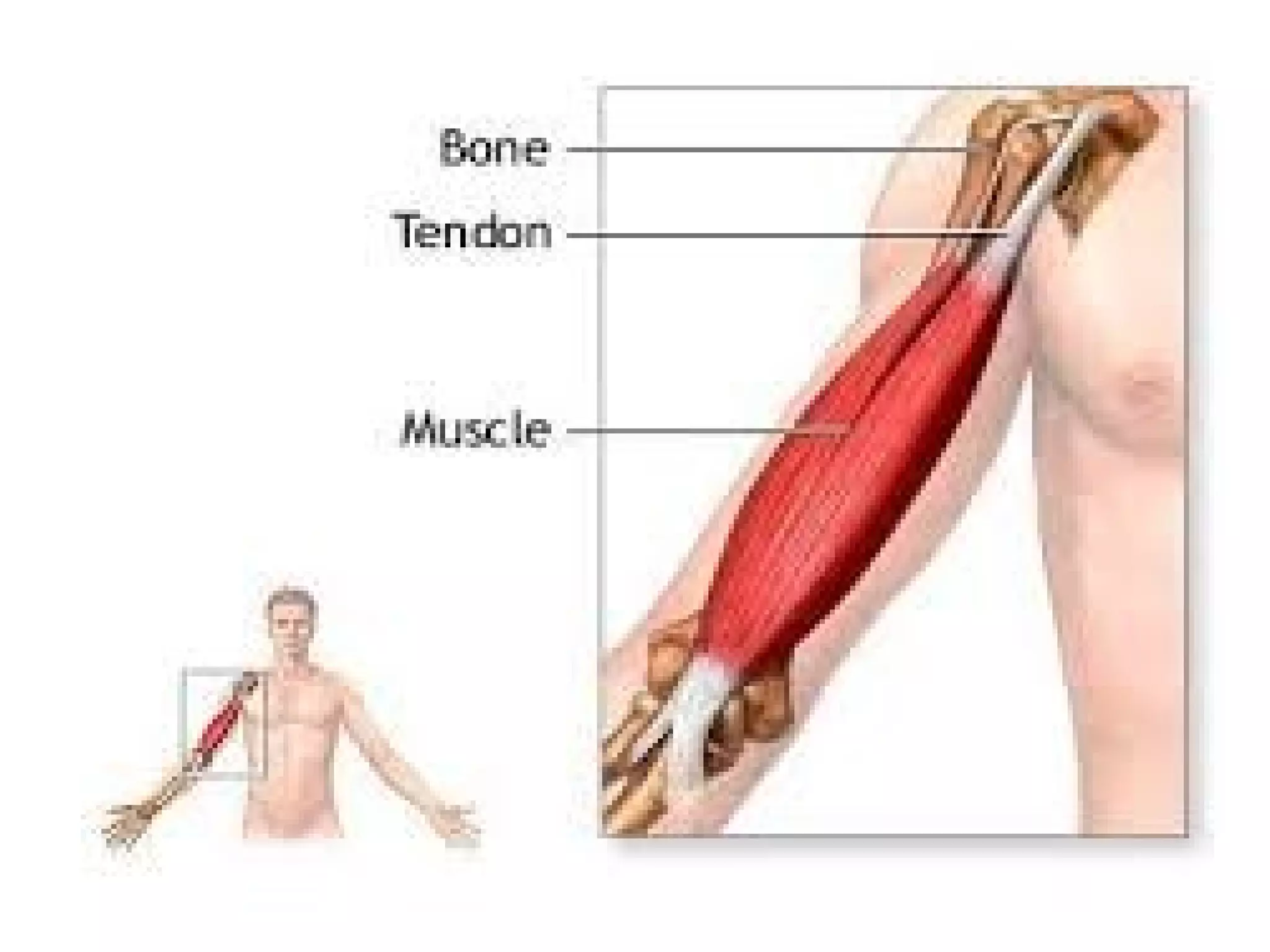
Strain > is a twist, pull or tear of a muscle or tendon – a 
cord of tissue connecting muscle to bone. It is an 
acute, non-contact injury that results from 
overstretching or over-contraction.
SPRAIN
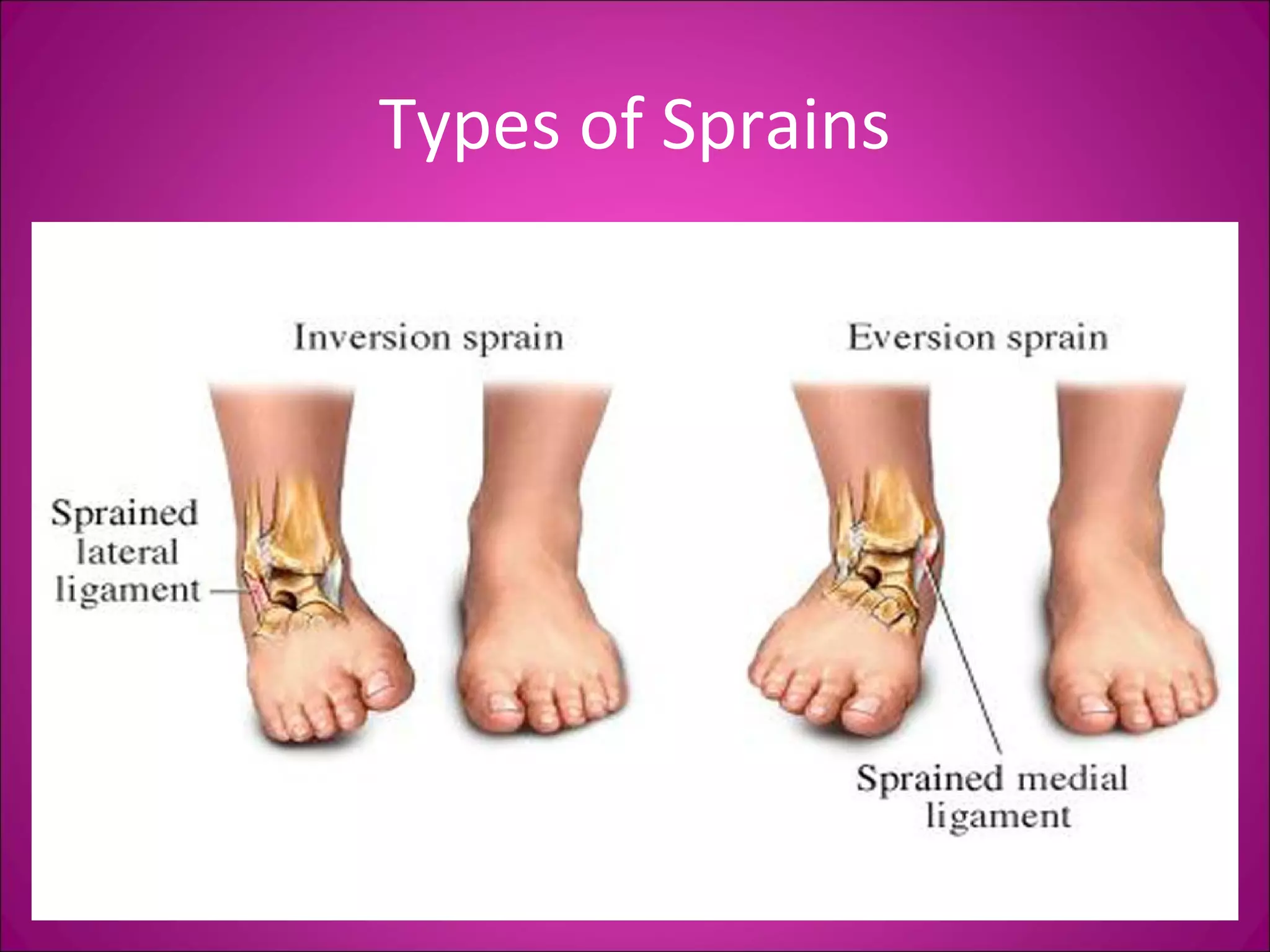
Types of Sprains
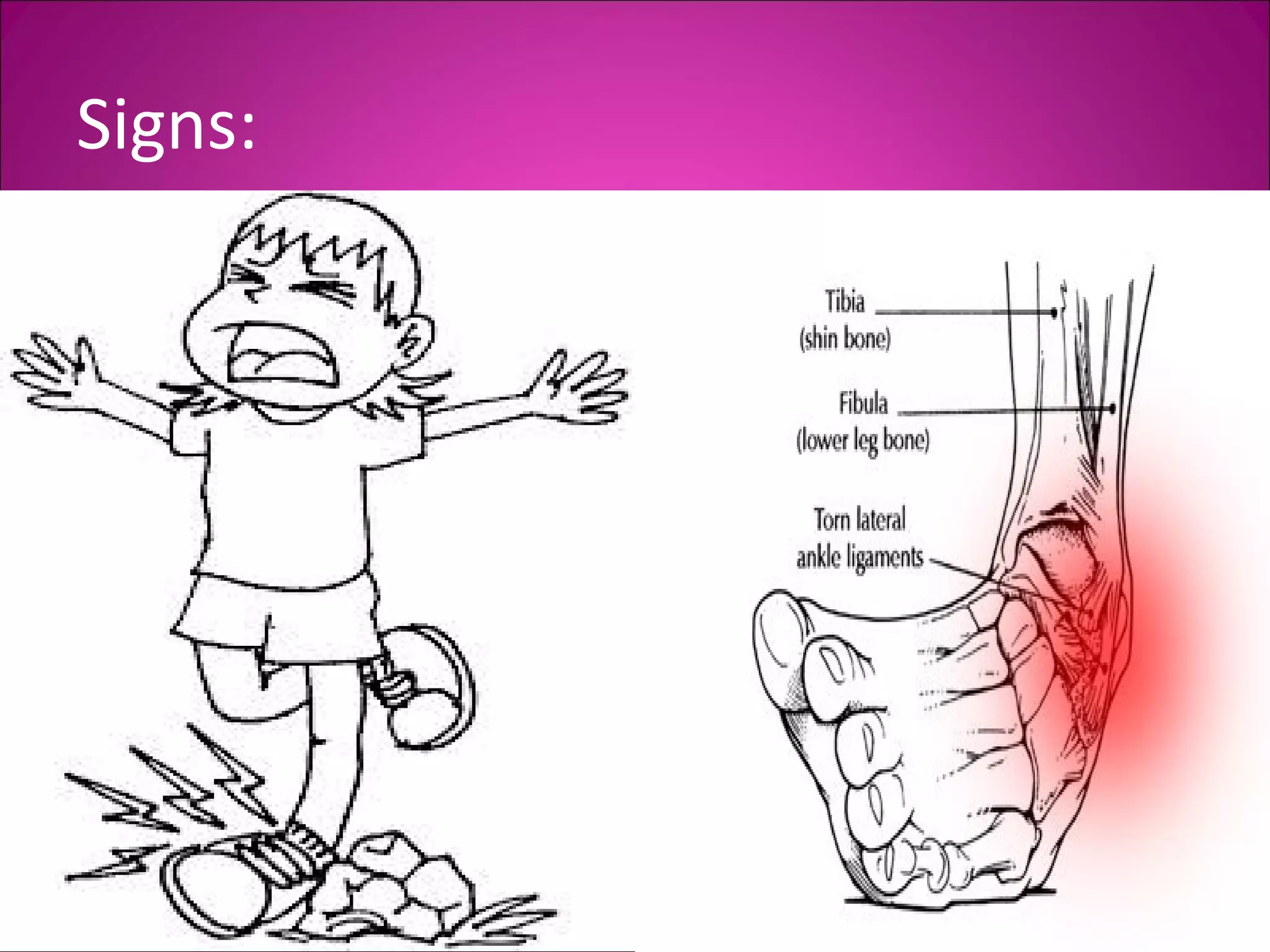
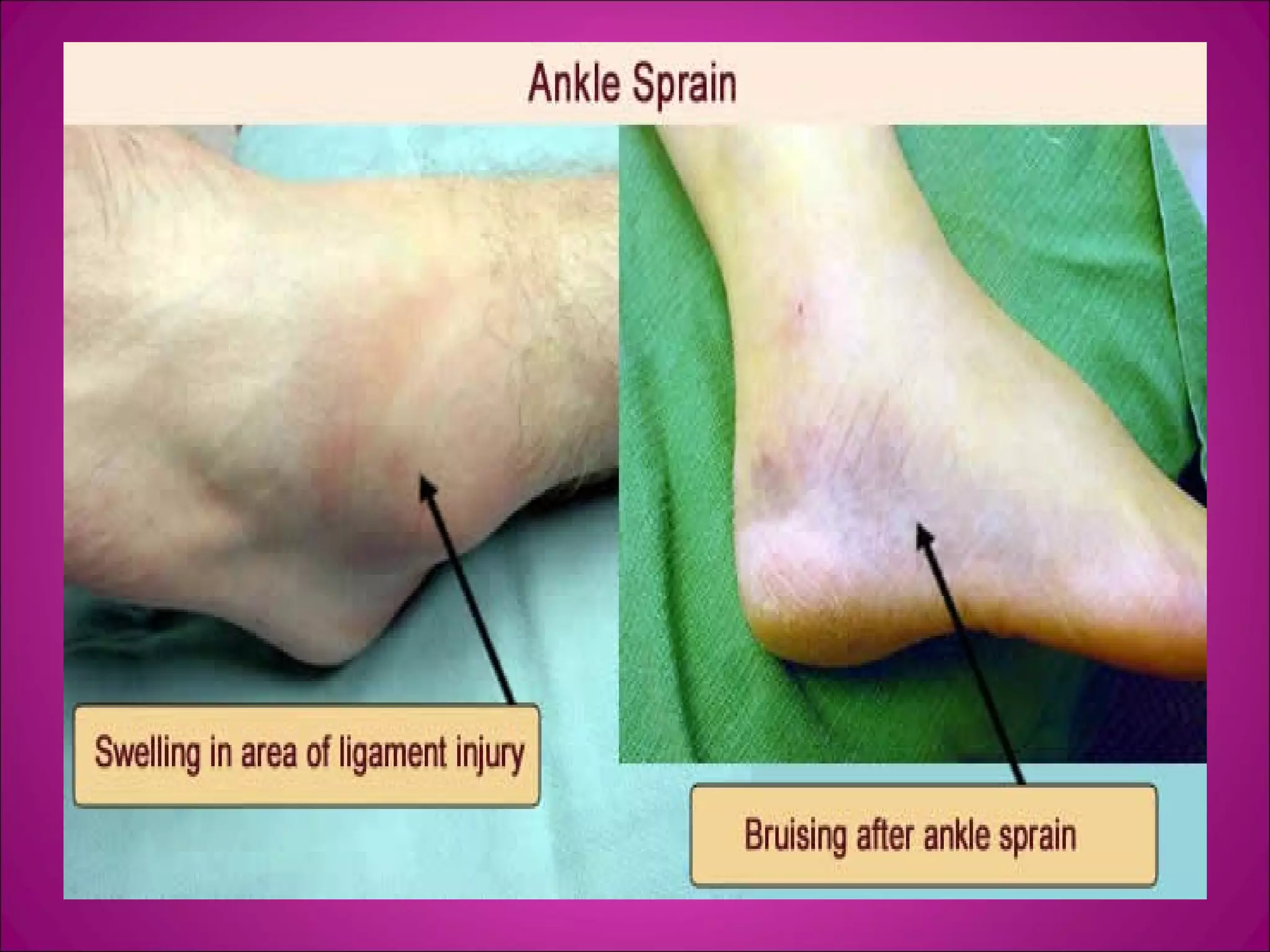
Signs:
STRAIN
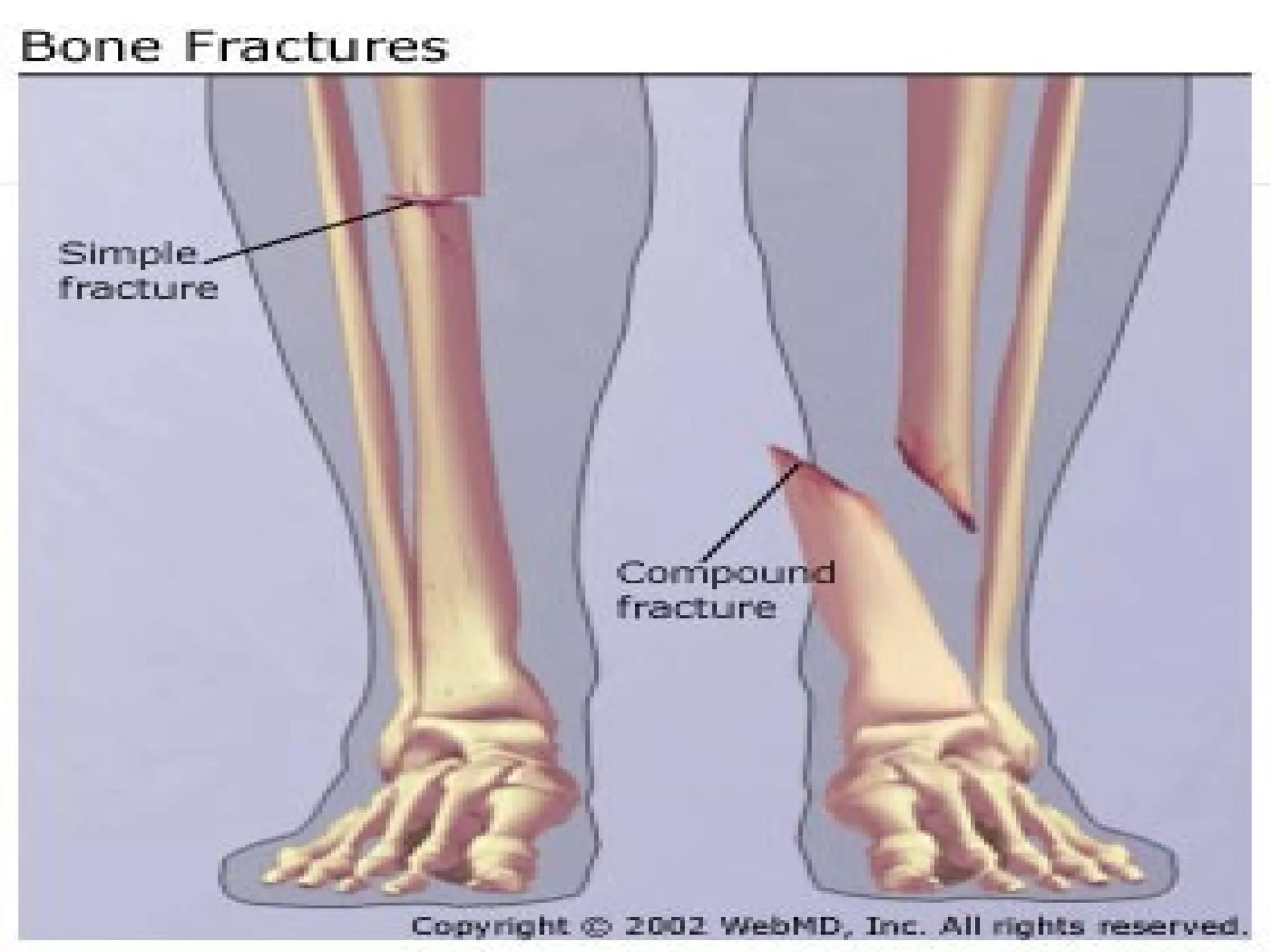
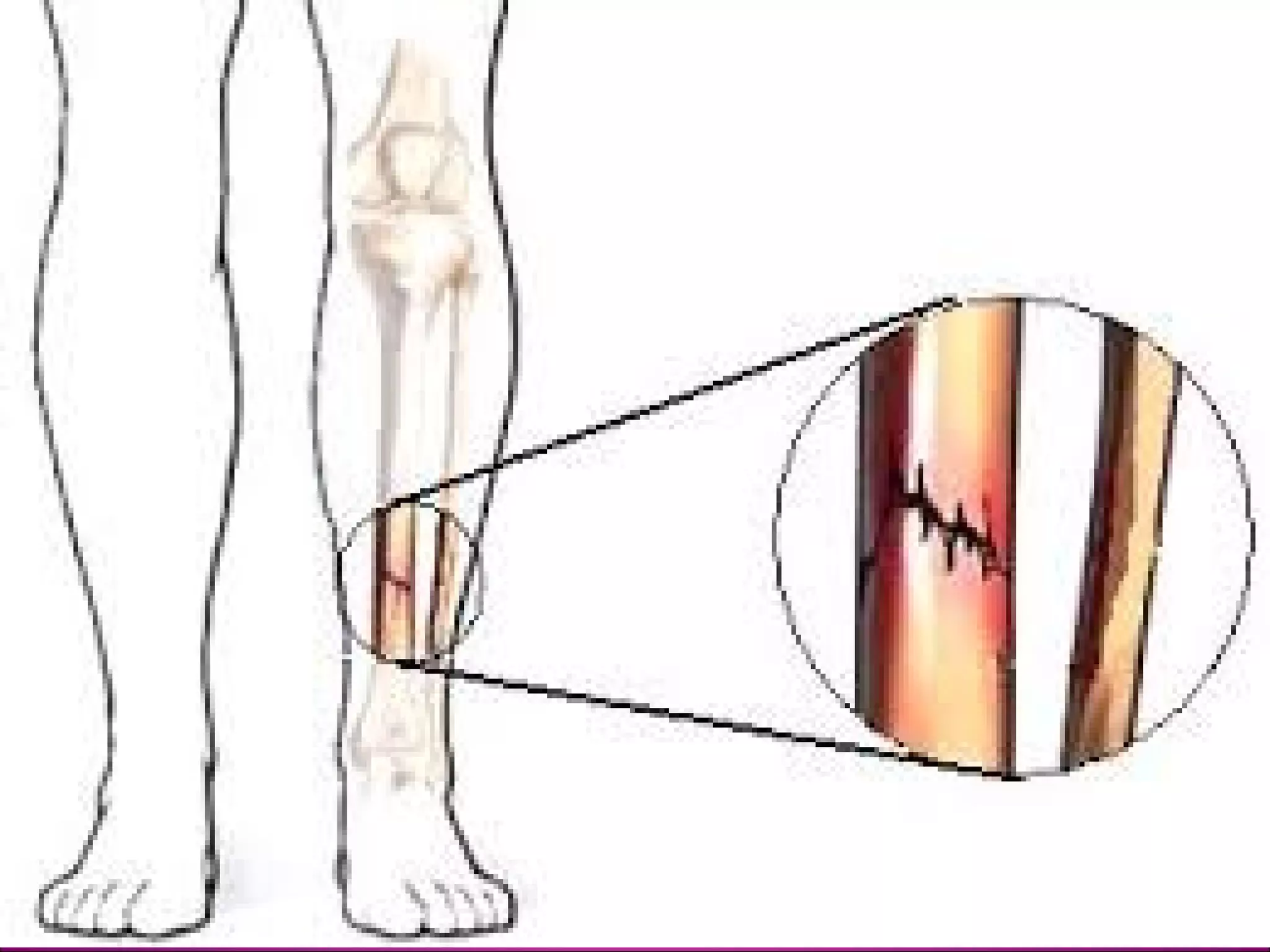
Fractures > is a break in the bone that can occur 
from either a quick, one-time injury to the 
bone. 
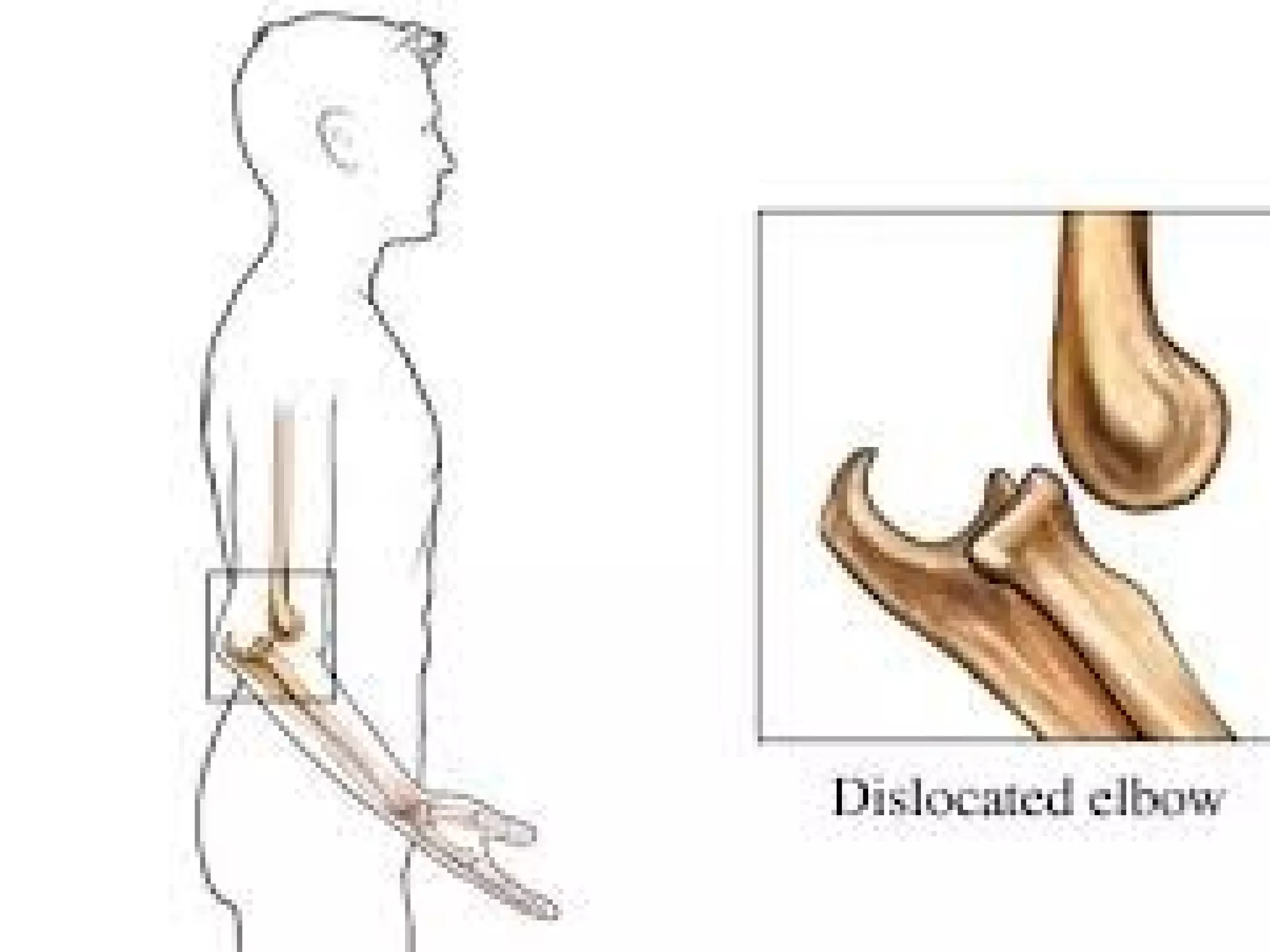
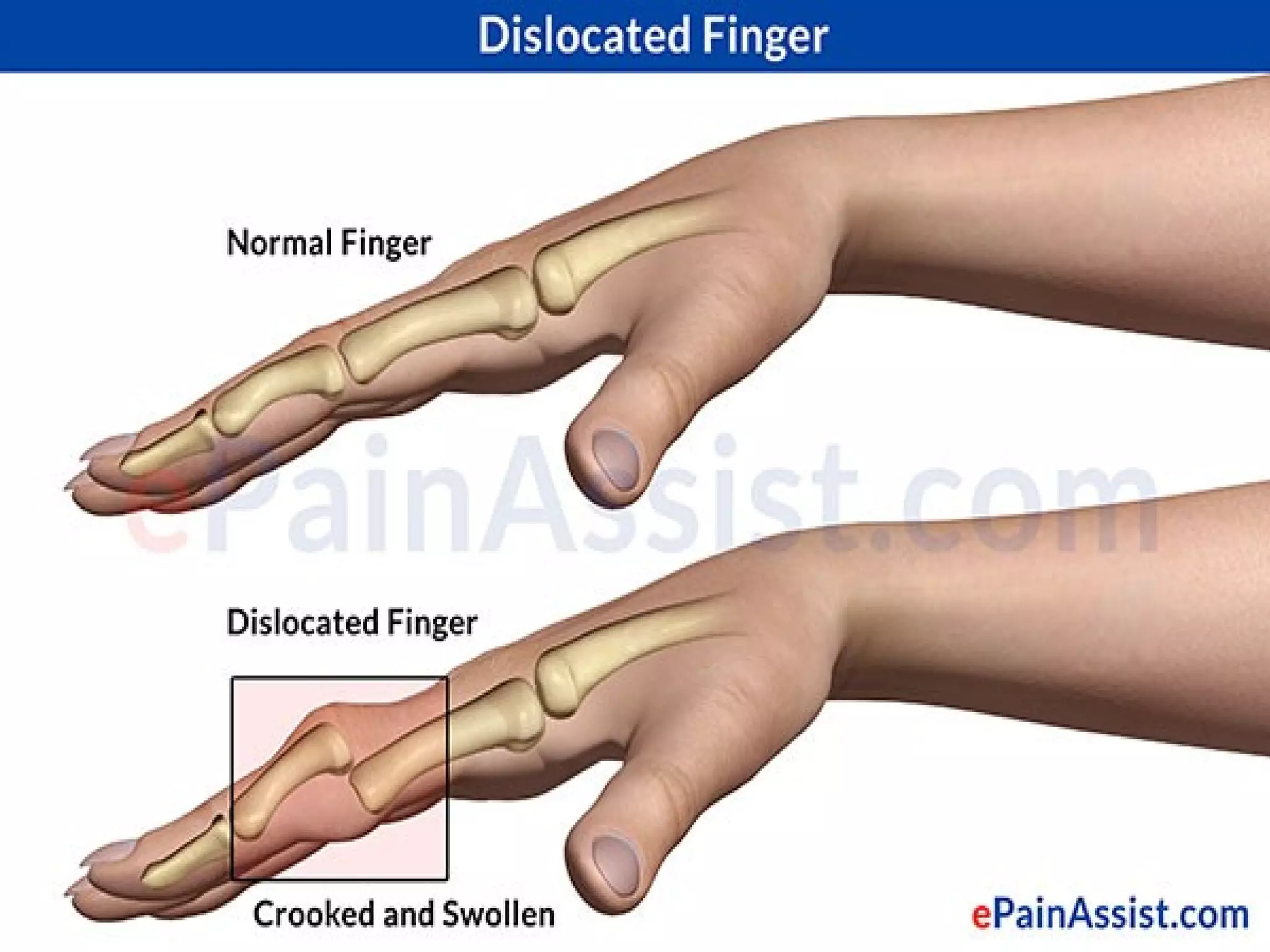
Dislocations > when the two bones come 
together to form a joint become separated, 
the joint is described as being dislocated.
Home Treatment 
For sprains and strains 
 Apply the R.I.C.E method 
 Do not apply heat during the first two days as this will only 
increase swelling. 
 Use paracetamol for the first day of the injury , to reduce pain 
without increasing bleeding. 
 Apply Arnica oil to reduce swelling. 
 Remove rings immediately if the injury is to the hand or finger. 
 After 48 hours, start moving the limb gently, but only enough 
not to cause the pain. 
 Gradually increase the range of movement.
R.I.C.E Method 
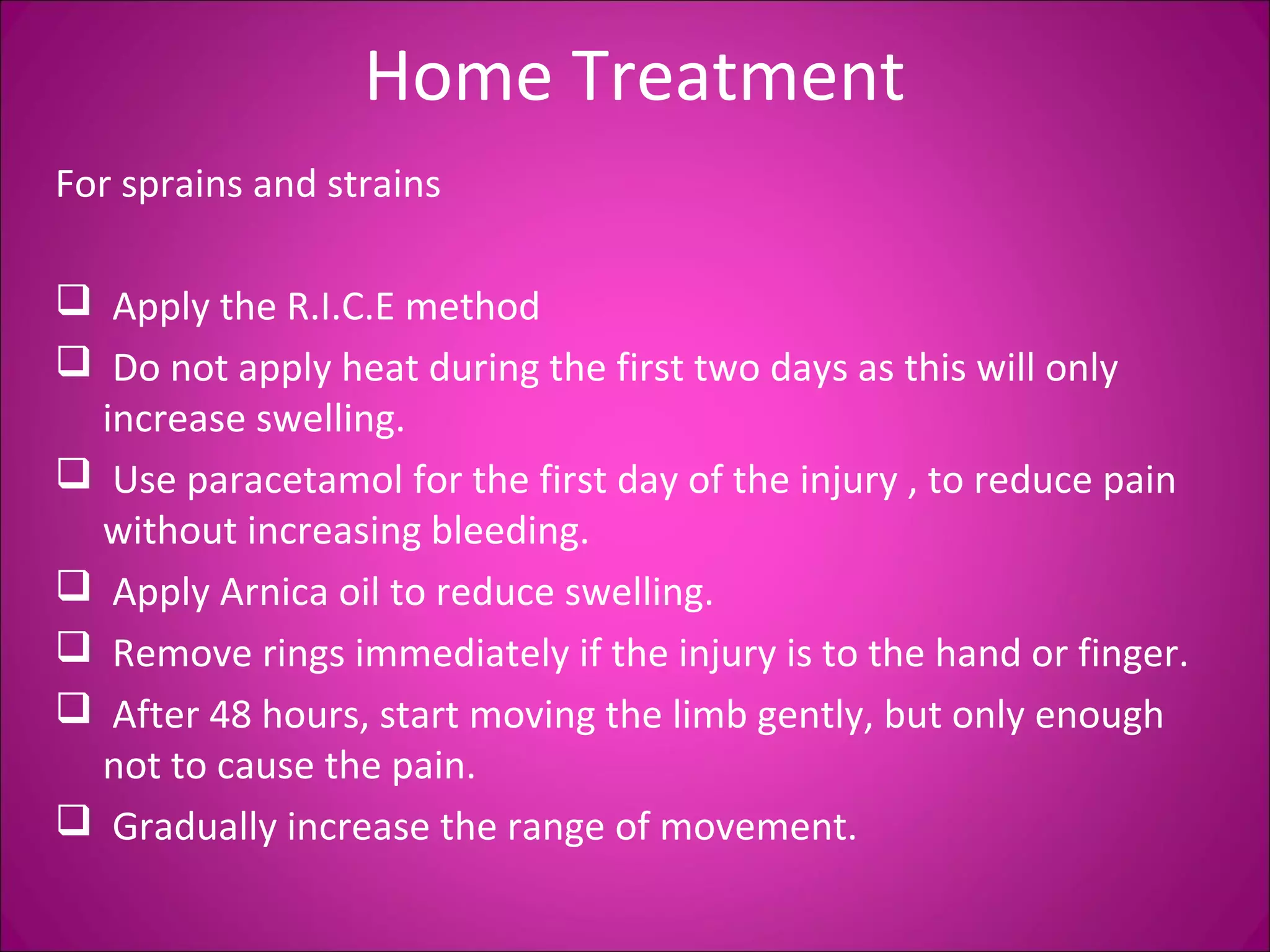
• Rest the injured part. 
• Avoid any activity that 
causes pain or makes it 
worse. 
• Use crutches if the leg, 
foot or ankle is injured. 
• Support an injured wrist, 
arm or shoulder with a 
sling.
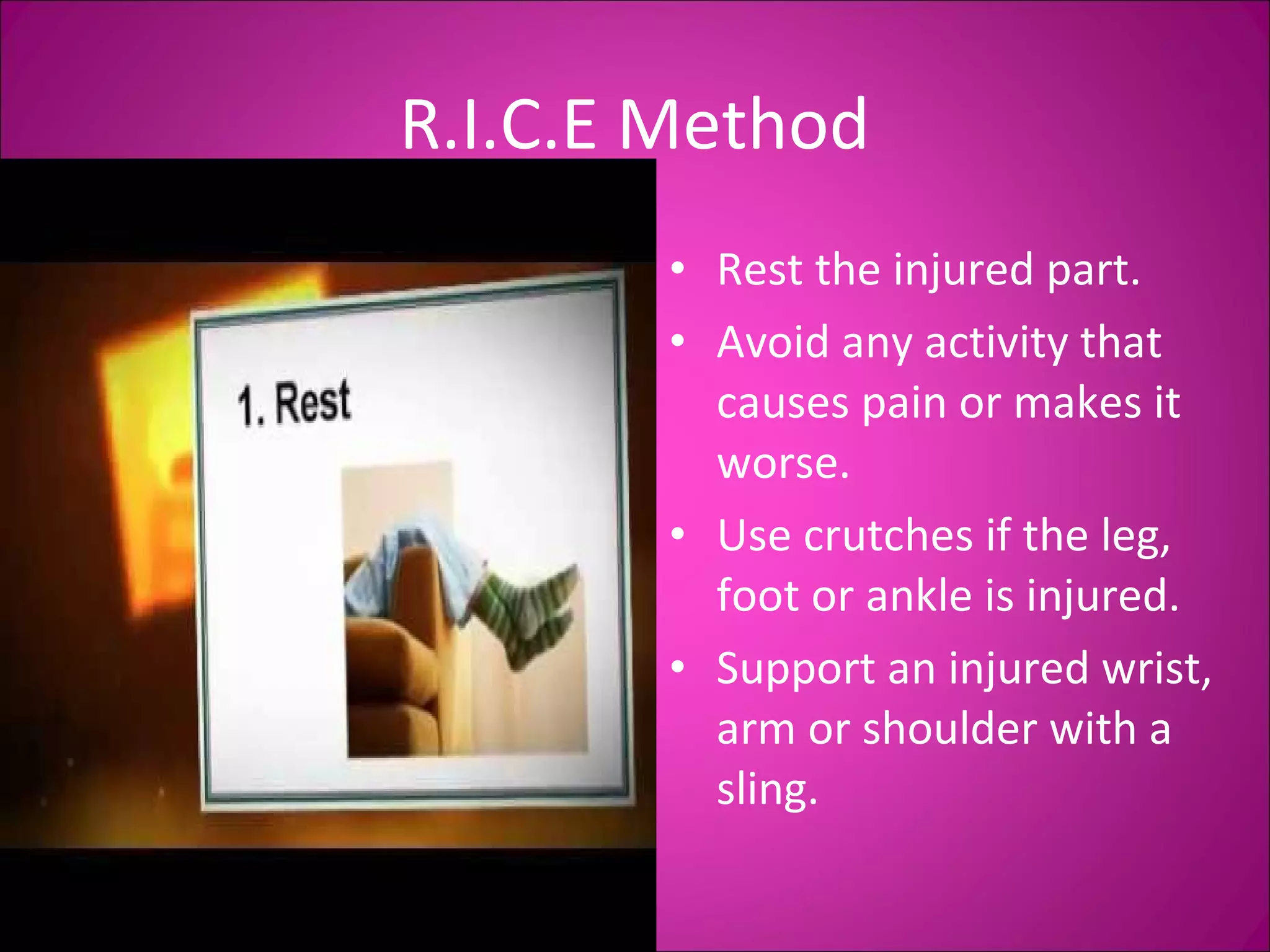
• Ice is an excellent anti-inflammatory 
and reduces 
swelling and pain. Apply an 
ice pack or cold compress 
for 10-15 mins. 
• Protect your skin with a 
thin cloth
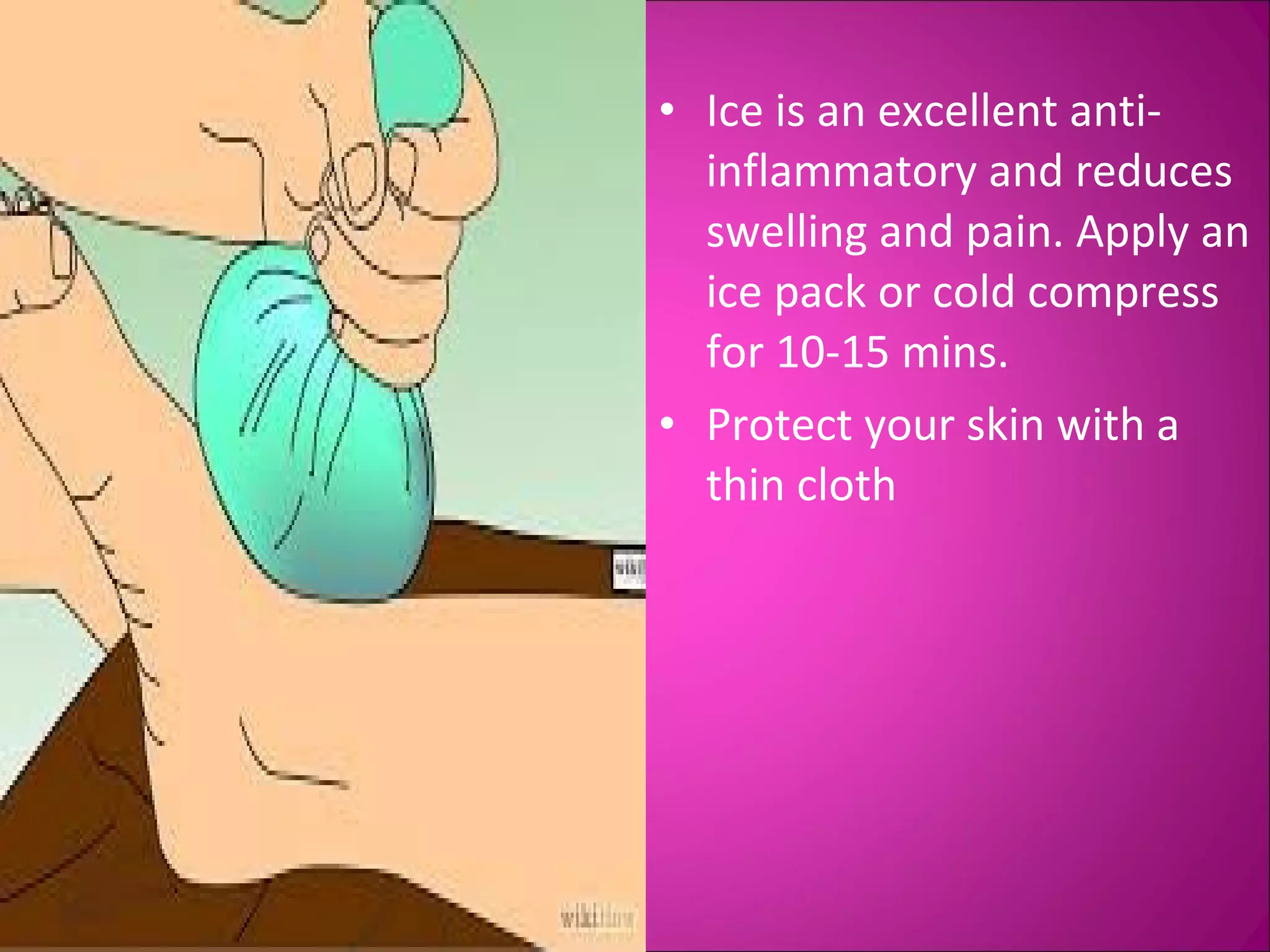
• Reduces swelling 
• Use elastic bandages for at 
least 2 days.
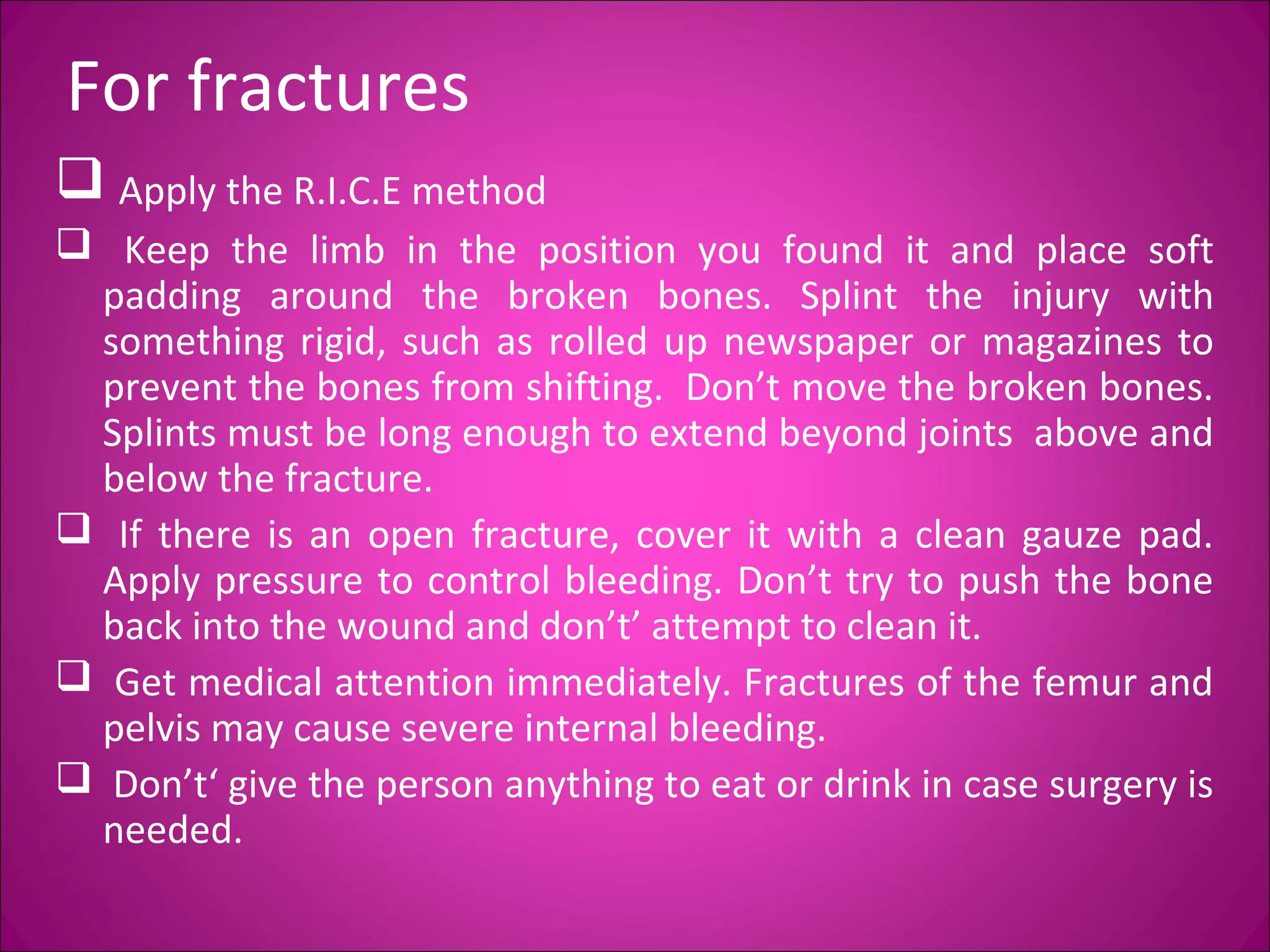
• Elevation drains fluids from 
injured tissues. 
• Try to keep the injured 
area at or above the level 
of the heart.
For fractures 
 Apply the R.I.C.E method 
 Keep the limb in the position you found it and place soft 
padding around the broken bones. Splint the injury with 
something rigid, such as rolled up newspaper or magazines to 
prevent the bones from shifting. Don’t move the broken bones. 
Splints must be long enough to extend beyond joints above and 
below the fracture. 
 If there is an open fracture, cover it with a clean gauze pad. 
Apply pressure to control bleeding. Don’t try to push the bone 
back into the wound and don’t’ attempt to clean it. 
 Get medical attention immediately. Fractures of the femur and 
pelvis may cause severe internal bleeding. 
 Don’t‘ give the person anything to eat or drink in case surgery is 
needed.
See a doctor if: 
• You suspect a fracture or dislocation or if you 
are unsure of the severity of a sprain or strain. 
• You cannot straighten the affected joint or bear 
weight on it, or if a joint is unstable. 
• The skin over the injury area is broken. 
• The limb below the injury feels numb or tingling, 
or is white, or pale or blue in colour, or feels 
colder compared to the other healthy limb.
• The ligaments of the knee are injured. 
• You injure an area that has been injured several 
times before. 
• Pain is severe or lasts longer than 24 hours, or if 
swelling doesn’t subside within 48 hours. 
• A sprain or strain doesn’t improve after five to 
seven days. 
• Signs of infection develops.
Prevention: 
 Warm up properly and cool off after exercising. 
 Use proper equipment and the correct 
technique. 
 Don’t carry heavy objects. 
 Watch where you step. 
 Keep your home safe. 
 Older adults should keep their muscles strong by 
exercising.

Basics of First Aid

  • 1.
    Question? What willyou do if the following situations happened to you?
  • 5.
    Basic First Aid First Aid > is an immediate and temporary care given to a person who has been injured or suddenly taken ill. It includes self-help and home care if medical assistance is not available or delayed. Objectives:  To alleviate suffering  To prevent added / further injury or danger  To prolong life
  • 6.
    Common Injury encounteredby Officiating Officials and Athletes  Sprains  Strains  Heat Exhaustion Fractures  Dislocations
  • 7.
    Sprain vs. Strain Sprain > is a stretch or tear of a ligament, the band of connective tissues that joins the end of one bone with another. Sprains are caused by trauma such as a fall or a blow to the body that knocks a joint out of position and, in the worst case, ruptures the supporting ligaments. Strain > is a twist, pull or tear of a muscle or tendon – a cord of tissue connecting muscle to bone. It is an acute, non-contact injury that results from overstretching or over-contraction.
  • 13.
  • 14.
  • 15.
  • 18.
  • 24.
    Fractures > isa break in the bone that can occur from either a quick, one-time injury to the bone. Dislocations > when the two bones come together to form a joint become separated, the joint is described as being dislocated.
  • 29.
    Home Treatment Forsprains and strains  Apply the R.I.C.E method  Do not apply heat during the first two days as this will only increase swelling.  Use paracetamol for the first day of the injury , to reduce pain without increasing bleeding.  Apply Arnica oil to reduce swelling.  Remove rings immediately if the injury is to the hand or finger.  After 48 hours, start moving the limb gently, but only enough not to cause the pain.  Gradually increase the range of movement.
  • 30.
    R.I.C.E Method •Rest the injured part. • Avoid any activity that causes pain or makes it worse. • Use crutches if the leg, foot or ankle is injured. • Support an injured wrist, arm or shoulder with a sling.
  • 31.
    • Ice isan excellent anti-inflammatory and reduces swelling and pain. Apply an ice pack or cold compress for 10-15 mins. • Protect your skin with a thin cloth
  • 32.
    • Reduces swelling • Use elastic bandages for at least 2 days.
  • 33.
    • Elevation drainsfluids from injured tissues. • Try to keep the injured area at or above the level of the heart.
  • 34.
    For fractures Apply the R.I.C.E method  Keep the limb in the position you found it and place soft padding around the broken bones. Splint the injury with something rigid, such as rolled up newspaper or magazines to prevent the bones from shifting. Don’t move the broken bones. Splints must be long enough to extend beyond joints above and below the fracture.  If there is an open fracture, cover it with a clean gauze pad. Apply pressure to control bleeding. Don’t try to push the bone back into the wound and don’t’ attempt to clean it.  Get medical attention immediately. Fractures of the femur and pelvis may cause severe internal bleeding.  Don’t‘ give the person anything to eat or drink in case surgery is needed.
  • 35.
    See a doctorif: • You suspect a fracture or dislocation or if you are unsure of the severity of a sprain or strain. • You cannot straighten the affected joint or bear weight on it, or if a joint is unstable. • The skin over the injury area is broken. • The limb below the injury feels numb or tingling, or is white, or pale or blue in colour, or feels colder compared to the other healthy limb.
  • 36.
    • The ligamentsof the knee are injured. • You injure an area that has been injured several times before. • Pain is severe or lasts longer than 24 hours, or if swelling doesn’t subside within 48 hours. • A sprain or strain doesn’t improve after five to seven days. • Signs of infection develops.
  • 37.
    Prevention:  Warmup properly and cool off after exercising.  Use proper equipment and the correct technique.  Don’t carry heavy objects.  Watch where you step.  Keep your home safe.  Older adults should keep their muscles strong by exercising.