Active
Recreation
•those who believe in the benefits of
healthy lifestyle are more likely to
engage in healthy behavior
Health
•Healthy lifestyle can be practiced by
everyone “health for all”
Everyone
•The longer healthy lifestyles are
practiced, the greater the beneficial
benefits
Lifetime
Personal • No two people are exactly the same.
Your personal needs is the basis of your
lifestyle change
Indoor
Recreational
Activities
Benefits
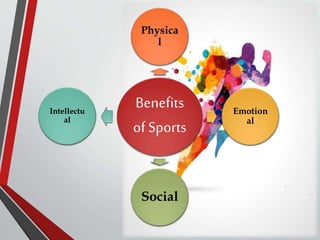
of Sports
Physica
l
Emotion
al
Social
Intellectu
al
•It improves cardiovascular
health
•It helps in losing weight
•It relieves stress
•It improves mood
•It tones the abdominals
Outdoor
Recreational
Activities
• is going on an extended walk for the purpose of
pleasure and exercise.
• Pleasure includes having close encounter with
nature, enjoying the beauty of the environment,
smelling the natural aroma of flowers and trees,
and being one with Mother Nature.
• Exercise on the other hand pertains to the fitness
benefits that we get from the activity
•It offers cardiovascular fitness.
•It gives the feeling of relaxation.
•It balances your daily life routine.
•It’s a good option for weight
management activity.
• Pick a partner
• Pick a destination
• Know your tine and distance
• Be physically ready
• Choose your gear and your backpack
• Pack and wear appropriate clothing
• Plan your meals
• Keep communication lines open
• Wilderness ethics
1. Navigation
 Map
Compass
GPS
2. Sun Protection
Sun screen and lip balm
Sun glasses
3. Insulation
Sun screen and lip balm
4. Illumination
Head lamp
flashlight
Extra batteries
5. First-Aid
Supplies
First aid kit
6. Fire
 matches/Lighter
Water proof container
Fire starter
7. Repair kit and tools
Knife/multi-tool
Kit for stove, mattress,
duct tape
8. Nutrition
Extra day’s supply of
food
9. Hydration
Water bottles
Flashlight water
filter /other treatment
system
10. Emergency
shelter
Tent, tarp, reflective
blanket
•be PHYSICALLY FIT.
•Attend to the following concerns:
o Your travel plan (itinerary).
o Possible transportation.
o Budget
o Food and water to bring.
o What equipment to bring
•On group formation
•Pacing (slow pace)
•Trail signs
•Natural trail signs
•It is an outdoor navigational
recreational activity using specially
drawn and detailed maps.
•It requires navigational skills to
navigate from point to point normally
moving at a speed .
•An orienteering course consist of a
series of control points which have to
be located in order in the shortest
•Conceptual Aspects
•Physical Aspect
•Personal Aspects
•Social Aspects
•Environmental Aspect
• is a picture or representation of the earth’ s
surface.
• It includes a compass rose that shows directions.
• Cardinal directions are the four base parts on a
compass.
• The top point is north and the point at the
bottom is south.
• The side points are called east and west.
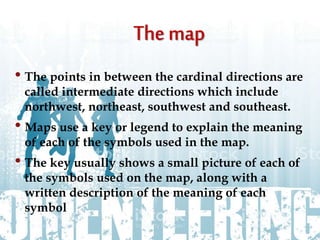
• The points in between the cardinal directions are
called intermediate directions which include
northwest, northeast, southwest and southeast.
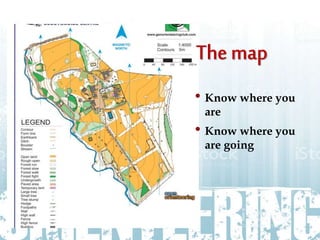
• Maps use a key or legend to explain the meaning
of each of the symbols used in the map.
• The key usually shows a small picture of each of
the symbols used on the map, along with a
written description of the meaning of each
symbol
• Know where you
are
• Know where you
are going
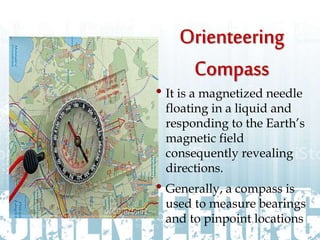
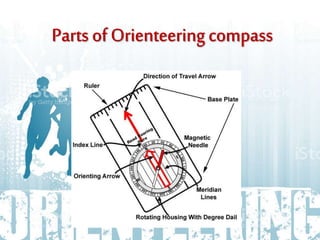
• It is a magnetized needle
floating in a liquid and
responding to the Earth’s
magnetic field
consequently revealing
directions.
• Generally, a compass is
used to measure bearings
and to pinpoint locations
Thank You
-Ma’am Jho

Pe active recreation

  • 1.
  • 7.
    •those who believein the benefits of healthy lifestyle are more likely to engage in healthy behavior Health •Healthy lifestyle can be practiced by everyone “health for all” Everyone •The longer healthy lifestyles are practiced, the greater the beneficial benefits Lifetime Personal • No two people are exactly the same. Your personal needs is the basis of your lifestyle change
  • 9.
  • 12.
  • 15.
    •It improves cardiovascular health •Ithelps in losing weight •It relieves stress •It improves mood •It tones the abdominals
  • 16.
  • 17.
    • is goingon an extended walk for the purpose of pleasure and exercise. • Pleasure includes having close encounter with nature, enjoying the beauty of the environment, smelling the natural aroma of flowers and trees, and being one with Mother Nature. • Exercise on the other hand pertains to the fitness benefits that we get from the activity
  • 18.
    •It offers cardiovascularfitness. •It gives the feeling of relaxation. •It balances your daily life routine. •It’s a good option for weight management activity.
  • 19.
    • Pick apartner • Pick a destination • Know your tine and distance • Be physically ready • Choose your gear and your backpack • Pack and wear appropriate clothing • Plan your meals • Keep communication lines open • Wilderness ethics
  • 20.
    1. Navigation  Map Compass GPS 2.Sun Protection Sun screen and lip balm Sun glasses 3. Insulation Sun screen and lip balm 4. Illumination Head lamp flashlight Extra batteries 5. First-Aid Supplies First aid kit
  • 21.
    6. Fire  matches/Lighter Waterproof container Fire starter 7. Repair kit and tools Knife/multi-tool Kit for stove, mattress, duct tape 8. Nutrition Extra day’s supply of food 9. Hydration Water bottles Flashlight water filter /other treatment system 10. Emergency shelter Tent, tarp, reflective blanket
  • 22.
    •be PHYSICALLY FIT. •Attendto the following concerns: o Your travel plan (itinerary). o Possible transportation. o Budget o Food and water to bring. o What equipment to bring
  • 23.
    •On group formation •Pacing(slow pace) •Trail signs •Natural trail signs
  • 24.
    •It is anoutdoor navigational recreational activity using specially drawn and detailed maps. •It requires navigational skills to navigate from point to point normally moving at a speed . •An orienteering course consist of a series of control points which have to be located in order in the shortest
  • 25.
    •Conceptual Aspects •Physical Aspect •PersonalAspects •Social Aspects •Environmental Aspect
  • 26.
    • is apicture or representation of the earth’ s surface. • It includes a compass rose that shows directions. • Cardinal directions are the four base parts on a compass. • The top point is north and the point at the bottom is south. • The side points are called east and west.
  • 27.
    • The pointsin between the cardinal directions are called intermediate directions which include northwest, northeast, southwest and southeast. • Maps use a key or legend to explain the meaning of each of the symbols used in the map. • The key usually shows a small picture of each of the symbols used on the map, along with a written description of the meaning of each symbol
  • 28.
    • Know whereyou are • Know where you are going
  • 29.
    • It isa magnetized needle floating in a liquid and responding to the Earth’s magnetic field consequently revealing directions. • Generally, a compass is used to measure bearings and to pinpoint locations
  • 31.