PRESENTED BY-KUMAR GAURAV,BRANCH-AE&I,ROLL NO-12AEI113
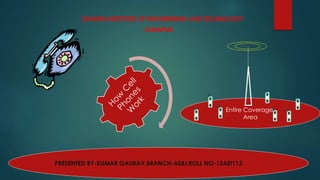
Entire Coverage
Area
GANDHI INSTITUTES OF ENGINEERING AND TECHNOLOGY
GUNUPUR
CONTENT
 INTRODUCTION
 FEATURES
 COMPONENTS
 SETTING UP A CALL PROCESS
 MAKING A CALL
 RECEIVING A CALL
 ADVANTAGE & DISADVANTAGES
 REFERENCE
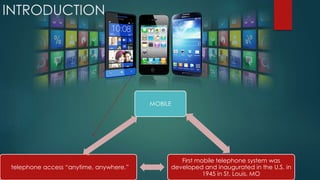
INTRODUCTION
MOBILE
First mobile telephone system was
developed and inaugurated in the U.S. in
1945 in St. Louis, MO
telephone access “anytime, anywhere.”
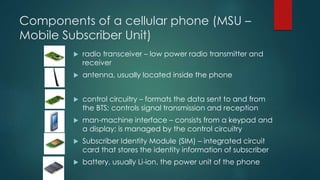
Components of a cellular phone (MSU –
Mobile Subscriber Unit)
 radio transceiver – low power radio transmitter and
receiver
 antenna, usually located inside the phone
 control circuitry – formats the data sent to and from
the BTS; controls signal transmission and reception
 man-machine interface – consists from a keypad and
a display; is managed by the control circuitry
 Subscriber Identity Module (SIM) – integrated circuit
card that stores the identity information of subscriber
 battery, usually Li-ion, the power unit of the phone
Beyond Voice
 Store contact information
 Make task/to-do lists
 Keep track of appointments
 Calculator
 Send/receive email
 Send/receive pictures
 Send/receive video clips
 Get information from the internet
 Play games
 Integrate with other devices
 MP3 Players etc.
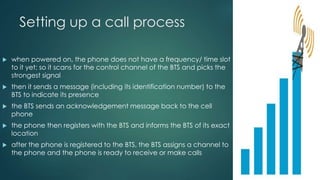
Setting up a call process
 when powered on, the phone does not have a frequency/ time slot
to it yet; so it scans for the control channel of the BTS and picks the
strongest signal
 then it sends a message (including its identification number) to the
BTS to indicate its presence
 the BTS sends an acknowledgement message back to the cell
phone
 the phone then registers with the BTS and informs the BTS of its exact
location
 after the phone is registered to the BTS, the BTS assigns a channel to
the phone and the phone is ready to receive or make calls
MAKING A CALL
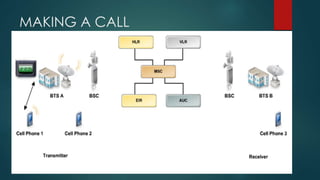
1. when the phone needs to make a call it sends an access request (containing phone
identification, number) using RACH to the BTS; if another cell phone tries to send an access
request at the same time the messages might get corrupted, in this case both cell phones wait
a random time interval before trying to send again
2. then the BTS authenticates the cell phone and sends an acknowledgement to the cell phone
3. the BTS assigns a specific voice channel and time slot to the cell phone and
transmits the cell phone request to the MSC via BSC
4. the MSC queries HLR and VLR and based on the information obtained it routes the call to the
receiver’s BSC and BTS
5. the cell phone uses the voice channel and time slot assigned to it by the BTS to communicate
with the receiver
MAKING A CALL
RECEIVING A CALL
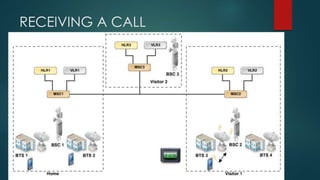
1. when a request to deliver a call is made in the network, the MSC or the
receiver’s home area queries the HLR; if the cell phone is located in its
home area the call is transferred to the receiver; if the cell phone is
located outside its home area, the HLR maintains a record of the VLR
attached to the cell phone
2. based on this record, the MSC notes the location of the VLR and
indicated the corresponding BSC about the incoming call
3. the BSC routes the call to the particular BTS which uses the paging
channel to alert the phone
4. the receiver cell phone monitors the paging channel periodically and
once it receives the call alert from the BTS it responds to the BTS
5. the BTS communicates a channel and a time slot for the cell phone to
communicate
6. now the call is established
RECEIVING A CALL
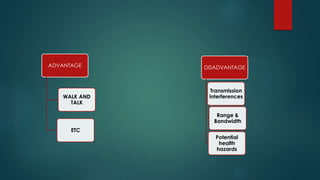
DISADVANTAGE
Transmission
interferences
Range &
Bandwidth
Potential
health
hazards
ADVANTAGE
WALK AND
TALK
ETC
REFERENCE….
 Google/Wikipedia of mobile.
 Images from Google
 Wikipedia/Wireless network
How cell phone work?

How cell phone work?

  • 1.
    PRESENTED BY-KUMAR GAURAV,BRANCH-AE&I,ROLLNO-12AEI113 Entire Coverage Area GANDHI INSTITUTES OF ENGINEERING AND TECHNOLOGY GUNUPUR
  • 2.
    CONTENT  INTRODUCTION  FEATURES COMPONENTS  SETTING UP A CALL PROCESS  MAKING A CALL  RECEIVING A CALL  ADVANTAGE & DISADVANTAGES  REFERENCE
  • 3.
    INTRODUCTION MOBILE First mobile telephonesystem was developed and inaugurated in the U.S. in 1945 in St. Louis, MO telephone access “anytime, anywhere.”
  • 4.
    Components of acellular phone (MSU – Mobile Subscriber Unit)  radio transceiver – low power radio transmitter and receiver  antenna, usually located inside the phone  control circuitry – formats the data sent to and from the BTS; controls signal transmission and reception  man-machine interface – consists from a keypad and a display; is managed by the control circuitry  Subscriber Identity Module (SIM) – integrated circuit card that stores the identity information of subscriber  battery, usually Li-ion, the power unit of the phone
  • 5.
    Beyond Voice  Storecontact information  Make task/to-do lists  Keep track of appointments  Calculator  Send/receive email  Send/receive pictures  Send/receive video clips  Get information from the internet  Play games  Integrate with other devices  MP3 Players etc.
  • 6.
    Setting up acall process  when powered on, the phone does not have a frequency/ time slot to it yet; so it scans for the control channel of the BTS and picks the strongest signal  then it sends a message (including its identification number) to the BTS to indicate its presence  the BTS sends an acknowledgement message back to the cell phone  the phone then registers with the BTS and informs the BTS of its exact location  after the phone is registered to the BTS, the BTS assigns a channel to the phone and the phone is ready to receive or make calls
  • 7.
    MAKING A CALL 1.when the phone needs to make a call it sends an access request (containing phone identification, number) using RACH to the BTS; if another cell phone tries to send an access request at the same time the messages might get corrupted, in this case both cell phones wait a random time interval before trying to send again 2. then the BTS authenticates the cell phone and sends an acknowledgement to the cell phone 3. the BTS assigns a specific voice channel and time slot to the cell phone and transmits the cell phone request to the MSC via BSC 4. the MSC queries HLR and VLR and based on the information obtained it routes the call to the receiver’s BSC and BTS 5. the cell phone uses the voice channel and time slot assigned to it by the BTS to communicate with the receiver
  • 8.
  • 9.
    RECEIVING A CALL 1.when a request to deliver a call is made in the network, the MSC or the receiver’s home area queries the HLR; if the cell phone is located in its home area the call is transferred to the receiver; if the cell phone is located outside its home area, the HLR maintains a record of the VLR attached to the cell phone 2. based on this record, the MSC notes the location of the VLR and indicated the corresponding BSC about the incoming call 3. the BSC routes the call to the particular BTS which uses the paging channel to alert the phone 4. the receiver cell phone monitors the paging channel periodically and once it receives the call alert from the BTS it responds to the BTS 5. the BTS communicates a channel and a time slot for the cell phone to communicate 6. now the call is established
  • 10.
  • 11.
  • 12.
    REFERENCE….  Google/Wikipedia ofmobile.  Images from Google  Wikipedia/Wireless network