 once called “MENTAL RETARDATION”
is define as a significantly below average
functioning of overall intelligence that exist
alongside deficits in adaptive behavior and is
manifested during the child’s developmental
period causing adverse effects on the child’s
educational performance.
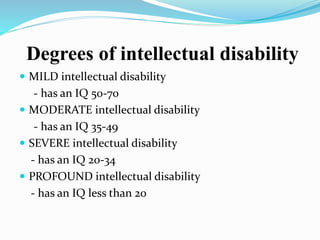
Degrees of intellectual disability
 MILD intellectual disability
- has an IQ 50-70
 MODERATE intellectual disability
- has an IQ 35-49
 SEVERE intellectual disability
- has an IQ 20-34
 PROFOUND intellectual disability
- has an IQ less than 20
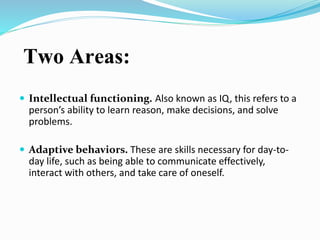
 Intellectual functioning. Also known as IQ, this refers to a
person’s ability to learn reason, make decisions, and solve
problems.
 Adaptive behaviors. These are skills necessary for day-to-
day life, such as being able to communicate effectively,
interact with others, and take care of oneself.
Two Areas:
Most common signs of intellectual
disability :
 Rolling over, sitting up, crawling, or walking late
 Talking late or having trouble with talking
 Slow to master things like potty training, dressing, and
feeding himself or herself
 Difficulty remembering things
 Inability to connect actions with consequences
 Behavior problems such as explosive tantrums
 Difficulty with problem-solving or logical thinking
The most common causes of
intellectual disability:
 Genetic conditions. These include things like Down
syndrome and fragile X syndrome.
 Problems during pregnancy. Things that can interfere with
fetal brain development include alcohol or drug use, malnutrition,
certain infections, or preeclampsia.
 Problems during childbirth. Intellectual disability may result if a
baby is deprived of oxygen during childbirth or born extremely
premature.
 Illness or injury. Infections like meningitis, whooping
cough, or the measles can lead to intellectual disability.
Severe head injury, near-drowning, extreme malnutrition,
exposure to toxic substances such as lead, and severe
neglect or abuse can also cause it.
 None of the above. In two-thirds of all children who
have intellectual disability, the cause is unknown.
Steps to help an intellectually
disabled child :
 Learn everything you can about intellectual disabilities.
The more you know, the better advocate you can be for
the child.
 Encourage the child’s independence. Let the child try new
things and encourage the child to do things by himself or
herself. Provide guidance when it’s needed and give
positive feedback when the child does something well or
masters something new.
 Get the child involved in group activities. Taking an
art class or participating in Scouts will help the child
build social skills.
 Stay involved. By keeping in touch with the child’s
teachers, you’ll be able to follow his or her progress
and reinforce what the child is learning at school
through practice at home.
 Get to know other parents of intellectually disabled
children. They can be a great source of advice and
emotional support.
Types of Intellectual Disability
1. Intellectual disability in reading
 problems in letter and word recognition
 problems understanding words and ideas
 slow reading speed and low fluency
 poor vocabulary skills
2.Intellectual disability in math
3.Intellectual disability in writing
 messy writing
 problems copying letters and words with accuracy
 problems with spelling
 issues with coherence and organization when writing
4.Intellectual disability with motor skills
6.Intellectual disability with language
 problems retelling a story
 problems in speech fluency
 issues with understanding word meanings
 issues carrying out directions
 problems understanding parts of speech
7.Intellectual disabilities with auditory and
visual processing

Intellectual disability

  • 1.
     once called“MENTAL RETARDATION”
  • 2.
    is define asa significantly below average functioning of overall intelligence that exist alongside deficits in adaptive behavior and is manifested during the child’s developmental period causing adverse effects on the child’s educational performance.
  • 3.
    Degrees of intellectualdisability  MILD intellectual disability - has an IQ 50-70  MODERATE intellectual disability - has an IQ 35-49  SEVERE intellectual disability - has an IQ 20-34  PROFOUND intellectual disability - has an IQ less than 20
  • 4.
     Intellectual functioning.Also known as IQ, this refers to a person’s ability to learn reason, make decisions, and solve problems.  Adaptive behaviors. These are skills necessary for day-to- day life, such as being able to communicate effectively, interact with others, and take care of oneself. Two Areas:
  • 5.
    Most common signsof intellectual disability :  Rolling over, sitting up, crawling, or walking late  Talking late or having trouble with talking  Slow to master things like potty training, dressing, and feeding himself or herself  Difficulty remembering things  Inability to connect actions with consequences  Behavior problems such as explosive tantrums  Difficulty with problem-solving or logical thinking
  • 6.
    The most commoncauses of intellectual disability:  Genetic conditions. These include things like Down syndrome and fragile X syndrome.  Problems during pregnancy. Things that can interfere with fetal brain development include alcohol or drug use, malnutrition, certain infections, or preeclampsia.  Problems during childbirth. Intellectual disability may result if a baby is deprived of oxygen during childbirth or born extremely premature.
  • 7.
     Illness orinjury. Infections like meningitis, whooping cough, or the measles can lead to intellectual disability. Severe head injury, near-drowning, extreme malnutrition, exposure to toxic substances such as lead, and severe neglect or abuse can also cause it.  None of the above. In two-thirds of all children who have intellectual disability, the cause is unknown.
  • 8.
    Steps to helpan intellectually disabled child :  Learn everything you can about intellectual disabilities. The more you know, the better advocate you can be for the child.  Encourage the child’s independence. Let the child try new things and encourage the child to do things by himself or herself. Provide guidance when it’s needed and give positive feedback when the child does something well or masters something new.
  • 9.
     Get thechild involved in group activities. Taking an art class or participating in Scouts will help the child build social skills.  Stay involved. By keeping in touch with the child’s teachers, you’ll be able to follow his or her progress and reinforce what the child is learning at school through practice at home.  Get to know other parents of intellectually disabled children. They can be a great source of advice and emotional support.
  • 10.
    Types of IntellectualDisability 1. Intellectual disability in reading  problems in letter and word recognition  problems understanding words and ideas  slow reading speed and low fluency  poor vocabulary skills
  • 11.
    2.Intellectual disability inmath 3.Intellectual disability in writing  messy writing  problems copying letters and words with accuracy  problems with spelling  issues with coherence and organization when writing 4.Intellectual disability with motor skills
  • 12.
    6.Intellectual disability withlanguage  problems retelling a story  problems in speech fluency  issues with understanding word meanings  issues carrying out directions  problems understanding parts of speech 7.Intellectual disabilities with auditory and visual processing