IT & Technology Consulting Dr. Joe O’Mahoney 2007
The Agenda IT Consulting What is IT? It’s the Business, Stupid Managing Projects Case-studies IT Consulting
IT Consulting
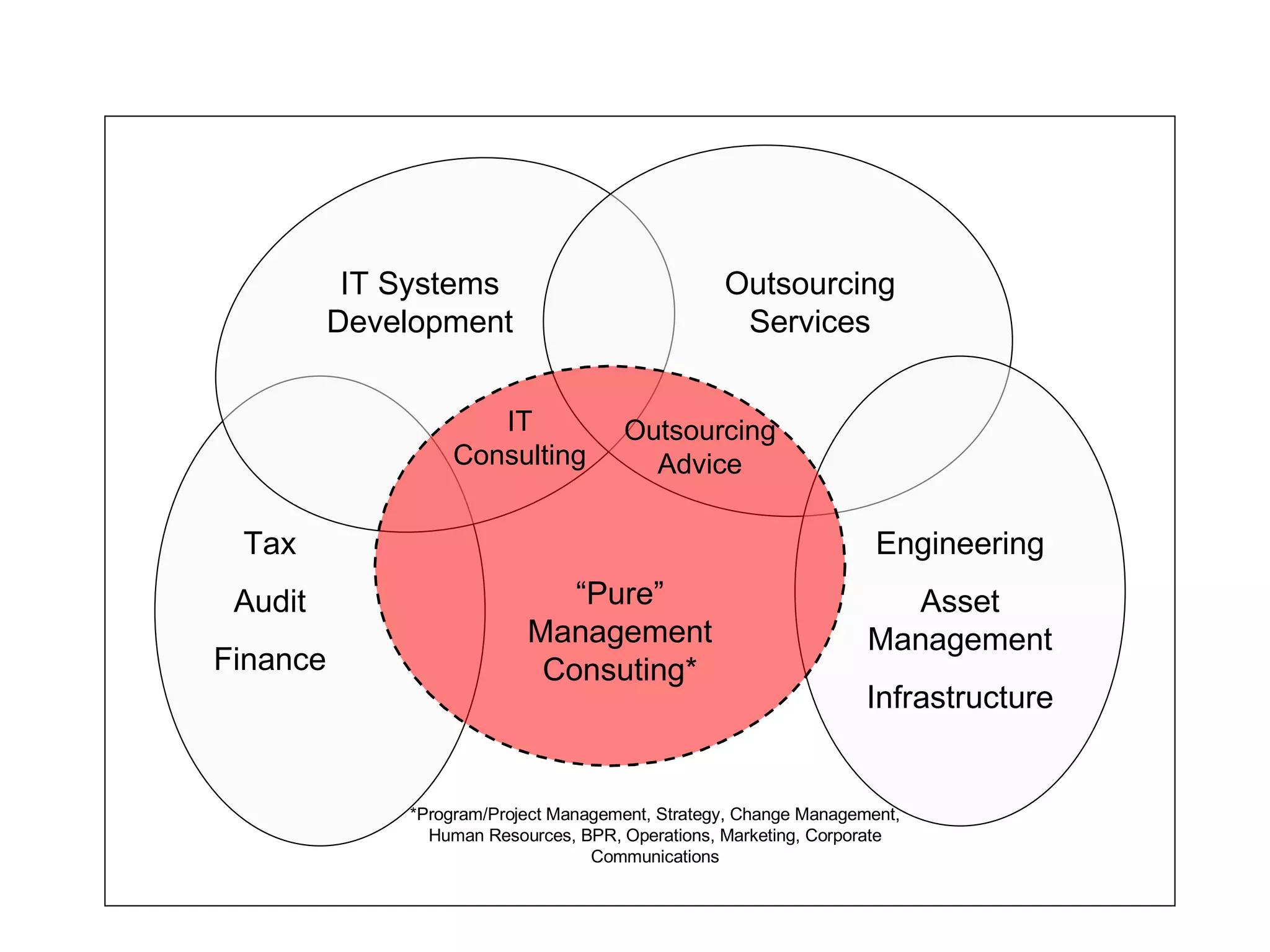
IT Systems Development Outsourcing Services Outsourcing Advice IT Consulting Tax Audit Finance Engineering Asset Management Infrastructure “ Pure” Management Consuting* *Program/Project Management, Strategy, Change Management, Human Resources, BPR, Operations, Marketing, Corporate Communications
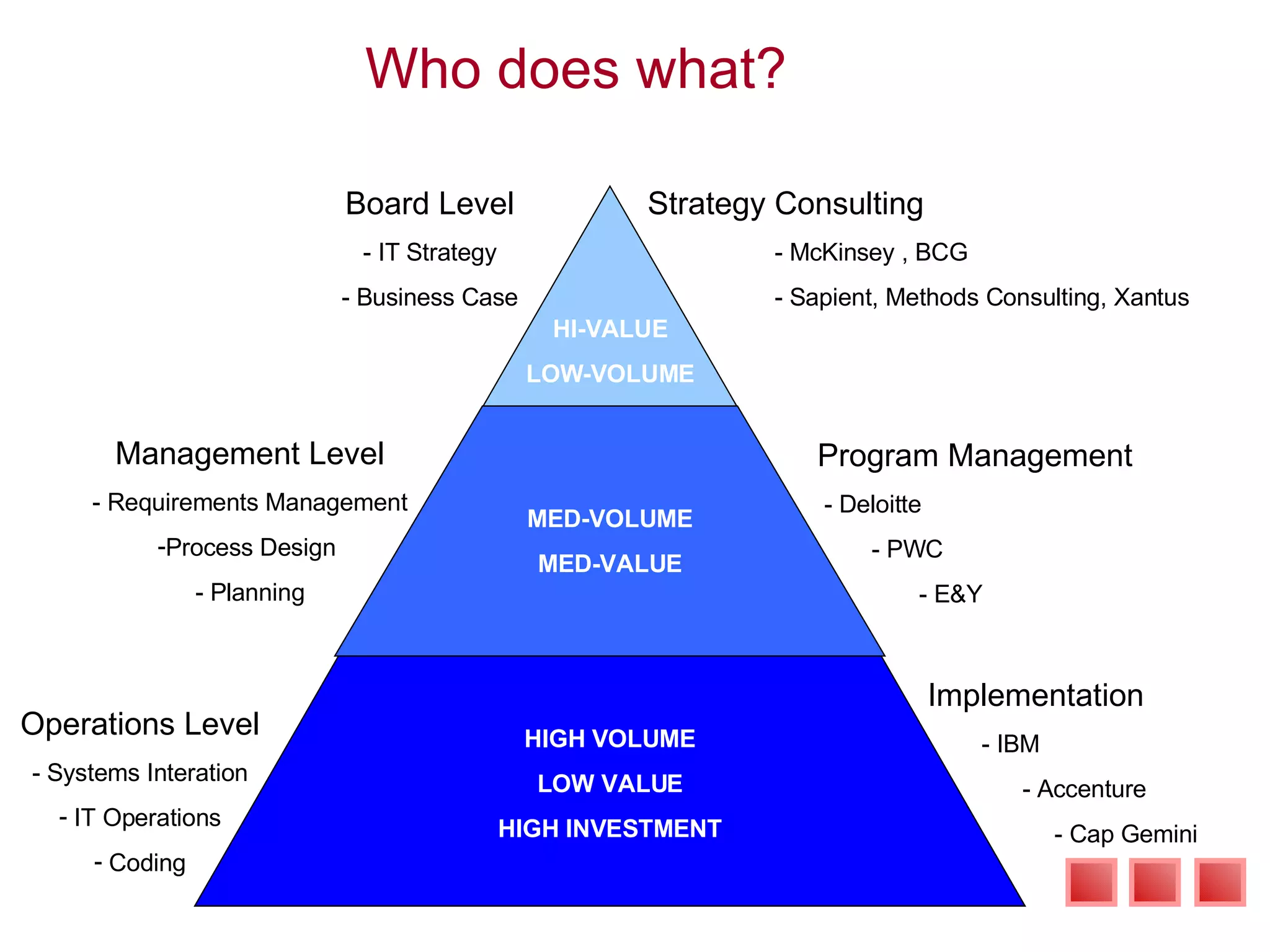
Who does what? Strategy Consulting - McKinsey , BCG - Sapient, Methods Consulting, Xantus Program Management - Deloitte - PWC - E&Y Implementation - IBM - Accenture - Cap Gemini Board Level - IT Strategy - Business Case Management Level - Requirements Management Process Design   - Planning Operations Level - Systems Interation IT Operations Coding HIGH VOLUME LOW VALUE HIGH INVESTMENT HI-VALUE LOW-VOLUME MED-VOLUME MED-VALUE
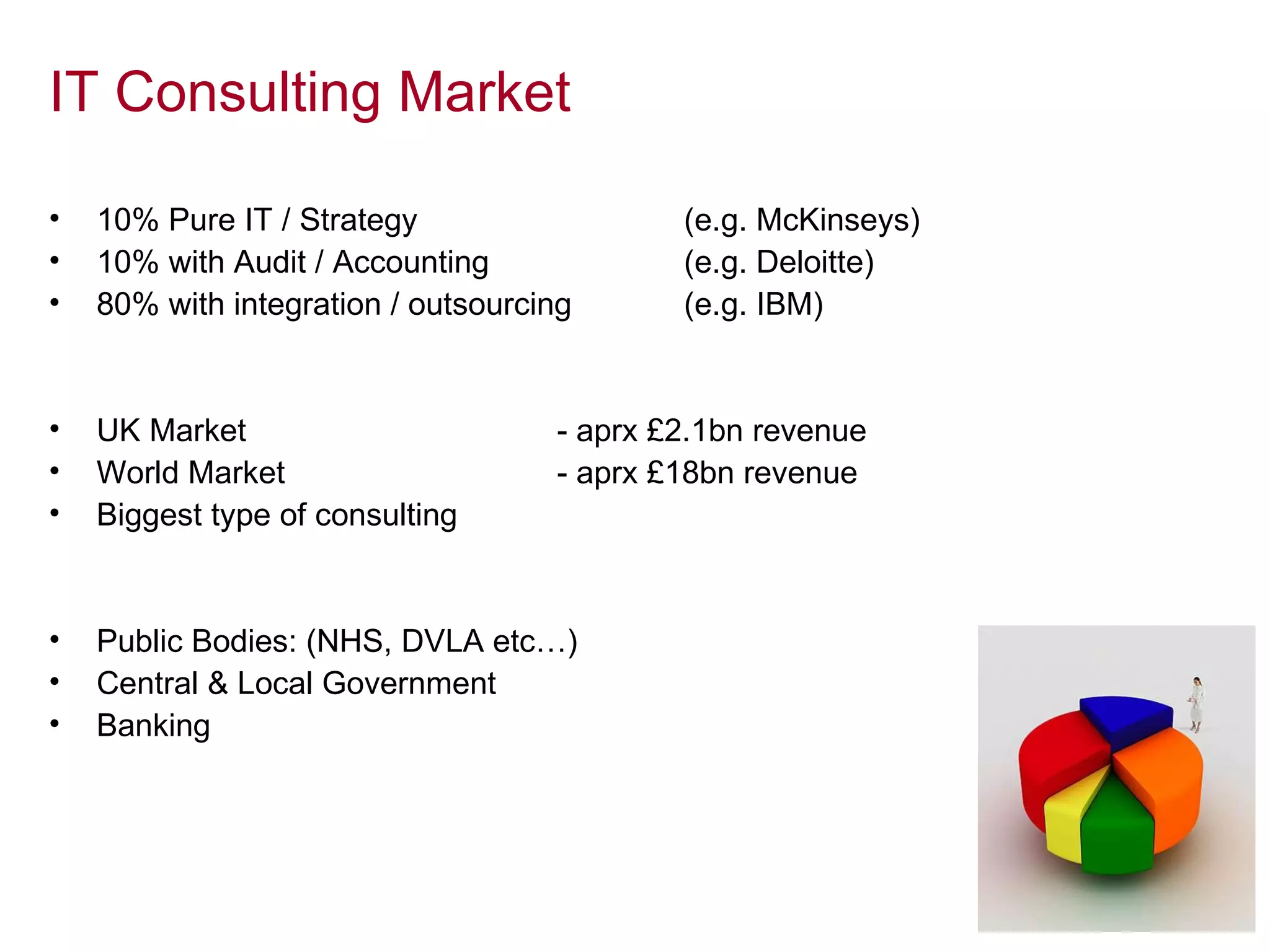
IT Consulting Market 10% Pure IT / Strategy (e.g. McKinseys) 10% with Audit / Accounting (e.g. Deloitte) 80% with integration / outsourcing (e.g. IBM) UK Market  - aprx £2.1bn revenue World Market  - aprx £18bn revenue Biggest type of consulting Public Bodies: (NHS, DVLA etc…) Central & Local Government Banking
 
For example? M&A:  inconsistent systems Modernisation:  cheque clearing, e-business New Opportunities:  RFID, mobile working Cutting costs:  Outsourcing, automation Improving service: CRM, Security, Business Intelligence
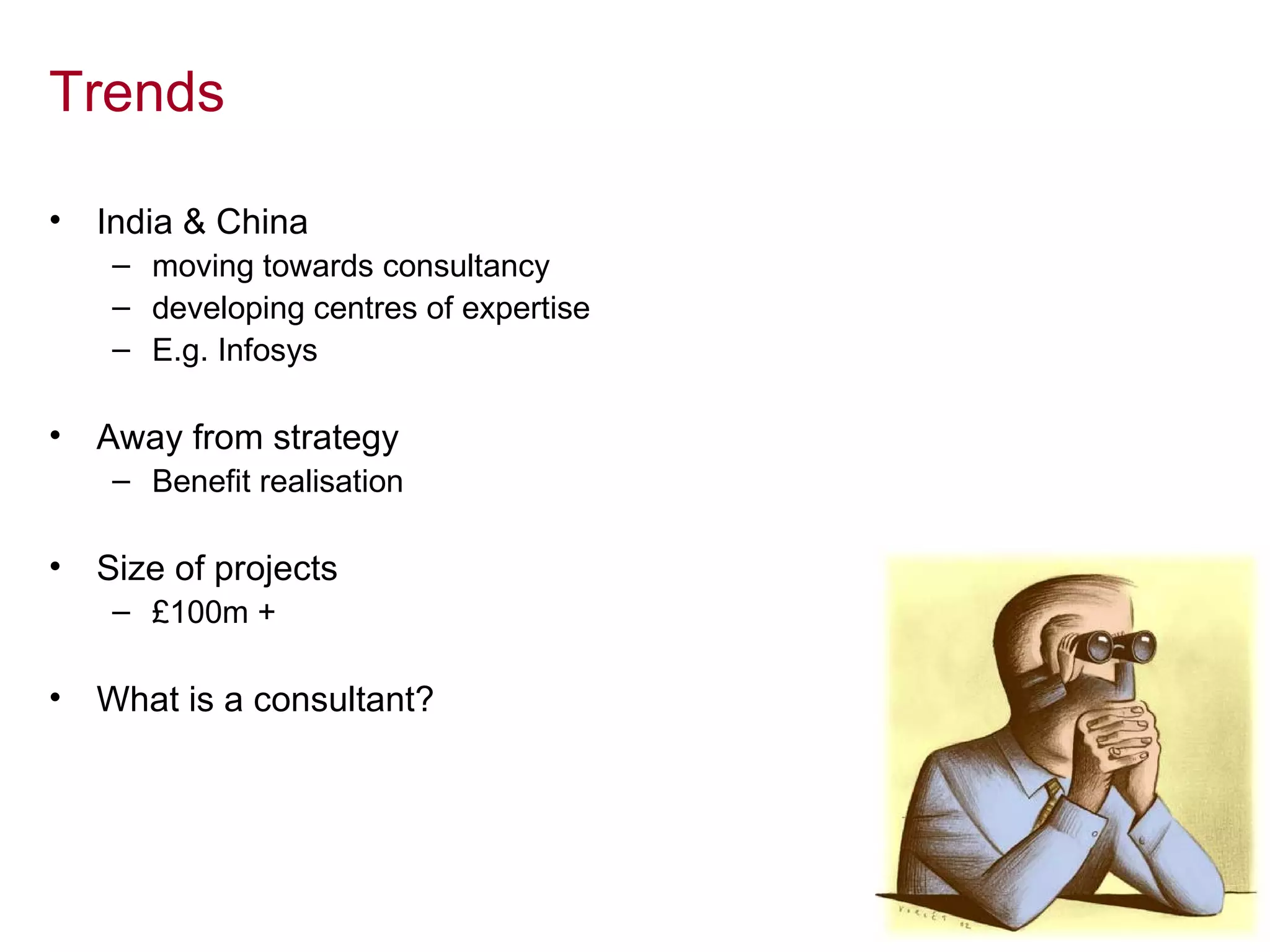
Trends India & China moving towards consultancy developing centres of expertise E.g. Infosys Away from strategy Benefit realisation Size of projects £100m + What is a consultant?
What is IT?
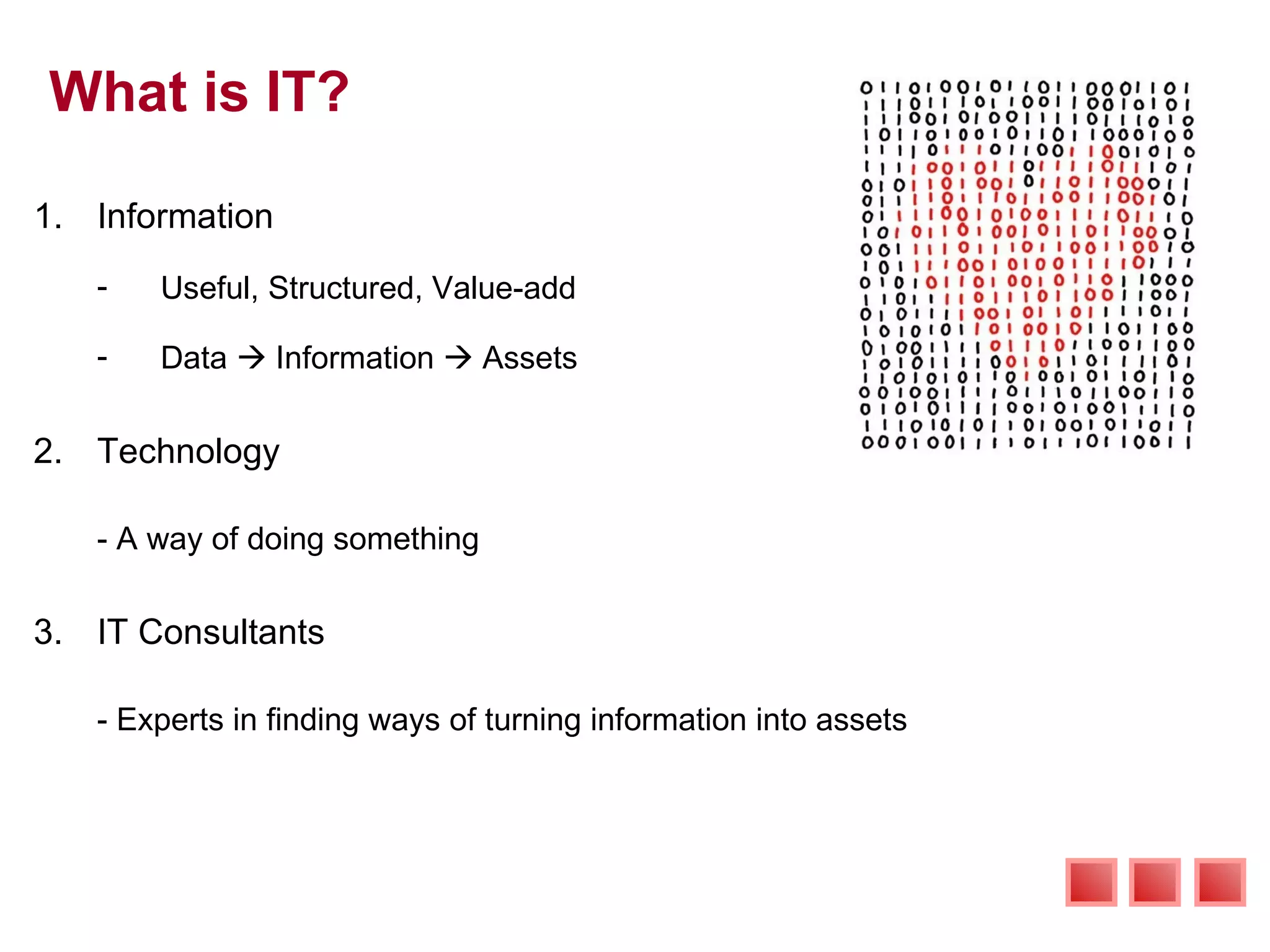
What is IT? Information Useful, Structured, Value-add Data    Information    Assets Technology - A way of doing something IT Consultants - Experts in finding ways of turning information into assets
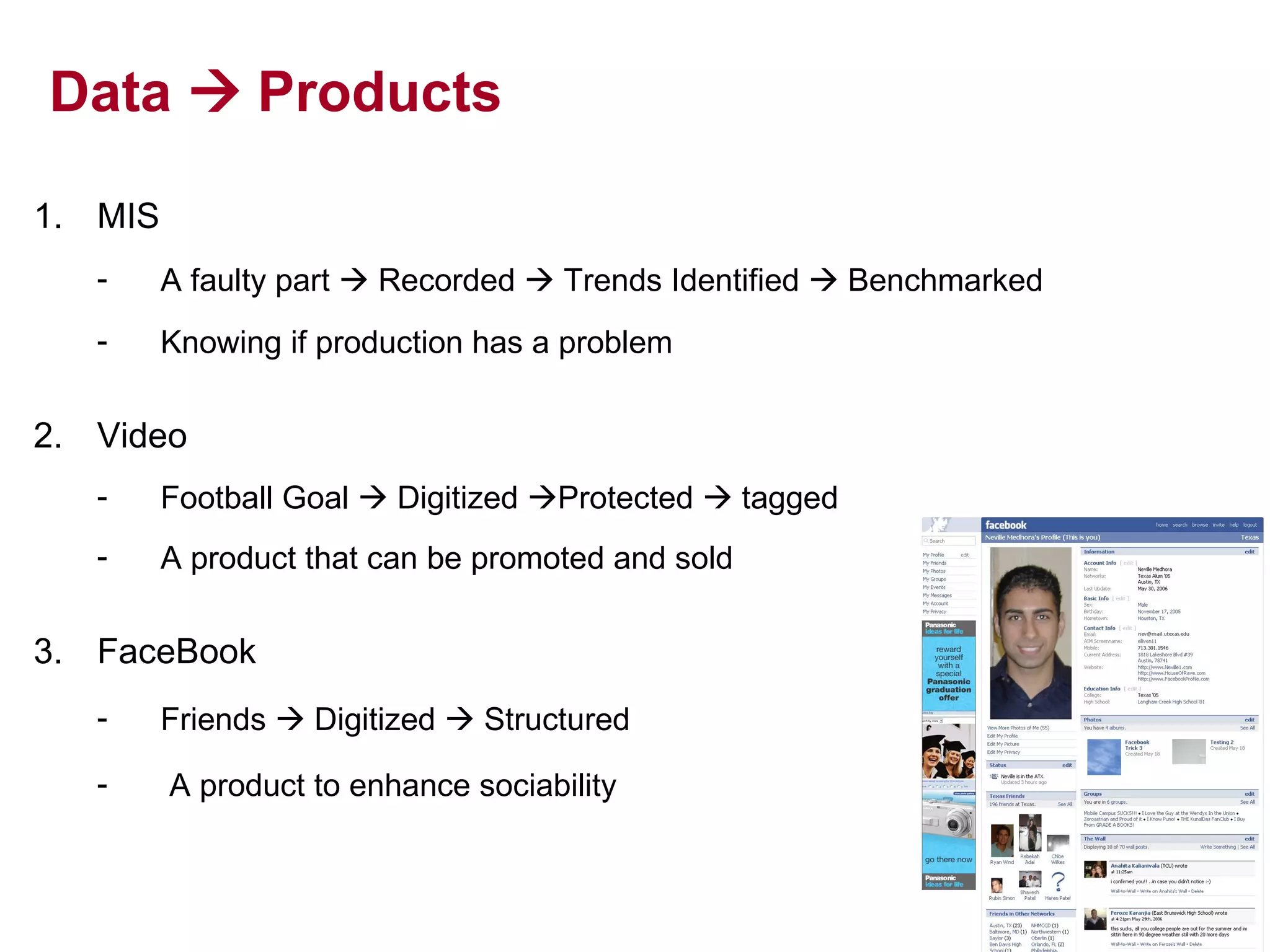
Data    Products MIS A faulty part    Recorded    Trends Identified    Benchmarked Knowing if production has a problem Video Football Goal    Digitized   Protected    tagged A product that can be promoted and sold FaceBook Friends    Digitized    Structured A product to enhance sociability
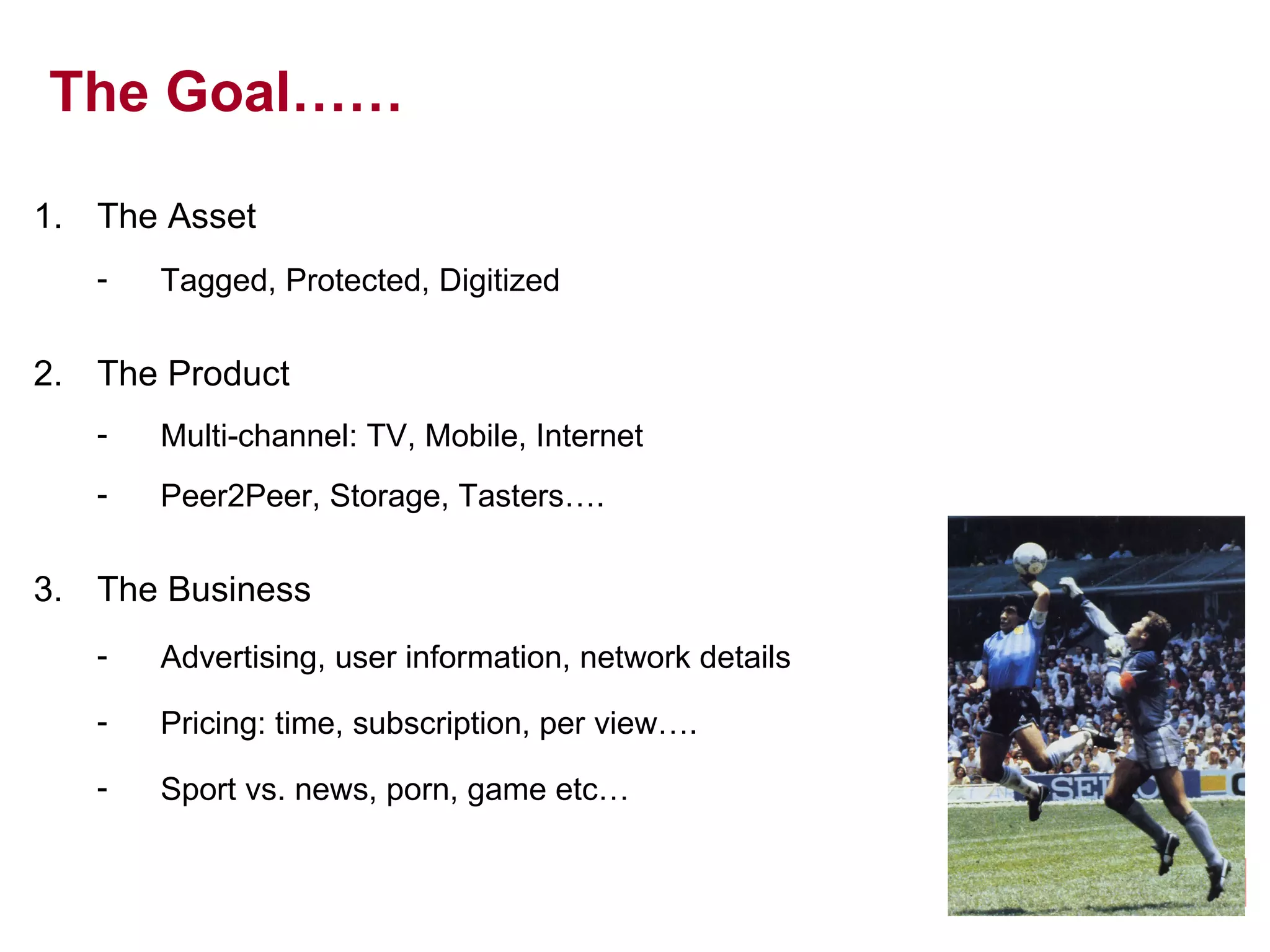
The Goal…… The Asset Tagged, Protected, Digitized The Product Multi-channel: TV, Mobile, Internet Peer2Peer, Storage, Tasters…. The Business Advertising, user information, network details Pricing: time, subscription, per view…. Sport vs. news, porn, game etc…
The Business
 
Focus on  Business  Requirements What the system will be able to do…….. MoSCoW Must Should Could Would like… Traceable Hierarchies Change Management
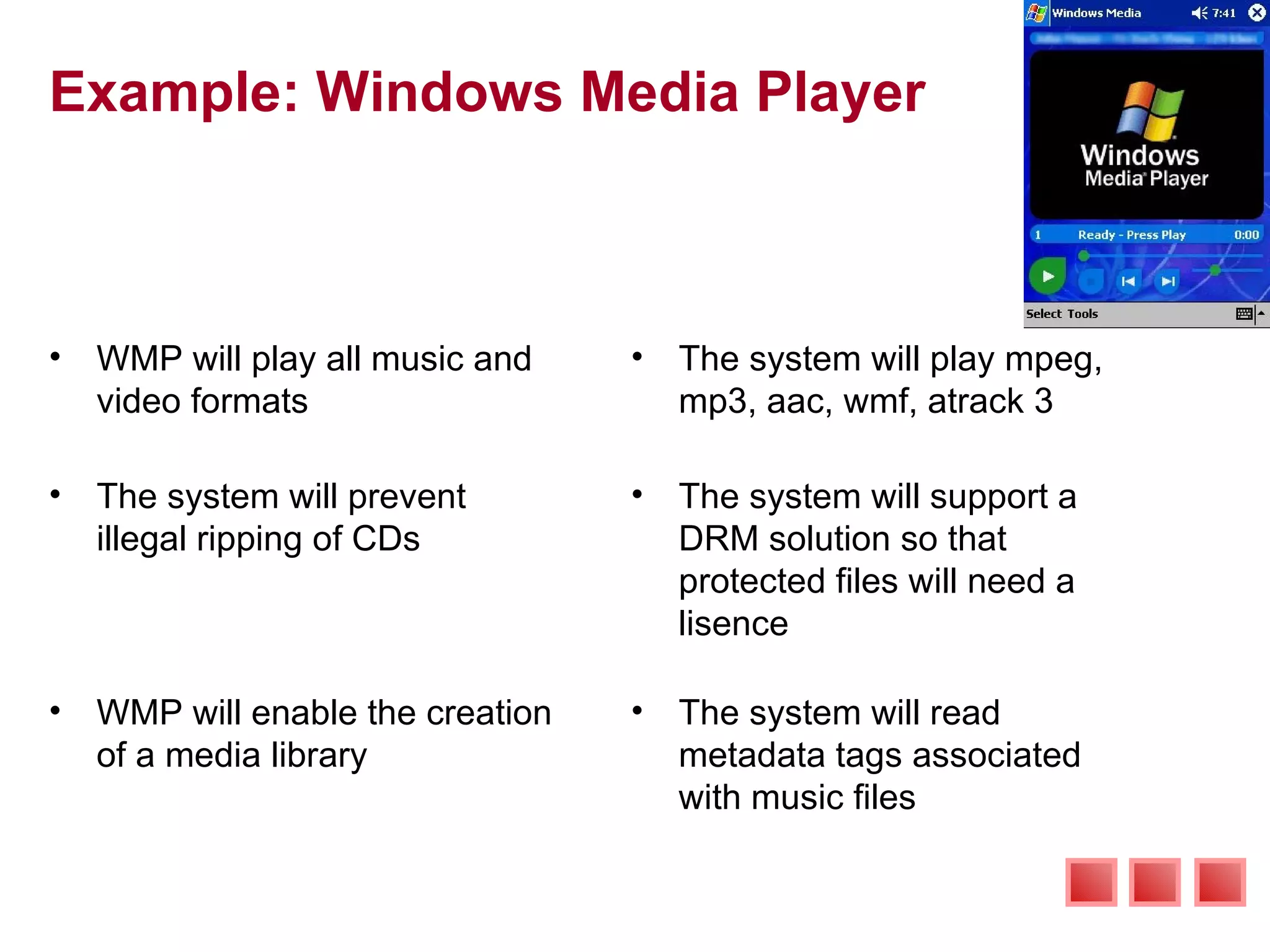
Example: Windows Media Player WMP will play all music and video formats The system will play mpeg, mp3, aac, wmf, atrack 3 The system will prevent illegal ripping of CDs The system will support a DRM solution so that protected files will need a lisence WMP will enable the creation of a media library The system will read metadata tags associated with music files
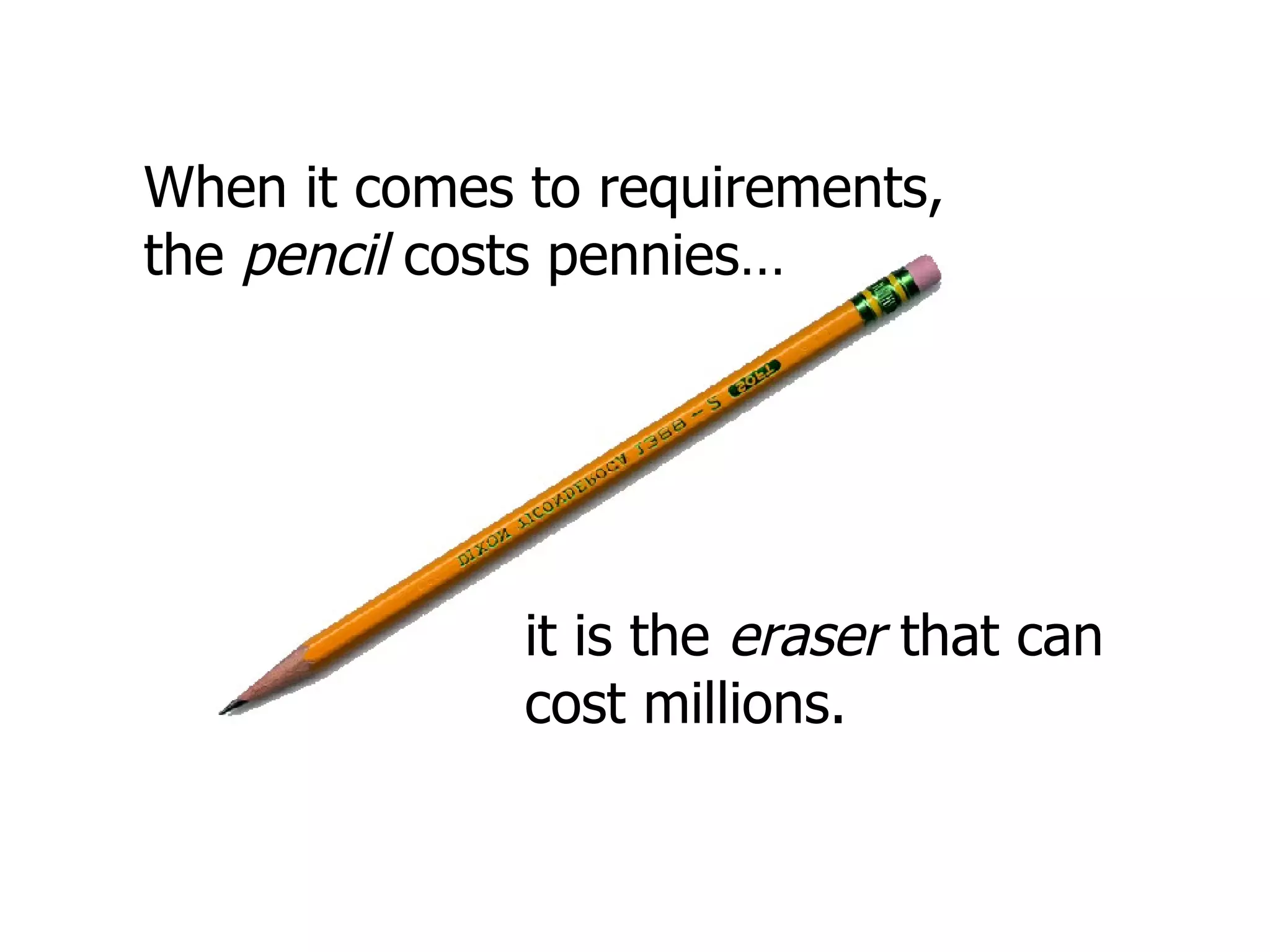
When it comes to requirements,  the  pencil  costs pennies…  it is the  eraser  that can  cost millions.
Other forms of requirements User Interface Scenarios Business Rules Flow charts Use Cases
Example: Amazon
Business Requirements Functional The system must allow searches by title, author and ISBN The system must allow a purchase within five clicks The customer must have the ability to unsubscribe from emails Technical / System 99% of search returns will be faster than 0.5 sec. Card transactions with be encoded with 128bit coding The system must be available 99.999% of the time
Requirement Hierarchy (examples) Anyone can post a review of a book All reviews must be spell and key word checked before publication The administrator can remove and edit a review A customer must enter a password before posting a review The customer will be able to search for a product By name, genre, author, album and publisher A maximum of 50 results will be shown The return must never be zero The search results can be ordered by price, alphabetically or popularity
Business Rules If the customer enters a wrong password three times then their PC will be blocked for an hour If the search return delivers nil then automatically search with variants of the spelling If a customer makes a purchase then recommend the product that most customers who purchased that product also bought If a cookie is present on the customer’s PC then automatically populate the customer’s email on the log-in screen
Scenario Katherine visits Amazon for the first time She types “Russia” into the search box Amazon returns items fitting this term by product type and listed by popularity Amazon remembers what Katherine has searched for Katherine clicks on the first item then clicks Add to Shopping Basket Katherine is presented with a screen recommending similar items that other buyers of this product bought.
IT Projects
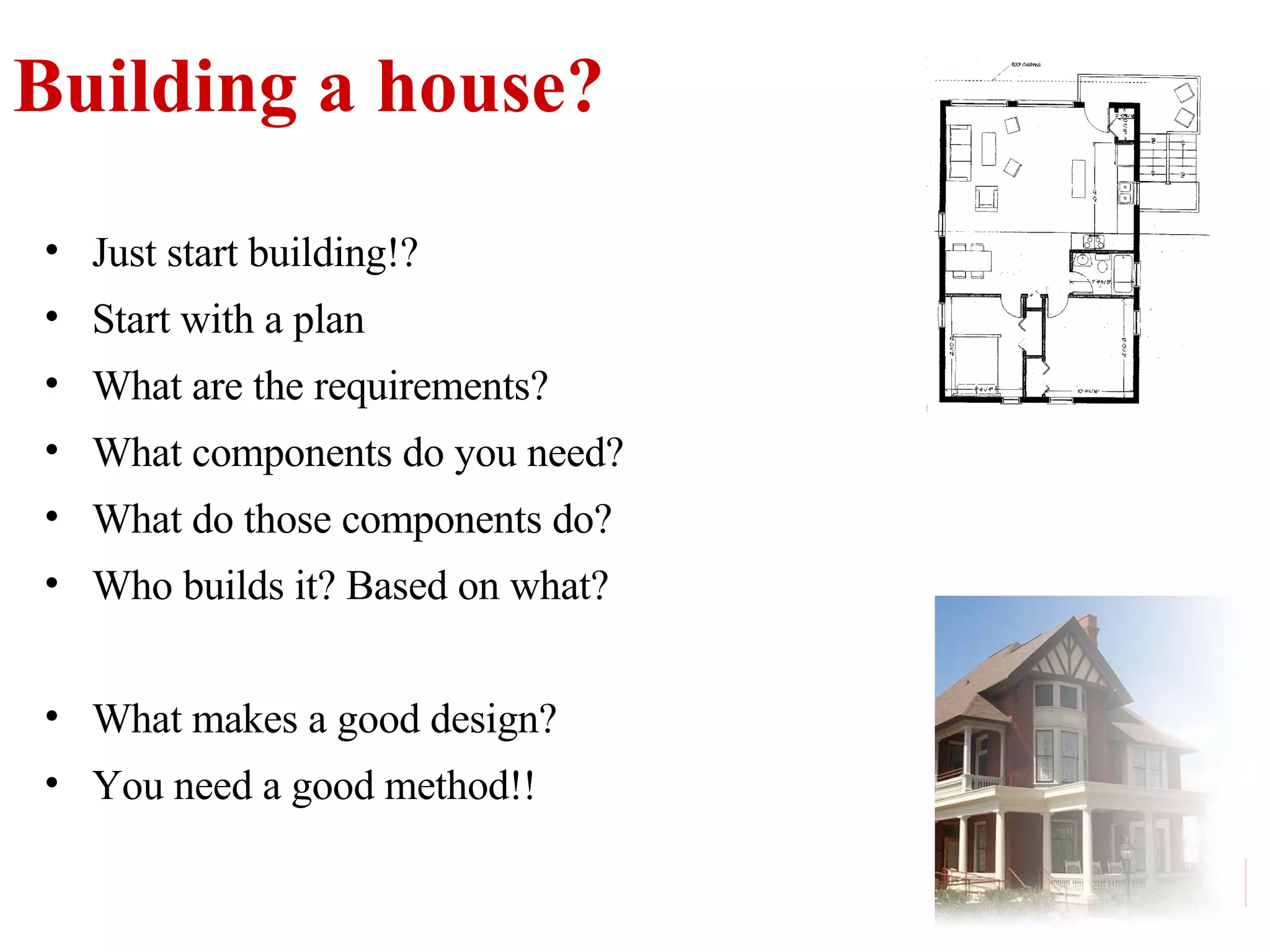
Building a house? Just start building!? Start with a plan What are the requirements? What components do you need? What do those components do? Who builds it? Based on what? What makes a good design? You need a good method!!
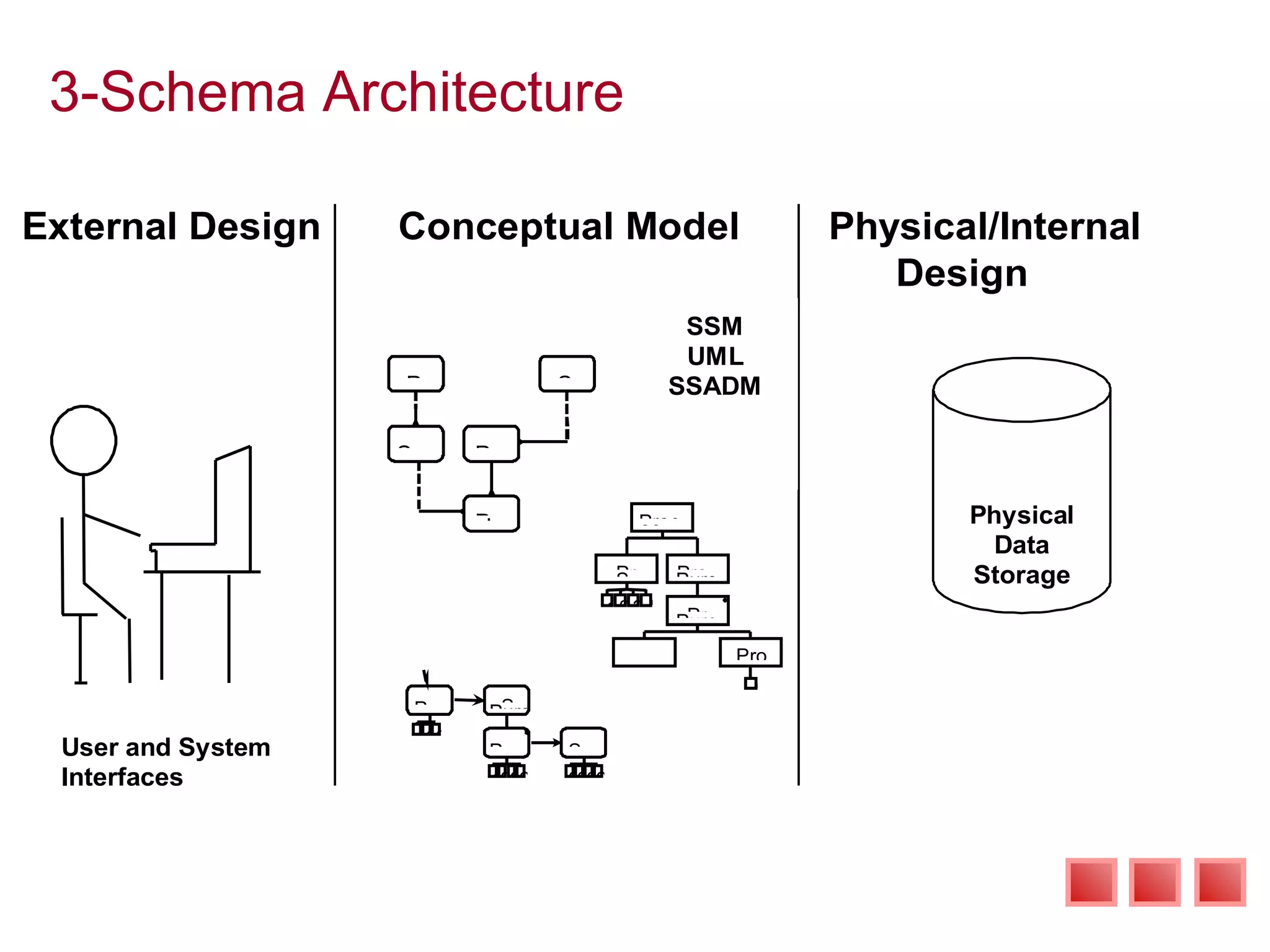
3-Schema Architecture
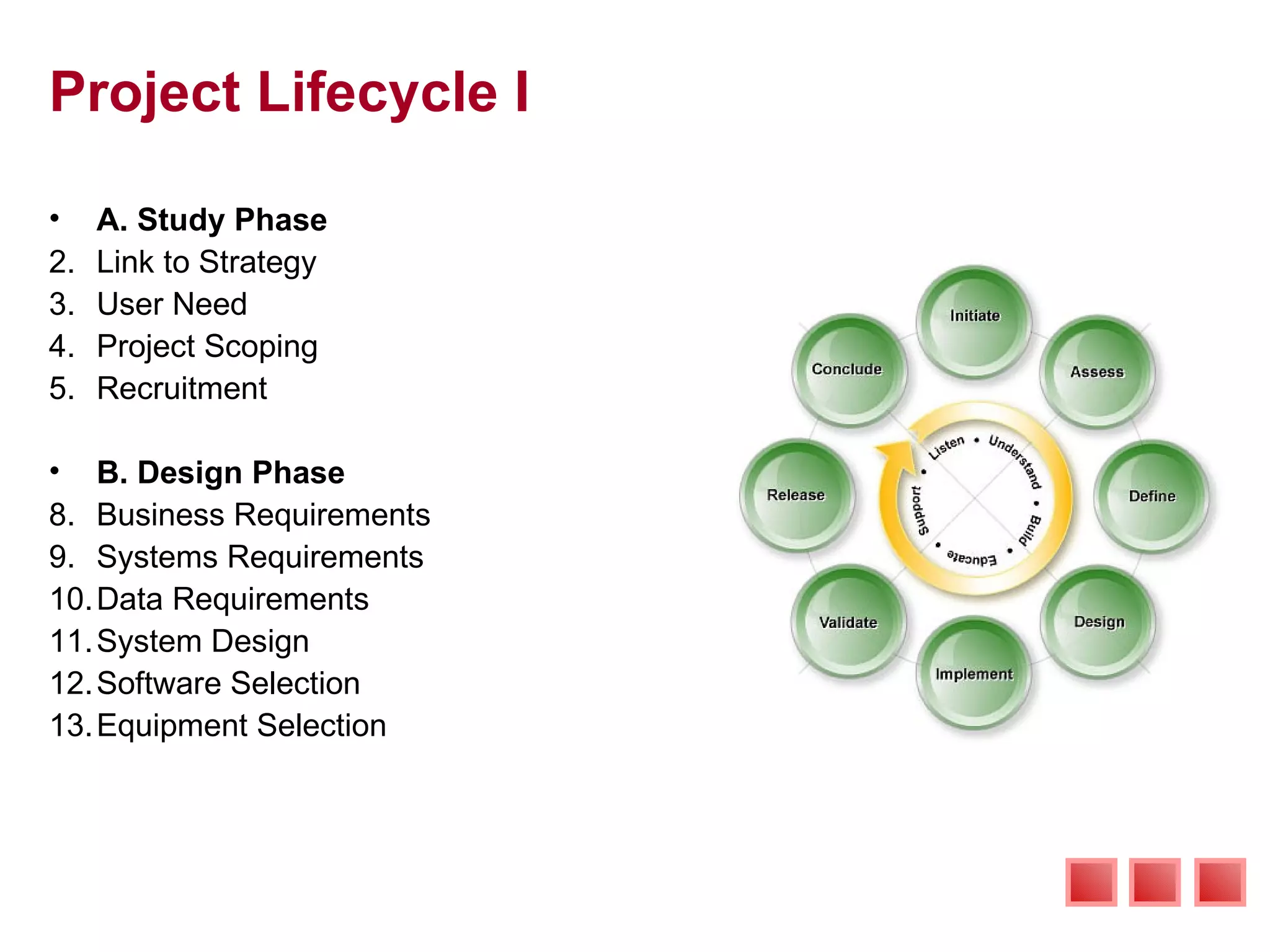
Project Lifecycle I A. Study Phase Link to Strategy User Need   Project Scoping Recruitment B. Design Phase Business Requirements Systems Requirements Data Requirements System Design Software Selection  Equipment Selection
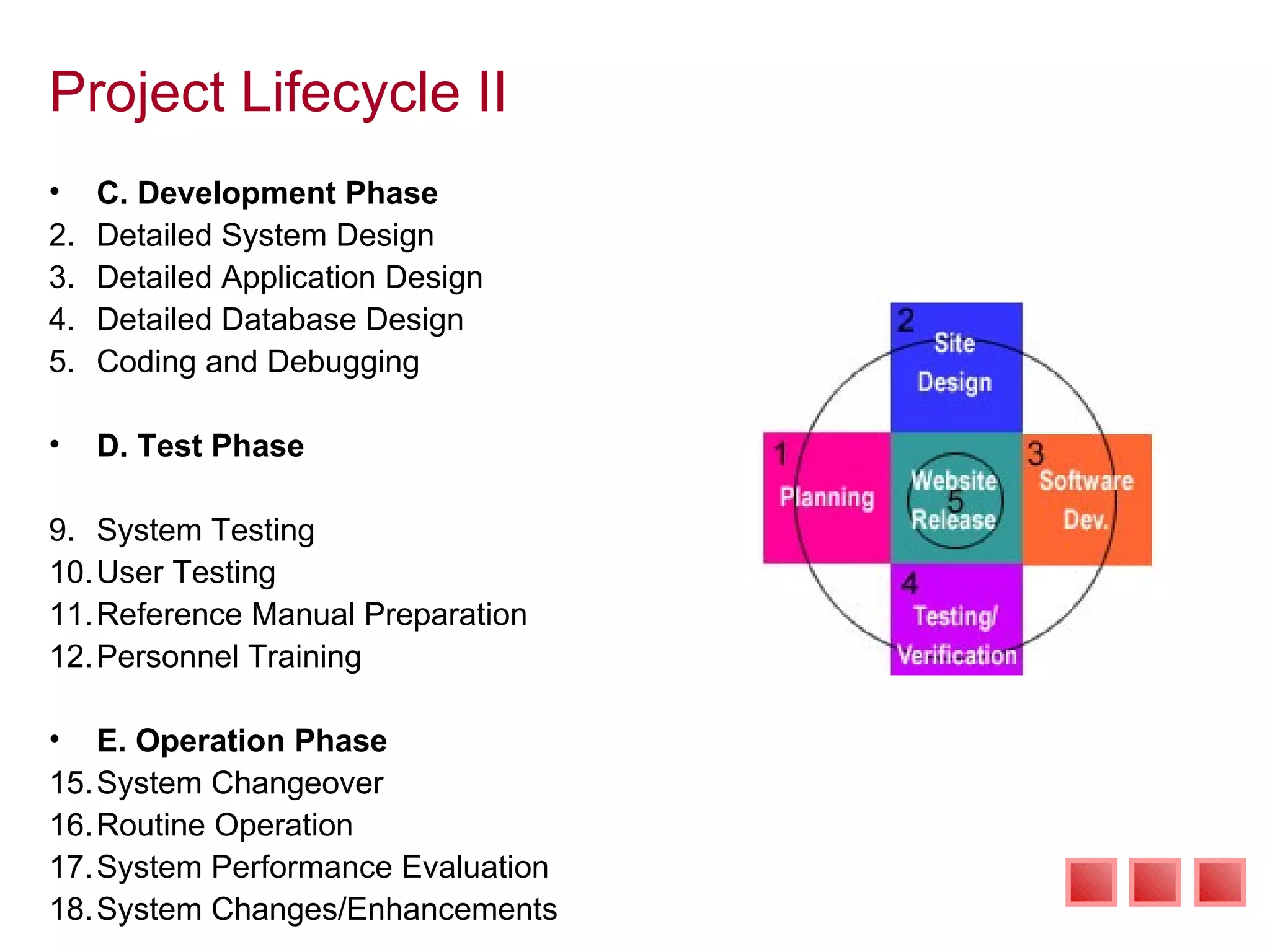
Project Lifecycle II C. Development Phase Detailed System Design Detailed Application Design Detailed Database Design Coding and Debugging  D. Test Phase System Testing User Testing  Reference Manual Preparation  Personnel Training  E. Operation Phase System Changeover  Routine Operation  System Performance Evaluation  System Changes/Enhancements
So Who’s Involved? Product Manager Business / Systems Analyst Coders Project Manager
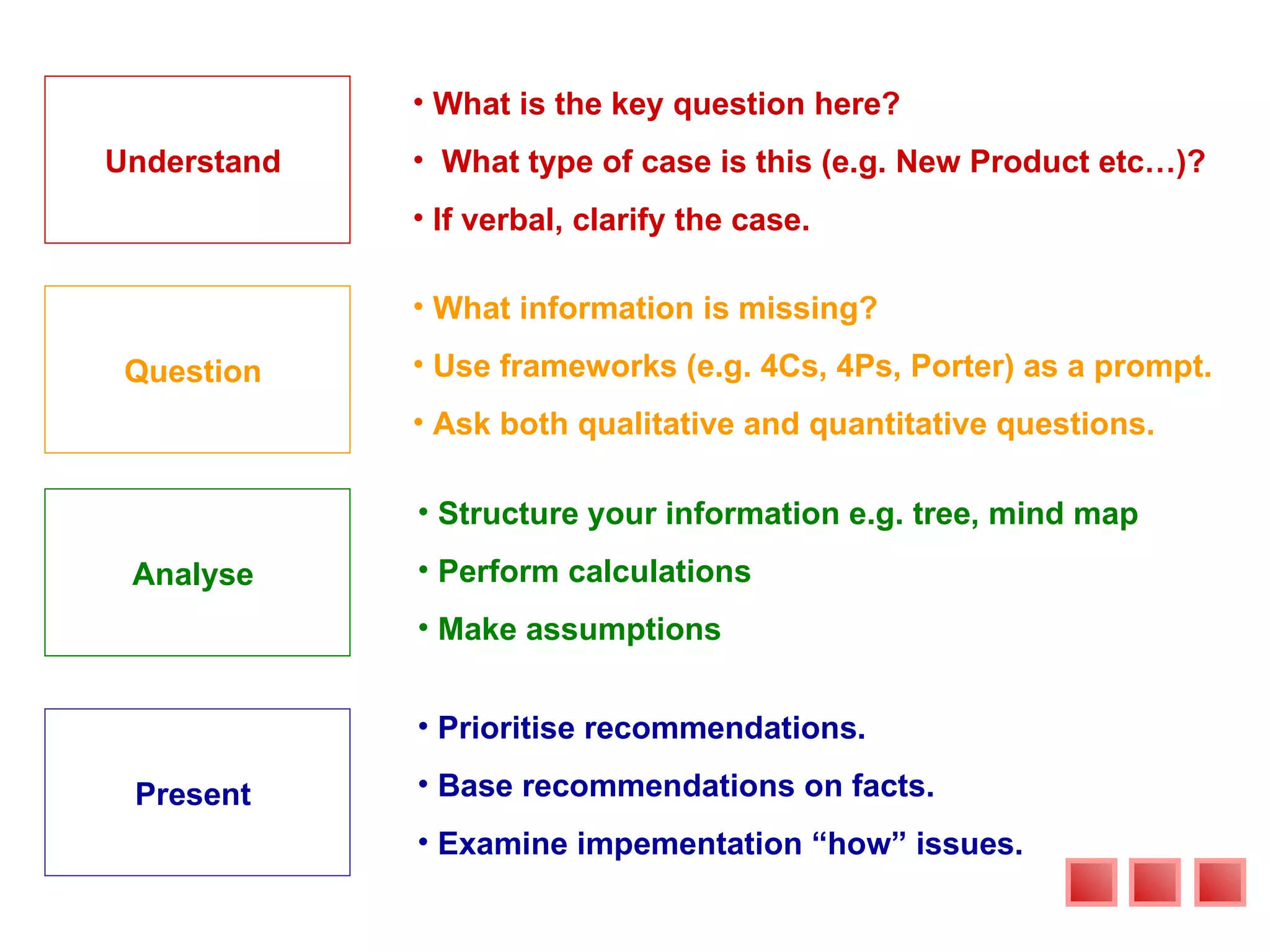
Understand  Question  Analyse  Present  What is the key question here? What type of case is this (e.g. New Product etc…)? If verbal, clarify the case. What information is missing? Use frameworks (e.g. 4Cs, 4Ps, Porter) as a prompt. Ask both qualitative and quantitative questions. Structure your information e.g. tree, mind map Perform calculations Make assumptions Prioritise recommendations. Base recommendations on facts. Examine impementation “how” issues.

It Consulting Slides

  • 1.
  • 2.
    IT & TechnologyConsulting Dr. Joe O’Mahoney 2007
  • 3.
    The Agenda ITConsulting What is IT? It’s the Business, Stupid Managing Projects Case-studies IT Consulting
  • 4.
  • 5.
    IT Systems DevelopmentOutsourcing Services Outsourcing Advice IT Consulting Tax Audit Finance Engineering Asset Management Infrastructure “ Pure” Management Consuting* *Program/Project Management, Strategy, Change Management, Human Resources, BPR, Operations, Marketing, Corporate Communications
  • 6.
    Who does what?Strategy Consulting - McKinsey , BCG - Sapient, Methods Consulting, Xantus Program Management - Deloitte - PWC - E&Y Implementation - IBM - Accenture - Cap Gemini Board Level - IT Strategy - Business Case Management Level - Requirements Management Process Design - Planning Operations Level - Systems Interation IT Operations Coding HIGH VOLUME LOW VALUE HIGH INVESTMENT HI-VALUE LOW-VOLUME MED-VOLUME MED-VALUE
  • 7.
    IT Consulting Market10% Pure IT / Strategy (e.g. McKinseys) 10% with Audit / Accounting (e.g. Deloitte) 80% with integration / outsourcing (e.g. IBM) UK Market - aprx £2.1bn revenue World Market - aprx £18bn revenue Biggest type of consulting Public Bodies: (NHS, DVLA etc…) Central & Local Government Banking
  • 8.
  • 9.
    For example? M&A: inconsistent systems Modernisation: cheque clearing, e-business New Opportunities: RFID, mobile working Cutting costs: Outsourcing, automation Improving service: CRM, Security, Business Intelligence
  • 10.
    Trends India &China moving towards consultancy developing centres of expertise E.g. Infosys Away from strategy Benefit realisation Size of projects £100m + What is a consultant?
  • 11.
  • 12.
    What is IT?Information Useful, Structured, Value-add Data  Information  Assets Technology - A way of doing something IT Consultants - Experts in finding ways of turning information into assets
  • 13.
    Data  Products MIS A faulty part  Recorded  Trends Identified  Benchmarked Knowing if production has a problem Video Football Goal  Digitized  Protected  tagged A product that can be promoted and sold FaceBook Friends  Digitized  Structured A product to enhance sociability
  • 14.
    The Goal…… TheAsset Tagged, Protected, Digitized The Product Multi-channel: TV, Mobile, Internet Peer2Peer, Storage, Tasters…. The Business Advertising, user information, network details Pricing: time, subscription, per view…. Sport vs. news, porn, game etc…
  • 15.
  • 16.
  • 17.
    Focus on Business Requirements What the system will be able to do…….. MoSCoW Must Should Could Would like… Traceable Hierarchies Change Management
  • 18.
    Example: Windows MediaPlayer WMP will play all music and video formats The system will play mpeg, mp3, aac, wmf, atrack 3 The system will prevent illegal ripping of CDs The system will support a DRM solution so that protected files will need a lisence WMP will enable the creation of a media library The system will read metadata tags associated with music files
  • 19.
    When it comesto requirements, the pencil costs pennies… it is the eraser that can cost millions.
  • 20.
    Other forms ofrequirements User Interface Scenarios Business Rules Flow charts Use Cases
  • 21.
  • 22.
    Business Requirements FunctionalThe system must allow searches by title, author and ISBN The system must allow a purchase within five clicks The customer must have the ability to unsubscribe from emails Technical / System 99% of search returns will be faster than 0.5 sec. Card transactions with be encoded with 128bit coding The system must be available 99.999% of the time
  • 23.
    Requirement Hierarchy (examples)Anyone can post a review of a book All reviews must be spell and key word checked before publication The administrator can remove and edit a review A customer must enter a password before posting a review The customer will be able to search for a product By name, genre, author, album and publisher A maximum of 50 results will be shown The return must never be zero The search results can be ordered by price, alphabetically or popularity
  • 24.
    Business Rules Ifthe customer enters a wrong password three times then their PC will be blocked for an hour If the search return delivers nil then automatically search with variants of the spelling If a customer makes a purchase then recommend the product that most customers who purchased that product also bought If a cookie is present on the customer’s PC then automatically populate the customer’s email on the log-in screen
  • 25.
    Scenario Katherine visitsAmazon for the first time She types “Russia” into the search box Amazon returns items fitting this term by product type and listed by popularity Amazon remembers what Katherine has searched for Katherine clicks on the first item then clicks Add to Shopping Basket Katherine is presented with a screen recommending similar items that other buyers of this product bought.
  • 26.
  • 27.
    Building a house?Just start building!? Start with a plan What are the requirements? What components do you need? What do those components do? Who builds it? Based on what? What makes a good design? You need a good method!!
  • 28.
  • 29.
    Project Lifecycle IA. Study Phase Link to Strategy User Need Project Scoping Recruitment B. Design Phase Business Requirements Systems Requirements Data Requirements System Design Software Selection Equipment Selection
  • 30.
    Project Lifecycle IIC. Development Phase Detailed System Design Detailed Application Design Detailed Database Design Coding and Debugging D. Test Phase System Testing User Testing Reference Manual Preparation Personnel Training E. Operation Phase System Changeover Routine Operation System Performance Evaluation System Changes/Enhancements
  • 31.
    So Who’s Involved?Product Manager Business / Systems Analyst Coders Project Manager
  • 32.
    Understand Question Analyse Present What is the key question here? What type of case is this (e.g. New Product etc…)? If verbal, clarify the case. What information is missing? Use frameworks (e.g. 4Cs, 4Ps, Porter) as a prompt. Ask both qualitative and quantitative questions. Structure your information e.g. tree, mind map Perform calculations Make assumptions Prioritise recommendations. Base recommendations on facts. Examine impementation “how” issues.