Today in Science
You will Need:
•Pencil, Periodic Table
•Power Notes – Atomic Structure– 2
page 4 sides- Picked up Wed.
•Atomic Structure – Application Part 2
– Bookshelf-1 page 2 sides
Binder Check #2
•Due next Thurs., March 15th at the beginning of
class.
•Table of Contents on Learning Point for this
week.
Test #2 – Part 1 & 2
• Part 1 – Thursday, March 15 th – Computer
  Portion
• Part 2 – Friday, March 16 th – Written Portion
• Target Concepts on Learning Point for this week
• You NEED to make a ½ page of notes to
  support yourself.
• YOU WILL NEED a CALCULATOR for this test.
Review
•Which subatomic particle in the atom has a
positive charge?
•Which subatomic particles are found in the
nucleus of the atom?
•Of the three major subatomic particle in the
atom, which is the smallest?
•Why are atoms found on the periodic table
neutral….why do they not have any charge?
•Which scientist found that the atom was
mostly empty space?
Review
•Which subatomic particle “IDENTIFIES”
which element it represents?
•Which subatomic particle is neutrally
charged and found in the nucleus?
•Which scientist named his model the “Plum
Pudding Model”?
•What does the atomic number on the
periodic table represent about the atomic
structure?
Review
•When an atom has more electrons than protons it
has what charge?
•What do you call an atom that does not have the
same number of electrons and protons?
• Protium, Deuterium and Tritium are all forms of
Hydrogen. How do we know they are all Hydrogen?
•When thee are different forms of the same
element with different amounts of neutrons what
do we call them?
Review
•Who was the scientist that created the 1st Modern
Atomic Theory?
• What particles does the Atomic Mass represent
on the Periodic Table?
• How many protons does Fluorine have?
• How many electrons does Calcium have if it is a
neutral atom?
•What is the chemical symbol for GOLD?
• Would I add, subtract, multiply or divide to find
the volume of a substance if I knew the mass and
density?
Review
•Slicing a piece of Sodium Chloride in half. Physical
or Chemical?
• Decaying trash. Physical or Chemical?
• How many neutrons are in the most common
form of Lithium?
• Most of the MASS in the atom is found in what
part?
• The phase of matter depends on what?
• The most abundant form of matter in the universe
is _______________?
All atoms found on the •      Neutral – same # of protons(+)
Periodic Table are            and # of electrons(-)


Isotope                  •    Atoms of the same element with
                              same number of protons and
                              different number of neutrons.
                             nucleus                  nucleus

                                        Proton
Hydrogen has 3 natural
occurring ISOTOPES:
Protium, Deuterium and       Protium      nucleus     Deuterium
Tritium

                    are                                Neutro
                All ROGEN have                         n
                            l
                 HYD use al              Tritium
                      a
                  bec oton.
                       r
                   1 p
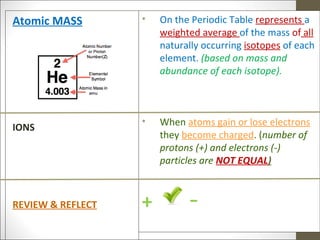
Atomic MASS        •   On the Periodic Table represents a
                       weighted average of the mass of all
                       naturally occurring isotopes of each
                       element. (based on mass and
                       abundance of each isotope).


                   •   When atoms gain or lose electrons
IONS
                       they become charged. (number of
                       protons (+) and electrons (-)
                       particles are NOT EQUAL)


REVIEW & REFLECT   +         -
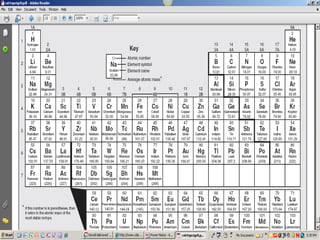
Coloring the Periodic            •   Outline each box in the following
Table                                way:

                                 •   Metalloids – in BLUE
                                 •   Nonmetals – in ORANGE
*Textbook pg 196-197 – Use the   •   Metals – in GREEN
key
NONMETALS-
                      gain electrons
METALS-       lose
  electrons


                      Metalloids
Atomic Structure                  •   The ATOMIC NUMBER of an
Application                           element is the number of PROTONS
  Can also be # of electrons if
                                      in the center, nucleus of an atom.
            neutral               •   It is the PROTONS that IDENTIFY
                                      which element is on the periodic
                                      table.
                                  •   NO TWO elements have the same
                                      ATOMIC NUMBER. (proton count)
                                   #2 – Ac
                                            tually 9
                                  elemen
                                           ts that
                                  start wi
                                           th the
    Number of protons + neutrons letter “
                                          C”
     Use your Periodic table to complete the
    application exercises. You may work as a
           group to answer the questions.
Homework
 Power Notes + Application Part 2–
 Please staple and turn in by Monday-
 DATE CHANGE
 None unless you owe me something


Do You see HOW the periodic table
and the Atomic Structure are
RELATED?

Power Notes Atomic Structure -Day 3

  • 1.
    Today in Science Youwill Need: •Pencil, Periodic Table •Power Notes – Atomic Structure– 2 page 4 sides- Picked up Wed. •Atomic Structure – Application Part 2 – Bookshelf-1 page 2 sides
  • 2.
    Binder Check #2 •Duenext Thurs., March 15th at the beginning of class. •Table of Contents on Learning Point for this week. Test #2 – Part 1 & 2 • Part 1 – Thursday, March 15 th – Computer Portion • Part 2 – Friday, March 16 th – Written Portion • Target Concepts on Learning Point for this week • You NEED to make a ½ page of notes to support yourself. • YOU WILL NEED a CALCULATOR for this test.
  • 3.
    Review •Which subatomic particlein the atom has a positive charge? •Which subatomic particles are found in the nucleus of the atom? •Of the three major subatomic particle in the atom, which is the smallest? •Why are atoms found on the periodic table neutral….why do they not have any charge? •Which scientist found that the atom was mostly empty space?
  • 4.
    Review •Which subatomic particle“IDENTIFIES” which element it represents? •Which subatomic particle is neutrally charged and found in the nucleus? •Which scientist named his model the “Plum Pudding Model”? •What does the atomic number on the periodic table represent about the atomic structure?
  • 5.
    Review •When an atomhas more electrons than protons it has what charge? •What do you call an atom that does not have the same number of electrons and protons? • Protium, Deuterium and Tritium are all forms of Hydrogen. How do we know they are all Hydrogen? •When thee are different forms of the same element with different amounts of neutrons what do we call them?
  • 6.
    Review •Who was thescientist that created the 1st Modern Atomic Theory? • What particles does the Atomic Mass represent on the Periodic Table? • How many protons does Fluorine have? • How many electrons does Calcium have if it is a neutral atom? •What is the chemical symbol for GOLD? • Would I add, subtract, multiply or divide to find the volume of a substance if I knew the mass and density?
  • 7.
    Review •Slicing a pieceof Sodium Chloride in half. Physical or Chemical? • Decaying trash. Physical or Chemical? • How many neutrons are in the most common form of Lithium? • Most of the MASS in the atom is found in what part? • The phase of matter depends on what? • The most abundant form of matter in the universe is _______________?
  • 8.
    All atoms foundon the • Neutral – same # of protons(+) Periodic Table are and # of electrons(-) Isotope • Atoms of the same element with same number of protons and different number of neutrons. nucleus nucleus Proton Hydrogen has 3 natural occurring ISOTOPES: Protium, Deuterium and Protium nucleus Deuterium Tritium are Neutro All ROGEN have n l HYD use al Tritium a bec oton. r 1 p
  • 9.
    Atomic MASS • On the Periodic Table represents a weighted average of the mass of all naturally occurring isotopes of each element. (based on mass and abundance of each isotope). • When atoms gain or lose electrons IONS they become charged. (number of protons (+) and electrons (-) particles are NOT EQUAL) REVIEW & REFLECT + -
  • 10.
    Coloring the Periodic • Outline each box in the following Table way: • Metalloids – in BLUE • Nonmetals – in ORANGE *Textbook pg 196-197 – Use the • Metals – in GREEN key
  • 11.
    NONMETALS- gain electrons METALS- lose electrons Metalloids
  • 12.
    Atomic Structure • The ATOMIC NUMBER of an Application element is the number of PROTONS Can also be # of electrons if in the center, nucleus of an atom. neutral • It is the PROTONS that IDENTIFY which element is on the periodic table. • NO TWO elements have the same ATOMIC NUMBER. (proton count) #2 – Ac tually 9 elemen ts that start wi th the Number of protons + neutrons letter “ C” Use your Periodic table to complete the application exercises. You may work as a group to answer the questions.
  • 14.
    Homework Power Notes+ Application Part 2– Please staple and turn in by Monday- DATE CHANGE None unless you owe me something Do You see HOW the periodic table and the Atomic Structure are RELATED?