THE
PERIODIC
TABLE 1
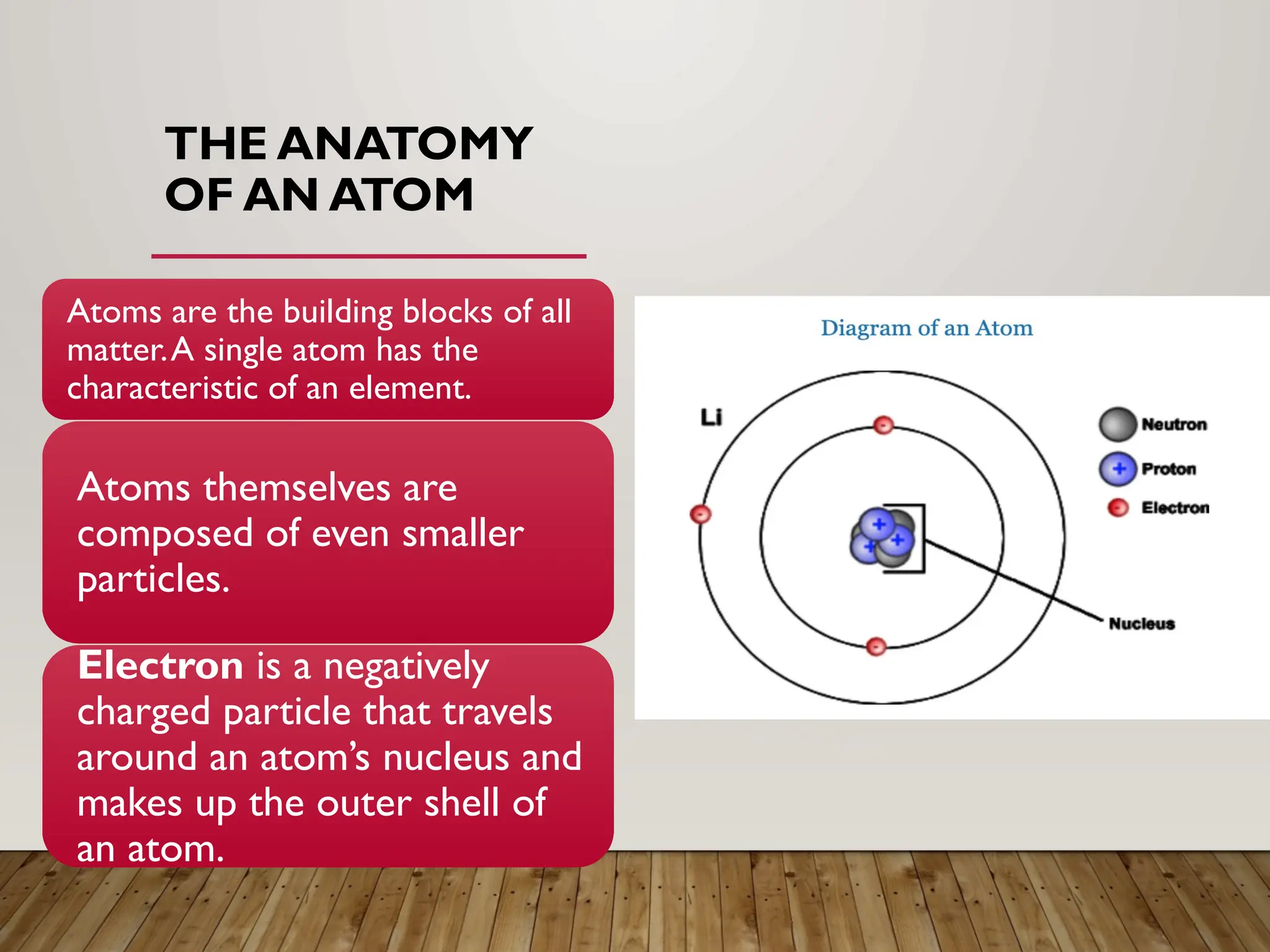
THE ANATOMY
OF AN ATOM
Atoms are the building blocks of all
matter.A single atom has the
characteristic of an element.
Atoms themselves are
composed of even smaller
particles.
Electron is a negatively
charged particle that travels
around an atom’s nucleus and
makes up the outer shell of
an atom.
MODEL OF THE ATOM:
NEGATIVELY CHARGED
ELECTRONS SURROUNDED
THE NUCLEUS.AFTER THE
DISCOVERY OFTHE
ELECTRON, SCIENTISTS
WONDERED WHAT
PARTICLES MADE UPTHE
NUCLEUS.TO ANSWER THIS
QUESTION,THEY
INVESTIGATED THE
HYDROGEN ATOM.
WHAT IS MEANT BY
THE SUBATOMIC
PARTICLES?
proton is a positively charged particle that composes
atomic nuclei.
A hydrogen atom consists of one electron bound to
one proton.
Electrons are negatively charged, and protons are
positively charged.
These particles have identical but opposite charges.
Because of this, most matter is electrically neutral.
As you move up the periodic table, elements have
more protons in their nuclei. But they also have more
electrons in their outer shells.The total result is that
atoms are electrically neutral.
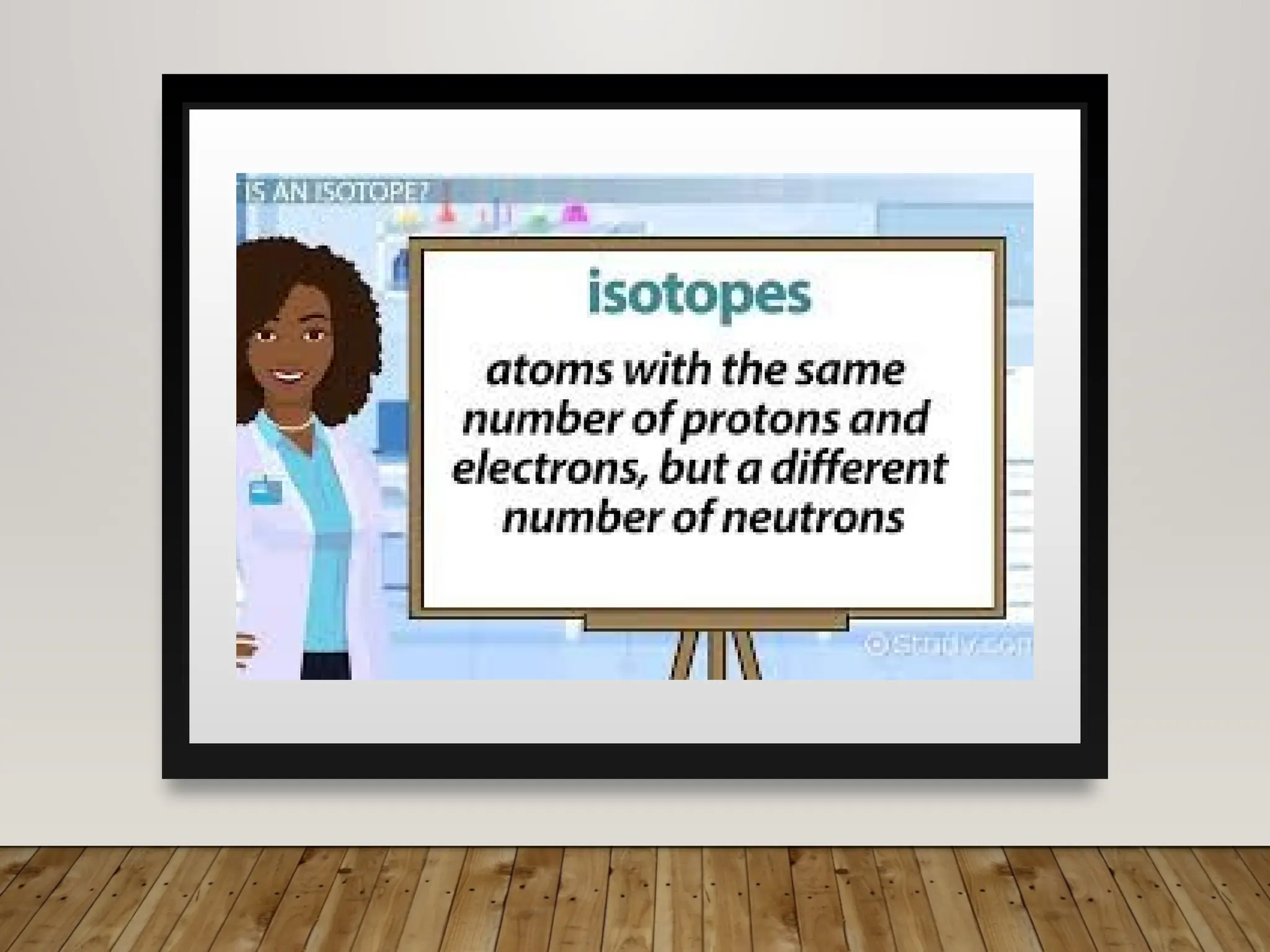
WHAT IS AN ISOTOPE?
• An isotope is a radioactive atom of the same element.
• These atoms have many of the same properties of the
element, but they also undergo radioactive decay.
• Different isotopes of the same element do not have the
same mass. Because isotopes are electrically neutral, they
could not have more protons in their nucleus.
• their nuclei contain a different number of neutrons.
NEUTRON
• neutron is an uncharged particle that exists in the nuclei of
most atoms.
• A helium atom contains two protons, two electrons and either
one or two neutrons, depending on the isotope.
• why do you think the neutron was the last of to be discovered?
• Because a neutron does not have
an electric charge, it is harder to
detect than the electron and
the proton.
• Also, protons and electrons
exist in all atoms, while
neutrons do not exist in
hydrogen atoms.
USINGTHE PERIODICTABLE
• An element’s position on the table tells many things about the
structure of its atoms.
• Information such as the particles in an element’s nucleus, the
electrons surrounding the nucleus, and an element’s ability to
react with other elements can all be seen in the periodic table.
ATOMIC NO & ATOMIC MASS
• Atomic number is a number that indicates how
many PROTONS are in an element’s nucleus.
• As you move from left to right in a period and from
top to bottom in a group, the atomic number
INCREASES.
• Elements closer to the bottom right corner of the
periodic table have the most protons in their nuclei.
WHAT’S THE DIFFERENCE BETWEEN
ATOMIC MASS & MASS NO?
• Atomic mass is the average mass of all an element’s isotopes.
• When given as a range, atomic mass indicates the range in values of mass of
an element’s isotopes from lowest to highest.
• Most elements have both stable and radioactive isotopes.
• Stable isotopes are the most common.
• Radioactive isotopes are isotopes that have a chance to undergo nuclear
decay.
• When this happens, the particles in the atom’s nuclei release other particles
and change into different particles.This might cause the atom to become a
different isotope. Or, the atom might become a different element entirely!
YOU WERE GIVEN JUSTTHE ATOMIC NUMBER OF
AN ATOM,WOULDYOU BE ABLETOTELL WHAT
ELEMENT IT IS? WHAT IFYOU JUST KNEWTHE
ATOMIC MASS?
-I would be able to say what element it is
because each atomic number corresponds to a
unique element on the periodic table.
• If I knew only the atomic mass of an atom, I
would not know what element it is because
some elements might have the same atomic
mass, depending on the isotope.
WHY THE NUMBER OF ELEMENTS IN EACH
PERIOD IS DIFFERENT.WHY NOT HAVE THE
SAME NUMBER OF ELEMENTS IN EACH ROW?
• The reason has to do with electron shells.With increasing
atomic number, the number of protons in an element’s nucleus
increases.
• Because matter remains electrically neutral, more electrons
build up around the nucleus.These electrons build up in shells.
Different shells hold different numbers of electrons.
ELECTRONEGATIVITY
• Electronegativity is an element’s ability to react
with other elements.
• Electronegativity is largely controlled by the
electrons in the element’s outer shell.
• This is because most types of bonds between elements involve a
sharing of electrons.
• As you move from left to right in a period and down to up in a group,
electronegativity increases.
NOBLE GASES
• The one exception to the electronegativity rule is the noble gases.
• The noble gases are the elements in the far right group of the
periodic table.
• These elements have their outer shell entirely full of electrons.
• Because of this, they do not take electrons from other elements or
give up their electrons.Therefore, they are not as reactive as the
other elements.

periodic table 1.pptx grade 6 -atomic structure

  • 1.
  • 2.
    THE ANATOMY OF ANATOM Atoms are the building blocks of all matter.A single atom has the characteristic of an element. Atoms themselves are composed of even smaller particles. Electron is a negatively charged particle that travels around an atom’s nucleus and makes up the outer shell of an atom.
  • 3.
    MODEL OF THEATOM: NEGATIVELY CHARGED ELECTRONS SURROUNDED THE NUCLEUS.AFTER THE DISCOVERY OFTHE ELECTRON, SCIENTISTS WONDERED WHAT PARTICLES MADE UPTHE NUCLEUS.TO ANSWER THIS QUESTION,THEY INVESTIGATED THE HYDROGEN ATOM.
  • 4.
    WHAT IS MEANTBY THE SUBATOMIC PARTICLES? proton is a positively charged particle that composes atomic nuclei. A hydrogen atom consists of one electron bound to one proton. Electrons are negatively charged, and protons are positively charged. These particles have identical but opposite charges. Because of this, most matter is electrically neutral. As you move up the periodic table, elements have more protons in their nuclei. But they also have more electrons in their outer shells.The total result is that atoms are electrically neutral.
  • 5.
    WHAT IS ANISOTOPE? • An isotope is a radioactive atom of the same element. • These atoms have many of the same properties of the element, but they also undergo radioactive decay. • Different isotopes of the same element do not have the same mass. Because isotopes are electrically neutral, they could not have more protons in their nucleus. • their nuclei contain a different number of neutrons.
  • 6.
    NEUTRON • neutron isan uncharged particle that exists in the nuclei of most atoms. • A helium atom contains two protons, two electrons and either one or two neutrons, depending on the isotope. • why do you think the neutron was the last of to be discovered?
  • 9.
    • Because aneutron does not have an electric charge, it is harder to detect than the electron and the proton. • Also, protons and electrons exist in all atoms, while neutrons do not exist in hydrogen atoms.
  • 10.
    USINGTHE PERIODICTABLE • Anelement’s position on the table tells many things about the structure of its atoms. • Information such as the particles in an element’s nucleus, the electrons surrounding the nucleus, and an element’s ability to react with other elements can all be seen in the periodic table.
  • 11.
    ATOMIC NO &ATOMIC MASS • Atomic number is a number that indicates how many PROTONS are in an element’s nucleus. • As you move from left to right in a period and from top to bottom in a group, the atomic number INCREASES. • Elements closer to the bottom right corner of the periodic table have the most protons in their nuclei.
  • 12.
    WHAT’S THE DIFFERENCEBETWEEN ATOMIC MASS & MASS NO? • Atomic mass is the average mass of all an element’s isotopes. • When given as a range, atomic mass indicates the range in values of mass of an element’s isotopes from lowest to highest. • Most elements have both stable and radioactive isotopes. • Stable isotopes are the most common. • Radioactive isotopes are isotopes that have a chance to undergo nuclear decay. • When this happens, the particles in the atom’s nuclei release other particles and change into different particles.This might cause the atom to become a different isotope. Or, the atom might become a different element entirely!
  • 13.
    YOU WERE GIVENJUSTTHE ATOMIC NUMBER OF AN ATOM,WOULDYOU BE ABLETOTELL WHAT ELEMENT IT IS? WHAT IFYOU JUST KNEWTHE ATOMIC MASS? -I would be able to say what element it is because each atomic number corresponds to a unique element on the periodic table. • If I knew only the atomic mass of an atom, I would not know what element it is because some elements might have the same atomic mass, depending on the isotope.
  • 14.
    WHY THE NUMBEROF ELEMENTS IN EACH PERIOD IS DIFFERENT.WHY NOT HAVE THE SAME NUMBER OF ELEMENTS IN EACH ROW? • The reason has to do with electron shells.With increasing atomic number, the number of protons in an element’s nucleus increases. • Because matter remains electrically neutral, more electrons build up around the nucleus.These electrons build up in shells. Different shells hold different numbers of electrons.
  • 15.
    ELECTRONEGATIVITY • Electronegativity isan element’s ability to react with other elements. • Electronegativity is largely controlled by the electrons in the element’s outer shell. • This is because most types of bonds between elements involve a sharing of electrons. • As you move from left to right in a period and down to up in a group, electronegativity increases.
  • 16.
    NOBLE GASES • Theone exception to the electronegativity rule is the noble gases. • The noble gases are the elements in the far right group of the periodic table. • These elements have their outer shell entirely full of electrons. • Because of this, they do not take electrons from other elements or give up their electrons.Therefore, they are not as reactive as the other elements.