

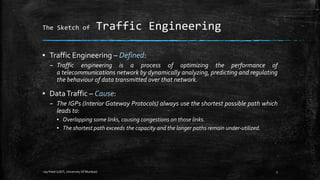


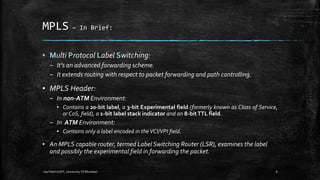


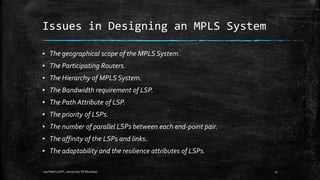


The document discusses traffic engineering in networks using MPLS. It begins by defining traffic engineering and explaining how shortest path routing can lead to link congestion and underutilized paths. It then describes MPLS, constraint-based routing, and enhanced interior gateway protocols. Constraint-based routing computes paths subject to constraints like bandwidth and policies. MPLS extends routing to control packet forwarding and paths. The document outlines the basic components and functioning of an MPLS system for traffic engineering, including setting up label switched paths (LSPs) with attributes like bandwidth, priority, affinity and establishing multiple LSPs between endpoints to distribute load.


![5G Explained! A High Level Overview [Introduction]](https://cdn.slidesharecdn.com/ss_thumbnails/5gexplainedahighleveloverview-260119165306-cc137a3e-thumbnail.jpg?width=640&height=640&fit=bounds)


